

Dalhousie
General information
-
Ideal Duration:
3-4 DaysPlace Type:
Hill StationSpecial Events:
Minjar Fair: A week-long harvest festival celebrated with traditional music and processions.
Navratri Celebrations: Local temples like Bhalei Mata host vibrant religious gatherings.
:...Minjar Fair: A week-long harvest festival celebrated with traditional music and processions.
Navratri Celebrations: Local temples like Bhalei Mata host vibrant religious gatherings.
:Best Photo Spots:
Dainkund Peak: Offers a wide-angle view of the entire Dhauladhar range.
Khajjiar Lake: Perfect for capturing the reflection of cedar trees in the water.
Panchpula: The cascading waterfalls provide a beautif...Dainkund Peak: Offers a wide-angle view of the entire Dhauladhar range.
Khajjiar Lake: Perfect for capturing the reflection of cedar trees in the water.
Panchpula: The cascading waterfalls provide a beautiful natural backdrop.
:Photo Gallery
Things To Do
 Chamera Lake is an exquisite artificial reservoir located in the Chamba district near the hill station of Dalhousie. It was formed as a result of the Chamera Dam project built on the Ravi river, which is a major source of hydroelectricity for the region. The lake is situated at an elevation of approximately 763 meters above sea level and serves as a vital water source for local villagers. Unlike many natural lakes, this man-made wonder is characterized by a complete absence of aquatic life, which makes its still, emerald-blue waters exceptionally clear and perfect for various water sports. The surrounding landscape is a breathtaking contrast of dense pine forests and steep mountain slopes that reflect beautifully on the water's surface during the early morning hours. This destination has evolved into a premier tourist hub, offering a serene escape from the bustling crowds of the main town. Visitors often spend hours simply gazing at the expansive water body or enjoying the cool breeze that flows through the valley. The lake is divided into three stages corresponding to the dam's hydroelectric phases, each offering unique vantage points for sightseers. It is a favored spot for families and honeymooners who seek a peaceful environment combined with the thrill of outdoor activities. The infrastructure around the lake includes well-maintained viewpoints, small food stalls serving local Himachali snacks, and dedicated boating jetties managed by the Himachal Pradesh Department of Tourism. Despite being artificial, the lake feels like a natural part of the Himalayan ecosystem, blending seamlessly with the rugged terrain of the Shivalik ranges. It is a must-visit for anyone traveling to Dalhousie in March, April, or May.
 Dainkund Peak is the highest point in the entire Dalhousie region, situated at a towering elevation of 2,755 meters (9,039 feet) above sea level. Its name, literally meaning 'Lake of the Daityas (Demons)' or 'Witch's Pond,' is derived from local legends that once spoke of witches residing here, but today it is known as the 'Singing Hill' due to the melodious whistling sound created by the wind passing through the dense groves of deodar, oak, and pine trees. The peak offers breathtaking 360-degree panoramic views of the entire valley, the majestic snow-capped Pir Panjal mountains of Jammu and Kashmir, the green Dhauladhar range, and the flowing rivers like Ravi and Chenab in the distance. The trek to the summit is considered easy to moderate, making it accessible to most visitors, including families and beginners. At the very top, one finds the sacred Pholani Mata Temple and a strategic Indian Air Force base. The entire environment is tranquil, providing a perfect escape from city life and serving as a major hub for nature lovers, trekkers, and peace seekers. The clear air and spectacular vistas make it a premier attraction, culminating in an unforgettable high-altitude Himalayan experience.
 @@Unique Trekkers' Delight: Ganji Pahari literally means "Bald Hill" due to the unique characteristic of its peak: it is completely devoid of vegetation, presenting a stark, bare summit that contrasts sharply with the dense green forests on its lower slopes. This hill is a popular destination for trekking enthusiasts and nature lovers, offering a moderately challenging trek, typically starting from Panchpula or the Pathankot road. The trek is rewarded with stunning panoramic views of the surrounding valleys, including the Dhauladhar and Pir Panjal ranges. The trail winds through beautiful natural settings, and the clear, unhindered view from the bald peak makes it an exceptional spot for watching sunrises and sunsets. Its barren summit is a result of extreme weather conditions and wind exposure, which prevent the growth of trees, creating a natural curiosity. The quiet, undeveloped nature of the area provides a much-needed escape from the more commercialized parts of Dalhousie. It is highly recommended for those seeking a physical challenge and a magnificent view.
 @@Natural Ridge Walk: Moti Tiba, translating to 'Pearl Hill' or 'Moti Tibba' (where 'Tiba' means hill), is a beautiful, forested ridge that is part of the original five hills acquired by the British for establishing Dalhousie. Situated at a significant elevation above the main town, it offers some of the most stunning panoramic views of the entire Dalhousie valley and the distant Pir Panjal range. The ridge is thickly forested with towering deodar, pine, fir, and rhododendron trees, creating an extremely refreshing and tranquil walking environment. It's especially popular for short, gentle nature walks and is frequently visited by tourists and locals seeking peace and the scenic beauty of the hill station without the strenuous effort of a major trek. The area is known for its serene environment and crisp, clean mountain air, which is a perfect antidote to city life. The viewpoint at the top provides a spectacular setting for quiet contemplation. The path leading to the ridge top is easily accessible from the town center, making it a convenient destination. It is often considered one of the most idyllic spots for a morning or evening stroll in Dalhousie, a quiet oasis near the bustling market areas.
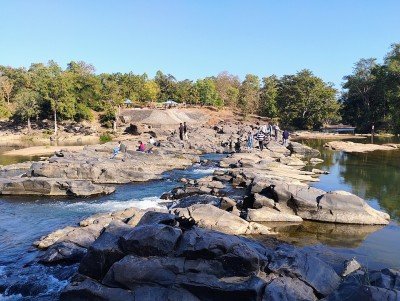 @@Natural Wonder and Medicinal Properties: Satdhara means "seven springs," referring to the confluence of seven beautiful springs that cascade down the hill, creating the waterfall. The water here is believed to have therapeutic and medicinal properties due to the presence of mica (known as 'gandhak') in the stream beds, which is said to cure skin diseases. This natural feature draws not just tourists but also locals seeking the water's benefits. The falls are surrounded by dense forests of deodar and pine, offering a visually stunning and spiritually uplifting environment. The constant roar of the water provides a soothing background noise, making it a perfect spot for unwinding. The entire area maintains a pristine, untouched feel, contributing to its charm as a nature retreat. It is a common stopover for trekkers and travelers heading towards Panchpula. @@The Legend of Gandhak: The belief in the medicinal properties of the water is rooted in local folklore, making the experience more than just a sightseeing stop. Many visitors drink the water or simply soak their feet in the stream. The viewpoint provides excellent photographic opportunities of the cascading water and the valley below. However, caution is advised, especially during the monsoon, as the flow of water is heavy and the rocks can be extremely slippery. It remains one of the most picturesque natural attractions near Dalhousie.
 @@Cultural Hub and Artisan Showcase: The Tibetan Handicrafts Center is a dedicated establishment, often distinct from the open-air market, focused on preserving and showcasing the traditional crafts and culture of the Tibetan refugee community settled in the area. It serves as an important source of livelihood for the community and a cultural bridge for visitors. The center specializes in high-quality, authentic Tibetan artifacts, handlooms, and art, often with a focus on traditional methods and materials. Items include exquisite hand-knotted Tibetan carpets, intricate Thangka paintings, hand-crafted jewelry, woolen garments, and religious artifacts like prayer wheels and flags. The center's mission is often rooted in community welfare. @@Shopping Experience and Quality: Unlike the vibrant, general market, the Handicrafts Center typically offers products at fixed prices, assuring a high standard of quality and authenticity. Visitors can often witness the artisans at work, especially the women weaving carpets, which provides a fascinating insight into the painstaking process of their craft. It offers a more curated and quiet shopping experience compared to the bustling marketplace. It is a place where every purchase directly supports the refugee community, lending a philanthropic touch to the shopping.
 @@Spiritual Stopover: Bara Pathar is a small but significant spot located on the road connecting Dalhousie to the Kalatop Wildlife Sanctuary. The area is primarily famous for the ancient Bhulwani Mata Temple, which draws numerous devotees and travelers. The name Bara Pathar literally translates to "big stone," though the location is defined by its deep spiritual energy and picturesque surroundings. Situated amidst a thick forest of deodar and pine, the area offers a cool respite, especially during the summer months. It serves as a perfect short stopover point for those heading towards Kalatop or Khajjiar. The temple itself is a historic structure, believed to be over 150 years old. Besides its religious importance, the area is surrounded by beautiful natural landscapes and also features a small, operational potato farm maintained by the local agricultural department, which adds to its unique charm. The serene atmosphere and the breathtaking view of the Chamba Valley make it a peaceful, mandatory stop.Show All
 @@Biodiversity and Environment: Kalatop Wildlife Sanctuary is a dense, beautiful forest spread over an area of about 30.69 square kilometers, located at an altitude of approximately 2,500 meters above sea level. Its name, 'Kalatop', literally means 'Black Cap', referring to the thick, dense black forest cover on the highest ridge. The sanctuary is a pristine haven for nature and wildlife lovers, characterized by vast expanses of lush coniferous and oak forests, with predominant species being deodar and pine. It protects a diverse range of fauna, including the elusive Himalayan Black Marten, Bear, Deer (like the Goral and Serow), Leopard, and an incredible variety of birds like the Eurasian Jay and Pheasants. It's a key destination for bird watching and nature walks. The landscape also offers stunning, panoramic views of the surrounding snow-capped Pir Panjal mountains and valleys. It was declared a protected game reserve in 1968 and a sanctuary in 1970, ensuring the preservation of its ecological integrity. The forest area is traversed by the tributaries of the Ravi River, adding to the scenic beauty and ecological richness of the region. The air is remarkably fresh and the environment tranquil, making it a perfect escape. The trek through the forest from Lakkarmandi to the Kalatop Rest House is particularly famous, showcasing the best of the sanctuary's beauty.
Information
-
Why Famous:
Colonial Heritage: Famous for its well-preserved British era churches and bungalows.
Natural Beauty: Known as the "Little Switzerland of India" due to the nearby Khajjiar meadows.
Trekking Hub: A popular st...Colonial Heritage: Famous for its well-preserved British era churches and bungalows.
Natural Beauty: Known as the "Little Switzerland of India" due to the nearby Khajjiar meadows.
Trekking Hub: A popular starting point for treks to Dainkund Peak and Sach Pass.
: -
How To Reach:
By Air: Pathankot Airport is 75 KM away, though Gaggal Airport at 130 KM is more reliable.
By Train: Pathankot Railway Station is the nearest broad gauge railhead, roughly 80 KM away.
By Road: Regular HRTC ...By Air: Pathankot Airport is 75 KM away, though Gaggal Airport at 130 KM is more reliable.
By Train: Pathankot Railway Station is the nearest broad gauge railhead, roughly 80 KM away.
By Road: Regular HRTC buses connect it to Delhi, Chandigarh, and Shimla via well-maintained highways.
By Local Transport: Private taxis and local buses are the primary modes for sightseeing.
: -
Weather and Best Time to Visit:
Summer Season: March to June offers pleasant weather between 15°C and 25°C.
Winter Season: December to February is perfect for snow lovers and honeymooners.
Day Time: Mid-mornings are perfect for outdoor ...Summer Season: March to June offers pleasant weather between 15°C and 25°C.
Winter Season: December to February is perfect for snow lovers and honeymooners.
Day Time: Mid-mornings are perfect for outdoor sightseeing while evenings are for the Mall Road.
: -
Near Tourist Places:
Khajjiar (22 KM), Chamba (56 KM), Panchpula (3 KM), Dainkund (10 KM), Kalatop (12 KM), Bakrota Hills (5 KM), Satdhara Falls (2 KM), Chamera Lake (30 KM), Subhash Baoli (1. 5 KM), Sach Pass (150 KM)
Tourism Tips
-
Packing: Carry heavy woolens for winters and light jackets for summer evenings.
Health & Safety: Roads can be winding, so carry motion sickness medication if needed.
Accommodation: Book hotels near Subhash ...Packing: Carry heavy woolens for winters and light jackets for summer evenings.
Health & Safety: Roads can be winding, so carry motion sickness medication if needed.
Accommodation: Book hotels near Subhash Chowk for easier access to local transport.
Connectivity: BSNL and Jio provide the best network coverage in the hilly terrain.
:
Reviews
FAQs
Dalhousie Itineray And Cost:-
Other Places In Himachal Pradesh :-
Other States In India :-
Information about New and Updated Locations() of Himachal Pradesh Has Been Added :-
Card subtitle
Note:-
Information provided here in good Faith and for reference only.
Near Places

Anandpur Sahib
Some quick example text to build on the card title and make up the bulk of the card's content.
Go somewhere
Bhuntar
Some quick example text to build on the card title and make up the bulk of the card's content.
Go somewhere
Bir Billing
Some quick example text to build on the card title and make up the bulk of the card's content.
Go somewhere
Chail
Some quick example text to build on the card title and make up the bulk of the card's content.
Go somewhere
Chamba
Some quick example text to build on the card title and make up the bulk of the card's content.
Go somewhere
Dalhousie
Some quick example text to build on the card title and make up the bulk of the card's content.
Go somewhere
Dharamshala
Some quick example text to build on the card title and make up the bulk of the card's content.
Go somewhere
Fagu
Some quick example text to build on the card title and make up the bulk of the card's content.
Go somewhere
Hamirpur
Some quick example text to build on the card title and make up the bulk of the card's content.
Go somewhere
Joginder Nagar
Some quick example text to build on the card title and make up the bulk of the card's content.
Go somewhere
Kangra
Some quick example text to build on the card title and make up the bulk of the card's content.
Go somewhere
Kasauli
Some quick example text to build on the card title and make up the bulk of the card's content.
Go somewhere
Kasol
Some quick example text to build on the card title and make up the bulk of the card's content.
Go somewhere
Khajjiar
Some quick example text to build on the card title and make up the bulk of the card's content.
Go somewhere
Kufri
Some quick example text to build on the card title and make up the bulk of the card's content.
Go somewhere
Kullu
Some quick example text to build on the card title and make up the bulk of the card's content.
Go somewherein Other Cities