

Gandhi Sangrahalaya
General information
-
Ideal Duration:
1-2 hoursPlace Type:
Museum, Historical Research CenterEntry Fees:
Standard Entry Fee: The entry fee for the Gandhi Sangrahalaya is typically very low, often around Rs.10 per person for Indian nationals and slightly higher for Foreign nationals (e. g. , Rs.50 to Rs.100). This low fee is intentional to ensure the museum remains accessible to all ...Standard Entry Fee: The entry fee for the Gandhi Sangrahalaya is typically very low, often around Rs.10 per person for Indian nationals and slightly higher for Foreign nationals (e. g. , Rs.50 to Rs.100). This low fee is intentional to ensure the museum remains accessible to all citizens, fulfilling its role as a public, educational institution.
Photography Fees: Usually, there is no separate fee for taking photos with a mobile phone or a standard camera for personal use. However, commercial photography, videography, or the use of professional equipment (like tripods and large flash setups) is usually restricted and requires a formal, pre-approved permit and a substantial fee.
Fees for Services: Access to the research library and archives may require a formal application and a small membership or usage fee for long-term researchers, though casual visitors may be allowed to browse for free. Attending seminars or special workshops may involve registration or delegate fees, which vary by event.
Students: Educational groups and bona fide students may often receive a discounted entry or even free access upon presenting valid ID, as the museum prioritizes its educational mission.Timing:
Regular Museum Timings: The Gandhi Sangrahalaya is typically open from 9:30 AM or 10:00 AM to 5:30 PM or 6:00 PM. It is generally closed on Mondays and on major national holidays, so it's essential to check the specific opening days before planning a visit.Regular Museum Timings: The Gandhi Sangrahalaya is typically open from 9:30 AM or 10:00 AM to 5:30 PM or 6:00 PM. It is generally closed on Mondays and on major national holidays, so it's essential to check the specific opening days before planning a visit.
Ideal Visit Time: The best time to visit is the Late Morning on a weekday (10:30 AM to 1:00 PM). This is when the museum is quietest, allowing for a peaceful, unhurried exploration of the detailed exhibits. Avoiding the crowds allows for a more reflective and focused experience, especially when reading the detailed textual panels.
Ideal Visit Day: Visiting on a Tuesday, Wednesday, or Thursday is often better than a weekend, as local groups and school trips tend to visit on Fridays and Saturdays. Since the museum is right next to Gandhi Maidan, visiting the museum in the morning and then the Maidan in the evening is an excellent daily plan.
Seasonal Consideration: The cool Winter months (November to March) are the most comfortable season for visiting, as the museum itself is indoors and provides a comfortable break from the outdoor heat or sun.Special Events:
Birth Anniversaries of Key Figures: The museum regularly organizes special programs, seminars, and exhibitions to commemorate the birth and death anniversaries of Mahatma Gandhi (October 2nd and January 30th) and other significant freedom fighters associated with Bihar, such...Birth Anniversaries of Key Figures: The museum regularly organizes special programs, seminars, and exhibitions to commemorate the birth and death anniversaries of Mahatma Gandhi (October 2nd and January 30th) and other significant freedom fighters associated with Bihar, such as Dr. Rajendra Prasad or Jayaprakash Narayan.
Annual Lectures and Seminars: The Sangrahalaya hosts annual lectures and academic seminars focused on contemporary interpretations of Gandhian philosophy, non-violence, and social justice. These events attract scholars and intellectuals from across India.
Special Exhibitions: Temporary exhibitions are occasionally set up to mark specific historical milestones, such as the centennial of the Champaran Satyagraha or anniversaries of other major national movements. These offer fresh material and new perspectives to regular visitors.
Book Launches and Literary Meets: The museum's auditorium is a frequent venue for book launches, particularly for academic and historical books related to Bihar and the freedom struggle. These events are an opportunity to meet authors and engage in literary discussions.Best Photo Spots:
Interior Gallery Shots: Focus on the photo panels and artifact displays inside the museum, using the exhibits to capture the historical narrative. Look for close-ups of rare documents and hand-written letters (where permitted). Using natural light from windows is often bet...Interior Gallery Shots: Focus on the photo panels and artifact displays inside the museum, using the exhibits to capture the historical narrative. Look for close-ups of rare documents and hand-written letters (where permitted). Using natural light from windows is often better than relying on flash.
The Gandhi Statue on the Lawn: Capture the large white statue of Mahatma Gandhi framed by the surrounding greenery of the lawn. Early morning or late afternoon light is best for an artistic, shadow-rich photo.
The Facade and Entrance: The simple, functional facade of the museum, often bearing the name in bold letters, makes for a good establishing shot. Frame the entrance with the surrounding landscaping to show its peaceful, academic environment.
The View from the Window: Find a window overlooking Gandhi Maidan to capture a contextual shot—the serene museum interior in the foreground with the bustling, historical Maidan in the background, symbolizing the connection between historical preservation and civic life. (Approx )Photo Gallery
Things To Do
-
Exploring the Photographic Gallery: Spend a significant amount of time meticulously going through the main picture gallery, which presents a chronological photographic journey of Mahatma Gandhi's life. Pay close attention to the sections detailing his time in South Africa and the various movements he led in India. The captions are highly informative, linking the photographs to specific dates and historical events. This is the core activity.
Deep Dive into the Champaran Exhibit: Dedicate a specific time slot to the section on the Champaran Satyagraha. Read the accompanying textual panels, which detail the exploitative system of indigo cultivation and how Gandhi's intervention provided relief to the farmers. Look for photocopies of original correspondence and official documents related to the movement for a deeper understandin...Exploring the Photographic Gallery: Spend a significant amount of time meticulously going through the main picture gallery, which presents a chronological photographic journey of Mahatma Gandhi's life. Pay close attention to the sections detailing his time in South Africa and the various movements he led in India. The captions are highly informative, linking the photographs to specific dates and historical events. This is the core activity.
Deep Dive into the Champaran Exhibit: Dedicate a specific time slot to the section on the Champaran Satyagraha. Read the accompanying textual panels, which detail the exploitative system of indigo cultivation and how Gandhi's intervention provided relief to the farmers. Look for photocopies of original correspondence and official documents related to the movement for a deeper understanding of this historic event.
Accessing the Library and Archives: If you are an academic, student, or deeply interested individual, ask the staff for permission to use the reference library and archives. You can spend hours here consulting rare books, journals, and microfilms. The library is a quiet, air-conditioned space perfect for serious study and research into Gandhian philosophy and history.
Attending a Seminar or Talk: Check the museum's notice board or website for scheduled events. The Sangrahalaya frequently hosts seminars, book launches, and lectures on historical and social issues. Attending one of these scholarly events offers a unique opportunity to engage with contemporary Gandhian thought and local historians.
Contemplation at the Statue: Take a quiet moment near the large Gandhi statue on the grounds. The peaceful setting is conducive to reflection on the principles of Satyagraha (non-violence) that Gandhi championed. It's a contemplative act that connects the visitor to the purpose of the museum.
Buying Scholarly Books: Visit the book counter (Sahitya Kendra) to purchase specialized books and low-cost publications on Gandhi, the freedom struggle, and the history of Bihar. These publications are often scholarly and not available in general bookshops, making them valuable resources and souvenirs.
Combining with Gandhi Maidan: Since the museum is right on the corner of Gandhi Maidan, plan to visit the Maidan for a walk or to see the 72-foot statue either before or after your museum visit. The museum provides the detailed historical narrative, while the Maidan provides the physical, public context.
Information
-
Why Famous:
Focus on Champaran Satyagraha: Its primary fame stems from its detailed focus on the Champaran Satyagraha of 1917, which was pivotal in Gandhi's rise to national leadership. The museum preserves and exhibits the direct evidence of Gandhi's first successful non-violent movem...Focus on Champaran Satyagraha: Its primary fame stems from its detailed focus on the Champaran Satyagraha of 1917, which was pivotal in Gandhi's rise to national leadership. The museum preserves and exhibits the direct evidence of Gandhi's first successful non-violent movement on Indian soil, making it a critical site for understanding the history of Bihar and India.
Presence on Gandhi Maidan: Its location on the northwest corner of the hugely famous Gandhi Maidan naturally draws attention. Visitors to the massive Gandhi statue often gravitate towards the museum to understand the context of the leader being celebrated in the ground. This strategic location enhances its visibility and public profile.
Repository of Rare Artifacts: The museum is famous among historians and scholars for its collection of rare and original artifacts, including copies of personal letters, original hand-written notes, and thousands of historical photographs that are not available elsewhere, making it an essential resource for Gandhian studies globally.
An Active Research Hub: Unlike many museums that are passive repositories, the Gandhi Sangrahalaya is famous for its active role as a research institution, publishing scholarly works, hosting seminars, and keeping the flame of Gandhian philosophy alive through educational outreach programs, which sustains its reputation among the academic community. -
Architecture:
Functional Modernist Design: The museum building, constructed around 1965-1967, adopts a simple, functional, and somewhat modernist architectural style, characterized by clean lines, minimal ornamentation, and a focus on providing large, well-lit gallery spaces suitable for ...Functional Modernist Design: The museum building, constructed around 1965-1967, adopts a simple, functional, and somewhat modernist architectural style, characterized by clean lines, minimal ornamentation, and a focus on providing large, well-lit gallery spaces suitable for exhibitions. This simplicity is often interpreted as echoing the austerity and unpretentiousness of Mahatma Gandhi's own life and principles.
Expansion and Integration: The complex has expanded over time. It started with the main picture gallery and later added a dedicated Library Hall, a Conference Hall, and a Gandhi Sahitya Kendra (Literary Center). The new additions have seamlessly integrated with the original structure, maintaining the unified theme of functional, unornamented spaces. The complex also features an auditorium for hosting academic events.
The Central Gandhi Statue: Located on the grounds, a large white stone statue of Mahatma Gandhi was inaugurated even before the museum building was fully completed. This statue, often the first visual element visitors encounter, contrasts the functional brickwork of the museum with the traditional, stoic representation of Gandhi.
Mural and Gallery Space Dimensions: The exhibit areas, including the Picture Gallery, are spacious to allow easy flow of visitors and proper display of large historical photographs. A notable architectural feature is the large mural, "Hindustan Hamara," measuring around 256 square feet, integrated into the building, which uses art to narrate the national movement. The building is generally a two-story structure designed around an open courtyard concept, though the architecture prioritizes light, ventilation, and quiet contemplation over grand, decorative elements. -
How To Reach:
By Air: The nearest airport, Jay Prakash Narayan International Airport (PAT), is about 7 KM away. The area is easily reachable by taxi or app-based cab within 20-30 minutes.
By Train: Patna Junction (PNBE) is the closest major station, only...By Air: The nearest airport, Jay Prakash Narayan International Airport (PAT), is about 7 KM away. The area is easily reachable by taxi or app-based cab within 20-30 minutes.
By Train: Patna Junction (PNBE) is the closest major station, only about 2 KM away. The museum is located right on the arterial Ashok Rajpath. From the station, take an auto-rickshaw towards Gandhi Maidan; the museum is on the northwest corner. The ride is quick, about 10-15 minutes.
By Road: The museum is on Ashok Rajpath, a major road. City buses and private vehicles regularly ply this route. It is easily identifiable as it is next to the massive Gandhi Maidan. Drivers should aim for the Patna University area or the northwest corner of the Maidan.
By Local Transport: Auto-rickshaws (shared or reserved) are the most convenient. You can tell the driver to go to the Gandhi Museum or Gandhi Sangrahalaya at Gandhi Maidan. The area is very well-connected and central, making local transport easy to find at all hours of operation. Cycle-rickshaws are also a viable option for short, local trips. -
Weather and Best Time to Visit:
Weather-Based Ideal Season: The Winter Season (October to March) is the best time for a visit, as the pleasant weather allows for a comfortable walk to and from the museum and for exploring the adjacent Gandhi Maidan. The humid and hot summer months (April to June) are less...Weather-Based Ideal Season: The Winter Season (October to March) is the best time for a visit, as the pleasant weather allows for a comfortable walk to and from the museum and for exploring the adjacent Gandhi Maidan. The humid and hot summer months (April to June) are less ideal for walking.
Time of Day for Visit: The Late Morning (10:00 AM to 1:00 PM) is the most ideal time. This allows you to explore the exhibits in a quiet environment before the afternoon rush or any school group visits. It also pairs perfectly with an evening visit to the nearby Gandhi Ghat for the Aarti.
Festival/Event Time: Avoid visiting on major national holidays when the museum might be closed. However, visiting during the lead-up to October 2nd (Gandhi Jayanti) may offer special temporary exhibits or events. -
Near Tourist Places:
1.
Gandhi Maidan: 0. 1 KM (Immediately adjacent). 2.
Golghar: 1. 5 KM (West). 3.
Khuda Bakhsh Oriental Public Library: 1 KM (North-East on Ashok Rajpath). 4.
Patna Museum (Jadu Ghar): 3 KM (South-West). 5.
Srikrishna Science Centre: 3. 5 KM (South). 6.
Buddha Smriti Park: 2 KM (South). 7.
Mahavir Mandir: 2 KM (Near Patna Junction). 8.
Gandhi Ghat: 4 KM (East on Ashok Rajpath). 9.
Patna Junction Railway Station: 2 KM. 10.
Old Patna Secretariat: 3 KM.
Tourism Tips
-
Health & Safety:
Footwear: Shoes must often be removed at the entrance to some sections; consider wearing slip-on footwear.
Fragile Exhibits: Do not touch any display, document, or artifact, as they are frag...Health & Safety:
Footwear: Shoes must often be removed at the entrance to some sections; consider wearing slip-on footwear.
Fragile Exhibits: Do not touch any display, document, or artifact, as they are fragile and of immense historical value. Follow the instructions of the museum staff implicitly.
Packing: Carry a notebook and pen if you plan to take notes or sketch in the galleries (pencil is often preferred over pen). A small water bottle is fine, but strictly no food or drinks are allowed inside the exhibit halls. Leave large bags at the cloakroom.
Accommodation: Stay near Fraser Road or Exhibition Road for excellent access to this central part of Patna. The location is close to major business centers and transport hubs.
Other Tourism Tips:
Read Up Beforehand: A brief review of the Champaran Satyagraha will greatly enhance the context and value of your visit.
Combine Visits: Always combine this visit with the Gandhi Maidan and a planned evening trip to Gandhi Ghat to create a unified historical and spiritual itinerary.
Seek Staff Guidance: The curatorial staff are knowledgeable; don't hesitate to politely ask them for context or details about specific exhibits that interest you.
Reviews
FAQs
Patna Itineray And Cost:-
Gandhi Sangrahalaya Tourism:-
Information about New and Updated Locations() of Bihar Has Been Added :-
Card subtitle
Note:-
Information provided here in good Faith and for reference only.
All information and pictures will be updated soon, please keep visiting.
Near Places
Agam Kuan
Some quick example text to build on the card title and make up the bulk of the card's content.
Go somewhere
Bihar Museum
Some quick example text to build on the card title and make up the bulk of the card's content.
Go somewhere
Buddha Smriti Park
Some quick example text to build on the card title and make up the bulk of the card's content.
Go somewhere
Darbhanga House
Some quick example text to build on the card title and make up the bulk of the card's content.
Go somewhere
Eco Park
Some quick example text to build on the card title and make up the bulk of the card's content.
Go somewhere
Gandhi Ghat
Some quick example text to build on the card title and make up the bulk of the card's content.
Go somewhere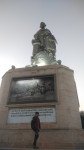
Gandhi Maidan
Some quick example text to build on the card title and make up the bulk of the card's content.
Go somewhere
Gandhi Sangrahalaya
Some quick example text to build on the card title and make up the bulk of the card's content.
Go somewhere
Golghar
Some quick example text to build on the card title and make up the bulk of the card's content.
Go somewhere
ISKCON Temple Patna
Some quick example text to build on the card title and make up the bulk of the card's content.
Go somewherein Other Cities