

Hajo
General information
-
Ideal Duration:
1 Full Day is sufficient to visit the major shrines and markets.Place Type:
Pilgrimage / Heritage / HistoricalEntry Fees:
Temple Entry: There is generally no entry fee for the main temples like Hayagriva Madhava, though donations are welcomed.
Powa Mecca: Entry is free for all visitors, but small contributions for the shrine's upkeep are common.Temple Entry: There is generally no entry fee for the main temples like Hayagriva Madhava, though donations are welcomed.
Powa Mecca: Entry is free for all visitors, but small contributions for the shrine's upkeep are common.
Parking Fees: A small fee of INR 20 to INR 40 might be charged for vehicles near major pilgrimage sites.Timing:
Regular Timings: 5:30 AM to 8:00 PM for the Hayagriva temple. Powa Mecca is open from sunrise to sunset.
Ideal Visit Time: Morning hours (7:00 AM to 10:00 AM) are best for rituals and avoiding the midday sun.
M...Regular Timings: 5:30 AM to 8:00 PM for the Hayagriva temple. Powa Mecca is open from sunrise to sunset.
Ideal Visit Time: Morning hours (7:00 AM to 10:00 AM) are best for rituals and avoiding the midday sun.
Market Timings: 9:00 AM to 7:00 PM for bell metal shops.Special Events:
Doul Utsav (Holi): The most significant festival in Hajo, celebrated with great fervor at the Hayagriva Madhava Temple during March.
Urs at Powa Mecca: An annual fair held at the mosque that attracts thousands of pilgrims from across the cou...Doul Utsav (Holi): The most significant festival in Hajo, celebrated with great fervor at the Hayagriva Madhava Temple during March.
Urs at Powa Mecca: An annual fair held at the mosque that attracts thousands of pilgrims from across the country to pay homage to the Sufi saint.Best Photo Spots:
Hayagriva Temple Entrance: The ancient stone staircase leading up the Monikut Hill is framed by trees and offers a majestic view.
Powa Mecca Minarets: The hilltop mosque provides a stunning silhouette against the sky, with panoramic views of...Hayagriva Temple Entrance: The ancient stone staircase leading up the Monikut Hill is framed by trees and offers a majestic view.
Powa Mecca Minarets: The hilltop mosque provides a stunning silhouette against the sky, with panoramic views of the Brahmaputra plains.
Madhab Pukhuri: Capturing the reflection of the temple in the pond along with the sacred turtles creates a very spiritual and serene image.
Bell Metal Workshops: Candid shots of artisans working with glowing molten metal capture the essence of Hajo's living heritage.Photo Gallery
Things To Do
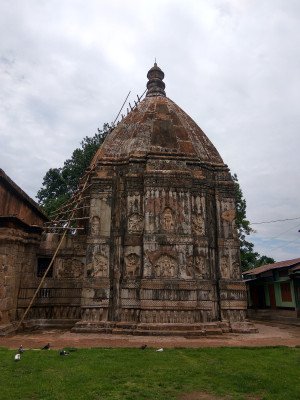 The Hayagriva Madhava Temple is a highly revered Hindu shrine located on the beautiful Manikut Hill in the town of Hajo, Assam. Dedicated to Lord Vishnu in his unique form of Hayagriva (the horse-headed deity, a symbol of knowledge and wisdom), the temple is a significant pilgrimage center for Hindus, particularly Vaishnavites, and holds immense spiritual importance for Buddhists as well. The current magnificent stone structure was constructed in 1583 AD by the Koch King Raghudeva Narayan, replacing an earlier temple that possibly dated back to the 6th or 10th-11th centuries under the Pala dynasty. This layered history makes it a fascinating site for archaeologists and historians. The main deity, the image of Hayagriva Madhava, is often likened to the idol of Lord Jagannath in Puri, Odisha, reinforcing its status as a major regional pilgrimage site. The syncretic nature of the temple is one of its defining features. For Hindus, it is a key Vaishnavite centre. For Buddhists from countries like Tibet and Bhutan, it is believed to be the spot where the Buddha attained Mahaparinirvana (Nirvana), and they often worship the main idol as a form of the Buddha. This peaceful coexistence of faiths on a single hilltop is a powerful testament to the region's cultural harmony. The temple complex includes a staircase leading up the hill, providing panoramic views of the surrounding landscape and the town of Hajo. At the base of the hill is the ancient Madhab Pukhuri (pond), home to a population of massive, sacred, and protected freshwater turtles. The temple's overall serene atmosphere, combined with its historical depth and architectural grandeur, makes it one of the most prominent spiritual destinations in North-East India.
 Kedareswar Temple, situated atop the Madanachala Hill, is one of the most revered Shiva temples in Assam and forms part of the "Pancha Tirtha" of Hajo. The temple is dedicated to Lord Shiva and is famous for enshrining a massive stone Shivalinga known as the "Swayambhu Linga" (self-manifested). Legend has it that the Linga is in the form of 'Ardhanarishwara' (half male, half female). The temple's location provides a panoramic view of the surrounding plains and the Brahmaputra river in the distance. Historically, it was rebuilt by the Ahom King Rajeswar Singha in 1753 after the original structure suffered damage. The atmosphere is deeply spiritual, filled with the scent of incense and the sound of temple bells. Devotees from across the country climb the stone steps to seek blessings. The temple is not only a religious site but also an architectural marvel that showcases the fusion of medieval Assamese and North Indian temple styles. It is a place where history, faith, and nature converge seamlessly.
 Deva Bhavana, also popularly known as the Ganesha Temple, is a pivotal Hindu shrine in the sacred town of Hajo, Assam. Hajo is famous for being a unique confluence of three religions—Hinduism, Buddhism, and Islam—and Deva Bhavana stands as an important element of the Pancha Tirtha, or five sacred sites, in the area. The temple is dedicated to Lord Ganesha, the elephant-headed god revered as the remover of obstacles. The existing structure was constructed by the Ahom King Pramatta Singha in 1744 AD. However, the temple's history is much older, as it is built around a colossal, naturally formed rock that strikingly resembles a reclining elephant. A large image of Lord Ganesha has been carved out of this elephant-shaped rock, making the idol and the temple itself unique in its composition and form. The name Deva Bhavana literally translates to "House of Gods" or "Abode of Deities." According to ancient local legends and traditions, this spot was historically considered the meeting place for all the Hindu deities of the region on special occasions, thus cementing its spiritual significance as a central hub for divine consultation. Visiting Deva Bhavana is often considered the traditional starting point for a pilgrimage to the other temples in Hajo, emphasizing its importance in the local religious hierarchy. The peaceful and serene environment of the temple complex offers a tranquil retreat for devotees and tourists alike. The simplicity of its architecture, combined with the profound religious belief associated with it, makes Deva Bhavana a fascinating spot. It is a place where history, folklore, and devotion intertwine, giving visitors a deep sense of the ancient spiritual heritage of Assam. The temple is situated in a slightly more level area compared to the hilltop temples like Hayagriva Madhava and Kedareswar, making it easily accessible for all visitors. This shrine is a proud testament to the royal patronage of the Ahom dynasty and the enduring religious practices of the region.
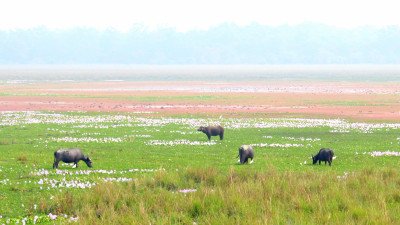 Pobitora Wildlife Sanctuary is a small but incredibly significant wildlife reserve located in the Morigaon district of Assam. It is world-famous for having the highest density of the Greater One-Horned Rhinoceros on the planet. Covering an area of only 38.8 SQ KM, it provides a more intimate wildlife experience compared to the larger Kaziranga. The sanctuary is situated in the floodplains of the Brahmaputra River, which results in a rich landscape of marshes, grasslands, and water bodies. This habitat is not only perfect for rhinos but also supports a large population of Asiatic Water Buffaloes, Wild Boars, and Leopards. For bird lovers, Pobitora is often called the 'Bharatpur of the East' because it attracts thousands of migratory birds during the winter months. The sanctuary is adjacent to the village of Mayong, which is historically known as the cradle of black magic in India. This adds a layer of mystery and intrigue to a visit to Pobitora. The forest department manages both jeep and elephant safaris, allowing tourists to get very close to the rhinos in their natural habitat. The small size of the park almost guarantees a rhino sighting within the first few minutes of the safari. It serves as an excellent day-trip destination from Guwahati or Hajo. The conservation efforts here by the local community and forest officials have seen the rhino population grow steadily over the years.
Dimu is a charming locality situated near Hajo that is known for its rural beauty and cultural roots. It serves as a bridge between the traditional lifestyles of Kamrup and the modernizing fringes of the district. The area is characterized by vast paddy fields, small water bodies, and a very peaceful village atmosphere. Visitors often pass through Dimu while traveling to other major shrines in Hajo, but it is a destination in itself for those who love "slow travel." The local people are very hospitable and deeply connected to their traditional Assamese customs. Dimu is also known for its small local markets where fresh organic produce is sold. The landscape changes beautifully with the seasons, from the bright green of the planting season to the golden hues of harvest. It offers a soul-soothing experience for those tired of urban congestion.
Pobitora Wildlife Sanctuary is a small but incredibly significant wildlife reserve located in the Morigaon district of Assam. It is world-famous for having the highest density of the Greater One-Horned Rhinoceros on the planet. Covering an area of only 38.8 SQ KM, it provides a more intimate wildlife experience compared to the larger Kaziranga. The sanctuary is situated in the floodplains of the Brahmaputra River, which results in a rich landscape of marshes, grasslands, and water bodies. This habitat is not only perfect for rhinos but also supports a large population of Asiatic Water Buffaloes, Wild Boars, and Leopards. For bird lovers, Pobitora is often called the 'Bharatpur of the East' because it attracts thousands of migratory birds during the winter months. The sanctuary is adjacent to the village of Mayong, which is historically known as the cradle of black magic in India. This adds a layer of mystery and intrigue to a visit to Pobitora. The forest department manages both jeep and elephant safaris, allowing tourists to get very close to the rhinos in their natural habitat. The small size of the park almost guarantees a rhino sighting within the first few minutes of the safari. It serves as an excellent day-trip destination from Guwahati or Hajo. The conservation efforts here by the local community and forest officials have seen the rhino population grow steadily over the years.
Dimu is a charming locality situated near Hajo that is known for its rural beauty and cultural roots. It serves as a bridge between the traditional lifestyles of Kamrup and the modernizing fringes of the district. The area is characterized by vast paddy fields, small water bodies, and a very peaceful village atmosphere. Visitors often pass through Dimu while traveling to other major shrines in Hajo, but it is a destination in itself for those who love "slow travel." The local people are very hospitable and deeply connected to their traditional Assamese customs. Dimu is also known for its small local markets where fresh organic produce is sold. The landscape changes beautifully with the seasons, from the bright green of the planting season to the golden hues of harvest. It offers a soul-soothing experience for those tired of urban congestion.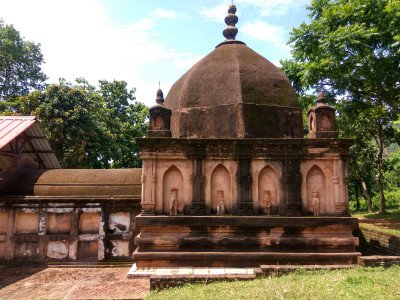 The Kamesware Temple is an ancient and highly revered Hindu shrine in Hajo, dedicated to Lord Shiva. It is believed to have been constructed during the reign of the powerful Ahom King Pramatta Singha in 1744 CE. While originally a Shiva temple, it is also associated with Lord Ganesha as it enshrines a giant, elephant-shaped natural rock figure of the deity, which is one of the temple's most unique features. The temple is a fine example of the archaeological beauty and the late medieval architectural style of Assam. Located on the Madanchala hill, the temple offers a serene and peaceful environment, providing visitors with a beautiful view of the surrounding countryside. Its religious and historical significance draws pilgrims and tourists alike. The presence of both Lord Shiva (the main deity, with a Shivlinga that reportedly resembles the one at Kedarnath) and the elephant-shaped Ganesha idol highlights the blend of different Hindu traditions within the complex. It stands as a testament to the cultural patronage of the Ahom rulers in the region. The temple is one of the many ancient sites in Hajo, a town famous for being a confluence of multiple religions. The tranquil setting and historical depth make a visit to Kamesware Temple a spiritually enriching experience.
@@Saraighat Bridge Details: The Saraighat Bridge is an iconic double-decker rail-cum-road bridge that spans the mighty Brahmaputra River, serving as a vital link between the northeastern states and the rest of mainland India. Inaugurated in the year 1963 by the then Prime Minister of India, Pandit Jawaharlal Nehru, the bridge is a masterpiece of modern engineering and a symbol of regional connectivity. It was the very first bridge to be built across the Brahmaputra River, which is known for its massive width and unpredictable currents. The bridge holds significant historical value as it is named after the historic Battle of Saraighat fought in 1671, where the Ahom General Lachit Borphukan successfully defended the region against the invading Mughal forces. The bridge consists of two levels; the lower deck is dedicated to a railway track, while the upper deck features a two-lane roadway for vehicular traffic. For many travelers entering the Northeast by train or road, the sight of the Saraighat Bridge is the first true welcome to the majestic beauty of Assam. The view from the bridge, especially during sunrise or sunset, is absolutely spectacular, offering a wide perspective of the shimmering river waters and the distant hills. Over the decades, it has stood as a resilient structure, weathering numerous monsoons and high-intensity floods. Due to its strategic and economic importance, it is often referred to as the "lifeline" of the Northeast. In recent years, a second bridge, known as the New Saraighat Bridge, has been constructed alongside the old one to ease the heavy traffic flow. However, the original Saraighat Bridge remains the most beloved landmark for the locals, carrying with it the stories of bravery and progress. It is not just a piece of infrastructure but a monument of national pride that showcases the capability of Indian engineers in the early years of independence. A walk or a slow drive across the bridge provides a sense of the sheer scale of the Brahmaputra, making it a must-visit spot for anyone traveling between Guwahati and Hajo.Show All
The Kanai Barashi Rock Inscription is one of the most significant archaeological sites in Assam, providing a stone-etched window into the medieval history of the region. Located on the northern bank of the Brahmaputra, these inscriptions date back to the 13th century and 17th century. The most famous among them records the defeat of the Turkish invader Muhammad-i-Bakhtiyar in 1206 AD by the King of Kamarupa. This site is not just a historical marker but also a linguistic treasure, as it contains some of the earliest specimens of the Assamese script. The boulders are situated in a serene environment, overlooking the mighty river, making it a place of both intellectual and aesthetic interest. For history buffs, it represents the resilience of the ancient Kamarupa kingdom against foreign invasions. The inscriptions are written in a mix of Sanskrit and early Assamese, providing vital clues to the evolution of the regional language. Despite its immense value, the site remains relatively quiet, offering a meditative atmosphere for those who visit. It is protected by the State Archaeology Department.
The Kamesware Temple is an ancient and highly revered Hindu shrine in Hajo, dedicated to Lord Shiva. It is believed to have been constructed during the reign of the powerful Ahom King Pramatta Singha in 1744 CE. While originally a Shiva temple, it is also associated with Lord Ganesha as it enshrines a giant, elephant-shaped natural rock figure of the deity, which is one of the temple's most unique features. The temple is a fine example of the archaeological beauty and the late medieval architectural style of Assam. Located on the Madanchala hill, the temple offers a serene and peaceful environment, providing visitors with a beautiful view of the surrounding countryside. Its religious and historical significance draws pilgrims and tourists alike. The presence of both Lord Shiva (the main deity, with a Shivlinga that reportedly resembles the one at Kedarnath) and the elephant-shaped Ganesha idol highlights the blend of different Hindu traditions within the complex. It stands as a testament to the cultural patronage of the Ahom rulers in the region. The temple is one of the many ancient sites in Hajo, a town famous for being a confluence of multiple religions. The tranquil setting and historical depth make a visit to Kamesware Temple a spiritually enriching experience.
@@Saraighat Bridge Details: The Saraighat Bridge is an iconic double-decker rail-cum-road bridge that spans the mighty Brahmaputra River, serving as a vital link between the northeastern states and the rest of mainland India. Inaugurated in the year 1963 by the then Prime Minister of India, Pandit Jawaharlal Nehru, the bridge is a masterpiece of modern engineering and a symbol of regional connectivity. It was the very first bridge to be built across the Brahmaputra River, which is known for its massive width and unpredictable currents. The bridge holds significant historical value as it is named after the historic Battle of Saraighat fought in 1671, where the Ahom General Lachit Borphukan successfully defended the region against the invading Mughal forces. The bridge consists of two levels; the lower deck is dedicated to a railway track, while the upper deck features a two-lane roadway for vehicular traffic. For many travelers entering the Northeast by train or road, the sight of the Saraighat Bridge is the first true welcome to the majestic beauty of Assam. The view from the bridge, especially during sunrise or sunset, is absolutely spectacular, offering a wide perspective of the shimmering river waters and the distant hills. Over the decades, it has stood as a resilient structure, weathering numerous monsoons and high-intensity floods. Due to its strategic and economic importance, it is often referred to as the "lifeline" of the Northeast. In recent years, a second bridge, known as the New Saraighat Bridge, has been constructed alongside the old one to ease the heavy traffic flow. However, the original Saraighat Bridge remains the most beloved landmark for the locals, carrying with it the stories of bravery and progress. It is not just a piece of infrastructure but a monument of national pride that showcases the capability of Indian engineers in the early years of independence. A walk or a slow drive across the bridge provides a sense of the sheer scale of the Brahmaputra, making it a must-visit spot for anyone traveling between Guwahati and Hajo.Show All
The Kanai Barashi Rock Inscription is one of the most significant archaeological sites in Assam, providing a stone-etched window into the medieval history of the region. Located on the northern bank of the Brahmaputra, these inscriptions date back to the 13th century and 17th century. The most famous among them records the defeat of the Turkish invader Muhammad-i-Bakhtiyar in 1206 AD by the King of Kamarupa. This site is not just a historical marker but also a linguistic treasure, as it contains some of the earliest specimens of the Assamese script. The boulders are situated in a serene environment, overlooking the mighty river, making it a place of both intellectual and aesthetic interest. For history buffs, it represents the resilience of the ancient Kamarupa kingdom against foreign invasions. The inscriptions are written in a mix of Sanskrit and early Assamese, providing vital clues to the evolution of the regional language. Despite its immense value, the site remains relatively quiet, offering a meditative atmosphere for those who visit. It is protected by the State Archaeology Department.Information
-
Why Famous:
Religious Confluence: Hajo is world-famous for the coexistence of Hindu, Muslim, and Buddhist shrines within a small radius.
Hayagriva Madhava: Famous as a site where Buddha is believed to have died, attracting international pilgrims.Religious Confluence: Hajo is world-famous for the coexistence of Hindu, Muslim, and Buddhist shrines within a small radius.
Hayagriva Madhava: Famous as a site where Buddha is believed to have died, attracting international pilgrims.
Bell Metal Craft: Renowned for the traditional Hajo bell metal industry producing unique utensils and artifacts.
Powa Mecca Mosque: Famous for the belief that visiting it grants one-fourth of the blessings of a trip to Mecca.
Historical Legacy: Famous for its association with the Ahom and Koch kings who patronized its many temples. -
Architecture:
Religious Architectural Styles: Hajo's architecture is dominated by stone masonry and brickwork from the medieval period.
Hayagriva Madhava Temple: The current stone structure was built by King Raghudeva Narayan in 1583. It features a large...Religious Architectural Styles: Hajo's architecture is dominated by stone masonry and brickwork from the medieval period.
Hayagriva Madhava Temple: The current stone structure was built by King Raghudeva Narayan in 1583. It features a large octagonal dome and a spacious Mandapa. The temple walls are adorned with rows of sculpted elephants, each approximately 1 foot in height.
Powa Mecca: This mosque exhibits classic Mughal-style architecture with domes and minarets.
Dimensions: The main sanctum of the Hayagriva temple sits on a platform with a height of about 30 feet, showcasing the engineering prowess of the Koch and Ahom dynasties. -
How To Reach:
By Air: The nearest airport is Lokpriya Gopinath Bordoloi International Airport (GAU) in Guwahati, which is about 36 KM from Hajo. Taxis are easily available at the airport for a direct drive to the pilgrimage center.
By Train: The nearest ...By Air: The nearest airport is Lokpriya Gopinath Bordoloi International Airport (GAU) in Guwahati, which is about 36 KM from Hajo. Taxis are easily available at the airport for a direct drive to the pilgrimage center.
By Train: The nearest major railway station is Guwahati Railway Station, located approximately 33 KM away. Travelers can take a bus or hire a cab from the station to reach Hajo within an hour.
By Road: Hajo is very well-connected by road to Guwahati via the Saraighat Bridge. State transport buses (ASTC) and private buses run frequently from Adabari and Paltan Bazar bus stands in Guwahati.
By Local Transport: Auto-rickshaws and cycle-rickshaws are the most common ways to move between the various temples and the mosque within the town. -
Weather and Best Time to Visit:
Winter Season: November to February is ideal as the weather is dry and pleasant for climbing the hillocks.
Summer Season: April to June can be quite hot and humid, but the festivals like Doul Utsav make it worth a visit.
Read MoreWinter Season: November to February is ideal as the weather is dry and pleasant for climbing the hillocks.
Summer Season: April to June can be quite hot and humid, but the festivals like Doul Utsav make it worth a visit.
Monsoon Season: July to September makes the landscape green, though heavy rains can make the stone stairs slippery.
Parts of Day: Early morning is the most spiritual time, while late afternoon offers cooler temperatures for walking.Near Tourist Places:
1. Sualkuchi (10 KM), 2. Guwahati (24 KM), 3. Madan Kamdev (35 KM), 4. Pobitora Wildlife Sanctuary (75 KM), 5. Nalbari (25 KM), 6. Barpeta (70 KM), 7. Chandubi Lake (60 KM), 8. Manas National Park (100 KM), 9. Deepor Beel (30 KM), 10. Kamakhya Temple (28 KM).Tourism Tips
-
Health & Safety: Stay hydrated while climbing the stairs to the temples. Wear modest clothing as these are active places of worship.
Packing Essentials: Light cotton clothes are best. Carry a hat and sunscreen for protection during the day...Health & Safety: Stay hydrated while climbing the stairs to the temples. Wear modest clothing as these are active places of worship.
Packing Essentials: Light cotton clothes are best. Carry a hat and sunscreen for protection during the day. Slip-on shoes are convenient for temples.
Accommodation: Most visitors stay in Guwahati and visit Hajo as a day trip, but basic lodges are available in the town.
Shopping Tip: Negotiate prices when buying bell metal items, but remember that these are handcrafted products requiring skill.
Reviews
FAQs
Hajo Itineray And Cost:-
Information about New and Updated Locations() of Assam Has Been Added :-
Card subtitle
Note:-
Information provided here in good Faith and for reference only.
Near Places
Agnigarh
Some quick example text to build on the card title and make up the bulk of the card's content.
Go somewhere
Barpeta
Some quick example text to build on the card title and make up the bulk of the card's content.
Go somewhere
Bhalukpong
Some quick example text to build on the card title and make up the bulk of the card's content.
Go somewhere
Diphu
Some quick example text to build on the card title and make up the bulk of the card's content.
Go somewhere
Goalpara
Some quick example text to build on the card title and make up the bulk of the card's content.
Go somewhere
Guwahati
Some quick example text to build on the card title and make up the bulk of the card's content.
Go somewhere
Haflong
Some quick example text to build on the card title and make up the bulk of the card's content.
Go somewhere
Hajo
Some quick example text to build on the card title and make up the bulk of the card's content.
Go somewhere
Majuli Island
Some quick example text to build on the card title and make up the bulk of the card's content.
Go somewhere
Nagaon
Some quick example text to build on the card title and make up the bulk of the card's content.
Go somewhere
Silchar
Some quick example text to build on the card title and make up the bulk of the card's content.
Go somewhere
Sualkuchi
Some quick example text to build on the card title and make up the bulk of the card's content.
Go somewhere
Tezpur
Some quick example text to build on the card title and make up the bulk of the card's content.
Go somewhere
Tinsukia
Some quick example text to build on the card title and make up the bulk of the card's content.
Go somewhere
Umananda Island
Some quick example text to build on the card title and make up the bulk of the card's content.
Go somewherein Other Cities