

Guwahati
General information
-
Ideal Duration:
Duration:
3 to 4 Days:Place Type:
Category:
Urban, Pilgrimage, and Wildlife:Entry Fees:
State Zoo: Entry is 50 INR for adults and 100 INR for cameras; foreign nationals pay higher rates around 500 INR.
Kalakshetra: Admission is 50 INR for adults, providing access to the entire cultural complex, museums, and open-air theaters....State Zoo: Entry is 50 INR for adults and 100 INR for cameras; foreign nationals pay higher rates around 500 INR.
Kalakshetra: Admission is 50 INR for adults, providing access to the entire cultural complex, museums, and open-air theaters.Timing:
Regular Timings: Most city attractions are open from 10:00 AM to 6:00 PM; Kamakhya Temple opens early at 5:30 AM.
Ideal Visit Time: Early morning for temples and late evening for river cruises to enjoy the best weather and scenic beauty of...Regular Timings: Most city attractions are open from 10:00 AM to 6:00 PM; Kamakhya Temple opens early at 5:30 AM.
Ideal Visit Time: Early morning for temples and late evening for river cruises to enjoy the best weather and scenic beauty of the city.Special Events:
Ambubachi Mela: This massive religious fair at Kamakhya Temple in June celebrates the annual menstruation of the Goddess, attracting millions of pilgrims.
Bihu Festivals: The city celebrates Bhogali, Rongali, and Kongali Bihu with immense f...Ambubachi Mela: This massive religious fair at Kamakhya Temple in June celebrates the annual menstruation of the Goddess, attracting millions of pilgrims.
Bihu Festivals: The city celebrates Bhogali, Rongali, and Kongali Bihu with immense fervor, featuring public performances and traditional food fairs.Best Photo Spots:
Kamakhya Viewpoint: The road leading up to the temple offers stunning aerial views of the city and the winding Brahmaputra river.
Brahmaputra Riverfront: The sunset views from the banks near Uzan Bazaar provide a perfect silhouette of count...Kamakhya Viewpoint: The road leading up to the temple offers stunning aerial views of the city and the winding Brahmaputra river.
Brahmaputra Riverfront: The sunset views from the banks near Uzan Bazaar provide a perfect silhouette of country boats against the orange sky.
Umananda Island: The lush greenery and ancient rock sculptures on the island offer diverse frames for travel and nature photography.Photo Gallery
Things To Do
 The ISKCON Guwahati Temple, officially known as Shri Shri Rukmini Krishna Temple, is a significant spiritual landmark in Guwahati, Assam. Established as part of the worldwide International Society for Krishna Consciousness (ISKCON) movement, founded by A.C. Bhaktivedanta Swami Prabhupada, this temple provides a serene and spiritually uplifting environment. The primary deities worshipped here are Lord Krishna and his consort Shri Rukmini, which is a unique feature as most other ISKCON temples outside of Vrindavan feature Radha and Krishna. This spiritual center is more than just a place of worship; it is a hub for cultural, educational, and social activities, promoting the teachings of the Bhagavad Gita and Srimad Bhagavatam. Visitors are instantly greeted by a tranquil atmosphere, characterized by the melodious chanting of the Hare Krishna Mahamantra and the sweet fragrance of incense. The temple is situated in the bustling Ulubari area, yet its location atop the Sarania Hills offers a peaceful escape and a vantage point for viewing the surrounding cityscape. The community kitchen, which serves prasadam (blessed vegetarian food), is an integral part of the temple's service to humanity, reflecting the core Vaishnava principle of service and devotion. The temple complex includes a main prayer hall, a gift shop, and facilities for discourses and workshops, making it a comprehensive destination for spiritual seekers, cultural enthusiasts, and tourists alike. It plays a vital role in introducing the ancient Vedic culture and philosophy to the modern world, making it a "must-visit" place in Guwahati for anyone seeking peace and spiritual solace.
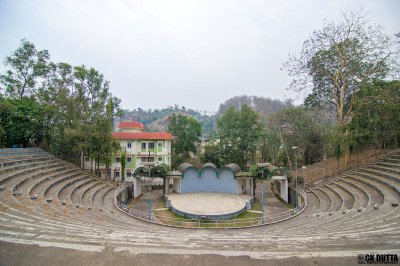 Srimanta Sankaradeva Kalakshetra, commonly known as the Kalakshetra, is a massive non-profit cultural institution in Guwahati, Assam, dedicated to preserving and promoting the rich cultural heritage of Assam and the entire Northeast region of India. Established in the 1990s, it is named after the great 15th-16th century Assamese polymath, saint-scholar, poet, playwright, and social-religious reformer, Mahapurusha Srimanta Sankardeva, who played a pivotal role in the cultural and spiritual upliftment of the region. The institution serves as a living memorial and a dynamic hub for the arts. The sprawling complex is divided into several sections, each focusing on different facets of the region's diverse culture and history. The Central Museum is a key attraction, housing a rich collection of artifacts, traditional costumes, musical instruments, weaponry, and historical relics representing the various ethnic communities of Assam. The Lalit-Kala Bhavan showcases contemporary and traditional art and sculptures. For literary enthusiasts, the Sahitya Bhavan functions as a library and archive, preserving rare books and manuscripts related to Assamese literature and history. The complex also features an Open-Air Theatre, which is one of the largest in the region, capable of hosting grand cultural performances, festivals, and folk dances like the Bihu. A unique element is the Artist's Village (Shilpgram), a meticulously crafted replica of a traditional Assamese village, offering visitors a glimpse into the rural life and indigenous architectural styles of Assam. Furthermore, a dedicated Bhupen Hazarika Museum honors the legendary Assamese singer and composer. The entire complex is beautifully landscaped with scenic gardens, creating a peaceful and informative environment for visitors to immerse themselves in the deep cultural narrative of the region. It is often regarded as the largest cultural congregation center in Northeast India.
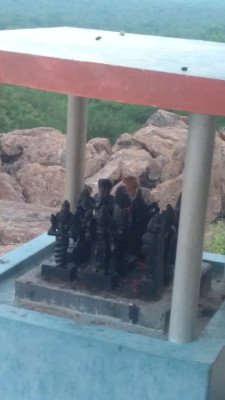 The Navagraha Temple is a unique and ancient Hindu temple perched atop the Chitrachal Hill in the southeastern part of Guwahati. The temple is dedicated to the Navagrahas, which are the nine major celestial bodies (planets) of Hindu cosmology. Built in the 18th century by the great Ahom King Rajeswar Singha, the site is not just a place of worship but historically served as a center for the study of astronomy and astrology. Inside the main sanctum, there are nine Shivalingas, each representing one of the planets: Surya (Sun), Chandra (Moon), Mangala (Mars), Budha (Mercury), Guru (Jupiter), Shukra (Venus), Shani (Saturn), Rahu (North Lunar Node), and Ketu (South Lunar Node). The central Shivalinga is larger and represents the Sun. The temple's historical significance is immense, making it a crucial spot for devotees and tourists interested in ancient Indian science and spirituality. The hill offers a serene environment, a peaceful escape from the city's hustle. This temple is considered highly auspicious for those seeking to mitigate planetary afflictions in their lives, making it a powerful pilgrimage site. The surrounding area once contained an excavated tank called Silpukhuri to supply water to devotees, further highlighting the planning involved in establishing this sacred site. The temple embodies a beautiful confluence of religious belief and rudimentary astronomical knowledge.
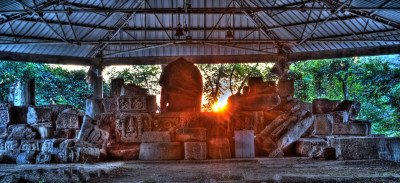 @@Historical Background: Madan Kamdev is a significant archaeological site located on a small hillock called Dewangiri in Baihata Chariali. Often referred to as the "Khajuraho of Assam," this site contains the ruins of a massive temple complex dating back to the 10th to 12th Century during the Pala Dynasty of the ancient Kamrupa Kingdom. The site remained hidden under dense forest cover for centuries until it was rediscovered in the late 1970s. The ruins consist of at least 13 different temples dedicated to Lord Shiva, with the main temple housing an idol of Madan (the God of Love) and his wife Rati. The architectural style is unique to the Kamrupi school of art, blending indigenous elements with North Indian temple designs. The most striking feature of these ruins is the abundance of erotic stone carvings, depicting various acts of love and fertility, similar to those found in Khajuraho. Apart from erotic art, the site features intricate sculptures of deities like Sun God, Ganesha, and Vidhyadharas. The location is incredibly peaceful, surrounded by the Madan Kuri river and vast green wetlands. It serves as a testament to the advanced artistic and engineering skills of the medieval Assamese people. Today, it is a protected site under the Archaeological Survey of India (ASI) and continues to intrigue historians and spiritual seekers with its mysterious past.
 The Brahmaputra River Cruise is an essential experience in Guwahati, offering a unique perspective of the city and the vast river, which is one of the few male rivers in the world. The short cruises (typically 90 minutes to 2 hours) run primarily in the late afternoon and evening, focusing on a scenic sail past major landmarks. The highlight is the sunset cruise, where the sky transforms into a canvas of vibrant colors over the expansive river. The dinner cruises offer a delightful buffet meal with live cultural entertainment, often featuring traditional Assamese music and the energetic Bihu dance. As the ship glides along, you can witness the Umananda Temple (Peacock Island) from a distance and the glittering city skyline coming to life after dark. It's a blend of serenity, cultural immersion, and modern leisure. Longer, multi-day cruises (4 to 10 nights) are also available, departing from Guwahati and sailing upstream to places like Kaziranga National Park, Majuli River Island, and Sualkuchi (the silk village), providing an in-depth exploration of Assam’s wildlife and cultural heritage. The cruise vessels are typically well-equipped, offering both open upper decks for panoramic views and enclosed lower decks, often with air conditioning and dining facilities. This activity provides a tranquil escape from the bustling city, allowing travelers to appreciate the Brahmaputra's significance as the lifeline of Assam.
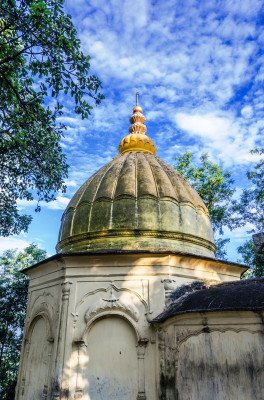 The Bhubaneswari Temple is a serene and highly revered Hindu shrine located on the Nilachal Hill, but situated approximately 165 feet higher than the more famous Kamakhya Temple. Dedicated to Goddess Bhubaneswari, one of the ten Mahavidyas (great wisdom goddesses) in the Tantric tradition, the temple symbolizes the cosmic mother, the ruler of the entire universe. The temple offers a spiritual retreat from the busy pace of the city below. Many pilgrims consider their visit to the Kamakhya Temple incomplete without paying homage at this elevated shrine. The air is noticeably calmer and cooler, fostering a powerful sense of tranquility that complements the intense spiritual energy of the Nilachal Hills. While its exact date of origin is lost to history, the current architectural style suggests construction or reconstruction around the 17th-18th century, placing it firmly within the Ahom era's patronage of Shakti worship. The temple's primary draw, aside from its spiritual significance, is the absolutely breathtaking, unobstructed, bird's-eye view of the entire Guwahati city, the vast valley, and the majestic, sprawling Brahmaputra River. This fusion of divine tradition and stunning natural beauty makes it an essential stop. The peaceful, whitewashed structure contrasts beautifully with the green hills and the blue river in the distance, providing a perfect backdrop for contemplation and prayer. It is not just a place of worship but a historical and geographical landmark that offers a unique perspective on the region. The goddess is believed to manifest as the primordial power that creates, sustains, and destroys the cosmos, offering a profound spiritual connection to those who seek her blessings.
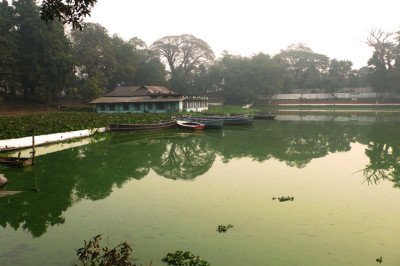 Dighali Pukhuri is a large, man-made rectangular pond, or tank, located in the heart of Guwahati, near the Pan Bazaar area. The name itself is derived from the Assamese words 'Dighol' (meaning long) and 'Pukhuri' (meaning pond/lake). This historic tank holds immense significance, with its origins tracing back to the ancient period. Legend suggests it was excavated by the powerful king Bhagadatta during the Mahabharata era for a military purpose, possibly to serve as a naval harbor connecting to the Brahmaputra River. Historical records confirm that the kings of the ancient Kamarupa kingdom utilized the pond for military exercises. Today, the pond and its surrounding area have been beautifully developed into the Dighali Pukhuri Park, transforming it into a popular recreational hub. It serves as a peaceful urban oasis for locals and tourists, offering boating facilities and a pleasant environment for leisurely strolls. The park, with its well-maintained pathways, lush greenery, and comfortable seating areas, provides a welcome respite from the city's commotion. It perfectly blends historical legacy with modern recreational utility, attracting families, couples, and nature lovers alike.Show All
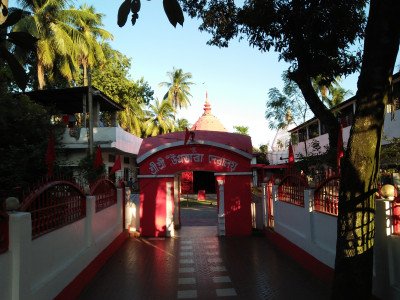 @@ Shakti Peeth: The Ugro Tara Temple is a highly revered shrine dedicated to Goddess Ugratara, often identified as a ferocious form of the Divine Mother. @@ Legend: It is believed that the navel of Goddess Sati fell at this exact spot, making it one of the powerful Shakti Peethas in India. @@ Unusual Deity: Unlike traditional temples, there is no idol here; instead, a small pit filled with water in the inner sanctum is worshipped as the deity. @@ Spiritual Aura: The temple is known for its intense spiritual energy and its historical connection to both Hindu Tantric practices and ancient Buddhist traditions :
Information
-
Why Famous:
Spiritual Significance: Guwahati is famous for the Kamakhya Temple, one of the 51 Shakti Peethas and a global center for Tantra.
Smallest River Island: It houses Umananda Island, the smallest inhabited river island in the world, located rig...Spiritual Significance: Guwahati is famous for the Kamakhya Temple, one of the 51 Shakti Peethas and a global center for Tantra.
Smallest River Island: It houses Umananda Island, the smallest inhabited river island in the world, located right in the middle of the Brahmaputra.
Cultural Capital: The city is the heart of Assamese culture, hosting the Srimanta Sankardev Kalakshetra, which preserves the state's artistic heritage. -
Architecture:
Architecture Style and Dimensions: The city features the unique Nilachala style of architecture, a hybrid of North Indian Nagara and Saracenic (Mughal) influences.
Kamakhya Temple:
The main temple consists of fiv...Architecture Style and Dimensions: The city features the unique Nilachala style of architecture, a hybrid of North Indian Nagara and Saracenic (Mughal) influences.
Kamakhya Temple:
The main temple consists of five chambers: Garbhagriha, Antarala, Jagamohan, Bhogmandir, and Natmandir.
Temple Dimensions: The Garbhagriha is a small cave-like space below ground level, while the Natmandir has a shell-shaped roof similar to the Rang Ghar in Sivasagar, showcasing Ahom-era aesthetics.
Umananda Temple: Located on Peacock Island, this 17th-century structure was built by Ahom King Gadadhar Singha and features exquisite Assamese craftsmanship and rock carvings.
Tirupati Balaji: This modern temple spans over 2 acres and follows the classic South Indian Dravidian style with white marble and intricate gopurams. -
How To Reach:
By Air: Guwahati is served by the Lokpriya Gopinath Bordoloi International Airport, connected to all major Indian cities and international destinations.
By Train: Guwahati Railway Junction is the busiest in the region, offering direct train...By Air: Guwahati is served by the Lokpriya Gopinath Bordoloi International Airport, connected to all major Indian cities and international destinations.
By Train: Guwahati Railway Junction is the busiest in the region, offering direct trains to Kolkata, Delhi, Mumbai, and Bangalore.
By Road: The city is well-connected via National Highways 27 and 37, with regular luxury and sleeper buses from neighboring states.
By Local Transport: The city has an extensive network of city buses, app-based cabs (Ola/Uber), and e-rickshaws for easy commuting within city limits. -
Weather and Best Time to Visit:
Winter Season (November to February): The weather is cold and dry, perfect for sightseeing and enjoying outdoor activities without the humidity.
Spring Season (March to April): The time of Rongali Bihu when the city is festive and the weath...Winter Season (November to February): The weather is cold and dry, perfect for sightseeing and enjoying outdoor activities without the humidity.
Spring Season (March to April): The time of Rongali Bihu when the city is festive and the weather is pleasantly warm before the monsoons. -
Near Tourist Places:
Near Places: Pobitora (45 KM), Hajo (35 KM), Sualkuchi (35 KM), Madan Kamdev (40 KM), Chandubi Lake (65 KM), Shillong (100 KM), Goalpara (140 KM), Cherrapunji (150 KM), Tezpur (180 KM), Manas National Park (140 KM).
Tourism Tips
-
Health & Safety: Be cautious with street food and carry an umbrella as rain can be unpredictable even outside the monsoon season.
Packing: Bring comfortable walking shoes, a sun hat for day trips, and modest clothing for visiting the numero...Health & Safety: Be cautious with street food and carry an umbrella as rain can be unpredictable even outside the monsoon season.
Packing: Bring comfortable walking shoes, a sun hat for day trips, and modest clothing for visiting the numerous sacred temples.
Accommodation: Guwahati offers a wide range of stay options, from luxury 5-star hotels to budget-friendly transit lodges near the railway station.
Digital Connectivity: The city has excellent 4G/5G connectivity, but it is always good to download offline maps for exploring the outskirts and hills.
Reviews
FAQs
Guwahati Itineray And Cost:-
Information about New and Updated Locations() of Assam Has Been Added :-
Card subtitle
Note:-
Information provided here in good Faith and for reference only.
Near Places
Agnigarh
Some quick example text to build on the card title and make up the bulk of the card's content.
Go somewhere
Barpeta
Some quick example text to build on the card title and make up the bulk of the card's content.
Go somewhere
Bhalukpong
Some quick example text to build on the card title and make up the bulk of the card's content.
Go somewhere
Diphu
Some quick example text to build on the card title and make up the bulk of the card's content.
Go somewhere
Goalpara
Some quick example text to build on the card title and make up the bulk of the card's content.
Go somewhere
Guwahati
Some quick example text to build on the card title and make up the bulk of the card's content.
Go somewhere
Haflong
Some quick example text to build on the card title and make up the bulk of the card's content.
Go somewhere
Hajo
Some quick example text to build on the card title and make up the bulk of the card's content.
Go somewhere
Majuli Island
Some quick example text to build on the card title and make up the bulk of the card's content.
Go somewhere
Nagaon
Some quick example text to build on the card title and make up the bulk of the card's content.
Go somewhere
Silchar
Some quick example text to build on the card title and make up the bulk of the card's content.
Go somewhere
Sualkuchi
Some quick example text to build on the card title and make up the bulk of the card's content.
Go somewhere
Tezpur
Some quick example text to build on the card title and make up the bulk of the card's content.
Go somewhere
Tinsukia
Some quick example text to build on the card title and make up the bulk of the card's content.
Go somewhere
Umananda Island
Some quick example text to build on the card title and make up the bulk of the card's content.
Go somewherein Other Cities