General information
Photo Gallery
Things To Do
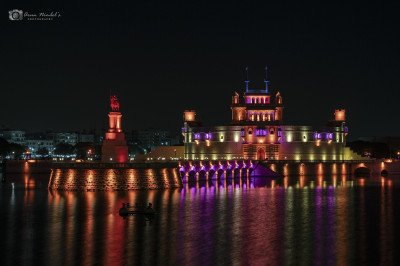
@@Historical Origin: Also known as Lakhota Talav, the lake is a large, man-made water body in the center of Jamnagar, constructed in the mid-19th century by Jam Ranmal II. It was designed primarily as a water reservoir to combat drought, showcasing the progressive nature of the Nawanagar rulers. @@Recreational Hub: Today, it serves as the most popular recreational spot in the city. The entire perimeter has been developed into a well-maintained promenade with paved walking tracks, seating, and food stalls, attracting joggers, families, and tourists. @@Ecological Importance: The lake is home to numerous aquatic species and is a significant urban birdwatching site, especially during the Winter season. Over 75 species of birds have been recorded here, with many migratory birds making it their temporary home, offering a breath of fresh air amidst the city bustle. @@Cultural Node: The presence of the Lakhota Fort in its center and the Bala Hanuman Temple on its bank gives it immense cultural and historical value, embedding it deeply into the city's identity.

@@A Spiritual and Historical Hub: Raisi Shah's Temple, also often referred to as a Derasar, stands as a pivotal religious site for the Swetambar Jain community in Jamnagar. It is one of a cluster of four highly revered marble Jain temples in the city, established by influential community figures like Vardhaman Shah, Raisi Shah, Sheth, and Vasupujya Swami. This particular temple is a shining example of the dedication and philanthropic efforts of the Jain merchant community, which has historically played a significant role in the economic and cultural development of Gujarat. The construction date of this temple, along with the others in the group, is generally traced back to the city's early history, sometime after the founding of Nawanagar by Jam Rawal in 1540 A.D. The temple serves not only as a place of Puja (worship) but also as a cultural and educational center, promoting the core Jain tenets of Ahimsa (non-violence), Aparigraha (non-possessiveness), and Anekantavada (multi-perspectivism). The entire structure is predominantly constructed from pure, white marble, a material favored in Jain temple architecture for its purity and luminescence, which is beautifully maintained through continuous, meticulous cleaning. Inside, the temple houses a Mula Nayak (main idol), a deity figure that is the central focus of devotion for the thousands of pilgrims and devotees who visit annually. The sheer artistry involved in the temple’s construction reflects the height of the M?ru-Gurjara style of architecture, which is prevalent across Gujarat and Rajasthan. The experience of visiting is highly immersive, immediately transforming from the bustling city outside to an atmosphere of deep tranquility and spiritual peace inside the marble halls. The rituals performed, including the saffron application (Kesar) to the idol by devotees whose wishes have been fulfilled, highlight the living, vibrant traditions still strongly associated with this ancient place of worship, cementing its status as an architectural and spiritual jewel of Jamnagar. Its enduring presence, despite centuries of history and change, marks it as a powerful symbol of faith and cultural preservation in the region.

@@Historical Significance: The foundation of the current university traces back to a charitable hospital and the Dhanvantri Mandir complex, which was built under the personal supervision of Dr. Pranjivan Manekchand Mehta, Chief Medical Officer of Guru Govindsingh Hospital in 1944. @@Evolution to University: After India's independence, the facility gained prominence and was officially established as the Gujarat Ayurved University (GAU) on January 5, 1965, through a legislative Act of the Government of Gujarat. This makes it a pioneer statutory university in the field. @@Mission and Scope: It is a dedicated center for teaching, training, and high-level clinical and experimental research in ancient Ayurveda, Ayurvedic Pharmacy, Yoga, and Naturopathy. The university's existence consolidated three major educational and research establishments, including the prestigious Institute of Post Graduate Teaching and Research in Ayurveda (IPGT&RA), the oldest and premier research institute of Ayurveda in India. The institution is known globally for upholding and advancing the ancient science of life, drawing students and researchers from various countries like Sri Lanka, Nepal, and Mauritius. @@Modern Relevance: The institution has been integrated into the Institute of Teaching and Research in Ayurveda (ITRA), which has been declared an 'Institute of National Importance' by the Parliament of India, signifying its crucial role in the national and international promotion of AYUSH (Ayurveda, Yoga & Naturopathy, Unani, Siddha, and Homoeopathy) systems. The campus also houses the historical Dhanvantri Mandir (temple) dedicated to Lord Dhanvantari, the physician of the gods, adding a spiritual dimension to the academic environment. Its commitment to research, including digitizing thousands of ancient palm-leaf manuscripts, solidifies its position as a global repository of Ayurvedic knowledge. This vast complex continues to be a hub for both public and academic activities, emphasizing holistic wellness.
Sat Rasta Circle is the pulsating heart of Jamnagar, serving as the primary traffic junction where seven major roads converge. This iconic landmark is more than just a transit point; it is a symbol of the city's urban planning and a meeting ground for locals and tourists alike. The circle features a beautifully maintained garden and a central statue that honors the royal heritage of the Nawanagar state. Surrounded by bustling markets, upscale cafes, and essential government buildings, it represents the modern face of the city. Visitors often find themselves passing through this circle to reach various historical sites, making it a central reference point for any itinerary. The area is particularly vibrant during the evening when the lights illuminate the junction and the local crowds gather for street food and social interaction. It serves as a bridge between the old-world charm of the inner city and the developing suburban landscape. Whether you are looking for local handicrafts or a quick snack, the vicinity of Sat Rasta Circle offers an authentic slice of Jamnagari life. It remains a busy yet organized hub that showcases the transition of Jamnagar into a contemporary urban center while keeping its traditions alive.

@@Urban Locality: Pavanchakki (literally "Windmill") is not a single tourist monument but an old, bustling locality and a commercial area in Jamnagar, primarily famous for a specific junction and its historical connection to a large water pumping system. The area's name is derived from a very old, possibly historical, windmill or wind-powered pump that was once a prominent landmark. @@Commercial Hub: The area is now known for its diverse businesses, including local architecture firms, interior designers, small-scale industries, and residential colonies, making it a key junction for local city life and commerce. @@Evolution of Name: The retention of the name Pavanchakki in the modern context is a testament to the structure's historical importance as a landmark in the city's early infrastructure and water management. It is a place name rather than a structured tourist site. @@Local Significance: It is a vibrant, crowded place where locals conduct their daily business, offering a look into the real, working urban environment of Jamnagar.
@@A Coastal Retreat and Natural Haven: Rozi Port is not a grand historical monument but rather a highly picturesque and strategically important coastal location on the Gulf of Kutch, serving as one of the main departure points for visiting the Marine National Park and its associated islands, such as Pirotan Island. It sits adjacent to the more commercial and industrial Bedi Port, which is a bustling center for maritime trade. Rozi Port, however, retains a tranquil, rugged charm, primarily functioning as a smaller fishing jetty and a favored spot for local residents seeking a natural escape. The location offers a unique, dual-sided sea view, where visitors can witness the vast expanse of the ocean on both sides, a rare and captivating experience created by the coastal geography of the port area. Historically, the entire port complex was vital to the Princely State of Nawanagar, which relied heavily on maritime trade, especially the export of brass products for which Jamnagar is famous. While modern Bedi Port continues this commercial legacy, Rozi Port has transitioned into a popular spot for leisure and nature appreciation. The shallow coastal waters and mudflats around the port, especially during low tide, become an important feeding ground for a variety of coastal and migratory birds. This dual attraction—maritime activity and natural beauty—makes it a unique destination. Visitors often spend time watching the fishing trawlers, local boats, and the ebb and flow of the tide, which dramatically changes the landscape. The atmosphere is one of serene, open space, making it a perfect spot for unwinding and soaking in the raw natural beauty of the Gujarat coastline, particularly known for its mesmerizing sunrises and sunsets over the water. The simplicity and openness of the port offer a stark contrast to the historical and architectural sites within the city.
The BAPS Shri Swaminarayan Mandir in Jamnagar is a stunning and relatively modern architectural masterpiece built by the BAPS (Bochasanwasi Akshar Purushottam Swaminarayan Sanstha) organization. Dedicated to Bhagwan Swaminarayan and his lineage of spiritual successors, the Mandir serves as a center for worship, community service, and cultural activities. Built using traditional methods and materials, the mandir showcases incredible craftsmanship with intricately carved pink stone and marble. The atmosphere inside the complex is one of profound peace and devotion. It houses beautiful idols (murtis) of various deities, including Shri Nilkanth Varni (a form of Bhagwan Swaminarayan), Shri Radha-Krishna, and others. The temple complex is meticulously maintained and offers a clean, serene environment for visitors to meditate and learn about the Swaminarayan faith and Hindu culture. It stands as a beacon of spirituality and a proud display of modern Indian temple architecture. The complex often includes a Haveli (cultural center) and facilities for devotees.
The Solarium, also known as the Ranjit Institute of Poly-Radio Therapy, is a unique medical monument in Jamnagar. Built in 1934 by Maharaja Ranjitsinhji, it was designed by French engineer Dr. Jean Saidman. This extraordinary structure was one of only three in the world, and today, it is the only one still standing. The Solarium was designed to treat patients using solar radiation for diseases like tuberculosis and skin conditions. The top part of the building is a revolving tower that follows the movement of the sun throughout the day to ensure maximum exposure to sunlight. The rotation is achieved through a complex mechanism that was cutting-edge for its time. Inside, there are special treatment rooms with rotating beds and filter glasses that concentrate specific wavelengths of light. While it is no longer used for medical purposes, it stands as a testament to the progressive thinking of the Jamnagar royalty and their investment in science. The building's architecture is a mix of industrial utility and colonial style. It attracts historians, architects, and curious tourists who want to see this "Solar Wonder." The surrounding area is part of the medical college campus, adding to the scholarly atmosphere. It is a rare gem that showcases the intersection of medicine, engineering, and astronomy in the early 20th century.
Information
Tourism Tips
Reviews
Jamnagar-Gujarat-India Tourism:-
Information about New and Updated Locations() of Has Been Added :-
Card subtitle
Note:-
Information provided here in good Faith and for reference only.
All information and pictures will be updated soon, please keep visiting.