

Jhajjar
General information
-
Ideal Duration:
1 DayPlace Type:
Historical & NatureEntry Fees:
Bhindawas Sanctuary: A nominal fee of 10 to 20 INR is charged for entry and cameras.
Gurukul Museum: Entry is usually Free, but donations are encouraged for the preservation of artifacts. ...Bhindawas Sanctuary: A nominal fee of 10 to 20 INR is charged for entry and cameras.
Gurukul Museum: Entry is usually Free, but donations are encouraged for the preservation of artifacts.Timing:
Regular Timings: Sanctuary is open from 6:00 AM to 5:00 PM. Museum hours are 9:00 AM to 5:00 PM.
Ideal Visit Time: November to February is the best time to see migratory birds and enjoy the weather. ...Regular Timings: Sanctuary is open from 6:00 AM to 5:00 PM. Museum hours are 9:00 AM to 5:00 PM.
Ideal Visit Time: November to February is the best time to see migratory birds and enjoy the weather.Special Events:
Beri Mela: A massive fair held twice a year during Navratri at the Bhimeshwari Devi Temple.
Independence Day: Celebrated with great fervor given the city's strong military history and patriotic spirit. ...Beri Mela: A massive fair held twice a year during Navratri at the Bhimeshwari Devi Temple.
Independence Day: Celebrated with great fervor given the city's strong military history and patriotic spirit.Best Photo Spots:
Bhindawas Lake: The silhouettes of birds against the rising sun provide award-winning photography opportunities.
Tomb of Bua Hasan: The weathered bricks and domes offer a melancholic yet beautiful subject for photos.
Read MoreBhindawas Lake: The silhouettes of birds against the rising sun provide award-winning photography opportunities.
Tomb of Bua Hasan: The weathered bricks and domes offer a melancholic yet beautiful subject for photos.
Pratapgarh Farms: The colorful traditional costumes and rural setups are perfect for fun, cultural snapshots.Photo Gallery
Things To Do
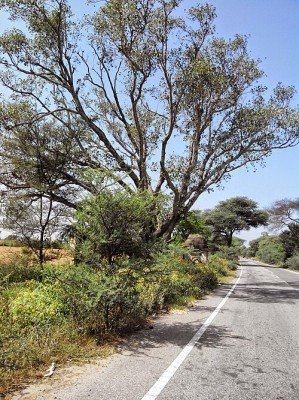 @@Historical Context and Foundation: The $mathbfJhajjar}$ $mathbfFort$ is a historical landmark, though its precise original construction date is $mathbfunclear}$, it is recognized as a significant structure reflecting the region's $mathbfmartial}$ history, having been controlled by various rulers including $mathbfMughals}$, $mathbfMarathas}$, and later the $mathbfNawab}$ of Jhajjar during the $mathbfBritish}$ $mathbfEra}$. The fort was a critical administrative and $mathbfmilitary}$ $mathbfstronghold}$. The town of $mathbfJhajjar}$ itself is believed to have been founded by $mathbfChahaju}$ Jat in the medieval era.@@The $mathbfNawab}$ $mathbfof}$ Jhajjar: The fort's most prominent historical period is linked to the $mathbfNawab}$ of Jhajjar (Abdul Rehman Khan), who was a key figure during the $mathbf1857}$ $mathbfUprising}$. The fort served as his main $mathbfresidence}$ and $mathbfbase}$ of $mathbfpower}$. After the $mathbfuprising}$ failed, the $mathbfNawab}$ was $mathbfexecuted}$ by the $mathbfBritish}$, and the $mathbffort}$ was $mathbflargely}$ $mathbfdemolished}$ or $mathbfallowed}$ to fall into ruins as a punitive measure.@@Current State: Today, the $mathbfJhajjar}$ $mathbfFort}$ exists largely in $mathbfruins}$, with only $mathbfvestiges}$ of its former $mathbframparts}$, $mathbfwalls}$, and $mathbfgateways}$ surviving. Much of the original structure was either $mathbfdismantled}$ or built over. The site serves as a physical reminder of the turbulent $mathbf19th}$-century history and the transition from $mathbfprincely}$ $mathbfrule}$ to $mathbfBritish}$ $mathbfcontrol}$.@@Significance for Visitors: Although not a fully preserved monument, its $mathbfhistorical}$ $mathbfsignificance}$ and the $mathbfstories}$ of $mathbfcourage}$ and $mathbftragedy}$ associated with the $mathbf1857}$ $mathbfrevolt}$ make it an important, if $mathbfmelancholy}$, site for history enthusiasts.
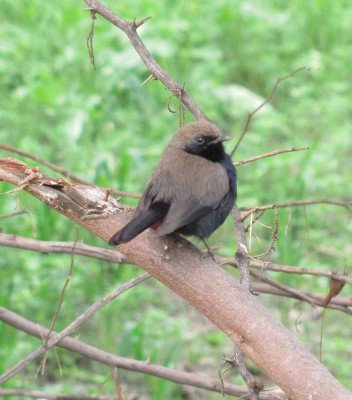 Bhindawas Bird Sanctuary is the largest wetland in the state of Haryana and was officially designated as a Ramsar Site in 2021. This ecological haven spans over 1074 acres of land and serves as a crucial habitat for over 250 species of resident and migratory birds. The sanctuary was originally established to store excess water from the Jawaharlal Nehru Canal, but it soon transformed into a flourishing ecosystem. During the winter months, specifically from November to February, the lake becomes a vibrant tapestry of colors as thousands of birds arrive from Siberia, Europe, and Central Asia. Visitors can witness the majestic Sarus Crane, Greater Flamingo, and various species of ducks and storks. The serene environment, surrounded by lush green fields and acacia trees, offers a peaceful retreat for nature lovers and wildlife photographers. The sanctuary is not just a water body; it is a complex network of small islands and marshy areas that provide nesting sites for local birds. The government of Haryana has worked extensively to maintain the biodiversity of this region, ensuring that the water levels are stable enough to support the avian population throughout the year. As you walk along the 12 KM peripheral embankment, you can hear the rhythmic calls of the Bar-headed Geese and the gentle rustle of the reeds. It is a place where time seems to slow down, allowing one to connect deeply with the natural world. The sanctuary also supports other wildlife like Nilgai, Jackals, and several species of reptiles, making it a comprehensive biodiversity hotspot.
 Pratapgarh Farms is an ethnic village resort that offers a comprehensive rural experience, making it one of the most popular day-picnic spots near Delhi-NCR. It is designed to look like a traditional Haryanvi village, complete with thatched huts, mud-plastered walls, and open courtyards. The farm provides a hands-on experience of village life where visitors can participate in activities like ploughing, milking cows, and spinning the charkha. The food served is purely traditional, prepared using fresh farm produce and cooked on earthen stoves (Chulhas). You can enjoy Makke ki Roti, Sarson ka Saag, and fresh white butter. The hospitality is warm and inviting, aiming to reconnect urban dwellers with their roots. The farm is surrounded by lush green fields of mustard and wheat, providing a beautiful backdrop for a relaxing day. It is an ideal destination for school students to learn about agriculture and for corporate teams to unwind. The farm also promotes local artisans by showcasing Pottery, Weaving, and Puppetry. From Camel Rides to Trampoline jumping, there is something for every age group. It is a place that celebrates the simplicity and joy of rural India, ensuring that every visitor leaves with a smile and a belly full of delicious food. The eco-friendly practices, like the Biogas Plant and Vermi-composting, also make it an educational visit for those interested in sustainability.
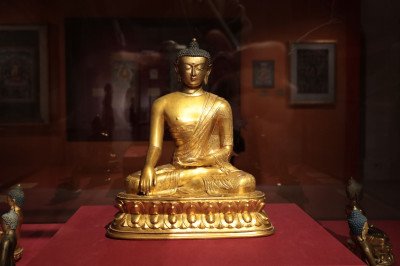 @@Introduction to Museum and Founder: This museum, often regarded as the biggest in Haryana, is a proud monument established in 1959 by Swami Omanand Saraswati. His visionary effort was dedicated to collecting, preserving, and exhibiting antiques from across India, making it a treasure trove of historical artifacts. It is not just a display space but a center for promoting Vedic culture and ancient Indian heritage, deeply connected with the Gurukul institution. The collection is vast and diverse, spanning various periods of Indian history, from the Harappan period to the late medieval era.@@Major Collections: The museum houses an impressive array of antiquities, including rare Panchal and Yaudheya coins, intricate terracotta objects, stone sculptures of deities like Lord Vishnu and Lord Ganesha, and unique items like a seamless wooden chain and a flexible stone. The sheer volume and variety of the exhibits provide a comprehensive view of the region's historical depth and cultural evolution. It serves as a vital educational resource for historians, archaeologists, and students.@@Historical Significance and Purpose: The museum’s significance lies in its role in documenting the rich past of the Haryana region, which was historically part of the extensive Indus Valley Civilization and later crucial ancient kingdoms. The collection includes pottery fragments, tools, and seals that directly link Jhajjar to sites like Banawali and Agroha. It actively works to inspire interest in the past among visitors, making history accessible and engaging for all age groups. It's a key destination for anyone wanting to understand the cultural thread running through Haryana.
Khaparwas Wildlife Sanctuary is a protected area that plays a vital role in the ecological corridor of the Sahibi River. Covering 82.7 hectares, it was officially declared a sanctuary in January 1987. It is situated very close to the Bhindawas Bird Sanctuary, yet it offers a much quieter and more secluded experience. The sanctuary is characterized by its freshwater lake, which is fed by rainwater and the JLN Feeder Canal. It acts as a secondary home for many migratory birds that find the larger Bhindawas too crowded. The dense vegetation consisting of Kikar and Shisham trees provides an ideal environment for breeding and nesting. It is a preferred spot for serious birdwatchers who wish to observe avian behavior in silence. Common sightings include the Crested Lark, White-throated Kingfisher, and various raptors. The sanctuary is also important for its role in maintaining the local groundwater table. Unlike commercial tourist spots, Khaparwas remains untouched by heavy tourism, preserving its raw natural beauty. The sanctuary's proximity to the Aravalli Hills makes it a part of a larger wildlife movement path. During the winter, the water surface is often covered with lotus leaves and ducks, creating a picturesque scene. It is a sanctuary for those who seek solitude and want to escape the hustle of city life.
@@The Painful Love Story: Bua Wala Talab (Bua's Pond) is famous for the poignant legend of Bua, the daughter of a high-ranking official, Mustafa Kalol, and a brave, handsome, poor woodcutter named Hasan. Hasan saved Bua from a tiger. Despite her father's initial reluctance, they married, but Bua's father conspiratorially sent Hasan to war, where he was killed. Heartbroken, Bua buried him near their meeting spot by the pond and built a tomb for him. She passed away two years later and was buried beside him.@@Historical Construction: The tank was originally built around 1625 AD by Kalal Khan, a mace bearer of $mathbfEmperor}$ Jahangir, and later became associated with the Bua?Hasan story. It served as a large, vital water source for the community and is located adjacent to the Mughal Era Tombs.@@Present Status: The Talab is now part of the local Shaheedi Park and is primarily fed by rainwater, although some of its original architectural fabric, including steps and channels, has been lost or damaged over time. Local efforts are underway to restore its historical significance and clean the surrounding area. The site holds immense sentimental and historical value for the locals.@@Folk Belief: A long-standing local belief suggests that the water of the pond possessed $mathbfmedicinal}$ $mathbfproperties}$ and was effective in curing certain $mathbfskin}$ $mathbfallergies}$. People from nearby areas sometimes still visit, especially on $mathbfSaturdays}$ and $mathbfSundays}$, to bathe and perform minor worship, linking the site to local spiritual practices.
@@Introduction to Museum and Founder: This museum, often regarded as the biggest in Haryana, is a proud monument established in 1959 by Swami Omanand Saraswati. His visionary effort was dedicated to collecting, preserving, and exhibiting antiques from across India, making it a treasure trove of historical artifacts. It is not just a display space but a center for promoting Vedic culture and ancient Indian heritage, deeply connected with the Gurukul institution. The collection is vast and diverse, spanning various periods of Indian history, from the Harappan period to the late medieval era.@@Major Collections: The museum houses an impressive array of antiquities, including rare Panchal and Yaudheya coins, intricate terracotta objects, stone sculptures of deities like Lord Vishnu and Lord Ganesha, and unique items like a seamless wooden chain and a flexible stone. The sheer volume and variety of the exhibits provide a comprehensive view of the region's historical depth and cultural evolution. It serves as a vital educational resource for historians, archaeologists, and students.@@Historical Significance and Purpose: The museum’s significance lies in its role in documenting the rich past of the Haryana region, which was historically part of the extensive Indus Valley Civilization and later crucial ancient kingdoms. The collection includes pottery fragments, tools, and seals that directly link Jhajjar to sites like Banawali and Agroha. It actively works to inspire interest in the past among visitors, making history accessible and engaging for all age groups. It's a key destination for anyone wanting to understand the cultural thread running through Haryana.
Khaparwas Wildlife Sanctuary is a protected area that plays a vital role in the ecological corridor of the Sahibi River. Covering 82.7 hectares, it was officially declared a sanctuary in January 1987. It is situated very close to the Bhindawas Bird Sanctuary, yet it offers a much quieter and more secluded experience. The sanctuary is characterized by its freshwater lake, which is fed by rainwater and the JLN Feeder Canal. It acts as a secondary home for many migratory birds that find the larger Bhindawas too crowded. The dense vegetation consisting of Kikar and Shisham trees provides an ideal environment for breeding and nesting. It is a preferred spot for serious birdwatchers who wish to observe avian behavior in silence. Common sightings include the Crested Lark, White-throated Kingfisher, and various raptors. The sanctuary is also important for its role in maintaining the local groundwater table. Unlike commercial tourist spots, Khaparwas remains untouched by heavy tourism, preserving its raw natural beauty. The sanctuary's proximity to the Aravalli Hills makes it a part of a larger wildlife movement path. During the winter, the water surface is often covered with lotus leaves and ducks, creating a picturesque scene. It is a sanctuary for those who seek solitude and want to escape the hustle of city life.
@@The Painful Love Story: Bua Wala Talab (Bua's Pond) is famous for the poignant legend of Bua, the daughter of a high-ranking official, Mustafa Kalol, and a brave, handsome, poor woodcutter named Hasan. Hasan saved Bua from a tiger. Despite her father's initial reluctance, they married, but Bua's father conspiratorially sent Hasan to war, where he was killed. Heartbroken, Bua buried him near their meeting spot by the pond and built a tomb for him. She passed away two years later and was buried beside him.@@Historical Construction: The tank was originally built around 1625 AD by Kalal Khan, a mace bearer of $mathbfEmperor}$ Jahangir, and later became associated with the Bua?Hasan story. It served as a large, vital water source for the community and is located adjacent to the Mughal Era Tombs.@@Present Status: The Talab is now part of the local Shaheedi Park and is primarily fed by rainwater, although some of its original architectural fabric, including steps and channels, has been lost or damaged over time. Local efforts are underway to restore its historical significance and clean the surrounding area. The site holds immense sentimental and historical value for the locals.@@Folk Belief: A long-standing local belief suggests that the water of the pond possessed $mathbfmedicinal}$ $mathbfproperties}$ and was effective in curing certain $mathbfskin}$ $mathbfallergies}$. People from nearby areas sometimes still visit, especially on $mathbfSaturdays}$ and $mathbfSundays}$, to bathe and perform minor worship, linking the site to local spiritual practices. The Mata Bhimeshwari Devi Temple, commonly known as the Beri Mandir, is one of the most significant religious sites in Haryana. Its history is deeply rooted in the Mahabharata. Legend has it that before the war of Kurukshetra, Bhima, one of the Pandava brothers, brought the idol of Goddess Hinglaj from the Hinglaj Mountain (now in Pakistan) to seek her blessings for victory. The Goddess agreed to come on the condition that Bhima would not place the idol on the ground. However, upon reaching Beri, Bhima had to place the idol down to answer nature's call, and as per the condition, the Goddess remained there. Today, the temple complex consists of two main structures: the Baharwala Mandir (Outer Temple) where the Goddess is worshipped during the day, and the Andarwala Mandir (Inner Temple) where the idol is moved at night. This unique ritual has been followed for centuries. During the Navratri festivals in April and October, the town of Beri transforms into a massive pilgrimage center, attracting lakhs of devotees. People come here to perform Mundan (first haircut) ceremonies for their children and to seek blessings for a prosperous life. The spiritual energy of the temple is palpable, with the continuous chanting of hymns and the scent of incense filling the air. It is a place where faith meets history, offering a glimpse into the ancient traditions of the region.Show All
@@Historical Overview and Chronology: This significant historical complex comprises a group of around seven surviving tombs and mosques that were constructed primarily during the reigns of Mughal Emperors Akbar, Jahangir, and Shah Jahan, spanning a period from 1594 AD to 1630 AD. They are believed to be the family $mathbfgraveyard}$ of local $mathbfMughal}$ $mathbfchiefs}$ and $mathbfnobles}$ of repute who served the empire. The earliest tomb is that of Mian Raib (1594 AD).@@Unique Architectural Style: The structures are noted for their unique blend of an $mathbfantedated}$ Pathan $mathbfstyle}$ of architecture and resemblances to the $mathbfSharqi}$ $mathbfmonuments}$ of $mathbfJaunpur}$, making them distinct from the typical $mathbfMughal}$ imperial architecture found elsewhere. This blend suggests the influence of local or regional craftsmen and older $mathbfSultanate}$ styles.@@Key Individual Tombs: Important tombs include the mausoleum of Hasan Shaheed (1625 AD), who was a soldier killed in battle, and the mosque of the $mathbffifth}$ $mathbftomb}$ built by Kalal Khan (1629 AD). Many of the tombs were built on $mathbfraised}$ $mathbfplatforms}$ and originally had $mathbfchhatris}$ (cupolas) and attached $mathbfIdgahs}$ (open-air mosques) within their enclosures.@@Current Status: While some structures are in ruins, the Archaeological Survey of India (ASI) has undertaken conservation and restoration work on several parts. The complex is a crucial site for understanding the regional $mathbfMughal}$ administration and funerary architecture in $mathbfHaryana}$ during the 17th century.
The Mata Bhimeshwari Devi Temple, commonly known as the Beri Mandir, is one of the most significant religious sites in Haryana. Its history is deeply rooted in the Mahabharata. Legend has it that before the war of Kurukshetra, Bhima, one of the Pandava brothers, brought the idol of Goddess Hinglaj from the Hinglaj Mountain (now in Pakistan) to seek her blessings for victory. The Goddess agreed to come on the condition that Bhima would not place the idol on the ground. However, upon reaching Beri, Bhima had to place the idol down to answer nature's call, and as per the condition, the Goddess remained there. Today, the temple complex consists of two main structures: the Baharwala Mandir (Outer Temple) where the Goddess is worshipped during the day, and the Andarwala Mandir (Inner Temple) where the idol is moved at night. This unique ritual has been followed for centuries. During the Navratri festivals in April and October, the town of Beri transforms into a massive pilgrimage center, attracting lakhs of devotees. People come here to perform Mundan (first haircut) ceremonies for their children and to seek blessings for a prosperous life. The spiritual energy of the temple is palpable, with the continuous chanting of hymns and the scent of incense filling the air. It is a place where faith meets history, offering a glimpse into the ancient traditions of the region.Show All
@@Historical Overview and Chronology: This significant historical complex comprises a group of around seven surviving tombs and mosques that were constructed primarily during the reigns of Mughal Emperors Akbar, Jahangir, and Shah Jahan, spanning a period from 1594 AD to 1630 AD. They are believed to be the family $mathbfgraveyard}$ of local $mathbfMughal}$ $mathbfchiefs}$ and $mathbfnobles}$ of repute who served the empire. The earliest tomb is that of Mian Raib (1594 AD).@@Unique Architectural Style: The structures are noted for their unique blend of an $mathbfantedated}$ Pathan $mathbfstyle}$ of architecture and resemblances to the $mathbfSharqi}$ $mathbfmonuments}$ of $mathbfJaunpur}$, making them distinct from the typical $mathbfMughal}$ imperial architecture found elsewhere. This blend suggests the influence of local or regional craftsmen and older $mathbfSultanate}$ styles.@@Key Individual Tombs: Important tombs include the mausoleum of Hasan Shaheed (1625 AD), who was a soldier killed in battle, and the mosque of the $mathbffifth}$ $mathbftomb}$ built by Kalal Khan (1629 AD). Many of the tombs were built on $mathbfraised}$ $mathbfplatforms}$ and originally had $mathbfchhatris}$ (cupolas) and attached $mathbfIdgahs}$ (open-air mosques) within their enclosures.@@Current Status: While some structures are in ruins, the Archaeological Survey of India (ASI) has undertaken conservation and restoration work on several parts. The complex is a crucial site for understanding the regional $mathbfMughal}$ administration and funerary architecture in $mathbfHaryana}$ during the 17th century.Information
-
Why Famous:
Military Contribution: Jhajjar is famous for its contribution to the Indian Armed Forces. Almost every household has a member serving the nation, earning it a proud reputation.
Bhindawas Sanctuary: It is recognized as a Ramsar Site, highlig...Military Contribution: Jhajjar is famous for its contribution to the Indian Armed Forces. Almost every household has a member serving the nation, earning it a proud reputation.
Bhindawas Sanctuary: It is recognized as a Ramsar Site, highlighting its international importance as a wetland. It is the largest such habitat in the state of Haryana. -
Architecture:
Mughal Architecture: The city features the Tomb of Bua Hasan, a beautiful brick structure with typical Mughal domes and arches. It reflects the medieval artistic style of the region.
Museum Architecture: The Archaeological Museum is built i...Mughal Architecture: The city features the Tomb of Bua Hasan, a beautiful brick structure with typical Mughal domes and arches. It reflects the medieval artistic style of the region.
Museum Architecture: The Archaeological Museum is built in a traditional style with large halls to accommodate thousands of exhibits. It is a center for Vedic learning and research. -
How To Reach:
By Air: The nearest airport is Indira Gandhi International Airport in Delhi, which is about 55 KMS away.
By Train: Jhajjar has its own railway station on the Delhi-Rohtak-Rewari line with regular passenger trains.
Read MoreBy Air: The nearest airport is Indira Gandhi International Airport in Delhi, which is about 55 KMS away.
By Train: Jhajjar has its own railway station on the Delhi-Rohtak-Rewari line with regular passenger trains.
By Road: It is well-connected by road to Delhi, Gurugram, and Rohtak via state highways and NH-9.
By Local Transport: Shared autos and cycle-rickshaws are the most common way to get around the town.Weather and Best Time to Visit:
Winter Season: October to March is the peak season for visiting the bird sanctuary and the farms.
Summer Season: April to June is very dry and hot; birds migrate away, and outdoor trips are taxing.
Monsoon Seas...Winter Season: October to March is the peak season for visiting the bird sanctuary and the farms.
Summer Season: April to June is very dry and hot; birds migrate away, and outdoor trips are taxing.
Monsoon Season: July to September makes the wetlands full and green, but accessibility can be a bit difficult.
Part of Day: Sunrise is the best time for the bird sanctuary, while the Afternoon is good for the museum.Near Tourist Places:
Rohtak (35 KMS), Rewari (50 KMS), Bahadurgarh (30 KMS), Delhi (55 KMS), Beri (15 KMS), Dighal (20 KMS), Farrukhnagar (25 KMS), Sultanpur Park (40 KMS), Dadri (45 KMS), Kosli (35 KMS).Tourism Tips
-
Health & Safety: Wear long sleeves and use mosquito repellent when visiting the wetlands. Stay hydrated throughout.
Packing Essentials: Binoculars are a must for the bird sanctuary. Carry a sun hat and wear comfortable walking shoes.
<...Health & Safety: Wear long sleeves and use mosquito repellent when visiting the wetlands. Stay hydrated throughout.
Packing Essentials: Binoculars are a must for the bird sanctuary. Carry a sun hat and wear comfortable walking shoes.
Accommodation: There are several decent guest houses and the Haryanvi hospitality makes home-stays a good option.
Other Tips: Visit the Beri Mandir on weekdays to avoid the massive crowds that gather during the weekends.
Reviews
FAQs
Jhajjar Itineray And Cost:-
Other Places In Haryana :-
Other States In India :-
Information about New and Updated Locations() of Haryana Has Been Added :-
Card subtitle
Note:-
Information provided here in good Faith and for reference only.
Near Places
Ambala
Some quick example text to build on the card title and make up the bulk of the card's content.
Go somewhere
Bahadurgarh
Some quick example text to build on the card title and make up the bulk of the card's content.
Go somewhere
Bhiwani
Some quick example text to build on the card title and make up the bulk of the card's content.
Go somewhere
Faridabad
Some quick example text to build on the card title and make up the bulk of the card's content.
Go somewhere
Fatehabad
Some quick example text to build on the card title and make up the bulk of the card's content.
Go somewhere
Gurugram
Some quick example text to build on the card title and make up the bulk of the card's content.
Go somewhere
Hisar
Some quick example text to build on the card title and make up the bulk of the card's content.
Go somewhere
Jhajjar
Some quick example text to build on the card title and make up the bulk of the card's content.
Go somewhere
Jind
Some quick example text to build on the card title and make up the bulk of the card's content.
Go somewhere
Jyotisar
Some quick example text to build on the card title and make up the bulk of the card's content.
Go somewhere
Karnal
Some quick example text to build on the card title and make up the bulk of the card's content.
Go somewhere
Kurukshetra
Some quick example text to build on the card title and make up the bulk of the card's content.
Go somewhere
Narnaul
Some quick example text to build on the card title and make up the bulk of the card's content.
Go somewhere
Palwal
Some quick example text to build on the card title and make up the bulk of the card's content.
Go somewhere
Panchkula
Some quick example text to build on the card title and make up the bulk of the card's content.
Go somewhere
Panipat
Some quick example text to build on the card title and make up the bulk of the card's content.
Go somewherein Other Cities