

Fatehabad
General information
-
Ideal Duration:
1 to 2 DaysPlace Type:
Historical & ArchaeologicalEntry Fees:
Government Sites: Most archaeological sites like Banawali and the Pillar have No Entry Fee.
Private Parks: Local municipal parks may charge a nominal fee of 10 INR for maintenance. ...Government Sites: Most archaeological sites like Banawali and the Pillar have No Entry Fee.
Private Parks: Local municipal parks may charge a nominal fee of 10 INR for maintenance.Timing:
Regular Timings: Sites are generally open from Sunrise to Sunset (approximately 6:00 AM to 6:00 PM).
Ideal Visit Time: The best time to visit is in the Morning between 8:00 AM and 11:00 AM to avoid the heat. ...Regular Timings: Sites are generally open from Sunrise to Sunset (approximately 6:00 AM to 6:00 PM).
Ideal Visit Time: The best time to visit is in the Morning between 8:00 AM and 11:00 AM to avoid the heat.Special Events:
Haryana Day: Celebrated on 1st November, featuring local folk dances, music, and traditional wrestling matches.
Teej Festival: Celebrated in August with swings and traditional songs, showcasing the vibrant culture of Fatehabad. ...Haryana Day: Celebrated on 1st November, featuring local folk dances, music, and traditional wrestling matches.
Teej Festival: Celebrated in August with swings and traditional songs, showcasing the vibrant culture of Fatehabad.Best Photo Spots:
Banawali Excavations: The layered mounds provide a dramatic backdrop for wide-angle landscape shots.
Ashokan Pillar: Best photographed at noon when the inscriptions are clearly highlighted by the sun.
Humayun Mo...Banawali Excavations: The layered mounds provide a dramatic backdrop for wide-angle landscape shots.
Ashokan Pillar: Best photographed at noon when the inscriptions are clearly highlighted by the sun.
Humayun Mosque: The brickwork and arches offer beautiful frames for architectural photography enthusiasts.Photo Gallery
Things To Do
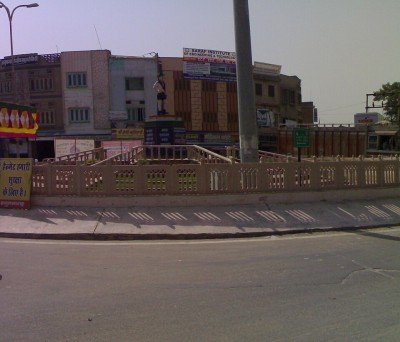 Bhagat Singh Chowk is the busiest and most iconic intersection in Fatehabad. Named after the legendary revolutionary Shaheed Bhagat Singh, this place serves as a central landmark for both commerce and social gatherings. A life-sized statue of the martyr stands at the center, serving as a reminder of India's struggle for independence. The area around the chowk is a bustling marketplace where one can find everything from traditional Haryanvi textiles to modern electronics. It is the site where most local protests, celebrations, and public speeches take place. In the evenings, the chowk transforms into a lively spot with numerous street food vendors selling local delicacies like Golgappas and Chaat. For a traveler, it is the best place to observe the daily life of Fatehabad residents. The energy here is infectious, especially during national holidays like Republic Day or Independence Day, when the entire area is decorated with tricolors. It is essentially the "Times Square" of Fatehabad, representing the city's modern identity while honoring its historical heroes.
 Ayodhya Dham in Fatehabad is a magnificent religious complex dedicated to Lord Rama. Unlike the ancient city in Uttar Pradesh, this modern temple serves as a spiritual hub for local devotees in Haryana. The temple complex is sprawling and meticulously maintained, offering a peaceful retreat from the urban hustle. It features a grand sanctum sanctorum where the idols of the Ram Darbar are installed with traditional Vedic rituals. The atmosphere is perpetually filled with the scent of incense and the sound of devotional hymns. Many pilgrims from neighboring districts visit this "Dham" to experience the serenity associated with the birthplace of Lord Ram. The temple trust also manages various social welfare activities, including a community kitchen that serves "Langar" to the needy. Visiting this site provides deep cultural insights into the local religious practices and the community's dedication to the Sanatana Dharma. It is considered one of the most serene landmarks in the entire Fatehabad district.
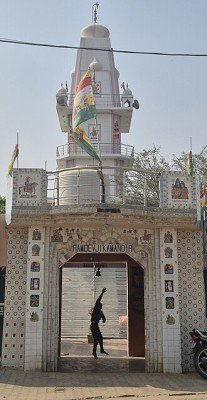 @@Deity: The temple is dedicated to a prominent Jain Tirthankara, serving the local Jain community. The central idol is likely of a Digambara or Shwetambara tradition. @@Cultural Hub: Like other religious centers, it serves as a center for the Jain community's cultural, social, and spiritual activities in Fatehabad. @@Atmosphere: It offers a very quiet, disciplined, and introspective atmosphere, characteristic of Jain places of worship, emphasizing non-violence (Ahimsa).
 @@A Bustling Market Town: Jakhal Mandi is one of the most significant commercial centers in the Fatehabad district, primarily known for its massive grain market and its strategic railway junction. The word 'Mandi' translates to a wholesale market, and this town lives up to its name by facilitating the trade of millions of tons of wheat, paddy, and cotton every year. Historically, the town gained importance during the British era when the railway lines were laid to connect the fertile plains of Punjab and Haryana to the national capital. Today, it serves as a melting pot of cultures, where traders from neighboring states like Punjab and Rajasthan converge for business. The town is characterized by its narrow, bustling lanes, ancient shops, and the constant hum of tractors and trucks transporting agricultural gold. Apart from commerce, Jakhal Mandi is a hub for local transportation, making it a gateway for travelers entering Haryana from the north. The local economy is entirely dependent on the seasonal cycles of harvest, and the town undergoes a complete transformation during the procurement months. It offers a glimpse into the backbone of India's economy—the agrarian trade system. For a traveler, it is a place to witness the organized chaos of an Indian mandi and enjoy the rustic charm of a semi-urban settlement that bridges the gap between village life and city conveniences.
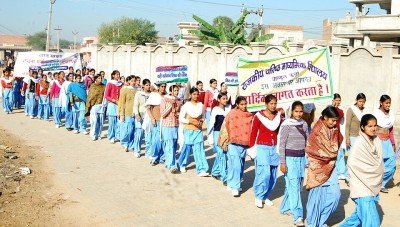 @@Purpose: This is a major municipal park designed to provide residents with a large, accessible green space for recreation, exercise, and social interaction. @@Facilities: It features paved walking/jogging tracks, open lawns, seating areas, and often a dedicated children's play area. @@Maintenance: It is one of the better-maintained parks in the city, making it a popular daily destination for morning walkers and families.
 @@Facility Type: This complex, managed by Haryana Tourism Corporation Ltd., combines a public park, a resort (Papiha Tourist Resort), and restaurant facilities. @@Recreation: The park component is a well-maintained green space with lawns, pathways, and shade, catering to both local residents and tourists. @@Purpose: It serves as a comfortable, official rest stop for travelers on the highway connecting major cities.
@@History and Purpose: The structure, also known as Feroz Shah's Palace and Tahakhana, was established by Sultan Firoz Shah Tughlaq of the Delhi Sultanate during his reign (1351-1388 AD). This site marks the original founding of the city of Fatehabad in 1352 CE, named after his son, Fateh Khan. The complex served as a royal residence, an administrative center, and a defensive fort. The Sultan was traversing the region from Multan to Delhi when his son was born here, prompting him to establish the new town, thus making the ruins a site of significant historical birth and political importance in the 14th century. @@Composition and Materials: The ruins primarily consist of two and three-storied structures surrounding an open courtyard. It was constructed mainly with rubble masonry and covered with a thick coat of lime plaster. Sandstone carved pillars, believed to have been repurposed from earlier Hindu temples (possibly from nearby Agroha), support the arches, showcasing a synthesis of different architectural styles. The complex includes remnants of underground apartments (Tahkhanas), a Diwan-e-Aam (Hall of Public Audience), and the associated Humayun Mosque and Lat of Firoz Shah. It stands as a testament to the Sultan's extensive building projects across the region, which also included the city of Hisar (Hisar-e-Firoza).Show All
@@The Ancient Roots: The Kunal Archaeological Site is arguably the most important historical landmark in Fatehabad, dating back nearly 8,000 years to the pre-Harappan era. Located on the banks of the now-dried Saraswati river, this site has redefined the timeline of civilization in the Indian subcontinent. Excavations have revealed that Kunal was a flourishing village long before the planned cities of Mohenjo-daro and Harappa came into existence. The site provides invaluable evidence of the transition from nomadic lifestyles to settled agricultural communities. Archaeologists have discovered successive layers of habitation, ranging from circular pit dwellings to sophisticated rectangular mud-brick houses. The discovery of a silver crown and various "regalia" items suggests that Kunal was home to an early elite class or perhaps a tribal chieftaincy. The site is a treasure trove for history buffs, offering a window into the technological advancements of the early settlers, including their expertise in bead-making and metallurgy. Unlike many other Harappan sites that are largely industrial, Kunal feels like an intimate look at the domestic lives of ancient people. It is a protected monument under the Archaeological Survey of India, attracting researchers and students from across the globe. The silent mounds of Kunal hold the secrets of our ancestors, making it a spiritual and intellectual pilgrimage for anyone interested in the origins of human society.
@@Facility Type: This complex, managed by Haryana Tourism Corporation Ltd., combines a public park, a resort (Papiha Tourist Resort), and restaurant facilities. @@Recreation: The park component is a well-maintained green space with lawns, pathways, and shade, catering to both local residents and tourists. @@Purpose: It serves as a comfortable, official rest stop for travelers on the highway connecting major cities.
@@History and Purpose: The structure, also known as Feroz Shah's Palace and Tahakhana, was established by Sultan Firoz Shah Tughlaq of the Delhi Sultanate during his reign (1351-1388 AD). This site marks the original founding of the city of Fatehabad in 1352 CE, named after his son, Fateh Khan. The complex served as a royal residence, an administrative center, and a defensive fort. The Sultan was traversing the region from Multan to Delhi when his son was born here, prompting him to establish the new town, thus making the ruins a site of significant historical birth and political importance in the 14th century. @@Composition and Materials: The ruins primarily consist of two and three-storied structures surrounding an open courtyard. It was constructed mainly with rubble masonry and covered with a thick coat of lime plaster. Sandstone carved pillars, believed to have been repurposed from earlier Hindu temples (possibly from nearby Agroha), support the arches, showcasing a synthesis of different architectural styles. The complex includes remnants of underground apartments (Tahkhanas), a Diwan-e-Aam (Hall of Public Audience), and the associated Humayun Mosque and Lat of Firoz Shah. It stands as a testament to the Sultan's extensive building projects across the region, which also included the city of Hisar (Hisar-e-Firoza).Show All
@@The Ancient Roots: The Kunal Archaeological Site is arguably the most important historical landmark in Fatehabad, dating back nearly 8,000 years to the pre-Harappan era. Located on the banks of the now-dried Saraswati river, this site has redefined the timeline of civilization in the Indian subcontinent. Excavations have revealed that Kunal was a flourishing village long before the planned cities of Mohenjo-daro and Harappa came into existence. The site provides invaluable evidence of the transition from nomadic lifestyles to settled agricultural communities. Archaeologists have discovered successive layers of habitation, ranging from circular pit dwellings to sophisticated rectangular mud-brick houses. The discovery of a silver crown and various "regalia" items suggests that Kunal was home to an early elite class or perhaps a tribal chieftaincy. The site is a treasure trove for history buffs, offering a window into the technological advancements of the early settlers, including their expertise in bead-making and metallurgy. Unlike many other Harappan sites that are largely industrial, Kunal feels like an intimate look at the domestic lives of ancient people. It is a protected monument under the Archaeological Survey of India, attracting researchers and students from across the globe. The silent mounds of Kunal hold the secrets of our ancestors, making it a spiritual and intellectual pilgrimage for anyone interested in the origins of human society.Information
-
Why Famous:
Indus Valley Connection: Fatehabad is world-famous for its link to the Sarasvati River valley civilizations found at Banawali. These excavations have provided proof of early human settlements.
Royal Foundation: It is celebrated for its foun...Indus Valley Connection: Fatehabad is world-famous for its link to the Sarasvati River valley civilizations found at Banawali. These excavations have provided proof of early human settlements.
Royal Foundation: It is celebrated for its founding history by the Delhi Sultanate, marking it as a strategic outpost in North India. The city bridges the gap between ancient and medieval history. -
Architecture:
Tughlaq Influence: The city's original layout followed the Tughlaq style of fort-town planning with thick walls and strategic gates. Most structures use Lakhauri bricks and lime mortar.
Ashokan Pillar Dimensions: The stone pillar stands app...Tughlaq Influence: The city's original layout followed the Tughlaq style of fort-town planning with thick walls and strategic gates. Most structures use Lakhauri bricks and lime mortar.
Ashokan Pillar Dimensions: The stone pillar stands approximately 5 metres tall with a circumference of 1. 9 meters at its base. It features high-relief Tughra Arabic inscriptions over original Mauryan markings. -
How To Reach:
By Air: The nearest airport is Indira Gandhi International Airport in Delhi, located about 215 KMS away.
By Train: Fatehabad does not have its own major station; the nearest railhead is Bhattu (20 KMS) or Hisar (48 KMS).
Read MoreBy Air: The nearest airport is Indira Gandhi International Airport in Delhi, located about 215 KMS away.
By Train: Fatehabad does not have its own major station; the nearest railhead is Bhattu (20 KMS) or Hisar (48 KMS).
By Road: It is well-connected by NH-9, with regular bus services from Delhi, Hisar, and Sirsa.
By Local Transport: Auto-rickshaws and cycle-rickshaws are the primary modes of transport within the city limits.Weather and Best Time to Visit:
Winter Season: November to February is the best time with temperatures between 10°C and 25°C.
Summer Season: April to June is very hot, with temperatures often crossing 45°C, making sightseeing difficult.
Mon...Winter Season: November to February is the best time with temperatures between 10°C and 25°C.
Summer Season: April to June is very hot, with temperatures often crossing 45°C, making sightseeing difficult.
Monsoon Season: July to September brings refreshing rain, but many archaeological sites can become muddy.
Part of Day: Early Morning or late Afternoon are the most comfortable times for outdoor exploration.Near Tourist Places:
Hisar (48 KMS), Sirsa (85 KMS), Agroha (25 KMS), Bhirrana (15 KMS), Kunal (22 KMS), Tohana (40 KMS), Ratia (25 KMS), Hansi (75 KMS), Mandi Adampur (35 KMS), Jakhal (55 KMS).Tourism Tips
-
Health & Safety: Always carry bottled water as the sites can be dusty; wear a hat and sunscreen for protection.
Packing Essentials: Wear comfortable walking shoes for the mounds and carry a power bank for your camera.
Read MoreHealth & Safety: Always carry bottled water as the sites can be dusty; wear a hat and sunscreen for protection.
Packing Essentials: Wear comfortable walking shoes for the mounds and carry a power bank for your camera.
Accommodation: There are several mid-range hotels and a Haryana Tourism motel available for a comfortable stay.
Other Tips: Hire a local guide at Banawali to better understand the significance of the archaeological findings.Reviews
FAQs
Fatehabad Itineray And Cost:-
Other Places In Haryana :-
Other States In India :-
Information about New and Updated Locations() of Haryana Has Been Added :-
Card subtitle
Note:-
Information provided here in good Faith and for reference only.
Near Places
Ambala
Some quick example text to build on the card title and make up the bulk of the card's content.
Go somewhere
Bahadurgarh
Some quick example text to build on the card title and make up the bulk of the card's content.
Go somewhere
Bhiwani
Some quick example text to build on the card title and make up the bulk of the card's content.
Go somewhere
Faridabad
Some quick example text to build on the card title and make up the bulk of the card's content.
Go somewhere
Fatehabad
Some quick example text to build on the card title and make up the bulk of the card's content.
Go somewhere
Gurugram
Some quick example text to build on the card title and make up the bulk of the card's content.
Go somewhere
Hisar
Some quick example text to build on the card title and make up the bulk of the card's content.
Go somewhere
Jhajjar
Some quick example text to build on the card title and make up the bulk of the card's content.
Go somewhere
Jind
Some quick example text to build on the card title and make up the bulk of the card's content.
Go somewhere
Jyotisar
Some quick example text to build on the card title and make up the bulk of the card's content.
Go somewhere
Karnal
Some quick example text to build on the card title and make up the bulk of the card's content.
Go somewhere
Kurukshetra
Some quick example text to build on the card title and make up the bulk of the card's content.
Go somewhere
Narnaul
Some quick example text to build on the card title and make up the bulk of the card's content.
Go somewhere
Palwal
Some quick example text to build on the card title and make up the bulk of the card's content.
Go somewhere
Panchkula
Some quick example text to build on the card title and make up the bulk of the card's content.
Go somewhere
Panipat
Some quick example text to build on the card title and make up the bulk of the card's content.
Go somewherein Other Cities