Meenakshi Amman Temple
General information
-
Ideal Duration:
Medium to Long Duration: 2 to 4 hours (Requires focused time to cover the vast complex and appreciate the carvings).Place Type:
Hindu Temple, Historical Monument, World HeritageEntry Fees:
Entry Fee: There is No Entry Fee to enter the main temple complex and its outer corridors (prakarams). This free access ensures that all people can enjoy this architectural and spiritual marvel.
Special Darshan Tickets: To bypass the long l...Entry Fee: There is No Entry Fee to enter the main temple complex and its outer corridors (prakarams). This free access ensures that all people can enjoy this architectural and spiritual marvel.
Special Darshan Tickets: To bypass the long lines for the main shrines, devotees can purchase a Special Darshan ticket. The cost for this is typically around INR 50 to INR 100 per person. There are different tiers of special tickets for various access points.
Camera/Video Fees: Photography is Strictly Prohibited inside the main sanctum sanctorums. For the outer areas and corridors, a nominal fee is charged for a still camera (around INR 50) and a higher fee for video cameras (around INR 100).
Note: Mobile phones with camera functionality are usually allowed with a fee.
Shoe and Luggage Lockers: There is a mandatory, nominal charge (around INR 5 to 20) for leaving footwear and large bags at the secure counters near the entrance, as they are not allowed inside.
Other Fees: Fees are charged for participating in special Poojas (Archana, Abhishekam), which vary in price from a small amount to several hundreds of rupees depending on the ritual's complexity.Timing:
Regular Timings:
The temple follows a split schedule: 5:00 AM to 12:30 PM in the morning and 4:00 PM to 9:30 PM in the evening. The temple is open every day. The most important time for Darshan is during the Pooja times.
Read MoreRegular Timings:
The temple follows a split schedule: 5:00 AM to 12:30 PM in the morning and 4:00 PM to 9:30 PM in the evening. The temple is open every day. The most important time for Darshan is during the Pooja times.
Ideal Visit Time: The Ideal Visit Time is the Early Morning (5:00 AM to 7:00 AM) on a weekday. This allows you to experience the main morning rituals, avoid the massive crowds that build up by 9:00 AM, and walk on the cool stone floor. Visiting in the late evening (after 7:00 PM) to witness the lighted towers and the final rituals is also highly recommended. The best season is the cool, dry Winter (October to March).
Closure: The temple has a mandatory break between 12:30 PM and 4:00 PM when the main shrines are closed; plan your day around this.
Night Ritual: Stay to witness the Palliarai Pooja at 9:30 PM, the ceremonial retirement of the deities, which is a beautiful, peaceful ritual.Special Events:
Chithirai Festival (Meenakshi Thirukalyanam): The most famous event is the 12-day annual Chithirai Festival held in the Tamil month of Chithirai (April-May). Its climax is the divine wedding (Thirukalyanam) of Meenakshi and Sundareswarar, and the ceremonial entry of Lord Az...Chithirai Festival (Meenakshi Thirukalyanam): The most famous event is the 12-day annual Chithirai Festival held in the Tamil month of Chithirai (April-May). Its climax is the divine wedding (Thirukalyanam) of Meenakshi and Sundareswarar, and the ceremonial entry of Lord Azhagar from his abode. The entire city participates in this massive cultural and religious spectacle.
Teppotsavam (Float Festival): Celebrated in the Tamil month of Thai (January-February), this event involves floating the beautifully decorated processional idols of the deities on a massive raft in the illuminated waters of the Vandiyur Mariamman Teppakulam (Temple Tank), a truly stunning sight.
Masi Mandala Festival: A major 10-day festival celebrated in the month of Masi (February-March), featuring elaborate processions and rituals.
Navaratri and Deepavali: Both the nine-night festival of Navaratri (September-October) and the festival of lights, Deepavali (October-November), are celebrated with great fervor, special decorations, and extended Pooja schedules, drawing huge crowds.Best Photo Spots:
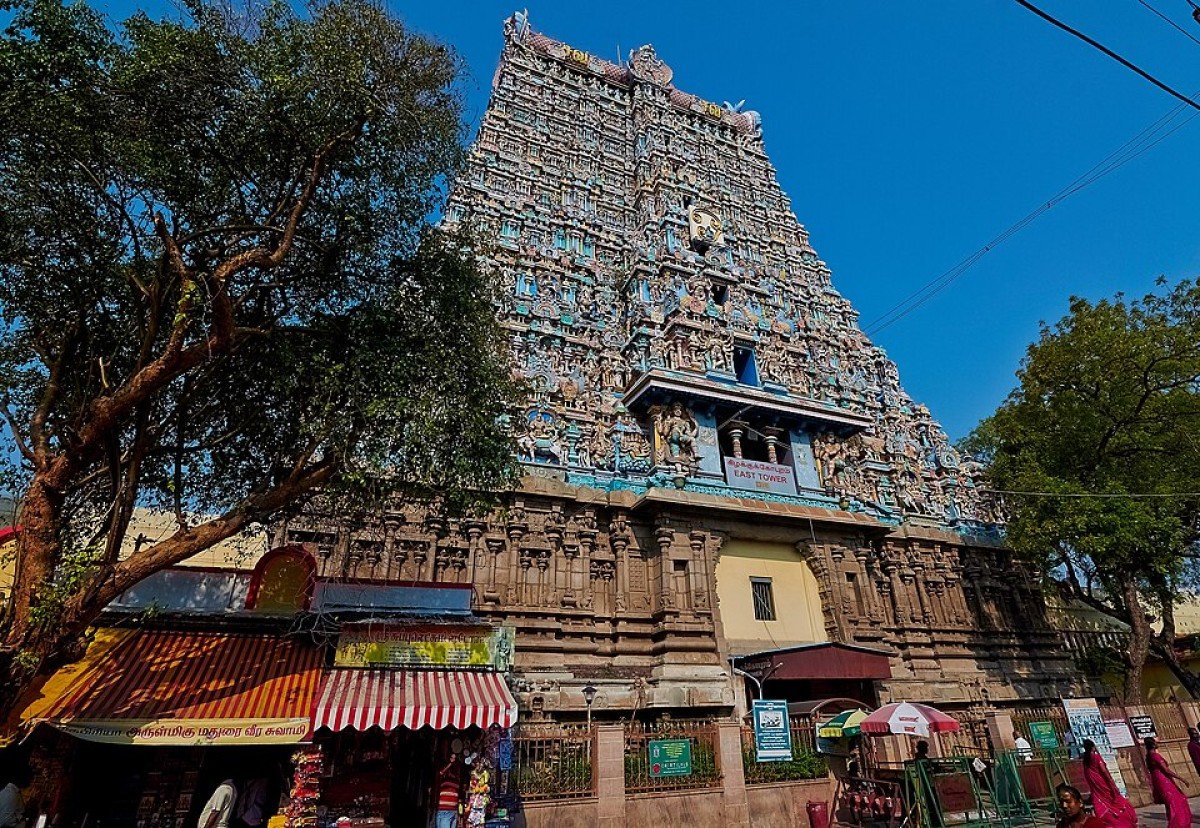
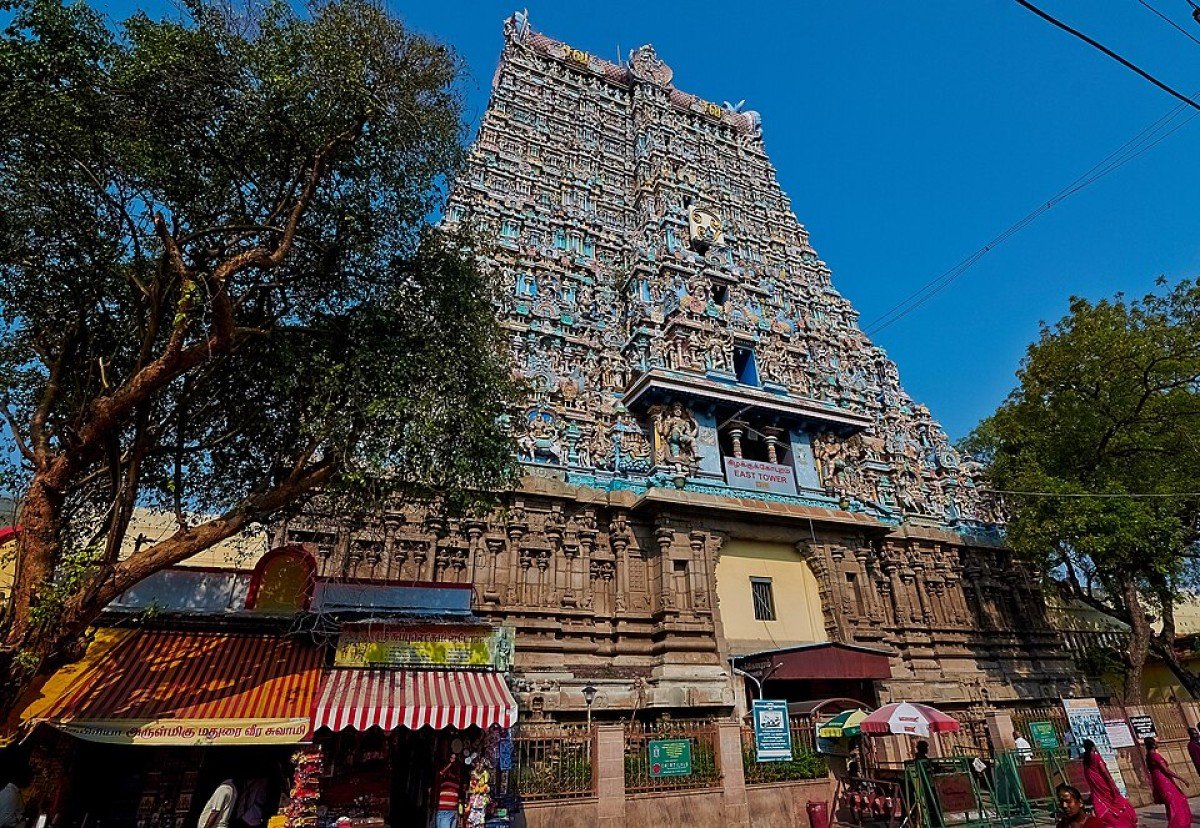
The Southern Gopuram: The majestic, tallest Southern Gopuram should be captured from a slight distance to fully appreciate its colossal height of over 170 feet and the incredible density of the stucco figures covering its face.
Reflection in the...The Southern Gopuram: The majestic, tallest Southern Gopuram should be captured from a slight distance to fully appreciate its colossal height of over 170 feet and the incredible density of the stucco figures covering its face.
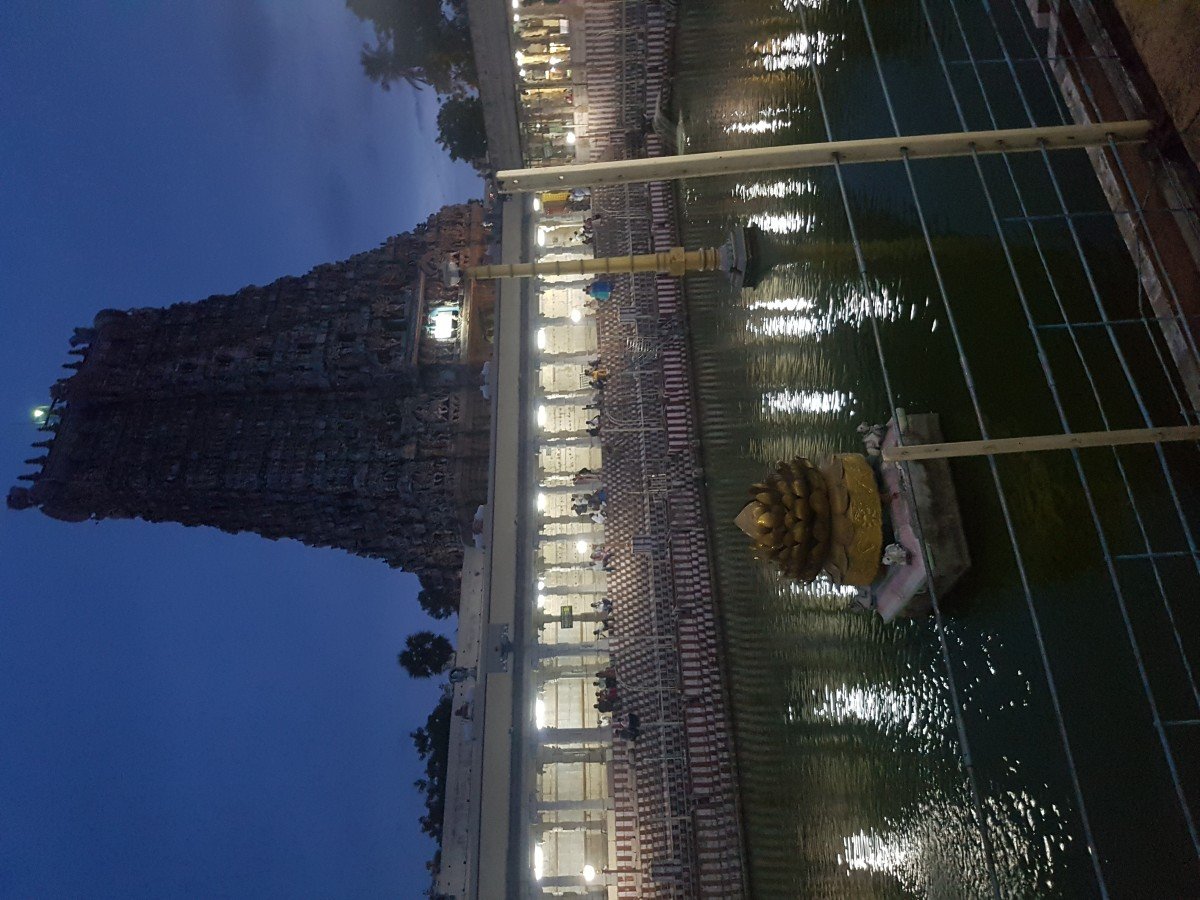
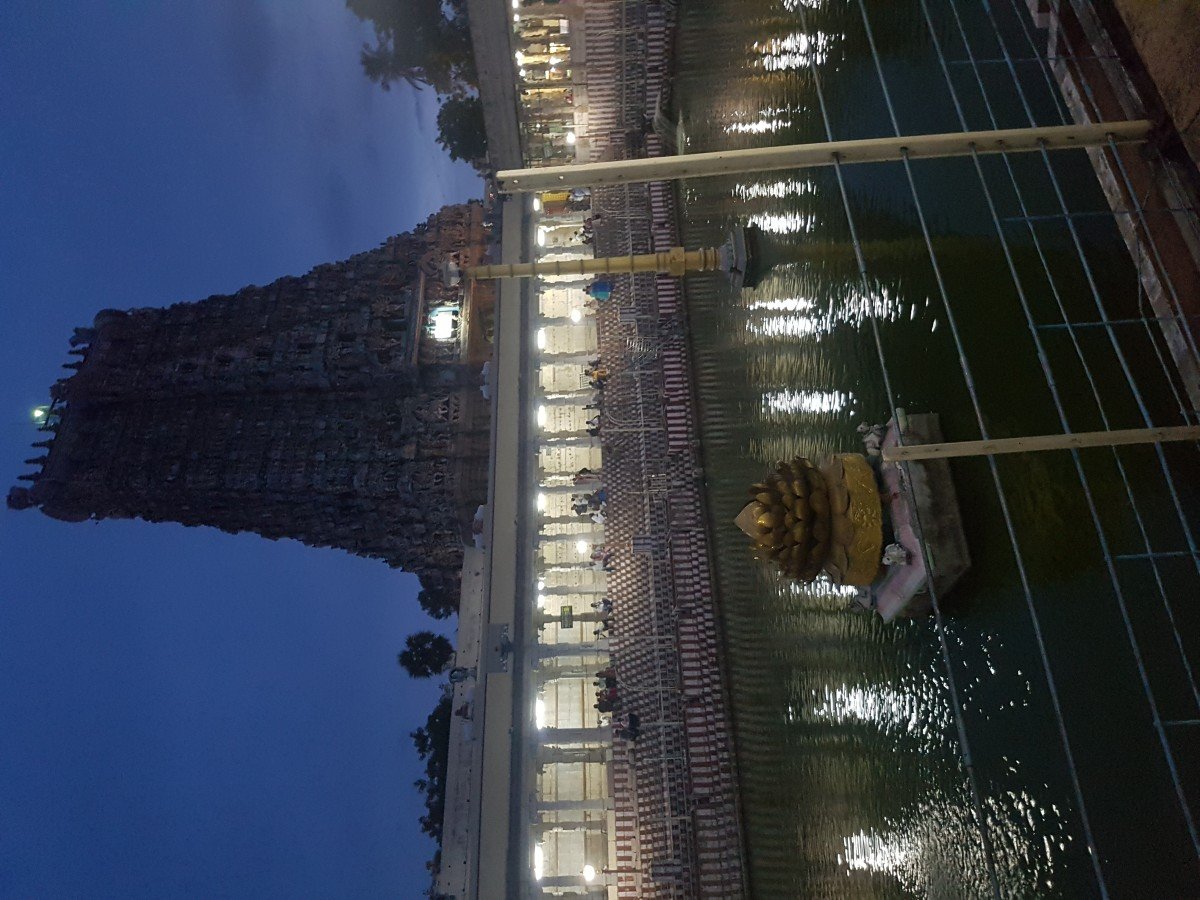
Reflection in the Golden Lotus Tank: The best photo spot is from the corner of the Pottramarai Kulam (Golden Lotus Tank), capturing the perfect, mirrored reflection of the Gopuram (usually the Eastern one) and the pillared portico in the still, sacred water.
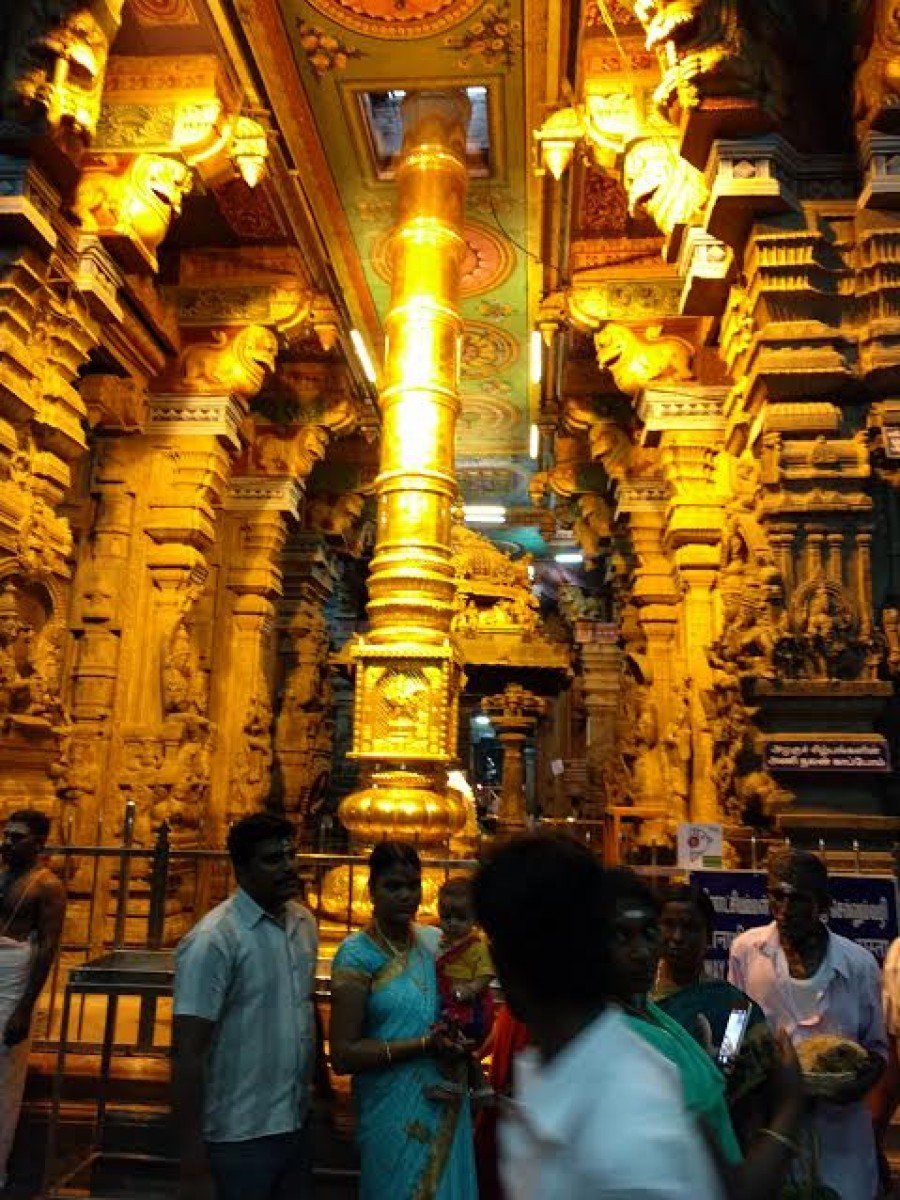
The Hall of Thousand Pillars Entrance: The massive, intricately carved entrance to the Ayiramkaal Mandapam provides a perfect frame for capturing the architectural depth and the rows of pillars receding into the distance.
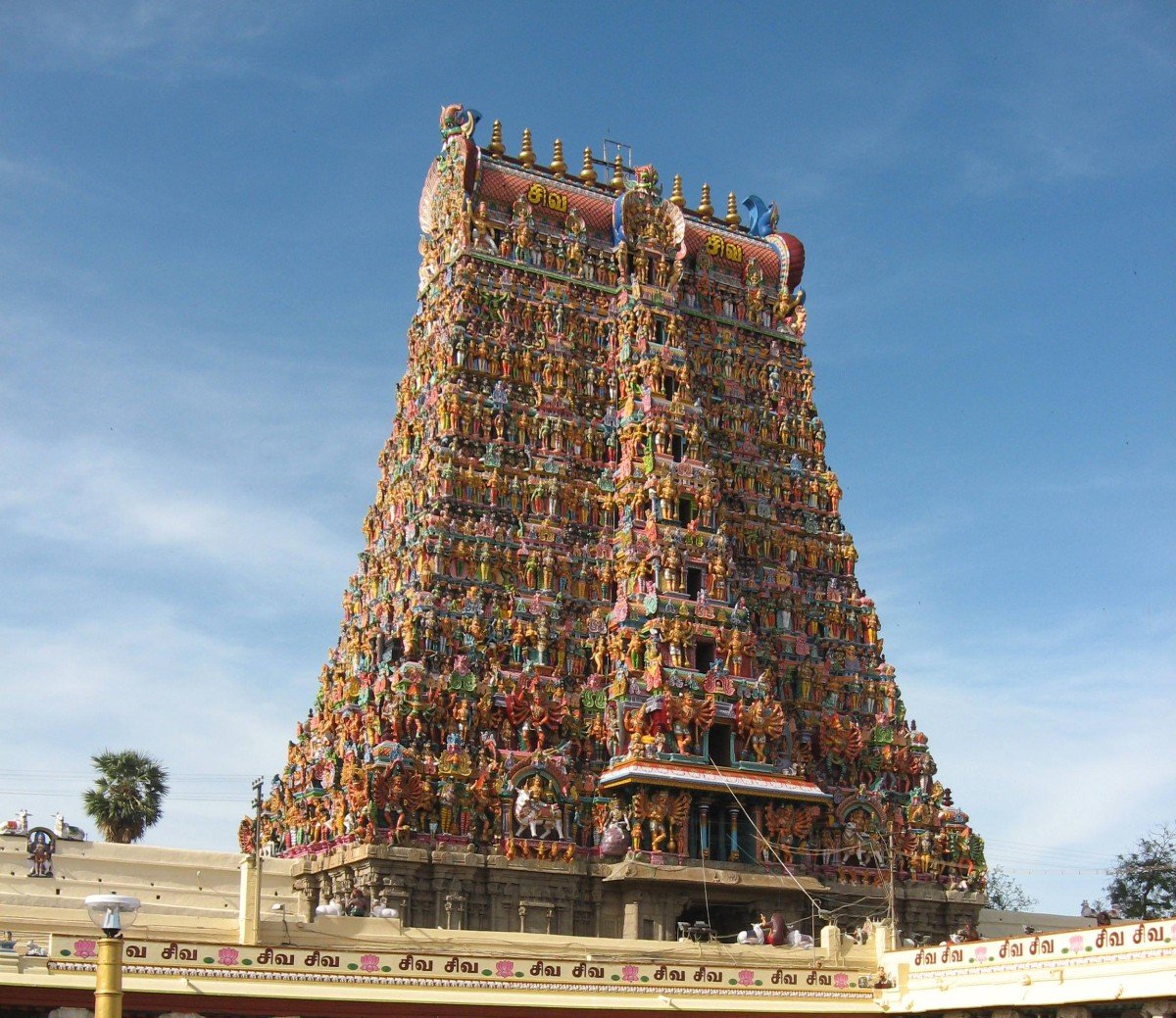
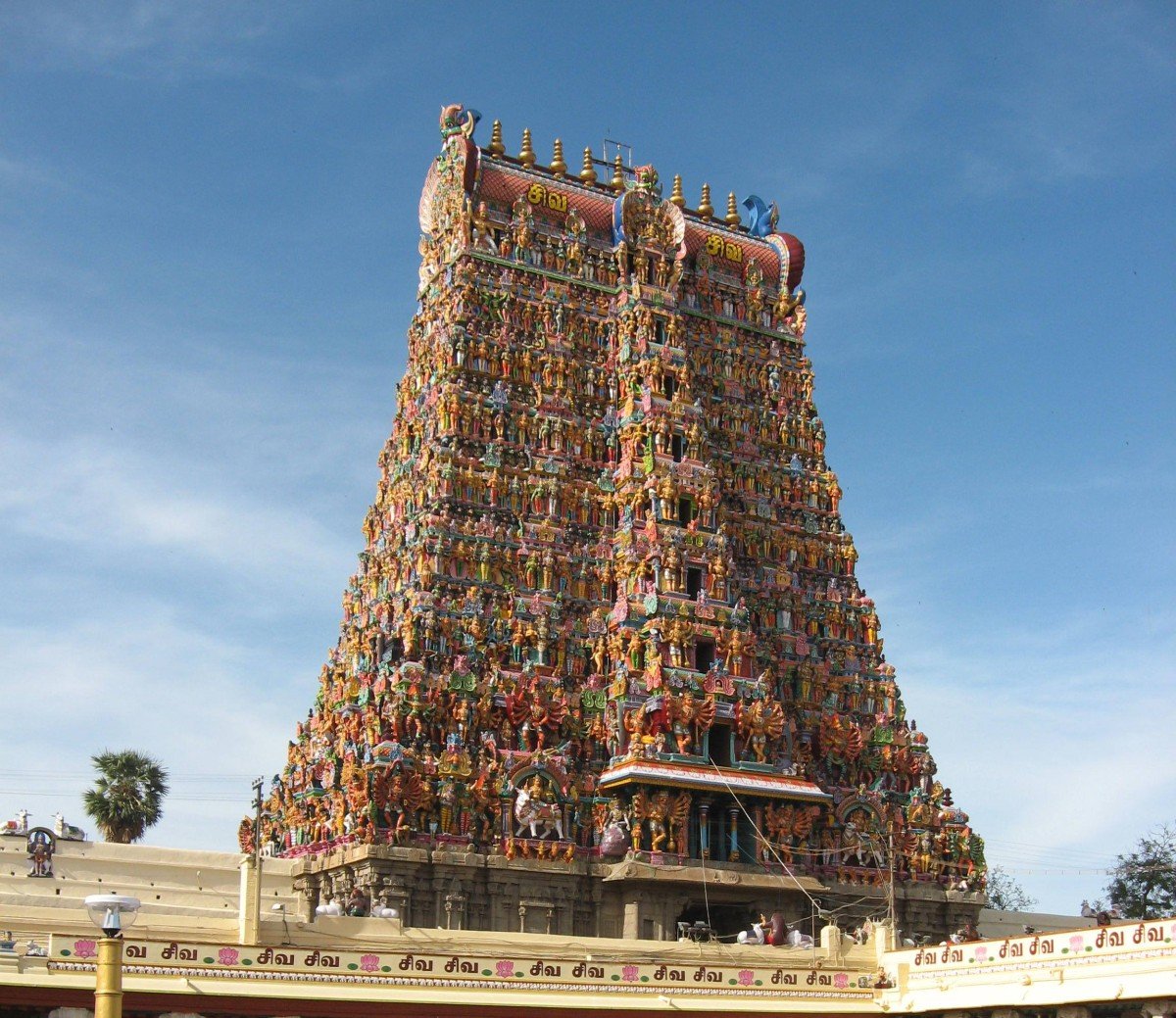
The Stucco Figures on the Towers: Use a zoom lens to capture close-up details of the brightly colored, expressive stucco figures on any of the Gopurams, showcasing the incredible folk art and mythological narrative.
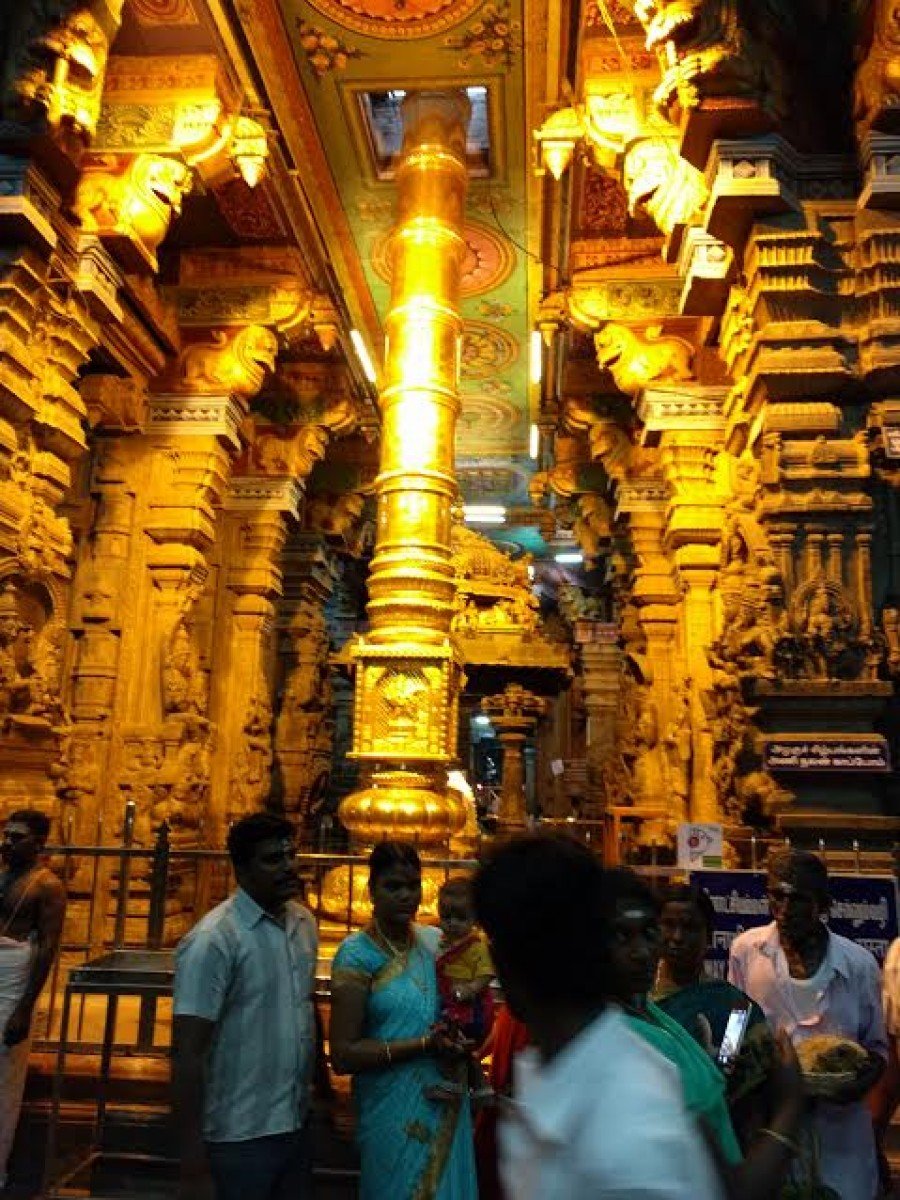
The Symmetrical Corridors: The long, dark corridors surrounding the inner shrines, with the oil lamps and the massive pillars, offer great opportunities for symmetrical, atmospheric, and highly artistic architectural photography.
The Temple Elephant: If the temple elephant is present, it is a great subject for a traditional, culturally rich photograph, often receiving blessings from its trunk.
The Exterior from a Distance: Position yourself in the surrounding Chithirai Streets to capture the full skyline view of the various Gopurams standing tall together, giving a sense of the complex's immense size within the city.Photo Gallery
Things To Do
-
Perform Darshan of the Twin Deities: The main activity is to perform Darshan (worship) at the central shrines of Goddess Meenakshi and Lord Sundareswarar. Note that the Goddess's shrine is traditionally visited first.
Witness the Pooja and Rituals: Attend one of the daily Pooja ceremonies, especially the Sayaraksha (evening Pooja) or the Palliarai Pooja (the ceremonial retirement of the deities for the night at 9:30 PM), for a deeply spiritual experience.
Explore the Hall of Thousand Pillars: Spend a significant amount of time walking through the Ayiramkaal Mandapam (Hall of Thousand Pillars), appreciating the almost 1,000 unique and intricately carved pillars and testing the optical illusion.
Visit the Golden Lotus Tank: Circumambulate the sacred Pottramarai Ku...Perform Darshan of the Twin Deities: The main activity is to perform Darshan (worship) at the central shrines of Goddess Meenakshi and Lord Sundareswarar. Note that the Goddess's shrine is traditionally visited first.
Witness the Pooja and Rituals: Attend one of the daily Pooja ceremonies, especially the Sayaraksha (evening Pooja) or the Palliarai Pooja (the ceremonial retirement of the deities for the night at 9:30 PM), for a deeply spiritual experience.
Explore the Hall of Thousand Pillars: Spend a significant amount of time walking through the Ayiramkaal Mandapam (Hall of Thousand Pillars), appreciating the almost 1,000 unique and intricately carved pillars and testing the optical illusion.
Visit the Golden Lotus Tank: Circumambulate the sacred Pottramarai Kulam (Golden Lotus Tank). Tradition says a bath here purifies the soul, and reading a book here ensures only truth is written.
Admire the Gopurams Up Close: Walk to the base of the massive outer Gopurams to appreciate the sheer volume and detail of the stucco figures that cover them.
Listen to the Musical Pillars: Seek out the musical pillars in the outer corridors and gently tap them to hear the distinct musical notes they produce, a testament to ancient acoustic science.
Shop in the Temple Complex: Browse the small shops and stalls within the outer corridors for flowers, handicrafts, brass lamps, and souvenirs.
Photography (Exterior and Corridors): Capture the beauty of the Gopurams and the intricate carvings in the outer halls and corridors (Note: photography is restricted in the main shrines).
Observe the Temple Elephant: Pay a visit to the temple elephant, often stationed near one of the inner entrances, and receive a blessing (where permitted and safe).
Discover the 64 Divine Plays: Try to spot and identify the carvings that depict the 64 Thiruvilaiyadals (divine plays) of Lord Shiva in the temple's sculptural narrative.
Eat the Temple Prasadam: Try the traditional Prasadam (blessed food offerings) sold in the temple premises, known for its simple, traditional taste.
Utilize a Guide: Consider hiring an official temple guide for a deeper, narrated understanding of the complex's vast mythology and architecture.
Experience the Night Closure Ritual: If possible, stay until the Palliarai Pooja at 9:30 PM, which is a beautiful, ceremonial ritual marking the day's end.
Find the Oldest Tower: Locate and admire the simplicity of the oldest Pottai Gompuram to contrast it with the later, grand towers.
Reflect at the Tank: Sit quietly by the Golden Lotus Tank to soak in the atmosphere and the sheer scale of the surrounding temple structures.
Information
-
Why Famous:
Architectural Pinnacle: The temple's foremost fame is its status as the living, breathing pinnacle of Dravidian temple architecture. The 14 massive, polychromatic Gopurams and the structural ingenuity of the Hall of Thousand Pillars are recognized globally as masterpieces o...Architectural Pinnacle: The temple's foremost fame is its status as the living, breathing pinnacle of Dravidian temple architecture. The 14 massive, polychromatic Gopurams and the structural ingenuity of the Hall of Thousand Pillars are recognized globally as masterpieces of structural and sculptural art.
The Divine Wedding Festival: It is famous worldwide as the host of the spectacular Chithirai Festival in April-May, celebrating the divine marriage of Goddess Meenakshi and Lord Sundareswarar. This festival, which involves the visit of Lord Azhagar, is a massive cultural and religious event that defines Madurai.
Cultural and Spiritual Hub: The temple is not a static museum but a vibrant, working place of worship with a continuous history stretching over two millennia. Its atmosphere, rich with the smell of camphor and flowers, the chanting of mantras, and the movement of millions of devotees, makes it an unparalleled destination for cultural immersion.
The Twin Deities: Its fame lies in the twin shrines dedicated to both the Goddess (Meenakshi) and the God (Sundareswarar), symbolizing the equal importance of the feminine and masculine divine in the Shaivite tradition. -
Architecture:
Dravidian Temple City Architecture: The architecture is the zenith of the Dravidian style, characterized by concentric walled enclosures (prakarams) leading to the central shrines. The entire complex is geometrically planned in the form of a lotus (Padma Vyuha plan). Gopur...Dravidian Temple City Architecture: The architecture is the zenith of the Dravidian style, characterized by concentric walled enclosures (prakarams) leading to the central shrines. The entire complex is geometrically planned in the form of a lotus (Padma Vyuha plan). Gopurams and The Hall of Thousand Pillars Dimension: The temple is defined by its 14 colossal Gopurams (gateway towers), which are multicolored and covered from base to top with thousands of mythological stucco figures, ranging in height from the tallest, the Southern Gopuram, standing at over 51. 9 meters (170 feet), to the smaller ones. The most celebrated interior feature is the Ayiramkaal Mandapam (Hall of Thousand Pillars). This hall is a structural masterpiece, featuring 985 intricately carved pillars, designed to appear in a straight line from any angle. The entire complex covers 65,000 square meters.
Sculptural and Artistic Detail: Every pillar and wall is a canvas for intricate carvings depicting deities, celestial beings, mythological scenes, and episodes from the lives of the 64 Thiruvilaiyadals (divine plays) of Lord Shiva. A unique feature is the set of "musical pillars" in the outer corridors that produce different musical notes when tapped. The Pottai Gompuram is another significant, older structure. -
How To Reach:
By Air: The nearest airport is Madurai Airport (IXM), approximately 12 kms away. From the airport, a taxi or ride-sharing cab will take you to the city center. The temple is a well-known, central landmark, making it an easy drive of about 20 to 30 minutes.By Air: The nearest airport is Madurai Airport (IXM), approximately 12 kms away. From the airport, a taxi or ride-sharing cab will take you to the city center. The temple is a well-known, central landmark, making it an easy drive of about 20 to 30 minutes.
By Train: The closest major station is Madurai Junction (MDU), which is very near, only about 1. 5 to 2 kms away. You can easily walk, take a local city bus, or take a short auto-rickshaw ride.
By Road: The temple is located right in the heart of the city center. All major city bus routes terminate at the Periyar Bus Stand, which is within a kilometer of the temple. You can easily walk or take a cycle-rickshaw from the bus stand.
By Local Transport: Cycle-rickshaws, auto-rickshaws, and local buses are abundant. Because the surrounding area (Chithirai Streets) is congested, it is advisable to walk the last few hundred meters from the bus stand or a main road. -
Weather and Best Time to Visit:
Different Types of Seasons: Winter (October to March) is the non-negotiable Best Time to Visit. The weather is cool and dry, making it comfortable to walk barefoot on the massive stone floor and to explore the surrounding city streets. Summer (April to June) is extremely h...Different Types of Seasons: Winter (October to March) is the non-negotiable Best Time to Visit. The weather is cool and dry, making it comfortable to walk barefoot on the massive stone floor and to explore the surrounding city streets. Summer (April to June) is extremely hot, and the stone floor can be unbearably hot at midday. Monsoon (July to September) is moderate but can see heavy, sudden rainfall.
Different Parts of the Day: Early Morning (5:00 AM to 7:00 AM) is the best time for peaceful Darshan and less crowd. The Evening (6:00 PM to 9:30 PM) is also a wonderful time as the temple is beautifully illuminated, providing a magical atmosphere for walking the corridors. -
Near Tourist Places:
Thirumalai Nayakkar Palace (1. 5 KMs), Koodal Azhagar Temple (1 KM), Kazimar Big Mosque (1 KM), Vandiyur Mariamman Teppakulam (4 KMs), Gandhi Memorial Museum (3 KMs), Madurai Junction (1. 5 KMs), Saint Mary's Cathedral (1 KM), Vilachery Pottery Village (7 KMs), Yanaimalai (10 KMs - Elephant Hill), Madurai Regional Museum (1 KM).
Tourism Tips
-
Health & Safety:
Footwear/Heat: Remove footwear and use the locker; carry socks if visiting during the day in summer to protect your feet from the hot stone floor.
Security: Bags and large items are checked,...Health & Safety:
Footwear/Heat: Remove footwear and use the locker; carry socks if visiting during the day in summer to protect your feet from the hot stone floor.
Security: Bags and large items are checked, and mobile phone usage inside the innermost sanctum is strictly prohibited.
Packing:
Modest Dress:
Dress code is mandatory: men typically wear dhotis or pyjamas with upper cloth, or formal pants and shirts; women wear sarees, half sarees with blouse, or churidars with upper cloth. Jeans and t-shirts are often discouraged.
Valuables: Do not carry unnecessary valuables, as the area is very crowded.
Accommodation:
Central Stay: Book a hotel in the central Madurai area for the easiest access, as most of your sightseeing will be around this hub.
Other Different Topics Heading:
Hiring a Guide: Highly recommended to hire an official temple guide near the entrance to understand the vast mythological and architectural details.
Time Management: Due to the size, be prepared for a long visit and prioritize the areas you wish to see.
Observe Silence: Maintain silence and respect, especially in the inner sanctums.
Reviews
FAQs
Madurai Itineray And Cost:-
Meenakshi Amman Temple Tourism:-
Other Places In Madurai :-
Other States In India :-
Information about New and Updated Locations() of Tamil Nadu Has Been Added :-
Card subtitle
Note:-
Information provided here in good Faith and for reference only.
Near Places

Athisayam Water & Amusement Park
Some quick example text to build on the card title and make up the bulk of the card's content.
Go somewhere
Azhagar Kovil
Some quick example text to build on the card title and make up the bulk of the card's content.
Go somewhere
Gandhi Memorial Museum
Some quick example text to build on the card title and make up the bulk of the card's content.
Go somewhere
Kazimar Big Mosque
Some quick example text to build on the card title and make up the bulk of the card's content.
Go somewhere
Koodal Azhagar Temple
Some quick example text to build on the card title and make up the bulk of the card's content.
Go somewhere
Kutladampatti Falls
Some quick example text to build on the card title and make up the bulk of the card's content.
Go somewhere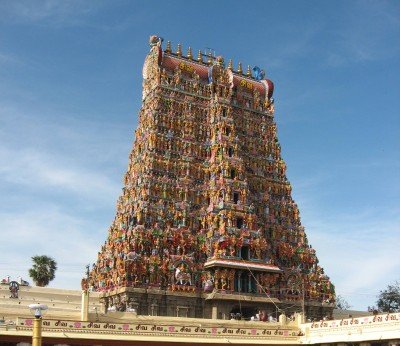
Meenakshi Amman Temple
Some quick example text to build on the card title and make up the bulk of the card's content.
Go somewhere
Pazhamudhircholai
Some quick example text to build on the card title and make up the bulk of the card's content.
Go somewhere
Puthu Mandapam
Some quick example text to build on the card title and make up the bulk of the card's content.
Go somewhere
Saint Mary's Cathedral
Some quick example text to build on the card title and make up the bulk of the card's content.
Go somewhere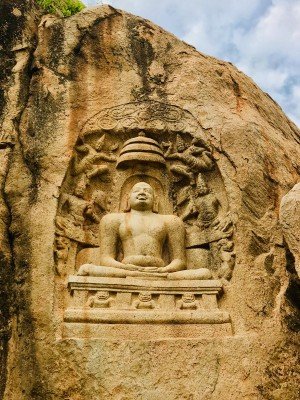
Samanar Hills / Samanar Malai
Some quick example text to build on the card title and make up the bulk of the card's content.
Go somewhere
Thirumalai Nayakkar Mahal
Some quick example text to build on the card title and make up the bulk of the card's content.
Go somewhere
Thirupparankundram Murugan Temple
Some quick example text to build on the card title and make up the bulk of the card's content.
Go somewhere
Vaigai Dam
Some quick example text to build on the card title and make up the bulk of the card's content.
Go somewhere
Vandiyur Mariamman Teppakulam
Some quick example text to build on the card title and make up the bulk of the card's content.
Go somewherein Other Cities