

Pidari Ratha / Valian Kuttai Ratha
General information
-
Ideal Duration:
30-45 minutes (as part of the Pancha Rathas complex visit)Place Type:
Monolithic Rock-Cut Temple / UNESCO MonumentEntry Fees:
Unified Ticket System: Access to the Pidari Ratha / Valian Kuttai Ratha is included in the unified ticket for the Pancha Rathas complex and other nearby centrally-protected monuments in Mahabalipuram, such as the Shore Temple and the Descent of the Ganges (Arjuna's Penance)....Unified Ticket System: Access to the Pidari Ratha / Valian Kuttai Ratha is included in the unified ticket for the Pancha Rathas complex and other nearby centrally-protected monuments in Mahabalipuram, such as the Shore Temple and the Descent of the Ganges (Arjuna's Penance). There is no separate ticket required to visit just this ratha.
Cost for Admission: The standard entry fee is Rs.40 for Indian citizens and visitors from SAARC and BIMSTEC countries, and Rs.600 for other Foreign Nationals. This is a one-time fee for all major ASI-managed sites in the region.
Concessions and Exemptions: Entry is free for all children under the age of 15 years, regardless of nationality. There may also be a small fee (around Rs.25) for professional video cameras, though still photography is typically free. The ticket counter is located near the main entrance of the Pancha Rathas complex.
Importance of the Ticket: Visitors must retain their ticket as it is checked at the entry points of all monuments covered under the unified system, including the Shore Temple. The ticket is typically valid for the day of purchase, allowing visitors to explore the multiple sites in the area.Timing:
Regular Timings: The monument complex is typically open daily from 6:00 AM to 6:00 PM (Sunrise to Sunset), offering a full 12-hour window for visitation. Tickets are usually sold until 5:30 PM. This extensive timing allows for flexibility in scheduling your visit, though e...Regular Timings: The monument complex is typically open daily from 6:00 AM to 6:00 PM (Sunrise to Sunset), offering a full 12-hour window for visitation. Tickets are usually sold until 5:30 PM. This extensive timing allows for flexibility in scheduling your visit, though early morning or late afternoon is highly recommended for comfort.
Ideal Visit Time: The absolute Ideal Visit Time is right at Sunrise (around 6:00 AM) or in the late afternoon/early evening (4:00 PM to 6:00 PM). Early morning offers the best light for photography, the coolest temperatures, and the lowest crowds, allowing for a peaceful and reflective experience. The late afternoon provides the beautiful 'golden hour' light and a pleasant breeze from the nearby sea, making the walk around the complex much more comfortable. Weekday vs.
Weekend: Visit on a Weekday to experience the lowest tourist footfall. Weekends, especially long weekends and public holidays, attract large crowds of local tourists and school groups, which can detract from the ancient atmosphere of the site. Mornings on a Tuesday or Wednesday are often the quietest times.Special Events:
Mahabalipuram Dance Festival Focus: The entire monument complex, including the area around the rathas, becomes a central part of the cultural landscape during the annual Mahabalipuram Dance Festival. Held in January/February, this major event showcases classical Indian danc...Mahabalipuram Dance Festival Focus: The entire monument complex, including the area around the rathas, becomes a central part of the cultural landscape during the annual Mahabalipuram Dance Festival. Held in January/February, this major event showcases classical Indian dance forms like Bharatanatyam, Kuchipudi, and Kathakali, often using the ancient monuments, especially the Shore Temple, as a magnificent backdrop. While Pidari Ratha is not the main stage, the atmosphere and foot traffic around the rathas complex increase dramatically, with cultural activities and related events spilling over. The festival draws artists and spectators from around the globe, celebrating the art forms depicted in the very stone carvings you see. The energy of the festival provides a living connection to the art and history of the site.
Special Evening Illumination: Although the monuments close at sunset, during certain festivals or public holidays, the ASI arranges special illumination for the monuments. When lit up at night, the monolithic forms of the rathas, including Pidari Ratha, stand out dramatically against the night sky, showcasing the incredible texture and shadows of the granite carvings in a way that is not possible during the daytime. These rare viewing opportunities are considered special events and are worth checking the local schedule for.Best Photo Spots:
Wide-Angle Monolith Shot: Capture the entire monolithic structure from a low angle, emphasizing its raw, carved-out-of-stone nature. The relatively small size of Pidari Ratha makes it easier to frame the entire structure compared to the taller Dharmaraja Ratha. Use the nea...Wide-Angle Monolith Shot: Capture the entire monolithic structure from a low angle, emphasizing its raw, carved-out-of-stone nature. The relatively small size of Pidari Ratha makes it easier to frame the entire structure compared to the taller Dharmaraja Ratha. Use the nearby open lawn to provide a clean foreground, giving a sense of scale to the monument.
The Quiet Architectural Detail: Focus on the individual architectural elements like the simple pilasters and the molded plinth. Since the ratha is less crowded, you can get close-up, high-detail shots of the granite surface and any subtle carvings that are present, highlighting the texture and the signs of ancient chisel work. Look for moss or lichen growth to add contrast and an element of age.
Context with Pancha Rathas: Position yourself to capture Pidari Ratha in the foreground with one or more of the larger, more ornate Pancha Rathas (Arjuna Ratha or Draupadi Ratha) in the background. This composition contrasts the architectural simplicity of this monument with the complexity of its neighbors, telling a visual story of Pallava architectural progression.
Sunset/Sunrise Silhouette: The location in an open park area is perfect for capturing the ratha silhouetted against the bright colors of sunrise or sunset. The modest, compact shape creates a powerful, graphic shadow, lending an ancient and timeless feel to the photograph. The golden hour light skimming across the granite also enhances the depth and relief of the surface.Photo Gallery
Things To Do
-
Study Pallava Engineering: Spend time comparing the simple structure of Pidari Ratha with the complex pyramidal superstructures of the Dharmaraja Ratha and the barrel-vaulted roof of the Bhima Ratha. This comparison is crucial for understanding the chronological and stylistic evolution of Pallava architecture, making it an intellectually rewarding exercise for architecture enthusiasts. Look closely at the base and the pilasters to identify the foundational elements of the Dravidian style.
Photography and Composition: The open, grassy area around Pidari Ratha provides excellent angles for wide-shot photography. Since it is less crowded, you can take unhurried shots, focusing on the texture of the granite and the play of light and shadow on the monolithic surface. Use the simplicity of the structure against the vibrant green gr...Study Pallava Engineering: Spend time comparing the simple structure of Pidari Ratha with the complex pyramidal superstructures of the Dharmaraja Ratha and the barrel-vaulted roof of the Bhima Ratha. This comparison is crucial for understanding the chronological and stylistic evolution of Pallava architecture, making it an intellectually rewarding exercise for architecture enthusiasts. Look closely at the base and the pilasters to identify the foundational elements of the Dravidian style.
Photography and Composition: The open, grassy area around Pidari Ratha provides excellent angles for wide-shot photography. Since it is less crowded, you can take unhurried shots, focusing on the texture of the granite and the play of light and shadow on the monolithic surface. Use the simplicity of the structure against the vibrant green grass or the blue sky for striking compositions. Morning or late afternoon light is best to bring out the rock details.
Engage with Local Guides: While visiting the Pancha Rathas complex, hire an official local guide. They often share lesser-known stories and historical context about the smaller structures like Pidari Ratha and Valian Kuttai Ratha, providing richer detail than is available on information boards. Learning the local legends, even the disputed ones regarding its dedication or purpose, enhances the visit significantly.
Connect with the Coast: After viewing the rathas, take a short stroll towards the sea. The monument is close to the Coromandel Coast, and the gentle sea breeze enhances the ancient atmosphere. The entire complex is an archaeological park, so walking leisurely and observing the landscape, including nearby smaller unfinished carvings and rock outcrops, is an excellent way to spend your time. Look for the small, carved animal sculptures that dot the area.
Visit the Other Rathas: Naturally, exploring all seven monolithic structures, including the main five (Dharmaraja, Bhima, Arjuna, Nakula-Sahadeva, and Draupadi), is the primary activity. Use Pidari Ratha as the starting or ending point to appreciate the scale and design progression of the whole Pallava group. The unified ticket grants access to the entire park, allowing for an in-depth exploration of this extraordinary open-air museum.
Art Sketching and Documentation: The quiet atmosphere around Pidari Ratha makes it an ideal spot for sketching or painting. Bring a notebook to capture the architectural details or the overall composition. It serves as a great location for art students and hobbyists looking to document the unique 7th-century South Indian sculptural forms. The relatively small scale of the ratha makes it a manageable subject to sketch in detail.
Historical Reflection: Spend a few minutes sitting on the nearby benches or grassy areas to simply reflect on the history. Imagine the Pallava artisans carving this entire structure by hand over a thousand years ago. The physical effort and architectural genius required to transform a natural rock into a temple prototype are truly awe-inspiring. This reflective time connects you deeply with the site's ancient past and cultural significance.
Information
-
Why Famous:
Prototype of Dravidian Temples: Pidari Ratha, alongside the other Pancha Rathas, is famous for being a vital and definitive example of the initial phase of Dravidian temple architecture. These seven monolithic structures were carved from single granite boulders, serving as ...Prototype of Dravidian Temples: Pidari Ratha, alongside the other Pancha Rathas, is famous for being a vital and definitive example of the initial phase of Dravidian temple architecture. These seven monolithic structures were carved from single granite boulders, serving as life-sized models or prototypes for the grand structural temples that were built across South India in later centuries. Its fame rests on its historical role as a key piece of evidence in the evolution of temple building. The ratha demonstrates the technique of sculpting a complete temple, including the base, walls, roof, and ornamental details, from the top downwards.
Archaeological Significance: Although smaller, its fame comes from its inclusion in the overall Group of Monuments at Mahabalipuram, a UNESCO World Heritage Site. Historians and architects study it for clues about the full extent of the Pallava's 'sculptor-workshop' campus. The fact that it is slightly detached or less complete than the others offers unique insight into the construction process. It is a critical landmark showing the transition from the rock-cut caves to the construction of temples with assembled stone blocks, representing a pivotal moment in Indian art history. The group's collective fame eclipses the individual status of this ratha, yet its presence is essential to the narrative. -
Architecture:
The Monolithic Chariot Style: Pidari Ratha is carved entirely from a single granite rock, showcasing the monolithic rock-cut architecture pioneered by the Pallavas. It features a relatively simple, small square plan, distinct from the pyramidal or barrel-vaulted designs of ...The Monolithic Chariot Style: Pidari Ratha is carved entirely from a single granite rock, showcasing the monolithic rock-cut architecture pioneered by the Pallavas. It features a relatively simple, small square plan, distinct from the pyramidal or barrel-vaulted designs of its neighbors. The structure consists of a square base and a modest superstructure, possibly representing an incomplete or stylized vimana (temple tower). The facade may have pilasters and niches, though the carving details are not as elaborate or well-preserved as the main Pancha Rathas. Its architectural style is classified under the Mamalla style (7th century).
Architectural Dimensions: While exact, measured dimensions are often debated and not consistently published for this smaller ratha, it is significantly smaller than the Dharmaraja Ratha (which has a base of about 28ft x 28ft). Pidari Ratha is characterized by its compact, almost shrine-like size, featuring a base likely around 10-12 feet square. The overall height is also modest, perhaps 15-20 feet. The limited use of decorative carvings, particularly the absence of multi-tiered vimanas and intricate human or divine figures, suggests either an early-stage architectural experiment or a structure that was abandoned before completion. The overall look is one of foundational Dravidian design: simple pillars, a molded plinth, and a square sanctum prototype. -
How To Reach:
By Air: The nearest major airport is Chennai International Airport (MAA), located approximately 55-60 KMS away from Mahabalipuram. From the airport, visitors can hire a pre-paid taxi or a private car, which takes about 1. 5 to 2 hours depending on traffic. You can also tak...By Air: The nearest major airport is Chennai International Airport (MAA), located approximately 55-60 KMS away from Mahabalipuram. From the airport, visitors can hire a pre-paid taxi or a private car, which takes about 1. 5 to 2 hours depending on traffic. You can also take a local bus from the airport's nearby bus terminal to Mahabalipuram.
By Train: The closest major railway station is Chengalpattu Junction (CGL), about 30 KMS away. This station is well-connected to major South Indian cities like Chennai, Madurai, and Trichy. From Chengalpattu, you can easily hire a local taxi or take a public bus directly to Mahabalipuram. Alternatively, Chennai Central (MAS) and Chennai Egmore (MS) are the primary stations, about 60 KMS away, offering more connections, from where you can take an Express Bus or taxi.
By Road: Mahabalipuram is excellently connected by the scenic East Coast Road (ECR), a well-maintained coastal highway. Tamil Nadu State Transport Corporation (TNSTC) and private buses run frequently from Chennai (taking about 1. 5 hours), Pondicherry (taking about 2 hours), and Chengalpattu. Driving or hiring a private cab along the ECR is the most convenient way to reach the town, offering beautiful coastal views.
By Local Transport: Once in Mahabalipuram, the monument is easily accessible. The Pancha Rathas complex is within walking distance (15-20 minutes) from the main bus stand and the town centre. Auto-rickshaws are readily available and can be hired for a short ride to the monument. You can also rent bicycles or two-wheelers for a full day of sightseeing across all the sites. -
Weather and Best Time to Visit:
Different Types of Seasons: Winter (October to March) is the Best Time to Visit. The weather is pleasantly cool and dry, with average temperatures ranging from 20°C to 25°C. This period allows for comfortable, extended exploration of the open-air monuments. Summer (Apri...Different Types of Seasons: Winter (October to March) is the Best Time to Visit. The weather is pleasantly cool and dry, with average temperatures ranging from 20°C to 25°C. This period allows for comfortable, extended exploration of the open-air monuments. Summer (April to June) is extremely hot and humid (30°C to 40°C), making midday visits difficult and tiring. Monsoon (July to September) brings relief from the heat, and the rain-washed greenery enhances the scenery, but sudden, heavy downpours can interrupt sightseeing. October and November, right after the main monsoon, are particularly good months. Different Parts of the Day The Ideal Time is the Early Morning (6:00 AM to 9:00 AM) or Late Afternoon (4:00 PM to 6:00 PM). Morning provides cooler temperatures, lower crowds, and soft, directional light for photography. Late Afternoon offers the beautiful 'golden hour' for photography and a pleasant sea breeze. The hours between 10:00 AM and 3:00 PM should be avoided due to the intense heat and harsh sunlight. -
Near Tourist Places:
Shore Temple (2 KMS): Must-see coastal temple.
Descent of the Ganges (Arjuna's Penance) (1 KMS): Massive rock relief carving. Krishna's Butterball (1.
5 KMS): Gravity-defying boulder.
Mahishasuramardini Cave (2 KMS): Cave temple with Durga panel. Mahabalipuram Light House (2.
5 KMS): Climb for panoramic views. Ganesh Ratha (1.
5 KMS): Another monolithic temple.
India Seashell Museum (4 KMS): Large collection of shells.
Tiger Cave (6 KMS): Seashore cave shrine.
Crocodile Bank Trust (1
5 KMS): Conservation centre. Thirukazhukundram (Vedagiriswarar Temple) (1
5 KMS): Hill temple.
Tourism Tips
-
Health & Safety: Stay Hydrated by carrying plenty of water, especially during your exploration of the open-air rock-cut structures. Wear a wide-brimmed hat or cap and use sunscreen with a high SPF to protect yourself from the tropical sun. Be mindful of the uneven terrain ...Health & Safety: Stay Hydrated by carrying plenty of water, especially during your exploration of the open-air rock-cut structures. Wear a wide-brimmed hat or cap and use sunscreen with a high SPF to protect yourself from the tropical sun. Be mindful of the uneven terrain and rock surfaces; wear comfortable, sturdy footwear as there is a significant amount of walking involved on granite and grass.
Packing: Essential items to pack include sunglasses, a camera for the incredible photo opportunities (still photography is free), and perhaps a small notebook for sketching or jotting down observations about the architecture. A light scarf or shawl can be useful for sun protection and for entering nearby active temples (though not strictly necessary for the ASI monuments). Avoid packing heavy backpacks; keep your load light.
Accommodation: Mahabalipuram offers a wide range of accommodation, from luxury resorts along the ECR to budget guesthouses in the town centre. For a cultural focus, stay near the town centre for easy access to the monuments. For a relaxing beach experience, choose a resort closer to the ECR. Booking in advance, especially during the peak tourist season (October-March) and during the Dance Festival, is highly recommended.
Other Topics Heading:
Hiring a Guide: Consider hiring a licensed, official guide near the main ticket counter. They offer valuable context, history, and architectural insight that information boards cannot provide.
Currency: Carry enough cash (Indian Rupees) for small purchases, local transport (auto-rickshaws), and quick snacks, as small vendors may not accept digital payments.
Respect the Site: As a UNESCO World Heritage Site, visitors must respect the preservation guidelines: do not touch the carvings, do not litter, and respect the serenity of the location.
Local Cuisine: Be sure to try the local South Indian cuisine, particularly fresh seafood and traditional Tamil vegetarian meals (Thali) at one of the many restaurants.
Reviews
FAQs
Mahabalipuram Itineray And Cost:-
Pidari Ratha / Valian Kuttai Ratha Tourism:-
Other Places In Mahabalipuram :-
Other States In India :-
Information about New and Updated Locations() of Tamil Nadu Has Been Added :-
Card subtitle
Note:-
Information provided here in good Faith and for reference only.
Near Places

Arjuna's Penance
Some quick example text to build on the card title and make up the bulk of the card's content.
Go somewhere
Dakshinachitra Museum
Some quick example text to build on the card title and make up the bulk of the card's content.
Go somewhere
Flipflops Beach Shack
Some quick example text to build on the card title and make up the bulk of the card's content.
Go somewhere
Ganesh Ratha Temple
Some quick example text to build on the card title and make up the bulk of the card's content.
Go somewhere
India Seashell Museum
Some quick example text to build on the card title and make up the bulk of the card's content.
Go somewhere
Krishna's Butter Ball
Some quick example text to build on the card title and make up the bulk of the card's content.
Go somewhere
Mahabalipuram Beach
Some quick example text to build on the card title and make up the bulk of the card's content.
Go somewhere
Mahabalipuram Stone Carving
Some quick example text to build on the card title and make up the bulk of the card's content.
Go somewhere
Mahishasura Rock
Some quick example text to build on the card title and make up the bulk of the card's content.
Go somewhere
Mahishasuramardini Cave
Some quick example text to build on the card title and make up the bulk of the card's content.
Go somewhere
Mamallapuram Lighthouse
Some quick example text to build on the card title and make up the bulk of the card's content.
Go somewhere
Mukunda Nayanar Temple
Some quick example text to build on the card title and make up the bulk of the card's content.
Go somewhere
Olakkannesvara Temple
Some quick example text to build on the card title and make up the bulk of the card's content.
Go somewhere
Pancha Pandava Rathas
Some quick example text to build on the card title and make up the bulk of the card's content.
Go somewhere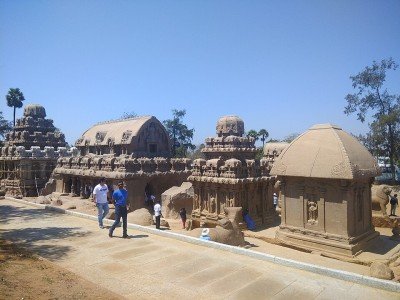
Pancha Rathas
Some quick example text to build on the card title and make up the bulk of the card's content.
Go somewhere
Pidari Ratha / Valian Kuttai Ratha
Some quick example text to build on the card title and make up the bulk of the card's content.
Go somewherein Other Cities