...

Place To Visit And Things To Do In Jamnagar

Gujarat, India
Jamnagar, historically known as Nawanagar, is a vibrant coastal city in Gujarat, India, renowned for its rich heritage, diverse ecosystems, and modern industrial landscape. Founded in 1540 by Jam Raval, it flourished under the patronage of rulers like Maharaja Kumar Shri Ranjitsinhji, who significa ntly contributed to its development and gave it a European touch in the 1920s. Often called "Chhoti Kashi" due to its numerous temples, Jamnagar is a unique blend of ancient charm and contemporary progress, housing the world's largest oil refinery by Reliance Industries and India's first Marine National Park. It's also famous for its Bandhani (tie-dye) textiles, gold embroidery, and an Ayurvedic University.

Things To Do

Card image cap
Adinath Mandir Jain Temple

The Adinath Mandir Jain Temple is a prominent and exquisitely adorned Jain temple in Jamnagar, dedicated to Lord Adinath (Rishabhanatha), the first T...

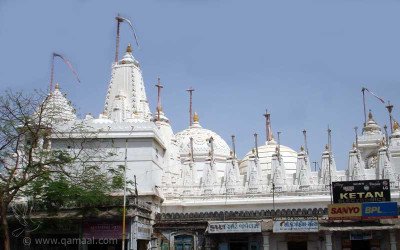
The Adinath Mandir Jain Temple is a prominent and exquisitely adorned Jain temple in Jamnagar, dedicated to Lord Adinath (Rishabhanatha), the first Tirthankara of Jainism. It is part of a cluster of four Jain temples in the bustling Chandi Bazaar, a historic area known for its silver and gold jewelers. The temple, built between 1574 and 1622, showcases a magnificent blend of traditional Jain architecture and intricate artistic detailing. While its exterior is often a classic white, the interior truly "explodes" with vibrant colors, fine murals, mirrored domes, elaborate chandeliers, and intricate stone carvings. The walls are richly decorated with frescos depicting the lives of various Tirthankaras, and the marble floor is adorned with distinctive Jain patterns in yellow, black, white, and red. The temple complex itself is surrounded by 52 smaller shrines or "Deri," built in 1622, adding to its spiritual and architectural significance. It's a tranquil oasis amidst the lively market, offering a profound spiritual and aesthetic experience.
Card image cap
Ayurved University

@@Historical Significance: The foundation of the current university traces back to a charitable hospital and the Dhanvantri Mandir complex, which was ...

@@Historical Significance: The foundation of the current university traces back to a charitable hospital and the Dhanvantri Mandir complex, which was built under the personal supervision of Dr. Pranjivan Manekchand Mehta, Chief Medical Officer of Guru Govindsingh Hospital in 1944. @@Evolution to University: After India's independence, the facility gained prominence and was officially established as the Gujarat Ayurved University (GAU) on January 5, 1965, through a legislative Act of the Government of Gujarat. This makes it a pioneer statutory university in the field. @@Mission and Scope: It is a dedicated center for teaching, training, and high-level clinical and experimental research in ancient Ayurveda, Ayurvedic Pharmacy, Yoga, and Naturopathy. The university's existence consolidated three major educational and research establishments, including the prestigious Institute of Post Graduate Teaching and Research in Ayurveda (IPGT&RA), the oldest and premier research institute of Ayurveda in India. The institution is known globally for upholding and advancing the ancient science of life, drawing students and researchers from various countries like Sri Lanka, Nepal, and Mauritius. @@Modern Relevance: The institution has been integrated into the Institute of Teaching and Research in Ayurveda (ITRA), which has been declared an 'Institute of National Importance' by the Parliament of India, signifying its crucial role in the national and international promotion of AYUSH (Ayurveda, Yoga & Naturopathy, Unani, Siddha, and Homoeopathy) systems. The campus also houses the historical Dhanvantri Mandir (temple) dedicated to Lord Dhanvantari, the physician of the gods, adding a spiritual dimension to the academic environment. Its commitment to research, including digitizing thousands of ancient palm-leaf manuscripts, solidifies its position as a global repository of Ayurvedic knowledge. This vast complex continues to be a hub for both public and academic activities, emphasizing holistic wellness.
Card image cap
Bala Hanuman Temple

@@Details:The Bala Hanuman Temple, officially Shri Bala Hanuman Sankirtan Mandir, is a major religious site renowned globally for the continuous chant...

@@Details:The Bala Hanuman Temple, officially Shri Bala Hanuman Sankirtan Mandir, is a major religious site renowned globally for the continuous chanting of the 'Shri Ram Jai Ram Jai Jai Ram' mantra, which has been ongoing since August 1, 1964. This unbroken chant, known as 'Akhand Ram Dhun', earned the temple a place in the Guinness Book of World Records. Established by Shri Prem Bhushan Ji Maharaj, the temple is dedicated to Lord Hanuman, but also houses idols of Lord Ram, Sita, and Lakshmana. The devotional atmosphere draws thousands of pilgrims daily who seek peace and blessings. The temple's location beside the picturesque Lakhota Lake adds to its serene charm, making it a perfect spot for spiritual reflection and quiet devotion. It is not just a place of worship but a symbol of unwavering faith and continuous divine remembrance, attracting visitors from all walks of life and all over the world. The constant flow of devotees and the resonating chant create a truly unique and powerful spiritual energy within the premises, embodying the city's religious spirit.
Card image cap
Balachadi Beach

@@Details:Balachadi Beach is a quiet and relatively secluded coastal stretch located on the coast of the Gulf of Kutch, about 26 kilometers from the m...

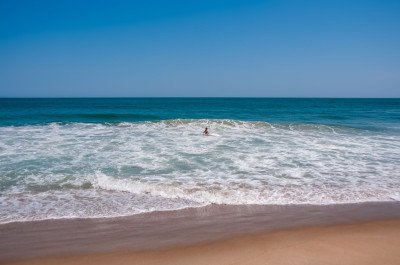
@@Details:Balachadi Beach is a quiet and relatively secluded coastal stretch located on the coast of the Gulf of Kutch, about 26 kilometers from the main city of Jamnagar. Unlike the commercialized beaches, Balachadi offers a peaceful environment, characterized by clean, white sandy shores and gentle waves. The area is famous for its tranquility and scenic beauty, particularly the mesmerizing sunrise and sunset views over the Arabian Sea. It is also historically significant as the location of the Sainik School Balachadi, which was initially set up as a refugee camp by Jam Saheb Digvijaysinhji to shelter Polish children escaping World War II. While it might be smaller and less developed than other beaches, its calm atmosphere makes it an ideal spot for family picnics, leisurely strolls, and relaxation away from the city crowds. The beach is a wonderful natural retreat for bird watching, especially during the migratory season, and for collecting sea shells. The surrounding area is relatively untouched, providing a raw and beautiful natural experience.
Card image cap
BAPS Shri Swaminarayan Mandir

@@Details:The BAPS Shri Swaminarayan Mandir in Jamnagar is a stunning and relatively modern architectural masterpiece built by the BAPS (Bochasanwasi ...

@@Details:The BAPS Shri Swaminarayan Mandir in Jamnagar is a stunning and relatively modern architectural masterpiece built by the BAPS (Bochasanwasi Akshar Purushottam Swaminarayan Sanstha) organization. Dedicated to Bhagwan Swaminarayan and his lineage of spiritual successors, the Mandir serves as a center for worship, community service, and cultural activities. Built using traditional methods and materials, the mandir showcases incredible craftsmanship with intricately carved pink stone and marble. The atmosphere inside the complex is one of profound peace and devotion. It houses beautiful idols (murtis) of various deities, including Shri Nilkanth Varni (a form of Bhagwan Swaminarayan), Shri Radha-Krishna, and others. The temple complex is meticulously maintained and offers a clean, serene environment for visitors to meditate and learn about the Swaminarayan faith and Hindu culture. It stands as a beacon of spirituality and a proud display of modern Indian temple architecture. The complex often includes a Haveli (cultural center) and facilities for devotees.
Card image cap
Bedi Port

@@Details:Bedi Port, situated on the south-eastern coast of the Gulf of Kutch, is one of the two main ports serving Jamnagar (the other being Rozi Por...

@@Details:Bedi Port, situated on the south-eastern coast of the Gulf of Kutch, is one of the two main ports serving Jamnagar (the other being Rozi Port) and has historically been the commercial lifeline of the city, which was once known as Nawanagar. Located a few nautical miles inland on the Rangmati River, it is an all-weather intermediate seaport that plays a significant role in maritime trade, primarily exporting commodities like bauxite, ground nut extracts, and soya meal, while importing items like coal and fertilizer. For a tourist, the port offers a glimpse into the bustling commercial activity and the city’s economic backbone. It is a scenic location, especially during sunrise and sunset, where one can observe large ships and smaller fishing boats. The area is also popular for seaside picnics, fishing, and boating activities. The port's activity has shaped the local economy and culture for centuries.
Card image cap
Bhidbhanjan Mahadev Temple

@@Details:The Bhidbhanjan Mahadev Temple is one of the oldest and most revered temples in Jamnagar, dedicated to Lord Shiva. The temple's name, 'Bhidb...

@@Details:The Bhidbhanjan Mahadev Temple is one of the oldest and most revered temples in Jamnagar, dedicated to Lord Shiva. The temple's name, 'Bhidbhanjan', literally means 'destroyer of crowds/troubles', and it is believed that praying here relieves one of all difficulties. It was constructed during the rule of Jam Rawal, the founder of Jamnagar (Nawanagar), showcasing the rich historical and religious legacy of the city. The temple is a fine example of Hindu-Rajput style architecture, known for its intricate carvings and detailed craftsmanship. The walls and pillars are adorned with exquisite sculptures, and the gates feature delicate silver work, highlighting the skill of the local artisans. It is a major center for worship, especially during the Hindu month of Shravan and on the festival of Maha Shivratri, when it attracts a huge influx of devotees. Its central location near the city's historical gates adds to its prominence as a city landmark.
Card image cap
Bhujiyo Kotho

@@Details:The Bhujiyo Kotho, also known as the Bhujiyo Bastion, is a significant historical tower and a part of the old city's defense mechanism, loca...

@@Details:The Bhujiyo Kotho, also known as the Bhujiyo Bastion, is a significant historical tower and a part of the old city's defense mechanism, located near Bedi Gate and overlooking the picturesque Ranmal Lake (Lakhota Lake). It is believed to have been constructed by the former rulers of Nawanagar (Jamnagar) to defend the city against invasions. The tower's strategic height offered a panoramic, commanding view of the entire city and the surrounding areas, a major advantage during historical battles. There is an intriguing local legend that suggests the tower was the entrance to a secret underground passage connecting Jamnagar to the city of Bhuj, reflecting the historical ties between the two princely states. Although parts of the structure have deteriorated and suffered damage (notably in the 2001 earthquake), restoration work has been ongoing to preserve this important heritage site. Once fully restored, it serves as a wonderful vantage point for visitors to appreciate the layout and beauty of Jamnagar.
Card image cap
Chandi Bazaar

@@Details:Chandi Bazaar, literally meaning 'Silver Market', is the bustling heart of traditional commerce in old Jamnagar. It is particularly renowned...

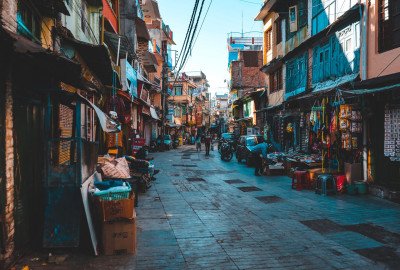
@@Details:Chandi Bazaar, literally meaning 'Silver Market', is the bustling heart of traditional commerce in old Jamnagar. It is particularly renowned for its exquisite and specialized trade in silver and gold jewelry, rare antique pieces, and items studded with exotic gemstones. The market takes up a significant area around the major Jain Temples in the city, underscoring the community's historical connection to the trade. Beyond precious metals, the bazaar is also famous for traditional Bandhani (tie-dye) sarees and fabrics, which are a specialty of Gujarat. Walking through the narrow, crowded lanes of Chandi Bazaar is a vibrant, sensory experience, offering a glimpse into the city's rich artisanal heritage and trading culture. It's a place where one can observe skilled silver and metal artisans at work. It is an essential stop for shoppers looking for authentic local goods, high-quality jewelry, and traditional textiles, making it a cultural and commercial center.
Card image cap
Cremation Ground of Jamnagar Royals (Shahi Samshan)

The Royal Cremation Ground, or Shahi Samshan, is a historical site where the cremations of the erstwhile Jadeja rulers of Nawanagar state took place....

The Royal Cremation Ground, or Shahi Samshan, is a historical site where the cremations of the erstwhile Jadeja rulers of Nawanagar state took place. Unlike typical cremation grounds, this site often features memorial structures, cenotaphs (chhatris), and intricately carved platforms that commemorate the deceased royals. These structures are often built in a blend of Rajput and Indo-Saracenic architectural styles, adorned with sculptures, carvings, and sometimes even paintings that depict scenes from the lives of the rulers or religious motifs. It's a place of historical significance, offering insights into the funerary customs and artistic traditions of the royal family. While it might sound unusual as a tourist spot, it's a quiet, reflective place for those interested in heritage, architecture, and the legacy of the princely states.
Card image cap
Darbargadh Palace

@@Details:The Darbargadh Palace is the original royal residence of the Jam Sahebs (rulers) of the former princely state of Nawanagar (now Jamnagar). I...

@@Details:The Darbargadh Palace is the original royal residence of the Jam Sahebs (rulers) of the former princely state of Nawanagar (now Jamnagar). Its foundation was laid by Jam Rawal, the city's founder, in 1540 A.D., making it one of the most historically significant structures in Jamnagar. Located in the heart of the old city, the palace is a magnificent example of a fusion of Rajput and European architectural styles. Although it suffered damage, particularly in the 2001 earthquake, the surviving structure showcases impressive carved pillars, jharokha balconies, intricate wall paintings, and beautiful stone carvings. The palace complex, built as a rectangular fort, once housed the administrative unit and the Ashapura Mataji temple. One section, known as Tilamedi, is believed to be the site of the coronation ceremonies of the Jam Sahebs and still preserves historical artifacts like the wooden throne of Jam Rawal, his sword, and a dagger. The palace offers a window into the opulent lifestyle and rich history of the Jadeja Rajput rulers.
Card image cap
Dwarkadhish Temple (Dwarka) & Bet Dwarka

The Dwarkadhish Temple, dedicated to Lord Krishna, is one of the Char Dham pilgrimage sites and one of the Sapta Puri (seven holy cities) of Hinduism...

The Dwarkadhish Temple, dedicated to Lord Krishna, is one of the Char Dham pilgrimage sites and one of the Sapta Puri (seven holy cities) of Hinduism. Its stunning five-story architecture, supported by 72 pillars, is a marvel. The temple is believed to have been built by Vajranabha, the great-grandson of Lord Krishna, over the original Hari Griha, Krishna's residential place. The temple attracts millions of devotees annually, especially during Janmashtami. Bet Dwarka, also known as Shankhodhar, is an island believed to be the original residence of Lord Krishna when he ruled Dwarka. The main temple here is also dedicated to Lord Krishna. Apart from the main temple, other shrines in the complex commemorate Hanuman, Vishnu, Shiva, Lakshmi Narayan, and Jambavati. Underwater explorations have revealed the presence of ancient settlements, further linking it to the historical epic Mahabharata. The recent inauguration of Sudarshan Setu, India's longest cable bridge, connects Okha to Bet Dwarka, significantly improving accessibility.
Card image cap
Jain Temples

@@Details:The Jain Temples complex in Jamnagar, particularly the Vardhman Shah's Temple, is a profound religious and architectural landmark located at...

@@Details:The Jain Temples complex in Jamnagar, particularly the Vardhman Shah's Temple, is a profound religious and architectural landmark located at the heart of the old city near Chandi Bazaar. The Vardhman Shah's Temple is one of the four main Jain temples in Jamnagar and is one of the city's oldest and most significant structures. Its foundation was laid in 1612 during the rule of Jam Jasaji I, and it was completed in 1620. A unique feature is the surrounding circle of fifty-two small shrines or Deri built in 1622, encircling the main temple. The temple is a masterpiece of marble and stone carving, known for its pristine beauty and intricate workmanship, reflecting the rich patronage of the Jain community. The temple serves as a peaceful spiritual center for the Jain community and attracts architecture enthusiasts globally, embodying the community's dedication to art, peace, and spirituality.
Card image cap
Khambhalia Gate

@@Historical Significance: The Khambhalia Gate is one of the two remaining original city gates of Jamnagar, built in the 17th century by Wazir Meraman...
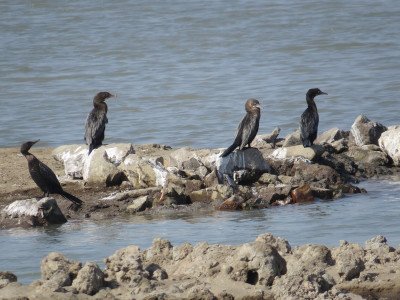
@@Historical Significance: The Khambhalia Gate is one of the two remaining original city gates of Jamnagar, built in the 17th century by Wazir Meraman Khawa to commemorate Raja Jamraval. It served as a critical defensive structure at the city's entrance. @@Restoration and Culture: Recently, the gate underwent significant restoration, preserving its majestic look and historical integrity. The upper floor now often features a gallery showcasing the city's rich history and heritage. It marks the entrance to the old city area, which is a hub for traditional markets and local commerce. It symbolizes the historical boundary of the old walled city of Nawanagar. @@Local Landmark: The area around the gate, particularly Hawai Chowk, is a bustling commercial area, making the gate a central landmark for both locals and tourists. It's a testament to the foresight of the Jadeja rulers in protecting their capital.
Card image cap
Khijadiya Bird Sanctuary

@@Unique Ecosystem: Established in May 1981, the Khijadiya Bird Sanctuary is a unique coastal-wetland ecosystem where freshwater from the Ranjit Sagar...
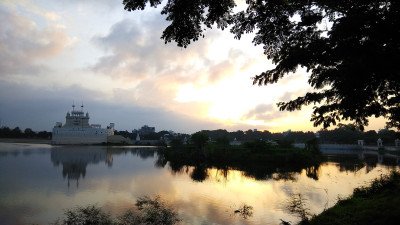
@@Unique Ecosystem: Established in May 1981, the Khijadiya Bird Sanctuary is a unique coastal-wetland ecosystem where freshwater from the Ranjit Sagar dam and seawater from the Gulf of Kutch meet. This confluence creates an unparalleled diversity of habitats—freshwater lakes, saline marshlands, mangroves, and mudflats—all within a compact area of approximately 6.05 sq. KM. @@Biodiversity Hotspot: This small area boasts one of the highest bird species densities in Gujarat, recording over 300 species, including both resident and significant migratory waterfowl. It is a critical staging ground for birds traveling on the Central Asian Flyway. @@Conservation Significance: The sanctuary is vital for globally threatened species like the Dalmatian Pelican, Black-necked Stork, and Indian Skimmer. The man-made bunds (embankments) that separate the two water types are the architectural feature that created this ecological haven.
Card image cap
Kotha Bastion (Kotha ni Kothari)

The Kotha Bastion, sometimes referred to as 'Kotha ni Kothari', is a significant historical structure located within Jamnagar's old city walls. It is...

The Kotha Bastion, sometimes referred to as 'Kotha ni Kothari', is a significant historical structure located within Jamnagar's old city walls. It is part of the historic fortifications that once protected the city. This bastion is particularly notable for housing a collection of ancient cannons, including the famous "Kotha Cannon." These cannons, with their imposing size and historical significance, offer a glimpse into the military past of the Nawanagar state. The bastion itself, with its robust construction, showcases the defensive architecture prevalent during the princely era. It serves as a reminder of Jamnagar's strategic importance and the foresight of its rulers in establishing strong defenses. The area around Kotha Bastion often bustles with local life, giving visitors an authentic feel of the old city. While it may not be as grand as a palace, its historical context and the presence of these ancient artillery pieces make it a point of interest for those keen on military history and the city's heritage.
Card image cap
Lakhota Fort & Museum

@@Historical Construction: The Lakhota Fort, locally known as Lakhota Kotha, is an island fortress situated in the middle of Ranmal Lake (Lakhota Lake...
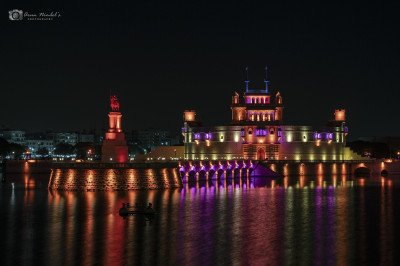
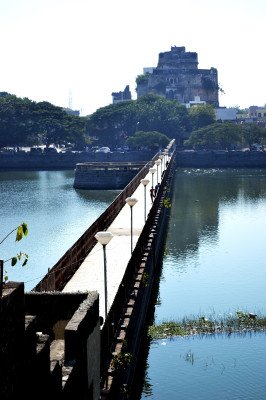
@@Historical Construction: The Lakhota Fort, locally known as Lakhota Kotha, is an island fortress situated in the middle of Ranmal Lake (Lakhota Lake). It was originally constructed as a famine relief work between 1839 and 1845 AD by Jam Ranmal II. The structure was designed to serve a dual purpose: a water reservoir and a defensive arsenal for the Nawanagar state. @@Museum Establishment: The fort was later converted into an archaeological museum in 1946, now managed by the Gujarat State Archaeology and Museum Department. It displays a vast collection of artifacts spanning the 9th to 18th centuries. @@Restoration: The fort sustained damage in the 2001 earthquake and was subsequently restored and reopened in 2018, making it one of the city's best-preserved heritage sites. The name is believed to derive from the 1 lakh koris (Nawanagar currency) spent on its construction.
Card image cap
Lakhota Lake & Lakhota Palace

Lakhota Lake, also known as Ranmal Lake, is a serene oasis spanning approximately 5 lakh square meters. It's a popular spot for leisurely strolls and...

Lakhota Lake, also known as Ranmal Lake, is a serene oasis spanning approximately 5 lakh square meters. It's a popular spot for leisurely strolls and birdwatching, especially during the evenings. The lake's center houses the magnificent Lakhota Palace, a 19th-century structure that once served as a royal residence and military fort. Today, it has been converted into the Lakhota Museum, showcasing a fascinating collection of artifacts, weaponry, pottery, and sculptures dating from the 9th to the 18th centuries. Visitors can also see the skeleton of a whale on display. The palace's turrets, powder flasks, and guardroom with musket loops offer a glimpse into its past. The blend of historical architecture and tranquil waters makes it a picturesque and insightful destination.
Card image cap
Lakhota Lake / Ranmal Lake

@@Historical Origin: Also known as Lakhota Talav, the lake is a large, man-made water body in the center of Jamnagar, constructed in the mid-19th cent...
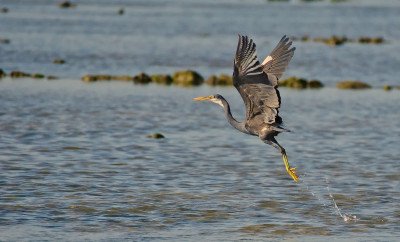
@@Historical Origin: Also known as Lakhota Talav, the lake is a large, man-made water body in the center of Jamnagar, constructed in the mid-19th century by Jam Ranmal II. It was designed primarily as a water reservoir to combat drought, showcasing the progressive nature of the Nawanagar rulers. @@Recreational Hub: Today, it serves as the most popular recreational spot in the city. The entire perimeter has been developed into a well-maintained promenade with paved walking tracks, seating, and food stalls, attracting joggers, families, and tourists. @@Ecological Importance: The lake is home to numerous aquatic species and is a significant urban birdwatching site, especially during the Winter season. Over 75 species of birds have been recorded here, with many migratory birds making it their temporary home, offering a breath of fresh air amidst the city bustle. @@Cultural Node: The presence of the Lakhota Fort in its center and the Bala Hanuman Temple on its bank gives it immense cultural and historical value, embedding it deeply into the city's identity.
Card image cap
Marine National Park & Pirotan Island

India's first Marine National Park and Sanctuary, established in 1982, is a unique underwater wonderland. It comprises 42 islands, with Pirotan Islan...

India's first Marine National Park and Sanctuary, established in 1982, is a unique underwater wonderland. It comprises 42 islands, with Pirotan Island being the most popular and accessible for visitors. This park is renowned for its rich marine biodiversity, including vibrant coral reefs (both hard and soft corals), mangroves, and a myriad of marine life such as colorful sponges, giant sea anemones, jellyfish, seahorses, octopuses, starfish, varieties of crabs and prawns, sea turtles, and even dolphins and dugongs. What makes it particularly special is that it's one of the few places in India where you can observe coral reefs without requiring diving or snorkeling, as water levels can be as low as 50 cm during low tide. Visitors can walk on the ocean floor during specific low tide timings, offering a truly unique experience. The park is a significant ecological site and a haven for both marine life and migratory birds.
Card image cap
Marine National Park

@@Ecological Status: The Marine National Park (MNP), established in 1982, is India's first marine protected area, encompassing 42 islands along the co...
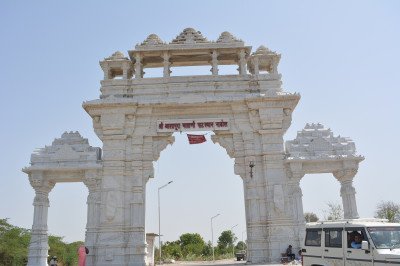
@@Ecological Status: The Marine National Park (MNP), established in 1982, is India's first marine protected area, encompassing 42 islands along the coast of the Gulf of Kutch, covering an area of approximately 163 sq. KM. The site most accessible to tourists is Narara Island/Pier (though technically in Devbhumi Dwarka district, it is accessed from Jamnagar). @@Biodiversity: The park protects two critical ecosystems: coral reefs (27 species of hard and soft corals) and mangroves. It is a spectacular site for intertidal zone exploration. @@Visible Marine Life: During low tide, the sea recedes by several kilometers, exposing the seabed and allowing visitors to walk on the ocean floor to see an abundance of marine life, including octopus, pufferfish, starfish, various species of crabs and crustaceans, sea anemones, and colorful sponges. @@Conservation: The park is a fragile ecosystem under threat from industrial pollution and is a key focus area for marine conservation in Gujarat.
Card image cap
Mota Ashapura Maa Temple

@@Spiritual Significance: The Mota Ashapura Maa Temple is one of the most revered religious sites in Jamnagar, dedicated to Ashapura Mata (Goddess who...

@@Spiritual Significance: The Mota Ashapura Maa Temple is one of the most revered religious sites in Jamnagar, dedicated to Ashapura Mata (Goddess who fulfills wishes), an aspect of Devi. She is the Kuldevi (clan goddess) of the powerful Jadeja Rajput clan, who were the former rulers of the Nawanagar state. @@Historical Location: The temple's location on the eastern edge of the old city (Bedi Gate area) is highly strategic, believed to have been placed by the Jams to guard the city from enemies and evil from the entrance point. @@Worship and Devotion: The goddess is seen as the guardian and protector of the city. Devotees visit the temple throughout the year, but her importance is magnified during the Navratri festival, when special rituals and grand celebrations are held. @@"Mota" Title: The prefix "Mota" (meaning "big" or "main") distinguishes it as the principal temple dedicated to the goddess in the city, holding greater religious importance than smaller shrines.
Card image cap
Nagneshwer Mahadev Temple

The Nageshwar Jyotirlinga Temple is one of the twelve sacred Jyotirlinga shrines of Lord Shiva, making it an extremely significant pilgrimage site fo...

The Nageshwar Jyotirlinga Temple is one of the twelve sacred Jyotirlinga shrines of Lord Shiva, making it an extremely significant pilgrimage site for Hindus. While the exact location of the original Nageshwar Jyotirlinga is debated among three sites (one in Dwarka, Gujarat; one in Audha, Maharashtra; and one in Jageshwar, Uttarakhand), the one near Jamnagar (close to Dwarka) is widely revered by devotees visiting Gujarat. The temple complex typically features a large, majestic idol of Lord Shiva and a serene spiritual atmosphere. Pilgrims often perform abhishek (ritual bathing of the idol) with milk and water and offer bilva leaves to seek blessings. The temple attracts a large number of devotees, particularly during the Mahashivratri festival, when special prayers and celebrations are held. The calm surroundings and the profound spiritual significance of the Jyotirlinga make it a deeply moving experience for visitors.
Card image cap
Pavanchakki

@@Urban Locality: Pavanchakki (literally "Windmill") is not a single tourist monument but an old, bustling locality and a commercial area in Jamnagar,...

@@Urban Locality: Pavanchakki (literally "Windmill") is not a single tourist monument but an old, bustling locality and a commercial area in Jamnagar, primarily famous for a specific junction and its historical connection to a large water pumping system. The area's name is derived from a very old, possibly historical, windmill or wind-powered pump that was once a prominent landmark. @@Commercial Hub: The area is now known for its diverse businesses, including local architecture firms, interior designers, small-scale industries, and residential colonies, making it a key junction for local city life and commerce. @@Evolution of Name: The retention of the name Pavanchakki in the modern context is a testament to the structure's historical importance as a landmark in the city's early infrastructure and water management. It is a place name rather than a structured tourist site. @@Local Significance: It is a vibrant, crowded place where locals conduct their daily business, offering a look into the real, working urban environment of Jamnagar.
Card image cap
Pirotan Island

@@Marine Ecosystem: Pirotan Island is the most famous of the 42 islands in the Marine National Park, known for its relatively pristine coral reefs, ri...
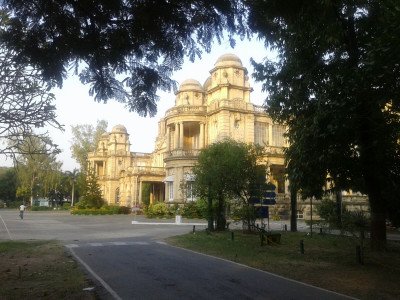
@@Marine Ecosystem: Pirotan Island is the most famous of the 42 islands in the Marine National Park, known for its relatively pristine coral reefs, rich mangrove patches, and extensive intertidal zones. It is a strictly protected area, and access is tightly regulated. @@Historical Landmark: The island is home to a historical Lighthouse, built first in 1898 and replaced in 1958, which serves as a navigational aid in the Gulf of Kutch. The island's name may derive from the ancient city of Pirotan Patan near Bedi Port. @@Biodiversity: It offers a phenomenal opportunity to view marine life, including diverse corals, sponges, sea anemones, crabs (Ghost, King, Hermit), sea slugs, and various sea birds, particularly during the low tide. @@Pilgrimage Site: It also hosts a small, sacred shrine (Durgah) of the holy saint Khwaja Khizer R.A., which is a destination for local pilgrims.
Card image cap
Pratap Vilas Palace

@@A Royal Legacy in Gujarat: The Pratap Vilas Palace stands as a spectacular testament to the opulent past of Jamnagar, formerly known as Nawanagar. I...

@@A Royal Legacy in Gujarat: The Pratap Vilas Palace stands as a spectacular testament to the opulent past of Jamnagar, formerly known as Nawanagar. Its construction spanned from 1907 to 1915, commissioned by the legendary cricketer and visionary ruler, Maharaja Kumar Shri Ranjitsinhji, though it was ultimately intended to serve as a royal guesthouse rather than his personal permanent residence. The architecture is a captivating and seamless fusion of traditional Indo-Saracenic design and distinct European influences, particularly drawing inspiration from the Victoria Memorial Building in Kolkata. This harmonious blend sets it apart as arguably the most magnificent palace in the entire Saurashtra region. The sheer scale and meticulous detailing of the palace complex immediately transport visitors back to the era of princely states and their accompanying grandeur. The palace is nestled within expansive, sprawling grounds that were later converted into a dedicated Natural Park in 1968 by Maharaja Kumar Ranjitsinhji, showcasing the royal family's dedication not only to architecture but also to nature conservation. The primary façade is dominated by three signature domes, which are said to be crafted from glass, a rare and innovative feature for its time, adding an element of exquisite light and transparency to the structure. Although the palace has faced some damage, notably from the devastating 2001 earthquake, subsequent restoration efforts have worked to preserve its dignity and historical integrity. Visitors are generally restricted to viewing the exterior and surrounding grounds, as the interior is often not fully open to the public, requiring special permission, yet the exterior alone provides a powerful sense of the wealth, refined taste, and immense pomp of the Jadeja Rajput rulers of Nawanagar. The interior, based on historical accounts, boasts magnificent halls, intricately carved pillars, and once held a vast collection of period artifacts, portraits, and weaponry. The palace is more than just a building; it is a historical narrative etched in stone, representing the transition and modernization of the princely state under the reformist rule of the Jams. The extensive gardens are home to diverse flora and fauna, making the palace grounds a haven for nature lovers and a quiet escape within the modern city limits of Jamnagar. Its enduring presence solidifies its place as the definitive symbol of royal heritage in the region.
Card image cap
Raisi Shah's Temple

@@A Spiritual and Historical Hub: Raisi Shah's Temple, also often referred to as a Derasar, stands as a pivotal religious site for the Swetambar Jain ...
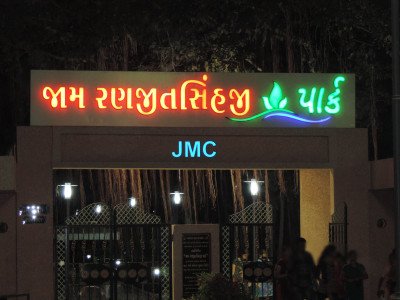
@@A Spiritual and Historical Hub: Raisi Shah's Temple, also often referred to as a Derasar, stands as a pivotal religious site for the Swetambar Jain community in Jamnagar. It is one of a cluster of four highly revered marble Jain temples in the city, established by influential community figures like Vardhaman Shah, Raisi Shah, Sheth, and Vasupujya Swami. This particular temple is a shining example of the dedication and philanthropic efforts of the Jain merchant community, which has historically played a significant role in the economic and cultural development of Gujarat. The construction date of this temple, along with the others in the group, is generally traced back to the city's early history, sometime after the founding of Nawanagar by Jam Rawal in 1540 A.D. The temple serves not only as a place of Puja (worship) but also as a cultural and educational center, promoting the core Jain tenets of Ahimsa (non-violence), Aparigraha (non-possessiveness), and Anekantavada (multi-perspectivism). The entire structure is predominantly constructed from pure, white marble, a material favored in Jain temple architecture for its purity and luminescence, which is beautifully maintained through continuous, meticulous cleaning. Inside, the temple houses a Mula Nayak (main idol), a deity figure that is the central focus of devotion for the thousands of pilgrims and devotees who visit annually. The sheer artistry involved in the temple’s construction reflects the height of the M?ru-Gurjara style of architecture, which is prevalent across Gujarat and Rajasthan. The experience of visiting is highly immersive, immediately transforming from the bustling city outside to an atmosphere of deep tranquility and spiritual peace inside the marble halls. The rituals performed, including the saffron application (Kesar) to the idol by devotees whose wishes have been fulfilled, highlight the living, vibrant traditions still strongly associated with this ancient place of worship, cementing its status as an architectural and spiritual jewel of Jamnagar. Its enduring presence, despite centuries of history and change, marks it as a powerful symbol of faith and cultural preservation in the region.
Card image cap
Ranjitsagar Dam & Garden

@@A Royal Project for the People: The Ranjitsagar Dam is a significant historical and engineering landmark in the Jamnagar district. Its construction ...

@@A Royal Project for the People: The Ranjitsagar Dam is a significant historical and engineering landmark in the Jamnagar district. Its construction was initiated by the legendary ruler, Maharaja Kumar Shri Ranjitsinhji, but was ultimately completed by his successor, His Highness Jam Digvijaysinhji, in 1938. The primary purpose of the dam was to ensure a consistent, year-round supply of drinking and irrigation water for the rapidly developing city of Jamnagar. Initially, the foundation stone was laid by the King of Baker, Shri Gangasinhji, after whom the dam was first named, before being renamed to honor Maharaja Ranjitsinhji's vision and efforts. The dam is an example of a gravity dam, designed to hold back the waters of the Aji River, creating a large, picturesque reservoir that seamlessly blends utility with natural beauty. The surrounding area was deliberately planned to be developed as a recreational space, a foresight that resulted in the creation of the beautiful Jam Ranjitsinhji Garden 1 & 2 on the downstream side. This combined development transformed a simple water project into a premier local picnic and nature destination. The reservoir not only serves the city’s water needs but has also become a critical habitat for both resident and migratory birds, especially during the Winter season. The large water body and the surrounding lush green forests create an ecosystem that is a sharp contrast to the typically dry terrain of Saurashtra. The Jamnagar Municipal Corporation (JMC) has maintained the gardens and the perimeter, ensuring the area remains a safe and enjoyable space for families, birdwatchers, and nature enthusiasts. The serene, tranquil atmosphere provides a perfect escape for those looking to relax, take leisurely walks, or simply enjoy the vast, open views of the water and the distant horizon. The dam stands as a tangible legacy of the princely rulers' commitment to public welfare and environmental conservation, continuing to serve the modern city decades after its construction.
Card image cap
Ranjitsagar Dam

Ranjitsagar Dam is a picturesque reservoir located amidst scenic surroundings, offering a tranquil escape from the city's hustle and bustle. While th...

Ranjitsagar Dam is a picturesque reservoir located amidst scenic surroundings, offering a tranquil escape from the city's hustle and bustle. While the name "Ranjit Sagar Dam" might also refer to a larger hydroelectric project on the Ravi River, the one near Jamnagar is a smaller, local dam primarily serving as a water source for the region and a popular recreational spot. It is named after Maharaja Ranjit Singh, a significant figure in Jamnagar's history. The dam's calm waters, surrounded by lush greenery, make it an ideal destination for picnics, leisurely strolls, and photography. It's a favorite getaway for locals to unwind and enjoy nature. The serene environment, especially during sunrise or sunset, provides beautiful views and a refreshing experience.
Card image cap
Ratan Bai Masjid

@@A Symbol of Faith and Cultural Blend: The Ratan Bai Masjid is a historically and architecturally significant place of worship for the Dawoodi Bohra ...
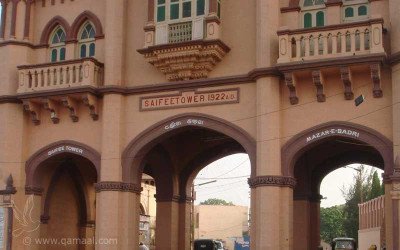
@@A Symbol of Faith and Cultural Blend: The Ratan Bai Masjid is a historically and architecturally significant place of worship for the Dawoodi Bohra Muslim community in Jamnagar. It was commissioned and built in the late 19th century by Ratan Bai, the wife of a respected local Bohra community leader, with the intention of creating a grand, spiritual, and community center for the local faithful. What immediately sets this mosque apart is its remarkable fusion of architectural styles. The design masterfully incorporates traditional Islamic elements, such as the prominent minarets and the classic mihrab (prayer niche) orientation, with distinct European architectural influences. This cosmopolitan blend is a defining characteristic, reflecting the widespread trade and travel of the Bohra community, who often incorporated global architectural trends into their religious buildings. The structure is predominantly built using local, warm yellow sandstone, a material that beautifully catches the light at sunrise and sunset, giving the entire mosque a serene, glowing appearance. The use of finely crafted domes and, notably, the inclusion of stained-glass windows—a feature typically found in European churches or grand homes—adds a unique layer of sophistication and light to the interior space. The mosque's purpose extends beyond daily prayer; it serves as a central hub for the Bohra community, playing a crucial role in maintaining their social cohesion, charitable work, and the conservation of their rich cultural heritage. Its location on a main road, easily visible to all, makes it a public statement of the community's established presence and prosperity in Jamnagar. It stands not just as a monument of faith but as a unique piece of Gujarat's diverse architectural history, a quiet testament to the religious and cultural tolerance that characterized the princely state of Nawanagar. Its meticulously preserved condition speaks volumes about the community's dedication to its upkeep.
Show All

Note:-

Information provided here in good Faith and for reference only.

All information and pictures will be updated soon, please keep visiting.

Near Places
...
Ahmedabad (Amdavad)

Some quick example text to build on the card title and make up the bulk of the card's content.

Go somewhere
...
Ahmedabad

Some quick example text to build on the card title and make up the bulk of the card's content.

Go somewhere
...
Bhuj

Some quick example text to build on the card title and make up the bulk of the card's content.

Go somewhere
...
Chotila

Some quick example text to build on the card title and make up the bulk of the card's content.

Go somewhere
...
Dahod

Some quick example text to build on the card title and make up the bulk of the card's content.

Go somewhere
...
Dandi

Some quick example text to build on the card title and make up the bulk of the card's content.

Go somewhere
...
Dwarka

Some quick example text to build on the card title and make up the bulk of the card's content.

Go somewhere
...
Exploring Rajkot

Some quick example text to build on the card title and make up the bulk of the card's content.

Go somewhere
...
Gandhinagar

Some quick example text to build on the card title and make up the bulk of the card's content.

Go somewhere
...
Jamnagar

Some quick example text to build on the card title and make up the bulk of the card's content.

Go somewhere
in Other Cities