

Saiha
General information
-
Ideal Duration:
2-3 DaysPlace Type:
Town & CultureEntry Fees:
Government Permits: Entry to the town is free for Indians, but Inner Line Permits (ILP) are required for non-locals. Foreigners may need special registration depending on current regulations. Always check the latest guidelines before traveling.Government Permits: Entry to the town is free for Indians, but Inner Line Permits (ILP) are required for non-locals. Foreigners may need special registration depending on current regulations. Always check the latest guidelines before traveling.
Minimal Site Fees: Most natural spots around Saiha do not have entry fees. Some managed parks or heritage sites might charge a nominal fee of 10-20 rupees. This makes the region very budget-friendly for explorers.Timing:
Standard Hours: Markets and shops are usually open from 9:00 AM to 6:00 PM. It is advisable to complete any out-of-town travel before dark. The town follows an early-to-bed, early-to-rise culture.
Best Visit Time: The post-monsoon months f...Standard Hours: Markets and shops are usually open from 9:00 AM to 6:00 PM. It is advisable to complete any out-of-town travel before dark. The town follows an early-to-bed, early-to-rise culture.
Best Visit Time: The post-monsoon months from October to March are best. During this time, the river is manageable and the roads are safer. The clear skies allow for better views of the distant mountain ranges.Special Events:
Palyutla Festival: This is the premier cultural festival of the Mara people, celebrating the harvest and community. It features competitive sports, traditional songs, and mass feasts. It is a time of great joy and cultural pride in the district.
Read MorePalyutla Festival: This is the premier cultural festival of the Mara people, celebrating the harvest and community. It features competitive sports, traditional songs, and mass feasts. It is a time of great joy and cultural pride in the district.
Christian Festivals: Christmas and New Year are celebrated with great fervor in Saiha. The entire town is lit up, and choir singing can be heard from the various churches. It is a peaceful yet celebratory time to visit.Best Photo Spots:
The River Banks: The sandy shores of the Chhimtuipui at sunset provide a golden, serene backdrop. The contrast between the water and the dark hills is visually striking. It is perfect for wide-angle landscape shots.
Palak Dil Viewpoint: Th...The River Banks: The sandy shores of the Chhimtuipui at sunset provide a golden, serene backdrop. The contrast between the water and the dark hills is visually striking. It is perfect for wide-angle landscape shots.
Palak Dil Viewpoint: The overlook of the lake surrounded by thick green forest is iconic. The reflection of the trees in the still water creates a mirror-like effect. It is the most beautiful natural spot in the region.Photo Gallery
Things To Do
 @@Geographical Significance:@@ The Saiha Town Viewpoint is strategically located on an elevated section of the road leading out of Saiha towards the famous Phawngpui National Park. This vantage point provides one of the most comprehensive and breathtaking panoramic vistas of the entire town of Saiha (also known as Siaha) nestled in the valley below. From here, visitors can appreciate the unique topography of the region, where the urban sprawl of the town clings precariously to the steep slopes and ridges of the surrounding hills. The viewpoint offers a clear perspective on the dense green cover of the Mara Autonomous District Council (MADC) region and the distant undulating mountain ranges, which merge with the borders of Myanmar. It is the quintessential spot for orientation, allowing visitors to grasp the scale and layout of the town before exploring its streets. The site is a popular stop for all travelers, from casual tourists to local residents stopping for a moment of reflection. The cool, unpolluted air and the silence of the altitude provide a welcome contrast to the bustle of the Saiha Bazar below. The viewpoint is generally maintained as a clean, public space, often featuring benches and a small, sheltered area for rest, making it an excellent spot for photographers. Its location on the main arterial road ensures easy access, making it the most visited photo opportunity in Saiha town.
@@Natural Grandeur and Ecological Significance:@@The Chhimtuipui River, known in Myanmar as the Kaladan, is the largest river by volume in Mizoram and serves as the ecological and cultural spine of Saiha District, often referred to as 'The Lifeline of Maraland.' It originates in Myanmar, flows through Saiha, and eventually meets the Bay of Bengal. The section near Saiha town is famed for its serene environment, providing an essential source of water and fish for the local Mara community. The riverbanks are lush with tropical vegetation, forming a picturesque setting against the rolling hills. @@Historical and Cultural Importance:@@Historically, the river has been a major transit and trade route, connecting the region to the coast of Myanmar, which is still a vital connection for the Kaladan Multi-Modal Transit Transport Project. The Mara people's life and folklore are deeply interwoven with the river, viewing it not just as a resource but as a sacred entity. The air is typically clean, and the environment is exceptionally tranquil, making it an ideal escape from the town's minor hustle and bustle. The flow rate changes significantly between the dry season (November to March) and the monsoon season (June to September).
The Maraland Mission Cemetery is a profoundly historical site located in the serene village of Saikao. It serves as the final resting place for the legendary British missionary Rev. Reginald Arthur Lorrain and his family, who brought Christianity to the Mara people in 1907. This cemetery is not merely a graveyard but a sacred chronicle of the transformation of the Mara community. Visitors often feel a deep sense of peace while walking through the rows of tombstones that tell stories of sacrifice and dedication. The site is meticulously maintained by the Evangelical Church of Maraland (ECM), ensuring that the legacy of the "Lakher Pioneer Mission" remains alive for future generations. For history buffs, it provides a unique window into the colonial era and the spiritual evolution of Southern Mizoram. The surrounding landscape of Saikao adds to the solemn beauty of the place, making it a must-visit for those seeking to understand the local cultural roots. It stands as a testament to the enduring bond between the missionaries and the indigenous Mara people.
@@Natural and Historical Landscape:@@ Vartek Tlang is a prominent local peak or Tlang (hill) situated on the outskirts of Saiha town, offering one of the highest accessible vantage points within a short distance. Its name, in the local Mara language, signifies a distinct geological or historical feature. Unlike the more famous, distant Phawngpui peak, Vartek Tlang is primarily a local hiking destination and a site for radio/communication towers, highlighting its strategic elevation. The climb to the summit is a popular activity for local fitness enthusiasts and a few adventurous tourists. The hill is covered in dense subtropical forest, a part of the broader ecological system of the Siaha District. The lower slopes often contain small, privately managed plantations or Jhum (shifting cultivation) fields, offering a glimpse into the traditional agricultural methods of the Mara people. The summit provides an even more expansive, but slightly more remote, view than the Saiha Town Viewpoint, encompassing vast stretches of the surrounding mountain ranges and the winding rivers in the distant valleys. It remains relatively underdeveloped for tourism, preserving its pristine, rugged character and making it a place of genuine, quiet natural beauty, highly valued by locals for its tranquility and challenging ascent.
@@Geographical Significance:@@ The Saiha Town Viewpoint is strategically located on an elevated section of the road leading out of Saiha towards the famous Phawngpui National Park. This vantage point provides one of the most comprehensive and breathtaking panoramic vistas of the entire town of Saiha (also known as Siaha) nestled in the valley below. From here, visitors can appreciate the unique topography of the region, where the urban sprawl of the town clings precariously to the steep slopes and ridges of the surrounding hills. The viewpoint offers a clear perspective on the dense green cover of the Mara Autonomous District Council (MADC) region and the distant undulating mountain ranges, which merge with the borders of Myanmar. It is the quintessential spot for orientation, allowing visitors to grasp the scale and layout of the town before exploring its streets. The site is a popular stop for all travelers, from casual tourists to local residents stopping for a moment of reflection. The cool, unpolluted air and the silence of the altitude provide a welcome contrast to the bustle of the Saiha Bazar below. The viewpoint is generally maintained as a clean, public space, often featuring benches and a small, sheltered area for rest, making it an excellent spot for photographers. Its location on the main arterial road ensures easy access, making it the most visited photo opportunity in Saiha town.
@@Natural Grandeur and Ecological Significance:@@The Chhimtuipui River, known in Myanmar as the Kaladan, is the largest river by volume in Mizoram and serves as the ecological and cultural spine of Saiha District, often referred to as 'The Lifeline of Maraland.' It originates in Myanmar, flows through Saiha, and eventually meets the Bay of Bengal. The section near Saiha town is famed for its serene environment, providing an essential source of water and fish for the local Mara community. The riverbanks are lush with tropical vegetation, forming a picturesque setting against the rolling hills. @@Historical and Cultural Importance:@@Historically, the river has been a major transit and trade route, connecting the region to the coast of Myanmar, which is still a vital connection for the Kaladan Multi-Modal Transit Transport Project. The Mara people's life and folklore are deeply interwoven with the river, viewing it not just as a resource but as a sacred entity. The air is typically clean, and the environment is exceptionally tranquil, making it an ideal escape from the town's minor hustle and bustle. The flow rate changes significantly between the dry season (November to March) and the monsoon season (June to September).
The Maraland Mission Cemetery is a profoundly historical site located in the serene village of Saikao. It serves as the final resting place for the legendary British missionary Rev. Reginald Arthur Lorrain and his family, who brought Christianity to the Mara people in 1907. This cemetery is not merely a graveyard but a sacred chronicle of the transformation of the Mara community. Visitors often feel a deep sense of peace while walking through the rows of tombstones that tell stories of sacrifice and dedication. The site is meticulously maintained by the Evangelical Church of Maraland (ECM), ensuring that the legacy of the "Lakher Pioneer Mission" remains alive for future generations. For history buffs, it provides a unique window into the colonial era and the spiritual evolution of Southern Mizoram. The surrounding landscape of Saikao adds to the solemn beauty of the place, making it a must-visit for those seeking to understand the local cultural roots. It stands as a testament to the enduring bond between the missionaries and the indigenous Mara people.
@@Natural and Historical Landscape:@@ Vartek Tlang is a prominent local peak or Tlang (hill) situated on the outskirts of Saiha town, offering one of the highest accessible vantage points within a short distance. Its name, in the local Mara language, signifies a distinct geological or historical feature. Unlike the more famous, distant Phawngpui peak, Vartek Tlang is primarily a local hiking destination and a site for radio/communication towers, highlighting its strategic elevation. The climb to the summit is a popular activity for local fitness enthusiasts and a few adventurous tourists. The hill is covered in dense subtropical forest, a part of the broader ecological system of the Siaha District. The lower slopes often contain small, privately managed plantations or Jhum (shifting cultivation) fields, offering a glimpse into the traditional agricultural methods of the Mara people. The summit provides an even more expansive, but slightly more remote, view than the Saiha Town Viewpoint, encompassing vast stretches of the surrounding mountain ranges and the winding rivers in the distant valleys. It remains relatively underdeveloped for tourism, preserving its pristine, rugged character and making it a place of genuine, quiet natural beauty, highly valued by locals for its tranquility and challenging ascent.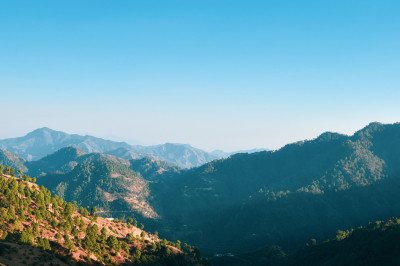 @@A Region of Lofty Peaks:@@The Mara Hills Viewpoint (distinct from Lakuar Aoh, often higher or on a different ridge) offers one of the most stunning and expansive views of the rugged landscape that defines the Siaha District. The entire region is part of the Lushai Hills or Mizo Hills range, characterized by steep slopes, deep river valleys, and dense subtropical and tropical evergreen forests. This viewpoint provides a breathtaking, layered perspective of the peaks that stretch towards the international border with Myanmar. It is an ideal spot to grasp the vast, untamed nature of this part of Northeast India. The viewpoint is usually equipped with a small resting shed and railing for safety. It is a testament to the fact that the Mara people live amidst nature's grandeur, with every village nestled strategically on a slope or in a small valley.
Palak Wildlife Sanctuary is a sprawling protected area of 15.5 square kilometers that encompasses the famous Palak Dil lake. Established in 2004, it represents the pinnacle of natural conservation in Southern Mizoram. The sanctuary is a dense mosaic of tropical evergreen and moist deciduous forests, providing a critical habitat for endangered wildlife. It is particularly famous for being one of the few places in India where the Hoolock Gibbon, the only ape found in India, can still be heard singing in the canopy. The sanctuary also hosts the Asiatic black bear, leopard, and various species of primates like the capped langur. For birdwatchers, the sanctuary is a dream come true, with over 120 species recorded, including the rare Blyth’s Tragopan. The terrain is rugged and interspersed with small streams and marshy wetlands that support a rich variety of orchids and medicinal plants. Walking through the sanctuary feels like stepping back in time to an era when the Earth was untouched by modern development. It is an essential destination for anyone interested in ecology, wildlife photography, or simply experiencing the profound silence of the deep jungle.
@@Historical Overview:@@ The Saiha Cultural Centre serves as the primary institution dedicated to preserving and promoting the unique culture and traditions of the Mara people, the predominant tribe of the Siaha District. Established with the support of the Mara Autonomous District Council (MADC), its mission extends beyond mere preservation to active dissemination, ensuring the younger generation remains connected to their roots. It houses an impressive collection of artifacts, including ancient weaponry, traditional farming implements, intricately woven textiles like the Mara's distinct 'Chyna-hno' petticoat and ceremonial 'Dua-âh' loin-cloth, and musical instruments specific to the region. The centre acts as a living museum where the vibrant narrative of Mara history, migration, and societal structure is presented through curated exhibits and interactive displays. The establishment of this centre underscores Saiha's role as the cultural and administrative heart of the region. It is often the starting point for visitors wishing to understand the local ethos before venturing to natural sites like Palak Dil. Furthermore, the centre hosts workshops on traditional crafts, such as bamboo work and handloom weaving, connecting tourists directly with local artisans. Its location, slightly elevated in the Zotlang area, offers an accessible yet prominent position within the town, symbolising the importance of culture in daily life. This hub is crucial for scholars, tourists, and locals alike, providing a space for learning, celebration, and community gathering, solidifying its status as a vital landmark in Saiha and Mizoram as a whole. The rich oral traditions of the Mara are often brought to life here through storytelling sessions, adding a dynamic, non-static layer to the cultural experience. The centre’s commitment to language preservation, particularly the Tlosai dialect used in Mara writing, is also a key feature.Show All
Saikao, also known as Serkawr, is a village of immense historical and religious significance in the Saiha district. It is famous for Lorrain Ville, the site where pioneer missionaries J. Herbert Lorrain and F.W. Savidge established their mission in 1907. The village served as the headquarters for the transformation of the Mara people from their ancestral practices to Christianity. The highlight of the site is the century-old Pioneer Missionary Bungalow, built in 1914. This wooden villa remains remarkably intact, showcasing colonial-era craftsmanship. The house is still occupied by the descendants of the missionaries, specifically the family of Mrs. Violet Lorrain Foxall. Saikao is considered the spiritual capital of the Mara Autonomous District Council. The village is also the headquarters of the Congregational Church of India (Maraland). Walking through the streets of Lorrain Ville, one can see well-preserved wooden houses that offer a panoramic view of the southern hills. The site includes an old cemetery where the early missionaries are buried, providing a somber yet peaceful atmosphere for reflection. The history of literacy and modernization of the Mara tribe is deeply rooted in this small village. The architecture of the entire village reflects a blend of traditional Mara styles and British colonial influences. It is a must-visit for history buffs and those interested in the missionary history of Northeast India. The serene environment and the high altitude make it a pleasant retreat from the busier town of Saiha. The locals are very protective of their heritage and are happy to share stories of the "pioneers" who brought education to the region.
@@A Region of Lofty Peaks:@@The Mara Hills Viewpoint (distinct from Lakuar Aoh, often higher or on a different ridge) offers one of the most stunning and expansive views of the rugged landscape that defines the Siaha District. The entire region is part of the Lushai Hills or Mizo Hills range, characterized by steep slopes, deep river valleys, and dense subtropical and tropical evergreen forests. This viewpoint provides a breathtaking, layered perspective of the peaks that stretch towards the international border with Myanmar. It is an ideal spot to grasp the vast, untamed nature of this part of Northeast India. The viewpoint is usually equipped with a small resting shed and railing for safety. It is a testament to the fact that the Mara people live amidst nature's grandeur, with every village nestled strategically on a slope or in a small valley.
Palak Wildlife Sanctuary is a sprawling protected area of 15.5 square kilometers that encompasses the famous Palak Dil lake. Established in 2004, it represents the pinnacle of natural conservation in Southern Mizoram. The sanctuary is a dense mosaic of tropical evergreen and moist deciduous forests, providing a critical habitat for endangered wildlife. It is particularly famous for being one of the few places in India where the Hoolock Gibbon, the only ape found in India, can still be heard singing in the canopy. The sanctuary also hosts the Asiatic black bear, leopard, and various species of primates like the capped langur. For birdwatchers, the sanctuary is a dream come true, with over 120 species recorded, including the rare Blyth’s Tragopan. The terrain is rugged and interspersed with small streams and marshy wetlands that support a rich variety of orchids and medicinal plants. Walking through the sanctuary feels like stepping back in time to an era when the Earth was untouched by modern development. It is an essential destination for anyone interested in ecology, wildlife photography, or simply experiencing the profound silence of the deep jungle.
@@Historical Overview:@@ The Saiha Cultural Centre serves as the primary institution dedicated to preserving and promoting the unique culture and traditions of the Mara people, the predominant tribe of the Siaha District. Established with the support of the Mara Autonomous District Council (MADC), its mission extends beyond mere preservation to active dissemination, ensuring the younger generation remains connected to their roots. It houses an impressive collection of artifacts, including ancient weaponry, traditional farming implements, intricately woven textiles like the Mara's distinct 'Chyna-hno' petticoat and ceremonial 'Dua-âh' loin-cloth, and musical instruments specific to the region. The centre acts as a living museum where the vibrant narrative of Mara history, migration, and societal structure is presented through curated exhibits and interactive displays. The establishment of this centre underscores Saiha's role as the cultural and administrative heart of the region. It is often the starting point for visitors wishing to understand the local ethos before venturing to natural sites like Palak Dil. Furthermore, the centre hosts workshops on traditional crafts, such as bamboo work and handloom weaving, connecting tourists directly with local artisans. Its location, slightly elevated in the Zotlang area, offers an accessible yet prominent position within the town, symbolising the importance of culture in daily life. This hub is crucial for scholars, tourists, and locals alike, providing a space for learning, celebration, and community gathering, solidifying its status as a vital landmark in Saiha and Mizoram as a whole. The rich oral traditions of the Mara are often brought to life here through storytelling sessions, adding a dynamic, non-static layer to the cultural experience. The centre’s commitment to language preservation, particularly the Tlosai dialect used in Mara writing, is also a key feature.Show All
Saikao, also known as Serkawr, is a village of immense historical and religious significance in the Saiha district. It is famous for Lorrain Ville, the site where pioneer missionaries J. Herbert Lorrain and F.W. Savidge established their mission in 1907. The village served as the headquarters for the transformation of the Mara people from their ancestral practices to Christianity. The highlight of the site is the century-old Pioneer Missionary Bungalow, built in 1914. This wooden villa remains remarkably intact, showcasing colonial-era craftsmanship. The house is still occupied by the descendants of the missionaries, specifically the family of Mrs. Violet Lorrain Foxall. Saikao is considered the spiritual capital of the Mara Autonomous District Council. The village is also the headquarters of the Congregational Church of India (Maraland). Walking through the streets of Lorrain Ville, one can see well-preserved wooden houses that offer a panoramic view of the southern hills. The site includes an old cemetery where the early missionaries are buried, providing a somber yet peaceful atmosphere for reflection. The history of literacy and modernization of the Mara tribe is deeply rooted in this small village. The architecture of the entire village reflects a blend of traditional Mara styles and British colonial influences. It is a must-visit for history buffs and those interested in the missionary history of Northeast India. The serene environment and the high altitude make it a pleasant retreat from the busier town of Saiha. The locals are very protective of their heritage and are happy to share stories of the "pioneers" who brought education to the region.Information
-
Why Famous:
Angling Paradise: Saiha is famous for the Chhimtuipui River, which is a prime spot for angling. Large species of catfish and local fish varieties attract fishing enthusiasts from far and wide. The river provides a serene and productive environment for the sport.Angling Paradise: Saiha is famous for the Chhimtuipui River, which is a prime spot for angling. Large species of catfish and local fish varieties attract fishing enthusiasts from far and wide. The river provides a serene and productive environment for the sport.
Cultural Uniqueness: Being the home of the Mara tribe, the town offers a cultural experience different from northern Mizoram. The traditional festivals, dress, and food of the Mara people are distinct and vibrant. It is a center for ethnic research and tourism. -
Architecture:
The Mara Traditional House: Similar to other Mizo tribes, the Mara houses are built on stilts using bamboo. However, the internal layout reflects their specific social customs and family hierarchies. The use of local hardwood ensures the longevity of these structures in th...The Mara Traditional House: Similar to other Mizo tribes, the Mara houses are built on stilts using bamboo. However, the internal layout reflects their specific social customs and family hierarchies. The use of local hardwood ensures the longevity of these structures in the humid climate.
Modern Administrative Buildings: The Council House and other government buildings feature a blend of modern concrete and traditional motifs. They are designed to withstand the heavy monsoon rains typical of the region. The town is spread over several hills, with buildings terraced into the slopes. -
How To Reach:
By Air: Fly to Lengpui Airport and then take a helicopter service or a long road trip. The helicopter service by Pawan Hans is the fastest way to reach the south. It offers a spectacular aerial view of the state’s geography.
By Road: It ...By Air: Fly to Lengpui Airport and then take a helicopter service or a long road trip. The helicopter service by Pawan Hans is the fastest way to reach the south. It offers a spectacular aerial view of the state’s geography.
By Road: It is a long 10-12 hour drive from Aizawl via Lunglei. Private taxis and Tata Sumos are the primary modes of transport. The road condition varies, so be prepared for a bumpy but scenic journey. -
Weather and Best Time to Visit:
The Autumn Season: October and November are beautiful as the greenery is fresh after the rains. The air is clear, making it the best time for photography and river activities. Temperatures are moderate and pleasant.
Evening Hours: The town...The Autumn Season: October and November are beautiful as the greenery is fresh after the rains. The air is clear, making it the best time for photography and river activities. Temperatures are moderate and pleasant.
Evening Hours: The town is most lively in the late afternoon when people gather in the markets. The cool evening breeze makes walking around the hilly streets very enjoyable. Sunsets in the south are particularly colorful and long. -
Near Tourist Places:
Palak Dil (76 km), Phura (70 km), Lunglei (170 km), Lawngtlai (75 km), Blue Mountain (150 km), Champhai (300 km), Aizawl (378 km), Tlabung (140 km), Thenzawl (230 km), Serchhip (250 km).
Tourism Tips
-
Safety and Health: Carry motion sickness medicine as the roads are extremely winding. Ensure you have anti-malarial precautions as the southern districts are tropical and prone to mosquitoes. Drink only bottled or boiled water during your stay.Safety and Health: Carry motion sickness medicine as the roads are extremely winding. Ensure you have anti-malarial precautions as the southern districts are tropical and prone to mosquitoes. Drink only bottled or boiled water during your stay.
Packing Tips: Pack sturdy walking shoes and a good raincoat, even if visiting in the dry season. A powerful flashlight is necessary as power cuts can happen in remote areas. Bring a high-capacity power bank for your electronics.
Accommodation: Saiha has a few decent government guest houses and basic private hotels. It is best to book your stay through the District Commissioner’s office or tourism department. Don't expect luxury; the focus is on simplicity and nature.
Local Etiquette: Respect the privacy of the Mara people when taking photos in villages. Always ask for permission before entering a traditional house. Learning a few words in the local Mara language will go a long way in building rapport.
Reviews
FAQs
Saiha Itineray And Cost:-
Other Places In Mizoram :-
Other States In India :-
Information about New and Updated Locations() of Mizoram Has Been Added :-
Card subtitle
Note:-
Information provided here in good Faith and for reference only.
Near Places
Aizawl
Some quick example text to build on the card title and make up the bulk of the card's content.
Go somewhere
Champhai
Some quick example text to build on the card title and make up the bulk of the card's content.
Go somewhere
Chhingpuii Thlan
Some quick example text to build on the card title and make up the bulk of the card's content.
Go somewhere
Hmuifang
Some quick example text to build on the card title and make up the bulk of the card's content.
Go somewhere
Hnahthial
Some quick example text to build on the card title and make up the bulk of the card's content.
Go somewhere
Khawzawl
Some quick example text to build on the card title and make up the bulk of the card's content.
Go somewhere
Kolasib
Some quick example text to build on the card title and make up the bulk of the card's content.
Go somewhere
Lawngtlai
Some quick example text to build on the card title and make up the bulk of the card's content.
Go somewhere
Lunglei
Some quick example text to build on the card title and make up the bulk of the card's content.
Go somewhere
Mamit
Some quick example text to build on the card title and make up the bulk of the card's content.
Go somewhere
Reiek
Some quick example text to build on the card title and make up the bulk of the card's content.
Go somewhere
Saiha
Some quick example text to build on the card title and make up the bulk of the card's content.
Go somewhere
Saitual
Some quick example text to build on the card title and make up the bulk of the card's content.
Go somewhere
Serchhip
Some quick example text to build on the card title and make up the bulk of the card's content.
Go somewhere
Tamdil
Some quick example text to build on the card title and make up the bulk of the card's content.
Go somewherein Other Cities