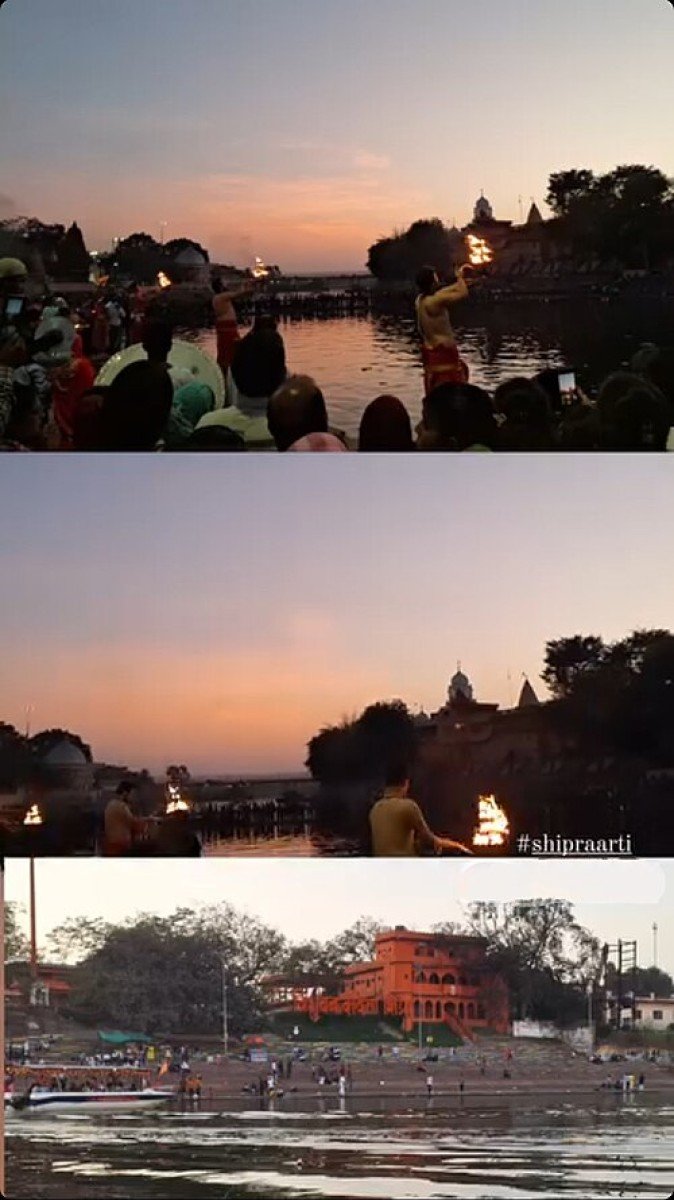

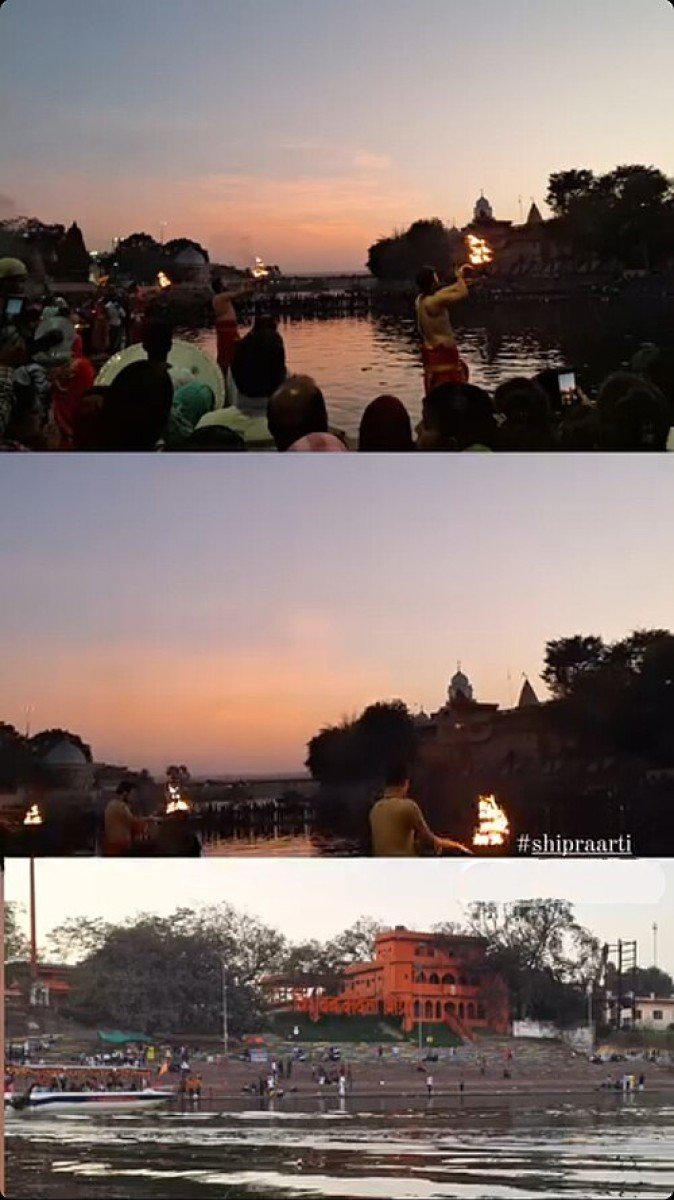
Shipra River Bank
General information
-
Ideal Duration:
1. 5 - 2 Hours (Excluding Kumbh Mela time)Place Type:
Religious Site, Natural Landmark, Historical SiteEntry Fees:
No Entry Fee for the River Bank or Ghats: Access to the Shipra River Bank and all its public ghats, including Ram Ghat and Gau Ghat, is completely free for all visitors and pilgrims. There is no ticket or gate fee to enter the area or perform a holy dip in the river.No Entry Fee for the River Bank or Ghats: Access to the Shipra River Bank and all its public ghats, including Ram Ghat and Gau Ghat, is completely free for all visitors and pilgrims. There is no ticket or gate fee to enter the area or perform a holy dip in the river.
Voluntary Offerings: While the entry is free, voluntary donations are accepted at the small temples and for participating in puja or rituals like deep daan. Tourists can purchase small offerings like flowers, coconut, and prasad from vendors near the ghats.
Photography Charges (Check Locally): Generally, photography is free in the public areas. However, during major festivals like Kumbh Mela, or if you intend to use professional equipment for commercial purposes, it is wise to check with local authorities for any temporary fees or restrictions.
Special Aarti and Ritual Fees: Certain personalized or elaborate rituals, such as pind daan or special pujas performed by a priest, will incur a fee, which is negotiated directly with the pujari and is separate from any government or administrative charge for the site itself.Timing:
Regular Timings: The river bank is accessible 24 hours a day, every day of the week, as it is a public space and a place of constant pilgrimage. The most important ritual times are Dawn (for the holy snan) and Dusk (for the spectacular aarti at Ram Ghat).
Read MoreRegular Timings: The river bank is accessible 24 hours a day, every day of the week, as it is a public space and a place of constant pilgrimage. The most important ritual times are Dawn (for the holy snan) and Dusk (for the spectacular aarti at Ram Ghat).
Ideal Visit Time: The best time is either the early morning (from 5:00 AM to 7:00 AM) for the purifying dip and the quiet spiritual atmosphere, or the evening (from 6:00 PM to 7:30 PM) to witness the grand Ram Ghat Aarti. Visiting outside these hours offers a quiet, relaxed experience but lacks the vibrancy and spiritual intensity of the main rituals.
Seasonal Variation: In winter (November to February), the morning and evening rituals are especially beautiful due to the cooler, often misty, air. In summer (April to June), daytime is very hot; hence, only morning and evening visits are advised.Special Events:
Simhastha Kumbh Mela: The single most important and grand event, occurring once every 12 years when Jupiter is in Leo (Simha) and the Sun is in Aries (Mesh). This event is a mass pilgrimage where millions gather for a holy dip (Shahi Snan), and the entire riverbank is trans...Simhastha Kumbh Mela: The single most important and grand event, occurring once every 12 years when Jupiter is in Leo (Simha) and the Sun is in Aries (Mesh). This event is a mass pilgrimage where millions gather for a holy dip (Shahi Snan), and the entire riverbank is transformed into a global city of faith with temporary settlements, akhadas of sadhus, and non-stop rituals. The next major Simhastha is anticipated around 2028.
Shipra Ganga Dashahara: A significant annual festival, usually in May/June, celebrated with special grandeur on the tenth day of the Jyeshtha month. Devotees take a holy dip and perform special puja to venerate the river goddess, involving large-scale aarti and cultural programs at Ram Ghat.
Kartik Purnima Festival: Celebrated in the November or December full moon, the ghats are spectacularly illuminated with thousands of diyas (lamps) floated on the water, creating a breathtaking, ethereal visual spectacle that draws huge crowds for night-long devotion and celebration.Best Photo Spots:
The Ram Ghat Steps during Aarti: The best spot is directly facing the main aarti platform at Ram Ghat, capturing the priests performing the ritual against the backdrop of the massive fire lamps and the temple silhouettes. Use a tripod for long-exposure shots of the flowing ...The Ram Ghat Steps during Aarti: The best spot is directly facing the main aarti platform at Ram Ghat, capturing the priests performing the ritual against the backdrop of the massive fire lamps and the temple silhouettes. Use a tripod for long-exposure shots of the flowing fire.
Distant View from a Bridge or Opposite Bank: To capture the complete, panoramic sweep of the river and the main ghats, including the temples and the mass of people, find a spot on a nearby bridge or the less crowded opposite bank, particularly at sunrise or during a full moon.
Floating Diyas on the Water: Get a close-up shot of the small earthen lamps (diyas) floating away on the current during the evening. This shot symbolizes faith, hope, and the release of wishes, creating a warm, soft-light photo that is uniquely spiritual and evocative.Photo Gallery
Things To Do
-
Witnessing the Ram Ghat Evening Aarti (Must-Do): Arrive at Ram Ghat at least an hour before sunset to secure a good spot to witness the spectacular fire and light ceremony. The synchronized rituals performed by the pujaris (priests), the sound of the gongs, and the collective chanting create an overwhelming spiritual atmosphere. Participate in the deep daan (floating of earthen lamps) ritual on the water afterward.
Taking a Holy Snan (Bath) at Dawn: Perform a purifying dip in the holy waters of the Shipra at sunrise, a highly auspicious act believed to wash away sins. The best spots are Ram Ghat or Triveni Ghat. Be mindful of the steps and current, and dress respectfully upon exiting the water.
Exploring the Small Temples and Shrines: Walk along the ghats from Ram Ghat towards Gau Ghat, disco...Witnessing the Ram Ghat Evening Aarti (Must-Do): Arrive at Ram Ghat at least an hour before sunset to secure a good spot to witness the spectacular fire and light ceremony. The synchronized rituals performed by the pujaris (priests), the sound of the gongs, and the collective chanting create an overwhelming spiritual atmosphere. Participate in the deep daan (floating of earthen lamps) ritual on the water afterward.
Taking a Holy Snan (Bath) at Dawn: Perform a purifying dip in the holy waters of the Shipra at sunrise, a highly auspicious act believed to wash away sins. The best spots are Ram Ghat or Triveni Ghat. Be mindful of the steps and current, and dress respectfully upon exiting the water.
Exploring the Small Temples and Shrines: Walk along the ghats from Ram Ghat towards Gau Ghat, discovering the numerous small, ancient shrines dedicated to various deities like Lord Hanuman and Lord Shiva. Each shrine has its own local story and unique architectural style, providing quiet places for meditation.
Visiting the Mangalnath Temple on the Bank: Though slightly upstream, a boat ride or a short drive to the Mangalnath Temple—dedicated to Mars and believed to be its birthplace—offers a stunning panoramic view of the river and surrounding plains. The temple itself is a major pilgrimage point for planetary peace rituals.
Photography of the Reflections: Capture the iconic sight of the ancient structures and the sky reflecting in the river at dawn and dusk. The warm hues of the morning sun or the evening aarti lights on the water are perfect for creating stunning, high-contrast images of the holy city.
Engaging with Local Life: Sit on the steps and simply observe the local life, the washing of clothes, the children playing, and the spiritual discussions of the sadhus. This observation offers a deep cultural insight into the daily rhythm of a holy city centered around its sacred river.
Shopping for Religious Artifacts: The shops and stalls lining the river banks offer puja samagri (worship materials), religious books, beautiful devotional pictures, and small souvenirs related to the Mahakal and the Kumbh Mela, making it a great place to buy gifts and remembrances of the pilgrimage.
Information
-
Why Famous:
The Center for Simhastha Kumbh Mela: The Shipra is one of the four sacred rivers in India where the Kumbh Mela is held, making it a globally recognized pilgrimage site. This twelve-yearly event elevates the river's status beyond a local waterway to an epicenter of global Hi...The Center for Simhastha Kumbh Mela: The Shipra is one of the four sacred rivers in India where the Kumbh Mela is held, making it a globally recognized pilgrimage site. This twelve-yearly event elevates the river's status beyond a local waterway to an epicenter of global Hindu faith. The spiritual significance is tied to the myth of the Amrita (nectar of immortality).
Daily Ram Ghat Aarti: The evening aarti at Ram Ghat is a major attraction, famous for its grand scale, the synchronous ringing of bells, the chanting of mantras, and the mesmerizing sight of lamps floating on the dark water. This ritual is a powerful, daily expression of devotion to the river goddess.
Moksha and Ancestral Rites: The river is believed to have the power to grant moksha (liberation from the cycle of rebirth), drawing pilgrims for specific rituals like pitru tarpan and pind daan, particularly at spots like Gau Ghat and Ram Ghat, establishing its fame as a sacred site for ancestors. -
Architecture:
Architectural Significance of the Ghats: The ghats are constructed mainly of strong stone and concrete, featuring broad, symmetrical steps leading down to the river.
This design serves a dual purpose: enabling easy access for mass bathing du...Architectural Significance of the Ghats: The ghats are constructed mainly of strong stone and concrete, featuring broad, symmetrical steps leading down to the river.
This design serves a dual purpose: enabling easy access for mass bathing during festivals like the Kumbh Mela and providing stable platforms for daily rituals. The most prominent, Ram Ghat, is known for its wide, open expanse. The riverbank itself is essentially a long, continuous architectural feature, reinforced over centuries by various dynasties, particularly the Marathas and the local administration.
Material and Aesthetic: The construction primarily utilizes local Malwa stone and simple masonry, focusing on utility and durability rather than ornate carving, contrasting with the nearby temples. The architecture is a practical, religious expression—a functional landscape designed to facilitate the immense flow of pilgrims and rituals. The length of the primary ghats, such as Ram Ghat, spans several hundred meters, creating an expansive ceremonial space. The lighting of thousands of earthen lamps during the evening aarti transforms this simple architecture into a spectacularly divine visual canvas. -
How To Reach:
By Air: The nearest airport is Devi Ahilyabai Holkar Airport (IDR) in Indore, located approximately 55 KMS from Ujjain City Center. This airport is well-connected to major Indian cities like Delhi, Mumbai, Bangalore, and Hyderabad. From the airport, you can hire a pre-paid...By Air: The nearest airport is Devi Ahilyabai Holkar Airport (IDR) in Indore, located approximately 55 KMS from Ujjain City Center. This airport is well-connected to major Indian cities like Delhi, Mumbai, Bangalore, and Hyderabad. From the airport, you can hire a pre-paid taxi, a private cab service, or take a local bus directly to Ujjain. The road journey takes about 1. 5 to 2 hours.
By Train: Ujjain Junction Railway Station (UJN) is a major railway hub and is extremely well-connected across India with direct trains from cities like Delhi, Mumbai, Kolkata, Chennai, and Ahmedabad. The station is very close to the river bank and the city center (approx. 1. 5 KMS). From the station, you can easily take an auto-rickshaw or a cycle-rickshaw to Ram Ghat.
By Road: Ujjain has excellent road connectivity via National Highways. State and private buses operate frequently to and from Indore, Bhopal, Gwalior, and other major cities in Madhya Pradesh and neighboring states. The bus stand is well-located. From the bus stand, it is a short ride to the river bank via local transport.
By Local Transport: Within Ujjain, the river bank area is easily accessed by auto-rickshaws, which are the most convenient mode of transport and are available everywhere. E-rickshaws are also becoming common. For a traditional feel, cycle-rickshaws are a short and inexpensive option for the distance from the city center or railway station. You can even walk the short distance from the center. -
Weather and Best Time to Visit:
Different Types of Seasons:
Winter (October to March): This is the best time to visit. The weather is pleasantly cool, ranging from 10Rs.C to 25Rs.C. The cool air enhances the spiritual ambiance of the morning snan and the evening aarti. Festi...Different Types of Seasons:
Winter (October to March): This is the best time to visit. The weather is pleasantly cool, ranging from 10Rs.C to 25Rs.C. The cool air enhances the spiritual ambiance of the morning snan and the evening aarti. Festivals like Kartik Purnima fall during this time, making the riverbank especially vibrant.
Summer (April to June): The weather is extremely hot, often exceeding 40Rs.C. It is advisable to avoid daytime visits and restrict travel to early mornings and late evenings. The river level is often lower.
Monsoon (July to September): The heavy rains cleanse the ghats and increase the river's water level, making the area lush and beautiful. This is a quieter time to visit, but heavy rain can disrupt plans and make the ghat steps slippery, requiring extra caution.
Different Parts of the Day:
Early Morning (Sunrise): The Ideal time for a holy dip, meditation, and quiet reflection. The atmosphere is calm and spiritually charged. Daytime (10 AM to 4 PM) Very hot and crowded with local activities and pujas. Not the ideal time for tourists, except for a quick walk-through.
Evening (Sunset): The second best time, specifically to witness the majestic Ram Ghat Aarti, where the river comes alive with fire, light, and sound. -
Near Tourist Places:
Shree Mahakaleshwar Temple (0. 5 KMS), Bade Ganeshji Ka Mandir (0. 6 KMS), Harsiddhi Temple (0. 7 KMS), Vikram Kirti Mandir Museum (2 KMS), Gopal Mandir (1 KMS), Chintaman Ganesh Temple (7 KMS), Siddhavat Ghat (5 KMS), Kaal Bhairav Temple (8 KMS), Triveni Museum (3 KMS), Mangalnath Temple (5 KMS).
Tourism Tips
-
Health & Safety: Always use bottled water for drinking. If you perform a holy bath (snan), be extremely cautious of the water level and the sometimes slippery steps; never venture too far into the river. Be mindful of your belongings in crowded areas, especially during th...Health & Safety: Always use bottled water for drinking. If you perform a holy bath (snan), be extremely cautious of the water level and the sometimes slippery steps; never venture too far into the river. Be mindful of your belongings in crowded areas, especially during the evening aarti. Keep an eye out for stray cattle and dogs, especially near the main road.
Packing: Pack light and comfortable clothing. Given the heat in summer, cotton is essential. For temple and ghat visits, carry modest clothing that covers the shoulders and knees to show respect. Carry a small towel if you plan to take a holy dip. A broad-brimmed hat, sunscreen, and sunglasses are highly recommended for daytime visits. Carry a small first-aid kit with basic medications.
Accommodation: Ujjain has a wide range of accommodation options. For proximity, look for hotels and guesthouses near the Mahakal Temple or the city center. Budget options are readily available, while comfortable mid-range and luxury hotels are located on the outskirts and along the Indore highway. Book well in advance if your visit coincides with a major festival or the Kumbh Mela.
Other Different Topics Heading:
Respect for Rituals: Be respectful of the various rituals taking place. When observing a puja or aarti, maintain silence and a respectful distance.
Photography Etiquette: Ask for permission before taking close-up photos of sadhus or people performing rituals.
Local Cuisine: Try the local street food like poha, jalebi, and the Malwa specialty, dal-bafla.
Reviews
FAQs
Ujjain Itineray And Cost:-
Shipra River Bank Tourism:-
Other Places In Ujjain :-
Other States In India :-
Information about New and Updated Locations() of Madhya Pradesh Has Been Added :-
Card subtitle
Note:-
Information provided here in good Faith and for reference only.
Near Places

Harsiddhi Temple
Some quick example text to build on the card title and make up the bulk of the card's content.
Go somewhere
Kark Rajeshwar Temple
Some quick example text to build on the card title and make up the bulk of the card's content.
Go somewhere
Mahakal Lok Corridor
Some quick example text to build on the card title and make up the bulk of the card's content.
Go somewhere
Mahakaleshwar Jyotirlinga Temple
Some quick example text to build on the card title and make up the bulk of the card's content.
Go somewhere
Mahakaleshwar Jyotirlinga
Some quick example text to build on the card title and make up the bulk of the card's content.
Go somewhere
Mahalaxmi Temple
Some quick example text to build on the card title and make up the bulk of the card's content.
Go somewhere
Mangalnath Temple
Some quick example text to build on the card title and make up the bulk of the card's content.
Go somewhere
Rudra Sagar Lake
Some quick example text to build on the card title and make up the bulk of the card's content.
Go somewhere
Sahasra Shiva Lingas
Some quick example text to build on the card title and make up the bulk of the card's content.
Go somewhere
Sudama Setu
Some quick example text to build on the card title and make up the bulk of the card's content.
Go somewhere
Triveni Museum
Some quick example text to build on the card title and make up the bulk of the card's content.
Go somewhere
Ved Shala
Some quick example text to build on the card title and make up the bulk of the card's content.
Go somewhere
Vikram Kirti Mandir Museum
Some quick example text to build on the card title and make up the bulk of the card's content.
Go somewherein Other Cities