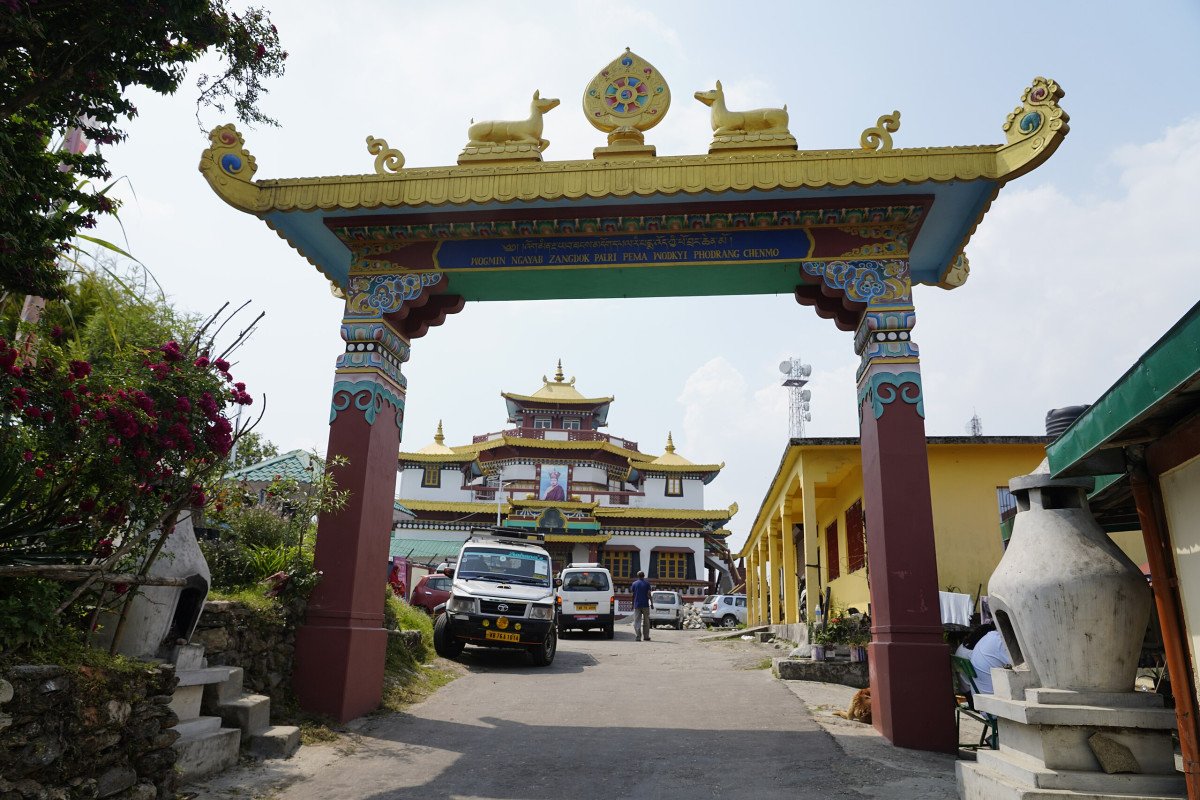
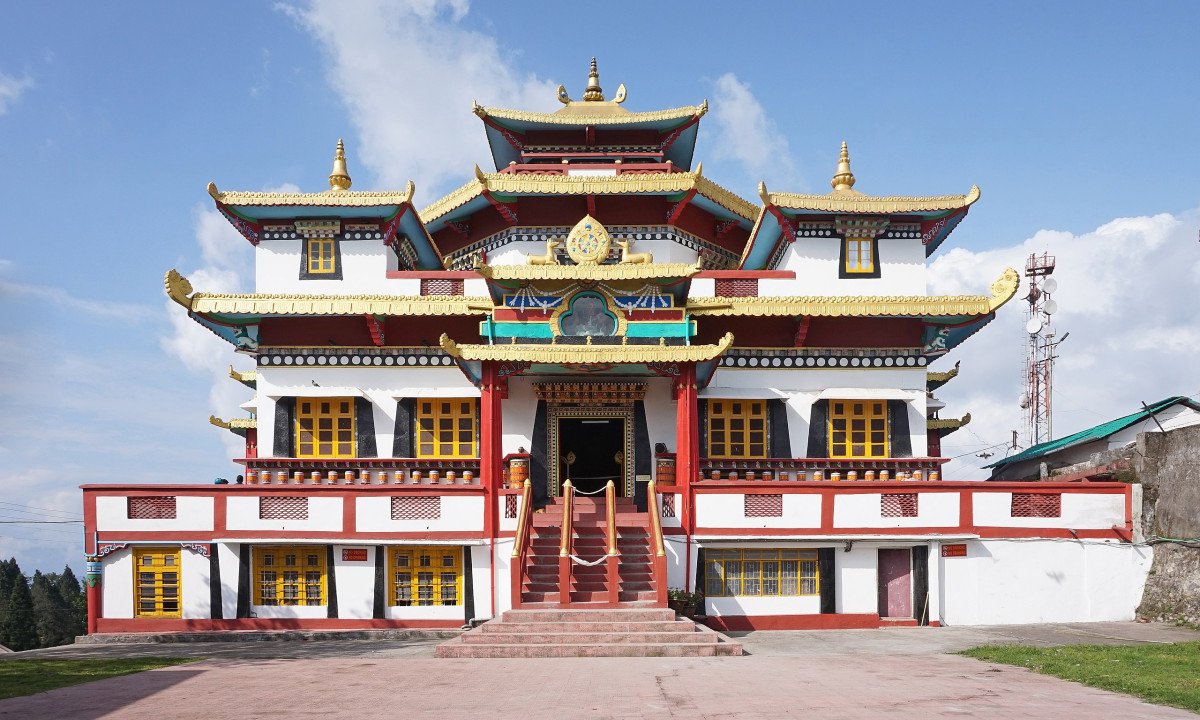
Zong Dog Palri Fo Brang Monastery
General information
-
Ideal Duration:
2 Hours (1. 5 hours for the monastery and the viewpoint, 30 minutes for the surrounding area).Place Type:
Buddhist Temple, High-Altitude Viewpoint, and HistEntry Fees:
Monastery Entry and General Access (Voluntary Donation Only): There is no mandatory entry fee for the monastery or the viewpoint.
Spiritual Accessibility and Maintenance Funding: The premises are open freely to all visitors, reflecting the welcoming nature of the f...Monastery Entry and General Access (Voluntary Donation Only): There is no mandatory entry fee for the monastery or the viewpoint.
Spiritual Accessibility and Maintenance Funding: The premises are open freely to all visitors, reflecting the welcoming nature of the faith. However, donation boxes are prominently placed; a voluntary contribution is the expected way to support the resident monks, the daily rituals, and the upkeep of this large, historic, and sacred complex.
Road Vehicle Toll/Parking Fee (Local Charge): A nominal fee, usually collected by a local committee, is charged for parking vehicles at the top of Durpin Dara Hill.
Traffic Management and Hill Road Infrastructure: This charge, generally around Rs.50 per car, is used to manage the limited parking space, control traffic flow on the narrow hill road, and contribute to the maintenance of the steep final section of the approach road.Timing:
Regular Timings (Standard Visitor Hours): The monastery and viewpoint are generally open from 8:00 AM to 5:00 PM.
Strict Daylight Operation and Monastic Schedule: Visitors should strictly adhere to these hours, as the gates are closed promp...Regular Timings (Standard Visitor Hours): The monastery and viewpoint are generally open from 8:00 AM to 5:00 PM.
Strict Daylight Operation and Monastic Schedule: Visitors should strictly adhere to these hours, as the gates are closed promptly. The main prayer hall may have intermittent closure times (e. g. , during lunch or private chanting sessions) where respectful waiting outside may be required.
Ideal Visit Time (Peak Mountain Clarity): The ideal time is between 7:30 AM and 9:00 AM.
Pristine Air Quality and Golden Light: This is when the air is at its freshest and clearest, offering the most spectacular, uninterrupted views of the distant Kanchenjunga range and the valley below, before the inevitable midday haze begins to set in.Special Events:
Annual Losar Festival (Tibetan New Year): The Losar festival, the Tibetan New Year, is the most vibrant celebration, usually falling in February or March.
Monastic Grandeur and Ritual Cleansing: The monastery is decorated elaborately, and t...Annual Losar Festival (Tibetan New Year): The Losar festival, the Tibetan New Year, is the most vibrant celebration, usually falling in February or March.
Monastic Grandeur and Ritual Cleansing: The monastery is decorated elaborately, and the monks engage in special, prolonged prayers and rituals designed to cleanse the negative karma of the past year and invite good fortune for the new one. The atmosphere is highly festive, marked by traditional music and drumming.
Chham (Mask Dance) Performances:
Symbolic Performance Art and Dramatic Narrative: During major festivals like Losar or Buddha Jayanti (May), the monks perform the sacred Chham dances in the courtyard. These traditional, masked performances accompanied by traditional music narrate Buddhist legends, depicting protective deities and the triumph of enlightenment over ignorance.Best Photo Spots:
Sunrise View from the Front Railing: Golden Light on Kanchenjunga and Defining the Horizon: Position your camera to capture the main altar or the monastery's gold-adorned roof in the foreground, with the snow-covered Kanchenjunga mountains visible in the background, especia...Sunrise View from the Front Railing: Golden Light on Kanchenjunga and Defining the Horizon: Position your camera to capture the main altar or the monastery's gold-adorned roof in the foreground, with the snow-covered Kanchenjunga mountains visible in the background, especially as the sun hits the peaks, creating a stunning contrast between the sacred architecture and the majestic nature.
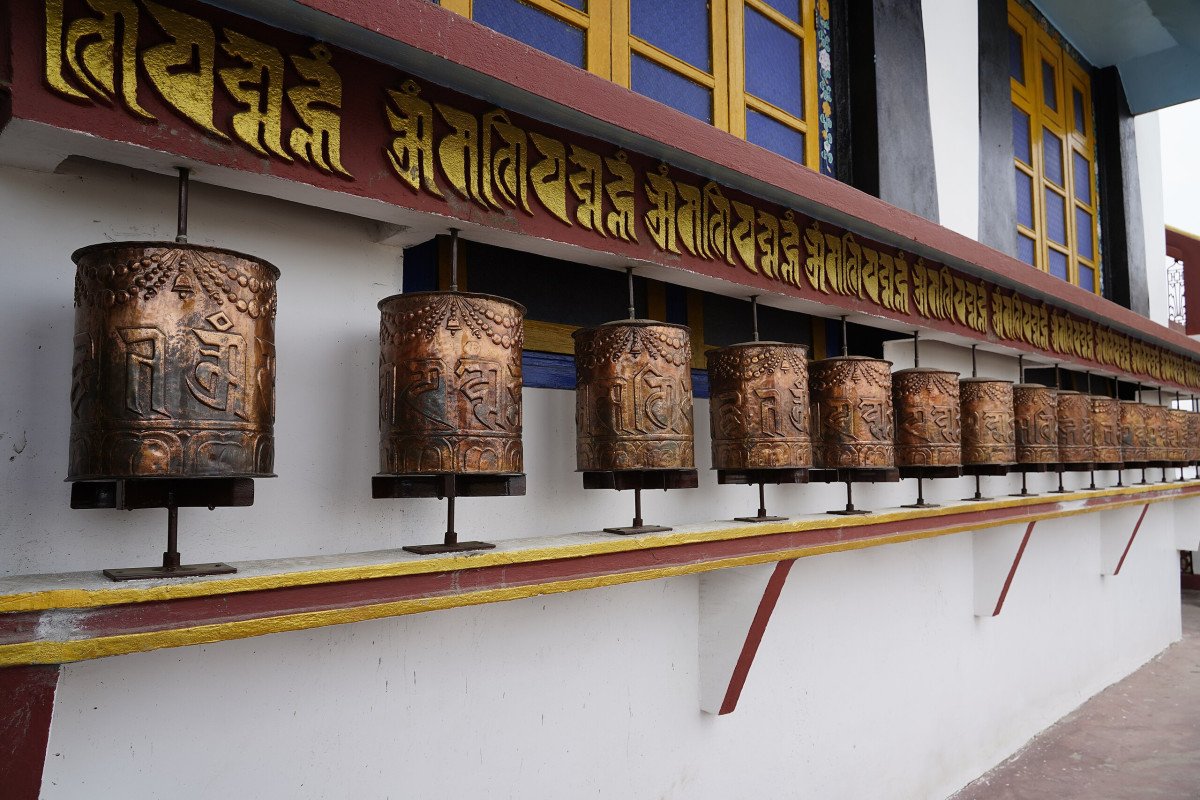
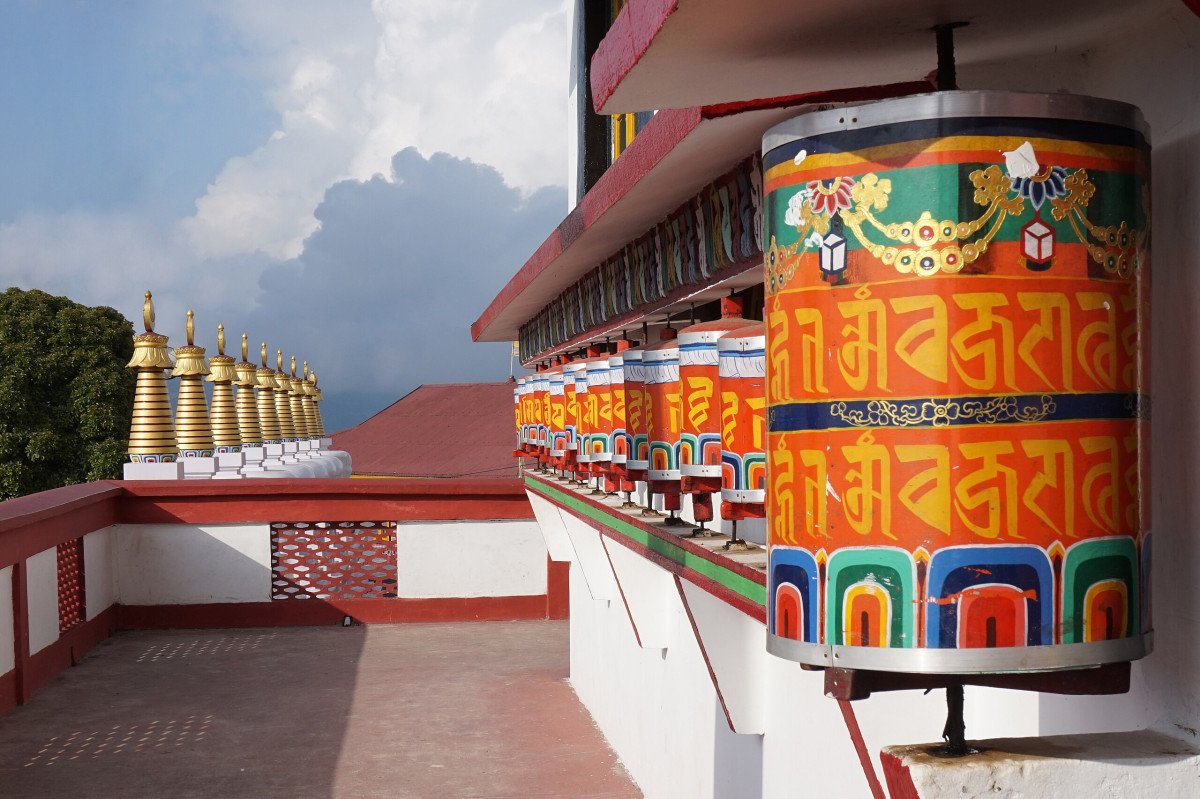
Rows of Prayer Wheels and Architectural Detail:
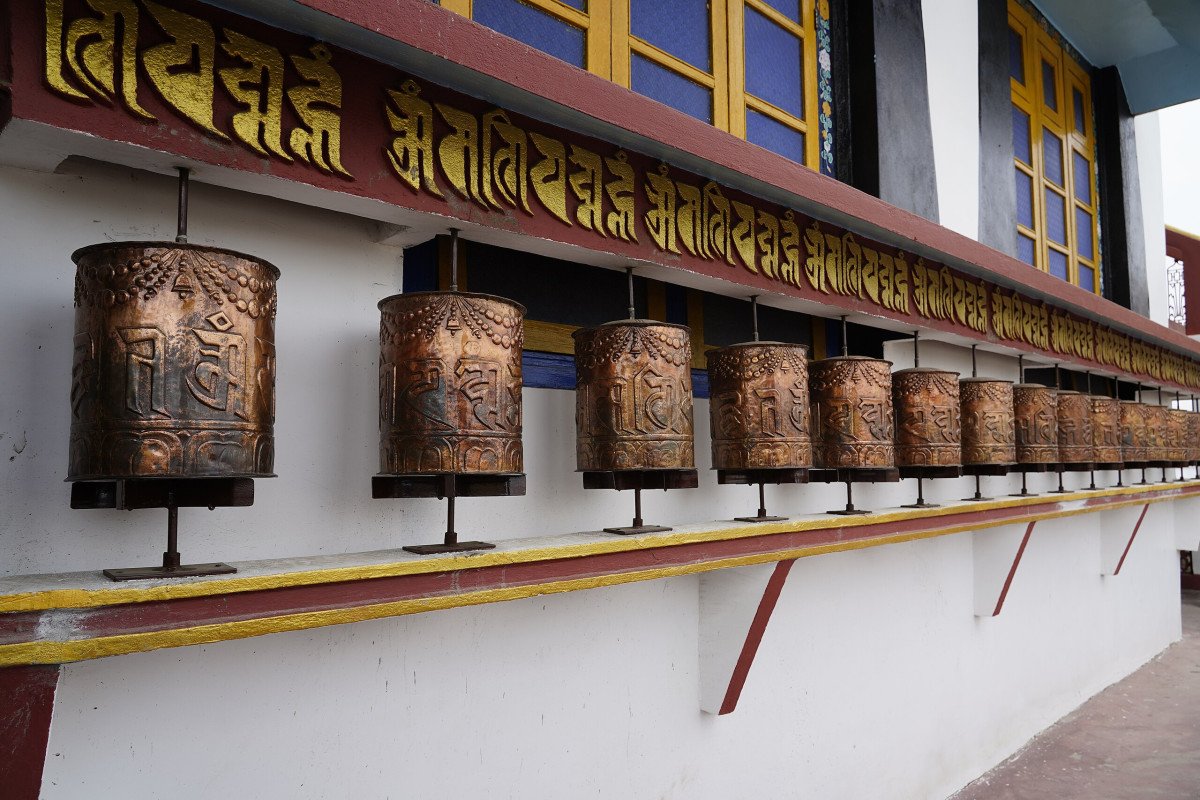
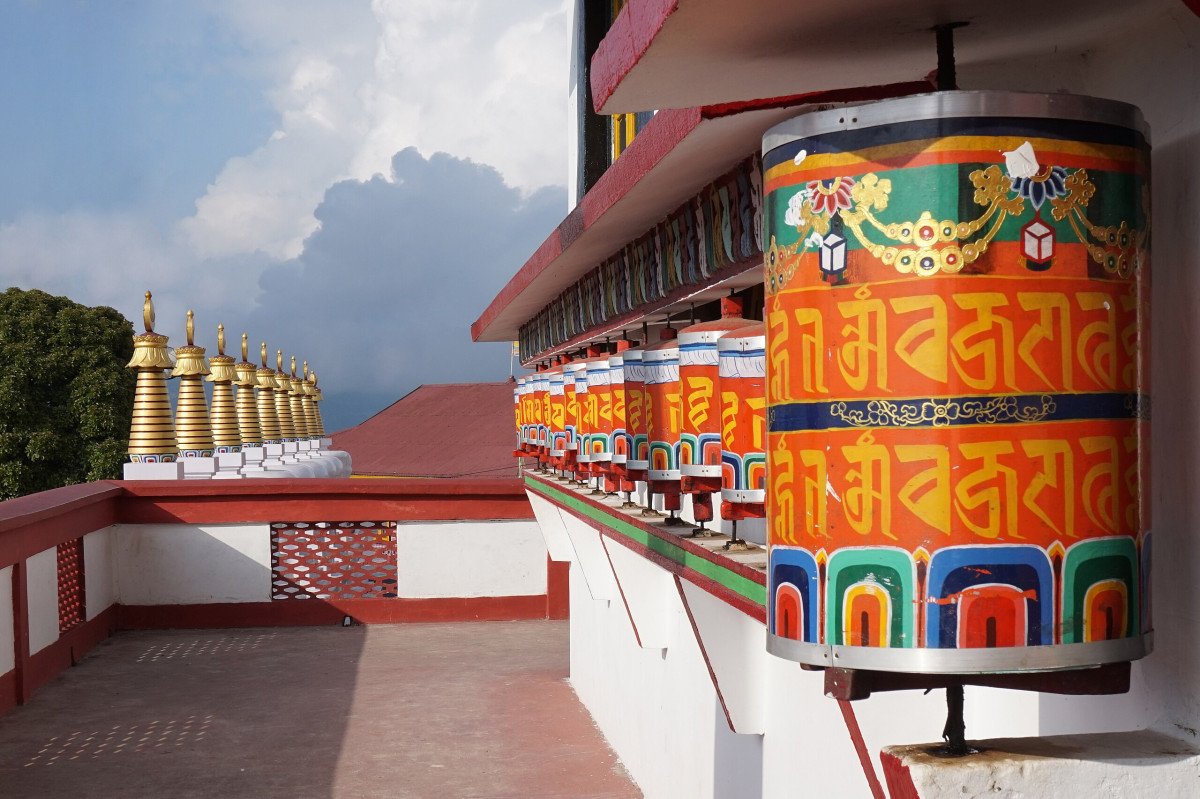
Repetitive Lines and Devotional Focus: Capture the long, repetitive lines of the prayer wheels along the periphery of the courtyard. Focus on the intricate carvings on the wheels and the vibrant colors of the small deity paintings often found above them, emphasizing the monastic dedication and visual repetition.
Close-up of the Tibetan Mural Art:
Interior Detail and Artistic Tradition: Use a wide aperture to capture the detailed, vibrant murals and Thangkas inside the main hall. Focus on a section of a mural depicting a deity or a scene from the Buddha's life, highlighting the rich colors and the meticulous brushwork of the traditional Tibetan art form.Photo Gallery
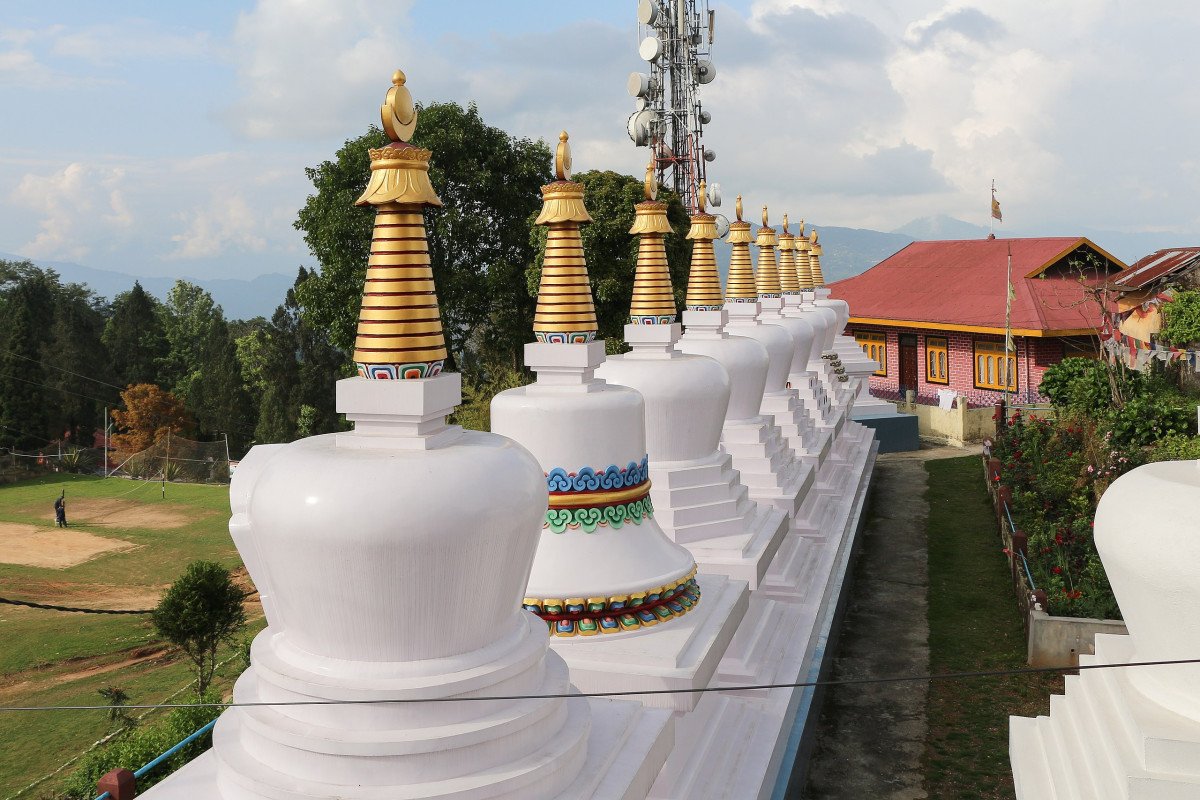
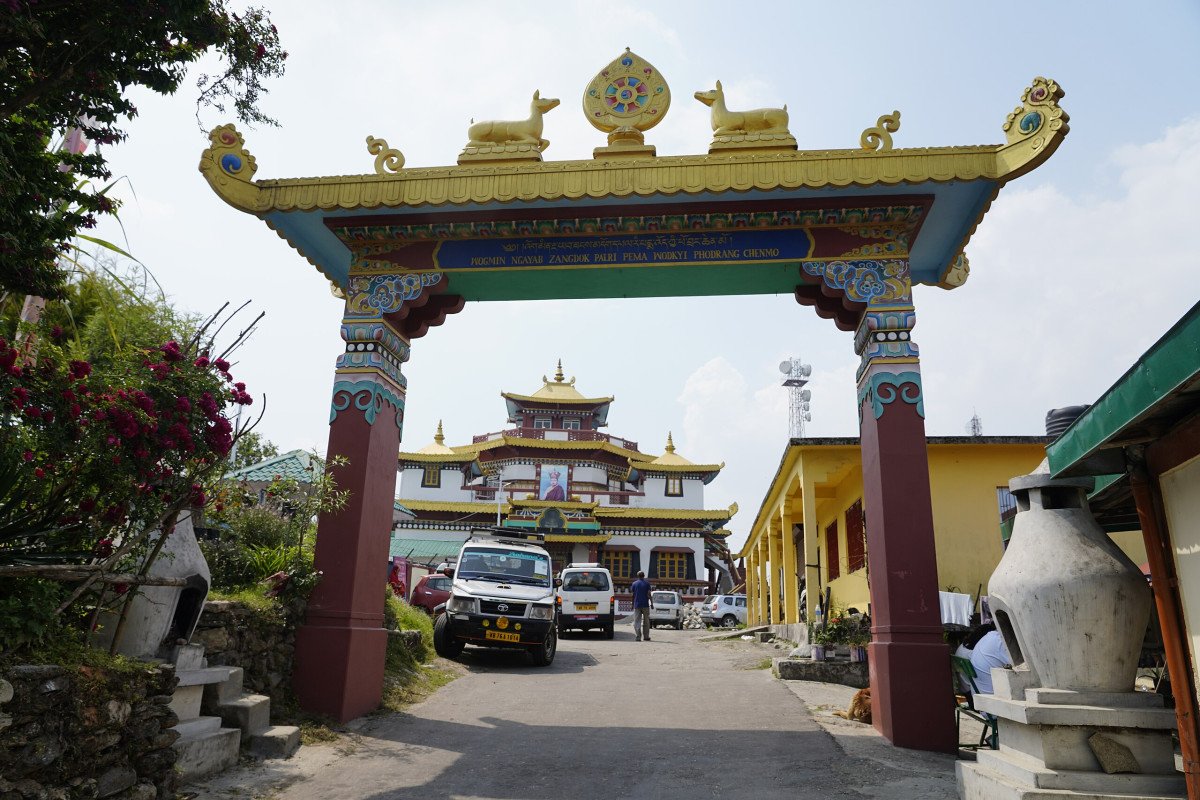
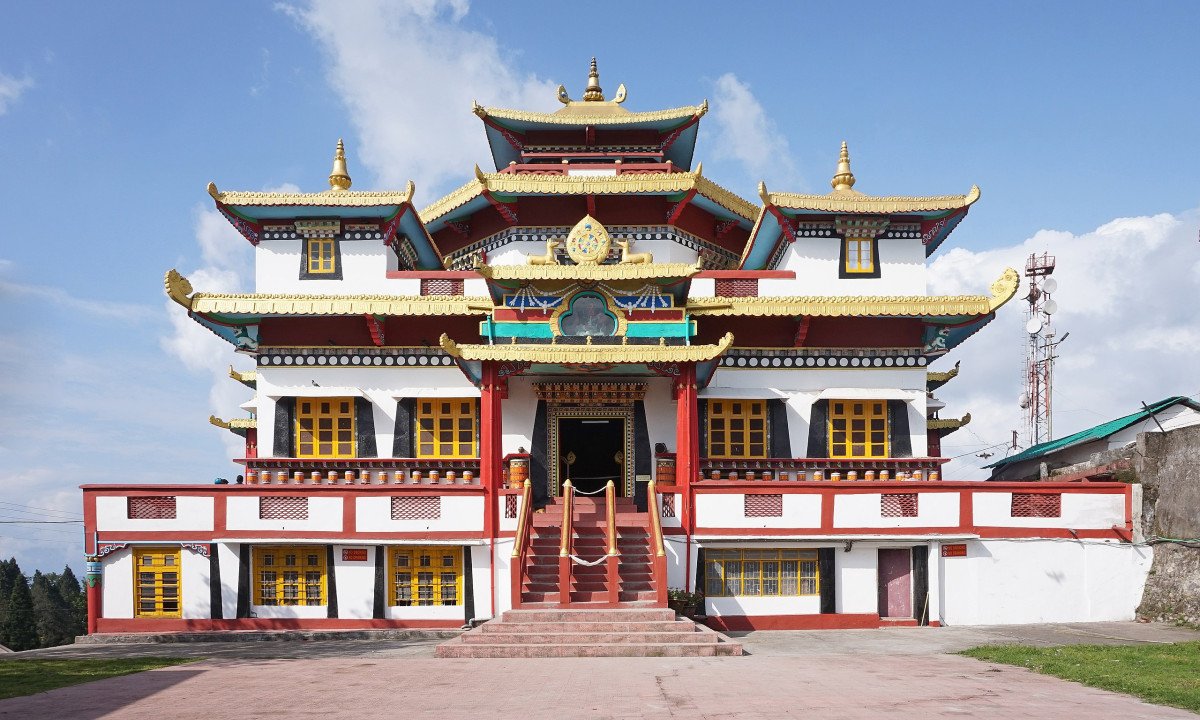
Things To Do
-
Perform the Kora with Prayer Wheels: Ritualistic Circumambulation and Merit Accumulation: Engage in the sacred ritual of Kora by walking clockwise around the monastery building and spinning the large prayer wheels. Each turn is said to chant the mantra Om Mani Padme Hum countless times, accumulating good karma. This physical and meditative practice is essential to the monastic experience.
Witness the Sunrise over Kanchenjunga:
Spectular Natural Phenomenon and Panoramic View: Arrive early (before 6:00 AM) to witness the sublime sunrise over the Kanchenjunga mountain range. From this elevated position on Durpin Dara, the view is legendary as the peaks transition from dark silhouettes to being bathed in intense gold and pink light, a moment of profound natural beauty.
Read MorePerform the Kora with Prayer Wheels: Ritualistic Circumambulation and Merit Accumulation: Engage in the sacred ritual of Kora by walking clockwise around the monastery building and spinning the large prayer wheels. Each turn is said to chant the mantra Om Mani Padme Hum countless times, accumulating good karma. This physical and meditative practice is essential to the monastic experience.
Witness the Sunrise over Kanchenjunga:
Spectular Natural Phenomenon and Panoramic View: Arrive early (before 6:00 AM) to witness the sublime sunrise over the Kanchenjunga mountain range. From this elevated position on Durpin Dara, the view is legendary as the peaks transition from dark silhouettes to being bathed in intense gold and pink light, a moment of profound natural beauty.
Meditate in the Peaceful Prayer Hall:
Silent Reflection and Spiritual Immersion: Find a quiet spot in the corner of the main prayer hall (after respectfully removing your shoes) and sit quietly. The atmosphere, permeated by the scent of incense and the sound of distant chanting, is highly conducive to meditation, mindfulness, and quiet spiritual reflection.
Seek Blessings from the Resident Monks:
Cultural Exchange and Protocol Observation: If a senior monk is not engaged in prayer or work, you may approach them respectfully to receive a blessing or ask a polite, brief question about the monastery's history or significance. Always maintain a respectful distance and a humble demeanor during such interactions.
Observe the Sacred Kanjur Repository: Respectful Viewing of Ancient Texts and Preservation: Stand near the ornately carved wooden cabinets that house the 108 volumes of the Kanjur. Reflect on the historical and religious significance of these centuries-old texts, acknowledging their role as a central pillar of Tibetan spiritual and cultural survival in the modern era.
Walk the Hillside to the Army Golf Club:
Scenic Walk and Leisure Contrast: Take a short, leisurely walk along the ridge road that leads past the monastery to the adjacent Army Golf Club. This provides a contrast between the quiet spiritual site and the manicured leisure greens, offering slightly different perspectives of the valley and the hillside itself.
Capture the Prayer Flag Vistas:
Dynamic Color Photography and Cultural Symbolism: Focus your camera on the thousands of multi-colored prayer flags (Lung Ta) that stretch from the monastery complex. Capture them fluttering against the backdrop of the clear blue sky or the misty mountains, symbolizing the Buddhist prayers being carried on the wind.
Information
-
Why Famous:
Consecration by the Dalai Lama:
Highest Spiritual Authority Endorsement: The greatest source of fame is its consecration by the spiritual leader of Tibetan Buddhism, the Dalai Lama. This act signifies the monastery's authenticity and spirit...Consecration by the Dalai Lama:
Highest Spiritual Authority Endorsement: The greatest source of fame is its consecration by the spiritual leader of Tibetan Buddhism, the Dalai Lama. This act signifies the monastery's authenticity and spiritual authority within the Gelug school, attracting international media attention and a constant stream of devout pilgrims from around the world to this site in Kalimpong.
Custodian of the Sacred Kanjur: Preservation of Buddhist Cannon and Cultural Heritage: The monastery's role as the safe repository for the complete, rare 108 volumes of the Kanjur scriptures makes it a globally significant location. These ancient texts are revered by Buddhists everywhere, and their physical presence at Zong Dog Palri Fo Brang underscores its importance as a center for learning and spiritual study. -
Architecture:
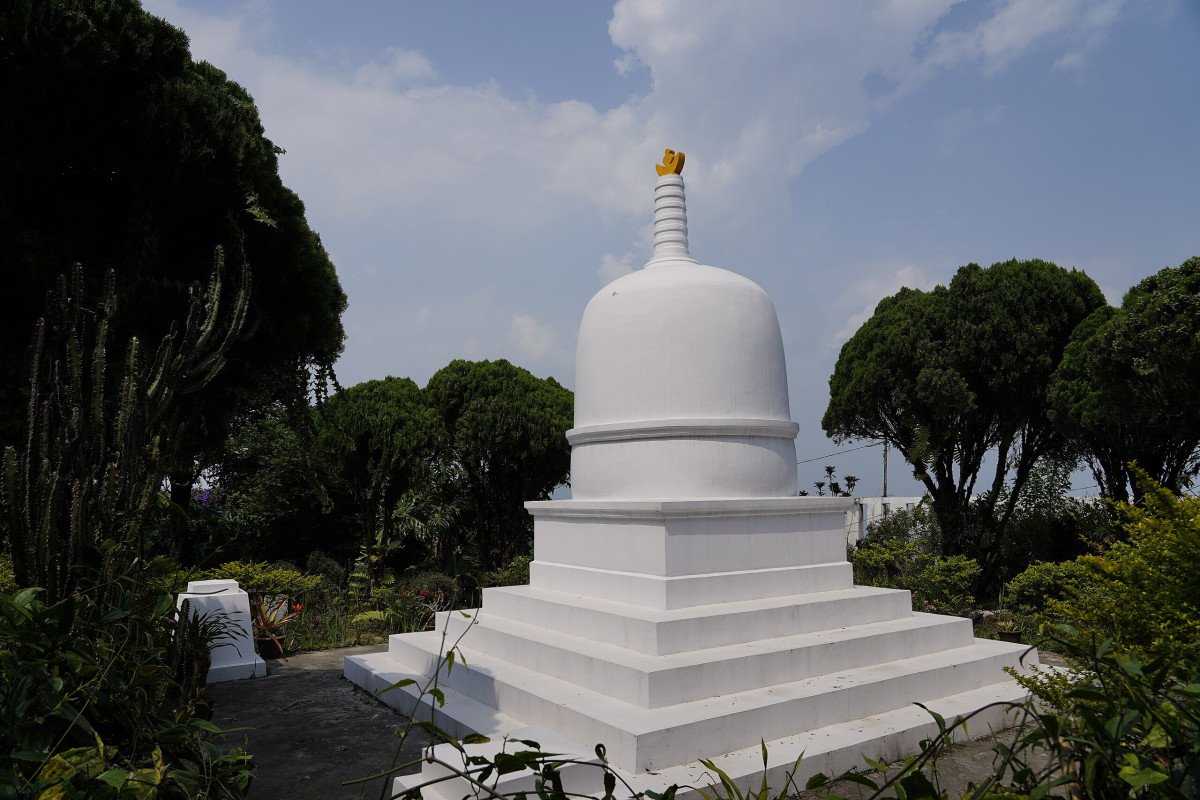
Traditional Tibetan Monastic Style: The architecture is a classic example of traditional Tibetan monastic design, adapted for the Himalayan hill environment.
Robust Hill Construction and Symbolic Colors: Key elements include heavy stone and...Traditional Tibetan Monastic Style: The architecture is a classic example of traditional Tibetan monastic design, adapted for the Himalayan hill environment.
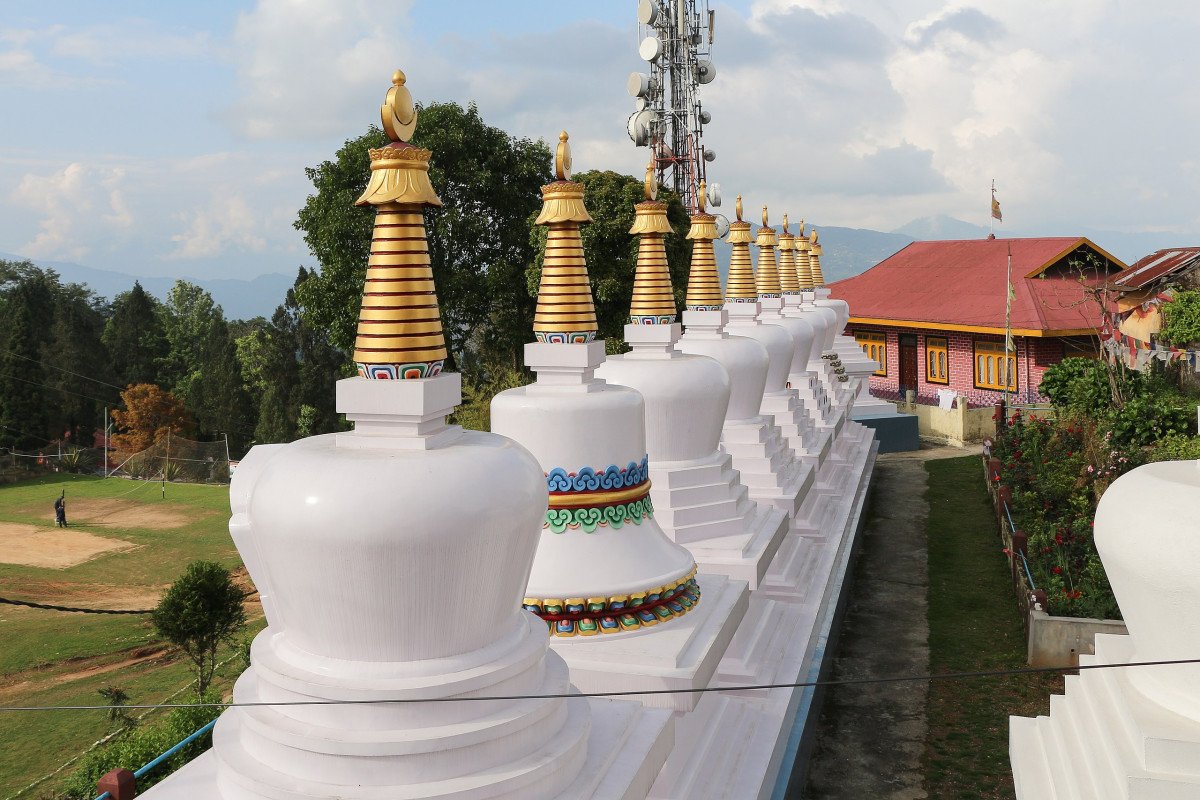
Robust Hill Construction and Symbolic Colors: Key elements include heavy stone and wood construction, thick, sloping outer walls, and small, strategically placed windows designed to retain warmth. The color palette is dominated by the sacred colors: deep maroon for the walls, vibrant yellow and gold for the roofs and decorative trims, and rich primary colors for the intricate interior murals (Thangkas).
Main Prayer Hall (Gompa) Dimensions: The central prayer hall is the largest structure, designed to accommodate large assemblies of monks and devotees.
Scale of Assembly and Ritual Space: The Gompa is a rectangular structure, roughly 30 meters long and 15 meters wide, featuring a high, vaulted ceiling supported by decorated columns. The altar, which holds the primary deities and relics, is placed centrally against the back wall, and the seating for the monks is arranged in long, parallel rows facing the altar, emphasizing the directional nature of the ritual space. -
How To Reach:
By Air: The nearest airport is Bagdogra Airport (IXB) in Siliguri.
Air Gateway and Direct Road Transfer to Hill Base: The distance is approximately 80 KMS. From IXB, hire a taxi to Kalimpong town center (about 3. 5 hours). The monastery i...By Air: The nearest airport is Bagdogra Airport (IXB) in Siliguri.
Air Gateway and Direct Road Transfer to Hill Base: The distance is approximately 80 KMS. From IXB, hire a taxi to Kalimpong town center (about 3. 5 hours). The monastery is 5. 5 KMS further up a steep road, requiring a separate, specialized local taxi hire from the town.
By Train: The principal railway station is New Jalpaiguri (NJP), about 75 KMS away.
Rail Arrival and Uphill Local Commute: After arriving at NJP, take a taxi to the main Kalimpong market area. From the market, you must hire a dedicated local cab or taxi service for the steep ascent up Durpin Dara Hill, as the final few kilometers are challenging for non-local vehicles.
By Road: The monastery is reached via the winding, steep road that climbs Durpin Hill. Challenging Road Gradient and Local Driver Requirement: While the road is motorable, it is very steep and demands caution. It is highly recommended to use a robust vehicle like a jeep and, critically, an experienced local driver from Kalimpong who is familiar with the road's demanding curves and steep gradients for maximum safety.
By Local Transport: Local taxis are the only reliable way to get to the top.
Dedicated Local Taxi Hire for Round Trip: From the Kalimpong town center, hire a local cab on a dedicated round-trip basis (including waiting time) to visit the monastery. This is often the most convenient and common method, as shared transport does not service the final steep ascent to the summit. -
Weather and Best Time to Visit:
Optimal Post-Monsoon Season: The months of October and November are the best.
High Visibility and Crisp Atmosphere: The weather is cool, dry, and sunny, providing exceptional clarity for mountain viewing. This period offers the most comfor...Optimal Post-Monsoon Season: The months of October and November are the best.
High Visibility and Crisp Atmosphere: The weather is cool, dry, and sunny, providing exceptional clarity for mountain viewing. This period offers the most comfortable walking temperatures for exploring the vast grounds and is widely considered the peak season.
Spring Season (Floral Beauty): The period from March to May is highly recommended.
Blooming Rhododendrons and Pleasant Warmth: The surrounding hills and the monastery grounds are often bursting with local flowers, including rhododendrons, creating a beautiful contrast with the green landscape. Mountain views are frequent, though sometimes interrupted by afternoon haze.
Different Parts of the Day: Early Morning Viewpoint and Midday Spiritual Quietude: Arrive early morning (7:30 AM) for the iconic Kanchenjunga views and best photography light. Midday (11:00 AM to 1:00 PM) is quieter, offering a better time for silent reflection and viewing the monastery's interior without the large morning rush. -
Near Tourist Places:
Army Golf Course: 1. 5 KMS (Scenic leisure area)
Kalimpong Market: 5. 5 KMS (Shopping hub)
Pine View Cactus Nursery: 6 KMS (Floral attraction)
Deolo Hill: 11 KMS (Highest viewpoint)
Morgan House: 7. 5 KMS (Historic guesthouse)
Mangal Dham Temple: 7 KMS (Hindu temple) Dr.
Graham s Homes: 9. 5 KMS (Historic school)
Tharpa Choling Monastery: 4. 5 KMS (Historic Gelug site)
Teesta River View Point: 15 KMS (River panorama)
Kalimpong Science Centre: 8 KMS (Educational center)
Tourism Tips
-
Health & Safety (Altitude and Physical Exertion):
Layered Protection and Careful Hillside Walking: The monastery is at a significant altitude, making the air thin and prone to wind chill; pack appropriate warm, layered clothing and a windpr...Health & Safety (Altitude and Physical Exertion):
Layered Protection and Careful Hillside Walking: The monastery is at a significant altitude, making the air thin and prone to wind chill; pack appropriate warm, layered clothing and a windproof jacket. Wear sturdy footwear, as the stone pathways can be uneven and the climb steep.
Packing Essentials (Camera Gear and Modesty):
Photography Tripod Use and Respectful Attire: Bring a zoom lens or binoculars for the distant mountain views. Critically, when entering the prayer hall, wear modest clothing (covering knees and shoulders) and mandatory remove shoes and hats before stepping onto the temple premises. Accommodation and Planning (Combined Sightseeing Plan): Central Town Stay for Convenience and Itinerary Efficiency: Stay in Kalimpong town center. Plan the Durpin Monastery visit to be combined with the nearby Army Golf Club and the Pine View Cactus Nursery to maximize your sightseeing time efficiently into a single, comprehensive half-day tour.
Other Tips (Silence and Cultural Respect):
Protocol for Sacred Sites and Monastic Life: Maintain absolute silence inside the prayer hall and on the grounds, especially if monks are chanting. Always walk in a clockwise direction around the monastery, prayer wheels, and stupas, which is the necessary ritualistic protocol in Tibetan Buddhism.
Reviews
FAQs
Ans:- The Zong Dog Palri Fo Brang Monastery is an alternate linguistic transliteration and official cataloged identity for the famous Zang Dhok Palri Phodang, reflecting how different archival records and administrative bodies spell the phonetic Tibetan name. While it represents the exact same spiritual sanctuary located on Durpin Hill, maintaining this specific ID ensures that travelers searching via alternative digital maps, tourism portals, and regional databases can accurately find the comprehensive location and unique historical data associated with it.Ans:- The principal founder of the Zong Dog Palri Fo Brang Monastery was His Holiness Dudjom Rinpoche, a highly revered master and supreme head of the Nyingma lineage of Tibetan Buddhism, who established the foundation in the year 1957. Dudjom Rinpoche chose this serene hilltop location in Kalimpong as a temporary religious seat and sanctuary for the exiled Tibetan community, building a vibrant center for spiritual preservation that was later formally inaugurated and blessed by the Dalai Lama in 1976.Ans:- The spiritual philosophy practiced at the Zong Dog Palri Fo Brang Monastery is deeply rooted in the Nyingma school of Tibetan Buddhism, which is the oldest of the four major schools and emphasizes ancient tantric lineages and teachings. Monks at this monastery engage in rigorous daily study of esoteric texts, meditation techniques, and ritual traditions passed down directly from Guru Padmasambhava, focusing heavily on inner transformation, universal compassion, and the preservation of sacred Vajrayana Buddhist heritages across future generations.Ans:- The Zong Dog Palri Fo Brang Monastery is situated at an elevation of approximately 1,372 meters or 4,500 feet above sea level, resulting in a pleasant subtropical highland climate that varies beautifully across seasons. Summers from April to June are mild and comfortable with temperatures rarely exceeding twenty-five degrees Celsius, whereas winters from November to February are crisp and cold, sometimes dropping below seven degrees Celsius, requiring tourists to carry heavy woolen apparel for their comfort.Ans:- The main assembly hall of the Zong Dog Palri Fo Brang Monastery features an extraordinary collection of vibrant wall murals and traditional thangka paintings that depict various peaceful and wrathful deities of the Nyingma pantheon. Executed with remarkable precision, these artworks use natural mineral pigments and gold dust to create a striking three-dimensional visual effect, illustrating the life journey of Buddha, the twelve deeds of Padmasambhava, and intricate cosmic wheels that serve as crucial visual meditation aids for practitioners.Ans:- The 108 volumes of the sacred Kangyur scriptures preserved at Zong Dog Palri Fo Brang Monastery represent the directly translated spoken words and foundational teachings of Lord Buddha, holding unparalleled spiritual value for Buddhists worldwide. These rare texts were painstakingly transported across rugged Himalayan passes from Tibet into India by Dudjom Rinpoche to prevent their destruction during a time of major political conflict, making this monastery a vital international repository for ancient scriptural wisdom and monastic research.Ans:- The local monks celebrate the Tibetan New Year, known as Losar, with elaborate religious rituals, extensive cleaning of the temple shrines, and the creation of beautiful butter sculptures as sacred offerings. The festival spans multiple days and features special congregational prayers for world peace, the hanging of fresh colorful prayer flags across Durpin Hill, and the performance of sacred ritual mask dances that symbolize the spiritual triumph of good over evil forces within our universe.Ans:- Photography is strictly prohibited inside the main inner shrine room of the Zong Dog Palri Fo Brang Monastery to preserve the sanctity, quietude, and intense spiritual focus required for prayers and meditation. However, tourists are fully permitted to capture photographs of the stunning exterior architecture, the expansive courtyard, the beautiful perimeter prayer wheels, and the magnificent panoramic mountain views of the Kanchenjunga range available from the outdoor terraces and upper balconies of the complex.Ans:- To reach the Zong Dog Palri Fo Brang Monastery from the nearest major railway hub, which is the New Jalpaiguri (NJP) Railway Station located roughly 72 kilometers away, travelers can choose between several convenient transport options. You can hire a direct private prepaid taxi from the station counter, which takes about two and a half to three hours to reach Kalimpong hill, or take a shared jeep to Kalimpong town and then hire a local auto-rickshaw up to Durpin Hill.Ans:- Yes, there are small, vibrant souvenir stalls located right outside the main gates of the Zong Dog Palri Fo Brang Monastery where local artisans sell traditional Tibetan artifacts, hand-woven prayer rugs, and metal prayer wheels. Visitors can also purchase colorful prayer flags, aromatic incense sticks, wooden masks, and local Himalayan tea packets, while the larger, bustling markets of Kalimpong town offer an even wider selection of authentic regional handicrafts and organic spices.Ans:- The Zong Dog Palri Fo Brang Monastery plays a vital educational role in the region by functioning as a traditional monastic school where young novice monks receive comprehensive training in Buddhist philosophy, literature, and rituals. Alongside studying ancient Tibetan scriptures and grammar, the young students are provided with modern foundational education, boarding facilities, and healthcare, ensuring the sustainable preservation of Nyingma religious lineages while empowering the younger generation with holistic life skills for the modern world.Ans:- Ordinary tourists and casual visitors are generally not permitted to stay overnight inside the primary monastery premises, as the residential quarters are strictly reserved for the practicing monks, students, and visiting religious teachers. However, travelers interested in experiencing the peaceful monastic lifestyle can find numerous spiritual homestays and specialized wellness retreats located in the surrounding Kalimpong hills that offer regular meditation classes and easy daily access to the monastery compounds.Ans:- Spinning the copper prayer wheels installed around the Zong Dog Palri Fo Brang Monastery is a profound devotional practice in Vajrayana Buddhism, where each wheel is packed with thousands of written mantras like "Om Mani Padme Hum". Believers spin these wheels in a clockwise direction while walking around the temple, a ritual believed to spiritually release the power of the prayers into the universe, accumulating positive karma, purifying negative energies, and bringing peace to all sentient beings.Ans:- The monastery actively manages its ecological footprint on Durpin Hill by implementing traditional rainwater harvesting systems and strictly enforcing waste segregation policies across the entire temple compound to preserve the fragile mountain environment. The resident community emphasizes eco-friendly practices, discouraging the use of single-use plastics by visitors and encouraging the planting of native flowering plants and trees around the hillside to prevent soil erosion and maintain the natural beauty of the area efficiently.Ans:- A tourist visiting Darjeeling or Gangtok should absolutely include this monastery in their travel plan because it offers a uniquely peaceful, uncrowded spiritual experience and a rich architectural display that stands out from other regional shrines. It bridges the geographic gap between Sikkim and West Bengal tourism loops, combining rare historical treasures carried directly from Tibet with unparalleled 360-degree views of Mount Kanchenjunga and the Teesta valley, making it a truly unforgettable highlight of any Himalayan vacation journey.Ans:- The Zong Dog Palri Fo Brang Monastery is an alternate linguistic transliteration and official cataloged identity for the famous Zang Dhok Palri Phodang, reflecting how different archival records and administrative bodies spell the phonetic Tibetan name. While it represents the exact same spiritual sanctuary located on Durpin Hill, maintaining this specific ID ensures that travelers searching via alternative digital maps, tourism portals, and regional databases can accurately find the comprehensive location and unique historical data associated with it.Ans:- The principal founder of the Zong Dog Palri Fo Brang Monastery was His Holiness Dudjom Rinpoche, a highly revered master and supreme head of the Nyingma lineage of Tibetan Buddhism, who established the foundation in the year 1957. Dudjom Rinpoche chose this serene hilltop location in Kalimpong as a temporary religious seat and sanctuary for the exiled Tibetan community, building a vibrant center for spiritual preservation that was later formally inaugurated and blessed by the Dalai Lama in 1976.Ans:- The spiritual philosophy practiced at the Zong Dog Palri Fo Brang Monastery is deeply rooted in the Nyingma school of Tibetan Buddhism, which is the oldest of the four major schools and emphasizes ancient tantric lineages and teachings. Monks at this monastery engage in rigorous daily study of esoteric texts, meditation techniques, and ritual traditions passed down directly from Guru Padmasambhava, focusing heavily on inner transformation, universal compassion, and the preservation of sacred Vajrayana Buddhist heritages across future generations.Ans:- The Zong Dog Palri Fo Brang Monastery is situated at an elevation of approximately 1,372 meters or 4,500 feet above sea level, resulting in a pleasant subtropical highland climate that varies beautifully across seasons. Summers from April to June are mild and comfortable with temperatures rarely exceeding twenty-five degrees Celsius, whereas winters from November to February are crisp and cold, sometimes dropping below seven degrees Celsius, requiring tourists to carry heavy woolen apparel for their comfort.Ans:- The main assembly hall of the Zong Dog Palri Fo Brang Monastery features an extraordinary collection of vibrant wall murals and traditional thangka paintings that depict various peaceful and wrathful deities of the Nyingma pantheon. Executed with remarkable precision, these artworks use natural mineral pigments and gold dust to create a striking three-dimensional visual effect, illustrating the life journey of Buddha, the twelve deeds of Padmasambhava, and intricate cosmic wheels that serve as crucial visual meditation aids for practitioners.Ans:- The 108 volumes of the sacred Kangyur scriptures preserved at Zong Dog Palri Fo Brang Monastery represent the directly translated spoken words and foundational teachings of Lord Buddha, holding unparalleled spiritual value for Buddhists worldwide. These rare texts were painstakingly transported across rugged Himalayan passes from Tibet into India by Dudjom Rinpoche to prevent their destruction during a time of major political conflict, making this monastery a vital international repository for ancient scriptural wisdom and monastic research.Ans:- The local monks celebrate the Tibetan New Year, known as Losar, with elaborate religious rituals, extensive cleaning of the temple shrines, and the creation of beautiful butter sculptures as sacred offerings. The festival spans multiple days and features special congregational prayers for world peace, the hanging of fresh colorful prayer flags across Durpin Hill, and the performance of sacred ritual mask dances that symbolize the spiritual triumph of good over evil forces within our universe.Ans:- Photography is strictly prohibited inside the main inner shrine room of the Zong Dog Palri Fo Brang Monastery to preserve the sanctity, quietude, and intense spiritual focus required for prayers and meditation. However, tourists are fully permitted to capture photographs of the stunning exterior architecture, the expansive courtyard, the beautiful perimeter prayer wheels, and the magnificent panoramic mountain views of the Kanchenjunga range available from the outdoor terraces and upper balconies of the complex.Ans:- To reach the Zong Dog Palri Fo Brang Monastery from the nearest major railway hub, which is the New Jalpaiguri (NJP) Railway Station located roughly 72 kilometers away, travelers can choose between several convenient transport options. You can hire a direct private prepaid taxi from the station counter, which takes about two and a half to three hours to reach Kalimpong hill, or take a shared jeep to Kalimpong town and then hire a local auto-rickshaw up to Durpin Hill.Ans:- Yes, there are small, vibrant souvenir stalls located right outside the main gates of the Zong Dog Palri Fo Brang Monastery where local artisans sell traditional Tibetan artifacts, hand-woven prayer rugs, and metal prayer wheels. Visitors can also purchase colorful prayer flags, aromatic incense sticks, wooden masks, and local Himalayan tea packets, while the larger, bustling markets of Kalimpong town offer an even wider selection of authentic regional handicrafts and organic spices.Ans:- The Zong Dog Palri Fo Brang Monastery plays a vital educational role in the region by functioning as a traditional monastic school where young novice monks receive comprehensive training in Buddhist philosophy, literature, and rituals. Alongside studying ancient Tibetan scriptures and grammar, the young students are provided with modern foundational education, boarding facilities, and healthcare, ensuring the sustainable preservation of Nyingma religious lineages while empowering the younger generation with holistic life skills for the modern world.Ans:- Ordinary tourists and casual visitors are generally not permitted to stay overnight inside the primary monastery premises, as the residential quarters are strictly reserved for the practicing monks, students, and visiting religious teachers. However, travelers interested in experiencing the peaceful monastic lifestyle can find numerous spiritual homestays and specialized wellness retreats located in the surrounding Kalimpong hills that offer regular meditation classes and easy daily access to the monastery compounds.Ans:- Spinning the copper prayer wheels installed around the Zong Dog Palri Fo Brang Monastery is a profound devotional practice in Vajrayana Buddhism, where each wheel is packed with thousands of written mantras like "Om Mani Padme Hum". Believers spin these wheels in a clockwise direction while walking around the temple, a ritual believed to spiritually release the power of the prayers into the universe, accumulating positive karma, purifying negative energies, and bringing peace to all sentient beings.Ans:- The monastery actively manages its ecological footprint on Durpin Hill by implementing traditional rainwater harvesting systems and strictly enforcing waste segregation policies across the entire temple compound to preserve the fragile mountain environment. The resident community emphasizes eco-friendly practices, discouraging the use of single-use plastics by visitors and encouraging the planting of native flowering plants and trees around the hillside to prevent soil erosion and maintain the natural beauty of the area efficiently.Ans:- A tourist visiting Darjeeling or Gangtok should absolutely include this monastery in their travel plan because it offers a uniquely peaceful, uncrowded spiritual experience and a rich architectural display that stands out from other regional shrines. It bridges the geographic gap between Sikkim and West Bengal tourism loops, combining rare historical treasures carried directly from Tibet with unparalleled 360-degree views of Mount Kanchenjunga and the Teesta valley, making it a truly unforgettable highlight of any Himalayan vacation journey.Ans:- Yes, Zong Dog Palri Fo Brang Monastery is simply an alternative phonetic English spelling and transliteration of Zang Dhok Palri Phodang. Both names refer to the exact same landmark Tibetan Buddhist institution located atop Durpin Dara Hill in Kalimpong. The variation in names often arises in travel guides and mapping applications due to different interpretations of the traditional Tibetan language pronunciation, but they represent the single historic monastery established by His Holiness Dudjom Rinpoche in the late 1957 era.Ans:- The monastery strictly follows the Nyingma lineage, which is widely recognized as the oldest of the four major schools of Tibetan Buddhism. Founded by the legendary master Guru Padmasambhava in the 8th century, the Nyingma tradition places heavy emphasis on ancient tantric teachings, deep meditation practices, and the preservation of hidden spiritual treasures called Termas. The monastery functions as a vital active center for transmitting these ancient Nyingma lineage teachings to new generations of Himalayan monks and international practitioners.Ans:- One of the most breathtaking features inside the upper levels of the Zong Dog Palri Fo Brang Monastery is a spectacular, meticulously crafted three-dimensional wooden mandala. This complex structural model serves as a visual cosmic map, physically representing the sacred celestial palace of the deities. Painted in stunning detail with traditional natural dyes, the mandala features hundreds of tiny, hand-carved details that monks use as an advanced visual aid during deep esoteric meditation practices to visualize cosmic order and spiritual enlightenment.Ans:- While the primary Zong Dog Palri Fo Brang structure on Durpin Hill was established directly by Dudjom Rinpoche, its history is deeply intertwined with the royal family of Bhutan. During the 1960s, the Queen Mother of Bhutan, Choying Wangmo, formally gifted another historical property in Kalimpong—the Jangsa Dechen Choling Monastery—to Dudjom Rinpoche. This generous royal gift allowed the Nyingma order to expand its educational operations significantly, establishing strong cultural ties between the Bhutanese kingdom and the monastic community thriving in Kalimpong.Ans:- Zong Dog Palri Fo Brang Monastery functions as a fully operational monastic school and spiritual seminary for young novitiate lamas arriving from across India, Nepal, and Bhutan. The young boys receive a comprehensive education that balances traditional Buddhist philosophies, advanced scriptural memorization, Tibetan grammar, and ritual arts with modern foundational subjects. The older monks closely mentor these students in the daily practices of logic, debate, and complex ritual setup, ensuring the ancient cultural heritage remains vibrant and uninterrupted.Ans:- To preserve the quiet, meditative environment required for the monks' daily studies, tourists must follow strict guidelines regarding electronic devices. Mobile phones must be switched to completely silent or airplane mode before entering any of the main prayer halls. While outdoor photography of the stunning architecture, lush gardens, and sweeping mountain valleys is highly encouraged, taking photos, recording videos, or using selfie sticks inside the sacred inner shrine rooms is strictly prohibited by the management.Ans:- The most rewarding time for photography enthusiasts to visit the monastery is during the early morning hours, between 8:00 AM and 10:00 AM, or during the late afternoon golden hour around 4:30 PM. The soft morning light beautifully illuminates the golden spires and brilliant red facades of the building against the blue sky, while the late afternoon sun casts a warm, magical glow over the entire Kalimpong valley, making it ideal for capturing dramatic landscape compositions.Ans:- Because the monastery sits at a high altitude on Durpin Dara Hill, its local weather conditions can change quite rapidly. Summers are incredibly pleasant and mild, making it an escape from the plains. Autumn and winter bring crisp, freezing air along with crystal-clear blue skies that offer the absolute best views of Mount Kanchenjunga. However, during the peak monsoon months, the hill top is frequently enveloped in thick rolling clouds and heavy mist, creating a mysterious atmosphere but blocking the view.Ans:- Tourists are welcome to observe the spectacular celebrations of Losar, the traditional Tibetan New Year, which usually takes place in February or March. During this multi-day festival, the monastery grounds come alive with elaborate offerings, traditional butter sculptures, and vibrant prayer flag installations. Visitors can sit quietly along the edges of the main courtyard to watch the monks perform spiritual rituals, offering a unique opportunity to experience authentic Himalayan Buddhist customs and hospitality firsthand.Ans:- While the monastery does not operate a commercial gift shop, there are a few small local handicraft stalls and street vendors located near the vehicle parking zone outside the gates. Tourists can purchase beautiful, locally crafted souvenirs such as small wooden prayer wheels, colorful hand-woven prayer flags, authentic incense sticks made by local monasteries, traditional Tibetan beads, and protective amulets. Buying from these vendors directly supports the livelihoods of local families living around Durpin Hill.Ans:- The monastery complex and the surrounding Durpin Dara neighborhood are exceptionally safe, peaceful, and welcoming for solo female travelers. The entire hill top area is under the management of the monastery and bordered by a very secure, well-maintained Indian Army cantonment zone, ensuring an environment free from harassment. The local monks and residents are known for their polite, helpful nature, making it comfortable for solo travelers to explore the grounds at their own pace.Ans:- Yes, visitors are fully permitted to engage in silent personal meditation inside the main prayer hall, provided there are no active large-scale group rituals or official monastic functions taking place at that moment. You can simply find a quiet spot along the back or sides of the hall, sit cross-legged on the floor mats, and spend time in quiet reflection. The soothing aroma of traditional incense and the serene, historic atmosphere make it an ideal setting for deep mindfulness.Ans:- A thorough and relaxed exploration of the entire monastery complex generally takes about 45 minutes to an hour. This time allows visitors to walk around the exterior path to spin the prayer wheels, enter the main temple to admire the statues and wall paintings, climb up to the open-air balconies to take photos of the valleys, and spend a few quiet moments sitting inside the prayer hall soaking in the peaceful, spiritual ambiance.Ans:- There are no official government-appointed tour guides stationed permanently at the monastery entrance gate. However, most private taxi drivers from Kalimpong are very knowledgeable and act as informal guides, sharing basic history during the drive. For a deeper historical understanding, visitors can read the informational plaques installed around the property or politely approach one of the senior English-speaking monks, who are often happy to explain the meanings behind specific murals and relics.Ans:- Zong Dog Palri Fo Brang Monastery stands as a vital pillar of Kalimpong's tourism because it offers a perfect blend of high-altitude natural beauty, unique architectural grandeur, and living spiritual heritage. It provides an essential window into the rich Tibetan diaspora traditions that have shaped the hill station's identity since the mid-20th century. By drawing pilgrims, art historians, and nature lovers alike, the monastery plays a major role in sustaining the local tourism economy while preserving ancient Himalayan traditions.Kalimpong Itineray And Cost:-
Zong Dog Palri Fo Brang Monastery Tourism:-
Information about New and Updated Locations() of West Bengal Has Been Added :-
Card subtitle
Note:-
Information provided here in good Faith and for reference only.
Near Places

7th Mile Viewpoint
Some quick example text to build on the card title and make up the bulk of the card's content.
Go somewhere
Ahal Dara Viewpoint
Some quick example text to build on the card title and make up the bulk of the card's content.
Go somewhere
Bara Mangwa
Some quick example text to build on the card title and make up the bulk of the card's content.
Go somewhere
Changey Falls
Some quick example text to build on the card title and make up the bulk of the card's content.
Go somewhere
Chatakpur
Some quick example text to build on the card title and make up the bulk of the card's content.
Go somewhere
Chota Mangwa
Some quick example text to build on the card title and make up the bulk of the card's content.
Go somewhere
Deolo Hill
Some quick example text to build on the card title and make up the bulk of the card's content.
Go somewhere
Dr. Graham s Homes
Some quick example text to build on the card title and make up the bulk of the card's content.
Go somewhere
Durpin Dara Hill
Some quick example text to build on the card title and make up the bulk of the card's content.
Go somewhere
Durpin Monastery
Some quick example text to build on the card title and make up the bulk of the card's content.
Go somewhere
Gauripur House
Some quick example text to build on the card title and make up the bulk of the card's content.
Go somewhere
Icchey Gaon
Some quick example text to build on the card title and make up the bulk of the card's content.
Go somewhere
Kalimpong Science Centre
Some quick example text to build on the card title and make up the bulk of the card's content.
Go somewhere
Kolakham
Some quick example text to build on the card title and make up the bulk of the card's content.
Go somewhere
Latpanchar
Some quick example text to build on the card title and make up the bulk of the card's content.
Go somewhere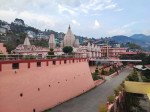
Mangal Dham
Some quick example text to build on the card title and make up the bulk of the card's content.
Go somewherein Other Cities