


Chilapata Forest
General information
-
Ideal Duration:
2 to 3 days (To cover multiple safari times, visit the Nalraja Garh, and explore neighboring Jaldapara).Place Type:
Wildlife Sanctuary and Historical Archeological SiEntry Fees:
Compulsory Forest Permit and Conservation Fee: All visitors must obtain an entry permit from the Forest Department counter near the gate, which includes a mandatory conservation fee.
Official Forest Access and Wildlife Tax: This fee is stan...Compulsory Forest Permit and Conservation Fee: All visitors must obtain an entry permit from the Forest Department counter near the gate, which includes a mandatory conservation fee.
Official Forest Access and Wildlife Tax: This fee is standardized, usually ranging from Rs.50 to Rs.150 per person for Indian nationals, and significantly higher for foreign tourists. This contribution is vital for anti-poaching and forest maintenance initiatives, and the permit must be presented at the check post.
Fixed Rate for Jeep Safari Vehicle Hire: The most substantial cost is the fixed fee for hiring the registered safari jeep.
Vehicle Rental for Designated Routes and Duration: This is a non-negotiable, fixed rate for the vehicle (regardless of the number of passengers, up to six), typically ranging from Rs.1800 to Rs.3000 for a single 2-3 hour slot. This cost does not include the mandatory guide or the driver's tip, so travelers should budget for these separately to avoid confusion.
Mandatory Local Guide Fees and Camera Charges: A local, authorized guide is required for every safari vehicle for safety and expertise.
Paid Expertise for Tracking and Safety: The guide fee is separate, usually around Rs.500 to Rs.800 per trip. Additionally, a nominal fee (e. g. , Rs.100) is levied for carrying any still camera, and a higher fee for professional video equipment, a standard practice across the Dooars forest areas.Timing:
Regular Safari Timings (Strict Bi-Daily Slots): Access to the core safari zones is strictly controlled and only allowed during two specific time slots daily.
Scheduled Morning and Afternoon Wildlife Access: The Morning Slot is rigidly set f...Regular Safari Timings (Strict Bi-Daily Slots): Access to the core safari zones is strictly controlled and only allowed during two specific time slots daily.
Scheduled Morning and Afternoon Wildlife Access: The Morning Slot is rigidly set from 6:00 AM to 8:30 AM, and the Afternoon Slot runs from 3:00 PM to 5:30 PM. These times are enforced to minimize stress on the animals and must be adhered to, meaning visitors need to arrive at the gate at least 30 minutes prior. Ideal Visit Time (Peak Animal Movement and Visibility): The prime time for spotting mammals is during the first hour of the morning slot (around 6:30 AM to 7:30 AM).
Dawn Hours for Feeding and Optimal Light: This is when the animals are most active, moving from their night resting spots to grazing or drinking. The secondary best time is the last hour of the afternoon slot (around 4:30 PM to 5:30 PM) as the light fades, causing them to move before settling down for the night.Special Events:
Annual Wildlife Census and Awareness Weeks: The Forest Department often organizes focused wildlife and forest health campaigns, usually between December and February, which is the dry, cool season. Conservation Drives and Community Engagement Programs: Tourists visiting du...Annual Wildlife Census and Awareness Weeks: The Forest Department often organizes focused wildlife and forest health campaigns, usually between December and February, which is the dry, cool season. Conservation Drives and Community Engagement Programs: Tourists visiting during this window may be able to observe or participate in minor local events such as tree planting drives, local cultural performances centered on forest deities, or public workshops aimed at educating surrounding communities about elephant and rhino conservation. This directly connects the tourist to the real, active protection efforts in the Dooars area.Best Photo Spots:
The Ruined Archway of Nalraja Garh:
Juxtaposition of History and Raw Nature: Focus on the specific spots where the massive root systems of the jungle trees have completely cracked and enveloped the ancient brick walls. This contrast, often ...The Ruined Archway of Nalraja Garh:
Juxtaposition of History and Raw Nature: Focus on the specific spots where the massive root systems of the jungle trees have completely cracked and enveloped the ancient brick walls. This contrast, often covered in bright green moss, creates highly textured, atmospheric photos. Using a wide-angle lens with a low perspective emphasizes the scale of nature's power over human structures. The best light is the soft morning light filtering through the dense canopy.
Wildlife Silhouettes at the Mendabari Watchtower:
Sunset Drama and Animal Outlines: Climb the watchtower just before sunset to capture the dramatic color of the evening sky. Use this light to silhouette the distant forest line, and if lucky, the outlines of grazing Gaur or deer against the bright horizon. A telephoto lens is necessary here to compress the distance and make the animals appear larger relative to the background.
The Misty Dawn Safari Trail:
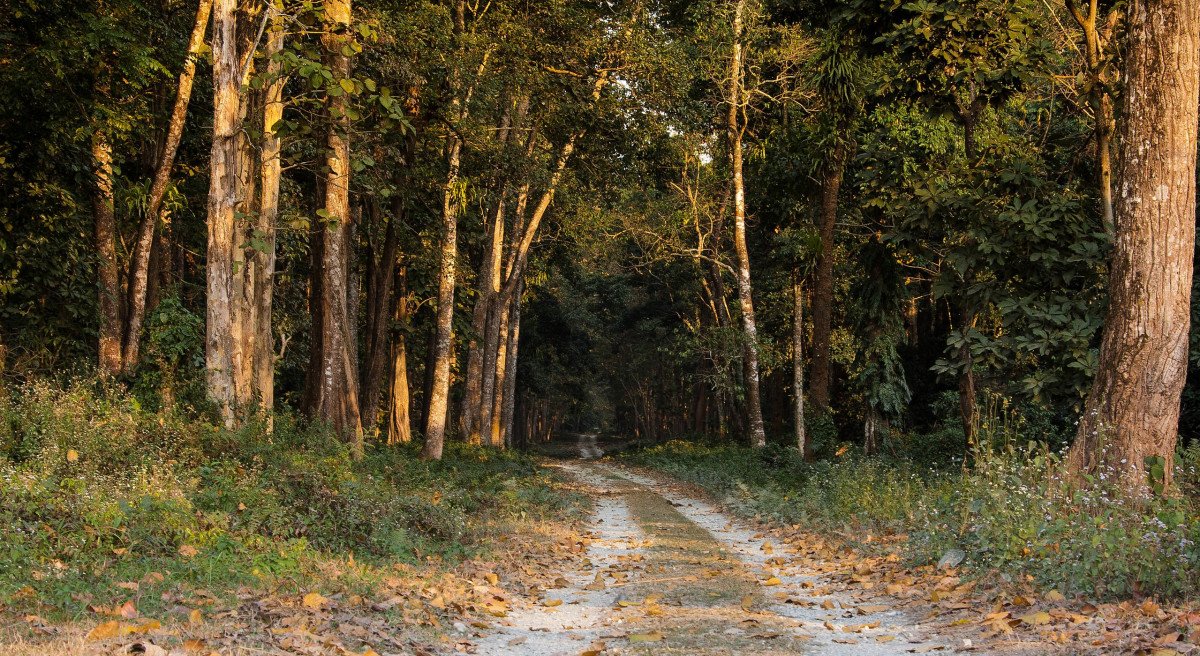
Atmospheric Fog and Mysterious Trails: During the early morning safari in Winter (December to January), the jungle paths are often shrouded in thick, beautiful fog. Frame the photo down a straight stretch of the dirt road, allowing the fog to create an ethereal, mysterious mood, with the large Sal trees fading into the mist. This requires quick, opportunistic shooting as the mist lifts fast.Photo Gallery
Things To Do
-
The Essential Early Morning Jeep Safari (Rhino and Gaur Spotting): This is the primary activity and should be done at least once, ideally starting around 6:00 AM. Prime Time Wildlife Tracking and Movement Observation: Licensed safari jeeps, accompanied by mandatory government guides, navigate the designated forest tracks. The focus is on spotting the One-Horned Rhinoceros in the open grasslands (khotis) or large herds of Gaur (Indian Bison) grazing near watering holes. The cold, misty morning air enhances the atmosphere, and the fresh pugmarks provide a thrilling sense of proximity to the forest's massive residents. Remember to book your vehicle and guide well in advance, especially during the peak November to February tourist season. Historical Walk to the Nalraja Garh Ruins (Time Travel and Botany): Take a guided walk (often short and less than an hour) to explore the ancient Na...
Hotels
● AAHI CHILAPATA JUNGLE STAY
Address: Chilapata, West Bengal
Distance: 4.1 km
Details: Introduction: A beautiful, nature-oriented homestay offering a rustic stay experience. Facilities: The property features well-designed rooms, barbecue...
● Amantran Hotel and Resort
Address: Chilapata, West Bengal
Distance: 1.9 km
Details: Introduction: A comfortable resort offering a hassle-free stay for families and tourists. Facilities: It features free parking, a restaurant, and conv...
● Bamboo Village Resort
Address: Chilapata, West Bengal
Distance: 0.6 km
Details: Introduction: A unique resort built to provide an authentic, nature-immersive experience. Facilities: The resort includes a popular restaurant and a b...
● Chilapata Alpine Resort
Address: Chilapata, West Bengal
Distance: 0.3 km
Details: Introduction: A lovely resort located within walking distance of the main forest eco-center. Facilities: The resort includes comfortable, well-furnish...
● CHILAPATA BANIA RIVER VIEW RESORT
Address: Kalchini, West Bengal
Distance: 2.1 km
Details: Introduction: A budget-friendly resort with beautiful river views. Facilities: The resort includes a restaurant, bonfire area, and options for jungle ...
● Chilapata Eco Resort
Address: Chilapata, West Bengal
Distance: 0 km
Details: Introduction: A premier eco-friendly resort located in the heart of the Chilapata forest range. Facilities: The resort offers various room categories ...
● Chilapata Jungle Cottage
Address: Kalchini, West Bengal
Distance: 3.7 km
Details: Introduction: A charming 3-star cottage offering a cozy and rustic experience. Facilities: The cottage provides a dedicated caretaker, efficient house...
● CHILAPATA TENT HOUSE
Address: Chilapata, West Bengal
Distance: 0.3 km
Details: Introduction: A unique accommodation option offering a tent-style stay in the forest. Facilities: The tent house provides a memorable experience for t...
● Hotel O Chilapata Forest
Address: Chilapata, West Bengal
Distance: 1 km
Details: Introduction: A well-connected hotel providing comfortable accommodation for forest visitors. Facilities: It offers clean rooms, essential daily house...
● WEST WINDS RESORT AND SPA
Address: Chilapata, West Bengal
Distance: 1.1 km
Details: Introduction: A luxurious resort offering spa facilities for a relaxing retreat. Facilities: The property features modern rooms, an on-site restaurant...
Show AllRestaurants
● Alipurduar Delight
Address: Alipurduar, near Chilapata, West Bengal, India
Distance: 15 KM
Details: A well-established restaurant in the nearby town of Alipurduar, serving a mix of North Indian and Bengali food. They are renowned for their Mutton Bir...
Food List: 'Mutton Biryani', 'Luchi', 'Alur Dom', 'Chicken Ch...
● Chilapata Eco Resort Dining
Address: Uttar Chakowakheti, Chilapata, West Bengal, India
Distance: 2 KM
Details: Located within the scenic beauty of Chilapata Forest, this dining facility offers authentic, freshly cooked meals. They specialize in Tribal cuisine, ...
Food List: 'Country Chicken Curry', 'Steamed Rice', 'Dal', 'V...
● Chilapata Royal Kitchen
Address: Main Road, Chilapata, West Bengal, India
Distance: 6 KM
Details: An elegant restaurant serving a curated menu of Bengali delicacies and Mughlai dishes. They are highly rated for their Chingri Malai Curry and Mutton ...
Food List: 'Chingri Malai Curry', 'Mutton Kosha', 'Basanti Pu...
● Dooars Dhaba
Address: NH 31, near Chilapata, West Bengal, India
Distance: 10 KM
Details: A classic highway dhaba style restaurant offering hearty and pocket-friendly meals. They are famous for their Dal Fry and Tandoori Roti. A Must Try is...
Food List: 'Dal Fry', 'Tandoori Roti', 'Egg Curry', 'Paneer B...
● Forest Corner Restaurant
Address: Main Road, Chilapata, West Bengal, India
Distance: 5 KM
Details: This restaurant is a popular spot for travelers looking for a quick and satisfying meal. They are famous for their Chicken Momos and Chilli Chicken. A...
Food List: 'Chicken Momos', 'Chilli Chicken', 'Thukpa', 'Frie...
Show AllInformation
-
Why Famous:
Critical Elephant Migratory Corridor Status: Chilapata is internationally recognized not just as a reserve, but as an indispensable ecological link for Asian elephants. Conservation Importance and Keystone Species Movement: It acts as a bridge, ensuring the elephant herds ...Critical Elephant Migratory Corridor Status: Chilapata is internationally recognized not just as a reserve, but as an indispensable ecological link for Asian elephants. Conservation Importance and Keystone Species Movement: It acts as a bridge, ensuring the elephant herds can safely transit between the large protected areas, which is vital for preventing inbreeding and guaranteeing the species' long-term genetic health across the state's southern forest belt. The sheer volume of elephant traffic, evidenced by huge trails and broken vegetation, makes this area ecologically unique.
The Mystery of the Overgrown King Nala's Fort: The forest s fame is cemented by the ruins of the Nalraja Garh, which date back to a forgotten era.
Blend of Nature and Ancient Human History: This site, shrouded in dense jungle, offers a thrilling mix of archeological intrigue and natural beauty. The sight of giant fig trees growing out of centuries-old brick walls creates a unique, dramatic landscape that draws history enthusiasts and those fascinated by nature reclaiming human endeavor. -
Architecture:
Historical Engineering of the Nalraja Garh Ruins: The most captivating structural remains are the decaying walls of the Nalraja Garh.
Ancient Defensive Walls and Materials: This historical site reveals massive remnants of defensive walls bu...Historical Engineering of the Nalraja Garh Ruins: The most captivating structural remains are the decaying walls of the Nalraja Garh.
Ancient Defensive Walls and Materials: This historical site reveals massive remnants of defensive walls built primarily from local burnt clay bricks held together by a crude lime-based mortar. The walls, now heavily eroded, demonstrate a formidable construction, with some foundational sections estimated to have been nearly 2. 5 meters thick in their prime. The surviving brickwork provides insight into the fortification techniques prevalent in the region over a millennium ago. The entire complex is believed to have spanned an area of roughly 180 meters by 140 meters.
Functional Design of Wildlife Observation Towers: Throughout the forest area, particularly at Mendabari, functional watchtowers are constructed to provide secure, elevated viewing platforms.
Elevated Surveillance Structures and Dimensions: These towers are built for stability and visibility, typically reaching a height of 30 to 40 feet (approximately 9 to 12 meters). They utilize strong local timber reinforced with steel supports and concrete footings. The square viewing platform at the top is generally small, about 4 meters by 4 meters, designed to safely accommodate a small group of tourists, offering a clear, unobstructed sightline over the open Torsha riverine grasslands (khotis) where large herbivores congregate during early morning hours. -
How To Reach:
By Air: The nearest airport is Bagdogra Airport (IXB), located near Siliguri.
Air Travel Gateway and Long Road Transfer: Chilapata is approximately 165 KMS from the airport. Upon landing, you must hire a private taxi or pre-arranged transf... -
Near Tourist Places:
Jaldapara National Park: 20 KMS (Rhino sanctuary and complementary safari)
Buxa Tiger Reserve: 35 KMS (Major trekking and forest reserve)
Cooch Behar Palace: 50 KMS (Historical architecture of the Rajbari)
Phuentsholing, Bhutan: 30 KMS (Gateway town to the Kingdom of Bhutan)
Jayanti (Buxa): 60 KMS (Scenic river valley famous for the Jayanti River)
Rajabhatkhawa: 40 KMS (Forest Interpretation Centre and Museum)
Alipurduar Town: 30 KMS (District headquarters and largest nearby market)
Gorumara National Park: 100 KMS (Another major Rhino hotspot)
South Khairbari: 45 KMS (Nature park, formerly known for leopard rescue)
Hasimara: 10 KMS (Nearest town and railway station)
Tourism Tips
-
Health & Safety (Jungle Etiquette and Emergency):
Mandatory Forest Rules and Essential Medical Kit: Always obey the forest guide's instructions; getting out of the vehicle is strictly forbidden and dangerous. Carry a comprehensive first-ai...
Reviews
Dooars Itineray And Cost:-
Chilapata Forest Tourism:-
Information about New and Updated Locations() of West Bengal Has Been Added :-
Card subtitle
Note:-
Information provided here in good Faith and for reference only.
All information and pictures will be updated soon, please keep visiting.
Near Places
Bhutanghat
Some quick example text to build on the card title and make up the bulk of the card's content.
Go somewhere
Bindu
Some quick example text to build on the card title and make up the bulk of the card's content.
Go somewhere
Buxa Fort
Some quick example text to build on the card title and make up the bulk of the card's content.
Go somewhere
Buxa Tiger Reserve
Some quick example text to build on the card title and make up the bulk of the card's content.
Go somewhere
Chapramari Wildlife Sanctuary
Some quick example text to build on the card title and make up the bulk of the card's content.
Go somewhere
Chilapata Forest
Some quick example text to build on the card title and make up the bulk of the card's content.
Go somewhere
Gorumara National Park
Some quick example text to build on the card title and make up the bulk of the card's content.
Go somewhere
Jaldapara National Park
Some quick example text to build on the card title and make up the bulk of the card's content.
Go somewhere
Jayanti
Some quick example text to build on the card title and make up the bulk of the card's content.
Go somewhere
Jhalong
Some quick example text to build on the card title and make up the bulk of the card's content.
Go somewherein Other Cities