...

FAQs On Chilapata Forest

Dooars, West Bengal, India
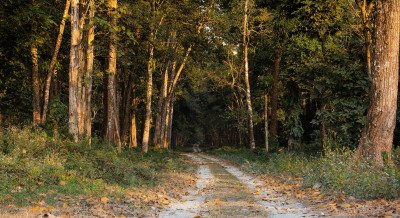
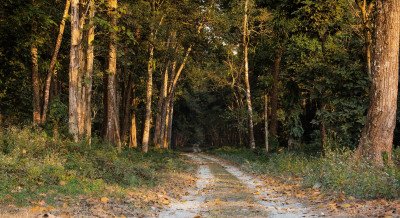
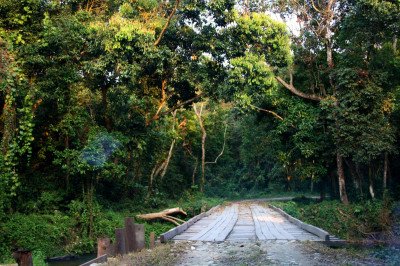
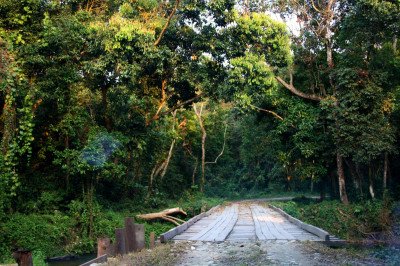
Chilapata Forest is much more than just a patch of green; it is a vital, living artery connecting the larger Jaldapara National Park to the west and the massive Buxa Tiger Reserve to the east. This biological corridor is critically important, serving as the main migratory path for huge herds of Asia n elephants, whose seasonal movements are essential for maintaining the health and diversity of the entire Terai-Dooars ecosystem. The forest is predominantly semi-evergreen and moist deciduous, characterized by towering Sal (Shorea robusta) and teak trees, creating a dense, multi-layered canopy that keeps the forest floor perpetually cool and shaded. The terrain is flat alluvial plain, typical of the lower Himalayan foothills, which facilitates the creation of marshes, waterholes, and khotis (open grasslands), which are the key areas for wildlife viewing. While the forest is famous for the One-Horned Rhinoceros a major, though challenging, sight it is also home to a diverse population of other large mammals, including the majestic Gaur (Indian Bison), leopards, wild pigs, and various species of deer like the Sambar and the Barking Deer. For the dedicated explorer, Chilapata holds historical significance with the ruins of the Nalraja Garh, an ancient fort that provides a mysterious link to the Gupta period; these forgotten ruins, swallowed by the jungle, evoke a profound sense of stepping back in time. The lifeblood of this area is the Torsha River, whose numerous tributaries and streams ensure constant water supply, particularly crucial during the dry Winter months when animals concentrate near these water sources. Tourism here is strictly regulated by the Forest Department, with safaris confined to specific areas and mandatory local guides, often from the indigenous Rabha community, whose intimate knowledge of the jungle's secrets enhances the experience immeasurably. The overall environment is one of raw, untamed nature, offering a profound retreat for anyone seeking a deep and meaningful connection with India's wilderness heritage, far removed from commercial tourism circuits. The forest s resilience in maintaining its ecological function despite increasing external pressures makes it an extraordinary site for both conservation and appreciation.

Ans:- Besides Rhinos and Elephants, you can see Indian Bison (Gaur), Leopards, Wild Boars, Sambar Deer, Barking Deer, and Hog Deer. The forest is also home to various reptiles and a massive variety of butterflies. Large carnivores like leopards are often spotted during the late afternoon safari shifts.

Ans:- Chilapata Forest is famous for being a natural elephant corridor between Jaldapara National Park and the Buxa Tiger Reserve. It is also home to the historical ruins of "Nalraja Garh" (Fort of the Nal Kings) dating back to the Gupta period. The forest is known for its dense canopy and rich rhino population.

Ans:- Chilapata is located in the Alipurduar district, near the town of Hasimara. It is about 20 km from Alipurduar and very close to Jaldapara National Park. The Torsa River flows through this region, adding to the lushness of the forest and providing a vital water source for the wildlife.

Ans:- Chilapata is very close to Jaldapara, located just about 15 to 20 km away. Most tourists who stay in Jaldapara (Madarihat) take a half-day excursion to Chilapata to explore its unique history and dense forest tracks. It is an easy drive that takes about 30 to 40 minutes.

Ans:- Currently, the forest department primarily offers Jeep Safaris in Chilapata. For Elephant Safaris, most tourists head to the nearby Jaldapara National Park (Madarihat). However, seeing wild elephants during the Jeep Safari in Chilapata is very common, especially near the river banks and the forest corridors.

Ans:- Inside the deep forest, mobile networks are very weak or unavailable. In the fringe villages and resorts, you can get decent signals from major Indian providers like BSNL, Jio, and Airtel. However, data speeds might be slow, so do not rely on high-speed internet during your stay.

Ans:- Jeep Safaris can be booked at the forest office in Chilapata. Unlike Gorumara, it is often easier to get safari slots here. The safari takes you through the dense "Bania" forest and the ruins of the Nalraja Garh. You must hire a forest-approved jeep and a local guide for the trip.

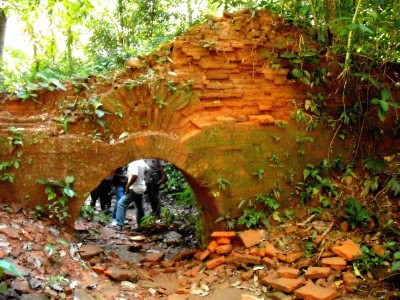
Ans:- Nalraja Garh is the ruin of a 5th-century fort built during the Gupta dynasty. Today, only the remains of a thick brick wall are visible, which have been partially overtaken by the roots of massive trees. It is a site of great archaeological interest located deep within the forest, adding a touch of mystery to the safari.

Ans:- No, for safety reasons, you are not allowed to wander on foot inside the Chilapata Forest. You can view the ruins of Nalraja Garh from your safari jeep. The area is frequented by wild elephants and leopards, so staying inside the vehicle is mandatory for all visitors.

Ans:- Similar to other Dooars forests, safaris are held in two shifts: Morning (around 6:00 AM to 8:30 AM) and Afternoon (around 3:00 PM to 5:30 PM). It is best to arrive at the booking counter at least 30 minutes before the start time to complete the necessary paperwork.

Ans:- The best time is from October to April when the weather is dry and wildlife is easier to spot. The forest is exceptionally beautiful in November and December. Like other parks, it is closed during the monsoon (June 16 to September 15) to allow for animal migration and breeding without human interference.

Ans:- There are several eco-resorts and homestays located in Chilapata village and near the forest fringe. One of the most famous places is the West Bengal Forest Development Corporation’s Mendabari Lodge. Staying near the forest allows you to hear the sounds of the wild at night, which is a thrilling experience.

Ans:- Yes, Chilapata has a significant population of One-horned Rhinoceros. They often cross into Chilapata from the neighboring Jaldapara National Park. The CC Line and the areas near the Torsa riverbed are the best places within the forest to spot these magnificent creatures during a jeep safari.

Ans:- Yes, Chilapata is a haven for birdwatchers. The dense canopy and proximity to the Torsa River attract many species like the Crested Serpent Eagle, Shikra, various types of Owls, Woodpeckers, and the colorful Pittas. Winter brings many migratory birds to the riverbeds, making it a great time for photography.
Information about New and Updated Locations(575+) of West Bengal Has Been Added :-
Card subtitle

Note:-

Information provided here in good Faith and for reference only.

All information and pictures will be updated soon, please keep visiting.

Near Places
...
Bhutanghat

Some quick example text to build on the card title and make up the bulk of the card's content.

Go somewhere

...
Bindu

Some quick example text to build on the card title and make up the bulk of the card's content.

Go somewhere
...
Buxa Fort

Some quick example text to build on the card title and make up the bulk of the card's content.

Go somewhere
...
Buxa Tiger Reserve

Some quick example text to build on the card title and make up the bulk of the card's content.

Go somewhere
...
Chapramari Wildlife Sanctuary

Some quick example text to build on the card title and make up the bulk of the card's content.

Go somewhere
...
Chilapata Forest

Some quick example text to build on the card title and make up the bulk of the card's content.

Go somewhere
...
Gorumara National Park

Some quick example text to build on the card title and make up the bulk of the card's content.

Go somewhere
...
Jaldapara National Park

Some quick example text to build on the card title and make up the bulk of the card's content.

Go somewhere
...
Jayanti

Some quick example text to build on the card title and make up the bulk of the card's content.

Go somewhere
...
Jhalong

Some quick example text to build on the card title and make up the bulk of the card's content.

Go somewhere
in Other Cities