
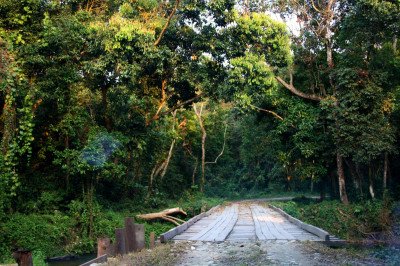
Travel Tips Of Chilapata Forest
Tourism Tips
Mandatory Forest Rules and Essential Medical Kit: Always obey the forest guide's instructions; getting out of the vehicle is strictly forbidden and dangerous. Carry a comprehensive first-aid kit that includes medication for stomach issues, fever, and common allergies. Strong insect repellent and sunblock are non-negotiable. Be aware that medical facilities near the forest are basic, so for any serious issue, travelers will need to reach Alipurduar or Siliguri.
Packing Essentials (Color, Layers, and Gear):
Earth Tones and Observation Equipment: Pack clothing in earth tones (brown, green, khaki) to blend into the surroundings. Crucially, pack clothes in layers thermals and thick jackets for the cold Winter mornings, and lighter clothes for the daytime. A high-quality pair of binoculars is essential for all wildlife viewing, and a powerful torch (flashlight) is needed for navigating the resort areas at night due to limited lighting. Accommodation and Booking (Limited Capacity and Advance Planning):
Securing WBFDC and Private Eco-Resort Stays: Accommodation options are limited to the government-run West Bengal Forest Development Corporation (WBFDC) cottages and a few private eco-resorts on the fringes. These must be booked at least 3 to 6 months in advance, especially for the peak Christmas and New Year period. Walk-in reservations are virtually impossible, and planning early is key to securing a room. Environmental and Cultural Responsibility (Low Impact and Respect):
Leave No Trace and Tribal Community Respect: Practice a zero-tolerance policy for littering; carry all waste (especially plastics) back with you. Never feed, provoke, or try to interact with the wildlife. When visiting local communities like the Rabha villages, always ask permission before taking photographs, respect their traditions, and try to purchase local crafts to support their sustainable livelihood.
Dooars Itineray And Cost:-
Chilapata Forest Tourism:-
Information about New and Updated Locations() of West Bengal Has Been Added :-
Card subtitle
Note:-
Information provided here in good Faith and for reference only.
All information and pictures will be updated soon, please keep visiting.
Near Places
Bhutanghat
Some quick example text to build on the card title and make up the bulk of the card's content.
Go somewhere
Bindu
Some quick example text to build on the card title and make up the bulk of the card's content.
Go somewhere
Buxa Fort
Some quick example text to build on the card title and make up the bulk of the card's content.
Go somewhere
Buxa Tiger Reserve
Some quick example text to build on the card title and make up the bulk of the card's content.
Go somewhere
Chapramari Wildlife Sanctuary
Some quick example text to build on the card title and make up the bulk of the card's content.
Go somewhere
Chilapata Forest
Some quick example text to build on the card title and make up the bulk of the card's content.
Go somewhere
Gorumara National Park
Some quick example text to build on the card title and make up the bulk of the card's content.
Go somewhere
Jaldapara National Park
Some quick example text to build on the card title and make up the bulk of the card's content.
Go somewhere
Jayanti
Some quick example text to build on the card title and make up the bulk of the card's content.
Go somewhere
Jhalong
Some quick example text to build on the card title and make up the bulk of the card's content.
Go somewhere