

Mumbai
General information
-
Ideal Duration:
3 to 4 DaysPlace Type:
Metropolitan / HeritageEntry Fees:
Monument Fees: Most public landmarks like Gateway of India and Marine Drive are free for everyone to visit. However, specific sites like museums and parks have nominal charges ranging from 20 to 100 INR.
Museum Charges: Places like Chhatrap...Monument Fees: Most public landmarks like Gateway of India and Marine Drive are free for everyone to visit. However, specific sites like museums and parks have nominal charges ranging from 20 to 100 INR.
Museum Charges: Places like Chhatrapati Shivaji Maharaj Vastu Sangrahalaya charge approximately 150 INR for Indian nationals and higher for foreigners. Special exhibits may require additional tickets.Timing:
Regular Timings: Most tourist attractions are open from 9:00 AM to 6:00 PM daily, though promenades like Marine Drive are accessible 24/7. Temples usually open as early as 5:00 AM.
Ideal Visit Time: The best time to explore the city is duri...Regular Timings: Most tourist attractions are open from 9:00 AM to 6:00 PM daily, though promenades like Marine Drive are accessible 24/7. Temples usually open as early as 5:00 AM.
Ideal Visit Time: The best time to explore the city is during the early morning hours to avoid traffic or late evenings for the cool sea breeze. Weekdays are generally less crowded at major heritage sites.Special Events:
Ganesh Chaturthi: The most significant festival celebrated in September, featuring massive processions and elaborate public displays of Ganpati idols. The city comes alive with music, dance, and a deep sense of community devotion.
Kala Ghoda Ar...Ganesh Chaturthi: The most significant festival celebrated in September, featuring massive processions and elaborate public displays of Ganpati idols. The city comes alive with music, dance, and a deep sense of community devotion.
Kala Ghoda Arts Festival: An annual multicultural festival held in February that showcases art, music, and literature in the historic precinct. It attracts artists and enthusiasts from all over the country.Best Photo Spots:
Marine Drive at Night: The curved lights of the promenade create a stunning "necklace" effect that is perfect for long-exposure photography. It is the most photographed spot in the city after dark.
Gateway of India: Capturing the grand arch...Marine Drive at Night: The curved lights of the promenade create a stunning "necklace" effect that is perfect for long-exposure photography. It is the most photographed spot in the city after dark.
Gateway of India: Capturing the grand arch against the backdrop of the Arabian Sea during sunrise provides a majestic and timeless image. The pigeons flying around add a dynamic element to the frame.Photo Gallery
Things To Do
 The Basilica of Our Lady of the Mount, commonly known as Mount Mary Basilica, is one of the most prominent and historically significant Roman Catholic churches in Mumbai. Located on a hillock (monte) overlooking the Arabian Sea in Bandra West, the current structure dates back to 1904, though the original statue of the Virgin Mary (Mother Mary) was brought here by Jesuit priests from Portugal in the 16th century. The basilica is revered not only by Christians but also by people of all faiths, who come to pray to the statue of the Virgin Mary, often referred to as 'Our Lady of the Mount' or 'Mumbaikars' own Mother Mary.' The basilica is most famous for hosting the annual Bandra Fair (officially the Feast of the Nativity of the Blessed Virgin Mary), a week-long celebration held in September that attracts hundreds of thousands of people from all over India. The church's location offers a breathtaking, panoramic view of the Arabian Sea and the city's skyline, adding to its serenity and appeal. The interior is spacious and beautifully decorated with murals and stained-glass windows depicting the life of the Virgin Mary. Its architecture is a fine example of Neo-Gothic revival. The basilica's elevated position and its historical importance as a pilgrimage center for centuries make it a symbol of Mumbai's rich, inclusive, and multi-cultural heritage. Visiting the basilica offers a tranquil spiritual experience and a cultural glimpse into the deep-rooted Catholic history of the Bandra neighborhood.
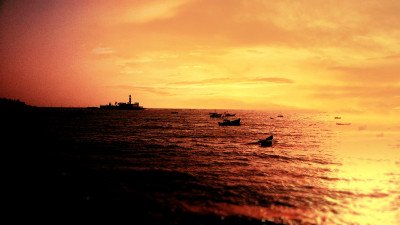 The Haji Ali Dargah is a revered mosque and dargah (tomb) dedicated to the Sufi saint Pir Haji Ali Shah Bukhari. The complex is uniquely situated on a small tidal islet in the Arabian Sea, approximately 500 meters from the shore of Worli. It is accessible only via a long, narrow causeway that is exposed during low tide but submerged during high tide, creating a sense of isolation and sanctity. The structure was built in 1431 after the saint, who was a wealthy Muslim merchant, renounced his worldly possessions and embarked on a pilgrimage to Mecca. Legend holds that he died while on the journey, and his coffin miraculously floated back to this spot. The Dargah is a magnificent example of Indo-Islamic architecture, featuring a white-domed mosque and the tomb of the saint, with soaring minarets. It has undergone several renovations over the centuries, with the recent structure built entirely of white marble. The shrine is a symbol of religious pluralism, attracting thousands of pilgrims and tourists every day, regardless of their faith, who come to offer prayers and seek blessings. The experience of walking along the tidal causeway with the sea on both sides, leading to the brilliant white monument, is one of the most memorable and iconic in Mumbai. The serene atmosphere, particularly during the early morning or late evening, offers a stark, spiritual contrast to the bustling city that can be seen across the water. The Dargah not only functions as a place of worship but also as an important landmark marking Mumbai's connection to its spiritual and maritime history.
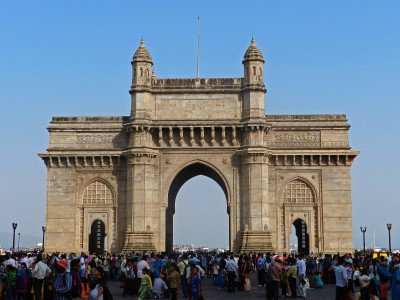 The Gateway Of India is arguably the most recognizable landmark in Mumbai, standing as a majestic arch monument on the waterfront of the Apollo Bunder area in South Mumbai. Conceived as a grand ceremonial entrance, its foundation stone was laid on March 31, 1913, and the structure was officially inaugurated on December 4, 1924. The primary purpose of its construction was to commemorate the landing of King-Emperor George V and Queen-Empress Mary at the spot in December 1911. This historic visit marked the first time a British monarch had visited India. The architects, led by George Wittet, adopted a distinct Indo-Saracenic architectural style, blending elements from Indian, Islamic, and European architecture. Built using tough yellow basalt stone and reinforced concrete, the structure is a testament to colonial-era engineering and artistic vision. Beyond its royal history, the Gateway holds immense national significance. It became the symbolic entry and exit point for British governors and viceroys during the colonial era. Most notably, it served as the point from which the last British troops, the First Battalion of the Somerset Light Infantry, symbolically departed India on February 28, 1948, marking the final end of British rule following India's independence in August 1947. Today, the area is a vibrant hub teeming with tourists, vendors, and photographers. It is the central embarkation point for ferries heading to the famous Elephanta Caves, making it a crucial junction for both local transport and international tourism. The proximity of the monument to the world-renowned Taj Mahal Palace Hotel enhances its stature, creating one of the most iconic and photographed cityscapes in the world. Visitors are drawn here to feel the cool sea breeze, watch the sunrise or sunset over the Arabian Sea, and simply soak in the history of a structure often referred to as the 'Taj Mahal of Mumbai'. The monument represents a historical bridge between the colonial past and the independent present of India.
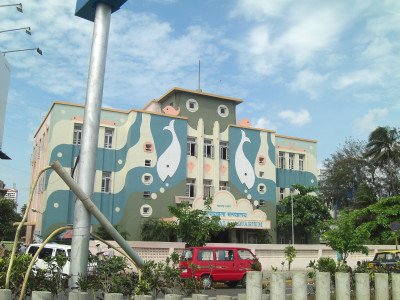 The Taraporewala Aquarium, situated prominently on the famous Marine Drive in South Mumbai, is India's oldest public aquarium, inaugurated in 1951 by the first President of India, Dr. Rajendra Prasad. It is named after a generous Parsi philanthropist, D. B. Taraporewala, who donated a significant amount towards its construction. The aquarium originally served as a key center for the study and display of marine and freshwater aquatic life. After a major renovation project completed in 2015, the aquarium was modernized to meet international standards. The redesigned facility now hosts over 400 species of fish, totaling over 2,000 individual fish, in larger, imported glass tanks with advanced LED lighting and sophisticated aqua-scaping, providing a much better viewing experience. The highlight of the renovation is a spectacular 12-foot long, 180-degree acrylic glass tunnel walk-through, allowing visitors to experience the feeling of being underwater, surrounded by diverse marine life. The aquarium showcases a wide variety of both marine fish (including sharks, moray eels, stingrays, sea stars, and colorful tropical species like clownfish and butterflyfish) and freshwater fish (such as Red Devil, Electric Blue, and various catfish). It also features specialized sections like a moss aquarium and a plantation aquarium with exotic aquatic plants. Beyond the fish, a popular, interactive attraction is the Doctor Fish tank, where visitors can dip their feet into the water for a unique, skin-nibbling experience. The Taraporewala Aquarium remains a much-loved destination for families, students, and marine enthusiasts, blending entertainment with education about the aquatic ecosystems of India and the world.
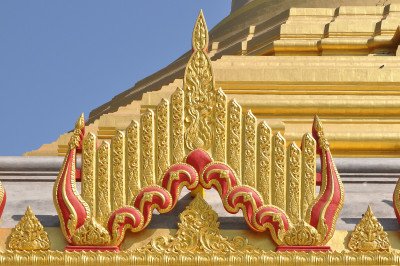 The Global Vipassana Pagoda is a magnificent and monumental structure in Mumbai, built as a tribute to Gautama Buddha and his teachings, particularly the non-sectarian practice of Vipassana meditation. It is an impressive landmark located on a peninsula between Gorai Creek and the Arabian Sea, in the northern part of the city. The Pagoda's central dome is a colossal, hollow stone structure, recognized as the world's largest of its kind without any supporting pillars, intended to last for at least a thousand years. It was constructed out of gratitude to Myanmar (Burma) for preserving the practice of Vipassana. The Pagoda's design is a deliberate replica of the famous Shwedagon Pagoda in Yangon, Myanmar, but unlike the solid masonry of the original, the Global Pagoda is hollow to accommodate a vast meditation hall. The foundation stone was laid in 2004, and the monument was inaugurated in 2009 by the President of India, Pratibha Patil. Its construction was a monumental engineering feat, relying on ancient Indian building techniques like interlocking stone blocks combined with modern scientific analysis. The core purpose of the pagoda is to provide a massive, noise-free space for people to practice Vipassana meditation, a technique taught by the late S.N. Goenka. Sacred bone relics of the Buddha are enshrined in the central keystone of the main dome, lending immense spiritual significance to the structure. Beyond the main dome, the complex includes smaller pagodas, a library, an art gallery depicting the life of the Buddha, and the Vipassana teaching center, Dhamma Pattana. It is a major spiritual destination, promoting peace, harmony, and the universal message of self-observation and inner purification, drawing visitors from all over the world seeking tranquility away from the chaos of Mumbai. The serene location, accessible by road or a picturesque ferry ride, enhances its meditative aura.
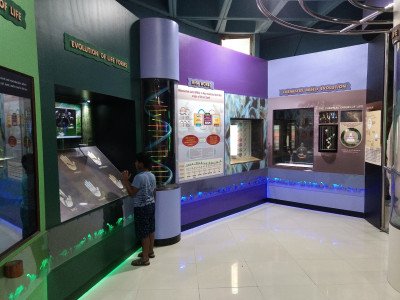 The Nehru Science Centre (NSC) in Worli, Mumbai, is one of the premier science museums in India, established as part of the National Council of Science Museums (NCSM). It opened its doors in 1985 and is dedicated to fostering a scientific temper among the public, especially students. The center is named after Pandit Jawaharlal Nehru, India's first Prime Minister, who was a strong advocate for scientific development. The NSC is not just a repository of scientific artifacts; it is a highly interactive, hands-on museum designed to make learning about science fun and engaging. The center houses several permanent exhibition galleries, covering topics like Energy, Sound, Light, Transportation, Human Biology, and the Legacy of Science and Technology in India. A key highlight is the expansive Science Park spread over 8 acres, which features numerous outdoor, working exhibits that demonstrate the principles of physics and mechanics in an open-air environment. Visitors are encouraged to touch, press, pull, and play with the exhibits to understand the underlying scientific principles through direct experience. The center also hosts regular science shows, temporary exhibitions on contemporary scientific issues, sky observations, and film screenings. It is a vital educational resource for schools and families in Mumbai, providing a dynamic alternative to textbook learning. The focus is always on demystifying complex scientific concepts and showcasing the practical applications of science and technology in everyday life. Its mission is deeply rooted in inspiring the next generation of scientists and innovators, making it a place of intellectual discovery and fun. The massive visitor base, including a large percentage of students, attests to its success as a leading institution for non-formal science education.
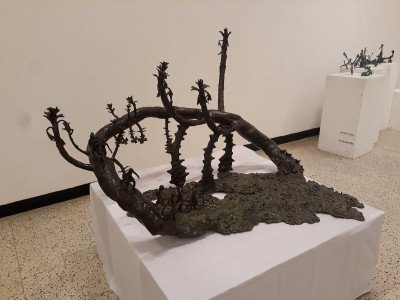 The Jehangir Art Gallery is arguably the most prestigious and influential contemporary art space in Mumbai and a cornerstone of India's modern art movement. Its creation was the vision of Sir Cowasji Jehangir, who generously donated the funds, and it was named in honor of his late son, Jehangir. Designed by architect G. M. Bhuta, the gallery's foundation stone was laid on February 9, 1951, by the then Chief Minister of Bombay, B. G. Kher, and it was inaugurated on January 21, 1952, by the Governor of Bombay, Sir Homi Mody. For decades, the Jehangir Art Gallery has been the launching pad and exhibition venue for virtually every major figure in post-independence Indian art. Renowned artists like M. F. Husain, S. H. Raza, Akbar Padamsee, and many others have showcased their early and seminal works here. Located in the historic Kala Ghoda precinct, the gallery has four main exhibition halls, which are rented out to artists and organizations for week-long exhibitions on a strictly curated, rotational basis. This model ensures a continuously fresh, dynamic, and diverse display of artwork, ranging from painting and sculpture to photography and installation art. The gallery is a hub of artistic energy, not only featuring established names but also providing crucial exposure for emerging talent. Its prime location next to the CSMVS and across from the famous Kala Ghoda pavement, where local artists display their works, solidifies its position as the nerve center of Mumbai's art scene. The gallery is maintained by the Bombay Art Society and remains dedicated to promoting artistic excellence and making art accessible to the public.Show All
EsselWorld is a pioneering amusement park located on Gorai Island off the coast of Mumbai. Opened in 1989, it holds the distinction of being one of India's first and most successful large-scale amusement parks. Spread over a vast area of approximately 64 acres, it provides a major recreational escape for residents and tourists alike. The park offers a wide variety of rides and attractions catering to all age groups, divided into categories like Family Rides (e.g., Copper Chopper, Wagon Wheel), Adult Thrill Rides (e.g., Hoola Loop, Road Rage, Shot-N-Drop, Top Spin), and Kids' Rides (e.g., Play Port, Mini Telecombat). Alongside the thrilling roller coasters and classic attractions, the park also boasts unique indoor attractions, such as the Arctic Circle (an ice-skating rink) and a large Bowling Alley. EsselWorld is an integrated part of a larger recreational complex that includes its popular sister park, Water Kingdom, one of the largest water parks in Asia. The park's famous jingle and its decades-long operation have cemented its place in the popular culture and childhood memories of an entire generation of Mumbaikars. The unique accessibility, primarily via a scenic ferry ride across the Gorai Creek, adds to the fun and adventurous feeling of the day trip. While the park is currently undergoing a temporary closure for renovation and is scheduled for a grand relaunch, its legacy and historical significance as India's premier amusement park remain intact, and it continues to be a major destination in the city's recreational landscape.
The Jehangir Art Gallery is arguably the most prestigious and influential contemporary art space in Mumbai and a cornerstone of India's modern art movement. Its creation was the vision of Sir Cowasji Jehangir, who generously donated the funds, and it was named in honor of his late son, Jehangir. Designed by architect G. M. Bhuta, the gallery's foundation stone was laid on February 9, 1951, by the then Chief Minister of Bombay, B. G. Kher, and it was inaugurated on January 21, 1952, by the Governor of Bombay, Sir Homi Mody. For decades, the Jehangir Art Gallery has been the launching pad and exhibition venue for virtually every major figure in post-independence Indian art. Renowned artists like M. F. Husain, S. H. Raza, Akbar Padamsee, and many others have showcased their early and seminal works here. Located in the historic Kala Ghoda precinct, the gallery has four main exhibition halls, which are rented out to artists and organizations for week-long exhibitions on a strictly curated, rotational basis. This model ensures a continuously fresh, dynamic, and diverse display of artwork, ranging from painting and sculpture to photography and installation art. The gallery is a hub of artistic energy, not only featuring established names but also providing crucial exposure for emerging talent. Its prime location next to the CSMVS and across from the famous Kala Ghoda pavement, where local artists display their works, solidifies its position as the nerve center of Mumbai's art scene. The gallery is maintained by the Bombay Art Society and remains dedicated to promoting artistic excellence and making art accessible to the public.Show All
EsselWorld is a pioneering amusement park located on Gorai Island off the coast of Mumbai. Opened in 1989, it holds the distinction of being one of India's first and most successful large-scale amusement parks. Spread over a vast area of approximately 64 acres, it provides a major recreational escape for residents and tourists alike. The park offers a wide variety of rides and attractions catering to all age groups, divided into categories like Family Rides (e.g., Copper Chopper, Wagon Wheel), Adult Thrill Rides (e.g., Hoola Loop, Road Rage, Shot-N-Drop, Top Spin), and Kids' Rides (e.g., Play Port, Mini Telecombat). Alongside the thrilling roller coasters and classic attractions, the park also boasts unique indoor attractions, such as the Arctic Circle (an ice-skating rink) and a large Bowling Alley. EsselWorld is an integrated part of a larger recreational complex that includes its popular sister park, Water Kingdom, one of the largest water parks in Asia. The park's famous jingle and its decades-long operation have cemented its place in the popular culture and childhood memories of an entire generation of Mumbaikars. The unique accessibility, primarily via a scenic ferry ride across the Gorai Creek, adds to the fun and adventurous feeling of the day trip. While the park is currently undergoing a temporary closure for renovation and is scheduled for a grand relaunch, its legacy and historical significance as India's premier amusement park remain intact, and it continues to be a major destination in the city's recreational landscape.Information
-
Why Famous:
Gateway of India: This iconic monument was built to commemorate the visit of King George V and Queen Mary in 1911. It serves as the primary landmark of the city and a symbol of its colonial history.
Bollywood Industry: Mumbai is globally fa...Gateway of India: This iconic monument was built to commemorate the visit of King George V and Queen Mary in 1911. It serves as the primary landmark of the city and a symbol of its colonial history.
Bollywood Industry: Mumbai is globally famous for being the home of the Hindi film industry, attracting millions of aspirants and cinema lovers. Visitors often flock to see film studios and the residences of famous superstars. -
Architecture:
Indo-Saracenic Style: The architecture of Mumbai is characterized by a blend of Victorian Gothic and Indo-Saracenic influences seen in structures like the Gateway of India. These buildings often feature large domes, minarets, and intricate stone carvings that reflect the Br...Indo-Saracenic Style: The architecture of Mumbai is characterized by a blend of Victorian Gothic and Indo-Saracenic influences seen in structures like the Gateway of India. These buildings often feature large domes, minarets, and intricate stone carvings that reflect the British era's grandeur.
Art Deco Legacy: Mumbai holds the second-largest collection of Art Deco buildings in the world after Miami, particularly along the Marine Drive area. These structures are known for their geometric shapes and vibrant facades that emerged during the early 20th century. -
How To Reach:
By Air: Chhatrapati Shivaji Maharaj International Airport connects Mumbai to all major global and domestic destinations with frequent flights. It is one of the busiest airports in India and offers world-class facilities.
By Train: The city ...By Air: Chhatrapati Shivaji Maharaj International Airport connects Mumbai to all major global and domestic destinations with frequent flights. It is one of the busiest airports in India and offers world-class facilities.
By Train: The city is well-connected by the Western and Central railway zones, with Chhatrapati Shivaji Maharaj Terminus being a major hub. Local trains are the lifeline of the city for commuting.
By Road: Mumbai is connected via well-maintained national highways like the Mumbai-Pune Expressway and NH48. State-run and private buses operate regularly from nearby cities.
By Local Transport: Commuters can use the extensive network of local trains, red BEST buses, black-and-yellow taxis, and auto-rickshaws. Metro and Monorail services are also expanding across the city. -
Weather and Best Time to Visit:
Winter Season: From November to February, the weather is pleasant and cool, making it the best time for outdoor sightseeing. Temperatures range between 15 to 25 degrees Celsius.
Monsoon Season: From June to September, the city receives heav...Winter Season: From November to February, the weather is pleasant and cool, making it the best time for outdoor sightseeing. Temperatures range between 15 to 25 degrees Celsius.
Monsoon Season: From June to September, the city receives heavy rainfall, which turns the surrounding Western Ghats lush green but can disrupt local travel. Experience the sea waves at Marine Drive during high tide. -
Near Tourist Places:
Nearby Places: 1. Elephanta Caves (10 KM), 2. Alibaug (95 KM), 3. Lonavala (83 KM), 4. Khandala (80 KM), 5. Matheran (80 KM), 6. Mahabaleshwar (260 KM), 7. Pune (150 KM), 8. Nashik (165 KM), 9. Shirdi (240 KM), 10. Murud Janjira (150 KM).
Tourism Tips
-
Health and Safety: Always carry a bottle of water to stay hydrated in the humid weather and be cautious of your belongings in crowded areas. Use licensed taxis and apps for safe commuting at night.
Packing Tips: Wear light cotton clothes to...Health and Safety: Always carry a bottle of water to stay hydrated in the humid weather and be cautious of your belongings in crowded areas. Use licensed taxis and apps for safe commuting at night.
Packing Tips: Wear light cotton clothes to stay comfortable and carry a sturdy umbrella or raincoat if visiting during the monsoon. Comfortable walking shoes are a must for exploring street markets.
Reviews
FAQs
Mumbai Itineray And Cost:-
Information about New and Updated Locations() of Maharashtra Has Been Added :-
Card subtitle
Note:-
Information provided here in good Faith and for reference only.
All information and pictures will be updated soon, please keep visiting.
Near Places

Alibaug
Some quick example text to build on the card title and make up the bulk of the card's content.
Go somewhere
Amravati
Some quick example text to build on the card title and make up the bulk of the card's content.
Go somewhere
Aurangabad
Some quick example text to build on the card title and make up the bulk of the card's content.
Go somewhere
Bhandardara
Some quick example text to build on the card title and make up the bulk of the card's content.
Go somewhere
Diveagar
Some quick example text to build on the card title and make up the bulk of the card's content.
Go somewhere
Ganpatipule
Some quick example text to build on the card title and make up the bulk of the card's content.
Go somewhere
Karjat
Some quick example text to build on the card title and make up the bulk of the card's content.
Go somewhere
Khandala
Some quick example text to build on the card title and make up the bulk of the card's content.
Go somewhere
Kolad
Some quick example text to build on the card title and make up the bulk of the card's content.
Go somewhere
Kolhapur
Some quick example text to build on the card title and make up the bulk of the card's content.
Go somewherein Other Cities