

Narnaul
General information
-
Ideal Duration:
1 DayPlace Type:
Historical / ArchaeologicalTiming:
Regular Timings: 8:00 AM to 6:00 PM.
Dhosi Hill: Best visited from 6:00 AM to 10:00 AM to avoid the sun.
Ideal Visit: A day trip is sufficient to cover the major tombs and the hill. ...Regular Timings: 8:00 AM to 6:00 PM.
Dhosi Hill: Best visited from 6:00 AM to 10:00 AM to avoid the sun.
Ideal Visit: A day trip is sufficient to cover the major tombs and the hill.Special Events:
Makar Sankranti: Celebrated with kite flying and local fairs.
Hanuman Jayanti: Special prayers at the Khalde Wale temple.
Teej: The town comes alive with traditional songs and colorful attire. ...Makar Sankranti: Celebrated with kite flying and local fairs.
Hanuman Jayanti: Special prayers at the Khalde Wale temple.
Teej: The town comes alive with traditional songs and colorful attire.Best Photo Spots:
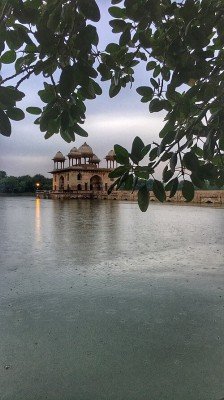
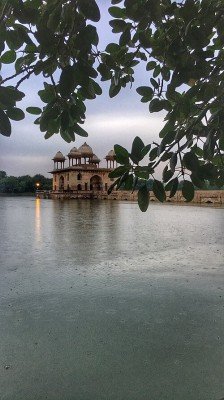
Jal Mahal Bridge: The reflection of the palace in the water is perfect.
Chor Gumbad: The arches provide a great frame for historical shots.
Dhosi Hill Summit: Panoramic views of the Haryana-Rajasthan border....Jal Mahal Bridge: The reflection of the palace in the water is perfect.
Chor Gumbad: The arches provide a great frame for historical shots.
Dhosi Hill Summit: Panoramic views of the Haryana-Rajasthan border.
Old City Lanes: For authentic street photography.Photo Gallery
Things To Do
 @@History and Significance of Shah Quli Khan:: Shah Quli Khan Mahram was a powerful Mughal noble and Governor of Narnaul under Emperor Akbar. He was crucial in the defeat of Hemu at the Second Battle of Panipat. This tomb, built by him in 1574-75 AD, serves as the final resting place for both his father and eventually himself. The entire complex, including the Tripolia Gateway (main entrance) and the adjacent gardens, was named Aram-i-Kausar, meaning 'The Garden of the Pool of Abundance/Paradise', symbolizing his wealth and piety. It represents the height of Mughal architectural patronage in the region. The tomb's construction predates Shah Quli Khan's death, a common practice among powerful nobles. The blend of Hindu and Islamic design elements is a hallmark of the Akbari era. The complex offers a tangible link to a pivotal era of Indian history and the rise of the Mughal Empire. The area surrounding the tomb was once a sprawling, manicured garden, which is now largely lost but adds to the structure's romanticized past. The architecture showcases the use of contrasting colored stone, reflecting the material availability and aesthetic choices of the time. The tomb stands as one of the most significant protected monuments in Narnaul, frequently visited by history enthusiasts and scholars alike.:@@
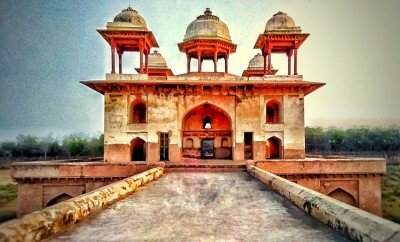
 @@Historical Significance:: This Baoli (stepwell) was constructed in the Akbar era (1556-1605 AD) by Mirza Ali Jan, a local Nawab and noble. It is part of a larger complex known as Mirza Ali Jan ka Takht, or 'The Throne of Mirza Ali Jan', a pavilion built over the main arched entrance. The structure served the critical function of water harvesting for the town and also acted as a cool, shaded resting place for travelers and the Nawab's retinue. The design elements showcase the late-Mughal style with strong indigenous influences. Despite current neglect, the structure remains majestic, underscoring its historical importance.::@@
 @@ Historical Context: The Rai Bal Mukund Dass Ka Chatta is a grand five-storied mansion built during the reign of Mughal Emperor Shah Jahan by his Diwan, Rai Bal Mukund Das. This monument stands as a testament to the administrative importance of Narnaul during the 17th century, serving as a residence and a cool retreat for the nobility. Local legends often refer to it as Birbal Ka Chhatta, though historical records link it firmly to Rai Bal Mukund Das rather than Akbar's advisor. The building was once much larger, featuring extensive gardens and secondary gateways that have since been lost to urban encroachment. Inside, the mansion houses several halls, pavilions, and rooms that display the opulence of the era through their layout and cooling systems. The structure is noted for its intricate water management, including Persian wheels and clay pipes designed to keep the interiors cool during the harsh Haryana summers. Despite its current dilapidated state, it remains the largest historical monument in Narnaul, offering a window into the luxurious lifestyle of Mughal officials. The local community holds various myths about the place, including stories of secret tunnels that once reached major cities. It is currently a protected monument under the Haryana State Archaeology Department, preserving what remains of its glorious past. Tourists visiting this site can explore the three accessible floors and marvel at the craftsmanship of the pillars and corridors. The mansion serves as a focal point for history buffs and architecture enthusiasts exploring the heritage of southern Haryana.
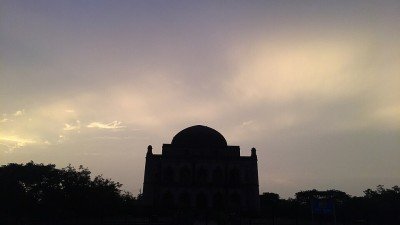 @@History and Original Purpose:@@ The Sahukar Gumbad is a significant historical monument, though it is more famously known by its local, slightly ominous name, Chor Gumbad (Thief's Dome). It was originally constructed as the tomb of an Afghan ruler named Jamal Khan. Its architectural style, with a low dome and arches, suggests it was likely built during the reign of Firoz Shah Tughlaq (1351-1388 AD), placing its origins firmly in the Tughlaq period. @@The Name and Legend:@@ The name Chor Gumbad stems from its isolated location outside the historical city walls, atop a rocky hill. Due to this seclusion, it reportedly became a shelter or hideout for local thieves and bandits (Chor or highwaymen) over time, giving rise to its popular name. The alternative name, Sahukar Gumbad, is often mentioned as well, although the "Chor" name is more widely recognized. @@Current Status:@@ Today, the surrounding hilly area has been developed into a public park by the district administration. The monument, despite being a tomb, currently contains no grave inside. Its prominent hilltop location makes it an instantly recognizable landmark, a sort of historical hallmark of Narnaul. Its solid, fortress-like structure has ensured its survival through the centuries. (Word Count: ~405):
 @@Historical Context:: The temple is believed to have been constructed by Raja Naun Karan of the area, who was a devout worshipper of Goddess Chamunda (a fierce form of Durga). Historically, the site was later occupied by Mughals who built the Jama Masjid over the temple site. Post-Independence, the temple's remnants were excavated and restored, becoming a central religious spot again. The temple is one of the most revered in the city and is intrinsically linked to the city's historical layers, showing the fusion and superimposition of different eras. It attracts massive crowds, especially during Hindu festivals. The deity is believed to fulfill the wishes of devotees, giving it high spiritual importance.::@@
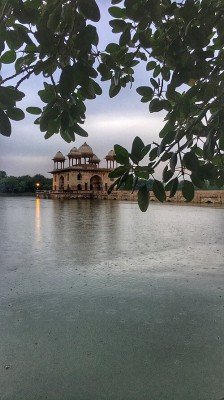
 @@Construction and Purpose:: Built in 1591 AD by Nawab Shah Quli Khan, the Mughal Governor, 15 years after his tomb. It was intended as a pleasure palace, located in the center of a large square, artificial reservoir (Khan Sarovar), which was meant to represent the celestial pool Kausar. It is connected to the shore by a 16-arched bridge or causeway (117 meters long), giving it the appearance of a building floating on water. The palace served as a place for leisure and grand entertainment for the Nawab. The tank, initially 11 acres, was later restored after being filled with debris for centuries.::@@
 @@The Discovery and Founding Legend:@@ The Modawala Mandir is a revered Hindu temple dedicated to Lord Shiva, situated on the Narnaul-Rewari Road. Its history is steeped in a local legend that dates its founding to a miraculous discovery. It is believed that the site was originally an agricultural field (khet). The temple came into being when a local farmer, while ploughing his land, accidentally struck a Shivling (a symbolic representation of Lord Shiva). Following this incident, the farmer reportedly heard a divine voice in his sleep, instructing him to build a temple at the spot for the well-being and benefit of the people. This divine instruction led to the construction of the present-day temple complex. @@A Center for Community Worship:@@ Today, it stands as a significant religious center in the region, unique because it attracts every member of the Hindu community for the worship of Lord Shiva and other important Hindu deities within the single complex. The community holds a firm belief that all sincere desires are fulfilled by Lord Shiva if worshipped here with a pure heart. The temple is not merely a place of prayer but a hub for cultural and social activities, symbolizing faith and community unity. Its ongoing maintenance and community support reflect its continuing importance as a spiritual landmark in Narnaul. This sacred place embodies the deep-rooted religious traditions of Haryana. @@Significance and Offerings:@@ Devotees often visit to perform Abhishek (ritual bathing of the Shivling) and offer Bel Patra and milk, seeking blessings for prosperity and health. The temple complex has evolved over time, yet its spiritual core, centered around the spontaneously manifested Shivling, remains a powerful draw. This historical and sacred narrative ensures the temple's enduring status. (Word Count: ~405):Show All
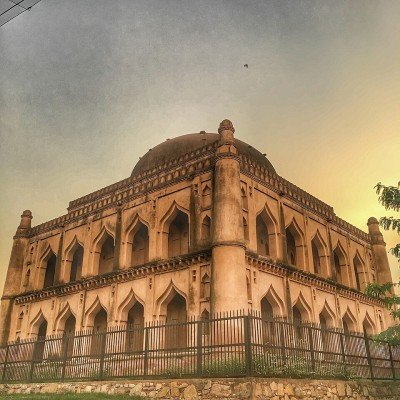 @@History and Naming:: Constructed by an Afghan noble Jamal Khan as his tomb during the Firoz Shah Tughlaq's reign (1351-88 AD), though no grave is currently inside. Its isolated location on a rock led to it being used as a hideout by thieves and highwaymen for a long period, earning it the ominous name Chor Gumbad (Thief's Dome). It is one of the oldest surviving structures in Narnaul, predating the major Mughal monuments. The structure now stands in the middle of a developed park. The hillock provides a prominent landmark visible from most parts of the city.::@@
Information
-
Why Famous:
Jal Mahal: A stunning 'Water Palace' similar to those in Rajasthan.
Birbal's Birthplace: A historical claim that brings many curious visitors.
Dhosi Hill: An extinct volcano and a sacred site for Ayurveda lo...Jal Mahal: A stunning 'Water Palace' similar to those in Rajasthan.
Birbal's Birthplace: A historical claim that brings many curious visitors.
Dhosi Hill: An extinct volcano and a sacred site for Ayurveda lovers.
Sher Shah Suri: The town's deep connection with the founder of the Suri Empire. -
Architecture:
Jal Mahal: A palace in the center of a lake, built in 1591. It is a blend of Persian and Indian styles with a massive square tank.
Chor Gumbad: A massive square structure with four minarets, once used as a hideout by outlaws.Jal Mahal: A palace in the center of a lake, built in 1591. It is a blend of Persian and Indian styles with a massive square tank.
Chor Gumbad: A massive square structure with four minarets, once used as a hideout by outlaws.
Tomb of Ibrahim Khan Sur: Built by Sher Shah Suri for his grandfather, displaying exquisite tile work and stone carvings.
Dimensions: The Jal Mahal tank is vast, while the Chor Gumbad stands as a prominent landmark visible from a distance. -
How To Reach:
By Air: Nearest airport is Delhi (DEL), about 130 KMS away.
By Train: Narnaul Railway Station connects to Delhi and Rewari.
By Road: Well-connected via the Delhi-Jaipur route and local state highways.By Air: Nearest airport is Delhi (DEL), about 130 KMS away.
By Train: Narnaul Railway Station connects to Delhi and Rewari.
By Road: Well-connected via the Delhi-Jaipur route and local state highways.
By Local Transport: Autos and cycle-rickshaws are the best way to navigate narrow lanes. -
Weather and Best Time to Visit:
Winter: October to March is the only comfortable time to visit.
Summer: Extremely hot (April-June); best avoided.
Monsoon: August is pleasant for the Dhosi Hill trek.
Time of D...Winter: October to March is the only comfortable time to visit.
Summer: Extremely hot (April-June); best avoided.
Monsoon: August is pleasant for the Dhosi Hill trek.
Time of Day: Early morning for trekking and late afternoon for monument visits. -
Near Tourist Places:
Dhosi Hill (8 KMS), Rewari (55 KMS), Mahendragarh (25 KMS), Neemrana (40 KMS), Jaipur (160 KMS), Delhi (140 KMS), Alwar (90 KMS), Jhunjhunu (80 KMS), Hisar (130 KMS), Rohtak (110 KMS).
Tourism Tips
-
Safety: Wear modest clothing as it is a traditional town.
Packing: Sturdy shoes for the hill trek and plenty of water.
Accommodation: Basic guest houses and budget hotels are available in town.Safety: Wear modest clothing as it is a traditional town.
Packing: Sturdy shoes for the hill trek and plenty of water.
Accommodation: Basic guest houses and budget hotels are available in town.
Local Guide: Hiring a local for the history of the tombs is highly recommended.
Reviews
FAQs
Narnaul Itineray And Cost:-
Other Places In Haryana :-
Other States In India :-
Information about New and Updated Locations() of Haryana Has Been Added :-
Card subtitle
Note:-
Information provided here in good Faith and for reference only.
Near Places

Ambala
Some quick example text to build on the card title and make up the bulk of the card's content.
Go somewhere
Bahadurgarh
Some quick example text to build on the card title and make up the bulk of the card's content.
Go somewhere
Bhiwani
Some quick example text to build on the card title and make up the bulk of the card's content.
Go somewhere
Faridabad
Some quick example text to build on the card title and make up the bulk of the card's content.
Go somewhere
Fatehabad
Some quick example text to build on the card title and make up the bulk of the card's content.
Go somewhere
Gurugram
Some quick example text to build on the card title and make up the bulk of the card's content.
Go somewhere
Hisar
Some quick example text to build on the card title and make up the bulk of the card's content.
Go somewhere
Jhajjar
Some quick example text to build on the card title and make up the bulk of the card's content.
Go somewhere
Jind
Some quick example text to build on the card title and make up the bulk of the card's content.
Go somewhere
Jyotisar
Some quick example text to build on the card title and make up the bulk of the card's content.
Go somewhere
Karnal
Some quick example text to build on the card title and make up the bulk of the card's content.
Go somewhere
Kurukshetra
Some quick example text to build on the card title and make up the bulk of the card's content.
Go somewhere
Narnaul
Some quick example text to build on the card title and make up the bulk of the card's content.
Go somewhere
Palwal
Some quick example text to build on the card title and make up the bulk of the card's content.
Go somewhere
Panchkula
Some quick example text to build on the card title and make up the bulk of the card's content.
Go somewhere
Panipat
Some quick example text to build on the card title and make up the bulk of the card's content.
Go somewherein Other Cities