

Bhojpur
General information
-
Ideal Duration:
1 to 2 DaysPlace Type:
Historical, Cultural, and SpiritualEntry Fees:
No Entry Fee: Most of the historical sites, including the Jagdishpur Fort and local temples, are free for the public to visit.
Museum Fee: A very small maintenance fee (around 5-10 INR) may be charged at the Veer Kunwar Singh Museum within...No Entry Fee: Most of the historical sites, including the Jagdishpur Fort and local temples, are free for the public to visit.
Museum Fee: A very small maintenance fee (around 5-10 INR) may be charged at the Veer Kunwar Singh Museum within the fort.Timing:
Regular Timings: Sites are generally open from 7:00 AM to 7:00 PM; however, the museum at the fort usually closes by 5:00 PM.
Best Visiting Hours: Early mornings are ideal for temples, while late afternoons are better for exploring the fo...Regular Timings: Sites are generally open from 7:00 AM to 7:00 PM; however, the museum at the fort usually closes by 5:00 PM.
Best Visiting Hours: Early mornings are ideal for temples, while late afternoons are better for exploring the forts and riverbanks.Special Events:
Vijayotsav: Celebrated in April to mark the victory of Kunwar Singh over the British, featuring grand parades and cultural shows.
Chhath Puja: Like the rest of Bihar, the ghats of the Ganga and Son rivers come alive with thousands of devot...Vijayotsav: Celebrated in April to mark the victory of Kunwar Singh over the British, featuring grand parades and cultural shows.
Chhath Puja: Like the rest of Bihar, the ghats of the Ganga and Son rivers come alive with thousands of devotees in November.
Navratri: The Aranya Devi Temple becomes the center of massive celebrations with special prayers and fairs during the nine days.Best Photo Spots:
Jagdishpur Fort Entrance: The grand gateway of the fort provides a majestic historical setting for portraits and heritage photography.
Koilwar Bridge: The long iron spans of this British-era bridge over the vast Son river offer a great per...Jagdishpur Fort Entrance: The grand gateway of the fort provides a majestic historical setting for portraits and heritage photography.
Koilwar Bridge: The long iron spans of this British-era bridge over the vast Son river offer a great perspective for industrial photography.
Aranya Devi Temple: The colorful temple architecture and the gathering of devotees provide excellent opportunities for cultural shots.Photo Gallery
Things To Do
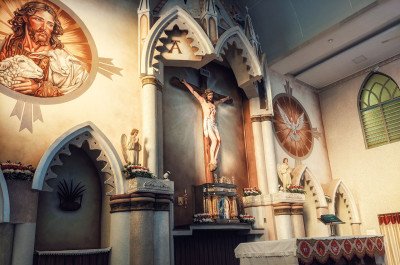 @@Historical Narrative of St. Mary's Church: The St. Mary's Church, popularly referred to as the Holy Saviour Church, stands as a poignant reminder of the colonial history in Bhojpur. Built in 1911, the church was specially commissioned to facilitate the visit of King George V and Queen Mary, who were traveling from Kolkata to Delhi. The King, known for his religious devotion, desired a place of worship during his brief halt in Arrah. Interestingly, a lavish red carpet was laid from the Arrah railway station to the church entrance to welcome the British royals. Beyond its royal connection, the church serves as a memorial for the British soldiers of the Arrah Garrison who perished during the 1857 Revolt. Inside, visitors can find numerous marble plaques inscribed with the names of deceased officers and moving memorial messages. The atmosphere is profoundly serene, offering a stark contrast to the bustling city outside. Though the structure shows signs of its century-old age, it remains remarkably well-preserved and continues to function as an active place of worship under the Methodist Church administration. It is a site where history and spirituality intertwine seamlessly.
 Parswanath Mandir is a century-old Jain temple located in the ancient village of Masarh. The village itself is historically significant, identified as 'Mo-ho-so-lo' by the Chinese traveler Hiuen Tsang. The temple is dedicated to Lord Parswanath, the 23rd Tirthankara of Jainism. It serves as a major pilgrimage site for the Jain community, especially the Rathors of Marwar who settled here. The temple is famous for its well-preserved idols and the serene environment it offers. Masarh is also known for its archaeological mounds and ancient Hindu remains, making it a hub for history enthusiasts. The temple complex is beautifully maintained and reflects the architectural elegance of Jain shrines. It stands as a testament to the long-standing Jain influence in the Bhojpur region. Visitors can see ancient inscriptions that mention the old name of Arrah as Aramnagar.
 @@The Legend of Aranya Devi: The Aranya Devi Temple is one of the most sacred sites in Bhojpur, dedicated to Goddess Aranya, the deity of the forest. Historically, the name of the city Arrah is derived from the word Aranya, signifying that the region was once a dense woodland where sages meditated. Legend has it that the temple was established during the Mahabharata era by the Pandavas, specifically Yudhishthira, who installed the idol following a divine dream. Another popular tale involves King Mayurdhwaj, who was tested by Lord Krishna and Arjuna; the Goddess appeared to bless the king for his unwavering devotion and sacrifice. Today, the temple stands as a symbol of spiritual power and is recognized as a Siddh Pitha among the 108 Shakti Pithas. Devotees believe that the Goddess fulfills every wish, and thousands flock here to offer prayers, especially during the Navratri festival. The atmosphere is filled with the scent of incense and the sound of bells, creating a serene environment for meditation and worship. Over the years, the temple has undergone several renovations, evolving from a small ancient shrine to a modern multi-storeyed complex. It remains the spiritual heart of Arrah, providing a bridge between the city's ancient mythological roots and its modern urban life. Visitors often find solace in the sanctum sanctorum, where the black stone idols are beautifully adorned with traditional attire and jewelry. The temple's significance is not just religious but also cultural, as it represents the identity of the local Bhojpuri people. Visiting this temple offers a deep insight into the rich tapestry of Indian mythology and the enduring faith of the local community.
@@Spiritual Essence of Venkatesh Mandir: The Venkatesh Mandir in Perhap village is a remarkable spiritual site that stands as a cultural bridge between North and South India. Dedicated to Lord Venkateswara (a form of Lord Vishnu), this temple is unique in the entire Bhojpur region for its distinct southern religious traditions. The temple was built with the vision of bringing the sanctity of Tirupati to the people of Bihar. The main idol is a magnificent black stone statue of Lord Vishnu, intricately carved to replicate the famous deity of Tirumala. The temple serves as a hub for Vedic learning and traditional rituals. Unlike many local temples, the priests here follow strict Agama Sastras for daily worship. The atmosphere within the temple complex is one of deep devotion and Vedic chanting, transporting visitors to the sacred hills of Andhra Pradesh. It is not just a place of worship but a center for cultural exchange where local Bhojpuri traditions meet the classical Dravidian spiritual practices. The temple's presence in a rural village adds to its charm and accessibility for the local farming community.
@@The Legend of Aranya Devi: The Aranya Devi Temple is one of the most sacred sites in Bhojpur, dedicated to Goddess Aranya, the deity of the forest. Historically, the name of the city Arrah is derived from the word Aranya, signifying that the region was once a dense woodland where sages meditated. Legend has it that the temple was established during the Mahabharata era by the Pandavas, specifically Yudhishthira, who installed the idol following a divine dream. Another popular tale involves King Mayurdhwaj, who was tested by Lord Krishna and Arjuna; the Goddess appeared to bless the king for his unwavering devotion and sacrifice. Today, the temple stands as a symbol of spiritual power and is recognized as a Siddh Pitha among the 108 Shakti Pithas. Devotees believe that the Goddess fulfills every wish, and thousands flock here to offer prayers, especially during the Navratri festival. The atmosphere is filled with the scent of incense and the sound of bells, creating a serene environment for meditation and worship. Over the years, the temple has undergone several renovations, evolving from a small ancient shrine to a modern multi-storeyed complex. It remains the spiritual heart of Arrah, providing a bridge between the city's ancient mythological roots and its modern urban life. Visitors often find solace in the sanctum sanctorum, where the black stone idols are beautifully adorned with traditional attire and jewelry. The temple's significance is not just religious but also cultural, as it represents the identity of the local Bhojpuri people. Visiting this temple offers a deep insight into the rich tapestry of Indian mythology and the enduring faith of the local community.
@@Spiritual Essence of Venkatesh Mandir: The Venkatesh Mandir in Perhap village is a remarkable spiritual site that stands as a cultural bridge between North and South India. Dedicated to Lord Venkateswara (a form of Lord Vishnu), this temple is unique in the entire Bhojpur region for its distinct southern religious traditions. The temple was built with the vision of bringing the sanctity of Tirupati to the people of Bihar. The main idol is a magnificent black stone statue of Lord Vishnu, intricately carved to replicate the famous deity of Tirumala. The temple serves as a hub for Vedic learning and traditional rituals. Unlike many local temples, the priests here follow strict Agama Sastras for daily worship. The atmosphere within the temple complex is one of deep devotion and Vedic chanting, transporting visitors to the sacred hills of Andhra Pradesh. It is not just a place of worship but a center for cultural exchange where local Bhojpuri traditions meet the classical Dravidian spiritual practices. The temple's presence in a rural village adds to its charm and accessibility for the local farming community. The Jagdamba Mandir, located in the town of Behea (Bihia) in the Bhojpur district, is one of the most significant Shaktism centers in the region. Dedicated to Goddess Jagdamba, a form of Durga, the temple is steeped in local folklore and historical legends. It is believed that the temple has been a place of worship for centuries, with the current structure reflecting the deep devotion of the local population. The temple becomes a focal point of intense religious activity during the festival of Navratri, where thousands of pilgrims from Bihar and neighboring Uttar Pradesh gather to seek the Goddess's blessings. The spiritual aura of the temple is enhanced by the ancient trees within the courtyard, which are often tied with red threads by devotees making wishes. The deity is considered a "Jagrat" (awake) goddess, and many locals attribute their prosperity and well-being to her divine intervention. The temple complex also includes smaller shrines dedicated to Lord Shiva and Lord Hanuman, making it a comprehensive religious site for the community. The surrounding marketplace of Behea adds a vibrant local flavor to the visit, offering traditional sweets and puja items. Visiting this temple provides a deep insight into the rural religious traditions of Bhojpur and the enduring faith of the common people in the power of the Divine Mother.
@@The Spiritual Legacy of Bisram: The Bisram Jain Temple, located in the heart of Arrah, is a site of immense historical and religious importance for the Jain community worldwide. The name Bisram literally translates to "Rest," marking the spot where the 24th Tirthankara, Lord Mahavira, is believed to have rested and delivered a sermon during his travels through the kingdom of Magadha. This temple is part of a larger complex that includes a girls' school and a center for Jain studies, reflecting the community's commitment to education and spirituality. Built around 1839, the temple's white marble structure stands as a symbol of purity and non-violence. Inside the sanctum, the idol of Lord Mahavira is seated in a meditative posture, radiating a sense of profound peace and equanimity. The walls are adorned with frescoes and carvings that depict various scenes from the lives of the Tirthankaras, serving as a visual narrative of Jain philosophy. The temple attracts pilgrims from across the country who come to pay their respects and practice 'Swadhyaya' or self-study. The peaceful gardens surrounding the temple provide a sanctuary for those looking to escape the noise of the city. It is also a repository of ancient Jain manuscripts, making it a vital center for researchers and scholars. The preservation of this site over nearly two centuries highlights the resilience and devotion of the local Jain population in Bhojpur. Visiting Bisram offers a unique opportunity to understand the principles of Jainism, such as 'Ahimsa' (non-violence) and 'Aparigraha' (non-attachment), in a setting that is both historical and spiritually charged.
The Masjid of Maulabagh, also known as the Shahi Masjid by some locals, is one of the oldest and most architecturally significant mosques in Arrah. Located in the historic Maula Bagh locality, it serves as the primary place of worship for the local Muslim population. The mosque is renowned for its grand structure and the peaceful environment it offers for daily prayers. Historically, the mosque has been a center of Islamic learning and community leadership in Bhojpur. The large courtyard and the ornate prayer hall reflect the craftsmanship of the era in which it was built. During the festivals of Eid-ul-Fitr and Eid-ul-Adha, the mosque and its surrounding streets come alive with thousands of worshippers dressed in their festive best, creating a spectacle of brotherhood and joy. The mosque is not just a building of stone and mortar but a living heritage site that has witnessed the changing history of Arrah over the centuries. It is often visited by travelers who are interested in the Indo-Islamic architecture of Bihar. The mosque's location in the busy Maula Bagh market means that it is always surrounded by a vibrant local atmosphere, where one can find traditional food, clothing, and religious items. The minarets of the mosque are visible from a distance, serving as a spiritual beacon for the faithful. A visit here provides a serene break from the chaotic markets and offers a glimpse into the spiritual life of the city's residents.Show All
Arrah House is a historic building situated within the campus of Maharaja College. It gained international fame during the Indian Rebellion of 1857 for the 'Siege of Arrah'. A small group of British civilians and soldiers defended this structure for eight days against the forces of Veer Kunwar Singh. Originally a billiard room for a British engineer, it became a symbol of colonial resilience and later, Indian bravery. Today, it is a protected monument under the Archaeological Survey of India (ASI). The building houses a museum dedicated to the life and struggle of the legendary Veer Kunwar Singh. It is a must-visit for history buffs who want to understand the dynamics of the first war of independence. The college itself was founded in 1954 and remains a premier educational institution in Bihar. The site is a blend of educational excellence and historical gravity.
The Jagdamba Mandir, located in the town of Behea (Bihia) in the Bhojpur district, is one of the most significant Shaktism centers in the region. Dedicated to Goddess Jagdamba, a form of Durga, the temple is steeped in local folklore and historical legends. It is believed that the temple has been a place of worship for centuries, with the current structure reflecting the deep devotion of the local population. The temple becomes a focal point of intense religious activity during the festival of Navratri, where thousands of pilgrims from Bihar and neighboring Uttar Pradesh gather to seek the Goddess's blessings. The spiritual aura of the temple is enhanced by the ancient trees within the courtyard, which are often tied with red threads by devotees making wishes. The deity is considered a "Jagrat" (awake) goddess, and many locals attribute their prosperity and well-being to her divine intervention. The temple complex also includes smaller shrines dedicated to Lord Shiva and Lord Hanuman, making it a comprehensive religious site for the community. The surrounding marketplace of Behea adds a vibrant local flavor to the visit, offering traditional sweets and puja items. Visiting this temple provides a deep insight into the rural religious traditions of Bhojpur and the enduring faith of the common people in the power of the Divine Mother.
@@The Spiritual Legacy of Bisram: The Bisram Jain Temple, located in the heart of Arrah, is a site of immense historical and religious importance for the Jain community worldwide. The name Bisram literally translates to "Rest," marking the spot where the 24th Tirthankara, Lord Mahavira, is believed to have rested and delivered a sermon during his travels through the kingdom of Magadha. This temple is part of a larger complex that includes a girls' school and a center for Jain studies, reflecting the community's commitment to education and spirituality. Built around 1839, the temple's white marble structure stands as a symbol of purity and non-violence. Inside the sanctum, the idol of Lord Mahavira is seated in a meditative posture, radiating a sense of profound peace and equanimity. The walls are adorned with frescoes and carvings that depict various scenes from the lives of the Tirthankaras, serving as a visual narrative of Jain philosophy. The temple attracts pilgrims from across the country who come to pay their respects and practice 'Swadhyaya' or self-study. The peaceful gardens surrounding the temple provide a sanctuary for those looking to escape the noise of the city. It is also a repository of ancient Jain manuscripts, making it a vital center for researchers and scholars. The preservation of this site over nearly two centuries highlights the resilience and devotion of the local Jain population in Bhojpur. Visiting Bisram offers a unique opportunity to understand the principles of Jainism, such as 'Ahimsa' (non-violence) and 'Aparigraha' (non-attachment), in a setting that is both historical and spiritually charged.
The Masjid of Maulabagh, also known as the Shahi Masjid by some locals, is one of the oldest and most architecturally significant mosques in Arrah. Located in the historic Maula Bagh locality, it serves as the primary place of worship for the local Muslim population. The mosque is renowned for its grand structure and the peaceful environment it offers for daily prayers. Historically, the mosque has been a center of Islamic learning and community leadership in Bhojpur. The large courtyard and the ornate prayer hall reflect the craftsmanship of the era in which it was built. During the festivals of Eid-ul-Fitr and Eid-ul-Adha, the mosque and its surrounding streets come alive with thousands of worshippers dressed in their festive best, creating a spectacle of brotherhood and joy. The mosque is not just a building of stone and mortar but a living heritage site that has witnessed the changing history of Arrah over the centuries. It is often visited by travelers who are interested in the Indo-Islamic architecture of Bihar. The mosque's location in the busy Maula Bagh market means that it is always surrounded by a vibrant local atmosphere, where one can find traditional food, clothing, and religious items. The minarets of the mosque are visible from a distance, serving as a spiritual beacon for the faithful. A visit here provides a serene break from the chaotic markets and offers a glimpse into the spiritual life of the city's residents.Show All
Arrah House is a historic building situated within the campus of Maharaja College. It gained international fame during the Indian Rebellion of 1857 for the 'Siege of Arrah'. A small group of British civilians and soldiers defended this structure for eight days against the forces of Veer Kunwar Singh. Originally a billiard room for a British engineer, it became a symbol of colonial resilience and later, Indian bravery. Today, it is a protected monument under the Archaeological Survey of India (ASI). The building houses a museum dedicated to the life and struggle of the legendary Veer Kunwar Singh. It is a must-visit for history buffs who want to understand the dynamics of the first war of independence. The college itself was founded in 1954 and remains a premier educational institution in Bihar. The site is a blend of educational excellence and historical gravity.Information
-
Why Famous:
Hero of 1857: It is the birthplace of Babu Veer Kunwar Singh, making it a pilgrimage for those interested in India's freedom struggle.
The Arrah House: Famous for the Siege of Arrah during the 1857 rebellion, where a small group defended themselves against a large...Hero of 1857: It is the birthplace of Babu Veer Kunwar Singh, making it a pilgrimage for those interested in India's freedom struggle.
The Arrah House: Famous for the Siege of Arrah during the 1857 rebellion, where a small group defended themselves against a large force.
Bhojpuri Culture: The district is the heartland of the Bhojpuri language and the famous Laukika folk traditions and music.
Aranya Devi: The temple of the forest goddess is believed to be the source of the name 'Arrah' and has links to the Mahabharata. -
Architecture:
Fortified Heritage: The Jagdishpur Fort represents the traditional residential and defensive architecture of the Bhojpuri zamindars of the 19th century.
Fort Dimensions: The main structure is a massive brick building with high ceilings and...Fortified Heritage: The Jagdishpur Fort represents the traditional residential and defensive architecture of the Bhojpuri zamindars of the 19th century.
Fort Dimensions: The main structure is a massive brick building with high ceilings and thick walls designed to withstand heat and attacks.
Temple Style: The Aranya Devi Temple features a modern multi-story design with a large dome, replacing the ancient stone structure that stood for centuries.
Shahi Masjid Features: This mosque showcases Mughal architecture with five domes and intricate geometric patterns on its white marble and stone surfaces. -
How To Reach:
By Air: The nearest airport is Jay Prakash Narayan International Airport in Patna, located about 60 KMS from Arrah.
By Train: Ara Junction is a major railhead on the main line connecting Delhi and Kolkata, with frequent trains from all ove...By Air: The nearest airport is Jay Prakash Narayan International Airport in Patna, located about 60 KMS from Arrah.
By Train: Ara Junction is a major railhead on the main line connecting Delhi and Kolkata, with frequent trains from all over India.
By Road: Arrah is well-connected by road to Patna, Buxar, and Sasaram via well-maintained state and national highways.
By Local Transport: Taxis, auto-rickshaws, and buses are readily available for travel between the city and surrounding historical sites. -
Weather and Best Time to Visit:
Winter Season: The months from October to February offer the most comfortable climate for exploring the district's outdoor attractions.
Summer Season: March to June can be extremely hot and dry, which may make long travels to rural areas q...Winter Season: The months from October to February offer the most comfortable climate for exploring the district's outdoor attractions.
Summer Season: March to June can be extremely hot and dry, which may make long travels to rural areas quite exhausting.
Monsoon Season: July to September sees the rivers swelling; while the greenery is beautiful, some rural roads may be difficult to navigate. -
Near Tourist Places:
1. Buxar (75 KMS), 2. Patna (60 KMS), 3. Sasaram (100 KMS), 4. Rohtasgarh Fort (140 KMS), 5. Mundeshwari Temple (130 KMS), 6. Deo Sun Temple (110 KMS), 7. Nalanda (140 KMS), 8. Rajgir (150 KMS), 9. Gaya (120 KMS), 10. Pawapuri (130 KMS).
Tourism Tips
-
Health & Safety: Stick to bottled water and carry basic medicines for heatstroke if traveling during the warmer months of the year.
Packing Essentials: Comfortable walking shoes are a must for exploring forts; carry a scarf or hat to prot...Health & Safety: Stick to bottled water and carry basic medicines for heatstroke if traveling during the warmer months of the year.
Packing Essentials: Comfortable walking shoes are a must for exploring forts; carry a scarf or hat to protect against the sun.
Accommodation: There are several decent hotels in Arrah city center; it is best to stay here rather than in smaller villages.
Local Interaction: People are friendly but conservative; it is polite to ask before taking photos of individuals or private properties.
Reviews
FAQs
Bhojpur Itineray And Cost:-
Information about New and Updated Locations() of Bihar Has Been Added :-
Card subtitle
Note:-
Information provided here in good Faith and for reference only.
All information and pictures will be updated soon, please keep visiting.
Near Places

Araria
Some quick example text to build on the card title and make up the bulk of the card's content.
Go somewhere
Arwal
Some quick example text to build on the card title and make up the bulk of the card's content.
Go somewhere
Banka
Some quick example text to build on the card title and make up the bulk of the card's content.
Go somewhere
Begusarai
Some quick example text to build on the card title and make up the bulk of the card's content.
Go somewhere
Bhagalpur
Some quick example text to build on the card title and make up the bulk of the card's content.
Go somewhere
Bhojpur
Some quick example text to build on the card title and make up the bulk of the card's content.
Go somewhere
Bihar Sharif
Some quick example text to build on the card title and make up the bulk of the card's content.
Go somewhere
Bodh Gaya
Some quick example text to build on the card title and make up the bulk of the card's content.
Go somewhere
Buxar
Some quick example text to build on the card title and make up the bulk of the card's content.
Go somewhere
Champaran
Some quick example text to build on the card title and make up the bulk of the card's content.
Go somewherein Other Cities