

Champaran
General information
-
Ideal Duration:
2 to 3 DaysPlace Type:
Nature, History, and Freedom TrailEntry Fees:
Place Entry Fees:
Nominal Charges for Conservation: Most Gandhian sites like Bhitiharwa Ashram and the Gandhi Sangrahalaya have no entry fee, though donations are welcome. The Valmiki National Park charges an entry fee of approximately 50 to...Place Entry Fees:
Nominal Charges for Conservation: Most Gandhian sites like Bhitiharwa Ashram and the Gandhi Sangrahalaya have no entry fee, though donations are welcome. The Valmiki National Park charges an entry fee of approximately 50 to 100 INR for Indians and a higher fee for foreigners, with additional costs for jeep safaris and camera usage. The Kesariya Stupa and Ashokan Pillars are managed by the ASI and generally have a nominal entry fee of 25 INR for Indian citizens, ensuring that the heritage remains accessible to all.Timing:
Place Timings:
Daily Access and Seasonal Hours: The Gandhi Sangrahalaya and Bhitiharwa Ashram are typically open from 10:00 AM to 5:00 PM, while the Valmiki Tiger Reserve follows strict safari timings, usually from 6:00 AM to 10:00 AM and 2:0...Place Timings:
Daily Access and Seasonal Hours: The Gandhi Sangrahalaya and Bhitiharwa Ashram are typically open from 10:00 AM to 5:00 PM, while the Valmiki Tiger Reserve follows strict safari timings, usually from 6:00 AM to 10:00 AM and 2:00 PM to 5:00 PM. The Ashokan Pillars are open from sunrise to sunset. The ideal visit time for most sites is the early morning to avoid the midday sun, especially since many of these locations are spread out across rural areas with limited shade.Special Events:
Place Special Event:
The Champaran Satyagraha Centenary: While the centennial was in 2017, the region hosts annual commemorative events every April to celebrate the start of the movement, featuring seminars and folk performances. The Valmiki...Place Special Event:
The Champaran Satyagraha Centenary: While the centennial was in 2017, the region hosts annual commemorative events every April to celebrate the start of the movement, featuring seminars and folk performances. The Valmiki Mahotsav is another significant cultural festival held near the tiger reserve to promote eco-tourism and local Tharu tribal culture. During Chhath Puja in October/November, the banks of the Gandak and Moti Jheel light up with thousands of lamps and devotees, creating a mesmerizing spiritual atmosphere.Best Photo Spots:
Place Best Photo Spots:
Icons of Ancient and Modern India: The Ashokan Pillar at Lauriya Nandangarh is a primary photo spot, especially when framed against the open sky to highlight its polished sandstone texture. The Kesariya Stupa offers g...Place Best Photo Spots:
Icons of Ancient and Modern India: The Ashokan Pillar at Lauriya Nandangarh is a primary photo spot, especially when framed against the open sky to highlight its polished sandstone texture. The Kesariya Stupa offers grand wide-angle shots from the ground and detailed shots of the Buddha idols within the niches on its upper levels. For a serene landscape, the Triveni Confluence at sunset provides a breathtaking view of the mountains and water. Additionally, the simple, rustic hut at Bhitiharwa Ashram offers a poignant subject for black-and-white photography, capturing the spirit of the freedom struggle.Photo Gallery
Things To Do
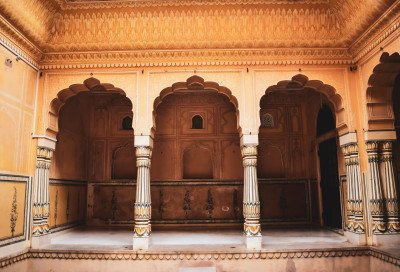 Sumeswar Fort is a historic ruin situated at the highest point in Bihar, perched on a sheer cliff in the Someshwar Range of the Himalayas. At an elevation of approximately 880 meters, the fort offers an unparalleled panoramic view of the snow-capped Himalayan peaks including Dhaulagiri, Annapurna, and Manaslu in Nepal. The fort was originally built to serve as a strategic lookout point during the medieval period, controlling the mountain passes between India and Nepal. Today, the fort is largely in ruins, with only broken walls and a few structures remaining, but its historical significance and the sheer beauty of its location make it a prime destination for trekkers and history buffs. The trek to the fort is an adventure in itself, passing through dense forests of the Valmiki Tiger Reserve, where one can spot various flora and fauna. The silence of the ruins, combined with the cool mountain air, creates a hauntingly beautiful atmosphere. It is said that the fort was once an impenetrable stronghold, but time and nature have reclaimed much of it. Standing on the edge of the fort's remains, looking down into the lush valleys of both India and Nepal, provides a sense of the strategic importance this place once held. For nature lovers, it is the best spot in the state to witness the majesty of the great Himalayan range.
 @@The Epicenter of Memories: The Gandhi Sangrahalaya in Motihari is the most comprehensive museum dedicated to the Champaran Satyagraha. It was established to preserve the legacy of Gandhi's first major victory in India. The museum is located near the site of the old court where Gandhi was tried in 1917. It houses a vast collection of rare photographs, original letters written by Gandhi, and various artifacts related to the movement. One of the main attractions is the 48-foot tall Chunar stone pillar designed by the famous artist Nand Lal Bose. This pillar marks the exact spot where Gandhi appeared before the magistrate. The museum also features a library with over 15,000 books on Gandhi and the freedom struggle. It serves as a major research center for historians and students. The galleries are organized chronologically, leading visitors through the events of the indigo farmers' protest. The audio-visual room often screens documentaries on the life of Bapu. The atmosphere inside the museum is solemn and educational. It provides a deep dive into the "Tinkathia" system and how Gandhi dismantled it. The museum is not just a building but a testament to the power of truth. It is a must-visit for anyone wishing to understand how the "Mahatma" was born in the fields of Champaran.
The Ashokan Pillar at Lauriya Nandangarh is a magnificent monolithic structure that stands as a testament to the Mauryan Empire's architectural brilliance. Erected by Emperor Ashoka in the 3rd century BC, this pillar is one of the few that remains in its original position with its capital intact. The site is historically significant because it served as a marker on the ancient royal road that connected the Mauryan capital, Pataliputra, with the Himalayan region. The pillar is carved from a single block of polished Chunar sandstone and features a single seated lion on its capital, facing the direction of the sunrise. This site is not just a monument but a symbol of the Buddhist philosophy of Dharma that Ashoka spread across his kingdom. Visitors can see the six edicts of Ashoka inscribed in Brahmi script, which preach non-violence and moral conduct. The surrounding area is also home to about 15 large burial mounds, believed to be Vedic-era structures, making the entire region an archaeological goldmine. The serenity of the landscape combined with the ancient stone's mirror-like polish creates a spiritual atmosphere for history enthusiasts and spiritual seekers alike. It represents the pinnacle of ancient Indian craftsmanship and the transition of Indian art from wood to stone. Local legends often associate the pillar with the "Laur" or staff of a mythological giant, but its historical reality as a royal decree is far more fascinating. Exploring this site provides deep insights into the early governance and cultural values of ancient India. :
@@The Epicenter of Memories: The Gandhi Sangrahalaya in Motihari is the most comprehensive museum dedicated to the Champaran Satyagraha. It was established to preserve the legacy of Gandhi's first major victory in India. The museum is located near the site of the old court where Gandhi was tried in 1917. It houses a vast collection of rare photographs, original letters written by Gandhi, and various artifacts related to the movement. One of the main attractions is the 48-foot tall Chunar stone pillar designed by the famous artist Nand Lal Bose. This pillar marks the exact spot where Gandhi appeared before the magistrate. The museum also features a library with over 15,000 books on Gandhi and the freedom struggle. It serves as a major research center for historians and students. The galleries are organized chronologically, leading visitors through the events of the indigo farmers' protest. The audio-visual room often screens documentaries on the life of Bapu. The atmosphere inside the museum is solemn and educational. It provides a deep dive into the "Tinkathia" system and how Gandhi dismantled it. The museum is not just a building but a testament to the power of truth. It is a must-visit for anyone wishing to understand how the "Mahatma" was born in the fields of Champaran.
The Ashokan Pillar at Lauriya Nandangarh is a magnificent monolithic structure that stands as a testament to the Mauryan Empire's architectural brilliance. Erected by Emperor Ashoka in the 3rd century BC, this pillar is one of the few that remains in its original position with its capital intact. The site is historically significant because it served as a marker on the ancient royal road that connected the Mauryan capital, Pataliputra, with the Himalayan region. The pillar is carved from a single block of polished Chunar sandstone and features a single seated lion on its capital, facing the direction of the sunrise. This site is not just a monument but a symbol of the Buddhist philosophy of Dharma that Ashoka spread across his kingdom. Visitors can see the six edicts of Ashoka inscribed in Brahmi script, which preach non-violence and moral conduct. The surrounding area is also home to about 15 large burial mounds, believed to be Vedic-era structures, making the entire region an archaeological goldmine. The serenity of the landscape combined with the ancient stone's mirror-like polish creates a spiritual atmosphere for history enthusiasts and spiritual seekers alike. It represents the pinnacle of ancient Indian craftsmanship and the transition of Indian art from wood to stone. Local legends often associate the pillar with the "Laur" or staff of a mythological giant, but its historical reality as a royal decree is far more fascinating. Exploring this site provides deep insights into the early governance and cultural values of ancient India. : Moti Jheel, which literally translates to "Pearl Lake," is the scenic heart and soul of Motihari. This expansive oxbow lake was formed by the shifting course of the Burhi Gandak river centuries ago. During the British colonial period, the lake became the focal point of the town’s administration, with high-ranking British officials building their bungalows and offices along its banks. The lake is not just a water body but a lifeline for the city, providing a natural drainage system and a source of livelihood for local fishermen. In recent years, the Bihar Government has invested heavily in the "Moti Jheel Rejuvenation Project" to clear weeds and develop the lakefront into a modern tourist attraction. The lake effectively splits the town into the "Old City" and the "Civil Lines," connected by various bridges. It is deeply associated with the memory of the Champaran Satyagraha, as Mahatma Gandhi frequently walked its banks during his 1917 investigation into the plight of indigo farmers. Today, the lake serves as a recreational hub where locals and tourists alike come to escape the city's hustle. The shimmering waters reflect the city lights at night, creating a mesmerizing view that justifies its name.
Bettiah Qila, often associated with the legacy of the Bettiah Raj and sometimes linked to the ancient Raja Visal Ka Garh, is the historical heart of the district. The fort served as the residence of the Maharajas of Bettiah, who were one of the largest landholders in Bihar during the British Raj. The architecture reflects a blend of traditional Indian styles and European influences, showcasing the wealth and taste of the royalty. Within the fort complex, there are several temples, most notably the Durga temple, which remains a center of religious life in the city. The history of the fort is intertwined with the struggle for independence; it was the Maharajas of Bettiah who initially hosted Mahatma Gandhi during his famous Champaran Satyagraha in 1917. Although parts of the fort are now in ruins or have been repurposed, the grand gates and the vast courtyards still evoke a sense of royal grandeur. The site provides a deep dive into the socio-political history of the region, from the ancient era of King Visal to the colonial period. It is a place where every stone tells a story of power, piety, and the eventual transition to democracy. Exploring the Bettiah Qila is essential for anyone wanting to understand the cultural identity of West Champaran. :
Moti Jheel, which literally translates to "Pearl Lake," is the scenic heart and soul of Motihari. This expansive oxbow lake was formed by the shifting course of the Burhi Gandak river centuries ago. During the British colonial period, the lake became the focal point of the town’s administration, with high-ranking British officials building their bungalows and offices along its banks. The lake is not just a water body but a lifeline for the city, providing a natural drainage system and a source of livelihood for local fishermen. In recent years, the Bihar Government has invested heavily in the "Moti Jheel Rejuvenation Project" to clear weeds and develop the lakefront into a modern tourist attraction. The lake effectively splits the town into the "Old City" and the "Civil Lines," connected by various bridges. It is deeply associated with the memory of the Champaran Satyagraha, as Mahatma Gandhi frequently walked its banks during his 1917 investigation into the plight of indigo farmers. Today, the lake serves as a recreational hub where locals and tourists alike come to escape the city's hustle. The shimmering waters reflect the city lights at night, creating a mesmerizing view that justifies its name.
Bettiah Qila, often associated with the legacy of the Bettiah Raj and sometimes linked to the ancient Raja Visal Ka Garh, is the historical heart of the district. The fort served as the residence of the Maharajas of Bettiah, who were one of the largest landholders in Bihar during the British Raj. The architecture reflects a blend of traditional Indian styles and European influences, showcasing the wealth and taste of the royalty. Within the fort complex, there are several temples, most notably the Durga temple, which remains a center of religious life in the city. The history of the fort is intertwined with the struggle for independence; it was the Maharajas of Bettiah who initially hosted Mahatma Gandhi during his famous Champaran Satyagraha in 1917. Although parts of the fort are now in ruins or have been repurposed, the grand gates and the vast courtyards still evoke a sense of royal grandeur. The site provides a deep dive into the socio-political history of the region, from the ancient era of King Visal to the colonial period. It is a place where every stone tells a story of power, piety, and the eventual transition to democracy. Exploring the Bettiah Qila is essential for anyone wanting to understand the cultural identity of West Champaran. : The Sikta Devi Temple is a highly revered spiritual site situated in the West Champaran district of Bihar, very close to the international border with Nepal. This ancient temple is dedicated to Goddess Durga in her local manifestation as Sikta Devi, who is believed to be the protector of the region. The temple holds immense historical and religious significance, drawing thousands of devotees who come to seek blessings for health, prosperity, and protection. Legend has it that the temple was established centuries ago by local rulers who worshipped the deity before going into battle. The atmosphere here is deeply spiritual, filled with the scent of incense and the sound of temple bells. During the festive season, the entire village of Sikta transforms into a hub of religious activity. The temple serves not only as a place of worship but also as a symbol of the shared cultural heritage between the people of India and Nepal. Visitors often find a sense of profound peace within its sanctum, away from the hustle of urban life. The surroundings are rustic and traditional, offering a glimpse into the heart of rural Bihar. The temple has seen several renovations over the years, yet it retains its soul-stirring ancient aura that makes it a must-visit for any spiritual seeker in Champaran.
@@A Significant Political Milestone: Brindavan Ashram, located near Kumarbagh, is famous for hosting the annual conference of the All India Gandhi Seva Sangh in 1937. This event was attended by legendary leaders like Mahatma Gandhi, Dr. Rajendra Prasad, and J.B. Kripalani. The ashram was established to promote Gandhi's vision of rural development and self-sufficiency. It served as a training ground for volunteers who wanted to dedicate their lives to social service. During the 1937 conference, crucial decisions regarding the future of the freedom struggle were discussed here. Today, a basic school and a Kendriya Vidyalaya operate within the complex, continuing the legacy of education. The site is spread over a large area and features a memorial dedicated to Bapu. It is much quieter than other tourist spots, providing a sense of peace and isolation. The ashram's role in the social reform of Champaran is well-documented in the archives. Visitors can see the platforms where the leaders once sat and addressed the crowds. The lush greenery surrounding the ashram makes it an ideal spot for nature lovers. It stands as a reminder of the time when the top leadership of India stayed in a simple village to connect with the common man. The preservation of this site is crucial for understanding the organizational side of the Gandhian movement. It remains a center of inspiration for local educators and social workers.Show All
The birth place of George Orwell, born as Eric Arthur Blair on June 25, 1903, is a site of immense global literary significance. Orwell's father, Richard Walmesley Blair, worked as a Sub-Deputy Opium Agent for the British Indian Civil Service, which explains the family’s presence in this remote outpost. The bungalow where Orwell was born remained in a state of neglect for decades, often used by local students as a study haunt or left to the elements. It was only after a 1983 article by British journalist Ian Jack titled "In Search of Jaarj Arwill" that the world rediscovered this humble origin of the man who wrote 'Animal Farm' and 'Nineteen Eighty-Four'. In 2014, the Bihar Government undertook a massive restoration project to convert the dilapidated colonial quarters into a world-class museum. The site now serves as a bridge between the local history of Champaran and the global narrative of anti-totalitarian literature. Although Orwell left India at the age of one, his birth here connects the soil of Bihar to some of the most profound political critiques of the 20th century. The museum houses photographs, documents, and copies of his manuscripts, providing a deep dive into his life and the colonial era of Motihari. It stands as the only museum in the world dedicated specifically to his birth and early family history.
The Sikta Devi Temple is a highly revered spiritual site situated in the West Champaran district of Bihar, very close to the international border with Nepal. This ancient temple is dedicated to Goddess Durga in her local manifestation as Sikta Devi, who is believed to be the protector of the region. The temple holds immense historical and religious significance, drawing thousands of devotees who come to seek blessings for health, prosperity, and protection. Legend has it that the temple was established centuries ago by local rulers who worshipped the deity before going into battle. The atmosphere here is deeply spiritual, filled with the scent of incense and the sound of temple bells. During the festive season, the entire village of Sikta transforms into a hub of religious activity. The temple serves not only as a place of worship but also as a symbol of the shared cultural heritage between the people of India and Nepal. Visitors often find a sense of profound peace within its sanctum, away from the hustle of urban life. The surroundings are rustic and traditional, offering a glimpse into the heart of rural Bihar. The temple has seen several renovations over the years, yet it retains its soul-stirring ancient aura that makes it a must-visit for any spiritual seeker in Champaran.
@@A Significant Political Milestone: Brindavan Ashram, located near Kumarbagh, is famous for hosting the annual conference of the All India Gandhi Seva Sangh in 1937. This event was attended by legendary leaders like Mahatma Gandhi, Dr. Rajendra Prasad, and J.B. Kripalani. The ashram was established to promote Gandhi's vision of rural development and self-sufficiency. It served as a training ground for volunteers who wanted to dedicate their lives to social service. During the 1937 conference, crucial decisions regarding the future of the freedom struggle were discussed here. Today, a basic school and a Kendriya Vidyalaya operate within the complex, continuing the legacy of education. The site is spread over a large area and features a memorial dedicated to Bapu. It is much quieter than other tourist spots, providing a sense of peace and isolation. The ashram's role in the social reform of Champaran is well-documented in the archives. Visitors can see the platforms where the leaders once sat and addressed the crowds. The lush greenery surrounding the ashram makes it an ideal spot for nature lovers. It stands as a reminder of the time when the top leadership of India stayed in a simple village to connect with the common man. The preservation of this site is crucial for understanding the organizational side of the Gandhian movement. It remains a center of inspiration for local educators and social workers.Show All
The birth place of George Orwell, born as Eric Arthur Blair on June 25, 1903, is a site of immense global literary significance. Orwell's father, Richard Walmesley Blair, worked as a Sub-Deputy Opium Agent for the British Indian Civil Service, which explains the family’s presence in this remote outpost. The bungalow where Orwell was born remained in a state of neglect for decades, often used by local students as a study haunt or left to the elements. It was only after a 1983 article by British journalist Ian Jack titled "In Search of Jaarj Arwill" that the world rediscovered this humble origin of the man who wrote 'Animal Farm' and 'Nineteen Eighty-Four'. In 2014, the Bihar Government undertook a massive restoration project to convert the dilapidated colonial quarters into a world-class museum. The site now serves as a bridge between the local history of Champaran and the global narrative of anti-totalitarian literature. Although Orwell left India at the age of one, his birth here connects the soil of Bihar to some of the most profound political critiques of the 20th century. The museum houses photographs, documents, and copies of his manuscripts, providing a deep dive into his life and the colonial era of Motihari. It stands as the only museum in the world dedicated specifically to his birth and early family history.Information
-
Why Famous:
Why Famous Place:
The Birthplace of Satyagraha: Champaran is primarily famous as the crucible of India's non-violent freedom struggle, where Gandhiji transformed from a lawyer to a 'Mahatma' while fighting for the rights of oppressed indigo f...Why Famous Place:
The Birthplace of Satyagraha: Champaran is primarily famous as the crucible of India's non-violent freedom struggle, where Gandhiji transformed from a lawyer to a 'Mahatma' while fighting for the rights of oppressed indigo farmers. It is also famous for Lauriya Nandangarh, which contains one of the few Ashokan Pillars that still stands in its original location with its lion capital intact. Furthermore, the region is a critical site for Buddhism, as it lies on the path Lord Buddha took during his final journey to Kushinagar, marked by the massive Kesariya Stupa. -
Architecture:
Place Architecture:
The Mauryan and Buddhist Marvels: The architecture of Champaran is dominated by the Ashokan Pillar at Lauriya Nandangarh, a monolithic column of polished sandstone standing about 32 feet tall. It features a bell-shaped ca...Place Architecture:
The Mauryan and Buddhist Marvels: The architecture of Champaran is dominated by the Ashokan Pillar at Lauriya Nandangarh, a monolithic column of polished sandstone standing about 32 feet tall. It features a bell-shaped capital with a circular abacus ornamented with Brahmi geese and a seated lion, showcasing the incredible craftsmanship of the 3rd century BCE. The Kesariya Stupa is another architectural giant, featuring a polygonal base and multiple terraces that once supported a massive dome, standing over 100 feet high today. The Gandhian architecture in the region, such as the Bhitiharwa Ashram, is characterized by simple, functional mud and tile structures that reflect the Mahatma’s philosophy of minimalism and rural empowerment, providing a stark contrast to the grand ancient monuments. -
How To Reach:
Place How to Reach:
Diverse Travel Options to North Bihar: Champaran is well-connected by road and rail through its main towns, Motihari and Bettiah. The Bapudham Motihari (BMKI) railway station has direct trains from Delhi, Kolkata, and Pat...Place How to Reach:
Diverse Travel Options to North Bihar: Champaran is well-connected by road and rail through its main towns, Motihari and Bettiah. The Bapudham Motihari (BMKI) railway station has direct trains from Delhi, Kolkata, and Patna. By air, the nearest major airport is Patna (PAT), about 160 KMS away, though Gorakhpur Airport (GOP) in UP is also an option for reaching West Champaran. For road travelers, NH-27 and NH-28 provide excellent connectivity from Muzaffarpur and Patna. Local transport includes buses, taxis, and shared autos that ply between the major historical sites and the district headquarters. -
Weather and Best Time to Visit:
Place Best Time to Visit:
Optimal Seasons and Daylight: The best time to explore Champaran is from October to March, as the winter weather is perfect for long outdoor excursions and wildlife safaris. Monsoons (June to September) make the reg...Place Best Time to Visit:
Optimal Seasons and Daylight: The best time to explore Champaran is from October to March, as the winter weather is perfect for long outdoor excursions and wildlife safaris. Monsoons (June to September) make the region very lush and green, but the tiger reserve remains closed during this period due to flooding risks. For daily visits, Mornings are best for the Ashokan Pillars to see the inscriptions clearly, while Late Afternoons are ideal for the Kesariya Stupa to catch the sunset colors over the ancient brickwork. -
Near Tourist Places:
Kesariya Stupa (55 KMS), Lauriya Areraj (30 KMS), Bhitiharwa (45 KMS), Valmiki Nagar (90 KMS), Muzaffarpur (80 KMS), Raxaul (50 KMS), Bettiah (45 KMS), Motihari (0 KMS), Lumbini (160 KMS), Kushinagar (110 KMS)
Tourism Tips
-
Place Tourism Tips:
Navigating the Rural Heartland: Traveling in Champaran requires some planning as sites like Lauriya Nandangarh and Kesariya are quite far from each other; hiring a dedicated private taxi for the day is highly recommended....Place Tourism Tips:
Navigating the Rural Heartland: Traveling in Champaran requires some planning as sites like Lauriya Nandangarh and Kesariya are quite far from each other; hiring a dedicated private taxi for the day is highly recommended. For Health & Safety, ensure you carry basic medicines and mosquito repellent, especially if visiting the Valmiki National Park. Regarding Packing, wear modest clothing suitable for religious sites and sturdy boots for the wildlife area. Accommodation is best found in Motihari or Bettiah, where several mid-range hotels and government guesthouses are available for travelers.
Reviews
FAQs
Champaran Itineray And Cost:-
Other Places In Bihar :-
Other States In India :-
Information about New and Updated Locations() of Bihar Has Been Added :-
Card subtitle
Note:-
Information provided here in good Faith and for reference only.
Near Places
Araria
Some quick example text to build on the card title and make up the bulk of the card's content.
Go somewhere
Arwal
Some quick example text to build on the card title and make up the bulk of the card's content.
Go somewhere
Banka
Some quick example text to build on the card title and make up the bulk of the card's content.
Go somewhere
Begusarai
Some quick example text to build on the card title and make up the bulk of the card's content.
Go somewhere
Bhagalpur
Some quick example text to build on the card title and make up the bulk of the card's content.
Go somewhere
Bhojpur
Some quick example text to build on the card title and make up the bulk of the card's content.
Go somewhere
Bihar Sharif
Some quick example text to build on the card title and make up the bulk of the card's content.
Go somewhere
Bodh Gaya
Some quick example text to build on the card title and make up the bulk of the card's content.
Go somewhere
Buxar
Some quick example text to build on the card title and make up the bulk of the card's content.
Go somewhere
Champaran
Some quick example text to build on the card title and make up the bulk of the card's content.
Go somewhere
Darbhanga
Some quick example text to build on the card title and make up the bulk of the card's content.
Go somewhere
Gaya
Some quick example text to build on the card title and make up the bulk of the card's content.
Go somewhere
Golghar
Some quick example text to build on the card title and make up the bulk of the card's content.
Go somewhere
Madhubani
Some quick example text to build on the card title and make up the bulk of the card's content.
Go somewhere
Mithila
Some quick example text to build on the card title and make up the bulk of the card's content.
Go somewhere
Munger
Some quick example text to build on the card title and make up the bulk of the card's content.
Go somewherein Other Cities