

Moreh
General information
-
Ideal Duration:
1 to 2 DaysPlace Type:
Border Town / ShoppingEntry Fees:
Place Entry Fees:
Market Entry: There is no fee to enter the town or the markets, but cross-border permits for Tamu may involve a small processing charge.
Temple Entry: Entry to the religious sites is free, t...Place Entry Fees:
Market Entry: There is no fee to enter the town or the markets, but cross-border permits for Tamu may involve a small processing charge.
Temple Entry: Entry to the religious sites is free, though donations for maintenance are welcomed by the local management committees.Timing:
Place Timings:
Regular Timings: Markets are most active from 7:00 AM to 4:00 PM; it is advisable to finish shopping before the border gates close.
Ideal Visit Time: Arrive early in the morning to beat the he...Place Timings:
Regular Timings: Markets are most active from 7:00 AM to 4:00 PM; it is advisable to finish shopping before the border gates close.
Ideal Visit Time: Arrive early in the morning to beat the heat and see the peak of the trading activity when the trucks start moving across.Special Events:
Place Special Event:
Tamil Fire Walking Festival: A unique cultural event held at the Amman Temple where devotees walk on hot coals, attracting thousands of spectators.
India-Myanmar Trade Fair: Occasional go...Place Special Event:
Tamil Fire Walking Festival: A unique cultural event held at the Amman Temple where devotees walk on hot coals, attracting thousands of spectators.
India-Myanmar Trade Fair: Occasional government-organized fairs that showcase products from both nations and promote bilateral economic ties and friendship.Best Photo Spots:
Place Best Photo Spots:
The Border Gate: The official gate with "India" written on one side and "Myanmar" on the other is the most iconic spot for a souvenir photo.
Market Streets: The chaotic yet colorful ma...Place Best Photo Spots:
The Border Gate: The official gate with "India" written on one side and "Myanmar" on the other is the most iconic spot for a souvenir photo.
Market Streets: The chaotic yet colorful market streets offer great opportunities for candid street photography and capturing the essence of trade.Photo Gallery
Things To Do
 @@Cultural History: This Hindu temple is a testament to the presence and historical significance of the Tamil community in Moreh, which migrated here decades ago, often via Myanmar. It is dedicated to Sri Angala Parameshwari Amman (an incarnation of Goddess Parvati) and Sri Muneeswarar (a folk deity). It serves as the primary spiritual and cultural center for the local Tamil population. @@Religious Blend: The temple reflects the unique blend of South Indian temple traditions with the local North-Eastern and Burmese environments, representing a successful cultural transplantation. It's a focal point for all major Tamil festivals.
 @@Ecological Importance: This is a major forest and riverine ecosystem near the border, covering 185 sq km. It is a key area for biodiversity and a declared Important Bird Area (IBA). The sanctuary is crucial for maintaining the ecological balance of the Indo-Burmese border region. @@Habitat: The sanctuary's forests are home to various species of mammals (like the Hoolock Gibbon), reptiles, and over 70 species of birds. The terrain is hilly and dense, typical of the Indo-Myanmar border. The river systems within the sanctuary are vital to its ecology.
The INA Martyr's Memorial in Moirang is a landmark of immense national pride and historical depth, marking the spot where the Indian National Army first planted the tricolor on Indian soil on April 14, 1944. This sacred ground served as the headquarters for the INA under the visionary leadership of Netaji Subhas Chandra Bose during the World War II campaign in the Northeast. The complex is not just a monument but a living archive of the liberation struggle, housing a massive collection of wartime relics, photographs, and personal effects of the soldiers. Visitors feel a profound sense of patriotism as they walk through the galleries that detail the Battle of Imphal and the strategic movements of the Azad Hind Fauj. The memorial serves as a beacon of sacrifice, reminding every Indian of the heavy price paid for freedom. The serene gardens and the imposing statue of Netaji provide a space for quiet contemplation and respect. It is a place where history breathes, allowing people to connect with the fervor of the independence movement that changed the course of the nation. The complex also includes an auditorium and a specialized library dedicated to the history of the INA, making it a hub for researchers and history enthusiasts alike. Exploring the corridors, one can see the evolution of the Indian flag and the various insignias that defined the army of liberation. The site is meticulously maintained by the state government, ensuring that the legacy of the martyrs remains preserved for future generations to honor and learn from. Every corner of the memorial tells a story of courage, from the rare currency notes issued by the provisional government to the uniforms worn in the humid jungles of Burma. This place is an essential pilgrimage for anyone wishing to understand the soul of Indian nationalism. :
@@Modern Trade Hub: The ICP Moreh is a state-of-the-art facility built by the Land Ports Authority of India (LPAI) to provide a streamlined, single-window system for customs, immigration, cargo handling, and security. It is a major infrastructure project under the Act East Policy to boost formal trade with Myanmar and eventually with Thailand. It replaces the old, scattered facilities, bringing all regulatory agencies under one roof. @@Functions: It manages the clearance of cargo, passenger movement, customs checks, and immigration processing for both Indians and foreign nationals. The facility is equipped with modern amenities and security features.
Khangkhui Cave, locally known as Khangkhui Mangsor, is a magnificent natural limestone cave system located in the Ukhrul district, about 210 kilometers from Moreh. This prehistoric site gained international fame when archaeologists discovered stone tools and artifacts dating back to the Paleolithic period, proving that early humans inhabited these hills thousands of years ago. The cave is steeped in local folklore, with the Tangkhul Nagas believing it was the abode of a powerful king who lived with his wives in different chambers. During World War II, the cave served as a vital shelter for the local villagers who hid there to escape the heavy bombardment and the advancing Japanese and Allied forces. The interior of the cave is a world of its own, featuring massive stalactites and stalagmites that have formed over millions of years. The main hall is vast and cold, with several branching tunnels that lead deep into the heart of the mountain. For adventurous souls, exploring the darker reaches of the cave is a thrilling experience that requires flashlights and a bit of courage. The surrounding landscape is equally stunning, characterized by rolling green hills, pine forests, and the fresh mountain air of the Ukhrul highlands. Visiting Khangkhui is like stepping back in time, both geologically and historically. The site remains largely untouched by commercial tourism, offering an authentic and rugged experience for those willing to make the journey from the border town of Moreh. It is a testament to the natural beauty and the deep-rooted history of the North-eastern frontier. :
@@Ecological Importance: This is a major forest and riverine ecosystem near the border, covering 185 sq km. It is a key area for biodiversity and a declared Important Bird Area (IBA). The sanctuary is crucial for maintaining the ecological balance of the Indo-Burmese border region. @@Habitat: The sanctuary's forests are home to various species of mammals (like the Hoolock Gibbon), reptiles, and over 70 species of birds. The terrain is hilly and dense, typical of the Indo-Myanmar border. The river systems within the sanctuary are vital to its ecology.
The INA Martyr's Memorial in Moirang is a landmark of immense national pride and historical depth, marking the spot where the Indian National Army first planted the tricolor on Indian soil on April 14, 1944. This sacred ground served as the headquarters for the INA under the visionary leadership of Netaji Subhas Chandra Bose during the World War II campaign in the Northeast. The complex is not just a monument but a living archive of the liberation struggle, housing a massive collection of wartime relics, photographs, and personal effects of the soldiers. Visitors feel a profound sense of patriotism as they walk through the galleries that detail the Battle of Imphal and the strategic movements of the Azad Hind Fauj. The memorial serves as a beacon of sacrifice, reminding every Indian of the heavy price paid for freedom. The serene gardens and the imposing statue of Netaji provide a space for quiet contemplation and respect. It is a place where history breathes, allowing people to connect with the fervor of the independence movement that changed the course of the nation. The complex also includes an auditorium and a specialized library dedicated to the history of the INA, making it a hub for researchers and history enthusiasts alike. Exploring the corridors, one can see the evolution of the Indian flag and the various insignias that defined the army of liberation. The site is meticulously maintained by the state government, ensuring that the legacy of the martyrs remains preserved for future generations to honor and learn from. Every corner of the memorial tells a story of courage, from the rare currency notes issued by the provisional government to the uniforms worn in the humid jungles of Burma. This place is an essential pilgrimage for anyone wishing to understand the soul of Indian nationalism. :
@@Modern Trade Hub: The ICP Moreh is a state-of-the-art facility built by the Land Ports Authority of India (LPAI) to provide a streamlined, single-window system for customs, immigration, cargo handling, and security. It is a major infrastructure project under the Act East Policy to boost formal trade with Myanmar and eventually with Thailand. It replaces the old, scattered facilities, bringing all regulatory agencies under one roof. @@Functions: It manages the clearance of cargo, passenger movement, customs checks, and immigration processing for both Indians and foreign nationals. The facility is equipped with modern amenities and security features.
Khangkhui Cave, locally known as Khangkhui Mangsor, is a magnificent natural limestone cave system located in the Ukhrul district, about 210 kilometers from Moreh. This prehistoric site gained international fame when archaeologists discovered stone tools and artifacts dating back to the Paleolithic period, proving that early humans inhabited these hills thousands of years ago. The cave is steeped in local folklore, with the Tangkhul Nagas believing it was the abode of a powerful king who lived with his wives in different chambers. During World War II, the cave served as a vital shelter for the local villagers who hid there to escape the heavy bombardment and the advancing Japanese and Allied forces. The interior of the cave is a world of its own, featuring massive stalactites and stalagmites that have formed over millions of years. The main hall is vast and cold, with several branching tunnels that lead deep into the heart of the mountain. For adventurous souls, exploring the darker reaches of the cave is a thrilling experience that requires flashlights and a bit of courage. The surrounding landscape is equally stunning, characterized by rolling green hills, pine forests, and the fresh mountain air of the Ukhrul highlands. Visiting Khangkhui is like stepping back in time, both geologically and historically. The site remains largely untouched by commercial tourism, offering an authentic and rugged experience for those willing to make the journey from the border town of Moreh. It is a testament to the natural beauty and the deep-rooted history of the North-eastern frontier. :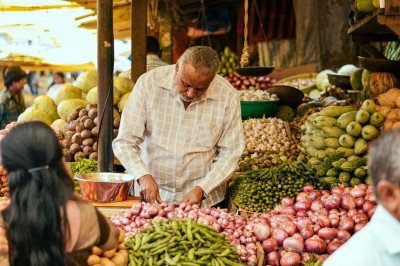 @@Economic Heart: The Moreh Market is the bustling commercial center of the town, acting as the primary point for the distribution of goods coming from Myanmar and other Southeast Asian countries, and for Indian goods moving the other way. It is characterized by its sheer diversity of products, from electronics and cosmetics to groceries and textiles. @@Cultural Blend: The market's vendors and customers are a microcosm of the entire region, with people speaking Meiteilon, Burmese, Tamil, Hindi, and local tribal languages, reflecting the town's unique status as a meeting point of cultures. The atmosphere is loud, colorful, and energetic.
@@Community Hub: This market was established by the Tibetan refugee community settled in Moreh to sustain their livelihood. It is a specialized market focusing on goods specific to their culture and trade, primarily woolens, shawls, carpets, and a variety of Chinese- and Tibetan-origin artifacts. @@Unique Products: It provides a unique contrast to the main Moreh Market by offering goods with a distinct Himalayan/Tibetan flavor, alongside some imported Chinese items. It is a testament to the resilience of the Tibetan diaspora in maintaining their culture and commerce in a distant land.Show All
@@Gateway to Southeast Asia: This bridge over the Lokchao River is a vital symbol of India’s Act East Policy, connecting Moreh, India with Tamu, Myanmar. It facilitates bilateral trade, tourism, and cultural exchange. It is the only feasible land route for commerce between the two nations, serving as a critical part of the proposed India-Myanmar-Thailand Trilateral Highway. The atmosphere is a vibrant mix of cultures. @@Strategic Importance: It has security checkpoints and is monitored to regulate the movement of goods and people. Visitors can witness the bustling cross-border activity, though crossing requires proper documentation. The bridge acts as an economic lifeline for the entire Northeastern region, driving the local economy of Moreh.
@@Economic Heart: The Moreh Market is the bustling commercial center of the town, acting as the primary point for the distribution of goods coming from Myanmar and other Southeast Asian countries, and for Indian goods moving the other way. It is characterized by its sheer diversity of products, from electronics and cosmetics to groceries and textiles. @@Cultural Blend: The market's vendors and customers are a microcosm of the entire region, with people speaking Meiteilon, Burmese, Tamil, Hindi, and local tribal languages, reflecting the town's unique status as a meeting point of cultures. The atmosphere is loud, colorful, and energetic.
@@Community Hub: This market was established by the Tibetan refugee community settled in Moreh to sustain their livelihood. It is a specialized market focusing on goods specific to their culture and trade, primarily woolens, shawls, carpets, and a variety of Chinese- and Tibetan-origin artifacts. @@Unique Products: It provides a unique contrast to the main Moreh Market by offering goods with a distinct Himalayan/Tibetan flavor, alongside some imported Chinese items. It is a testament to the resilience of the Tibetan diaspora in maintaining their culture and commerce in a distant land.Show All
@@Gateway to Southeast Asia: This bridge over the Lokchao River is a vital symbol of India’s Act East Policy, connecting Moreh, India with Tamu, Myanmar. It facilitates bilateral trade, tourism, and cultural exchange. It is the only feasible land route for commerce between the two nations, serving as a critical part of the proposed India-Myanmar-Thailand Trilateral Highway. The atmosphere is a vibrant mix of cultures. @@Strategic Importance: It has security checkpoints and is monitored to regulate the movement of goods and people. Visitors can witness the bustling cross-border activity, though crossing requires proper documentation. The bridge acts as an economic lifeline for the entire Northeastern region, driving the local economy of Moreh.Information
-
Why Famous:
Why Famous Place:
International Trade: Moreh is world-famous as the main entry point for Burmese and South East Asian goods into the Indian market.
Indo-Myanmar Bridge: The Friendship Bridge connecting India ...Why Famous Place:
International Trade: Moreh is world-famous as the main entry point for Burmese and South East Asian goods into the Indian market.
Indo-Myanmar Bridge: The Friendship Bridge connecting India and Myanmar is a symbolic and functional landmark that attracts many tourists. -
Architecture:
Place Architecture:
Trade Centers: The architecture in Moreh is primarily functional, consisting of large concrete trade halls and markets like the Moreh Trade Centre. The buildings are designed to facilitate the storage and movement of heav...Place Architecture:
Trade Centers: The architecture in Moreh is primarily functional, consisting of large concrete trade halls and markets like the Moreh Trade Centre. The buildings are designed to facilitate the storage and movement of heavy goods, with large loading bays and open courtyards for trucks.
Religious Structures: The Sri Angala Parameswari Amman Temple stands out with its colorful Dravidian architecture, featuring a high Gopuram reaching about 50 feet. This provides a stark and beautiful contrast to the traditional tribal and Meitei structures found elsewhere in the border town. -
How To Reach:
Place How to Reach:
By Air: The nearest airport is Imphal, and from there, one must take a road journey of about 3. 5 to 4 hours to reach the border.
By Train: No direct train; the nearest railhead is Dimapu...Place How to Reach:
By Air: The nearest airport is Imphal, and from there, one must take a road journey of about 3. 5 to 4 hours to reach the border.
By Train: No direct train; the nearest railhead is Dimapur in Nagaland, which is roughly 310 KMs away from the town of Moreh.
By Road: Well-connected to Imphal via NH 102; several shared vans (Wingers) and private taxis ply this route daily from the capital.
By Local Transport: Auto-rickshaws and cycle-rickshaws are the primary modes of transport within the town and between different market sections. -
Weather and Best Time to Visit:
Place Best Time to Visit:
Winter Season: November to February is the best time as the weather is cool and pleasant for walking through the extensive outdoor markets.
Early Summer: March and April are also goo...Place Best Time to Visit:
Winter Season: November to February is the best time as the weather is cool and pleasant for walking through the extensive outdoor markets.
Early Summer: March and April are also good, though it starts getting warmer; the clear skies offer great views of the hills. -
Near Tourist Places:
1. Tamu Myanmar (2 KM), 2. Kakching Garden (65 KM), 3. Tengnoupal (40 KM), 4. Khongjom Memorial (75 KM), 5. Imphal (110 KM), 6. Thoubal (85 KM), 7. Pallel (62 KM), 8. Moreh Trade Centre (1 KM), 9. Indo-Myanmar Bridge (1 KM), 10. Chandel (70 KM)
Tourism Tips
-
Place Tourism Tips:
Health & Safety: Carry your valid ID proof at all times as there are multiple security check-posts along the highway and at the border.
Packing: Wear light cotton clothes and a good hat fo...Place Tourism Tips:
Health & Safety: Carry your valid ID proof at all times as there are multiple security check-posts along the highway and at the border.
Packing: Wear light cotton clothes and a good hat for sun protection; carry an umbrella as sudden rain showers are common in this region.
Accommodation: There are several budget hotels and a government guest house in Moreh, but for better luxury, staying in Imphal is recommended.
Border Regulations: Be aware of the customs rules regarding the quantity of goods you can bring back to avoid any issues at the security checkpoints.
Reviews
FAQs
Moreh Itineray And Cost:-
Other Places In Manipur :-
Other States In India :-
Information about New and Updated Locations() of Manipur Has Been Added :-
Card subtitle
Note:-
Information provided here in good Faith and for reference only.
Near Places
Bishnupur
Some quick example text to build on the card title and make up the bulk of the card's content.
Go somewhere
Chandel
Some quick example text to build on the card title and make up the bulk of the card's content.
Go somewhere
Churachandpur
Some quick example text to build on the card title and make up the bulk of the card's content.
Go somewhere
Ima Keithel
Some quick example text to build on the card title and make up the bulk of the card's content.
Go somewhere
Imphal
Some quick example text to build on the card title and make up the bulk of the card's content.
Go somewhere
Jiribam
Some quick example text to build on the card title and make up the bulk of the card's content.
Go somewhere
Kakching
Some quick example text to build on the card title and make up the bulk of the card's content.
Go somewhere
Kamjong
Some quick example text to build on the card title and make up the bulk of the card's content.
Go somewhere
Khongjom
Some quick example text to build on the card title and make up the bulk of the card's content.
Go somewhere
Lairok Maru
Some quick example text to build on the card title and make up the bulk of the card's content.
Go somewhere
Loukham
Some quick example text to build on the card title and make up the bulk of the card's content.
Go somewhere
Moreh
Some quick example text to build on the card title and make up the bulk of the card's content.
Go somewhere
Pherzawl
Some quick example text to build on the card title and make up the bulk of the card's content.
Go somewhere
Phumdi
Some quick example text to build on the card title and make up the bulk of the card's content.
Go somewhere
Senapati
Some quick example text to build on the card title and make up the bulk of the card's content.
Go somewhere
Tamenglong
Some quick example text to build on the card title and make up the bulk of the card's content.
Go somewherein Other Cities