...

Place To Visit And Things To Do In Vadodara

Gujarat, India
Royal Legacy: Vadodara, also known as Baroda, is the cultural heart of Gujarat and was the seat of the Gaekwad dynasty. The city is famous for its grand palaces, museums, and educational institutions founded by Maharaja Sayajirao Gaekwad III. It perfectly blends a royal past with a progressive and m odern educational environment. Art and Culture: The city is home to the world-renowned Maharaja Sayajirao University, which attracts art students from across the globe. The Baroda Museum and Picture Gallery house a rich collection of European paintings and Indian sculptures. During the festival of Navratri, Vadodara hosts some of the most traditional and graceful Garba events in the state. Green Spaces: Known as a green city, Vadodara has many large parks and gardens that serve as the lungs of the city. Sayaji Baug is one of the largest public gardens in Western India, featuring a zoo and a planetarium. The Sursagar Lake in the city center with its tall Shiva statue is a major landmark. Industrial Growth: Apart from culture, it is a major industrial hub for chemicals, pharmaceuticals, and engineering. The city's economy is robust, yet it maintains a relaxed and intellectual atmosphere compared to other industrial cities. It is a gateway to the famous Statue of Unity, making it a key tourist transit point.

Things To Do

Card image cap
Ajwa Nimeta Garden

@@Introduction: Ajwa Nimeta Garden, often referred to as the Vrindavan Garden of Gujarat, is a sprawling, lush green retreat inspired by the famous Vr...
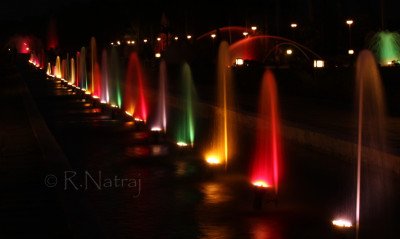
@@Introduction: Ajwa Nimeta Garden, often referred to as the Vrindavan Garden of Gujarat, is a sprawling, lush green retreat inspired by the famous Vrindavan Garden near Mysore. The garden covers an extensive area adjacent to the Ajwa Dam and is a popular picnic and relaxation spot away from the city's hustle. @@Key Attractions: Its main attractions are the beautifully manicured lawns, the towering rows of palm trees, vibrant flower beds, and a century-old water supply system. It is a harmonious blend of nature, landscaping, and historical waterworks. @@Historical Context: The gardens are part of the complex linked to the Ajwa Reservoir, which was built during the time of the Gaekwad rule to provide water to Vadodara.
Card image cap
Ajwa World

@@Introduction: Ajwa World is a large leisure complex comprising a popular Water Park and a separate Amusement Park (also known as Fun World), making ...

@@Introduction: Ajwa World is a large leisure complex comprising a popular Water Park and a separate Amusement Park (also known as Fun World), making it a comprehensive destination for family entertainment and thrill-seekers. Located near the scenic Ajwa Dam and Nimeta Garden, it offers a full day of diverse activities. @@Water Park Highlights: The Water Park section features multiple slides like the Dark Hole Slide, Space Bowl Slide, and a large Wave Pool. It also includes a Rain Dance area with DJ music, making it a perfect spot to beat the Gujarat heat during the summer months. @@Amusement Park Features: The Amusement Park has various land rides, including thrilling options like roller coasters (Italian Coaster, Wave Express) and classic family rides like the Dashing Car and Jumping Horse, catering to all age groups.
Card image cap
BAPS Swaminarayan Mandir Atladara

@@Introduction: The BAPS Swaminarayan Mandir in Atladara is a revered Hindu temple dedicated to Bhagwan Swaminarayan and the lineage of BAPS Gurus. It...

@@Introduction: The BAPS Swaminarayan Mandir in Atladara is a revered Hindu temple dedicated to Bhagwan Swaminarayan and the lineage of BAPS Gurus. It serves as a profound center for spiritual, social, and cultural activities for the entire region. @@Spiritual Significance: Managed by the Bochasanwasi Akshar Purushottam Swaminarayan Sanstha (BAPS), the Mandir promotes the teachings of Hindu Dharma and values such as piety, selfless service, and integrity. The atmosphere is one of immense peace and devotion. @@Complex Layout: Beyond the main shrine, the complex includes large prayer halls, community service wings, cultural exhibition areas, and residential quarters for the resident Swamis. The complex is known for its immaculate cleanliness and organized environment.
Card image cap
BAPS Swaminarayan Mandir

@@History and Purpose: The BAPS Swaminarayan Mandir in Vadodara (Atladara) is a modern marvel of Hindu architecture, dedicated to Lord Swaminarayan an...
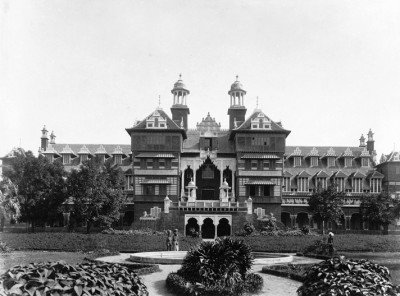
@@History and Purpose: The BAPS Swaminarayan Mandir in Vadodara (Atladara) is a modern marvel of Hindu architecture, dedicated to Lord Swaminarayan and his spiritual successors. It is managed by the Bochasanwasi Akshar Purushottam Swaminarayan Sanstha (BAPS). This large complex serves not just as a temple but as a center for cultural, spiritual, and charitable activities, upholding Hindu values and promoting ethical living. @@Sanctity and Environment: The temple provides a deeply serene and tranquil environment, offering a welcome escape from the city's hustle. The complex includes prayer halls, exhibition areas detailing the life and work of Swaminarayan gurus, and peaceful gardens. It is a key site for the Swaminarayan Sampradaya and draws millions of devotees and tourists annually. The emphasis is on purity, devotion, and community service. @@Daily Activities: Daily Aartis (rituals of light) are held at specific times, which are a major attraction for visitors. The complex often hosts weekly spiritual assemblies (Sabhas) for children, youths, and families, reinforcing moral and spiritual lessons. The sheer scale and meticulous maintenance of the campus are a testament to the organization's dedication.
Card image cap
Baroda Museum & Picture Gallery

@@History and Establishment: The Baroda Museum and Picture Gallery was established by Maharaja Sayajirao Gaekwad III in 1894 and formally opened in 19...

@@History and Establishment: The Baroda Museum and Picture Gallery was established by Maharaja Sayajirao Gaekwad III in 1894 and formally opened in 1914. It was designed to rival the Victoria & Albert Museum and the Science Museum in London, reflecting the Maharaja's vision for education and culture in his state. It stands as a testament to the Gaekwad dynasty's patronage of the arts and sciences. @@Diverse Collection: The museum houses an astonishingly rich and diverse collection spanning art, sculpture, ethnography, ethnology, and natural history. Highlights include the famous Akota Bronzes (dating back to the 5th century AD), a gallery dedicated to Tibetan art, a collection of Mughal miniature paintings, and an Egyptian mummy. @@The Picture Gallery: The Picture Gallery is housed in a separate but connected building and features a significant collection of European oil paintings, including original works and replicas of masters like J. M. W. Turner and John Constable. This part was completed later, in 1914, but its opening was delayed until 1921 due to the First World War. The museum is a cultural landmark, a perfect fusion of Indian and European historical artifacts.
Card image cap
Champaner - Pavagadh Archaeological Park

@@Cultural Heritage Overview: The Champaner - Pavagadh Archaeological Park is a massive historical site that represents a rare, complete, and unexcava...

@@Cultural Heritage Overview: The Champaner - Pavagadh Archaeological Park is a massive historical site that represents a rare, complete, and unexcavated Islamic pre-Mughal city. Established by Sultan Mahmud Begada in the late 15th century, it served as the capital of the Gujarat Sultanate. The park is sprawling, covering over 1,328 hectares of land, and is uniquely situated at the base of the sacred Pavagadh Hill. It is a treasure trove of historical artifacts, featuring a total of 114 monuments including forts, mosques, temples, residential precincts, and agricultural structures. The site effectively bridges the gap between different eras, from the 8th-century Hindu forts to the sophisticated 16th-century Islamic city planning. It was honored with the UNESCO World Heritage status in 2004 for its outstanding universal value. Visitors can see the remains of the Royal Enclosure, which once housed grand palaces and administrative buildings. The area's water-retaining installations, such as stepwells and tanks, demonstrate the advanced engineering skills of the period. The blend of Hindu and Islamic styles is evident in every stone, making it a living museum of Indian history. The transition from the plains to the hilltop offers a diverse range of archaeological and natural beauty. It remains one of the most significant sites for understanding the regional sultanates of India. The park is not just a graveyard of ruins but a site where history feels incredibly tangible and alive.
Card image cap
Dabhoi Fort

@@Historical Significance: Dabhoi Fort, originally known as Darbhavati, is a 13th-century military marvel built during the Solanki dynasty. It was est...

@@Historical Significance: Dabhoi Fort, originally known as Darbhavati, is a 13th-century military marvel built during the Solanki dynasty. It was established by the great King Siddhraj Jaisinh to serve as a defensive stronghold for the eastern borders of his kingdom. The fort is an exquisite example of the Hindu Military Architecture that flourished in Gujarat before the arrival of the Sultanates. It is world-renowned for its four magnificent gateways, which are masterpieces of stone craftsmanship. Each gate is oriented toward a cardinal direction: Hira Bhagol (East), Baroda Gate (West), Champaner Gate (North), and Nandod Gate (South). The most famous of these is the Hira Bhagol, named after the architect Hiradhar, who was allegedly sacrificed or punished after its completion to ensure no replica could ever be built. The fort walls were once nearly 3 KM in circumference, though only parts of the walls and the gates remain well-preserved today. It played a vital role in regional trade as it sat at the junction of routes connecting Malwa and the Gujarat coast. Over centuries, the fort witnessed several battles and changed hands between Rajputs, Muslims, and Marathas. Today, it stands as a testament to the artistic heights reached by the Vaghela and Solanki rulers. The intricate carvings on the gates depict scenes from the Puranas, floral patterns, and figures of deities, making it a "stone library" of Hindu mythology. It is a must-visit for anyone interested in the structural evolution of Indian forts.
Card image cap
EME Temple

@@History and Construction: The EME Temple, officially the Dakshinamurti Temple, was constructed in 1966 by the Electrical and Mechanical Engineers (E...

@@History and Construction: The EME Temple, officially the Dakshinamurti Temple, was constructed in 1966 by the Electrical and Mechanical Engineers (EME) corps of the Indian Army and is still maintained by them. It is dedicated to Lord Shiva in the form of Dakshinamurti (the silent teacher). The temple was conceived and designed by Brigadier A.F. Eugene, the then-Christian commandant of the EME School. @@Unique Concept: The temple's primary distinction is its strong emphasis on secularism and the Unity of Religions, which is physically symbolized in its architecture. It aims to represent the unity of the Indian Army, which is composed of individuals from diverse religious backgrounds. This philosophical undercurrent makes it unlike any other temple in the world. @@Materials and Design: The most striking feature is its geodesic dome design, which is covered with aluminum sheets—a material fitting for a temple built by engineers. The use of war fragments and scrap materials in its construction adds a unique, patriotic dimension to the structure.
Card image cap
Hathni Mata Waterfall

@@Natural Beauty and Myth: Hathni Mata Waterfall is one of the most spectacular natural attractions in Gujarat, dropping from a height of about 100 me...
@@Natural Beauty and Myth: Hathni Mata Waterfall is one of the most spectacular natural attractions in Gujarat, dropping from a height of about 100 meters. Tucked away in the dense forests near Jambughoda, it provides a refreshing escape from the urban heat. The name "Hathni" translates to "Female Elephant" in the local language. This name is derived from a large rock formation at the base of the waterfall that closely resembles a baby elephant. The site is considered sacred by the local tribal communities, who believe the waterfall is the abode of the goddess Hathni Mata. A small cave-like temple dedicated to the goddess is situated right behind the cascading water, adding a spiritual dimension to the natural site. During the monsoon, the waterfall transforms into a roaring curtain of white water, surrounded by lush green cliffs and a mist-filled valley. The approach road to the waterfall winds through tribal villages and thick forests of teak and mahua, making the journey as beautiful as the destination. It is a popular spot for youth and families from Vadodara and Godhra who come for day picnics. The area is rich in biodiversity, and one can often hear the calls of various forest birds. While it is crowded on weekends, the weekday atmosphere is serene and meditative. It is a perfect example of the hidden natural gems that the Vindhya Range foothills have to offer.
Card image cap
Hazira Maqbara

@@History and Occupants: The Hazira Maqbara, also known as the Hajira or the Tomb of Qutubuddin Muhammad Khan, is an impressive Mughal-era mausoleum b...

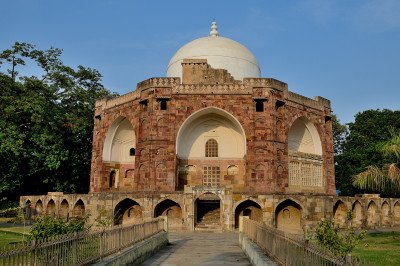
@@History and Occupants: The Hazira Maqbara, also known as the Hajira or the Tomb of Qutubuddin Muhammad Khan, is an impressive Mughal-era mausoleum built around 1586. Qutubuddin Muhammad Khan was a prominent Mughal nobleman, the foster brother of Emperor Akbar's trusted general, Mirza Aziz Koka, and served as the Governor of Gujarat. He was killed in 1583 during a rebellion by Muzaffar Shah III, the last Sultan of the Gujarat Sultanate. The tomb also houses the remains of his son, Naurang Khan. @@Architectural Significance: As a Mughal structure in Gujarat, the Hazira is a significant example of early Mughal funerary architecture, similar to the style seen in Delhi. It marks the extent of Mughal influence in the region during the late 16th century. @@Current State and Environment: Maintained by the Archaeological Survey of India (ASI), the tomb is set in a quiet, somewhat neglected area, offering a tranquil, introspective atmosphere away from the main tourist circuit. It is a key historical site for those interested in the transition of power in Gujarat.
Card image cap
ISKCON Baroda

@@Spiritual Sanctuary: ISKCON Baroda, also known as the Sri Sri Radha Shyamsundar Mandir, is a prominent spiritual and cultural landmark located in th...

@@Spiritual Sanctuary: ISKCON Baroda, also known as the Sri Sri Radha Shyamsundar Mandir, is a prominent spiritual and cultural landmark located in the Gotri area. Spread across 6 acres of beautifully landscaped land, it serves as a center for the International Society for Krishna Consciousness. The temple was inaugurated in 1999 and has since become a focal point for the city's religious life. The temple complex is not just a place of worship but a comprehensive "Hare Krishna" campus that includes a large prayer hall, a Vedic library, a guesthouse, and the famous Govinda’s Restaurant. The presiding deities are Sri Sri Radha Shyamsundar, along with Lord Jagannath, Baladeva, and Subhadra. The atmosphere inside the temple is remarkably serene, filled with the constant, gentle chanting of the "Hare Krishna" maha-mantra and the scent of fresh flowers and incense. The temple is famous for its strict adherence to Vedic rituals and its vibrant community service, including the distribution of sanctified food (Prasadam). It attracts thousands of visitors daily, ranging from serious practitioners of Bhakti Yoga to tourists seeking a moment of peace. The complex also houses a Goshala (cow sanctuary), reflecting Lord Krishna's love for cows. For many residents of Vadodara, the temple is a daily refuge from the hustle of city life. The evening aarti, with its rhythmic drums and soulful singing, is a transcendent experience that leaves a lasting impact on every visitor.
Card image cap
ISKCON Temple Vadodara

@@History and Purpose: The ISKCON Temple Vadodara, officially the Shri Radha Shyam Sundar Mandir, is dedicated to Lord Krishna and his consort Radha. ...

@@History and Purpose: The ISKCON Temple Vadodara, officially the Shri Radha Shyam Sundar Mandir, is dedicated to Lord Krishna and his consort Radha. It is part of the worldwide ISKCON (International Society for Krishna Consciousness) movement, founded by A. C. Bhaktivedanta Swami Prabhupada. The temple was inaugurated in 1999 and serves as a major hub for the practice of Bhakti Yoga (devotional service to God). @@Deities and Atmosphere: The main deities are Shri Radha Shyam Sundar, along with Jagannath, Baladev, Subhadra Devi, and Gaur Nitai (Chaitanya Mahaprabhu and Nityananda). The temple's atmosphere is characterized by vibrant devotion, continuous chanting of the Hare Krishna mantra, and the sound of kirtans. @@Community and Outreach: The temple is built on a large estate (around 6 acres) and includes a main prayer hall, a guest house, a gift shop, and a restaurant, actively promoting Vedic culture, spiritual education, and a vegetarian lifestyle.
Card image cap
Jambughoda Wildlife Sanctuary

@@Ecological Haven: Jambughoda Wildlife Sanctuary is a sprawling forest reserve established in 1990 to protect the diverse flora and fauna of the sout...
@@Ecological Haven: Jambughoda Wildlife Sanctuary is a sprawling forest reserve established in 1990 to protect the diverse flora and fauna of the southern Aravalli hills. Covering an area of about 130 square kilometers, it is a magnificent landscape of rolling hills, dense teak forests, and bamboo thickets. Before independence, this area was a private hunting reserve for the Princely State of Jambughoda. Today, it serves as a critical habitat for various wildlife species, most notably the Indian Leopard. The sanctuary is also home to sloth bears, four-horned antelopes (Chousingha), blue bulls (Nilgai), wild boars, and hyenas. The topography is characterized by two major reservoirs—Kada and Targol—which serve as vital watering holes for the animals and attract a wide variety of migratory birds. The sanctuary is a paradise for nature lovers and trekkers, offering several well-defined trails that lead through the heart of the jungle. Unlike the more commercialized parks, Jambughoda offers a raw and authentic wilderness experience. The presence of tribal settlements within and around the sanctuary adds a cultural layer to the visit, as one can see the harmonious relationship between the Tadvi tribes and the forest. It is one of the best places in Gujarat for a weekend camping trip, providing a much-needed break from the pollution and noise of city life. The forest changes its character with every season, from the dry gold of summer to the vibrant, dripping emerald of the monsoon.
Card image cap
Khanderao Market

@@History and Gift to the City: The Khanderao Market Building is a grand, palatial commercial structure built between 1906 and 1907 by Maharaja Sayaji...
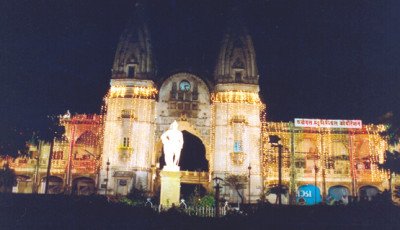
@@History and Gift to the City: The Khanderao Market Building is a grand, palatial commercial structure built between 1906 and 1907 by Maharaja Sayajirao Gaekwad III. It was erected as a generous gift to the city municipality to commemorate the silver jubilee (25th anniversary) of his administration. The market is named after the Maharaja's predecessor and adoptive father, Maharaja Khanderao Gaekwad (1856–1870). @@Purpose and Current Use: Originally intended as a municipal market, it remains a bustling hub of commerce today, housing a large vegetable, fruit, and flower market. Significantly, the offices of the Vadodara Municipal Corporation (VMC) are also located within this historic building, making it the administrative and commercial heart of the city. @@Architectural Pride: The building is considered one of Vadodara's most iconic and photographed landmarks, representing the city's golden age of architecture and development under the Gaekwad rule. Its blend of styles and grand scale set it apart from typical market structures.
Card image cap
Kirti Mandir

@@History and Commemoration: The Kirti Mandir (Temple of Fame) was built in 1936 by Maharaja Sayajirao Gaekwad III to commemorate the Diamond Jubilee ...
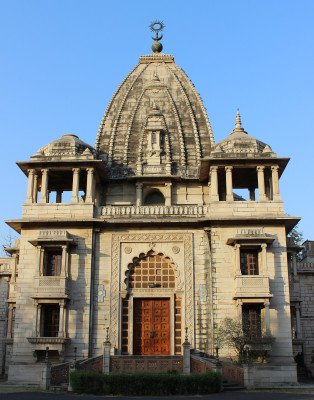
@@History and Commemoration: The Kirti Mandir (Temple of Fame) was built in 1936 by Maharaja Sayajirao Gaekwad III to commemorate the Diamond Jubilee of his reign (60 years) and, more importantly, to honor the memory of the deceased members of the royal Gaekwad dynasty. The name 'Kirti Mandir' literally means 'Temple of Fame' or 'Tower of Glory.' @@Purpose: The monument is a memorial hall that also serves as a place of worship, originally consecrated to Lord Mahadev (Shiva). It houses relics, belongings, and memorabilia of the royal family, including rare coins, weapons, and personal items, though the collection is often moved for conservation. @@Artistic Significance: The monument is also famous for its interior decorations, which include magnificent murals by the renowned Bengal School artist Nandalal Bose. These murals depict scenes from the Mahabharata (Battle of Kurukshetra), the life of Meera Bai, and the myth of Gangavataran (Descent of the Ganga).
Card image cap
Kirti Stambh

@@History and Purpose: The Kirti Stambh, or 'Tower of Triumph/Fame,' is an iconic historical monument located near the Polo Ground in the heart of Vad...

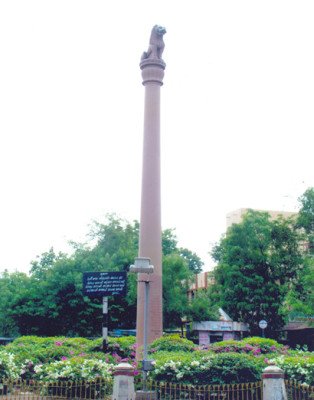
@@History and Purpose: The Kirti Stambh, or 'Tower of Triumph/Fame,' is an iconic historical monument located near the Polo Ground in the heart of Vadodara. It was constructed in 1935 to commemorate the 60-year reign (Diamond Jubilee) of Maharaja Sayajirao Gaekwad III, one of the most progressive rulers of Baroda State. The monument was inaugurated by his successor, Maharaja Pratapsinhrao Gaekwad, in 1941. @@Philosophical Symbolism: The monument is not merely a tower but is steeped in deep philosophical and spiritual symbolism related to the life of Maharaja Sayajirao III. It represents the Maharaja's profound decision to renounce worldly pleasures and enter Vanprasthashram (the third stage of life, characterized by relinquishing worldly duties and adopting an advisory role). @@A Symbol of Departure: The monument's location and its unique crest visually symbolize this renunciation. The statue of a Lion atop the column faces East (the direction of spiritual pilgrimage/salvation) with its rear towards the Laxmi Vilas Palace, signifying the Maharaja's 'departure' from the kingdom and luxurious life for spiritual pursuits.
Card image cap
Kuber Bhandari Temple

@@Introduction: The Kuber Bhandari Temple is a highly revered Hindu shrine dedicated to Lord Shiva, specifically in his form as the provider of wealth...
@@Introduction: The Kuber Bhandari Temple is a highly revered Hindu shrine dedicated to Lord Shiva, specifically in his form as the provider of wealth. Situated on the serene banks of the holy Narmada river, this temple is considered one of the most spiritual spots in the Vadodara district. It holds a unique significance because it is believed that Lord Shiva appeared here as Kuber, the treasurer of the gods. The temple’s location in Karnali is part of the sacred Narmada Parikrama, making it a vital stop for pilgrims. Legend says that Lord Shiva helped Kuber perform penance here to regain his lost wealth and status. Today, thousands of devotees flock here to seek financial stability and spiritual peace. The atmosphere is filled with the chanting of mantras and the gentle sound of the river waves. Accessing the temple often involves a scenic boat ride from Chandod, which adds to the pilgrim's experience. The temple complex is modest but radiates an ancient energy that is felt by everyone who visits. It is widely believed that offering prayers here on Amavasya (New Moon) brings immense prosperity. The temple management provides basic facilities for pilgrims, though it remains a place of deep traditional simplicity. Over the centuries, the shrine has remained a symbol of the harmonious relationship between material wealth and spiritual health. For many, a visit to Kuber Bhandari is not just a religious duty but a way to reset their life’s intentions. The surrounding village of Karnali offers a glimpse into rural Gujarat's religious life, where the river is treated as a mother deity. Exploring the ghats nearby provides a tranquil environment for meditation and reflection.
Card image cap
Laxmi Vilas Palace

@@History and Grandeur: Laxmi Vilas Palace is the official residence of the former ruling family of Baroda (the Gaekwad dynasty) and is one of the gra...

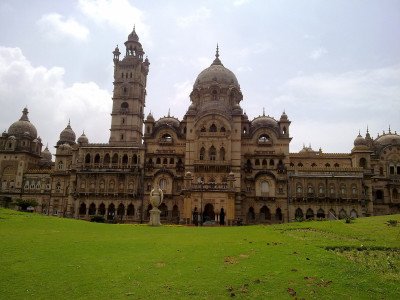
@@History and Grandeur: Laxmi Vilas Palace is the official residence of the former ruling family of Baroda (the Gaekwad dynasty) and is one of the grandest private dwellings ever built in India. Commissioned by Maharaja Sayajirao Gaekwad III in 1878 and completed in 1890, it was built at an estimated cost of £180,000. The palace is famously said to be four times the size of Buckingham Palace in London and covers an estate of over 500 acres. @@Current Use: Although the present royal family still resides in a section of the palace, the main state rooms, the Darbar Hall, and the adjacent Maharaja Fateh Singh Museum are open to the public for viewing. It stands as a monument to the extraordinary wealth and progressive vision of the Gaekwad rule. @@Interiors and Collections: The palace interiors are opulent, featuring Italian mosaic floors, magnificent chandeliers, European sculptures, and a remarkable collection of armaments and art. It is also famous for housing the works of the celebrated Indian painter Raja Ravi Varma.
Card image cap
Maharaja Fateh Singh Museum

@@History & Significance: The Maharaja Fateh Singh Museum is a spectacular art repository located in the heart of the Lakshmi Vilas Palace estate. Ori...

@@History & Significance: The Maharaja Fateh Singh Museum is a spectacular art repository located in the heart of the Lakshmi Vilas Palace estate. Originally constructed as a school for the royal children of the Gaekwad dynasty, it was converted into a museum in 1961 by Maharaja Fatehsinghrao Gaekwad. This institution is a testament to the grand vision of Maharaja Sayajirao Gaekwad III, who was a passionate patron of the arts and global culture. The museum houses an incredible collection of personal belongings and art pieces acquired by the royal family during their travels across Europe and Asia. One of its most famous sections is the gallery dedicated to Raja Ravi Varma, featuring more than 30 original paintings that depict Indian mythological scenes with Western techniques. Beyond paintings, the museum displays a wide array of marble busts, bronze sculptures, and exquisite porcelain from China and Japan. It also features a unique collection of headgear and royal costumes that tell the story of the Maratha legacy in Baroda. Outside the building, a fully functional toy train—the world's smallest locomotive engine—remains a delight for visitors, representing the playful side of royal history. The museum is structured across two floors, each meticulously organized to guide visitors through different eras and styles. The quiet, cool interior offers a stark contrast to the busy city life outside, allowing art lovers to lose themselves in the details of the masterpieces. It serves as a bridge between the regal past of Baroda and the modern inquisitive public. For students of history and art, the museum is an indispensable resource for understanding the 19th-century cultural exchange between India and the West.
Card image cap
Maharaja Sayajirao University

@@Academic Legacy: The Maharaja Sayajirao University of Baroda, popularly known as MSU, is one of India's premier educational institutions. Establishe...

@@Academic Legacy: The Maharaja Sayajirao University of Baroda, popularly known as MSU, is one of India's premier educational institutions. Established as Baroda College in 1881, it was formally converted into a university in 1949 following the vision of Maharaja Sayajirao Gaekwad III. He believed that education was the foundation of a progressive state and spared no expense in creating a world-class campus. The university is unique because it is the only one in Gujarat where the medium of instruction for all courses is English. Spanning over 275 acres, the campus is a blend of natural beauty and architectural brilliance. It houses various faculties including Fine Arts, Performing Arts, Technology, and Science, many of which are nationally ranked. The Faculty of Fine Arts is particularly world-renowned, having produced some of India’s most influential modern artists. The university's logo features a lotus rising from a lake, symbolizing the triumph of mind over matter, which reflects the institution's commitment to intellectual growth. MSU has a massive student body of over 45,000, creating a vibrant and diverse atmosphere throughout the year. The campus is not just for students; its historical buildings and lush gardens attract tourists from all over. The library, known as the Smt. Hansa Mehta Library, is one of the largest in Asia and is a sanctuary for researchers. Throughout its history, the university has maintained a tradition of academic excellence and social reform. Its alumni include Nobel laureates, artists, and political leaders who have shaped modern India. Visiting the campus allows one to experience the intellectual heartbeat of Vadodara, a city that takes great pride in its "Sanskari" or cultured identity.
Card image cap
Makarpura Palace

@@Royal Splendor: Makarpura Palace is a magnificent three-story structure that stands as a fine example of Italian Renaissance architecture in Vadodar...

@@Royal Splendor: Makarpura Palace is a magnificent three-story structure that stands as a fine example of Italian Renaissance architecture in Vadodara. Built in 1870 by Maharaja Khanderao, it was intended to serve as a summer residence and a hunting resort for the royal family of Baroda. The site was chosen due to its proximity to the deer reserves in Dhaniavi, offering the royals a perfect getaway from the main city. Later, Maharaja Sayajirao Gaekwad III extended and renovated the palace between 1883 and 1890, giving it its current grand appearance. The palace is divided into two distinct parts that are symmetrical and connected by corridors, reflecting a sense of balance and harmony. One of its most striking features is the 130-acre Japanese-style garden designed by William Goldring. This garden once featured a swimming pool, a lake with swans, and ivory fountains that were activated to welcome the King. Although the interior of the palace has seen better days and is currently in a somewhat dilapidated state, the exterior still exudes an aura of regal sophistication. Today, the palace is under the control of the Indian Air Force, which uses it as a training school (No. 17 Tetra School). Because it is a defense facility, public access to the interiors is strictly restricted, but the grand facade and the surrounding grounds are still visible to admirers. The palace represents a shift in the architectural preferences of the Gaekwads, moving towards European aesthetics while maintaining Indian functional elements like "chhajjas" for shade. It remains a significant landmark in south Vadodara, reminding residents of the city's royal transition into the modern era. Despite the restrictions, it is a must-see for those interested in the evolution of princely architecture in India.
Card image cap
Mandvi Gate

The Mandvi Gate stands as a colossal historical landmark in the heart of Vadodara, serving as a reminder of the city's fortified past and its vibrant ...

The Mandvi Gate stands as a colossal historical landmark in the heart of Vadodara, serving as a reminder of the city's fortified past and its vibrant commercial evolution over several centuries. This square-shaped pavilion was originally built during the Mughal era by Sultan Muzaffar between 1511 and 1526 AD and has since witnessed numerous renovations by the Maratha rulers and the Gaekwad dynasty. Historically, it served as a crucial toll gate where traders paid duties, and it was centrally located within the walled city where four major roads intersected to connect the city's primary gates. On special occasions and national festivals, the entire structure is illuminated with thousands of colorful lights, making it a spectacular sight for both locals and tourists exploring the old city's charm. Today, it remains a bustling hub surrounded by traditional markets like Laheripura and Raopura, where the old-world spirit of Baroda continues to thrive through narrow lanes and heritage shops.
Card image cap
Nyay Mandir

Nyay Mandir, which translates to the 'Temple of Justice', is a magnificent building that formerly housed the District Court of Vadodara and stands as ...

Nyay Mandir, which translates to the 'Temple of Justice', is a magnificent building that formerly housed the District Court of Vadodara and stands as a symbol of the visionary governance of Maharaja Sayajirao Gaekwad III. Completed in 1896, the building was originally commissioned as a vegetable market named after the Maharaja's first wife, Maharani Chimnabai I, before being converted into a town hall and eventually an imperial court. It is situated on the eastern bank of the scenic Sursagar Lake, providing a regal backdrop to one of the city's most iconic water bodies. The building has played a pivotal role in the socio-political history of the region, hosting legendary figures like Dr. B.R. Ambedkar and Sri Aurobindo for public lectures and important legal proceedings. Although the courts have recently shifted to a newer complex, the building continues to be a major tourist attraction due to its grand scale, historical weight, and its association with the legal reforms of the Baroda State.
Card image cap
Qutubuddin Tomb

The Qutubuddin Tomb, popularly known as Hazira Maqbara, is one of the most significant and well-preserved Mughal-era monuments in Vadodara, dating bac...

The Qutubuddin Tomb, popularly known as Hazira Maqbara, is one of the most significant and well-preserved Mughal-era monuments in Vadodara, dating back to the late 16th century. It was built in 1586 as a mausoleum for Qutb-ud-din Muhammad Khan, who was the tutor to Prince Salim (who later became Emperor Jahangir) and the uncle of Mirza Aziz Koka, a prominent Mughal governor. The tomb also houses the remains of his son, Naurang Khan, who held high administrative offices in Gujarat under the reign of Emperor Akbar. Unlike the Indo-Saracenic structures that dominate the city's landscape, this monument is a rare example of pure Mughal architecture in the region, featuring a serene garden setting that offers a quiet escape from the city. The site is maintained by the Archaeological Survey of India (ASI) and serves as a testament to the brief but influential period of direct Mughal rule in the Baroda region before the rise of the Gaekwad power.
Card image cap
S-Cube Water Park

S-Cube Water Park is a premier recreational destination located near the famous Ajwa Garden, offering a perfect blend of thrill, relaxation, and famil...

S-Cube Water Park is a premier recreational destination located near the famous Ajwa Garden, offering a perfect blend of thrill, relaxation, and family entertainment for visitors of all age groups. Spanning across a vast area, the park features more than 16 unforgettable attractions, including high-speed water slides, a massive wave pool, and specialized play zones for children. It is strategically positioned away from the city's hustle, providing a resort-like atmosphere where families can spend an entire day enjoying various aquatic adventures and land-based amusement rides. The park is integrated with Gujarat Funworld, which offers additional entertainment like a toy train, striking cars, and a pirate ship, making it a comprehensive picnic spot. With its well-maintained facilities, multi-cuisine food court, and beautiful landscaping, it has become the go-to weekend getaway for people living in Vadodara, Ahmedabad, and surrounding towns.
Card image cap
Sardar Patel Planetarium

@@Introduction to Astronomy Center: This planetarium is one of the most popular educational attractions located inside the Sayaji Baug complex. It is ...

@@Introduction to Astronomy Center: This planetarium is one of the most popular educational attractions located inside the Sayaji Baug complex. It is a dome-shaped theatre dedicated to informing the public about the wonders of outer space and the night sky. It achieves this through immersive, high-definition video shows and projections that simulate space travel and celestial phenomena. The primary goal is to foster an interest in science and astronomy among students and the general public. It offers shows in multiple languages, including Gujarati, Hindi, and English, making the complex scientific concepts accessible to a diverse audience. @@The Charles Correa Design: The building itself is notable, designed by the renowned architect Charles Correa, featuring a unique pyramidal shape that stands out within the garden. Its location next to the Baroda Museum and Picture Gallery and the Sayaji Baug Zoo makes it a perfect part of a comprehensive family outing focused on education and recreation. The experience is designed to be life-like, with realistic projections that fill the dome structure, providing a sense of traveling through galaxies and witnessing the birth and death of stars. It's a key spot for rare astronomical events like meteor showers or eclipses. @@Educational Impact and Purpose: The planetarium serves as a vital resource for local schools and colleges, often conducting special sessions. It moves beyond simple entertainment to narrate the stories of cosmic events, mythology related to constellations, and the latest discoveries by space agencies like ISRO and NASA. Visitors walk away with a deeper appreciation for the scale and beauty of the universe, anchored by the technical quality of the presentations and the engaging storytelling that accompany them. It remains a key landmark in Vadodara for scientific tourism.:
Card image cap
Sayaji Baug

@@History and Vision: Sayaji Baug, also known locally as Kamati Baug, is one of the largest public parks in Western India. It was built in 1879 by Mah...

@@History and Vision: Sayaji Baug, also known locally as Kamati Baug, is one of the largest public parks in Western India. It was built in 1879 by Maharaja Sayajirao Gaekwad III as a gift to the citizens of Baroda State, reflecting his progressive vision for public spaces, education, and recreation. It was named after him. @@Multi-faceted Complex: The expansive, 113-acre park is far more than just a garden. It is a comprehensive cultural and recreational complex that includes the Baroda Museum & Picture Gallery, the Sayaji Baug Zoo, the Sardar Patel Planetarium, the Museum of Health, and an operational toy train. @@Legacy and Environment: The park is situated on the banks of the Vishwamitri River. It is meticulously maintained by the Vadodara Municipal Corporation (VMC) and features beautiful, sprawling lawns, numerous statues (including a famous floral clock), and nearly a hundred species of trees, making it a crucial green lung for the city.
Card image cap
Sayaji Sarovar

@@The Genesis and Purpose of the Reservoir: Sayaji Sarovar, popularly known as Ajwa Lake, is a massive reservoir located about 22 KM east of the main ...

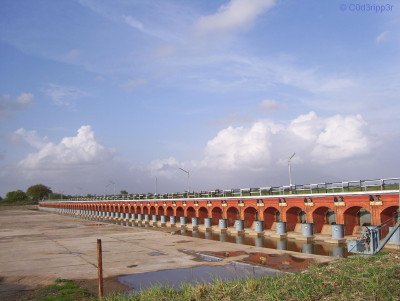
@@The Genesis and Purpose of the Reservoir: Sayaji Sarovar, popularly known as Ajwa Lake, is a massive reservoir located about 22 KM east of the main Vadodara city. It was an ambitious project completed in 1890 by Maharaja Sayajirao Gaekwad III to provide a consistent and reliable supply of drinking water to the city of Baroda (now Vadodara). The foresight of the Maharaja ensured the reservoir was built three times larger than the immediate requirement, a decision that still benefits a major portion of the city's water needs over a century later. The reservoir was built across the Surya rivulet and the Vaghali Nala. @@Engineering and Dimensions: The dam wall spans approximately 5.5 KMs (3.5 miles) in length and is about 15 feet wide. A key engineering feature is the presence of 62 gates designed to regulate the water flow. During periods of heavy rainfall and flooding, the excess water from the dam is strategically diverted into the Vishwamitri River which flows through Vadodara. The catchment area of the reservoir covers nearly 195 square kilometers. The road leading from the city to Ajwa is named after the engineer, Shri Jagannath Sadashivji, who oversaw its construction. The scale of this public works project speaks volumes about the Gaekwad administration's focus on essential infrastructure. @@The Present-Day Tourist Appeal: Today, the reservoir is much more than a source of water. The vast water body and the adjacent well-maintained Ajwa-Nimeta Garden (often compared to the famous Vrindavan Gardens) have transformed it into a major picnic spot and a scenic destination. Visitors are drawn by the panoramic views, the cool breeze, and the tranquil environment, especially during the sunset. The rhythmic cascade of water from the fountains in the nearby garden adds to the serene ambiance, making it a perfect weekend getaway away from the urban bustle. The area around the lake is actively promoted for eco-tourism and nature outings.:
Card image cap
Sindhrot Check Dam

The Sindhrot Check Dam is a popular escape from the city's hustle, originally constructed for water management on the Mahi River, but today it is prim...

The Sindhrot Check Dam is a popular escape from the city's hustle, originally constructed for water management on the Mahi River, but today it is primarily known as a picturesque picnic and relaxation spot. It has become a favorite hangout for youth, families, and nature enthusiasts seeking peace and cool waters, especially during the hot summer months. The area surrounding the dam is generally serene, offering a natural landscape that contrasts sharply with the urban environment of Vadodara. While its main function remains water conservation, its recreational value has surged due to its clear water and tranquil setting. Visitors often spend time wading in the shallow areas of the river or simply relaxing on the banks. The infrastructure is basic, intentionally maintaining a raw, natural ambiance. However, this has led to some concerns about littering, making it crucial for visitors to practice responsible tourism. The setting is particularly appealing in the late afternoon when the sun begins to set, casting beautiful reflections over the water, creating a truly memorable visual experience. The atmosphere during the monsoon, when the water level rises and the surrounding greenery is vibrant, transforms the dam into a unique, adventurous locale. It is a simple yet vital piece of infrastructure that has evolved into a beloved natural sanctuary for the people of Vadodara and nearby areas. It represents a functional design that has seamlessly integrated with local recreational life, offering a slice of nature easily accessible from the city. The basic structure helps control the water flow of the Mahi River, preventing rapid run-off and aiding local groundwater recharge in the surrounding agricultural lands. This dual purpose—utility and recreation—makes Sindhrot a significant landmark, embodying a blend of rural and accessible natural beauty. The simplicity is its charm, attracting those who prefer natural scenery over manicured parks.
Card image cap
Sursagar Lake

Sursagar Lake, also historically known as Chand Talao (Moon Lake), is a massive artificial water body situated right in the core of Vadodara City. Bui...

Sursagar Lake, also historically known as Chand Talao (Moon Lake), is a massive artificial water body situated right in the core of Vadodara City. Built in the 18th century, it served as a vital water conservation source for the old city and was later renovated with stone masonry, ensuring it remains perennial. Its central location, surrounded by bustling markets, historical structures, and commercial activity, makes it the city's geographical and emotional heart. The lake's most prominent and iconic feature is the colossal, 120-feet-tall statue of Lord Shiva installed in its center by the Vadodara Mahanagar Seva Sadan. This statue, which is brilliantly lit up and sometimes adorned with gold gilding (a notable event in recent history), acts as a beacon visible from all surrounding areas. The lake is a popular site for evening strolls, relaxation, and boating activities, though boating availability can vary. It plays a significant role in the city's cultural calendar, especially during the festival of Maha Shivratri, when the Shiva statue is the focal point of city-wide celebration and devotion. The surrounding stone embankment offers seating for visitors to relax and observe the city's pulse. Despite the surrounding urban chaos, the lake offers a pocket of tranquility, a historical anchor in the modern city, reflecting the commitment of the Gaekwad rulers and the municipal corporation to public spaces. It serves as a reminder of the city's history and planning, designed to sustain the populace while also offering aesthetic and spiritual value. Its function has shifted over the centuries from a purely utilitarian reservoir to a key urban landmark and recreational asset, drawing both local residents and tourists to its banks. The sound of the surrounding markets fades here, replaced by the gentle lapping of water, offering a true urban oasis experience.
Show All

Note:-

Information provided here in good Faith and for reference only.

All information and pictures will be updated soon, please keep visiting.

Near Places

...
Ahmedabad (Amdavad)

Some quick example text to build on the card title and make up the bulk of the card's content.

Go somewhere
...
Ahmedabad

Some quick example text to build on the card title and make up the bulk of the card's content.

Go somewhere
...
Bhuj

Some quick example text to build on the card title and make up the bulk of the card's content.

Go somewhere
...
Chotila

Some quick example text to build on the card title and make up the bulk of the card's content.

Go somewhere
...
Dahod

Some quick example text to build on the card title and make up the bulk of the card's content.

Go somewhere
...
Dandi

Some quick example text to build on the card title and make up the bulk of the card's content.

Go somewhere
...
Dwarka

Some quick example text to build on the card title and make up the bulk of the card's content.

Go somewhere
...
Exploring Rajkot

Some quick example text to build on the card title and make up the bulk of the card's content.

Go somewhere
...
Gandhinagar

Some quick example text to build on the card title and make up the bulk of the card's content.

Go somewhere
...
Jamnagar

Some quick example text to build on the card title and make up the bulk of the card's content.

Go somewhere
in Other Cities