

Vadodara
General information
-
Ideal Duration:
2 DaysPlace Type:
Culture, RoyaltyEntry Fees:
Palace Entry: Rs.200 for the main palace tour.
Museums: Rs.10 to Rs.100 depending on the specific gallery.
Public Parks: Generally free or a nominal fee of Rs.5. ...Palace Entry: Rs.200 for the main palace tour.
Museums: Rs.10 to Rs.100 depending on the specific gallery.
Public Parks: Generally free or a nominal fee of Rs.5.Timing:
Palace Timings: 9:30 AM to 5:00 PM (Closed on Mondays).
Garden Timings: 5:00 AM to 9:00 PM.
Ideal Visit: Early morning for parks and afternoon for museums. ...Palace Timings: 9:30 AM to 5:00 PM (Closed on Mondays).
Garden Timings: 5:00 AM to 9:00 PM.
Ideal Visit: Early morning for parks and afternoon for museums.Special Events:
Navratri: Witness the world-famous Garba at United Way or Palace Grounds in September or October.
Uttarayan: Experience the kite flying festival in January where the entire city gathers on rooftops. ...Navratri: Witness the world-famous Garba at United Way or Palace Grounds in September or October.
Uttarayan: Experience the kite flying festival in January where the entire city gathers on rooftops.Best Photo Spots:
Palace Gardens: The vast lawns and the facade of Laxmi Vilas Palace are perfect for grand architectural photos.
Sursagar Lake: The Shiva statue reflects beautifully in the water at night, making it a great photography spot.Palace Gardens: The vast lawns and the facade of Laxmi Vilas Palace are perfect for grand architectural photos.
Sursagar Lake: The Shiva statue reflects beautifully in the water at night, making it a great photography spot.
Sayaji Baug: The floral clock and the heritage museum building provide excellent backdrops for nature photos.Photo Gallery
Things To Do
 Sursagar Lake, also historically known as Chand Talao (Moon Lake), is a massive artificial water body situated right in the core of Vadodara City. Built in the 18th century, it served as a vital water conservation source for the old city and was later renovated with stone masonry, ensuring it remains perennial. Its central location, surrounded by bustling markets, historical structures, and commercial activity, makes it the city's geographical and emotional heart. The lake's most prominent and iconic feature is the colossal, 120-feet-tall statue of Lord Shiva installed in its center by the Vadodara Mahanagar Seva Sadan. This statue, which is brilliantly lit up and sometimes adorned with gold gilding (a notable event in recent history), acts as a beacon visible from all surrounding areas. The lake is a popular site for evening strolls, relaxation, and boating activities, though boating availability can vary. It plays a significant role in the city's cultural calendar, especially during the festival of Maha Shivratri, when the Shiva statue is the focal point of city-wide celebration and devotion. The surrounding stone embankment offers seating for visitors to relax and observe the city's pulse. Despite the surrounding urban chaos, the lake offers a pocket of tranquility, a historical anchor in the modern city, reflecting the commitment of the Gaekwad rulers and the municipal corporation to public spaces. It serves as a reminder of the city's history and planning, designed to sustain the populace while also offering aesthetic and spiritual value. Its function has shifted over the centuries from a purely utilitarian reservoir to a key urban landmark and recreational asset, drawing both local residents and tourists to its banks. The sound of the surrounding markets fades here, replaced by the gentle lapping of water, offering a true urban oasis experience.
@@Introduction: The BAPS Swaminarayan Mandir in Atladara is a revered Hindu temple dedicated to Bhagwan Swaminarayan and the lineage of BAPS Gurus. It serves as a profound center for spiritual, social, and cultural activities for the entire region. @@Spiritual Significance: Managed by the Bochasanwasi Akshar Purushottam Swaminarayan Sanstha (BAPS), the Mandir promotes the teachings of Hindu Dharma and values such as piety, selfless service, and integrity. The atmosphere is one of immense peace and devotion. @@Complex Layout: Beyond the main shrine, the complex includes large prayer halls, community service wings, cultural exhibition areas, and residential quarters for the resident Swamis. The complex is known for its immaculate cleanliness and organized environment.
Nyay Mandir, which translates to the 'Temple of Justice', is a magnificent building that formerly housed the District Court of Vadodara and stands as a symbol of the visionary governance of Maharaja Sayajirao Gaekwad III. Completed in 1896, the building was originally commissioned as a vegetable market named after the Maharaja's first wife, Maharani Chimnabai I, before being converted into a town hall and eventually an imperial court. It is situated on the eastern bank of the scenic Sursagar Lake, providing a regal backdrop to one of the city's most iconic water bodies. The building has played a pivotal role in the socio-political history of the region, hosting legendary figures like Dr. B.R. Ambedkar and Sri Aurobindo for public lectures and important legal proceedings. Although the courts have recently shifted to a newer complex, the building continues to be a major tourist attraction due to its grand scale, historical weight, and its association with the legal reforms of the Baroda State.
Sursagar Lake, also historically known as Chand Talao (Moon Lake), is a massive artificial water body situated right in the core of Vadodara City. Built in the 18th century, it served as a vital water conservation source for the old city and was later renovated with stone masonry, ensuring it remains perennial. Its central location, surrounded by bustling markets, historical structures, and commercial activity, makes it the city's geographical and emotional heart. The lake's most prominent and iconic feature is the colossal, 120-feet-tall statue of Lord Shiva installed in its center by the Vadodara Mahanagar Seva Sadan. This statue, which is brilliantly lit up and sometimes adorned with gold gilding (a notable event in recent history), acts as a beacon visible from all surrounding areas. The lake is a popular site for evening strolls, relaxation, and boating activities, though boating availability can vary. It plays a significant role in the city's cultural calendar, especially during the festival of Maha Shivratri, when the Shiva statue is the focal point of city-wide celebration and devotion. The surrounding stone embankment offers seating for visitors to relax and observe the city's pulse. Despite the surrounding urban chaos, the lake offers a pocket of tranquility, a historical anchor in the modern city, reflecting the commitment of the Gaekwad rulers and the municipal corporation to public spaces. It serves as a reminder of the city's history and planning, designed to sustain the populace while also offering aesthetic and spiritual value. Its function has shifted over the centuries from a purely utilitarian reservoir to a key urban landmark and recreational asset, drawing both local residents and tourists to its banks. The sound of the surrounding markets fades here, replaced by the gentle lapping of water, offering a true urban oasis experience.
@@Introduction: The BAPS Swaminarayan Mandir in Atladara is a revered Hindu temple dedicated to Bhagwan Swaminarayan and the lineage of BAPS Gurus. It serves as a profound center for spiritual, social, and cultural activities for the entire region. @@Spiritual Significance: Managed by the Bochasanwasi Akshar Purushottam Swaminarayan Sanstha (BAPS), the Mandir promotes the teachings of Hindu Dharma and values such as piety, selfless service, and integrity. The atmosphere is one of immense peace and devotion. @@Complex Layout: Beyond the main shrine, the complex includes large prayer halls, community service wings, cultural exhibition areas, and residential quarters for the resident Swamis. The complex is known for its immaculate cleanliness and organized environment.
Nyay Mandir, which translates to the 'Temple of Justice', is a magnificent building that formerly housed the District Court of Vadodara and stands as a symbol of the visionary governance of Maharaja Sayajirao Gaekwad III. Completed in 1896, the building was originally commissioned as a vegetable market named after the Maharaja's first wife, Maharani Chimnabai I, before being converted into a town hall and eventually an imperial court. It is situated on the eastern bank of the scenic Sursagar Lake, providing a regal backdrop to one of the city's most iconic water bodies. The building has played a pivotal role in the socio-political history of the region, hosting legendary figures like Dr. B.R. Ambedkar and Sri Aurobindo for public lectures and important legal proceedings. Although the courts have recently shifted to a newer complex, the building continues to be a major tourist attraction due to its grand scale, historical weight, and its association with the legal reforms of the Baroda State.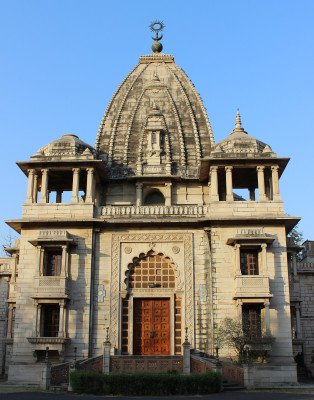 @@History and Commemoration: The Kirti Mandir (Temple of Fame) was built in 1936 by Maharaja Sayajirao Gaekwad III to commemorate the Diamond Jubilee of his reign (60 years) and, more importantly, to honor the memory of the deceased members of the royal Gaekwad dynasty. The name 'Kirti Mandir' literally means 'Temple of Fame' or 'Tower of Glory.' @@Purpose: The monument is a memorial hall that also serves as a place of worship, originally consecrated to Lord Mahadev (Shiva). It houses relics, belongings, and memorabilia of the royal family, including rare coins, weapons, and personal items, though the collection is often moved for conservation. @@Artistic Significance: The monument is also famous for its interior decorations, which include magnificent murals by the renowned Bengal School artist Nandalal Bose. These murals depict scenes from the Mahabharata (Battle of Kurukshetra), the life of Meera Bai, and the myth of Gangavataran (Descent of the Ganga).
@@History and Purpose: The ISKCON Temple Vadodara, officially the Shri Radha Shyam Sundar Mandir, is dedicated to Lord Krishna and his consort Radha. It is part of the worldwide ISKCON (International Society for Krishna Consciousness) movement, founded by A. C. Bhaktivedanta Swami Prabhupada. The temple was inaugurated in 1999 and serves as a major hub for the practice of Bhakti Yoga (devotional service to God). @@Deities and Atmosphere: The main deities are Shri Radha Shyam Sundar, along with Jagannath, Baladev, Subhadra Devi, and Gaur Nitai (Chaitanya Mahaprabhu and Nityananda). The temple's atmosphere is characterized by vibrant devotion, continuous chanting of the Hare Krishna mantra, and the sound of kirtans. @@Community and Outreach: The temple is built on a large estate (around 6 acres) and includes a main prayer hall, a guest house, a gift shop, and a restaurant, actively promoting Vedic culture, spiritual education, and a vegetarian lifestyle.
@@Cultural Heritage Overview: The Champaner - Pavagadh Archaeological Park is a massive historical site that represents a rare, complete, and unexcavated Islamic pre-Mughal city. Established by Sultan Mahmud Begada in the late 15th century, it served as the capital of the Gujarat Sultanate. The park is sprawling, covering over 1,328 hectares of land, and is uniquely situated at the base of the sacred Pavagadh Hill. It is a treasure trove of historical artifacts, featuring a total of 114 monuments including forts, mosques, temples, residential precincts, and agricultural structures. The site effectively bridges the gap between different eras, from the 8th-century Hindu forts to the sophisticated 16th-century Islamic city planning. It was honored with the UNESCO World Heritage status in 2004 for its outstanding universal value. Visitors can see the remains of the Royal Enclosure, which once housed grand palaces and administrative buildings. The area's water-retaining installations, such as stepwells and tanks, demonstrate the advanced engineering skills of the period. The blend of Hindu and Islamic styles is evident in every stone, making it a living museum of Indian history. The transition from the plains to the hilltop offers a diverse range of archaeological and natural beauty. It remains one of the most significant sites for understanding the regional sultanates of India. The park is not just a graveyard of ruins but a site where history feels incredibly tangible and alive.
@@Introduction: The Kuber Bhandari Temple is a highly revered Hindu shrine dedicated to Lord Shiva, specifically in his form as the provider of wealth. Situated on the serene banks of the holy Narmada river, this temple is considered one of the most spiritual spots in the Vadodara district. It holds a unique significance because it is believed that Lord Shiva appeared here as Kuber, the treasurer of the gods. The temple’s location in Karnali is part of the sacred Narmada Parikrama, making it a vital stop for pilgrims. Legend says that Lord Shiva helped Kuber perform penance here to regain his lost wealth and status. Today, thousands of devotees flock here to seek financial stability and spiritual peace. The atmosphere is filled with the chanting of mantras and the gentle sound of the river waves. Accessing the temple often involves a scenic boat ride from Chandod, which adds to the pilgrim's experience. The temple complex is modest but radiates an ancient energy that is felt by everyone who visits. It is widely believed that offering prayers here on Amavasya (New Moon) brings immense prosperity. The temple management provides basic facilities for pilgrims, though it remains a place of deep traditional simplicity. Over the centuries, the shrine has remained a symbol of the harmonious relationship between material wealth and spiritual health. For many, a visit to Kuber Bhandari is not just a religious duty but a way to reset their life’s intentions. The surrounding village of Karnali offers a glimpse into rural Gujarat's religious life, where the river is treated as a mother deity. Exploring the ghats nearby provides a tranquil environment for meditation and reflection.Show All
@@History and Commemoration: The Kirti Mandir (Temple of Fame) was built in 1936 by Maharaja Sayajirao Gaekwad III to commemorate the Diamond Jubilee of his reign (60 years) and, more importantly, to honor the memory of the deceased members of the royal Gaekwad dynasty. The name 'Kirti Mandir' literally means 'Temple of Fame' or 'Tower of Glory.' @@Purpose: The monument is a memorial hall that also serves as a place of worship, originally consecrated to Lord Mahadev (Shiva). It houses relics, belongings, and memorabilia of the royal family, including rare coins, weapons, and personal items, though the collection is often moved for conservation. @@Artistic Significance: The monument is also famous for its interior decorations, which include magnificent murals by the renowned Bengal School artist Nandalal Bose. These murals depict scenes from the Mahabharata (Battle of Kurukshetra), the life of Meera Bai, and the myth of Gangavataran (Descent of the Ganga).
@@History and Purpose: The ISKCON Temple Vadodara, officially the Shri Radha Shyam Sundar Mandir, is dedicated to Lord Krishna and his consort Radha. It is part of the worldwide ISKCON (International Society for Krishna Consciousness) movement, founded by A. C. Bhaktivedanta Swami Prabhupada. The temple was inaugurated in 1999 and serves as a major hub for the practice of Bhakti Yoga (devotional service to God). @@Deities and Atmosphere: The main deities are Shri Radha Shyam Sundar, along with Jagannath, Baladev, Subhadra Devi, and Gaur Nitai (Chaitanya Mahaprabhu and Nityananda). The temple's atmosphere is characterized by vibrant devotion, continuous chanting of the Hare Krishna mantra, and the sound of kirtans. @@Community and Outreach: The temple is built on a large estate (around 6 acres) and includes a main prayer hall, a guest house, a gift shop, and a restaurant, actively promoting Vedic culture, spiritual education, and a vegetarian lifestyle.
@@Cultural Heritage Overview: The Champaner - Pavagadh Archaeological Park is a massive historical site that represents a rare, complete, and unexcavated Islamic pre-Mughal city. Established by Sultan Mahmud Begada in the late 15th century, it served as the capital of the Gujarat Sultanate. The park is sprawling, covering over 1,328 hectares of land, and is uniquely situated at the base of the sacred Pavagadh Hill. It is a treasure trove of historical artifacts, featuring a total of 114 monuments including forts, mosques, temples, residential precincts, and agricultural structures. The site effectively bridges the gap between different eras, from the 8th-century Hindu forts to the sophisticated 16th-century Islamic city planning. It was honored with the UNESCO World Heritage status in 2004 for its outstanding universal value. Visitors can see the remains of the Royal Enclosure, which once housed grand palaces and administrative buildings. The area's water-retaining installations, such as stepwells and tanks, demonstrate the advanced engineering skills of the period. The blend of Hindu and Islamic styles is evident in every stone, making it a living museum of Indian history. The transition from the plains to the hilltop offers a diverse range of archaeological and natural beauty. It remains one of the most significant sites for understanding the regional sultanates of India. The park is not just a graveyard of ruins but a site where history feels incredibly tangible and alive.
@@Introduction: The Kuber Bhandari Temple is a highly revered Hindu shrine dedicated to Lord Shiva, specifically in his form as the provider of wealth. Situated on the serene banks of the holy Narmada river, this temple is considered one of the most spiritual spots in the Vadodara district. It holds a unique significance because it is believed that Lord Shiva appeared here as Kuber, the treasurer of the gods. The temple’s location in Karnali is part of the sacred Narmada Parikrama, making it a vital stop for pilgrims. Legend says that Lord Shiva helped Kuber perform penance here to regain his lost wealth and status. Today, thousands of devotees flock here to seek financial stability and spiritual peace. The atmosphere is filled with the chanting of mantras and the gentle sound of the river waves. Accessing the temple often involves a scenic boat ride from Chandod, which adds to the pilgrim's experience. The temple complex is modest but radiates an ancient energy that is felt by everyone who visits. It is widely believed that offering prayers here on Amavasya (New Moon) brings immense prosperity. The temple management provides basic facilities for pilgrims, though it remains a place of deep traditional simplicity. Over the centuries, the shrine has remained a symbol of the harmonious relationship between material wealth and spiritual health. For many, a visit to Kuber Bhandari is not just a religious duty but a way to reset their life’s intentions. The surrounding village of Karnali offers a glimpse into rural Gujarat's religious life, where the river is treated as a mother deity. Exploring the ghats nearby provides a tranquil environment for meditation and reflection.Show All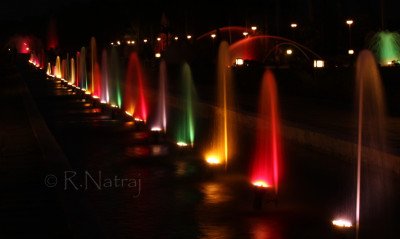 @@Introduction: Ajwa Nimeta Garden, often referred to as the Vrindavan Garden of Gujarat, is a sprawling, lush green retreat inspired by the famous Vrindavan Garden near Mysore. The garden covers an extensive area adjacent to the Ajwa Dam and is a popular picnic and relaxation spot away from the city's hustle. @@Key Attractions: Its main attractions are the beautifully manicured lawns, the towering rows of palm trees, vibrant flower beds, and a century-old water supply system. It is a harmonious blend of nature, landscaping, and historical waterworks. @@Historical Context: The gardens are part of the complex linked to the Ajwa Reservoir, which was built during the time of the Gaekwad rule to provide water to Vadodara.
Information
-
Why Famous:
Laxmi Vilas Palace: One of the largest private residences in the world, showcasing extreme royal opulence and art.
Garba Capital: Known for the most authentic and massive Navratri celebrations that attract global visitors.
Read MoreLaxmi Vilas Palace: One of the largest private residences in the world, showcasing extreme royal opulence and art.
Garba Capital: Known for the most authentic and massive Navratri celebrations that attract global visitors.
Statue of Unity Gateway: It is the nearest major city and transport hub for people visiting the world's tallest statue.Architecture:
Indo-Saracenic Style: The Laxmi Vilas Palace is a stunning example of this style, mixing Hindu, Mughal, and Gothic elements. It is four times the size of Buckingham Palace and features elaborate mosaic floors and stained glass windows. The Darbar Hall is particularly famou...Indo-Saracenic Style: The Laxmi Vilas Palace is a stunning example of this style, mixing Hindu, Mughal, and Gothic elements. It is four times the size of Buckingham Palace and features elaborate mosaic floors and stained glass windows. The Darbar Hall is particularly famous for its ornate decorations and Italian marble.
Unique Structures: The EME Temple is a unique geodesic dome structure made entirely of aluminum sheets by the Indian Army. The Kirti Mandir features beautiful murals and shikhars that represent different religious philosophies. The city's old gates and arches reflect the traditional Maratha and Mughal influence on its urban planning.How To Reach:
By Air: Vadodara Airport has frequent flights to major Indian cities and is located very close to the city center.
By Train: Vadodara Junction is one of the busiest railway stations in India, located on the Mumbai-Delhi main line.Near Tourist Places:
1. Statue of Unity (90 Kms), 2. Champaner (45 Kms), 3. Pavagadh Hill (50 Kms), 4. Ajwa Garden (25 Kms), 5. Anand (45 Kms), 6. Dakor (60 Kms), 7. Zarwani Waterfalls (95 Kms), 8. Kayavarohan (30 Kms), 9. Hathni Mata Falls (75 Kms), 10. Chandod (55 Kms)Tourism Tips
-
Health and Safety: The city is very safe for solo travelers, but be cautious with spicy local street food like Sev Usal.
Packing: Wear comfortable shoes as there is a lot of walking involved in the palace and museum complexes.
Reviews
Information about New and Updated Locations(862+) of Gujarat Has Been Added :-
Card subtitle
Note:-
Information provided here in good Faith and for reference only.
All information and pictures will be updated soon, please keep visiting.
Near Places

Ahmedabad
Some quick example text to build on the card title and make up the bulk of the card's content.
Go somewhere
Bhuj
Some quick example text to build on the card title and make up the bulk of the card's content.
Go somewhere
Chotila
Some quick example text to build on the card title and make up the bulk of the card's content.
Go somewhere
Dahod
Some quick example text to build on the card title and make up the bulk of the card's content.
Go somewhere
Dandi
Some quick example text to build on the card title and make up the bulk of the card's content.
Go somewhere
Kevadia
Some quick example text to build on the card title and make up the bulk of the card's content.
Go somewhere
Kutch
Some quick example text to build on the card title and make up the bulk of the card's content.
Go somewhere
Lothal
Some quick example text to build on the card title and make up the bulk of the card's content.
Go somewhere
Mandvi
Some quick example text to build on the card title and make up the bulk of the card's content.
Go somewhere
Modhera
Some quick example text to build on the card title and make up the bulk of the card's content.
Go somewherein Other Cities