

Rajgir
General information
-
Ideal Duration:
Place Idea Duration: 1 to 2 Days.Place Type:
Place Category: Heritage, Adventure, Spiritual.Entry Fees:
Place Entry Fees:
Glass Bridge/Safari: Approx INR 250 per person.
Ropeway: INR 100-120 for a round trip.
Heritage Sites: Free or nominal fee for Indians. ...Place Entry Fees:
Glass Bridge/Safari: Approx INR 250 per person.
Ropeway: INR 100-120 for a round trip.
Heritage Sites: Free or nominal fee for Indians.Timing:
Place Timings:
Regular Timings: Monuments open 9:00 AM to 5:30 PM.
Ideal Visit Time: Early morning for Safaris; evening for the Shanti Stupa sunset. ...Place Timings:
Regular Timings: Monuments open 9:00 AM to 5:30 PM.
Ideal Visit Time: Early morning for Safaris; evening for the Shanti Stupa sunset.Special Events:
Place Special Event:
Rajgir Mahotsav: A grand cultural festival held in November or December featuring folk dance, music, and traditional arts. ...Place Special Event:
Rajgir Mahotsav: A grand cultural festival held in November or December featuring folk dance, music, and traditional arts.Best Photo Spots:
Place Best Photo Spots:
Glass Bridge: Capturing the valley through the transparent floor.
Peace Pagoda: The golden Buddha statues against the white marble stupa. ...Place Best Photo Spots:
Glass Bridge: Capturing the valley through the transparent floor.
Peace Pagoda: The golden Buddha statues against the white marble stupa.Photo Gallery
Things To Do
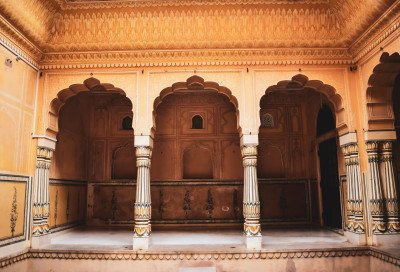 The Ajatshatru Fort is an ancient historical monument in Rajgir, believed to have been constructed by King Ajatshatru of the Magadha Empire around the 6th century BCE, making it over 2500 years old. It served as a strategic military outpost and possibly a royal residence. The fort's construction is contemporary to the time of Lord Buddha and is considered one of the oldest known forts in India. It is primarily a ruin now, but its foundational structure speaks volumes of the military engineering of the pre-Mauryan era. The fort is closely linked with the tragic tale of King Bimbisara's imprisonment, whose jail, Bimbisara's Jail, is situated within the fort complex, allowing him a final view of Lord Buddha on Griddhakuta Hill. The site is a major attraction for historians, archaeologists, and general tourists interested in the early history of India and the life of Buddha. The remaining structures are large, imposing stone walls that define the original rectangular perimeter. It offers a tangible connection to the powerful Magadha kingdom and the dynastic struggles of its rulers. The sheer scale of the original fortification, even in ruins, inspires awe and contemplation on the rise and fall of ancient empires. Visitors can walk through the remains and imagine the daily life and strategic importance of this historical stronghold, a place where India's political and religious history dramatically converged. The fort’s location was strategically chosen amidst the hills, giving it a natural defense advantage. The ruins primarily consist of massive stone foundation walls and remnants of the corner towers, offering a unique opportunity to study early Indian fortification techniques and political history. The site often hosts archaeological teams who study the various layers of history embedded in its ruins, providing continuous new insights into this pivotal period of history. This extensive ruin represents a significant chapter in the political landscape of ancient India when the Magadha empire was at its zenith, setting the stage for subsequent great empires like the Mauryas.
 The Rajgir Ropeway, often referred to as the Chairlift, is one of the oldest and most iconic ropeways in India. It serves as the primary mode of transport for pilgrims and tourists heading to the Vishwa Shanti Stupa (World Peace Pagoda) located atop the Ratnagiri Hill. The ropeway offers a thrilling single-seater chairlift experience that takes you over the dense forests of the Pant Wildlife Sanctuary. As you ascend, the panoramic views of the five hills of Rajgir—Ratnagiri, Vipulgiri, Vaibhavgiri, Songiri, and Udaygiri—unfold in a breathtaking manner. The ride is approximately 7-10 minutes long and reaches a significant height, providing a bird's-eye view of the ancient city's ruins and the surrounding valley. Historically, the ropeway was a gift from the Japanese government to facilitate access to the Peace Pagoda, which was built to spread the message of non-violence. In recent years, a new cabin-style ropeway has also been introduced to accommodate more passengers and provide a more stable ride for the elderly. The chairlift remains a favorite for adventure lovers who enjoy the wind in their hair and the feeling of dangling above the trees. At the top, besides the stupa, there are several small temples and viewpoints. The experience is not just about the destination but the journey itself, offering a unique perspective on the geography of the Magadha region. The ropeway is managed by the Bihar State Tourism Development Corporation (BSTDC), ensuring regular maintenance and safety checks. It is a vital link in the Buddhist Circuit, connecting the valley to the sacred peaks where Lord Buddha once meditated. For anyone visiting Rajgir, the ropeway ride is considered a quintessential experience that combines religious devotion with a dash of adrenaline.
@@Historical and Spiritual Essence: Brahma Kund is the most revered among the several hot springs in Rajgir. Legend says Lord Brahma himself created this spring, and it remains a focal point for Hindu, Buddhist, and Jain pilgrims. The water is consistently hot, around 45°C to 50°C, due to geothermal activity beneath the Vaibhava Hill. Devotees believe that a dip in these waters can wash away sins and cure chronic skin diseases and joint pains. It is a place where ancient faith meets natural wonder, nestled amidst the rugged beauty of the Seven Hills.
Makhdum Kund is a famous sacred hot spring and shrine in Rajgir, renowned for its perpetually hot, therapeutic water and its unique significance as a place of harmony between different faiths. The kund (water tank) is named after the Sufi saint Hazrat Makhdum Shah, who is believed to have lived and meditated here in the 13th century. The shrine and the hot spring are revered by both Muslims and Hindus, who visit to pay their respects and, more importantly, to bathe in the water. The water of the kund, which is naturally warm year-round, is believed to possess medicinal and curative properties, attracting devotees seeking relief from various ailments. The source of the hot water is a natural underground fissure, a phenomenon common in the Rajgir hills. The site is a complex featuring a mosque, a dharamsala (rest house), and the main hot water reservoir, showcasing a beautiful blend of spiritual devotion, thermal geology, and historical Sufi influence in the region. The peaceful coexistence of faith and the curative nature of the water make it a special, frequently visited spot, offering both spiritual solace and physical therapy. It is a vital stop for pilgrims and a popular place for locals to take a ritual bath.
@@Birthplace of a Tirthankara: Kundalpur is believed by the Digambar Jain sect to be the birthplace of the 24th Tirthankara, Lord Mahavira. It is a serene village located very close to the ancient Nalanda University. The site is marked by a majestic temple complex that serves as a beacon of peace and spiritual learning. Historical texts suggest that this was the ancient "Kundagrama." The area is dotted with beautiful temples and a sacred pond, making it a vital stop on the Jain circuit of Bihar. It offers a glimpse into the early life of the great teacher.
@@History and Significance: Vaibhara Hill (Vaibhavagiri) is one of the five hills of Rajgir and is deeply significant to both Buddhism and Hinduism. The hill's base is renowned for the Rajgir Hot Springs or Brahmakund, which are fed by seven streams (Saptadhara) believed to originate from the Saptaparni Caves higher up the hill. This cave is historically famous as the site where the First Buddhist Council was held shortly after the Mahaparinirvana of Lord Buddha, a pivotal event in Buddhist history where the teachings (Dhamma) and monastic discipline (Vinaya) were formally compiled. The other prominent historical site at the foot of Vaibhara Hill is the Son Bhandar Caves (Treasure Caves), rock-cut caves that legend holds conceal the treasure of King Bimbisara. The hill also hosts numerous Hindu temples near the springs. The path up the hill, passing the Pippala Cave (Jarasandha ki Baithak), offers a challenging trek into an area steeped in religious history, highlighting the hill's role as a major site of ascetic practice and spiritual discourse across multiple faiths in ancient Magadha.
The Cyclopean Wall of Rajgir is an imposing 40-kilometer-long stone fortification that once completely encircled the ancient city of Rajagriha, the capital of the powerful Magadha kingdom. Built without any mortar, using colossal, undressed stones fitted together—a construction style known as cyclopean masonry—it is one of the oldest extant pre-Mauryan structures in India, dating back to between the 6th and 4th centuries BCE. The wall's primary purpose was to protect the capital city from external enemies and invaders, making it a masterpiece of ancient military engineering and urban planning. Though much of the original wall has succumbed to time and erosion, significant portions remain, particularly in the hilly areas surrounding Rajgir. These remaining sections stand as a powerful testament to the military and architectural capabilities of the early Magadha rulers, particularly King Bimbisara and his son, Ajatshatru. It is a proposed UNESCO World Heritage Site and a must-visit for anyone interested in ancient defensive structures and the history of the Magadha Empire. The scale is breathtaking, demonstrating an immense collective effort and strategic foresight in defending the city, which was crucial to the rise of the first great Indian empires. Walking along its remnants offers a literal journey through pre-classical Indian history, providing panoramic views of the entire valley.Show All
The Stupa of Sariputra, also known as the Great Stupa, is a monumental structure dedicated to one of the most prominent disciples of Lord Buddha. This site is steeped in spiritual history as it is believed to contain the sacred bone relics of Sariputra, who was revered for his wisdom and mastery of the Dhamma. The stupa stands as the most iconic landmark within the UNESCO World Heritage site of the Nalanda Mahavihara. Historically, the original structure was built by Emperor Ashoka in the 3rd century BC, and it underwent several enlargements over the centuries, particularly during the Gupta and Pala periods. The current ruins reveal a massive pyramidal structure surrounded by smaller votive stupas, which were built by pilgrims as offerings. Walking through the site, visitors can feel the ancient academic and spiritual energy that once drew thousands of scholars from across Asia. The site serves as a profound reminder of the monastic life and the intellectual heights achieved during the golden era of Indian history. It remains a primary pilgrimage destination for Buddhists worldwide who come to pay their respects to the "Captain of the Dhamma." The surrounding archaeological park provides a serene backdrop, allowing for a deep reflection on the impermanence of great civilizations. Today, it stands as a silent witness to the destruction and the enduring legacy of the world's first residential university.
The Rajgir Ropeway, often referred to as the Chairlift, is one of the oldest and most iconic ropeways in India. It serves as the primary mode of transport for pilgrims and tourists heading to the Vishwa Shanti Stupa (World Peace Pagoda) located atop the Ratnagiri Hill. The ropeway offers a thrilling single-seater chairlift experience that takes you over the dense forests of the Pant Wildlife Sanctuary. As you ascend, the panoramic views of the five hills of Rajgir—Ratnagiri, Vipulgiri, Vaibhavgiri, Songiri, and Udaygiri—unfold in a breathtaking manner. The ride is approximately 7-10 minutes long and reaches a significant height, providing a bird's-eye view of the ancient city's ruins and the surrounding valley. Historically, the ropeway was a gift from the Japanese government to facilitate access to the Peace Pagoda, which was built to spread the message of non-violence. In recent years, a new cabin-style ropeway has also been introduced to accommodate more passengers and provide a more stable ride for the elderly. The chairlift remains a favorite for adventure lovers who enjoy the wind in their hair and the feeling of dangling above the trees. At the top, besides the stupa, there are several small temples and viewpoints. The experience is not just about the destination but the journey itself, offering a unique perspective on the geography of the Magadha region. The ropeway is managed by the Bihar State Tourism Development Corporation (BSTDC), ensuring regular maintenance and safety checks. It is a vital link in the Buddhist Circuit, connecting the valley to the sacred peaks where Lord Buddha once meditated. For anyone visiting Rajgir, the ropeway ride is considered a quintessential experience that combines religious devotion with a dash of adrenaline.
@@Historical and Spiritual Essence: Brahma Kund is the most revered among the several hot springs in Rajgir. Legend says Lord Brahma himself created this spring, and it remains a focal point for Hindu, Buddhist, and Jain pilgrims. The water is consistently hot, around 45°C to 50°C, due to geothermal activity beneath the Vaibhava Hill. Devotees believe that a dip in these waters can wash away sins and cure chronic skin diseases and joint pains. It is a place where ancient faith meets natural wonder, nestled amidst the rugged beauty of the Seven Hills.
Makhdum Kund is a famous sacred hot spring and shrine in Rajgir, renowned for its perpetually hot, therapeutic water and its unique significance as a place of harmony between different faiths. The kund (water tank) is named after the Sufi saint Hazrat Makhdum Shah, who is believed to have lived and meditated here in the 13th century. The shrine and the hot spring are revered by both Muslims and Hindus, who visit to pay their respects and, more importantly, to bathe in the water. The water of the kund, which is naturally warm year-round, is believed to possess medicinal and curative properties, attracting devotees seeking relief from various ailments. The source of the hot water is a natural underground fissure, a phenomenon common in the Rajgir hills. The site is a complex featuring a mosque, a dharamsala (rest house), and the main hot water reservoir, showcasing a beautiful blend of spiritual devotion, thermal geology, and historical Sufi influence in the region. The peaceful coexistence of faith and the curative nature of the water make it a special, frequently visited spot, offering both spiritual solace and physical therapy. It is a vital stop for pilgrims and a popular place for locals to take a ritual bath.
@@Birthplace of a Tirthankara: Kundalpur is believed by the Digambar Jain sect to be the birthplace of the 24th Tirthankara, Lord Mahavira. It is a serene village located very close to the ancient Nalanda University. The site is marked by a majestic temple complex that serves as a beacon of peace and spiritual learning. Historical texts suggest that this was the ancient "Kundagrama." The area is dotted with beautiful temples and a sacred pond, making it a vital stop on the Jain circuit of Bihar. It offers a glimpse into the early life of the great teacher.
@@History and Significance: Vaibhara Hill (Vaibhavagiri) is one of the five hills of Rajgir and is deeply significant to both Buddhism and Hinduism. The hill's base is renowned for the Rajgir Hot Springs or Brahmakund, which are fed by seven streams (Saptadhara) believed to originate from the Saptaparni Caves higher up the hill. This cave is historically famous as the site where the First Buddhist Council was held shortly after the Mahaparinirvana of Lord Buddha, a pivotal event in Buddhist history where the teachings (Dhamma) and monastic discipline (Vinaya) were formally compiled. The other prominent historical site at the foot of Vaibhara Hill is the Son Bhandar Caves (Treasure Caves), rock-cut caves that legend holds conceal the treasure of King Bimbisara. The hill also hosts numerous Hindu temples near the springs. The path up the hill, passing the Pippala Cave (Jarasandha ki Baithak), offers a challenging trek into an area steeped in religious history, highlighting the hill's role as a major site of ascetic practice and spiritual discourse across multiple faiths in ancient Magadha.
The Cyclopean Wall of Rajgir is an imposing 40-kilometer-long stone fortification that once completely encircled the ancient city of Rajagriha, the capital of the powerful Magadha kingdom. Built without any mortar, using colossal, undressed stones fitted together—a construction style known as cyclopean masonry—it is one of the oldest extant pre-Mauryan structures in India, dating back to between the 6th and 4th centuries BCE. The wall's primary purpose was to protect the capital city from external enemies and invaders, making it a masterpiece of ancient military engineering and urban planning. Though much of the original wall has succumbed to time and erosion, significant portions remain, particularly in the hilly areas surrounding Rajgir. These remaining sections stand as a powerful testament to the military and architectural capabilities of the early Magadha rulers, particularly King Bimbisara and his son, Ajatshatru. It is a proposed UNESCO World Heritage Site and a must-visit for anyone interested in ancient defensive structures and the history of the Magadha Empire. The scale is breathtaking, demonstrating an immense collective effort and strategic foresight in defending the city, which was crucial to the rise of the first great Indian empires. Walking along its remnants offers a literal journey through pre-classical Indian history, providing panoramic views of the entire valley.Show All
The Stupa of Sariputra, also known as the Great Stupa, is a monumental structure dedicated to one of the most prominent disciples of Lord Buddha. This site is steeped in spiritual history as it is believed to contain the sacred bone relics of Sariputra, who was revered for his wisdom and mastery of the Dhamma. The stupa stands as the most iconic landmark within the UNESCO World Heritage site of the Nalanda Mahavihara. Historically, the original structure was built by Emperor Ashoka in the 3rd century BC, and it underwent several enlargements over the centuries, particularly during the Gupta and Pala periods. The current ruins reveal a massive pyramidal structure surrounded by smaller votive stupas, which were built by pilgrims as offerings. Walking through the site, visitors can feel the ancient academic and spiritual energy that once drew thousands of scholars from across Asia. The site serves as a profound reminder of the monastic life and the intellectual heights achieved during the golden era of Indian history. It remains a primary pilgrimage destination for Buddhists worldwide who come to pay their respects to the "Captain of the Dhamma." The surrounding archaeological park provides a serene backdrop, allowing for a deep reflection on the impermanence of great civilizations. Today, it stands as a silent witness to the destruction and the enduring legacy of the world's first residential university.Information
-
Why Famous:
Why Famous Place:
Buddhist Significance: Site of the first Buddhist Council.
Adventure Tourism: Home to India's one of the most exciting Glass Bridges and Nature Safaris. ...Why Famous Place:
Buddhist Significance: Site of the first Buddhist Council.
Adventure Tourism: Home to India's one of the most exciting Glass Bridges and Nature Safaris. -
Architecture:
Place Architecture:
Shanti Stupa: A massive white marble pagoda standing 120 feet tall with a diameter of 103 feet.
Cyclopean Wall: Built 2,500 years ago, this 40 KM long stone wall is 4 meters wide, showcasi...Place Architecture:
Shanti Stupa: A massive white marble pagoda standing 120 feet tall with a diameter of 103 feet.
Cyclopean Wall: Built 2,500 years ago, this 40 KM long stone wall is 4 meters wide, showcasing ancient dry-masonry techniques. -
How To Reach:
Place How to Reach:
By Air: Nearest airport is Patna (105 KM).
By Train: Rajgir Station is well-connected to Patna, Kolkata, and Delhi.
By Road: Excellent roads from Patna (N...Place How to Reach:
By Air: Nearest airport is Patna (105 KM).
By Train: Rajgir Station is well-connected to Patna, Kolkata, and Delhi.
By Road: Excellent roads from Patna (NH 120).
By Local Transport: Electric rickshaws and horse-drawn Tongas are very popular. -
Weather and Best Time to Visit:
Place Best Time to Visit:
Winter: October to February is the peak season.
Monsoon: July to September makes the hills incredibly green and beautiful. ...Place Best Time to Visit:
Winter: October to February is the peak season.
Monsoon: July to September makes the hills incredibly green and beautiful. -
Near Tourist Places:
Place Near Tourist Places: Nalanda University (15 KM), Pawapuri (19 KM), Gaya (78 KM), Bodh Gaya (80 KM), Kundalpur (18 KM), Silao (8 KM), Kakolat Falls (70 KM), Bihar Sharif (25 KM), Telhara (55 KM), Hilsa (60 KM).
Tourism Tips
-
Place Tourism Tips:
Health & Safety: Be careful with monkeys at the Stupa.
Packing: Carry comfortable trekking shoes and binoculars.
Accommodation: Many Bihar Tourism hotels ...Place Tourism Tips:
Health & Safety: Be careful with monkeys at the Stupa.
Packing: Carry comfortable trekking shoes and binoculars.
Accommodation: Many Bihar Tourism hotels and private resorts like The Rajgir Residency are available.
Reviews
FAQs
Rajgir Itineray And Cost:-
Other Places In Bihar :-
Other States In India :-
Information about New and Updated Locations() of Bihar Has Been Added :-
Card subtitle
Note:-
Information provided here in good Faith and for reference only.
Near Places
Araria
Some quick example text to build on the card title and make up the bulk of the card's content.
Go somewhere
Arwal
Some quick example text to build on the card title and make up the bulk of the card's content.
Go somewhere
Banka
Some quick example text to build on the card title and make up the bulk of the card's content.
Go somewhere
Begusarai
Some quick example text to build on the card title and make up the bulk of the card's content.
Go somewhere
Bhagalpur
Some quick example text to build on the card title and make up the bulk of the card's content.
Go somewhere
Bhojpur
Some quick example text to build on the card title and make up the bulk of the card's content.
Go somewhere
Bihar Sharif
Some quick example text to build on the card title and make up the bulk of the card's content.
Go somewhere
Bodh Gaya
Some quick example text to build on the card title and make up the bulk of the card's content.
Go somewhere
Buxar
Some quick example text to build on the card title and make up the bulk of the card's content.
Go somewhere
Champaran
Some quick example text to build on the card title and make up the bulk of the card's content.
Go somewhere
Darbhanga
Some quick example text to build on the card title and make up the bulk of the card's content.
Go somewhere
Gaya
Some quick example text to build on the card title and make up the bulk of the card's content.
Go somewhere
Golghar
Some quick example text to build on the card title and make up the bulk of the card's content.
Go somewhere
Madhubani
Some quick example text to build on the card title and make up the bulk of the card's content.
Go somewhere
Mithila
Some quick example text to build on the card title and make up the bulk of the card's content.
Go somewhere
Munger
Some quick example text to build on the card title and make up the bulk of the card's content.
Go somewherein Other Cities