Champa Baoli
General information
-
Ideal Duration:
45 Minutes:Place Type:
Hydraulic System / Stepwell / Royal Retreat:Entry Fees:
Ticket Requirement: A common ticket is required to enter the major sites in the Royal Enclave Group, which includes Champa Baoli, Jahaz Mahal, and Hindola Mahal:
Indian Nationals: The ASI consolidated ticket fee is typically around Rs.25 to Rs.40...Ticket Requirement: A common ticket is required to enter the major sites in the Royal Enclave Group, which includes Champa Baoli, Jahaz Mahal, and Hindola Mahal:
Indian Nationals: The ASI consolidated ticket fee is typically around Rs.25 to Rs.40 per person:
Foreign Tourists: Foreign visitors pay a higher fee, usually around Rs.300 to Rs.500 per person for the cluster:
Guide Fees: A guide is highly recommended to explain the complex water management system and the function of the subterranean rooms:Timing:
Regular Timings: Open daily from Sunrise to Sunset, typically 7:00 AM to 6:
00 PM:
Ideal Visit Time: Visit during the hottest part of the day (11:00 AM to 2:00 PM) to truly appreciate the cooling effect of the ...Regular Timings: Open daily from Sunrise to Sunset, typically 7:00 AM to 6:
00 PM:
Ideal Visit Time: Visit during the hottest part of the day (11:00 AM to 2:00 PM) to truly appreciate the cooling effect of the subterranean chambers:
Photography Timing: The best lighting for the interiors, capturing the light filtering through the openings, is usually in the mid-morning (10:00 AM to 12:
00 PM) Crowd Timing: The Baoli is part of the busy Royal Enclave and is crowded during weekends and public holidays, making a weekday visit preferable:Special Events:
Mandu Festival: The open area near the Royal Enclave often features heritage craft bazaars and food stalls during the annual Mandu Festival, making the Baoli part of the lively central activity hub:
Water Heritage Day: Local or ASI-organized ...Mandu Festival: The open area near the Royal Enclave often features heritage craft bazaars and food stalls during the annual Mandu Festival, making the Baoli part of the lively central activity hub:
Water Heritage Day: Local or ASI-organized events focusing on the water management systems of Mandu occasionally highlight the Champa Baoli as a prime example of medieval hydro-engineering:
Photography Workshops: Due to its unique lighting and architectural lines, the Baoli is sometimes the subject of specialized photography workshops held in Mandu:Best Photo Spots:
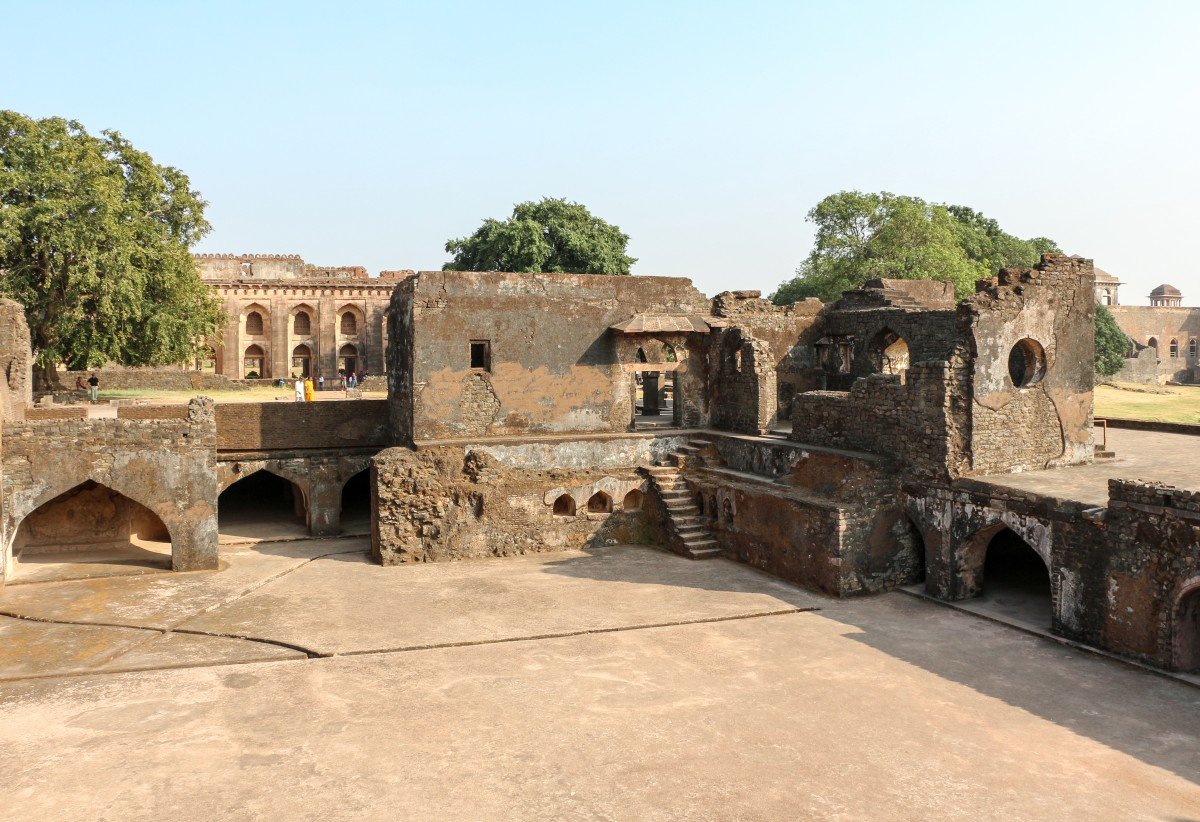
The Well's Mouth: Capture the circular opening of the well from ground level, framed by the surrounding ruins, to emphasize the depth:
Subterranean Arches: The repeating arches of the underground corridors are excellent for high-contrast, moo...The Well's Mouth: Capture the circular opening of the well from ground level, framed by the surrounding ruins, to emphasize the depth:
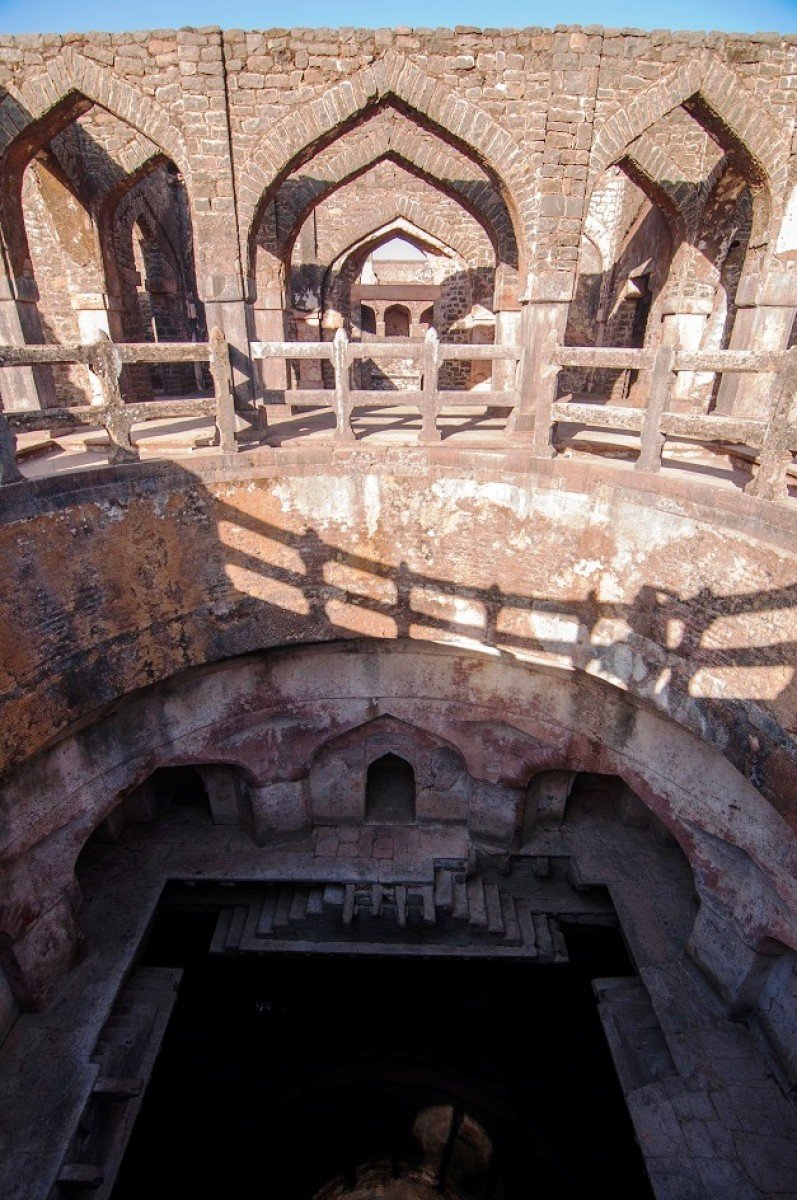
Subterranean Arches: The repeating arches of the underground corridors are excellent for high-contrast, moody photography:
Light and Shadow: Focus on the way the sunlight filters through the openings into the dark subterranean chambers, creating dramatic shafts of light:
Detail Shots: Capture the intricate stonework and any surviving details on the column supports within the cool rooms:Photo Gallery
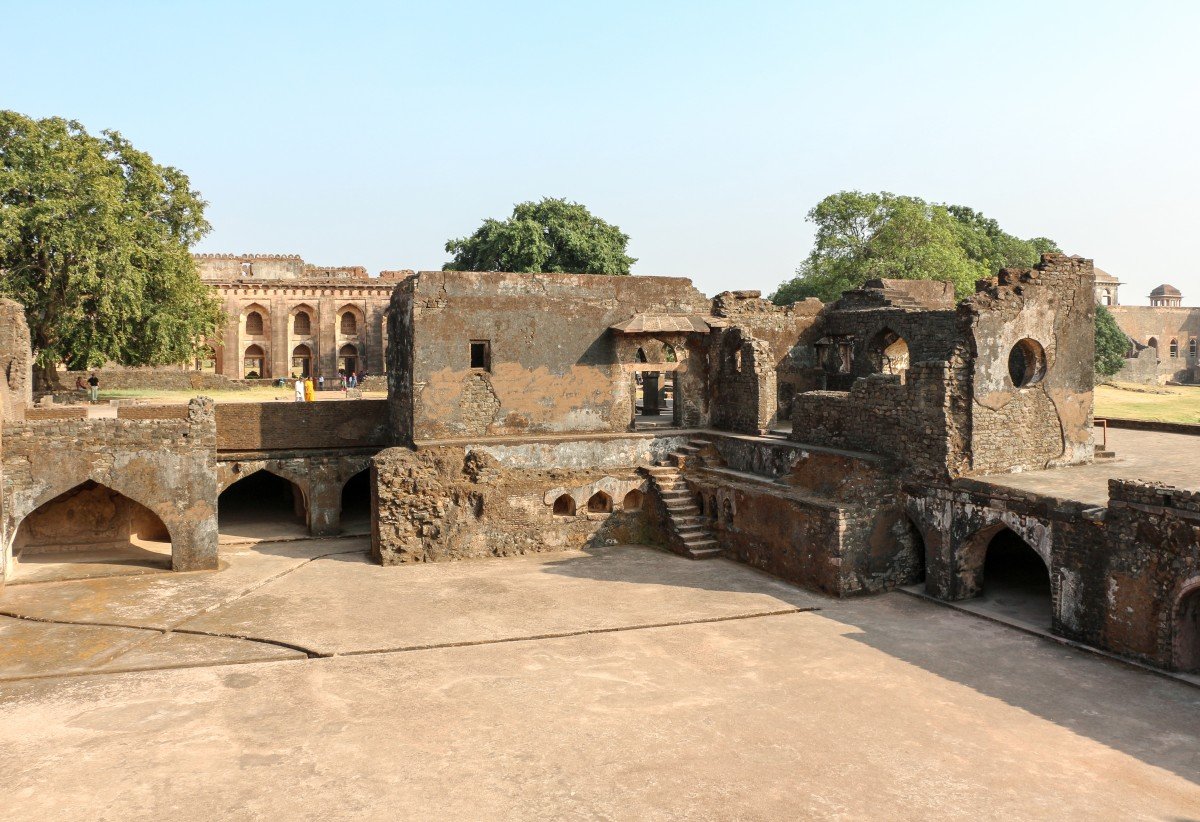

Things To Do
-
Descend the Steps: Carefully walk down the stone steps into the stepwell to experience the immediate drop in temperature, especially noticeable during the heat of the day:
Explore the Taikhanas: Spend time in the underground vaulted rooms to appreciate the ingenious cooling effect and the architectural design:
Photography: Capture the repeating patterns of the arches and the shadows within the subterranean chambers, contrasting the dark interiors with the light from above:
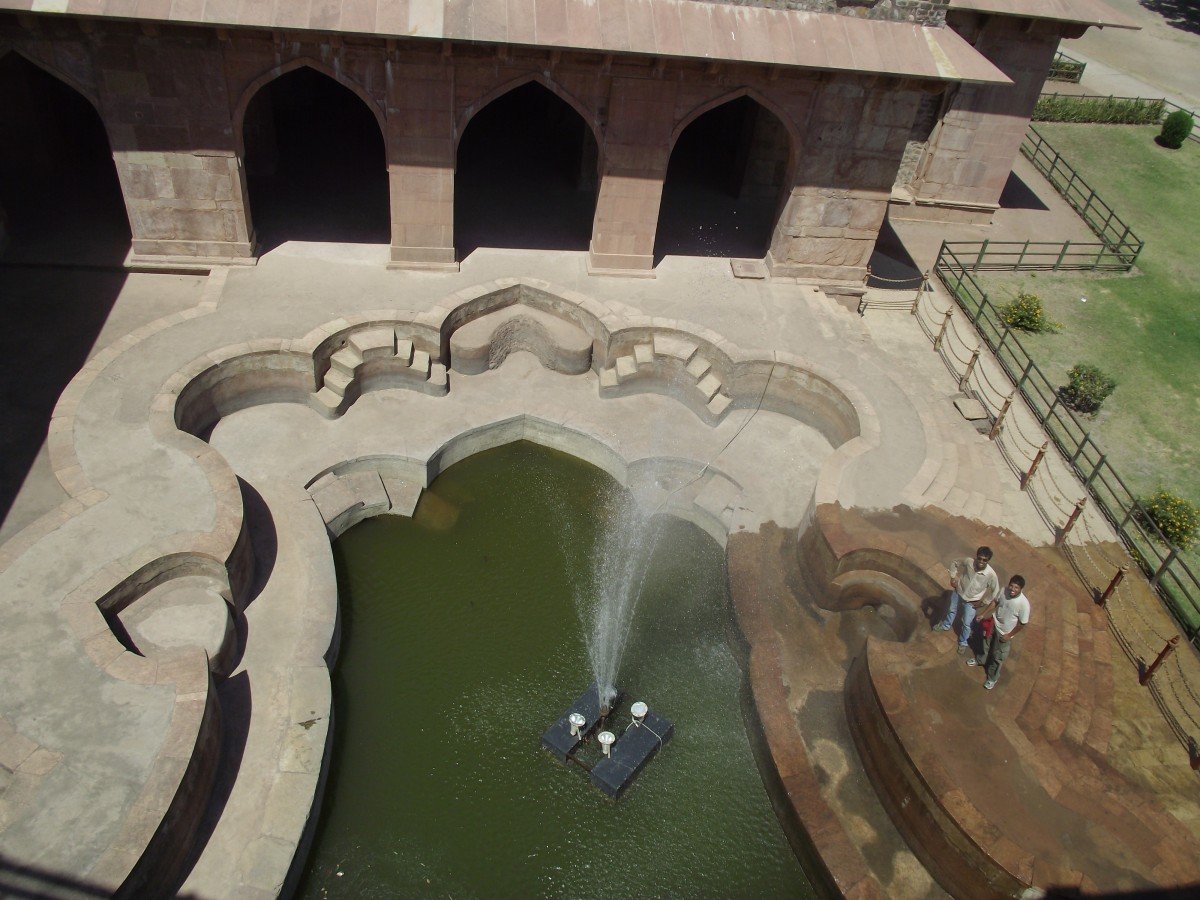
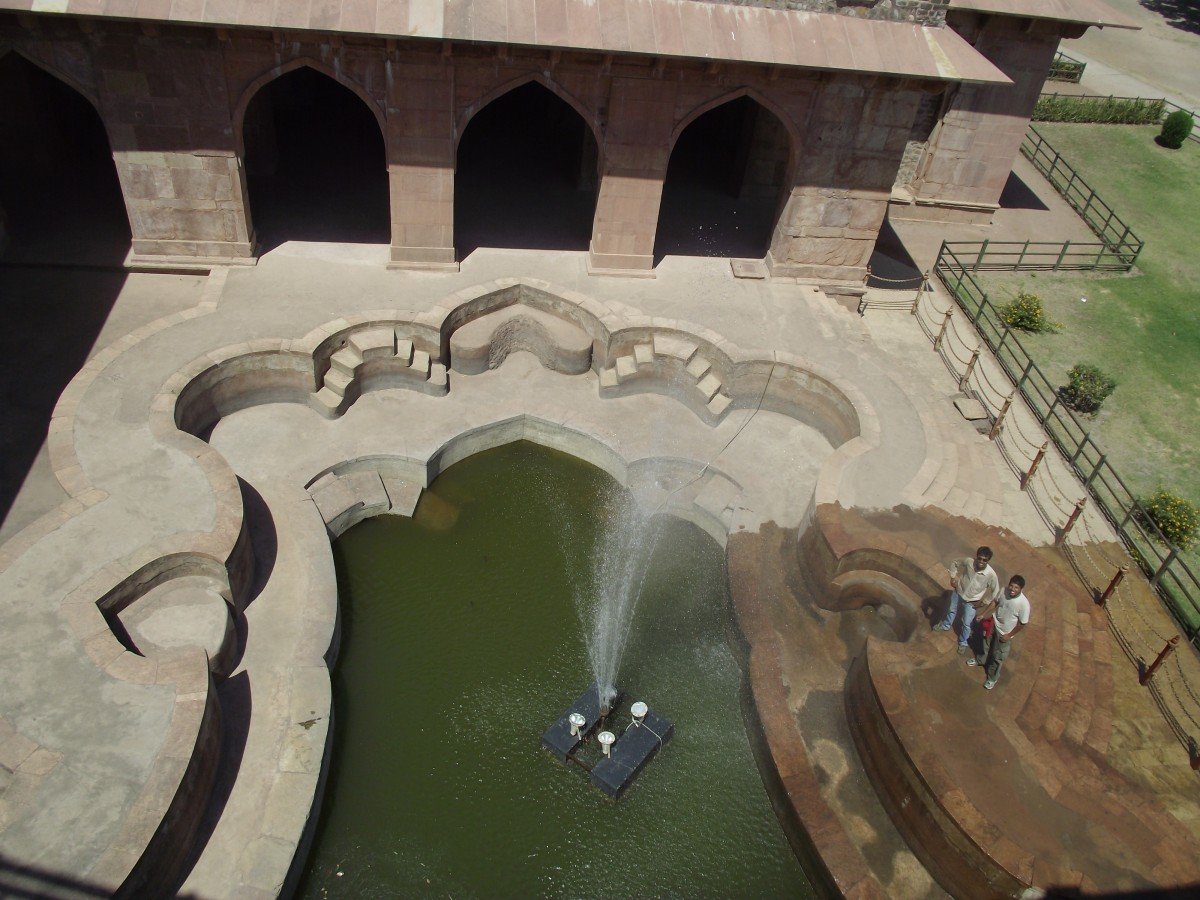
Study the Water System: Observe the architectural features that managed the water, such as the arches and channels leading from the well to the surrounding structures:
Connect the Complex: Visit the Hammam and the Jahaz Mahal immediately after to understand how the...Descend the Steps: Carefully walk down the stone steps into the stepwell to experience the immediate drop in temperature, especially noticeable during the heat of the day:
Explore the Taikhanas: Spend time in the underground vaulted rooms to appreciate the ingenious cooling effect and the architectural design:
Photography: Capture the repeating patterns of the arches and the shadows within the subterranean chambers, contrasting the dark interiors with the light from above:
Study the Water System: Observe the architectural features that managed the water, such as the arches and channels leading from the well to the surrounding structures:
Connect the Complex: Visit the Hammam and the Jahaz Mahal immediately after to understand how the Champa Baoli was the heart of the royal water and climate management system:
Relax: Find a quiet corner in one of the lower chambers and enjoy the cool, serene atmosphere as the royal women once did:
Learn the Legends: Ask a guide about the folklore regarding the scented water and the rumored escape route to enrich the historical context:
Information
-
Why Famous:
Medieval Air-Conditioning: It is famous for its sophisticated, natural climate control system—the subterranean vaulted rooms that offered a cool retreat from the summer heat, a testament to the advanced engineering of the time:
The Jahaz Mahal ...Medieval Air-Conditioning: It is famous for its sophisticated, natural climate control system—the subterranean vaulted rooms that offered a cool retreat from the summer heat, a testament to the advanced engineering of the time:
The Jahaz Mahal Connection: Its integral role in supplying water to the adjacent Jahaz Mahal and Hammam (Turkish bath) highlights its importance in the daily life and opulence of the royal household:
The Fragrant Name: The evocative name, derived from the legendary scent of the Champak flower in its water, adds a touch of poetic romance to the utilitarian structure: -
Architecture:
Architectural Style: The architecture is a beautiful blend of Indo-Islamic styles, showcasing utility and aesthetic design, with influences possibly from Turkish bath designs:
Design Features: The stepwell is circular at the ground level, tra...Architectural Style: The architecture is a beautiful blend of Indo-Islamic styles, showcasing utility and aesthetic design, with influences possibly from Turkish bath designs:
Design Features: The stepwell is circular at the ground level, transitioning to an octagonal design at the lower levels, with rooms (taikhanas) arranged around the circumference of the well shaft:
Subterranean Rooms: The most striking architectural element is the series of double-arched corridors and vaulted rooms that extend deep underground. These chambers are supported by columns and feature ingenious ventilation:
Dimension: The well is quite deep, reaching several stories underground. The complex, including the adjacent rooms, is substantial. The precise depth varies with the water table, but the underground chambers are large enough to comfortably accommodate royal parties: -
How To Reach:
By Air: The nearest air hub is Devi Ahilya Bai Holkar Airport in Indore (IDR), about 100 km away. Hiring a pre-paid taxi is the quickest way to cover the 3-hour journey to Mandu:
By Train: The major railway stations are Ratlam Junction (RTM)...By Air: The nearest air hub is Devi Ahilya Bai Holkar Airport in Indore (IDR), about 100 km away. Hiring a pre-paid taxi is the quickest way to cover the 3-hour journey to Mandu:
By Train: The major railway stations are Ratlam Junction (RTM) at 124 km and Indore Junction (INDB) at 99 km. Direct road transport (bus or taxi) is necessary from the station to Mandu:
By Road: Champa Baoli is easily accessible as it's a central site in the Royal Enclave. The roads to Mandu from Dhar (35 km) and Indore are well-maintained for private and public transport:
By Local Transport: The best way to reach this site within Mandu is by an auto-rickshaw or hired bicycle, as it is located within a walkable cluster of major monuments near the main village: -
Weather and Best Time to Visit:
Different Seasons: Winter (October to March) is the most comfortable for the overall visit to Mandu: Monsoon (July to September) sees the stepwell filled with water, which greatly enhances its visual appeal and the cooling effect: Summer (April to June) is the best time to e...Different Seasons: Winter (October to March) is the most comfortable for the overall visit to Mandu: Monsoon (July to September) sees the stepwell filled with water, which greatly enhances its visual appeal and the cooling effect: Summer (April to June) is the best time to experience the effectiveness of the ancient 'air-conditioning' system in the cool chambers:
Different Parts of the Day: Midday is ironically the best time to visit to appreciate the unique architectural solution to heat, though the rest of the complex will be hot: -
Near Tourist Places:
Jahaz Mahal (50 meters), Hindola Mahal (100 meters), Hammam (Adjacent), Taveli Mahal (200 meters), Dilawar Khan's Mosque (300 meters), Hoshang Shah's Tomb (4. 5 km), Jami Masjid (4. 5 km), Ashrafi Mahal (4. 5 km), Rewa Kund (8 km), Rani Roopmati's Pavilion (8.
5 km):
Tourism Tips
-
Health & Safety: The steps inside the Baoli can be slippery, especially during the Monsoon or when wet; hold the railings and watch your step.
The light can be dim in the lower chambers:
Packing: Carry a fla...Health & Safety: The steps inside the Baoli can be slippery, especially during the Monsoon or when wet; hold the railings and watch your step.
The light can be dim in the lower chambers:
Packing: Carry a flashlight or use your phone's light for better visibility in the subterranean rooms:
Accommodation: Stay in the nearby Mandu village for convenience, as the Baoli is part of the central Royal Enclave:
Other Different Topics: Do not venture into any closed or barricaded areas. Be respectful of the ancient structure and avoid littering. Keep a lookout for unique local carvings or tile remnants:
Reviews
FAQs
Mandu Itineray And Cost:-
Other Places In Mandu :-
Other States In India :-
Information about New and Updated Locations() of Madhya Pradesh Has Been Added :-
Card subtitle
Note:-
Information provided here in good Faith and for reference only.
Near Places
Alamgir Darwaza
Some quick example text to build on the card title and make up the bulk of the card's content.
Go somewhere
Ashrafi Mahal
Some quick example text to build on the card title and make up the bulk of the card's content.
Go somewhere
Bagh Caves
Some quick example text to build on the card title and make up the bulk of the card's content.
Go somewhere
Baz Bahadur's Palace
Some quick example text to build on the card title and make up the bulk of the card's content.
Go somewhere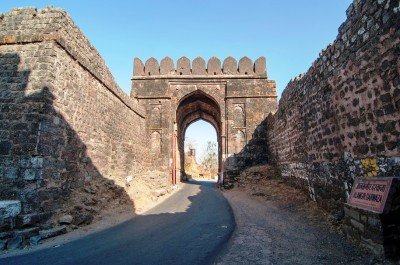
Bhangi Darwaza
Some quick example text to build on the card title and make up the bulk of the card's content.
Go somewhere
Champa Baoli
Some quick example text to build on the card title and make up the bulk of the card's content.
Go somewhere
Dai ka Mahal
Some quick example text to build on the card title and make up the bulk of the card's content.
Go somewhere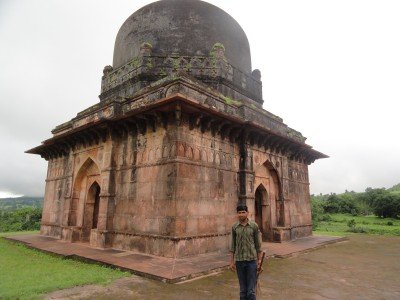
Dai ki Chhoti Bahen ka Mahal
Some quick example text to build on the card title and make up the bulk of the card's content.
Go somewhere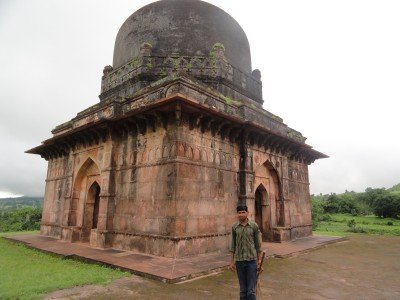
Dai ki Chhoti Behan ka Mahal
Some quick example text to build on the card title and make up the bulk of the card's content.
Go somewhere
Darya Khan's Tomb
Some quick example text to build on the card title and make up the bulk of the card's content.
Go somewhere
Delhi Darwaza
Some quick example text to build on the card title and make up the bulk of the card's content.
Go somewhere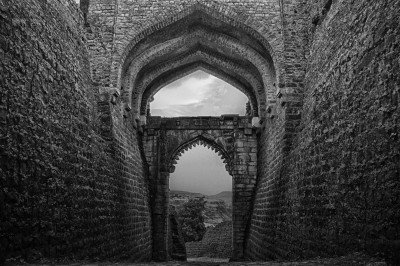
Delhi Gate
Some quick example text to build on the card title and make up the bulk of the card's content.
Go somewhere
Dharampuri
Some quick example text to build on the card title and make up the bulk of the card's content.
Go somewhere
Dilawar Khan's Mosque
Some quick example text to build on the card title and make up the bulk of the card's content.
Go somewhere
Echo Point
Some quick example text to build on the card title and make up the bulk of the card's content.
Go somewhere
Eco Point
Some quick example text to build on the card title and make up the bulk of the card's content.
Go somewherein Other Cities