

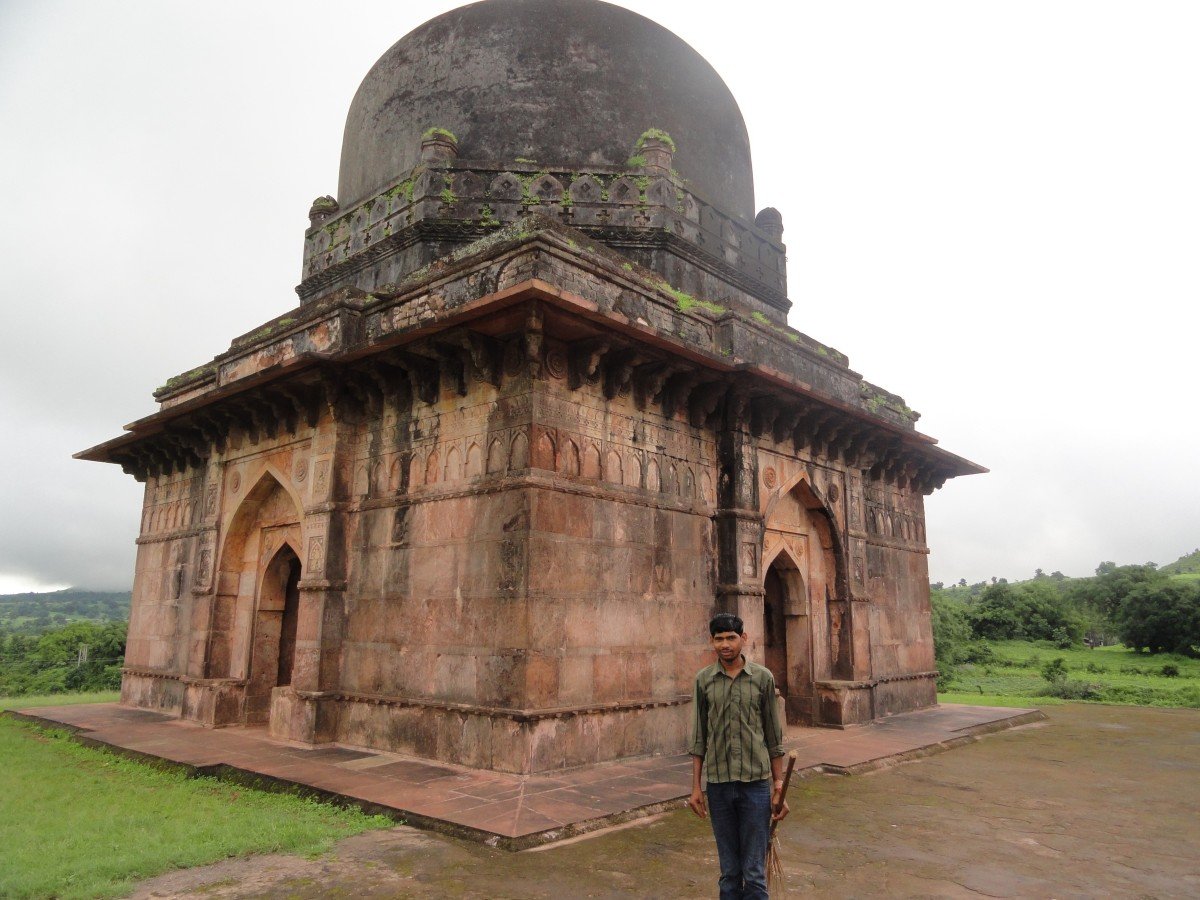
Dai ki Chhoti Bahen ka Mahal
General information
-
Ideal Duration:
45 Minutes:Place Type:
Mausoleum / Historical Tomb:Entry Fees:
Ticket Requirement: This monument is part of the Sagar Talao Group and is covered by the ASI consolidated entry ticket:
Indian Nationals: The ASI consolidated ticket fee is typically around Rs.25 to Rs.40 per person:
...Ticket Requirement: This monument is part of the Sagar Talao Group and is covered by the ASI consolidated entry ticket:
Indian Nationals: The ASI consolidated ticket fee is typically around Rs.25 to Rs.40 per person:
Foreign Tourists: Foreign visitors pay a higher fee, usually around Rs.300 to Rs.500 per person for the cluster:
Parking: Nominal parking fees may be applicable near the Sagar Talao Group, which is shared with the Dai ka Mahal:Timing:
Regular Timings: Open daily from Sunrise to Sunset, generally 7:00 AM to 6:
00 PM:
Ideal Visit Time: The best time to visit is during the late afternoon, between 4:00 PM and 6:00 PM, when the soft, warm light i...Regular Timings: Open daily from Sunrise to Sunset, generally 7:00 AM to 6:
00 PM:
Ideal Visit Time: The best time to visit is during the late afternoon, between 4:00 PM and 6:00 PM, when the soft, warm light illuminates the red stone and highlights the shape of the dome:
Morning Visit: Early morning is also pleasant and quiet, offering the opportunity for a peaceful, reflective visit without crowds:
Seasonal View: The area is particularly beautiful and quiet during the Monsoon and the immediate post-Monsoon months:Special Events:
Architectural Documentation: As a unique structure, it is a frequent site for students of architecture and historians to conduct detailed documentation and studies, though public events are rare:
Heritage Walks: It is an integral and specific...Architectural Documentation: As a unique structure, it is a frequent site for students of architecture and historians to conduct detailed documentation and studies, though public events are rare:
Heritage Walks: It is an integral and specific stop on specialized architectural and historical heritage walks of the Sagar Talao Group in Mandu:
Local Art: Local artists sometimes use the quiet, picturesque spot for plein air sketching and painting, celebrating its unique form:Best Photo Spots:
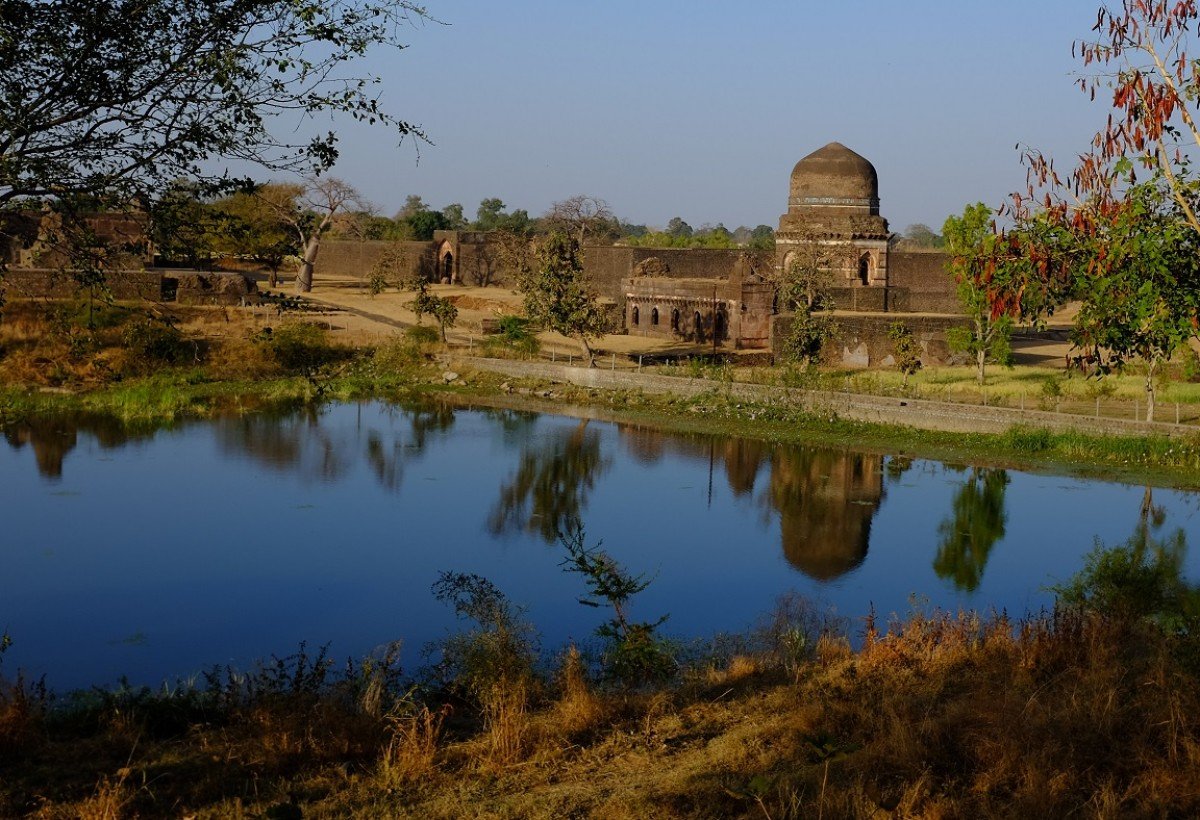
The Octagonal Frame: Capture the entire octagonal structure, including the dome, from a slightly lower angle to emphasize its form and height:
Blue Tile Close-up: Use a zoom lens for a close-up shot of the precious remnants of the blue tiles ...The Octagonal Frame: Capture the entire octagonal structure, including the dome, from a slightly lower angle to emphasize its form and height:
Blue Tile Close-up: Use a zoom lens for a close-up shot of the precious remnants of the blue tiles on the dome's drum:
Symmetry Shot: Position yourself to capture the repeating pattern of the arched openings and decorative recesses on the walls:
Nature's Frame: Frame the tomb with the surrounding foliage or the ruins of the nearby Caravan Sarai for a contextual shot:Photo Gallery
Things To Do
-
Study the Geometry: Walk around the building to fully appreciate its unique octagonal shape and the symmetry of the arched openings:
Search for Blue Tiles: Look closely at the base of the dome for the surviving traces of the brilliant blue tiles, imagining how colorful and striking the dome must have originally looked:
Photography: Capture the building's distinct octagonal form against the backdrop of the trees or the sky:
Visit the Complex: Visit the neighboring Dai ka Mahal and the ruins of the Caravan Sarai to understand the entire Sagar Talao Group of monuments and their context:
Detail Work: Examine the red chiselled masonry for fine craftsmanship and note the interplay of plain stone with the once-tiled dome:
Read MoreStudy the Geometry: Walk around the building to fully appreciate its unique octagonal shape and the symmetry of the arched openings:
Search for Blue Tiles: Look closely at the base of the dome for the surviving traces of the brilliant blue tiles, imagining how colorful and striking the dome must have originally looked:
Photography: Capture the building's distinct octagonal form against the backdrop of the trees or the sky:
Visit the Complex: Visit the neighboring Dai ka Mahal and the ruins of the Caravan Sarai to understand the entire Sagar Talao Group of monuments and their context:
Detail Work: Examine the red chiselled masonry for fine craftsmanship and note the interplay of plain stone with the once-tiled dome:
Reflect and Rest: The pleasant, quiet setting, often surrounded by lush vegetation (especially after the Monsoon), is a perfect spot for a brief rest and reflection:
Guide Context: Engage a guide to explain the architectural significance of the octagonal plan and the influence of the indigenous builders on the masonry:
Information
-
Why Famous:
Octagonal Design: It is famous for its unique octagonal plan among the funerary monuments of Mandu, making it a distinct architectural landmark:
Blue Tile Remnants: The surviving traces of blue tiles on its dome are highly notable, as they re...Octagonal Design: It is famous for its unique octagonal plan among the funerary monuments of Mandu, making it a distinct architectural landmark:
Blue Tile Remnants: The surviving traces of blue tiles on its dome are highly notable, as they represent a rare and colorful decorative technique used during the Malwa Sultanate period:
The Sisterhood of Honor: The existence of this tomb alongside the Dai ka Mahal highlights the rare and honored status of the Dai and her family in the royal court, making it a unique social history symbol: -
Architecture:
Architectural Style: The Mahal is architecturally significant for its octagonal plan, a shape reserved for specific, often important, funerary monuments in Indo-Islamic architecture:
The Exterior: The walls feature alternating arched openings...Architectural Style: The Mahal is architecturally significant for its octagonal plan, a shape reserved for specific, often important, funerary monuments in Indo-Islamic architecture:
The Exterior: The walls feature alternating arched openings and decorative outlines of arches, lending a sense of symmetry. The structure is built of red chiselled masonry, providing a strong, simple base for the once ornate dome:
The Dome: It is crowned by a shapely dome that was originally decorated with a band of striking blue tiles, a rare decorative element in Mandu architecture, suggesting influence or craftsmanship from areas like Persia or the Deccan:
Dimension: The tomb is octagonal in plan, making it compact and geometrically distinct from the larger Dai ka Mahal. The four cardinal points feature open arches for entry and light, enhancing its unique aesthetic: -
How To Reach:
By Air: The nearest airport is Devi Ahilya Bai Holkar Airport in Indore (IDR), about 100 km away. A pre-booked taxi is the most convenient way to reach Mandu in about 3 hours:
By Train: The closest major railway stations are Ratlam Junction ...By Air: The nearest airport is Devi Ahilya Bai Holkar Airport in Indore (IDR), about 100 km away. A pre-booked taxi is the most convenient way to reach Mandu in about 3 hours:
By Train: The closest major railway stations are Ratlam Junction (RTM) at 124 km and Indore Junction (INDB) at 99 km. From there, you must hire road transport to reach Mandu and the Sagar Talao Group:
By Road: The monument is located in the Sagar Talao Group, which is accessible by the main road network connecting Mandu to Dhar (38 km) and other parts of Madhya Pradesh:
By Local Transport: The best way to cover this site is by hiring an auto-rickshaw for the Sagar Talao Group circuit, or by using a private vehicle, as the monuments in this cluster are spread out over a distance: -
Weather and Best Time to Visit:
Different Seasons: Winter (October to March) is the most comfortable and popular time for a visit: Monsoon (July to September) makes the surroundings lush and green, creating a beautiful contrast with the tomb's red stone, offering the most picturesque setting: Summer (April...Different Seasons: Winter (October to March) is the most comfortable and popular time for a visit: Monsoon (July to September) makes the surroundings lush and green, creating a beautiful contrast with the tomb's red stone, offering the most picturesque setting: Summer (April to June) is extremely hot and should be avoided for comfortable sightseeing:
Different Parts of the Day: Late afternoon provides the perfect lighting to highlight the octagonal form and the color of the chiselled masonry: -
Near Tourist Places:
Dai ka Mahal (100 meters), Malik Mughith's Mosque (300 meters), Caravan Sarai (Adjacent), Jali Mahal (500 meters), Hathi Mahal (3 km), Jami Masjid (5 km), Hoshang Shah's Tomb (5 km), Jahaz Mahal (6 km), Hindola Mahal (6 km), Nilkanth Palace (2 km):
Tourism Tips
-
Health & Safety: The surrounding area can be grassy and uneven, so wear good shoes and be mindful of your footing:
Packing: A cap, sunglasses, and water are essential. A camera with good zoom is useful for capturing the tile remnants:Health & Safety: The surrounding area can be grassy and uneven, so wear good shoes and be mindful of your footing:
Packing: A cap, sunglasses, and water are essential. A camera with good zoom is useful for capturing the tile remnants:
Accommodation: Stay in the main Mandu village, as there are no direct accommodations near the Sagar Talao Group:
Other Different Topics: Do not miss visiting the nearby ruins of the Caravan Sarai, which gives a sense of the historical logistics and traveler accommodation of the time:
Reviews
FAQs
Mandu Itineray And Cost:-
Dai ki Chhoti Bahen ka Mahal Tourism:-
Other Places In Mandu :-
Other States In India :-
Information about New and Updated Locations() of Madhya Pradesh Has Been Added :-
Card subtitle
Note:-
Information provided here in good Faith and for reference only.
Near Places
Alamgir Darwaza
Some quick example text to build on the card title and make up the bulk of the card's content.
Go somewhere
Ashrafi Mahal
Some quick example text to build on the card title and make up the bulk of the card's content.
Go somewhere
Bagh Caves
Some quick example text to build on the card title and make up the bulk of the card's content.
Go somewhere
Baz Bahadur's Palace
Some quick example text to build on the card title and make up the bulk of the card's content.
Go somewhere
Bhangi Darwaza
Some quick example text to build on the card title and make up the bulk of the card's content.
Go somewhere
Champa Baoli
Some quick example text to build on the card title and make up the bulk of the card's content.
Go somewhere
Dai ka Mahal
Some quick example text to build on the card title and make up the bulk of the card's content.
Go somewhere
Dai ki Chhoti Bahen ka Mahal
Some quick example text to build on the card title and make up the bulk of the card's content.
Go somewhere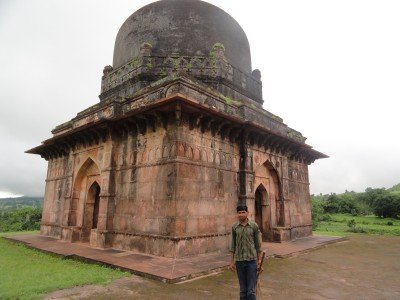
Dai ki Chhoti Behan ka Mahal
Some quick example text to build on the card title and make up the bulk of the card's content.
Go somewhere
Darya Khan's Tomb
Some quick example text to build on the card title and make up the bulk of the card's content.
Go somewhere
Delhi Darwaza
Some quick example text to build on the card title and make up the bulk of the card's content.
Go somewhere
Delhi Gate
Some quick example text to build on the card title and make up the bulk of the card's content.
Go somewhere
Dharampuri
Some quick example text to build on the card title and make up the bulk of the card's content.
Go somewhere
Dilawar Khan's Mosque
Some quick example text to build on the card title and make up the bulk of the card's content.
Go somewhere
Echo Point
Some quick example text to build on the card title and make up the bulk of the card's content.
Go somewhere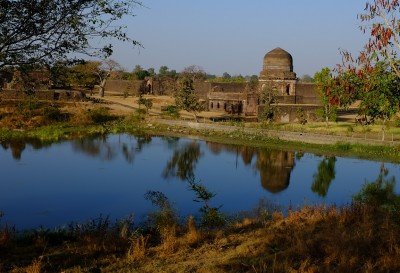
Eco Point
Some quick example text to build on the card title and make up the bulk of the card's content.
Go somewherein Other Cities