

Chanderi
General information
-
Ideal Duration:
1 to 2 DaysPlace Type:
Heritage / CraftEntry Fees:
ASI Monuments: Entry to the fort and major palaces is Rs.25 for Indian citizens; the Chanderi Museum has a separate entry ticket of approximately Rs.20.
Weaving Units: There is no fee to visit the weaving workshops, but it is polite to seek per...ASI Monuments: Entry to the fort and major palaces is Rs.25 for Indian citizens; the Chanderi Museum has a separate entry ticket of approximately Rs.20.
Weaving Units: There is no fee to visit the weaving workshops, but it is polite to seek permission and perhaps make a purchase from the hard-working artisans.Timing:
Standard Timings: Most heritage monuments are open from 8:00 AM to 6:00 PM; the weaving workshops are usually active from 9:00 AM to 7:00 PM.
Best Visit Time: The late afternoon (after 3:30 PM) is the best time to visit the fort to catch th...Standard Timings: Most heritage monuments are open from 8:00 AM to 6:00 PM; the weaving workshops are usually active from 9:00 AM to 7:00 PM.
Best Visit Time: The late afternoon (after 3:30 PM) is the best time to visit the fort to catch the sunset and avoid the midday heat on the stone structures.Special Events:
Chanderi Mahotsav: A vibrant cultural festival held in December that celebrates the town's weaving tradition with fashion shows, folk music, and local food stalls.
Jain Mela: Large annual gatherings at the Khandargiri temples where thousands...Chanderi Mahotsav: A vibrant cultural festival held in December that celebrates the town's weaving tradition with fashion shows, folk music, and local food stalls.
Jain Mela: Large annual gatherings at the Khandargiri temples where thousands of devotees perform rituals and participate in colorful religious processions.Best Photo Spots:
Badal Mahal Gate: The iconic gate serves as a perfect frame for the fort in the background, making it the most photographed spot in the entire town.
Koshak Mahal: The play of light and shadow through the massive stone arches during the late ...Badal Mahal Gate: The iconic gate serves as a perfect frame for the fort in the background, making it the most photographed spot in the entire town.
Koshak Mahal: The play of light and shadow through the massive stone arches during the late afternoon provides excellent opportunities for architectural photography.Photo Gallery
Things To Do
 @@Historical Significance: The Pakhan Darwaja is one of the important historic gateways that once fortified the ancient city of Chanderi, though less prominent than the famous Kati Ghati or Khooni Darwaza. It served as a vital entry and exit point for the inner city (Andar Shehar), controlling trade and movement within the fort walls. The name 'Pakhan' itself signifies 'stone' or 'rock', reflecting its sturdy construction. This gate, alongside others, marks the strategic importance of Chanderi as a military and trade hub between Malwa and Bundelkhand regions across centuries. It often goes unnoticed by mainstream tourists, making it a true remnant of the town's original fortifications and urban layout, dating back possibly to the Malwa Sultanate period or later Bundela restorations. Today, it stands integrated into the modern town's fabric, with local life bustling around its ancient structure, offering a unique glimpse into the layered history of Chanderi.
@@Historical Context of Construction: The Jama Masjid in Chanderi is the largest and one of the oldest mosques in the entire Bundelkhand region, capable of accommodating over 2,000 worshippers during prayer. Its foundational history is tied to the early period of Islamic rule in the area, with its initial foundation possibly laid in 1251 CE by Ghyasuddin Balban of the Delhi Sultanate to commemorate the conquest of Chanderi. However, the current, magnificent structure is generally attributed to the 15th century (specifically 1449-1450 CE or 853 AH) during the reign of the Malwa Sultans. The construction is a testament to the confluence of political and religious power that characterized the town's golden age. @@Blend of Dynastic Influences: The mosque's detailed carving and ornamentation showcase the distinct Indo-Islamic architectural style that flourished under the Malwa Sultanate, which later blended with local Rajput elements. The materials used, primarily local stone, highlight the indigenous resources employed for such grand imperial projects. The prayer hall and surrounding arcades remain well-preserved, offering a deep insight into the religious life of medieval Chanderi. The building stands as a powerful symbol of the city's complex political transitions and enduring historical narrative. Its peaceful, yet commanding presence near the city center makes it an unmissable part of the Chanderi heritage trail, chronicling centuries of rule from the Khiljis to the Mughals. (400 words)
@@History & Significance: The mosque, often referred to as Jama Masjid in Chanderi, is a major religious and historical landmark. It is believed to have been initiated during the reign of the Delhi Sultanate's Naib Balban around 1251 CE after he captured Chanderi. This makes it one of the oldest and largest mosques in the entire Bundelkhand region. Its foundations predate Babur's involvement, but the mosque's name "Babur's Mosque" is sometimes locally used, or it is confused with the mosque built by him on the fort hill (Babur Kataan). The Jama Masjid in the city center is a massive, imposing structure. It was later modified and expanded, with its main entrance being lavishly carved in the 15th century. It stands as a profound symbol of the long-standing Islamic influence in the region, which was strategically located on major central Indian trade routes. Its immense capacity (said to accommodate over 2000 persons) underscores Chanderi's former importance as a bustling, prosperous city. The design features a large courtyard and impressive domes, reflecting the prevailing architectural styles of the Sultanate period. The entire monument, standing near other prominent structures like the Badal Mahal Gate, showcases the rich cultural confluence of Central India.
@@Historical Significance: The Pakhan Darwaja is one of the important historic gateways that once fortified the ancient city of Chanderi, though less prominent than the famous Kati Ghati or Khooni Darwaza. It served as a vital entry and exit point for the inner city (Andar Shehar), controlling trade and movement within the fort walls. The name 'Pakhan' itself signifies 'stone' or 'rock', reflecting its sturdy construction. This gate, alongside others, marks the strategic importance of Chanderi as a military and trade hub between Malwa and Bundelkhand regions across centuries. It often goes unnoticed by mainstream tourists, making it a true remnant of the town's original fortifications and urban layout, dating back possibly to the Malwa Sultanate period or later Bundela restorations. Today, it stands integrated into the modern town's fabric, with local life bustling around its ancient structure, offering a unique glimpse into the layered history of Chanderi.
@@Historical Context of Construction: The Jama Masjid in Chanderi is the largest and one of the oldest mosques in the entire Bundelkhand region, capable of accommodating over 2,000 worshippers during prayer. Its foundational history is tied to the early period of Islamic rule in the area, with its initial foundation possibly laid in 1251 CE by Ghyasuddin Balban of the Delhi Sultanate to commemorate the conquest of Chanderi. However, the current, magnificent structure is generally attributed to the 15th century (specifically 1449-1450 CE or 853 AH) during the reign of the Malwa Sultans. The construction is a testament to the confluence of political and religious power that characterized the town's golden age. @@Blend of Dynastic Influences: The mosque's detailed carving and ornamentation showcase the distinct Indo-Islamic architectural style that flourished under the Malwa Sultanate, which later blended with local Rajput elements. The materials used, primarily local stone, highlight the indigenous resources employed for such grand imperial projects. The prayer hall and surrounding arcades remain well-preserved, offering a deep insight into the religious life of medieval Chanderi. The building stands as a powerful symbol of the city's complex political transitions and enduring historical narrative. Its peaceful, yet commanding presence near the city center makes it an unmissable part of the Chanderi heritage trail, chronicling centuries of rule from the Khiljis to the Mughals. (400 words)
@@History & Significance: The mosque, often referred to as Jama Masjid in Chanderi, is a major religious and historical landmark. It is believed to have been initiated during the reign of the Delhi Sultanate's Naib Balban around 1251 CE after he captured Chanderi. This makes it one of the oldest and largest mosques in the entire Bundelkhand region. Its foundations predate Babur's involvement, but the mosque's name "Babur's Mosque" is sometimes locally used, or it is confused with the mosque built by him on the fort hill (Babur Kataan). The Jama Masjid in the city center is a massive, imposing structure. It was later modified and expanded, with its main entrance being lavishly carved in the 15th century. It stands as a profound symbol of the long-standing Islamic influence in the region, which was strategically located on major central Indian trade routes. Its immense capacity (said to accommodate over 2000 persons) underscores Chanderi's former importance as a bustling, prosperous city. The design features a large courtyard and impressive domes, reflecting the prevailing architectural styles of the Sultanate period. The entire monument, standing near other prominent structures like the Badal Mahal Gate, showcases the rich cultural confluence of Central India.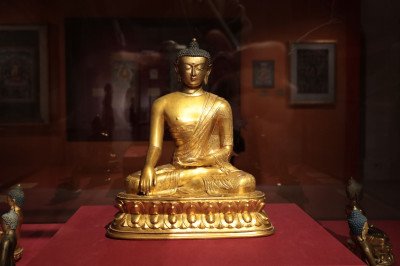 @@Detailed History of Artifacts: The ASI Museum in Chanderi is a magnificent repository of the region's historical wealth, established to preserve and showcase sculptures and architectural remains recovered from the ruins of ancient Chanderi, Budhi Chanderi, and surrounding areas. Opened in 1999, it houses six distinct galleries including the History of Chanderi, Vaishnava, Shaiva, and Jain galleries, each meticulously organized to take visitors on a journey through time. The collection includes exquisite statues of Hindu deities like Lord Vishnu in his various incarnations, stunning Jain Tirthankara figures, and intricate stone carvings dating back to the 10th to 12th centuries. Beyond religious icons, the museum also preserves ancient weaponry, stone coins, and copper plates that provide invaluable insights into the socio-political landscape of the Bundelkhand and Malwa regions. The lush green lawns surrounding the museum are dotted with larger stone artifacts, creating a peaceful outdoor display area. This institution serves not just as a tourist spot but as a research hub for historians and archaeology students who wish to study the transition of art styles from the Pratihara period to the Bundela era. Visiting this museum is essential before exploring the actual ruins of the city, as it provides the necessary context to understand the craftsmanship seen in the local monuments. It stands as a silent witness to the rise and fall of various dynasties that once called Chanderi their home.
@@Bundela Legacy: The Purani Adalat (Old Court) is one of the important civic structures constructed by the Bundela Rajput rulers of Chanderi during their reign, which spanned over two centuries, demonstrating their commitment to administration and justice. @@Architectural Beauty: Despite its function as a court, it is a beautifully designed stone structure, showcasing the distinctive Bundela style that often incorporated elements of local and earlier Sultanate architecture. @@Multi-Storied Design: The building is noted for its square plan and two to three stories, a feature common in historical Indian administrative and residential buildings designed for ventilation and cooling. @@Civic History: It represents the administrative heart of the old town, where justice was dispensed, making it a place of significant civic and social history. The building has suffered some neglect but remains structurally sound and appealing.
@@A Major Center of Jain Heritage: Khandargiri is a highly revered Digambar Jain pilgrimage center located on a hillock, about 2 kilometers south of the main Chanderi town. Historically, the entire region, particularly Budhi Chanderi (Old Chanderi), was a significant hub of Jain philosophy, art, and culture dating back over a thousand years. This site in particular rose to prominence for its monumental rock-cut sculptures. @@The Colossal Adinath Statue: The most striking feature of the complex is the colossal, monolithic rock-cut statue of the first Jain Tirthankara, Rishabhnath, also known as Adinath. Carved directly into the hillside, this towering figure stands at a magnificent height of approximately 45 feet. The sheer size and powerful presence of the statue, which is over 700 years old, make it a major attraction for both pilgrims and art historians alike, signifying the long and deep roots of Jainism in Central India. @@Temple and Cave Complex: The pilgrimage site includes the main rock-cut statue, several smaller rock-cut images of other Tirthankaras carved into the hill face, and two ancient caves that also house enshrined statues. At the foot of the hill, there are modern temples and Dharamshalas (guest houses) for the convenience of pilgrims, which continue the tradition of spiritual practice and community gathering. The site offers a profound sense of antiquity and spiritual serenity away from the bustle of the town. (400 words)
@@History & Significance: The Battisi Baoli (Stepwell of Thirty-Two) is the largest and arguably the most architecturally advanced stepwell in the Chanderi region, completed in 1485 CE during the reign of Malwa Sultan Ghyasuddin Khilji. It was commissioned by Taghi, the son of the local revenue officer (Shariq-ul-Mulk). Its name derives from the 32 ghats (platforms/steps) at each of its four descending levels. The Baoli was not just a utilitarian water source but a grand public space, as the inscriptions reveal that Taghi also built a mosque and a lush garden nearby. Its most famed feature is the mysterious constant water level that remains largely unchanged throughout the year, regardless of the season, suggesting a connection to a permanent underground aquifer or spring—a testament to medieval hydrological engineering. Local legend and an inscription boldly state that the water level will remain constant as long as there is water in the ocean. The stepwell played a crucial role in providing a dependable water source for the large population of medieval Chanderi.Show All
@@A Unique Islamic Monument: The Jama Masjid of Chanderi is one of the most significant religious structures in the town, built during the 15th century under the patronage of the Sultanate rulers. Unlike most other grand mosques in India, this structure is famous for not having any minarets, a unique architectural choice that sets it apart. The mosque features three massive white marble domes that dominate the skyline of the old city. The entrance is through an exquisitely carved gateway that was reportedly brought from the ruins of a palace in Tamarpura. Inside, the spacious courtyard is flanked by arched cloisters with delicate carvings. The prayer hall is a masterpiece of stonework, featuring rows of pillars that support the domes and create a sense of vast openness. The mosque can accommodate over 2,000 worshippers at a time, making it the largest in the region. Its design reflects the "Chanderi Style" of architecture, which combines traditional Islamic elements with local Bundeli stone-crafting techniques. Even today, it remains an active place of worship, vibrating with the spiritual energy of the local community. The mosque serves as a center for social and religious life, standing as a symbol of the town's diverse cultural history.
@@Detailed History of Artifacts: The ASI Museum in Chanderi is a magnificent repository of the region's historical wealth, established to preserve and showcase sculptures and architectural remains recovered from the ruins of ancient Chanderi, Budhi Chanderi, and surrounding areas. Opened in 1999, it houses six distinct galleries including the History of Chanderi, Vaishnava, Shaiva, and Jain galleries, each meticulously organized to take visitors on a journey through time. The collection includes exquisite statues of Hindu deities like Lord Vishnu in his various incarnations, stunning Jain Tirthankara figures, and intricate stone carvings dating back to the 10th to 12th centuries. Beyond religious icons, the museum also preserves ancient weaponry, stone coins, and copper plates that provide invaluable insights into the socio-political landscape of the Bundelkhand and Malwa regions. The lush green lawns surrounding the museum are dotted with larger stone artifacts, creating a peaceful outdoor display area. This institution serves not just as a tourist spot but as a research hub for historians and archaeology students who wish to study the transition of art styles from the Pratihara period to the Bundela era. Visiting this museum is essential before exploring the actual ruins of the city, as it provides the necessary context to understand the craftsmanship seen in the local monuments. It stands as a silent witness to the rise and fall of various dynasties that once called Chanderi their home.
@@Bundela Legacy: The Purani Adalat (Old Court) is one of the important civic structures constructed by the Bundela Rajput rulers of Chanderi during their reign, which spanned over two centuries, demonstrating their commitment to administration and justice. @@Architectural Beauty: Despite its function as a court, it is a beautifully designed stone structure, showcasing the distinctive Bundela style that often incorporated elements of local and earlier Sultanate architecture. @@Multi-Storied Design: The building is noted for its square plan and two to three stories, a feature common in historical Indian administrative and residential buildings designed for ventilation and cooling. @@Civic History: It represents the administrative heart of the old town, where justice was dispensed, making it a place of significant civic and social history. The building has suffered some neglect but remains structurally sound and appealing.
@@A Major Center of Jain Heritage: Khandargiri is a highly revered Digambar Jain pilgrimage center located on a hillock, about 2 kilometers south of the main Chanderi town. Historically, the entire region, particularly Budhi Chanderi (Old Chanderi), was a significant hub of Jain philosophy, art, and culture dating back over a thousand years. This site in particular rose to prominence for its monumental rock-cut sculptures. @@The Colossal Adinath Statue: The most striking feature of the complex is the colossal, monolithic rock-cut statue of the first Jain Tirthankara, Rishabhnath, also known as Adinath. Carved directly into the hillside, this towering figure stands at a magnificent height of approximately 45 feet. The sheer size and powerful presence of the statue, which is over 700 years old, make it a major attraction for both pilgrims and art historians alike, signifying the long and deep roots of Jainism in Central India. @@Temple and Cave Complex: The pilgrimage site includes the main rock-cut statue, several smaller rock-cut images of other Tirthankaras carved into the hill face, and two ancient caves that also house enshrined statues. At the foot of the hill, there are modern temples and Dharamshalas (guest houses) for the convenience of pilgrims, which continue the tradition of spiritual practice and community gathering. The site offers a profound sense of antiquity and spiritual serenity away from the bustle of the town. (400 words)
@@History & Significance: The Battisi Baoli (Stepwell of Thirty-Two) is the largest and arguably the most architecturally advanced stepwell in the Chanderi region, completed in 1485 CE during the reign of Malwa Sultan Ghyasuddin Khilji. It was commissioned by Taghi, the son of the local revenue officer (Shariq-ul-Mulk). Its name derives from the 32 ghats (platforms/steps) at each of its four descending levels. The Baoli was not just a utilitarian water source but a grand public space, as the inscriptions reveal that Taghi also built a mosque and a lush garden nearby. Its most famed feature is the mysterious constant water level that remains largely unchanged throughout the year, regardless of the season, suggesting a connection to a permanent underground aquifer or spring—a testament to medieval hydrological engineering. Local legend and an inscription boldly state that the water level will remain constant as long as there is water in the ocean. The stepwell played a crucial role in providing a dependable water source for the large population of medieval Chanderi.Show All
@@A Unique Islamic Monument: The Jama Masjid of Chanderi is one of the most significant religious structures in the town, built during the 15th century under the patronage of the Sultanate rulers. Unlike most other grand mosques in India, this structure is famous for not having any minarets, a unique architectural choice that sets it apart. The mosque features three massive white marble domes that dominate the skyline of the old city. The entrance is through an exquisitely carved gateway that was reportedly brought from the ruins of a palace in Tamarpura. Inside, the spacious courtyard is flanked by arched cloisters with delicate carvings. The prayer hall is a masterpiece of stonework, featuring rows of pillars that support the domes and create a sense of vast openness. The mosque can accommodate over 2,000 worshippers at a time, making it the largest in the region. Its design reflects the "Chanderi Style" of architecture, which combines traditional Islamic elements with local Bundeli stone-crafting techniques. Even today, it remains an active place of worship, vibrating with the spiritual energy of the local community. The mosque serves as a center for social and religious life, standing as a symbol of the town's diverse cultural history.Information
-
Why Famous:
Chanderi Handlooms: It is the world center for the production of the prestigious Chanderi silk sarees, which are recognized with a Geographical Indication (GI) tag.
Film Location: The town gained modern fame as the setting for the hit Bollyw...Chanderi Handlooms: It is the world center for the production of the prestigious Chanderi silk sarees, which are recognized with a Geographical Indication (GI) tag.
Film Location: The town gained modern fame as the setting for the hit Bollywood movie "Stree," which highlighted its hauntingly beautiful old-world architecture and narrow lanes. -
Architecture:
Bundela & Malwa Style: The architecture features high-domed ceilings and intricate jali (lattice) work; the Koshak Mahal is a grand four-storied palace built with white sandstone.
Dimensions: The Badal Mahal Gate stands 15 meters high and i...Bundela & Malwa Style: The architecture features high-domed ceilings and intricate jali (lattice) work; the Koshak Mahal is a grand four-storied palace built with white sandstone.
Dimensions: The Badal Mahal Gate stands 15 meters high and is a singular, freestanding ceremonial gateway with two arched openings and elaborate floral motifs. -
How To Reach:
By Air: The nearest airport is Gwalior (210 km) or Bhopal (215 km); from these cities, one can hire a taxi or take a bus for a 5-hour road journey.
By Train: Lalitpur (37 km) in Uttar Pradesh is the nearest major railway station on the Delh...By Air: The nearest airport is Gwalior (210 km) or Bhopal (215 km); from these cities, one can hire a taxi or take a bus for a 5-hour road journey.
By Train: Lalitpur (37 km) in Uttar Pradesh is the nearest major railway station on the Delhi-Chennai line, with frequent taxis and buses to Chanderi.
By Road: It is well-connected by state highways to Jhansi (110 km), Guna (125 km), and Orchha (110 km), making it a popular stop on the heritage circuit.
By Local Transport: The town is best explored on foot or by hiring an auto-rickshaw; for visiting the distant Koshak Mahal or Old Chanderi, a taxi is recommended. -
Weather and Best Time to Visit:
Winter Season: October to March is the peak tourist season as the weather is cool and dry, making it ideal for walking through the narrow heritage lanes.
Post-Monsoon: September is also beautiful as the surrounding hills and lakes are full a...Winter Season: October to March is the peak tourist season as the weather is cool and dry, making it ideal for walking through the narrow heritage lanes.
Post-Monsoon: September is also beautiful as the surrounding hills and lakes are full and green, though it can be a bit humid for long outdoor treks. -
Near Tourist Places:
Koshak Mahal (4 km), Badal Mahal Gate (0 km), Chanderi Fort (1 km), Khandargiri (3 km), Shehzadi Ka Roza (2 km), Jama Masjid (0. 5 km), Rajghat Dam (15 km), Buddhi Chanderi (20 km), Lalitpur (37 km), Deogarh (70 km).
Tourism Tips
-
Health & Safety: Chanderi is a peaceful town with low crime; carry a basic first-aid kit and mosquito repellent if you plan to visit the forested areas of Old Chanderi.
Packing Essentials: Pack comfortable walking shoes as the fort and old ...Health & Safety: Chanderi is a peaceful town with low crime; carry a basic first-aid kit and mosquito repellent if you plan to visit the forested areas of Old Chanderi.
Packing Essentials: Pack comfortable walking shoes as the fort and old town involve a lot of uphill walking; carry a light scarf or shawl for visiting religious sites.
Shopping Tip: Always look for the Handloom Mark and GI tag when buying Chanderi sarees to ensure you are getting an authentic, hand-woven product.
Accommodation: MP Tourism operates Kila Kothi, a heritage hotel located right on the fort hill, offering the best views and a royal stay experience.
Reviews
FAQs
Chanderi Itineray And Cost:-
Information about New and Updated Locations() of Madhya Pradesh Has Been Added :-
Card subtitle
Note:-
Information provided here in good Faith and for reference only.
All information and pictures will be updated soon, please keep visiting.
Near Places

Amarkantak
Some quick example text to build on the card title and make up the bulk of the card's content.
Go somewhere
Bhedaghat
Some quick example text to build on the card title and make up the bulk of the card's content.
Go somewhere
Bhopal
Some quick example text to build on the card title and make up the bulk of the card's content.
Go somewhere
Burhanpur
Some quick example text to build on the card title and make up the bulk of the card's content.
Go somewhere
Chanderi
Some quick example text to build on the card title and make up the bulk of the card's content.
Go somewhere
Chitrakoot
Some quick example text to build on the card title and make up the bulk of the card's content.
Go somewhere
Gwalior
Some quick example text to build on the card title and make up the bulk of the card's content.
Go somewhere
Indore
Some quick example text to build on the card title and make up the bulk of the card's content.
Go somewhere
Jabalpur
Some quick example text to build on the card title and make up the bulk of the card's content.
Go somewhere
Khajuraho
Some quick example text to build on the card title and make up the bulk of the card's content.
Go somewherein Other Cities