

Khajuraho
General information
-
Ideal Duration:
2-3 DaysPlace Type:
Heritage & PilgrimageEntry Fees:
Indian Citizens: Approximately 40 INR for the Western Group; free for other groups.
Foreign Tourists: Approximately 600 INR for the main complex.
Sound Show: Roughly 250 INR for Indians and 700 INR for fore...Indian Citizens: Approximately 40 INR for the Western Group; free for other groups.
Foreign Tourists: Approximately 600 INR for the main complex.
Sound Show: Roughly 250 INR for Indians and 700 INR for foreigners depending on the language selected.Timing:
Temple Hours: Open daily from Sunrise to Sunset (approx. 6:00 AM to 6:00 PM).
Ideal Visit: October to March is the best time due to pleasant weather.
Sound Show: Held in the evening, usually 6:30 PM (Winter...Temple Hours: Open daily from Sunrise to Sunset (approx. 6:00 AM to 6:00 PM).
Ideal Visit: October to March is the best time due to pleasant weather.
Sound Show: Held in the evening, usually 6:30 PM (Winter) and 7:30 PM (Summer).Special Events:
Khajuraho Dance Festival: Held in February, this week-long event features India's top classical dancers performing against the backdrop of the illuminated temples.
Mahashivratri: This festival sees thousands of devotees gathering at the Mata...Khajuraho Dance Festival: Held in February, this week-long event features India's top classical dancers performing against the backdrop of the illuminated temples.
Mahashivratri: This festival sees thousands of devotees gathering at the Matangeshvara Temple to offer prayers to the 8-foot tall emerald-colored Shiva Lingam.Best Photo Spots:
Western Group Sunrise: The first light of the sun turns the golden sandstone temples into glowing jewels, making it the perfect time for wide-angle shots.
Vamana Temple: This smaller temple in the Eastern Group offers a quiet environment and...Western Group Sunrise: The first light of the sun turns the golden sandstone temples into glowing jewels, making it the perfect time for wide-angle shots.
Vamana Temple: This smaller temple in the Eastern Group offers a quiet environment and unique angles for capturing the intricate Shikhara against the blue sky.Photo Gallery
Things To Do
 @@Historical Context: The Khajuraho Airport (HJR), officially named V?jpayee International Airport after the former Indian Prime Minister, serves as the main air access point for the town of Khajuraho and the surrounding region, including the Panna National Park. The airport plays a crucial role in promoting tourism to the UNESCO World Heritage Site. Its existence makes Khajuraho highly accessible to both domestic and international tourists, significantly reducing travel time compared to road or rail. It is a smaller, well-maintained airport with an emphasis on tourist facilitation. Despite its 'International' designation, it primarily handles domestic flights connecting Khajuraho to major metropolitan hubs like Delhi and Varanasi. The airport's architecture and design are simple but functional, reflecting the needs of a small but significant tourist destination. Its efficient operation is key to the local tourism economy, as it allows visitors to arrive and begin their temple tour within a short period.:
 @@A Temple of Shifting Deities: Built between 1000 and 1025 AD, the Devi Jagadambi Temple is one of the most aesthetically refined temples in the Western Group. Originally, the temple may have been dedicated to Lord Vishnu, which is suggested by an image of Vishnu on the entrance lintel. Later, it was dedicated to the Hindu trinity, and finally, the sanctum was consecrated with a large, beautiful image of Goddess Parvati (or Jagadambi), the Goddess of the Universe. It is structurally similar to the neighboring Chitragupta Temple but is renowned for its three famous bands of sculpture that encircle its body. The exquisite carvings include a significant number of the controversial mithuna (amorous) sculptures, but also a wealth of beautiful sura-sundaris (celestial maidens) and various deities.
@@Historical Significance of Adinath Temple: This 11th-century temple is part of the Jain Group of Temples in Khajuraho, dedicated to Lord Adinath (or Rishabh Dev), the first Jain Tirthankara. Built during the Chandela Dynasty, it stands next to the Parsvanath Temple. While partially ruined, it is still an active site of worship for the Jain community. The temple's exterior features a single band of finely carved sculptures, including sura-sundaris (celestial maidens), and notably lacks the complex erotic carvings typical of the Western Group. Its construction reflects a shift in artistic focus within the Chandela period, prioritizing the depiction of various deities and celestial beings over mithuna scenes. Many broken and whole Jain statues with valuable dated inscriptions were collected from the vicinity, aiding in historical dating.
The Vishwanatha Temple is one of the most magnificent and well-preserved structures in the Western Group of Khajuraho. Dedicated to Lord Shiva, it was commissioned by the Chandela King Dhanga around 999-1002 AD. The name Vishwanatha translates to "Lord of the Universe," a fitting title for this architectural marvel. It is a Panchayatana temple, meaning it originally had four smaller subsidiary shrines at the corners of the main platform, though only two remain today. The temple is famous for its intricate shikhara (tower) which is designed to look like the peaks of the Himalayas, specifically Mount Kailash. Inside the sanctum, there is a massive stone Lingam, and the temple complex also includes a separate shrine for Nandi, the sacred bull, located directly opposite the main entrance. The exterior walls are a riot of carvings, featuring some of the most famous erotic art of Khajuraho, as well as depictions of musicians, dancers, and gods. An inscription found here mentions two Lingams—one made of emerald and one of stone—though only the stone one exists today. The temple represents the pinnacle of the Nagara style, where every inch of stone is utilized to tell a story of life, love, and divinity. It remains a key highlight for anyone interested in the spiritual and artistic history of medieval India.
The Shantinatha Temple is an exquisite gem located within the Eastern Group of Temples in Khajuraho. Dedicated to Lord Shantinatha, the 16th Jain Tirthankara, this temple is a living site of worship, unlike many other historical monuments in the area. It was originally built during the Chandela period in the 11th Century, but the current structure has undergone significant renovations in the 19th Century to preserve its sanctity. The temple complex is part of the UNESCO World Heritage Site and stands out due to its serene spiritual environment and well-preserved rituals. Inside the sanctum, visitors are greeted by a massive 12-foot high idol of Lord Shantinatha, which is awe-inspiring in its scale and craftsmanship. The walls are adorned with various stone inscriptions and smaller shrines dedicated to other Tirthankaras. Walking through the temple, one can feel the deep-rooted Jain philosophy of non-violence and peace reflecting through the quiet corridors. It is a place where history and modern devotion meet seamlessly. Visitors often find solace in the temple's courtyard, which is surrounded by multiple smaller cells containing ancient Tirthankara statues. The temple serves as a vital center for the local Digambar Jain community and pilgrims from across the globe. Exploring this temple offers a profound insight into the medieval religious tolerance of the Chandela kings who supported both Hindu and Jain faiths. The intricate details of the carvings, though partially restored, still tell stories of ancient wisdom and spiritual discipline. It is a must-visit for anyone looking to go beyond the erotic carvings of Khajuraho and discover the spiritual depth of Indian heritage. The temple's atmosphere is particularly enchanting during the morning hours when the sound of chants fills the air. It remains one of the most culturally significant landmarks in the region today.
@@A Temple of Shifting Deities: Built between 1000 and 1025 AD, the Devi Jagadambi Temple is one of the most aesthetically refined temples in the Western Group. Originally, the temple may have been dedicated to Lord Vishnu, which is suggested by an image of Vishnu on the entrance lintel. Later, it was dedicated to the Hindu trinity, and finally, the sanctum was consecrated with a large, beautiful image of Goddess Parvati (or Jagadambi), the Goddess of the Universe. It is structurally similar to the neighboring Chitragupta Temple but is renowned for its three famous bands of sculpture that encircle its body. The exquisite carvings include a significant number of the controversial mithuna (amorous) sculptures, but also a wealth of beautiful sura-sundaris (celestial maidens) and various deities.
@@Historical Significance of Adinath Temple: This 11th-century temple is part of the Jain Group of Temples in Khajuraho, dedicated to Lord Adinath (or Rishabh Dev), the first Jain Tirthankara. Built during the Chandela Dynasty, it stands next to the Parsvanath Temple. While partially ruined, it is still an active site of worship for the Jain community. The temple's exterior features a single band of finely carved sculptures, including sura-sundaris (celestial maidens), and notably lacks the complex erotic carvings typical of the Western Group. Its construction reflects a shift in artistic focus within the Chandela period, prioritizing the depiction of various deities and celestial beings over mithuna scenes. Many broken and whole Jain statues with valuable dated inscriptions were collected from the vicinity, aiding in historical dating.
The Vishwanatha Temple is one of the most magnificent and well-preserved structures in the Western Group of Khajuraho. Dedicated to Lord Shiva, it was commissioned by the Chandela King Dhanga around 999-1002 AD. The name Vishwanatha translates to "Lord of the Universe," a fitting title for this architectural marvel. It is a Panchayatana temple, meaning it originally had four smaller subsidiary shrines at the corners of the main platform, though only two remain today. The temple is famous for its intricate shikhara (tower) which is designed to look like the peaks of the Himalayas, specifically Mount Kailash. Inside the sanctum, there is a massive stone Lingam, and the temple complex also includes a separate shrine for Nandi, the sacred bull, located directly opposite the main entrance. The exterior walls are a riot of carvings, featuring some of the most famous erotic art of Khajuraho, as well as depictions of musicians, dancers, and gods. An inscription found here mentions two Lingams—one made of emerald and one of stone—though only the stone one exists today. The temple represents the pinnacle of the Nagara style, where every inch of stone is utilized to tell a story of life, love, and divinity. It remains a key highlight for anyone interested in the spiritual and artistic history of medieval India.
The Shantinatha Temple is an exquisite gem located within the Eastern Group of Temples in Khajuraho. Dedicated to Lord Shantinatha, the 16th Jain Tirthankara, this temple is a living site of worship, unlike many other historical monuments in the area. It was originally built during the Chandela period in the 11th Century, but the current structure has undergone significant renovations in the 19th Century to preserve its sanctity. The temple complex is part of the UNESCO World Heritage Site and stands out due to its serene spiritual environment and well-preserved rituals. Inside the sanctum, visitors are greeted by a massive 12-foot high idol of Lord Shantinatha, which is awe-inspiring in its scale and craftsmanship. The walls are adorned with various stone inscriptions and smaller shrines dedicated to other Tirthankaras. Walking through the temple, one can feel the deep-rooted Jain philosophy of non-violence and peace reflecting through the quiet corridors. It is a place where history and modern devotion meet seamlessly. Visitors often find solace in the temple's courtyard, which is surrounded by multiple smaller cells containing ancient Tirthankara statues. The temple serves as a vital center for the local Digambar Jain community and pilgrims from across the globe. Exploring this temple offers a profound insight into the medieval religious tolerance of the Chandela kings who supported both Hindu and Jain faiths. The intricate details of the carvings, though partially restored, still tell stories of ancient wisdom and spiritual discipline. It is a must-visit for anyone looking to go beyond the erotic carvings of Khajuraho and discover the spiritual depth of Indian heritage. The temple's atmosphere is particularly enchanting during the morning hours when the sound of chants fills the air. It remains one of the most culturally significant landmarks in the region today.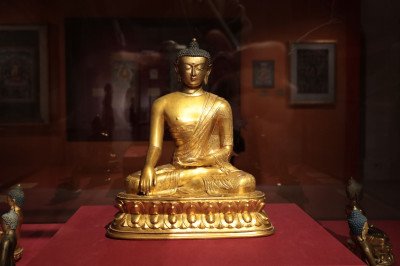 @@Historical Context: The Jain Museum, officially known as the Sahu Shanti Prasad Jain Kala Sangrahalaya, is a specialized museum dedicated to the art, iconography, and architectural fragments of the Jain temples of Khajuraho. Established near the Eastern Group of Temples, the complex which features the prominent Parshvanatha, Adinatha, and Shantinatha Temples, it serves as the repository for hundreds of salvaged sculptures and architectural ruins. Many of these artifacts were recovered from the surrounding ruined temples, including the colossal Ghantai Temple Ruins, which were once scattered across the area. The museum plays a crucial role in preserving these relics, some of which are older than the surviving temples themselves. It was set up with the aim of providing an organized view of Jain heritage, which thrived alongside the Hindu faith under the Chandela rulers. The collection provides a comprehensive insight into the religious and artistic life of the Jain community during the medieval period. It is well-maintained and provides context to the spiritual side of Khajuraho's history.:
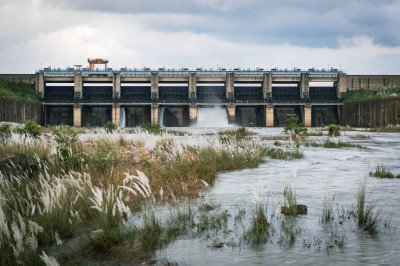 @@A Natural Escape in Khajuraho: Beni Sagar Dam is a man-made reservoir built on the Khuddar River, serving as a major water source and a popular recreational spot just a short drive from the main temple complex. Stretching over approximately 8 square kilometers, the dam area is known for its serene, tranquil environment, making it a favorite for nature lovers and locals seeking a break from the busy town. The lush greenery surrounding the reservoir provides a beautiful, picturesque landscape, particularly during and after the Monsoon season. It is not an ancient monument like the temples but a functional and scenic attraction. It is a great spot to witness the local community relaxing and enjoying the water.Show All
@@Wilderness and Wildlife: Located a short drive from the temples, Panna National Park is a premier tiger reserve and a haven for biodiversity. Spanning over 540 square kilometers along the banks of the Ken River, the park is famous for its successful tiger reintroduction program. The landscape is a breathtaking mix of deep gorges, dense teak forests, and sprawling grasslands that resemble the African savannah. Visitors can spot the Royal Bengal Tiger, Indian Leopard, Sloth Bear, and over 200 species of birds. The river itself is home to the Mugger crocodile and the rare Gharial. A safari through the Madla Gate takes you through the heart of this rugged terrain, offering a chance to witness nature in its rawest form. The park also holds historical significance, with ruins of ancient shrines and the legendary Pandav Falls located within its vicinity. It is a must-visit for anyone looking to balance the stone art of Khajuraho with the living art of the Indian jungle.
@@A Natural Escape in Khajuraho: Beni Sagar Dam is a man-made reservoir built on the Khuddar River, serving as a major water source and a popular recreational spot just a short drive from the main temple complex. Stretching over approximately 8 square kilometers, the dam area is known for its serene, tranquil environment, making it a favorite for nature lovers and locals seeking a break from the busy town. The lush greenery surrounding the reservoir provides a beautiful, picturesque landscape, particularly during and after the Monsoon season. It is not an ancient monument like the temples but a functional and scenic attraction. It is a great spot to witness the local community relaxing and enjoying the water.Show All
@@Wilderness and Wildlife: Located a short drive from the temples, Panna National Park is a premier tiger reserve and a haven for biodiversity. Spanning over 540 square kilometers along the banks of the Ken River, the park is famous for its successful tiger reintroduction program. The landscape is a breathtaking mix of deep gorges, dense teak forests, and sprawling grasslands that resemble the African savannah. Visitors can spot the Royal Bengal Tiger, Indian Leopard, Sloth Bear, and over 200 species of birds. The river itself is home to the Mugger crocodile and the rare Gharial. A safari through the Madla Gate takes you through the heart of this rugged terrain, offering a chance to witness nature in its rawest form. The park also holds historical significance, with ruins of ancient shrines and the legendary Pandav Falls located within its vicinity. It is a must-visit for anyone looking to balance the stone art of Khajuraho with the living art of the Indian jungle.Information
-
Why Famous:
World Heritage Status: Recognized by UNESCO in 1986, it is famous for being one of the most stunning examples of medieval Indian temple art.
Erotic Sculptures: While only 10% of the art is erotic, it is world-famous for its open depiction of...World Heritage Status: Recognized by UNESCO in 1986, it is famous for being one of the most stunning examples of medieval Indian temple art.
Erotic Sculptures: While only 10% of the art is erotic, it is world-famous for its open depiction of human intimacy and the Kama Sutra.
Spiritual Grandeur: It is a major pilgrimage center for Shaivism and Jainism, housing the massive Matangeshvara lingam which is still worshipped today. -
Architecture:
Nagara Style: The temples are built in the classic Nagara architectural style characterized by a high curvilinear spire called a Shikhara.
Dimension and Scale: The Kandariya Mahadeva temple, the largest here, stands 31 meters tall and 20 met...Nagara Style: The temples are built in the classic Nagara architectural style characterized by a high curvilinear spire called a Shikhara.
Dimension and Scale: The Kandariya Mahadeva temple, the largest here, stands 31 meters tall and 20 meters wide, resting on a massive stone plinth.
Material Used: Local buff-colored sandstone was used for the primary structures, with granite foundations ensuring stability for over a thousand years of existence.
Mandala Design: The layout follows the Vastu Purusha Mandala grid, a geometric plan that aligns the sanctum with cosmic energies and cardinal directions. -
How To Reach:
By Air: Khajuraho Airport (HJR) has direct flights from Delhi and Agra.
By Train: Khajuraho Railway Station connects to Delhi via the UP Sampark Kranti Express.
By Road: Well-connected to Bhopal (370 KMS) an...By Air: Khajuraho Airport (HJR) has direct flights from Delhi and Agra.
By Train: Khajuraho Railway Station connects to Delhi via the UP Sampark Kranti Express.
By Road: Well-connected to Bhopal (370 KMS) and Jhansi (175 KMS) via NH-39 and private buses.
Local Transport: Auto-rickshaws and bicycles are the most common and convenient ways to move around the small town. -
Weather and Best Time to Visit:
Winter Season: October to February offers cool days and cold nights, perfect for long walks through the massive temple complexes without getting tired.
Monsoon Season: July to September makes the surrounding landscape lush green, though outd...Winter Season: October to February offers cool days and cold nights, perfect for long walks through the massive temple complexes without getting tired.
Monsoon Season: July to September makes the surrounding landscape lush green, though outdoor photography can be tricky during heavy rain showers.
Morning Hours: Visit the temples between 6:00 AM and 9:00 AM for soft light, fewer crowds, and a serene spiritual atmosphere. -
Near Tourist Places:
Panna Tiger Reserve (25 KMS), Raneh Falls (20 KMS), Ken River (25 KMS), Ajaygarh Fort (80 KMS), Kalinjar Fort (100 KMS), Pandav Falls (35 KMS), Beni Sagar Dam (10 KMS), Gangau Dam (30 KMS), Dhubela Museum (65 KMS), Rajgarh Palace (25 KMS).
Tourism Tips
-
Footwear: Wear comfortable walking shoes as you will be on your feet for hours; remember to remove them before entering the temple sanctums.
Guides: Hire only government-approved guides who wear official badges to ensure you get accurate hi...Footwear: Wear comfortable walking shoes as you will be on your feet for hours; remember to remove them before entering the temple sanctums.
Guides: Hire only government-approved guides who wear official badges to ensure you get accurate historical information rather than local myths.
Hydration: Carry a reusable water bottle and wear a hat, as the sun can be quite strong even in winter while exploring open temple courtyards.
Dress Code: Dress modestly out of respect for the religious nature of the site, covering shoulders and knees when entering active places of worship.
Reviews
FAQs
Khajuraho Itineray And Cost:-
Information about New and Updated Locations() of Madhya Pradesh Has Been Added :-
Card subtitle
Note:-
Information provided here in good Faith and for reference only.
All information and pictures will be updated soon, please keep visiting.
Near Places

Amarkantak
Some quick example text to build on the card title and make up the bulk of the card's content.
Go somewhere
Bhedaghat
Some quick example text to build on the card title and make up the bulk of the card's content.
Go somewhere
Bhopal
Some quick example text to build on the card title and make up the bulk of the card's content.
Go somewhere
Burhanpur
Some quick example text to build on the card title and make up the bulk of the card's content.
Go somewhere
Chanderi
Some quick example text to build on the card title and make up the bulk of the card's content.
Go somewhere
Chitrakoot
Some quick example text to build on the card title and make up the bulk of the card's content.
Go somewhere
Gwalior
Some quick example text to build on the card title and make up the bulk of the card's content.
Go somewhere
Indore
Some quick example text to build on the card title and make up the bulk of the card's content.
Go somewhere
Jabalpur
Some quick example text to build on the card title and make up the bulk of the card's content.
Go somewhere
Khajuraho
Some quick example text to build on the card title and make up the bulk of the card's content.
Go somewherein Other Cities