
Eastern Gateway
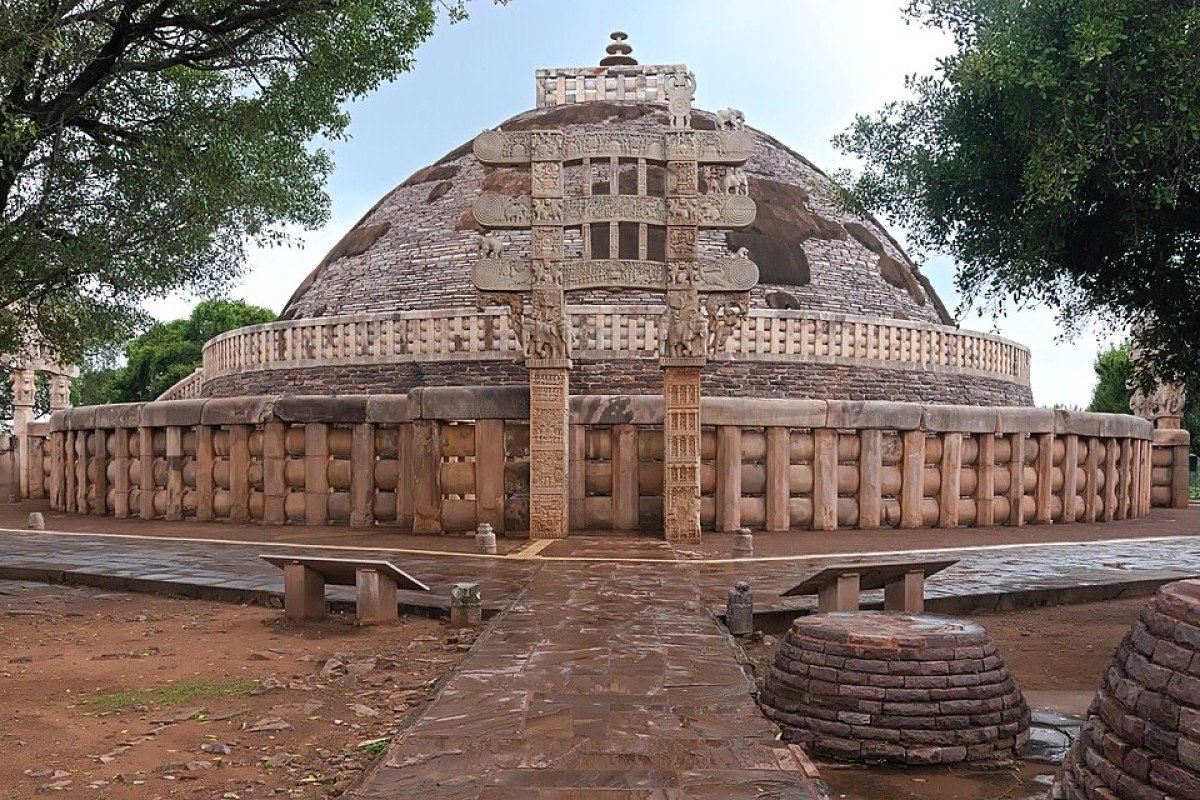
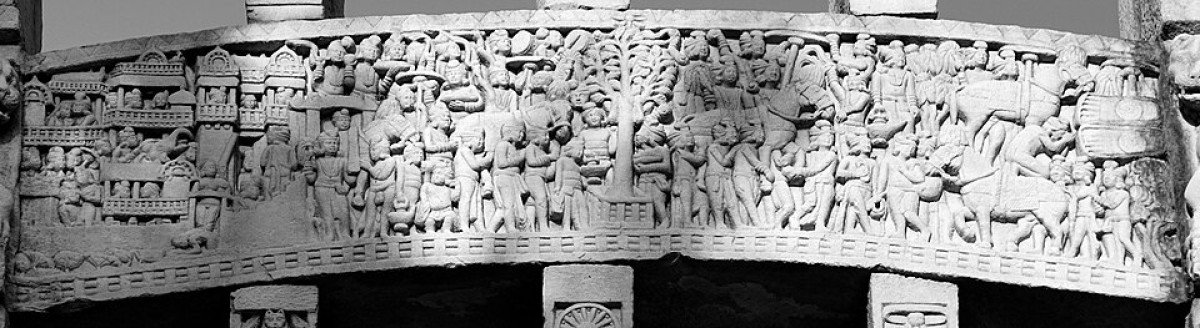
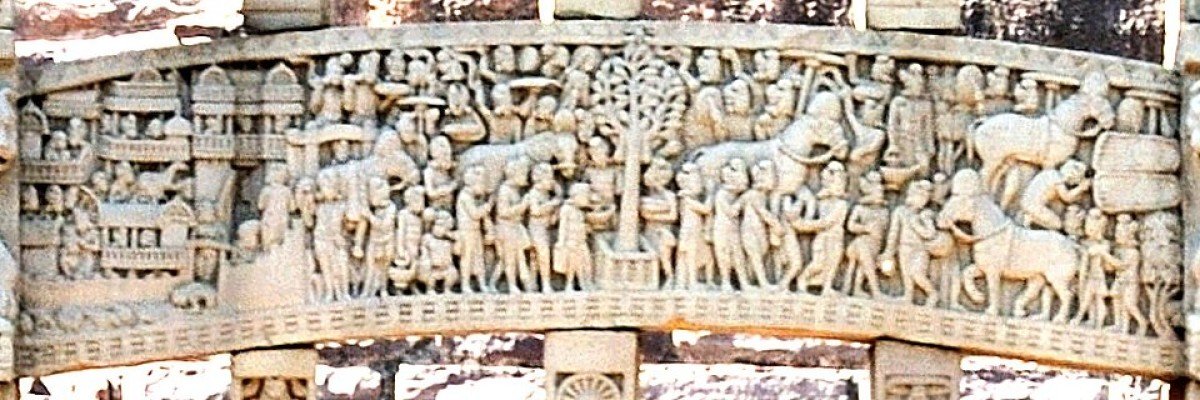
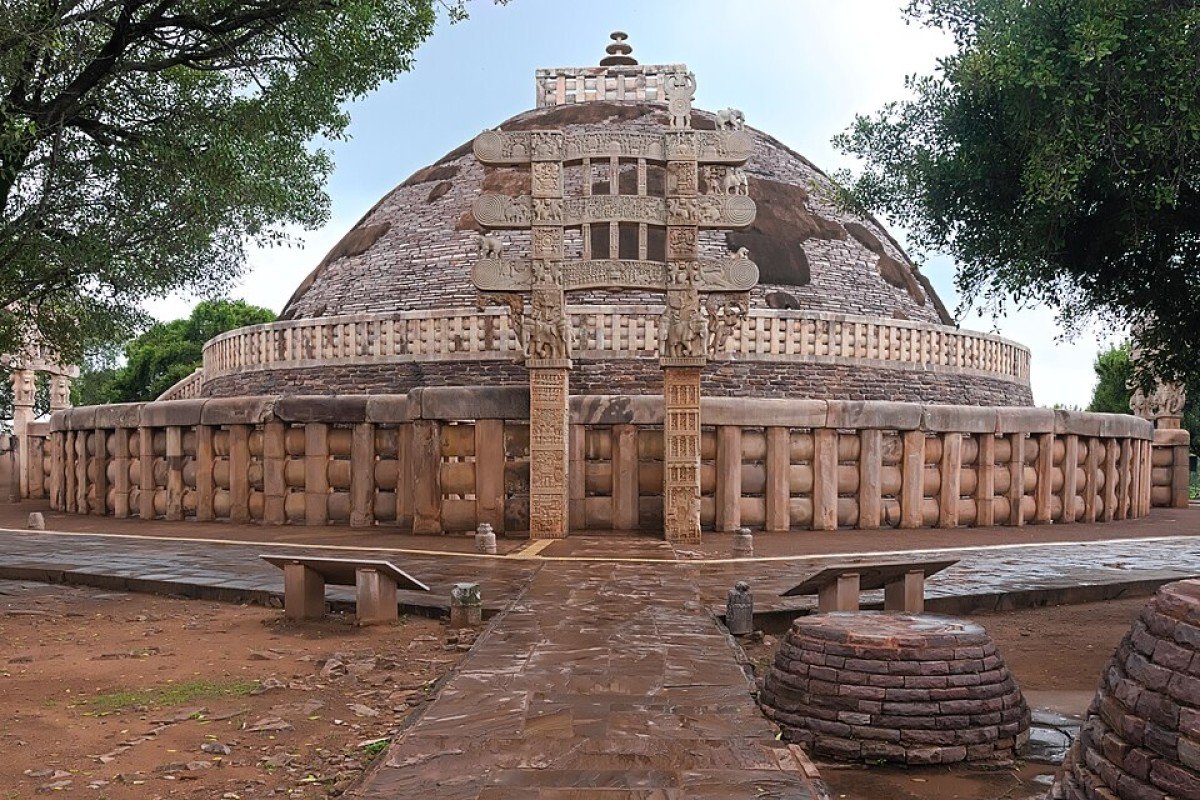
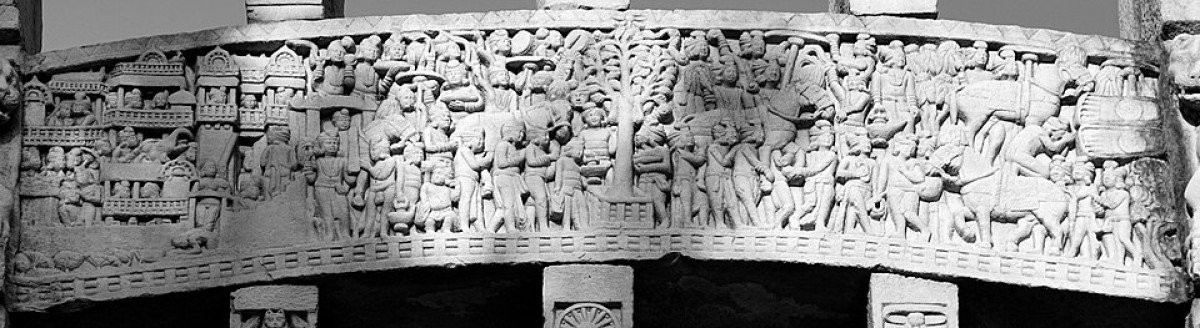
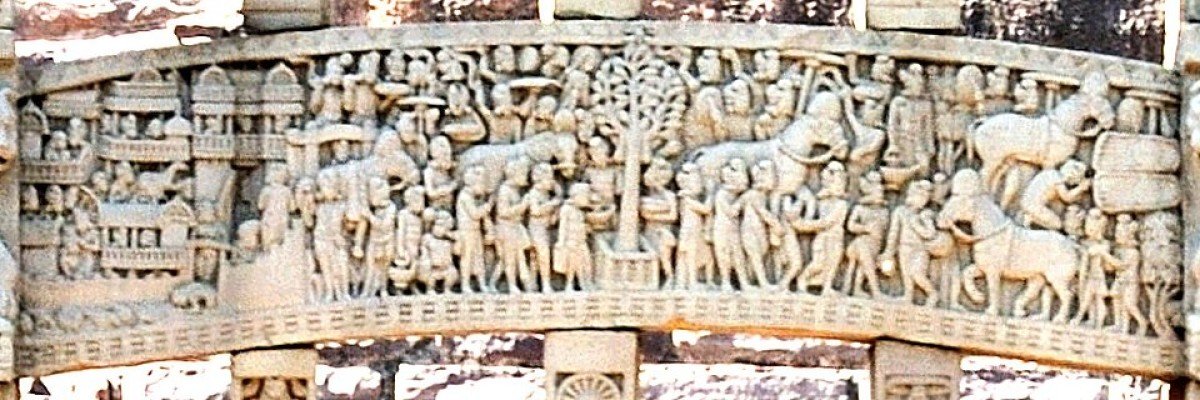
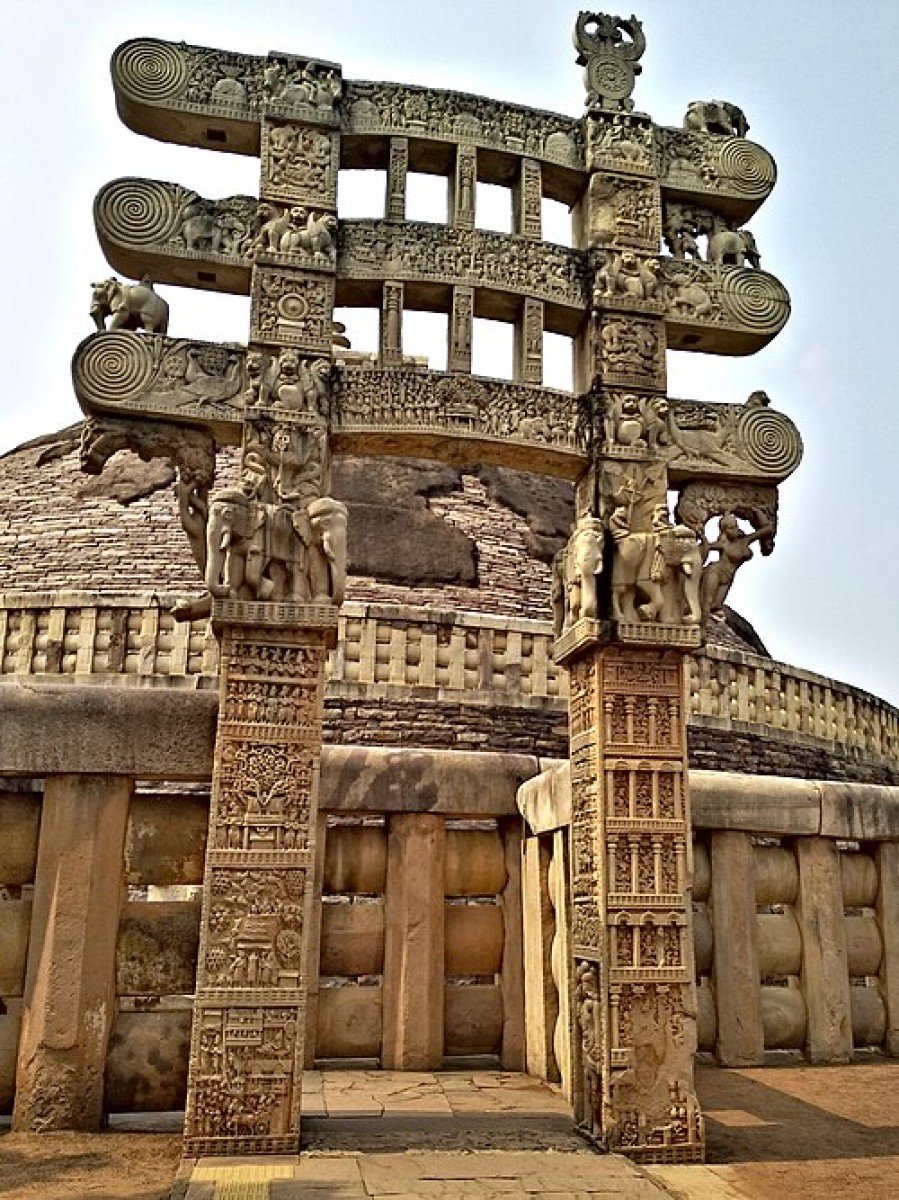
Narrative and Artistic Theme: The Eastern Gateway is considered one of the most artistically refined of the four Toranas at Stupa No. 1. Its primary theme is the Great Departure of Prince Siddhartha from his palace, symbolizing the beginning of his quest for enlightenment. The carvings meticulously depict this scene, showing the horse Kanthaka leaving the city, but with an empty saddle, as the Buddha is represented aniconically (symbolically) by his footprints or the empty throne. The gateway also portrays the Great Enlightenment at Bodh Gaya and the Dream of Queen Maya. Condition and Patronage: This gateway is well-preserved, though its structural integrity required restoration by Sir John Marshall. The carvings, attributed to ivory-carvers from nearby Vidisha, showcase an exceptional level of detail, suggesting a transfer of skills from wood and ivory carving to stone. The structure stands as a glorious example of Satavahana patronage (1st century BCE/CE) that enhanced the original Mauryan stupa, turning it into a visual narrative of Buddhist teachings. The entire surface is a canvas of early Buddhist art.
General information
-
Ideal Duration:
30-45 minutesEntry Fees:
Monuments Complex Ticket:
Same as the other monuments:
Indian Citizens: Rs.40 per person;
Foreign Nationals: Rs.600 per person. The ticket covers the entire hill complex, allowin...Monuments Complex Ticket:
Same as the other monuments:
Indian Citizens: Rs.40 per person;
Foreign Nationals: Rs.600 per person. The ticket covers the entire hill complex, allowing access to the gateway.
No Separate Fee: There is no separate ticket for the Eastern Gateway. Your single entry ticket gives you all-day access to all four gateways.
Guide Fee: Hiring a knowledgeable guide is highly recommended here, as the complexity of the carvings requires explanation. Guide fees are separate and typically range from Rs.300 to Rs.500 for a full tour of the site.
Photography: Photography is generally free for hand-held cameras/mobiles, though commercial or tripod-based photography may require a special permit.Timing:
Regular Timings: Open from Sunrise to Sunset (approx. 6:30 AM to 6:30 PM), daily. Access to the gateways is always permitted within these hours.
Ideal Visit Time: Early Morning (6:30 AM - 9:00 AM) is the best time. The eastern sun perfect...Regular Timings: Open from Sunrise to Sunset (approx. 6:30 AM to 6:30 PM), daily. Access to the gateways is always permitted within these hours.
Ideal Visit Time: Early Morning (6:30 AM - 9:00 AM) is the best time. The eastern sun perfectly illuminates the carvings on this gateway, bringing the intricate narrative reliefs to life and allowing for excellent photography.
Crowd Management: The four gateways are a major draw. Visiting right at opening time allows for a solitary, peaceful experience and better photo opportunities before the tour buses arrive from Bhopal.Special Events:
Buddha Purnima Procession: During Buddha Purnima (May), the Eastern Gateway, being the symbolic 'Gate of Departure,' is sometimes the start or end point for a small, ceremonial procession involving monks and local devotees, marking the cycle of the Buddha's life.Buddha Purnima Procession: During Buddha Purnima (May), the Eastern Gateway, being the symbolic 'Gate of Departure,' is sometimes the start or end point for a small, ceremonial procession involving monks and local devotees, marking the cycle of the Buddha's life.
Historical Sanchi Festival: Though not annually fixed, the Madhya Pradesh Tourism Board occasionally organizes a Sanchi Festival (usually in November or December) featuring cultural programs. The gateways are dramatically lit up at night for these events, providing a spectacular view of the carvings.Best Photo Spots:
Framing the Great Departure: The ultimate shot is a close-up of the middle architrave, capturing the carving of the horse Kanthaka and the entire scene of the Great Departure, showing the drama and motion of the narrative.
The Yakshi Bracket:Framing the Great Departure: The ultimate shot is a close-up of the middle architrave, capturing the carving of the horse Kanthaka and the entire scene of the Great Departure, showing the drama and motion of the narrative.
The Yakshi Bracket: A high-angle shot focusing specifically on the sensuous Yakshi bracket figure on the pillar, contrasting the figure's movement with the static stone structure. This is best taken from the upper level of the Stupa's base.
Sunrise Shot: Stand back and capture the entire gateway silhouetted against the rising sun, allowing the detail of the stone to be subtly illuminated by the warm, golden light—a classic artistic photograph.
Texture and Detail: Use a macro lens or a close-up setting to capture the minute details of the carving—the faces, the jewelry, the animals—showcasing the astonishing craftsmanship of the artisans from Vidisha.Photo Gallery
Things To Do
-
Detailed Examination of Carvings: Start from the bottom pillars and slowly work your way up to the architraves, spending at least 30 minutes just on this gateway. Use binoculars to see the minute details of the Jataka tales and the different animal and human figures.
Interpreting the Aniconic Buddha: Identify the various symbols used to represent the Buddha—the empty throne, the Bodhi Tree, the Dharma Chakra, and the footprints. This exercise helps in understanding the aniconic phase of Buddhist art.
Photography of the Yakshi: Capture the iconic Yakshi bracket figure; the best light for this is usually the late morning or mid-afternoon.
Comparing the Gateways: Make a note of the stylistic differences and conservation status compared to the Northern, Southern...Detailed Examination of Carvings: Start from the bottom pillars and slowly work your way up to the architraves, spending at least 30 minutes just on this gateway. Use binoculars to see the minute details of the Jataka tales and the different animal and human figures.
Interpreting the Aniconic Buddha: Identify the various symbols used to represent the Buddha—the empty throne, the Bodhi Tree, the Dharma Chakra, and the footprints. This exercise helps in understanding the aniconic phase of Buddhist art.
Photography of the Yakshi: Capture the iconic Yakshi bracket figure; the best light for this is usually the late morning or mid-afternoon.
Comparing the Gateways: Make a note of the stylistic differences and conservation status compared to the Northern, Southern, and Western Gateways, noting how the narratives shift around the cardinal directions of the stupa.
Circumambulation (Pradakshina): Incorporate the gateway into your spiritual clockwise walk around Stupa No. 1, viewing it as the starting point for the Buddha’s journey to enlightenment.
Reading the Plaques: Pay close attention to the ASI plaques nearby that explain the specific Jataka tales depicted on the three cross-beams, providing immediate context to the visual story.
Focus on the Craftsmanship: Observe the joints and construction of the massive stone pieces, realizing that they were assembled without mortar, a feat of interlocking stonework, a key feature of ancient Indian civil engineering.
Information
-
Why Famous:
Narrative Art Masterpiece: It is most famous for its intricate, well-preserved stone carvings, specifically the depiction of the Great Departure (Mahabhinishkramana) of the Buddha. It is a seminal work of early Buddhist sculpture in India.
Arti...Narrative Art Masterpiece: It is most famous for its intricate, well-preserved stone carvings, specifically the depiction of the Great Departure (Mahabhinishkramana) of the Buddha. It is a seminal work of early Buddhist sculpture in India.
Artistic Detail and Yakshi Figure: The Eastern Gateway is particularly renowned for its bracket figure of a Yakshi (a celestial beauty), often hanging from a tree branch, which is considered an iconic masterpiece of Salabhanjika art (a woman grasping a branch), showcasing the sensuous, indigenous art form integrated into the Buddhist narrative. -
Architecture:
Satavahana Stone Architecture: The gateway is a freestanding archway, approximately 10. 6 meters high. It consists of two upright pillars with square shafts, topped by elaborate capitals (often with elephants or yakshas), which support three curved architraves (cross-beams)...Satavahana Stone Architecture: The gateway is a freestanding archway, approximately 10. 6 meters high. It consists of two upright pillars with square shafts, topped by elaborate capitals (often with elephants or yakshas), which support three curved architraves (cross-beams) with scrolled ends.
Carving Style: The stone carving style is narrative and aniconic. Aniconism (Buddha represented by symbols like the Dharma Chakra or Bodhi Tree) is a key feature, as the human form of the Buddha was not commonly depicted until the Gupta period. The intricate relief carvings cover every inch of the architraves, depicting Jataka tales (stories of the Buddha’s previous lives) and scenes from his final life, forming a continuous visual scripture. The three architraves are separated by vertical uprights carved with figures of Yakshis (nature spirits). -
How To Reach:
By Air: Nearest airport is Bhopal (BHO), 55 km. Taxis are easily available for the scenic drive to Sanchi.
By Train: Nearest major station is Vidisha (BHS), 10 km, well-connected to major cities. Sanchi (SCI) station is closer (2 km) but h...By Air: Nearest airport is Bhopal (BHO), 55 km. Taxis are easily available for the scenic drive to Sanchi.
By Train: Nearest major station is Vidisha (BHS), 10 km, well-connected to major cities. Sanchi (SCI) station is closer (2 km) but has limited express train stops.
By Road: Sanchi is situated on NH 146. The road connectivity from Bhopal (46 km) is excellent. Buses, taxis, and self-drive cars are all viable options.
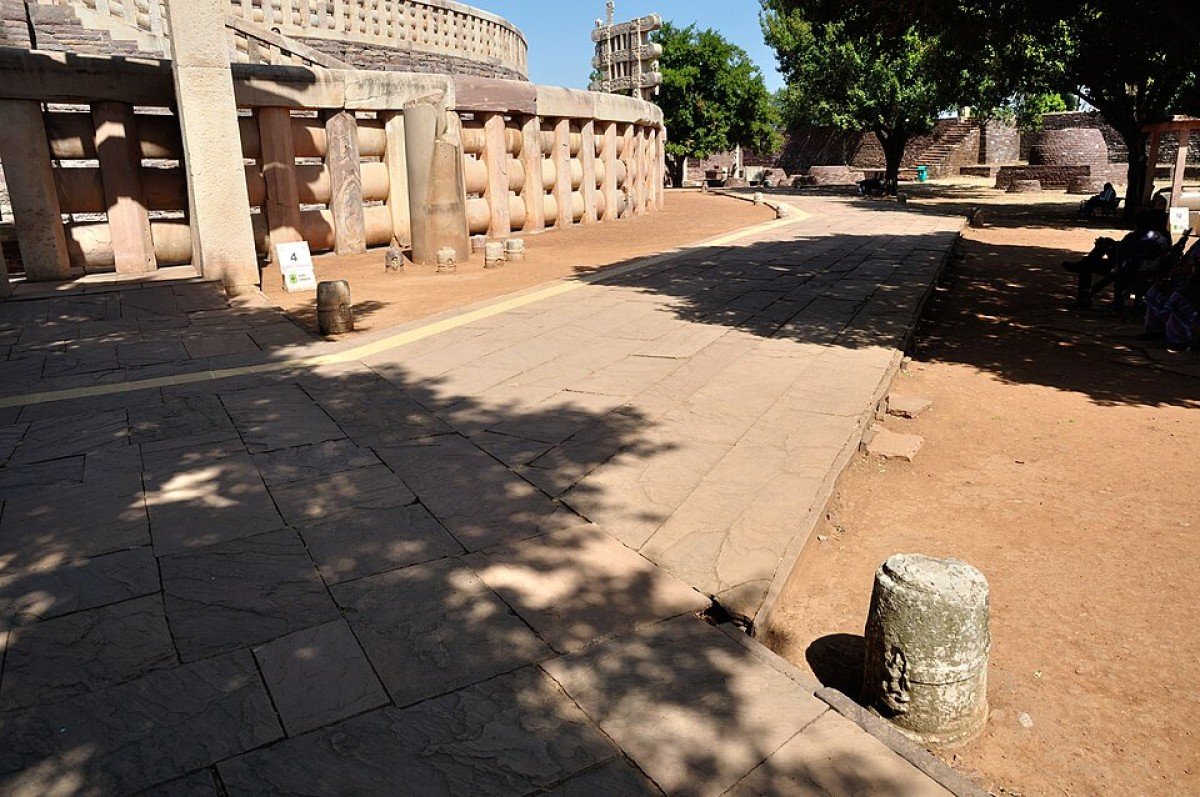
By Local Transport: The gateway is located on the main terrace of the Great Stupa. You will have to walk up the path from the ticket counter and the Buddhist Vihara at the base. Auto-rickshaws will drop you at the parking area near the top. -
Weather and Best Time to Visit:
Different Types of Seasons: Winter (October to March) is perfect for the cool, clear weather, allowing for comfortable, prolonged observation of the carvings. Monsoon can be lovely, with wet stone textures enhancing the contrast of the carvings, but be mindful of slippery s...Different Types of Seasons: Winter (October to March) is perfect for the cool, clear weather, allowing for comfortable, prolonged observation of the carvings. Monsoon can be lovely, with wet stone textures enhancing the contrast of the carvings, but be mindful of slippery surfaces. Summer heat can make appreciation of the carvings tiring.
Different Parts of the Day: Sunrise is essential for this specific gateway. As the sun rises in the East, the low-angle light dramatically highlights the three-dimensional depth and details of the bas-relief sculptures, giving them a rich, living quality. The late afternoon is the worst time for photography here. -
Near Tourist Places:
Great Stupa (Stupa No. 1) (<10m)Northern Gateway (Torana) (100m)Stupa No. 3 (150m)Temple 17 (Gupta Temple) (50m)The Great Bowl (500m)Sanchi Museum (ASI) (1 km)Vidisha (10 km)Udayagiri Caves (13 km)Bhopal (46 km)Bhimbetka Rock Shelters (90 km):
Tourism Tips
-
Health & safety: Be extremely careful when climbing the steps of the stupa near the gateway; the stone can be worn and slippery. Carry water even in winter.
Packing: A powerful camera zoom or a pair of small binoculars is highly recommende...Health & safety: Be extremely careful when climbing the steps of the stupa near the gateway; the stone can be worn and slippery. Carry water even in winter.
Packing: A powerful camera zoom or a pair of small binoculars is highly recommended to appreciate the details of the carvings, many of which are high up on the architraves.
Accommodation: Stay in Bhopal for luxury or in a clean guesthouse in Sanchi or Vidisha for proximity.
Other Different Topics:
Respect the Carvings: Do not touch or lean on the carvings. The stone is over 2000 years old and is fragile.
Guide: A guide is especially useful for this gateway to interpret the complex narratives of the Jataka tales depicted.
Reviews
FAQs
Sanchi Itineray And Cost:-
Other Places In Sanchi :-
Other States In India :-
Information about New and Updated Locations() of Madhya Pradesh Has Been Added :-
Card subtitle
Note:-
Information provided here in good Faith and for reference only.
Near Places

Mata Mandir
Some quick example text to build on the card title and make up the bulk of the card's content.
Go somewhere
Sanchi Museum
Some quick example text to build on the card title and make up the bulk of the card's content.
Go somewhere
The Great Bowl
Some quick example text to build on the card title and make up the bulk of the card's content.
Go somewhere
Turtle Rock
Some quick example text to build on the card title and make up the bulk of the card's content.
Go somewhere
Western Gateway
Some quick example text to build on the card title and make up the bulk of the card's content.
Go somewhere
Zoo Rock
Some quick example text to build on the card title and make up the bulk of the card's content.
Go somewhere