

Gupta Temple
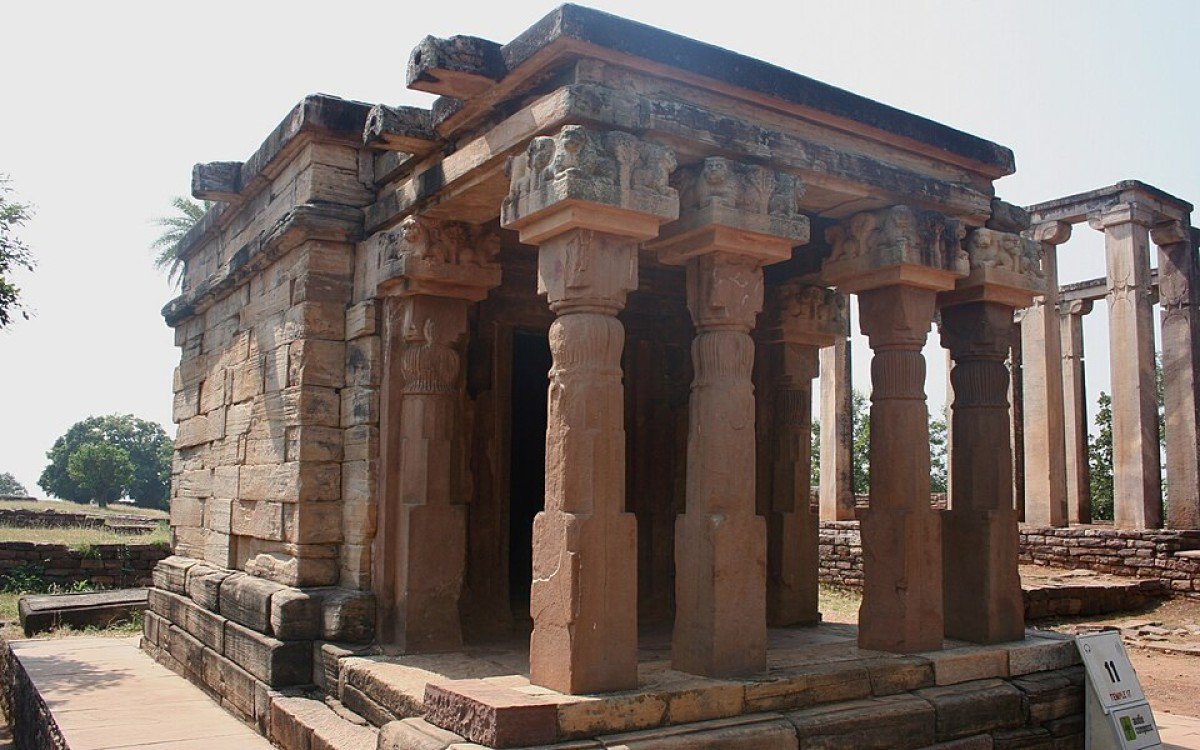
Historical Significance: Temple No. 17 is arguably one of the most important landmarks in the history of Indian temple architecture. Dating back to the 5th century CE during the reign of the Gupta Empire, it is considered one of the earliest surviving examples of structural temples in India. Before this era, religious worship often took place in rock-cut caves (Chaityas) or around Stupas. This temple marks the transition to building permanent, dedicated stone 'houses of god' for Hindu deities, influencing nearly all subsequent temple styles across the subcontinent. Architectural Purity: Its significance lies in its incredible simplicity and structural purity. It consists of a simple, square sanctum (Garbagriha) with a flat roof and a pillared portico (mandapa) in the front. This basic design established the template for the classical Indian temple structure. The builders used well-cut stone blocks assembled without mortar, relying on precise fitting, demonstrating the technical maturity of the Gupta age. Though found in a Buddhist complex, its form is a perfect model for early Hindu temples.
General information
-
Ideal Duration:
20 minutesEntry Fees:
Monuments Complex Ticket: Included in the general entry ticket for the Buddhist Monuments at Sanchi:
Indian Citizens: Rs.40 per person;
Foreign Nationals: Rs.600 per person.
No Separ...Monuments Complex Ticket: Included in the general entry ticket for the Buddhist Monuments at Sanchi:
Indian Citizens: Rs.40 per person;
Foreign Nationals: Rs.600 per person.
No Separate Fee: There is no separate ticket for this specific temple, but access is only permitted with the main monument ticket.
Educational Discount: Students, particularly those of architecture and history, often receive special permissions or discounted entry during educational tours, emphasizing the temple’s academic importance.
Parking Fee: There is a small charge for vehicle parking at the base of the hill near the main complex entrance.Timing:
Regular Timings: Open from Sunrise to Sunset (approx. 6:30 AM to 6:30 PM), daily.
Ideal Visit Time: Late Morning (9:00 AM - 11:00 AM) is perfect. The sun is high enough to illuminate the portico and the details of the capitals, but the hea...Regular Timings: Open from Sunrise to Sunset (approx. 6:30 AM to 6:30 PM), daily.
Ideal Visit Time: Late Morning (9:00 AM - 11:00 AM) is perfect. The sun is high enough to illuminate the portico and the details of the capitals, but the heat is not yet excessive. It is a good second or third stop after viewing the Great Stupa.
Visit in Succession: For maximum architectural impact, visit this temple immediately after seeing the older rock-cut structures or other ruined monasteries to understand its evolutionary context.Special Events:
ASI Preservation Work: The temple does not have specific religious festivals due to its uncertain dedication and the site's primary Buddhist nature. However, it is often a key focus of Archaeological Survey of India (ASI) conservation awareness days and heritage walks, espe...ASI Preservation Work: The temple does not have specific religious festivals due to its uncertain dedication and the site's primary Buddhist nature. However, it is often a key focus of Archaeological Survey of India (ASI) conservation awareness days and heritage walks, especially around World Heritage Day (April 18), when specialized lectures and demonstrations on structural preservation may be held.
Scholarly Conventions: Given its architectural significance, the temple often serves as the backdrop or focus of international architectural and historical conventions organized in Sanchi or Bhopal, where academics gather to discuss early structural temples.Best Photo Spots:
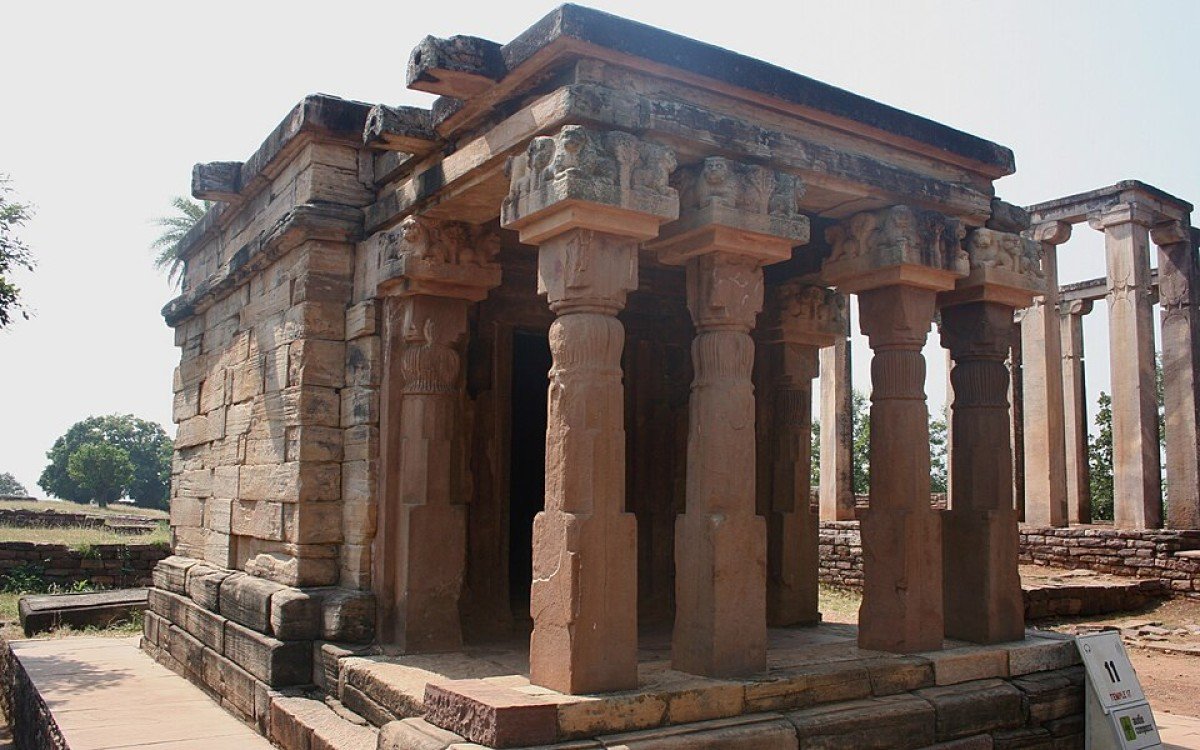
The Classical Frame: The perfect shot is a frontal view that captures the geometric balance of the porch and the sanctum, emphasizing the temple’s clean lines and proportions. This is best done from a slight distance.
Shadow and Light on Pill...The Classical Frame: The perfect shot is a frontal view that captures the geometric balance of the porch and the sanctum, emphasizing the temple’s clean lines and proportions. This is best done from a slight distance.
Shadow and Light on Pillars: A side-angle shot of the four pillars, taken when the sun casts a strong shadow, dramatically highlights the shape of the Gupta capitals and the depth of the portico.
Doorway Close-up: A detailed photograph of the carved doorway jambs, capturing the subtle foliate patterns, which are some of the finest examples of restrained Gupta ornamentation.
Architectural Contrast: Frame Temple No. 17 with the massive, curved dome of Stupa No. 1 visible in the background, a powerful visual contrast between the Mauryan/Satavahana and Gupta eras.Photo Gallery
Things To Do
-
Architectural Study: Stand and observe the temple's form from a distance, focusing on its geometry—the simple cube of the sanctum and the rectangle of the portico. Sketch the structure to appreciate its groundbreaking design.
Contrasting Architecture: Visit Temple No. 17 immediately after viewing the massive Stupa No. 1 and the ornate Toranas. The stark contrast in scale and decoration between the two periods (Satavahana and Gupta) is a profound lesson in the evolution of Indian art.
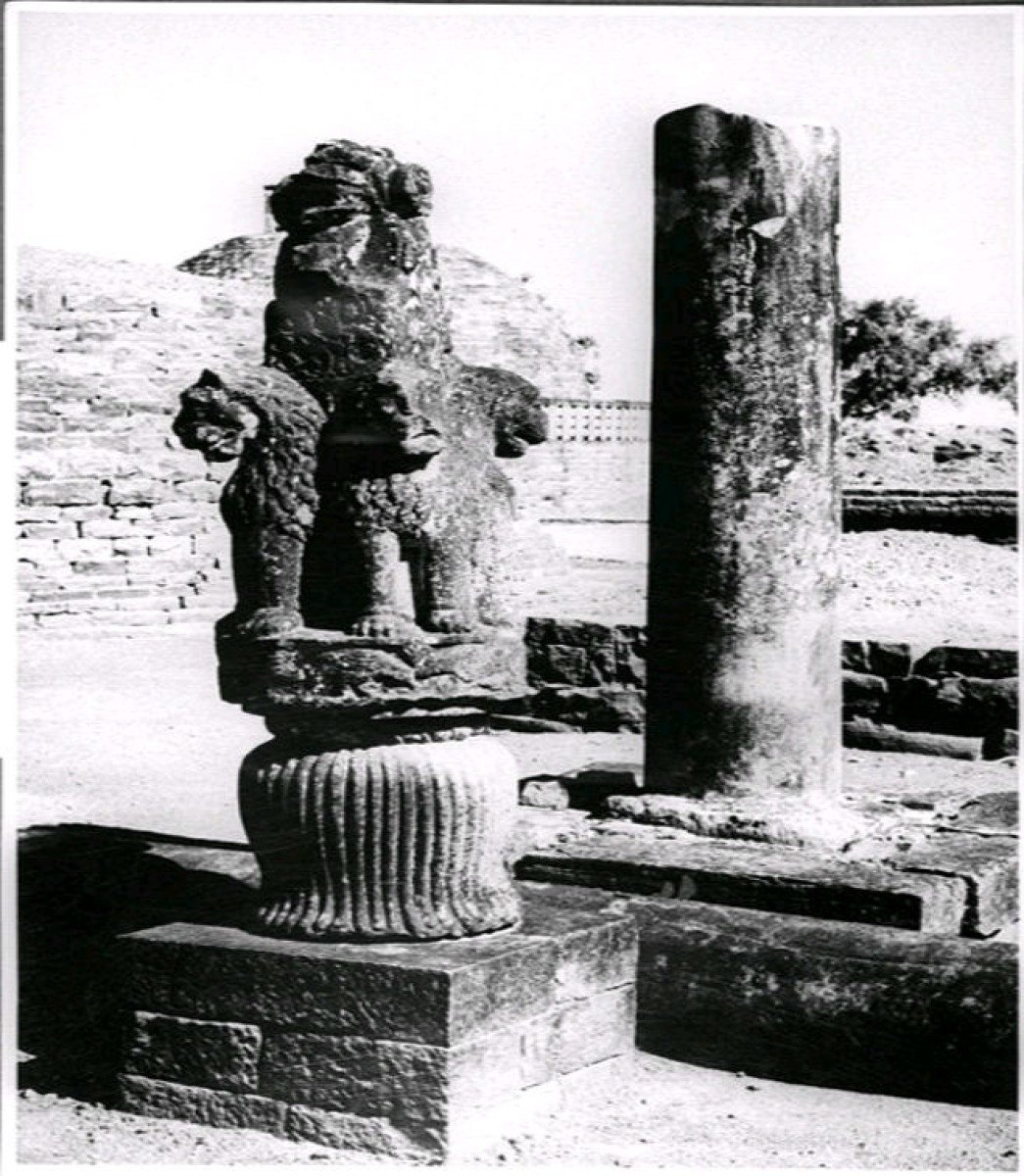
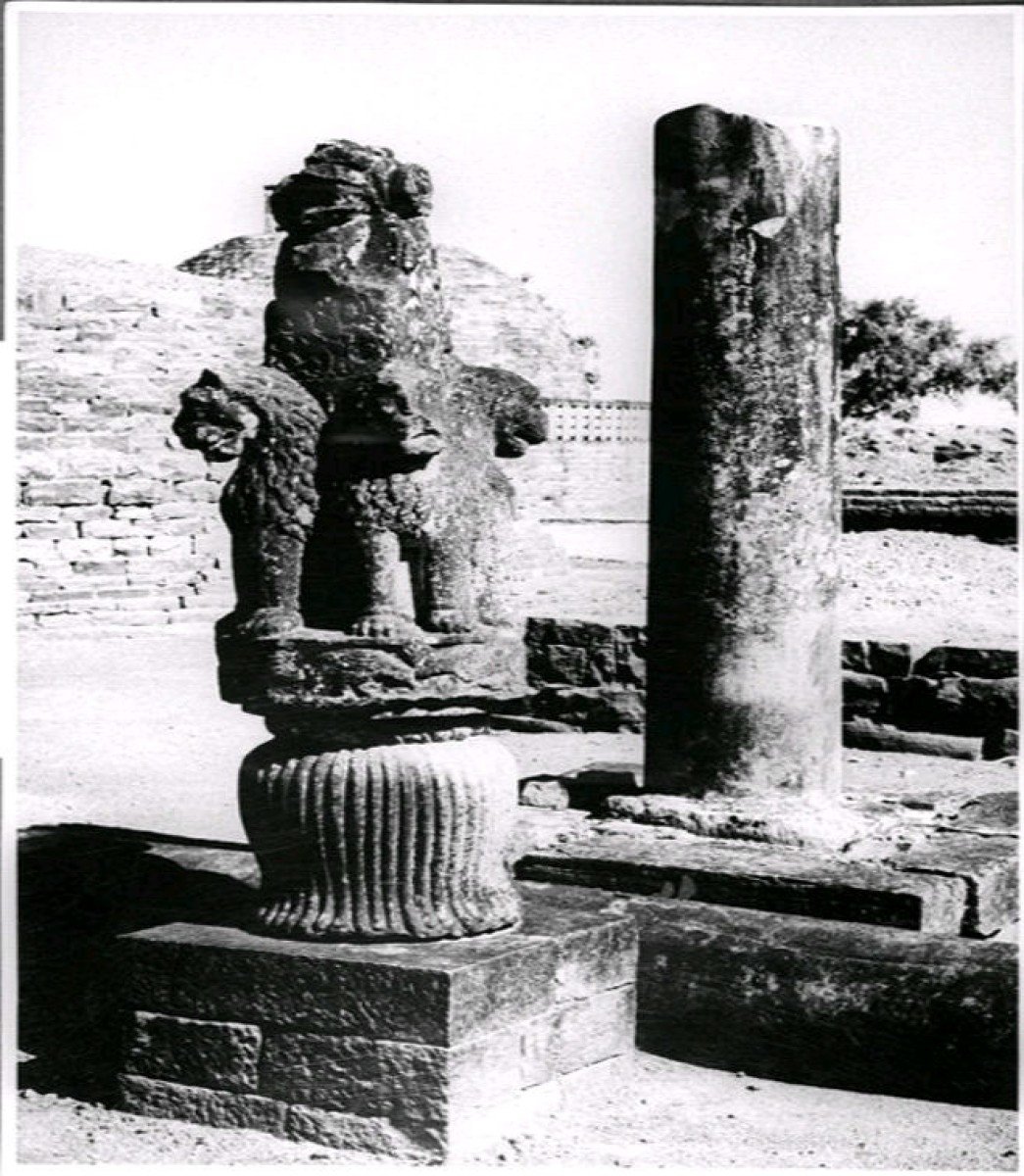
Identifying Gupta Features: Examine the four pillars of the portico closely to identify the specific elements of the Gupta column order—the plain shaft, the vase capital, and the lions—a signature style you will find in other Gupta monuments.
Quiet Reflection: The temple’...Architectural Study: Stand and observe the temple's form from a distance, focusing on its geometry—the simple cube of the sanctum and the rectangle of the portico. Sketch the structure to appreciate its groundbreaking design.
Contrasting Architecture: Visit Temple No. 17 immediately after viewing the massive Stupa No. 1 and the ornate Toranas. The stark contrast in scale and decoration between the two periods (Satavahana and Gupta) is a profound lesson in the evolution of Indian art.
Identifying Gupta Features: Examine the four pillars of the portico closely to identify the specific elements of the Gupta column order—the plain shaft, the vase capital, and the lions—a signature style you will find in other Gupta monuments.
Quiet Reflection: The temple’s location is often quieter than the main stupa area. Use the space for a few moments of peace, contemplating the spiritual shift that occurred in India during the 5th century.
Photography of the Doorway: Focus on the simple yet elegant carvings of the doorway, the main ornamental feature of the structure, especially the river goddess figures (if present or depicted by analogy).
Historical Timeline Walk: Consider this the midpoint of your visit, representing the pinnacle of classical structural architecture before the site's decline, helping you chart the historical timeline of Sanchi.
Detailed Observation: Walk around the temple, checking the plain, unadorned walls. This simplicity is intentional, emphasizing form over excess decoration, which is a core tenet of classical Gupta aesthetics.
Information
-
Why Famous:
Pioneering Structural Temple:
Its fame is purely academic and architectural: it is renowned as a definitive, perfectly preserved example of the earliest phase of free-standing structural temple architecture in India. It is the prototype, or ...Pioneering Structural Temple:
Its fame is purely academic and architectural: it is renowned as a definitive, perfectly preserved example of the earliest phase of free-standing structural temple architecture in India. It is the prototype, or 'textbook example,' of what a temple should structurally be.
Gupta Classical Art: The temple is a symbol of the Gupta period, often called the Golden Age of India. Its balanced proportions, simple elegance, and logical construction reflect the intellectual and artistic confidence of that era, standing in stark contrast to the massive narrative carvings of the earlier stupa gateways. -
Architecture:
Classical Gupta Style: The temple is modest in size, approximately 3. 7 meters square for the sanctum. The overall structure follows the classical Gupta formula: a flat roofed, square sanctum (Garbagriha) and an attached porch (portico).
Pillar...Classical Gupta Style: The temple is modest in size, approximately 3. 7 meters square for the sanctum. The overall structure follows the classical Gupta formula: a flat roofed, square sanctum (Garbagriha) and an attached porch (portico).
Pillared Portico: The front portico is supported by four pillars, which are plain shafts with characteristic Gupta capitals: a square abacus and the famous 'bell-shaped' (or 'pot-and-foliage') capital, often surmounted by stylized lions. This specific column design is a signature of the Gupta period.
Restraint in Ornamentation: The walls are perfectly plain, and the only ornamentation is found on the doorway, which features subtle, vertical bands of foliate and rosette designs. This restraint, along with logical proportions and structural propriety, is why the temple is celebrated as a hallmark of the Gupta classical age. -
How To Reach:
By Air: Nearest airport is Raja Bhoj Airport, Bhopal (BHO), 55 km. Taxis are the most convenient option.
By Train: Nearest rail station is Sanchi (SCI), 2 km. Better connectivity is at Vidisha (BHS), 10 km, or Bhopal Junction (BPL), 50 km....By Air: Nearest airport is Raja Bhoj Airport, Bhopal (BHO), 55 km. Taxis are the most convenient option.
By Train: Nearest rail station is Sanchi (SCI), 2 km. Better connectivity is at Vidisha (BHS), 10 km, or Bhopal Junction (BPL), 50 km.
By Road: Sanchi is easily reached via NH 146. The temple is located atop the hill within the archaeological complex.
By Local Transport: From the town, auto-rickshaws will take you up to the monument complex gate. From there, it's a short, pleasant walk up the main path, past the Stupa No. 1 to the temple's location on the main terrace. -
Weather and Best Time to Visit:
Different Types of Seasons: Winter (October to March) is ideal for extended time spent studying the architecture without the discomfort of heat. The clear skies also enhance the visibility of the structure’s clean lines. Monsoon brings a refreshing, cooler atmosphere, bu...Different Types of Seasons: Winter (October to March) is ideal for extended time spent studying the architecture without the discomfort of heat. The clear skies also enhance the visibility of the structure’s clean lines. Monsoon brings a refreshing, cooler atmosphere, but the exposed nature of the temple can be difficult in a downpour.
Different Parts of the Day: Late Morning is optimal for clear, shadow-less light on the façade for architectural photography and detailed inspection. Late Afternoon light is also good, casting long, dramatic shadows that highlight the symmetry of the portico. -
Near Tourist Places:
Great Stupa (Stupa No. 1) (<50m)Northern Gateway (Torana) (80m)Temple 18 Ruins (30m)Stupa No. 3 (150m)Sanchi Museum (ASI) (1 km)Vidisha (10 km)Udayagiri Caves (13 km)Bhojpur Temple (65 km)Bhimbetka Rock Shelters (90 km)Bhopal (46 km):
Tourism Tips
-
Health & safety: The ground around the temple ruins can be uneven. Watch your step. The stone is ancient and can be surprisingly hot in the afternoon sun.
Packing: Bring an architectural guidebook or a reference book to fully appreciate th...Health & safety: The ground around the temple ruins can be uneven. Watch your step. The stone is ancient and can be surprisingly hot in the afternoon sun.
Packing: Bring an architectural guidebook or a reference book to fully appreciate the Gupta style, as the simple appearance belies its profound historical significance.
Accommodation: Accommodation is best in nearby Bhopal for comfort and convenience, though basic hotels are available in Sanchi town.
Other Different Topics:
Respect the History: This is a key point in the evolution of Indian architecture. Treat it with the respect due to a foundational historical model.
Time Allocation: Do not rush. Take the time to genuinely absorb the simplicity, as its power is in its restraint, not its ornamentation.
Reviews
FAQs
Sanchi Itineray And Cost:-
Other Places In Sanchi :-
Other States In India :-
Information about New and Updated Locations() of Madhya Pradesh Has Been Added :-
Card subtitle
Note:-
Information provided here in good Faith and for reference only.
Near Places

Mata Mandir
Some quick example text to build on the card title and make up the bulk of the card's content.
Go somewhere
Sanchi Museum
Some quick example text to build on the card title and make up the bulk of the card's content.
Go somewhere
The Great Bowl
Some quick example text to build on the card title and make up the bulk of the card's content.
Go somewhere
Turtle Rock
Some quick example text to build on the card title and make up the bulk of the card's content.
Go somewhere
Western Gateway
Some quick example text to build on the card title and make up the bulk of the card's content.
Go somewhere
Zoo Rock
Some quick example text to build on the card title and make up the bulk of the card's content.
Go somewhere