...

FAQs On Jor Bangla Temple

Bishnupur, West Bengal, India
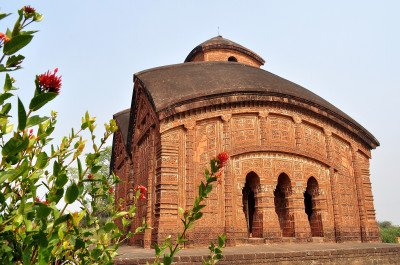
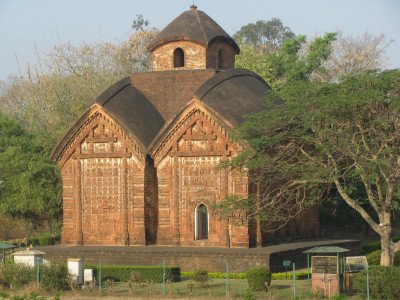
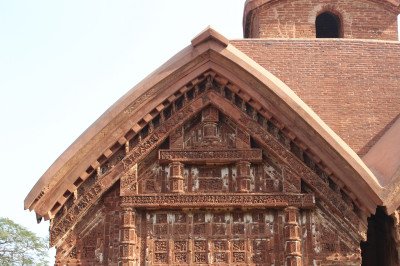
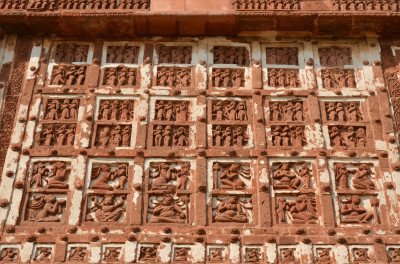
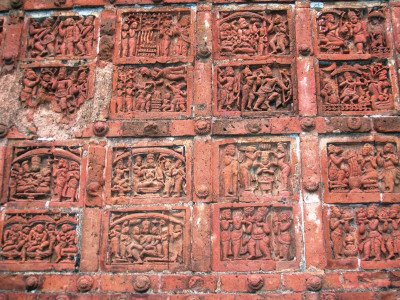
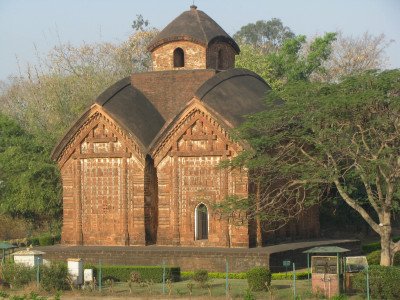
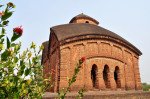
The Jor Bangla Temple, also known as the Kesto Rai Temple, is one of the most exquisite and well-preserved examples of terracotta artistry in Bishnupur, rivaling the fame of Rasmancha. Constructed in 1655 CE by the powerful Malla King Raghunath Singha Dev II, it is dedicated to Lord Krishna (Kesto R ai) and is a stellar showcase of the Jor Bangla architectural stylea distinct regional variant. The name itself, Jor Bangla, literally means 'twin Bengali huts,' which perfectly describes its structure: it consists of two identical Do-chala (two-sloped roof) huts joined side-by-side. One hut serves as the porch or entrance (jagmohan), and the inner one acts as the main shrine (garbhagriha). A single, small tower (Charchala sikhara) crowns the juncture where the two curved roofs meet, completing its distinctive appearance. The temple is constructed primarily of laterite brick, but its true glory lies in the astonishingly detailed terracotta plaques that completely clad its exterior. These rich ornaments transform the temple into a visual epic, depicting scenes from the two great Indian epics, the Ramayana and the Mahabharata, as well as various Krishna Lila episodes. The frontal faade is particularly dense with artistry, featuring narratives such as Bhisma's Sarasajya, the Marriage of Ram-Sita, and scenes of contemporary social life, including royal hunts, musicians, and dancers. The sheer variety and quality of the carvings provide historians and art enthusiasts with an unparalleled window into the religious devotion and daily life of 17th-century Bengal. Unlike some other temples in Bishnupur, the intricate terracotta work of the Jor Bangla Temple is exceptionally well-preserved due to the care taken during its construction and subsequent maintenance by the Archaeological Survey of India (ASI). Although the original idol of Kesto Rai has been moved, the architectural integrity and artistic value of the temple remain paramount, solidifying its status as an unmissable destination for anyone seeking to understand the zenith of Bengali temple craftsmanship.

Ans:- The magnificent Jor Bangla Temple, also widely recognized by its alternative historical name as the Kesto Rai Temple, was built in the year 1655 CE. It was commissioned under the royal patronage of King Raghunath Singha Dev II, who was the illustrious 51st ruler of the famous Malla dynasty of the Mallabhum kingdom. This era marked a massive golden age for terracotta art and architecture in the Bankura region, as the Malla kings actively promoted the construction of grand Hindu shrines dedicated to Vaishnavism.

Ans:- The architecture of this spectacular monument is a classic representation of the traditional Bengal "chala" style, specifically combining elements of "do-chala" and "ratna" designs. The main structure consists of two large, conjoined brick houses built in the do-chala format, which seamlessly merge along their longitudinal axis to create a unified double-roof layout. Above the intersection of these two structures rises a distinct, small four-sided tower known as a char-chala pinnacle, creating an elegant blend that exemplifies medieval structural mastery.

Ans:- The term "Jor Bangla" is derived from the local linguistic deformation of the Bengali word "Jora," which literally translates to "twin," "paired," or "coupled," combined with "Bangla," referring to the regional architectural style mimicking native thatched huts. Because the unique temple layout structurally pairs two distinct do-chala or twin-sloping roofs together over a single high laterite platform, it naturally acquired this descriptive colloquial name, highlighting its rare architectural configuration which stands out significantly among the single-roofed structures of West Bengal.

Ans:- The Jor Bangla Temple was primarily built as a grand place of worship dedicated to Lord Krishna and his divine consort Radha. The colloquial name of the shrine, "Kesto Rai Temple," directly reflects this dedication, as "Kesto" is a common local variation for Krishna, while "Rai" is an affectionate name used for Radha. Although active daily worship is no longer conducted within the inner sanctum today, the entire complex remains deeply revered as a monumental symbol of medieval Vaishnava devotion.

Ans:- The primary construction material utilized for the outer superstructure and walls of the temple is premium-quality burnt red bricks, which provided a smooth and durable surface for fine artistic carving. The entire brick edifice is raised upon a sturdy, square platform that measures nearly twelve meters on each side and stands approximately one meter high, built entirely using heavy laterite stone blocks to protect the delicate brickwork above from moisture, ground erosion, and structural shifting over the centuries.

Ans:- The entire exterior facade of the Jor Bangla Temple is covered in incredibly intricate and detailed terracotta plaques that serve as a magnificent open-air gallery. These beautiful burnt-clay bas-reliefs showcase an extraordinary level of craftsmanship, depicting a wide variety of subjects including divine figures, historical events, everyday social life, hunting scenes, royal processions, exotic animals, and elaborate floral patterns. The carvings are arranged in neat rows and panels that completely coat the pillars, arches, and walls.

Ans:- The terracotta decorations on the temple walls prominently feature dramatic and narrative scenes extracted directly from major Hindu scriptures and epics, including the Ramayana, the Mahabharata, and the Puranas. Visitors can easily identify beautifully carved panels depicting the epic battles of Lord Rama against Ravana, various legendary exploits from the Krishna Leela stories, representations of Lord Vishnu's multiple incarnations, and depictions of ancient sages, celestial dancers, and traditional Hindu gods performing cosmic duties across different spiritual realms.

Ans:- The structural layout of the temple features a clever functional separation where the southern do-chala structure serves as an open, columned porch or mandapa, while the northern do-chala structure houses the private inner sanctum or garbhagriha. The southern entrance facade boasts three beautiful arched openings supported by four thick ornamental columns, providing a grand entryway. Inside, a narrow gallery completely encircles the central sanctum, and small side chambers contain steps that allow access to the top char-chala tower.

Ans:- The roof design of the Jor Bangla Temple is a brilliant architectural adaptation that mimics the humble mud and thatch cottages traditionally built by rural communities across ancient Bengal. The architects intentionally incorporated a distinct, low curved profile with two-way pitching, which was originally developed in vernacular architecture to shed heavy monsoon rainwater quickly. The brick and terracotta replication even includes simulated timber frameworks on the eastern and western sides, demonstrating how royal architects elevated humble folk designs into royal monuments.

Ans:- Yes, the Jor Bangla Temple is fully recognized as an ancient monument of national importance and is strictly protected under the jurisdiction of the Archaeological Survey of India (ASI). Due to its extraordinary historical value and unique architectural synthesis, it has also been included on the UNESCO World Heritage Site's Tentative List since 1998. The ASI continuously manages regular structural maintenance, chemical preservation of the delicate terracotta plaques, and landscaping around the site to preserve it for future generations.

Ans:- The Jor Bangla Temple is generally open to tourists throughout the week from sunrise to sunset, typically between 6:00 AM and 6:00 PM. Visitors are required to purchase a composite entry ticket issued by the Archaeological Survey of India, which grants access to multiple historic monuments across Bishnupur. The ticket cost is highly affordable for domestic Indian travelers and SAARC visitors, while a separate, higher international tariff applies to foreign tourists, with children under fifteen entering free.

Ans:- Travelers can reach the Jor Bangla Temple from Kolkata quite easily by taking a direct train from Howrah or Shalimar Station to the Bishnupur Railway Station, which takes around three to four hours. From the Bishnupur station, the temple is located just about four kilometers away and can be accessed via local cycle rickshaws, auto-rickshaws, or toto e-rickshaws. Alternatively, tourists can drive via the well-maintained state highways or board regular long-distance buses connecting Kolkata directly to Bishnupur town.

Ans:- The official alternative name for this monument is the Kesto Rai Temple, as recorded in various historical texts, royal Malla kingdom chronicles, and official Archaeological Survey of India plaques. The name directly honors Lord Krishna, with "Kesto" serving as a regional, colloquial variant of Krishna's name, and "Rai" referencing his eternal divine counterpart, Radha. While scholars and historians frequently use Kesto Rai in academic papers, the public overwhelmingly uses the descriptive architectural name Jor Bangla.

Ans:- The central pinnacle, or ratna, plays a vital role in balancing the unique visual silhouette of the temple by providing a vertical focal point where the twin roofs join. It is designed as a small, square char-chala tower that rests securely upon a masonry platform built directly in the V-shaped valley formed by the sloping roofs. This architectural masterstroke prevents the structure from looking flat or disjointed, adding a sense of height, royal dignity, and classical religious sanctity to the layout.

Ans:- The absolute best angle for photographing the Jor Bangla Temple is from the front-left or front-right sides of the landscaped garden, which perfectly captures the twin curvature of the do-chala roofs and the central pinnacle simultaneously. Capturing close-up shots of the southern facade during the early morning or late afternoon golden hours provides excellent lighting that accentuates the deep textures, dramatic shadows, and fine details of the hundreds of terracotta plaques lining the entry arches.
Information about New and Updated Locations() of West Bengal Has Been Added :-
Card subtitle

Note:-

Information provided here in good Faith and for reference only.

Near Places
...
Acharya Jogesh Chandra Museum

Some quick example text to build on the card title and make up the bulk of the card's content.

Go somewhere

...
Big Stone Gateway

Some quick example text to build on the card title and make up the bulk of the card's content.

Go somewhere

...
Bishnupur Mela Ground

Some quick example text to build on the card title and make up the bulk of the card's content.

Go somewhere
...
Bishnupur Rajbari

Some quick example text to build on the card title and make up the bulk of the card's content.

Go somewhere
...
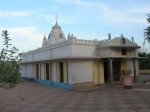
Chhinnamasta Temple

Some quick example text to build on the card title and make up the bulk of the card's content.

Go somewhere
...
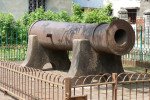
Dalmadal Cannon

Some quick example text to build on the card title and make up the bulk of the card's content.

Go somewhere
...
Garh Darwaja

Some quick example text to build on the card title and make up the bulk of the card's content.

Go somewhere
...
Gokul Chand Temple

Some quick example text to build on the card title and make up the bulk of the card's content.

Go somewhere

...
Hadal-Narayanpur

Some quick example text to build on the card title and make up the bulk of the card's content.

Go somewhere
...
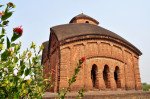
Jhilimili & Sutan Forest

Some quick example text to build on the card title and make up the bulk of the card's content.

Go somewhere
...
Jor Bangla Temple

Some quick example text to build on the card title and make up the bulk of the card's content.

Go somewhere
...
Jor Mandir Complex

Some quick example text to build on the card title and make up the bulk of the card's content.

Go somewhere
...
Jorbangla Temple

Some quick example text to build on the card title and make up the bulk of the card's content.

Go somewhere
...
Joypur Forest

Some quick example text to build on the card title and make up the bulk of the card's content.

Go somewhere
...
Kalachand Temple

Some quick example text to build on the card title and make up the bulk of the card's content.

Go somewhere
...
Kamarpukur

Some quick example text to build on the card title and make up the bulk of the card's content.

Go somewhere
in Other Cities