Jor Bangla Temple
General information
-
Ideal Duration:
1 HourPlace Type:
Religious TempleEntry Fees:
Entry with Unified ASI Ticket: The Jor Bangla Temple does not have a separate entry fee. Access to the temple is included in the single, consolidated ticket purchased at the main ticket counter near the Rasmancha. This system is highly convenient for tourists, as the ticke...Entry with Unified ASI Ticket: The Jor Bangla Temple does not have a separate entry fee. Access to the temple is included in the single, consolidated ticket purchased at the main ticket counter near the Rasmancha. This system is highly convenient for tourists, as the ticket remains valid for a full day and covers the three most important, centrally located, ticketed monuments in the Bishnupur cluster: Rasmancha, Jor Bangla Temple, and Shyam Rai Temple. The current fee for Indian nationals is approximately Rs.20 to Rs.25.
Fees for Foreign Tourists and Maintenance Funds: As with other protected monuments, foreign nationals are subject to different fee structures, typically ranging from Rs.250 to Rs.600, depending on their nationality. The revenue generated from these tickets is essential for the ongoing preservation of the delicate terracotta work and the structural maintenance of the Jor Bangla Temple, which has stood for nearly four centuries. All visitors are encouraged to purchase their tickets through the official Archaeological Survey of India (ASI) portal or at the on-site counter to ensure their contribution directly supports the conservation efforts of this national heritage site.Timing:
Regular Timings:
Open for Day Viewing: The Jor Bangla Temple complex is open to visitors daily from Sunrise (around 6:00 AM) to Sunset (around 5:30 PM). The temple complex, being a protected monument, is highly accessible throughout the week...Regular Timings:
Open for Day Viewing: The Jor Bangla Temple complex is open to visitors daily from Sunrise (around 6:00 AM) to Sunset (around 5:30 PM). The temple complex, being a protected monument, is highly accessible throughout the week, including weekends and holidays. Visitors must ensure they enter the complex well before the sunset closure time to allow for ample exploration of the site.
Ideal Visit Time:
Focusing on Carving Clarity: The best time to visit the Jor Bangla Temple to fully appreciate its detailed terracotta carvings is during the late morning (9:00 AM to 11:00 AM). Unlike the Rasmancha, which thrives on interior light play, the Jor Bangla's exterior carvings are best seen when the sun is higher, providing enough light to clearly delineate the high-relief terracotta figures on the southern and western facades. The light at this time helps the intricate details of the narrative friezes stand out. Alternatively, a second visit in the late afternoon (4:00 PM onwards) provides a warmer, golden light that enhances the reddish hue of the clay and the shadows within the carvings.Special Events:
The Annual Jhulan Yatra (Religious Ritual): While the primary annual festival, Ras Utsav, moved its central event from the Rasmancha, the Jor Bangla Temple complex remains religiously active. The Jhulan Yatra festival, typically observed during the month of Shravana (usuall...The Annual Jhulan Yatra (Religious Ritual): While the primary annual festival, Ras Utsav, moved its central event from the Rasmancha, the Jor Bangla Temple complex remains religiously active. The Jhulan Yatra festival, typically observed during the month of Shravana (usually July or August), is celebrated with enthusiasm. This festival, focused on the swinging of the idol of Radha and Krishna, is one of the important Vaishnavite celebrations in the town. Even though the original idols from the Jor Bangla Temple are no longer present, the religious fervor is maintained in the vicinity through local congregation and kirtan (devotional music) programs. The Bishnupur Heritage Festival (Modern Celebration): Every December, as a part of the extended Bishnupur Mela/Festival (which is a secular celebration of culture and art), the Jor Bangla Temple often becomes a key venue for cultural performances. The beautiful temple complex, especially the open space surrounding the temple, hosts programs featuring local artists, including performances of the Bishnupur gharana of Dhrupad music and traditional Bengali folk dances. This modern festival utilizes the ancient temple's aesthetic appeal and historical weight to provide a spectacular backdrop for celebrating the region's cultural renaissance, drawing large crowds of music and art lovers.Best Photo Spots:
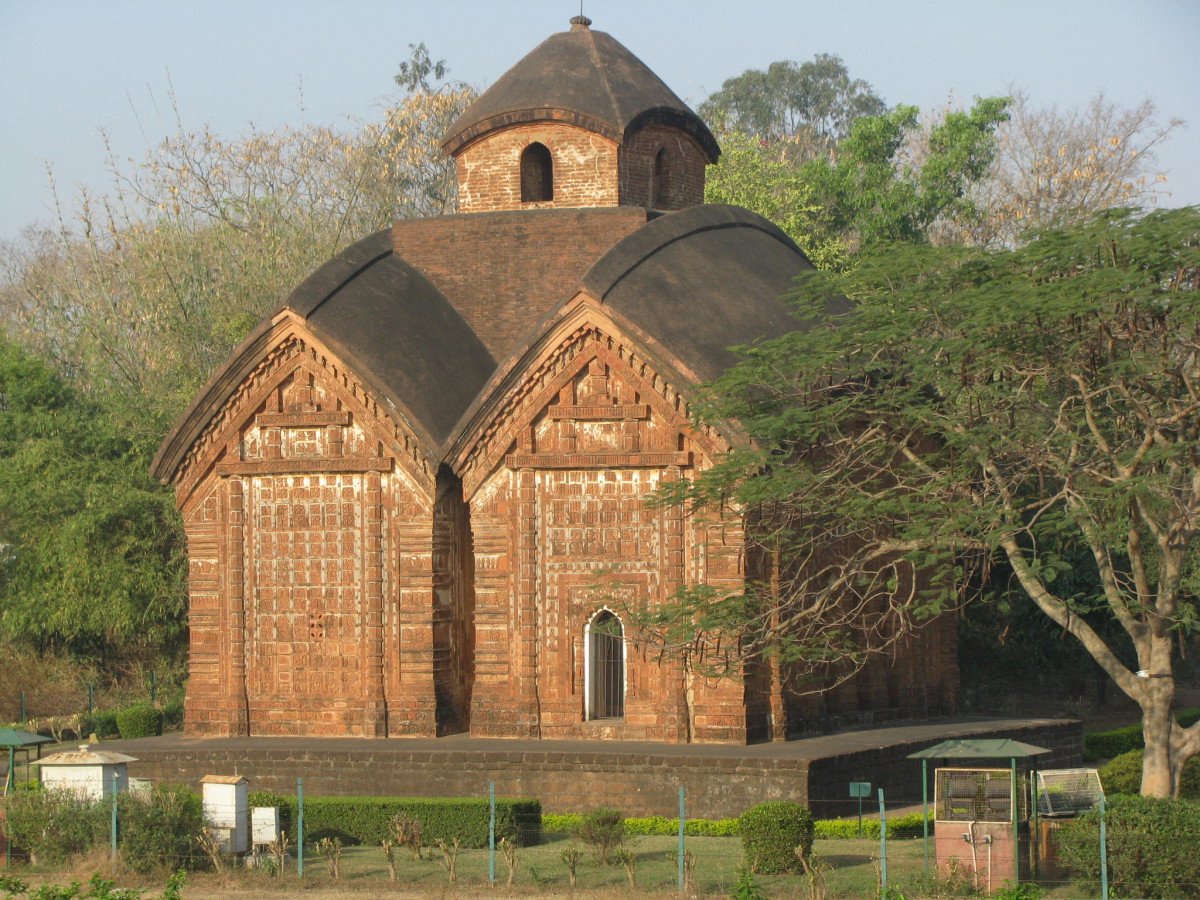
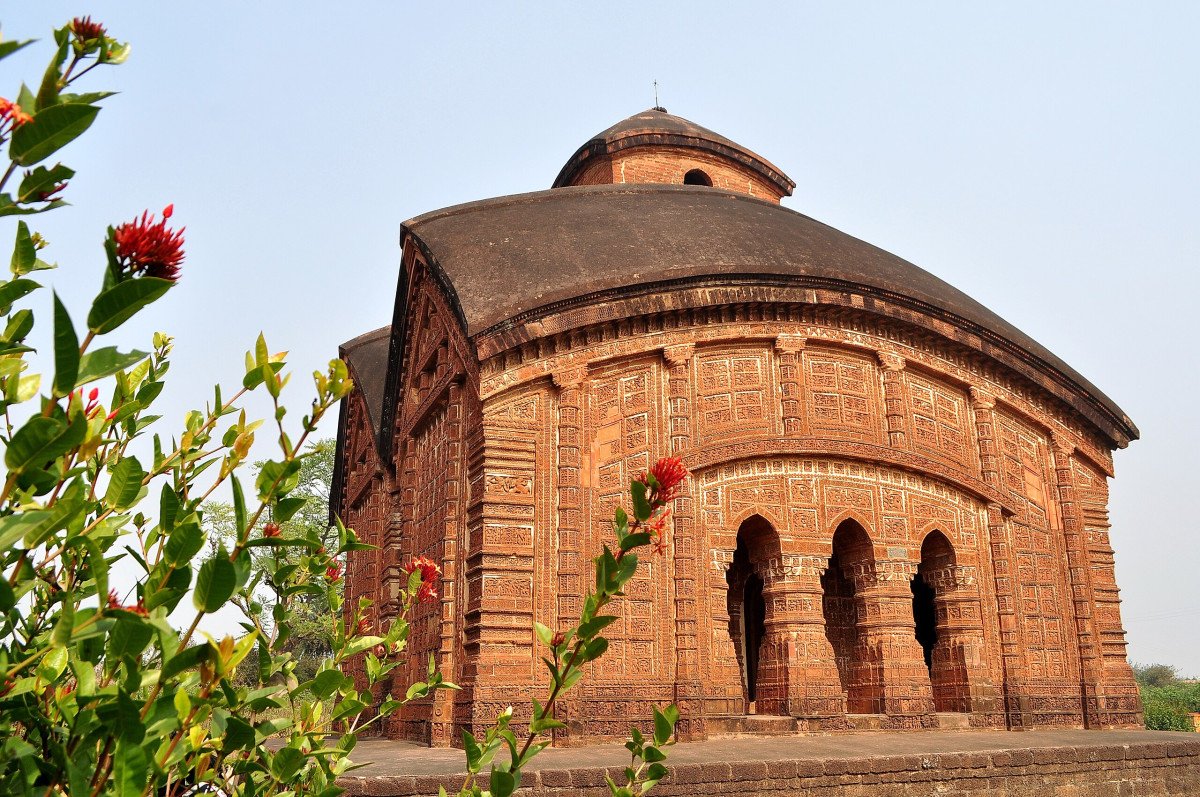
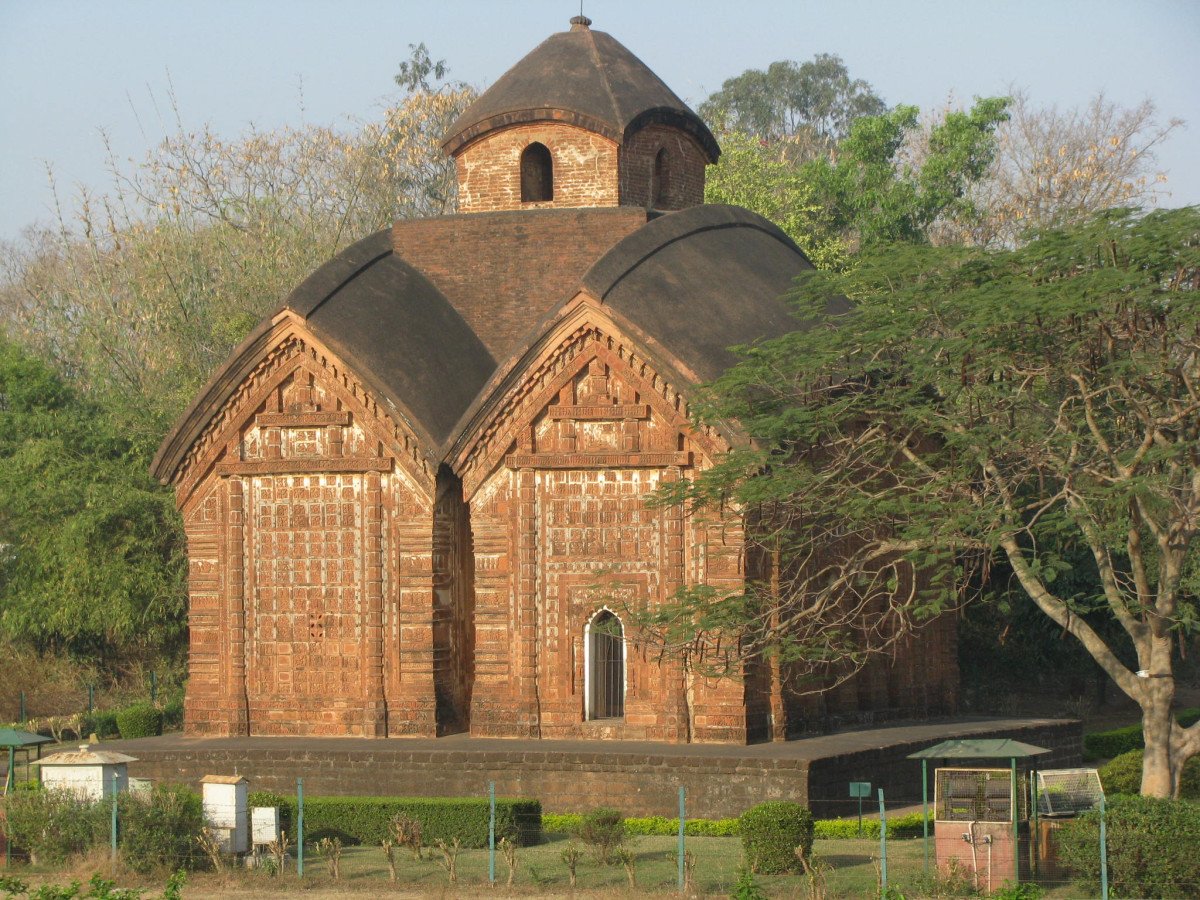
The Twin-Hut Symmetry Shot: The best overall photograph of the Jor Bangla Temple focuses on its unique 'twin-hut' architecture. Stand directly in front of the southern facade, slightly off-center, to capture the perfect symmetry of the joined Do-chala roofs and the crowning...The Twin-Hut Symmetry Shot: The best overall photograph of the Jor Bangla Temple focuses on its unique 'twin-hut' architecture. Stand directly in front of the southern facade, slightly off-center, to capture the perfect symmetry of the joined Do-chala roofs and the crowning central sikhara. The foreground should include the meticulously maintained lawn, which provides a clean green frame for the reddish-brown temple. The ideal time is early morning or late afternoon when the sun highlights the depth of the terracotta carving.
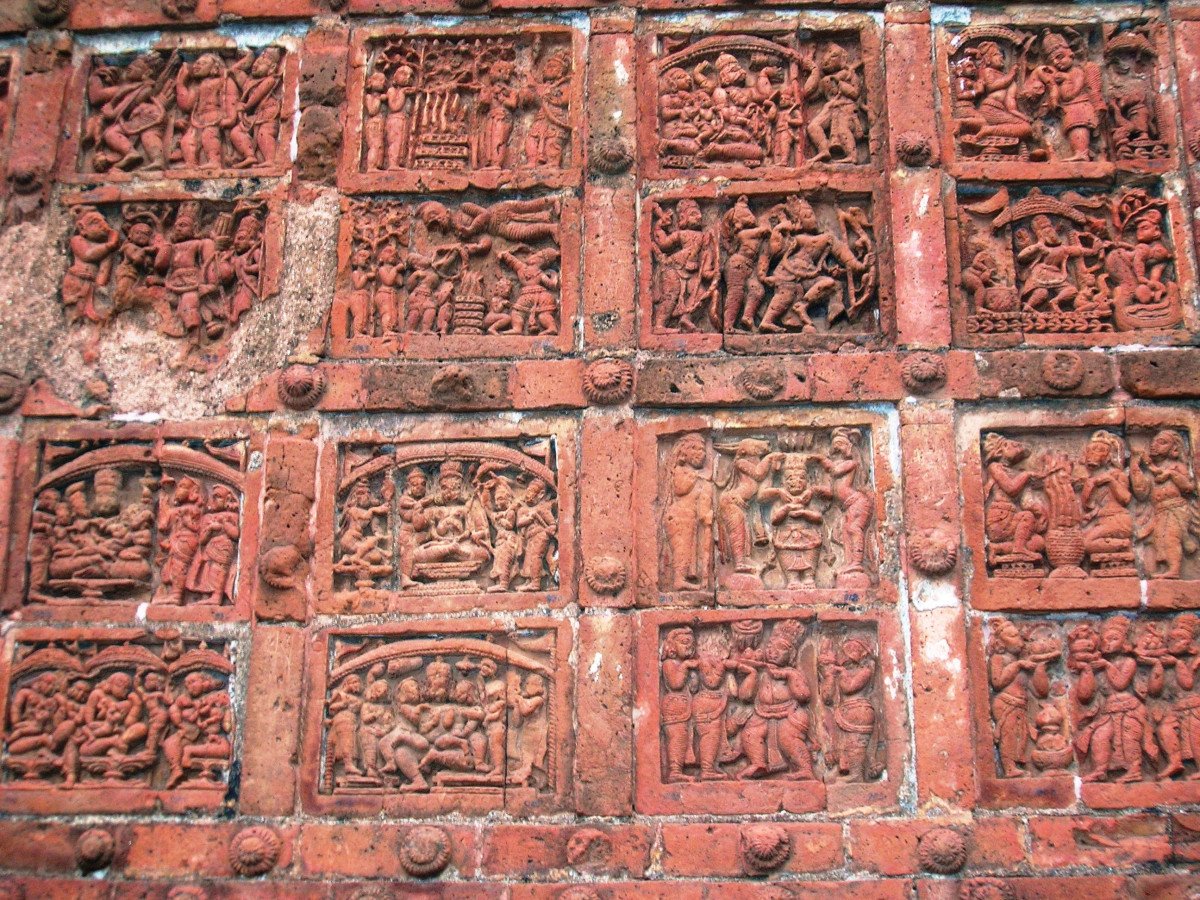
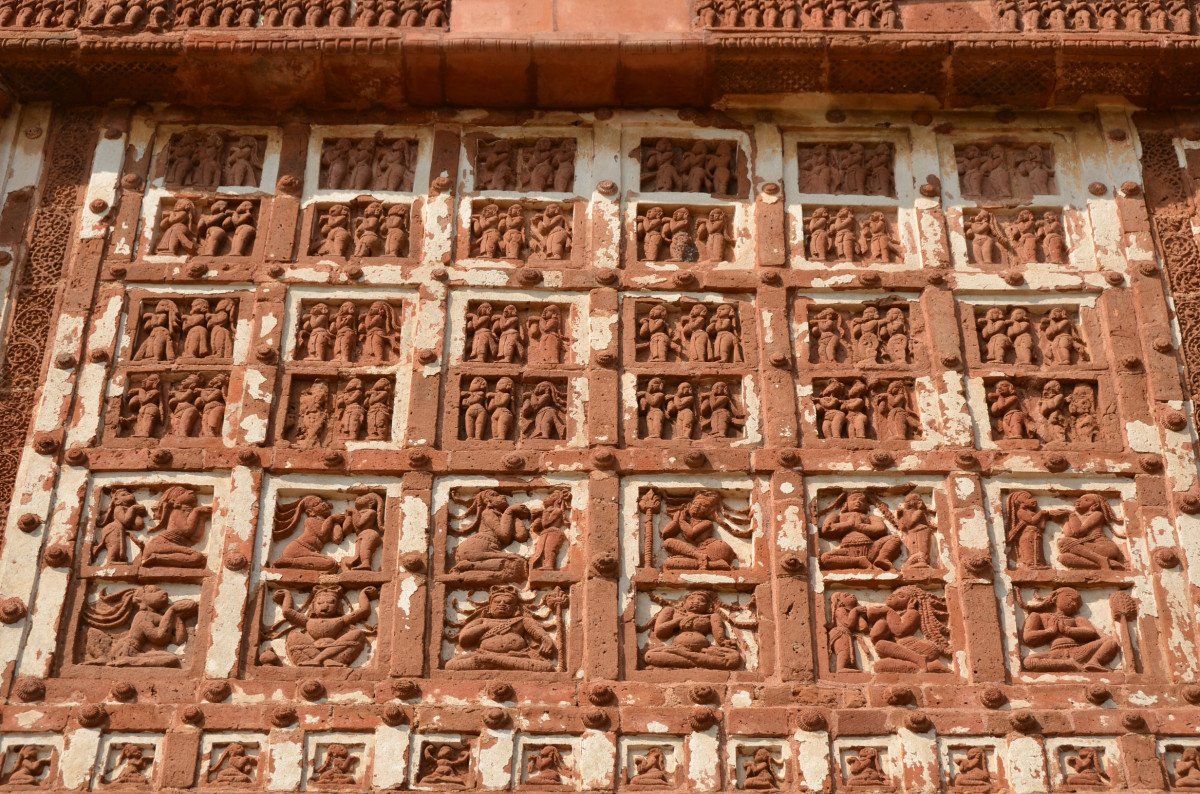
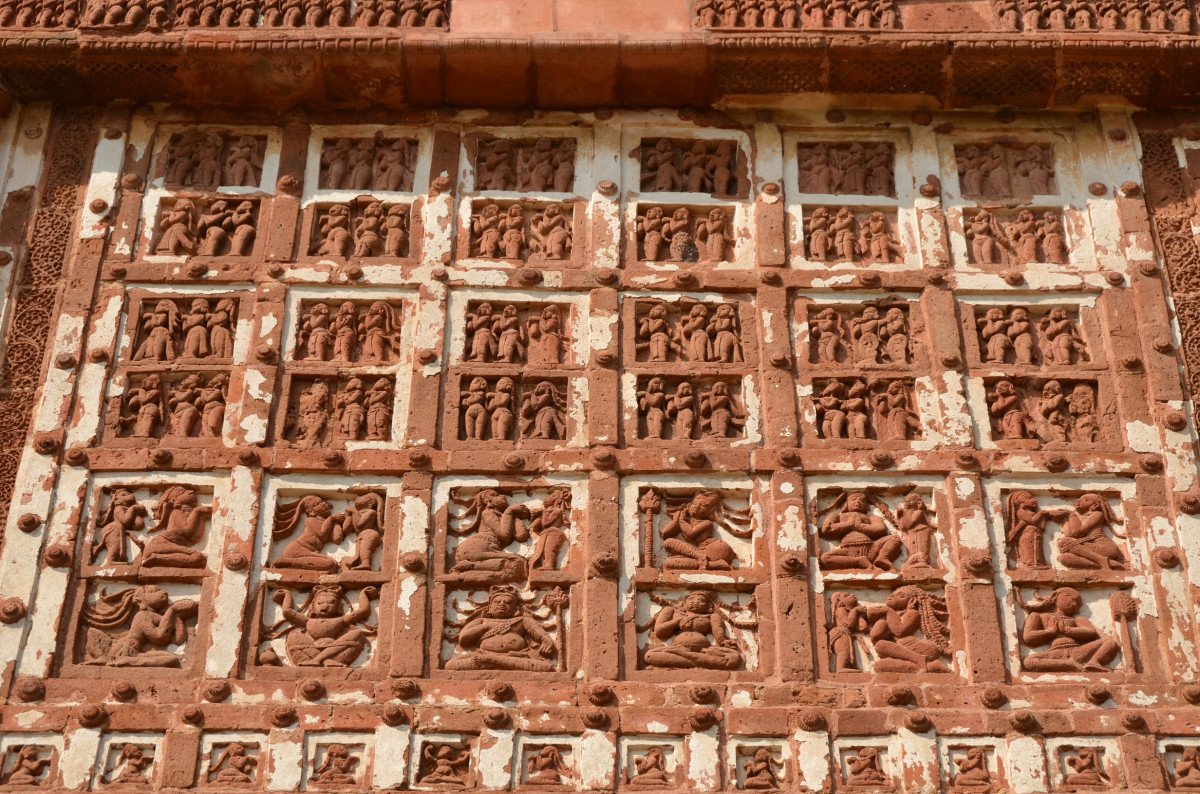
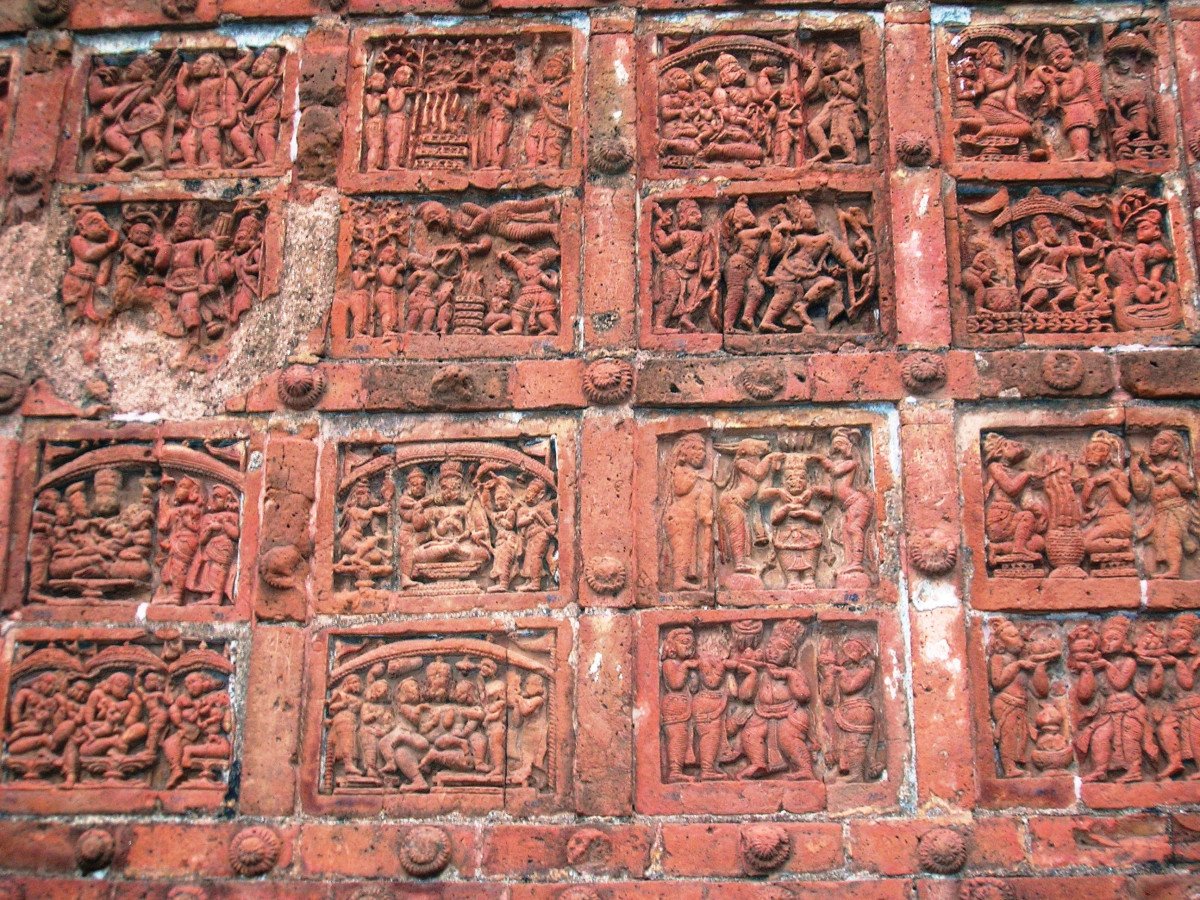
The Narrative Wall and Carving Frieze: For a detailed shot, focus on a section of the southern wall, where the terracotta friezes are most dense. Use a telephoto lens to compress the perspective and bring the carvings to life. The goal is to capture the intricate detail of the narrative panelsfor example, a large epic battle scenedemonstrating the 'Terracotta Masterpiece' aspect of the temple. The sheer volume of detail on these walls provides an incredible backdrop for portrait or detail-oriented photography.
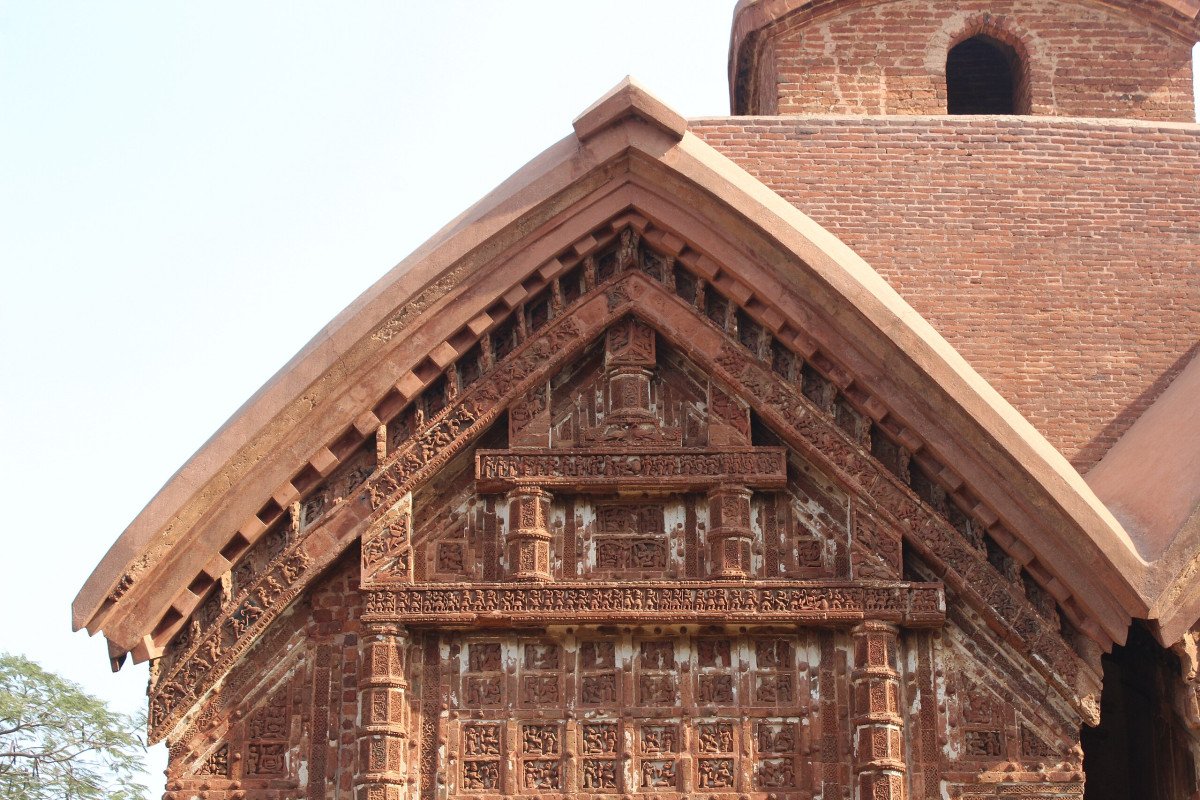
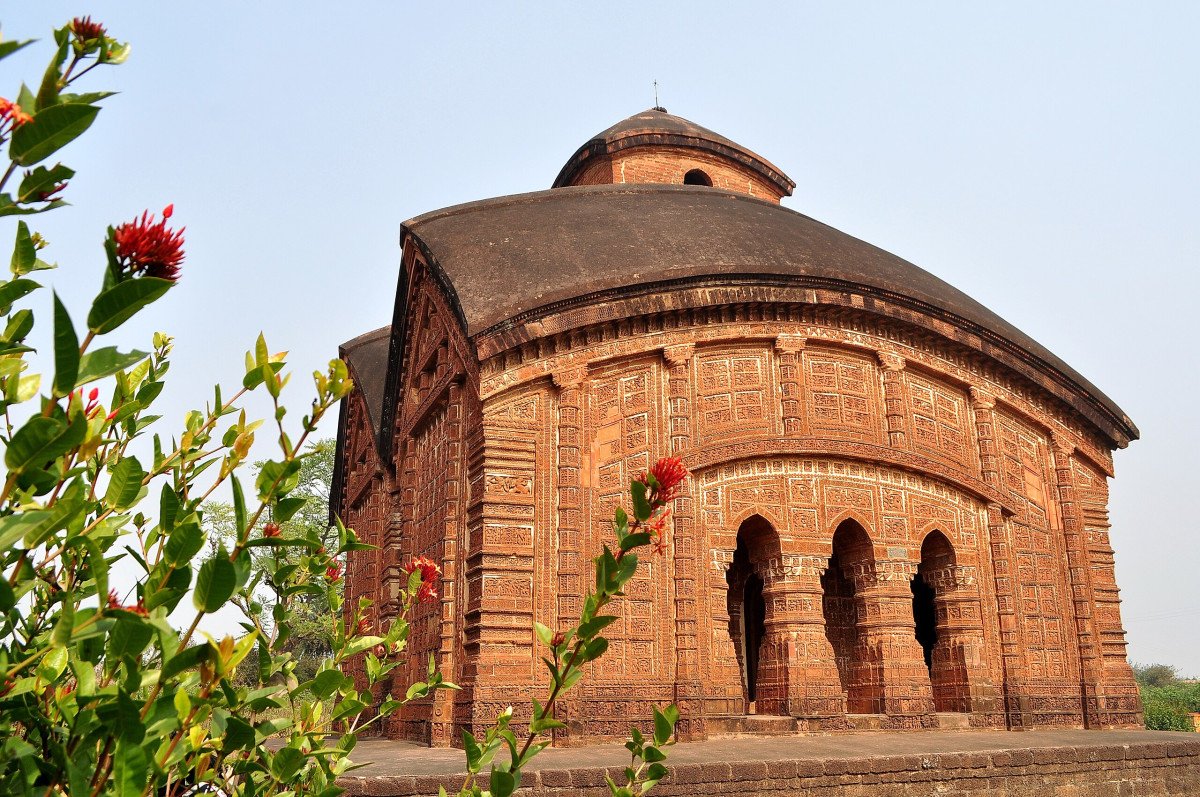
The Archway and Interior Gateway: While the interior of the main sanctum is off-limits, the deep triple-arched entrance of the porch offers a fantastic framing opportunity. Stand just inside the outermost arch and use the dark shadow of the porch interior to create a dramatic contrast with the bright, carved entrance of the sanctum. This shot uses the architecture itself as a natural frame, drawing the viewer's eye towards the intricate carvings around the inner doorways. This is also one of the few places where you can appreciate the scale of the jali work above the arches.Photo Gallery
Things To Do
-
Deep Dive into Terracotta Storytelling: Dedicate at least an hour to an in-depth study of the terracotta carvings, using the temple's exterior walls as a colossal open-air museum. The carvings are organized logically, typically with the main mythological themes on the facade and various minor deities and social scenes on the side walls. Focus on an entire panel, tracing the narrative from one corner to the next.
Ramayana Frieze: Identify key moments like the construction of the bridge to Lanka or the battle scenes involving Rama and Ravana.
Krishna Lila: Look for playful scenes of Lord Krishna's childhood, such as him stealing butter or subduing the serpent Kaliya.
The Narrative Flow: Notice how the artisans used continuous narration, where characters appear...Deep Dive into Terracotta Storytelling: Dedicate at least an hour to an in-depth study of the terracotta carvings, using the temple's exterior walls as a colossal open-air museum. The carvings are organized logically, typically with the main mythological themes on the facade and various minor deities and social scenes on the side walls. Focus on an entire panel, tracing the narrative from one corner to the next.
Ramayana Frieze: Identify key moments like the construction of the bridge to Lanka or the battle scenes involving Rama and Ravana.
Krishna Lila: Look for playful scenes of Lord Krishna's childhood, such as him stealing butter or subduing the serpent Kaliya.
The Narrative Flow: Notice how the artisans used continuous narration, where characters appear multiple times in a single panel to signify the passage of time or a sequence of events, a classic technique of Malla art.
Architectural Deconstruction and Comparison: The Jor Bangla Temple is a perfect starting point for comparing the different temple styles of Bishnupur. Stand a short distance away and observe how the dual Do-chala roofs join to support the single central Charchala sikhara. Compare this Jor Bangla style with the single-pinnacled (Eka-ratna) style of the nearby Madan Mohan Temple or the unique pyramidal form of the Rasmancha. This comparative study will deepen your understanding of the incredible architectural versatility achieved by the Malla kings using the same basic materials (brick and laterite). Note the detailed stucco work around the arches and how it frames the central carvings. Capture the Terracotta Details with Macro Photography: Given the exceptional level of detail, the Jor Bangla Temple is one of the best sites for macro and telephoto photography in Bishnupur. Instead of just wide shots, focus on isolated figures, such as a musician's face, a dancer's posture, or a mythological animal.
Telephoto Strategy: Use a telephoto lens to isolate specific, well-preserved panels that are placed high up on the wall, bringing their detailed artistry down to your eye level.
Texture Shot: Capture the subtle texture of the terracotta clay itselfthe fine lines, the tiny indentations, and the evidence of the tools used by the 17th-century artisans. The intricate jali (lattice) work patterns found on the walls also make for stunning texture studies.
Spiritual Contemplation in the Complex: Although the temple is now managed by the ASI, it retains a deep sense of calm and spiritual sanctity. Sit on the manicured lawns or the plinth and absorb the peaceful atmosphere. The inner sanctum, though not open for worship as before, once housed a six-armed stucco figure of Shri Chaitanya Deva, underscoring the Vaishnavite devotion of the Malla kings. Reflect on the cultural continuity represented by the enduring stories carved in clay, which have served as inspiration and education for generations of local people. Interacting with Local Craftsmen (Saree Connection): The temple's intricate designs have been directly translated onto the famed Baluchari Sarees. After your visit, look for saree stalls or the local silk weaving co-operative near the temple complex. Examine a Baluchari Saree and try to spot the motifsa hunting scene, a figure playing a flute, a processional sequencethat you just saw carved on the temple walls. This activity creates an invaluable link between the ancient heritage site and the towns living craft, enriching the cultural experience and making any purchased souvenir more meaningful.
Restaurants
● Babu Moshai Hotel
Address: Dalmadal Para, Bishnupur
Distance: 0.9 KM
Details: Babu Moshai Hotel and Restaurant is a hidden gem for food lovers. The authentic Bengali cuisine is bursting with flavor, and every dish is crafted to ...
Food List: Fish Curry', 'Steamed Rice', 'Dal', 'Alu Bhaja'...
● Bawarchi
Address: 7th Lane, Mayra Pukur
Distance: 1.2 KM
Details: Bawarchi is an established name in Bishnupur known for its flavorful Indian dishes. The restaurant maintains a moderate price range and is excellent f...
Food List: Egg Roll', 'Chicken Roll', 'Veg Roll', 'Chowmein'...
● Bfc Bishnupur
Address: Bishnupur, Dalmadal Road
Distance: 0.6 KM
Details: Bfc Bishnupur is a modern eatery specializing in fast food and quick bites. It is popular for its clean and bright environment. Must try their Fried C...
Food List: Fried Chicken', 'Fries', 'Burger', 'Coke'...
● Cha Coffee O Kobitai
Address: Dalmadal Para, Bishnupur
Distance: 0.5 KM
Details: Cha Coffee O Kobitai provides a cozy, artistic atmosphere perfect for intellectual conversations. Known for its beverages, the Masala Tea is the highl...
Food List: Masala Tea', 'Coffee', 'Biscuits', 'Cake'...
● Grihini Food Restaurant
Address: Bankura Bishnupur, Bankura
Distance: 0.8 KM
Details: Grihini Food Restaurant is known for its clean, well-decorated space and friendly staff. The food is remarkably tasty and priced affordably, making it...
Food List: Veg Thali', 'Dal Tadka', 'Sabzi', 'Curd'...
Show AllInformation
-
Why Famous:
The Climax of Terracotta Art: The Jor Bangla Temple is widely regarded by art historians as the high point of the Bishnupur School of Terracotta Art. While other temples boast fine work, the density, clarity, and narrative complexity of the carvings on the Jor Bangla are un...The Climax of Terracotta Art: The Jor Bangla Temple is widely regarded by art historians as the high point of the Bishnupur School of Terracotta Art. While other temples boast fine work, the density, clarity, and narrative complexity of the carvings on the Jor Bangla are unparalleled. The panels on its walls are not merely decorative but serve as a comprehensive illustrated textbook of Hindu mythology, featuring thousands of figures, animals, and mythological creatures carved in high relief. The fluidity of the poses and the expressive faces captured in clay make this temple a masterpiece of narrative sculpting.
The Unique Architectural Narrative: Its unique Jor Bangla style, a permanent structure replicating two simple, temporary thatched huts, makes it a celebrated monument. This conscious effort to integrate indigenous, regional architecture with sophisticated temple building techniques is highly distinctive. This style, which literally translated the concept of the Bangla (Bengali) roof into stone and brick, provided a structural prototype that would influence later architectural expressions in the region, firmly establishing the temple's fame as an architectural original. -
Architecture:
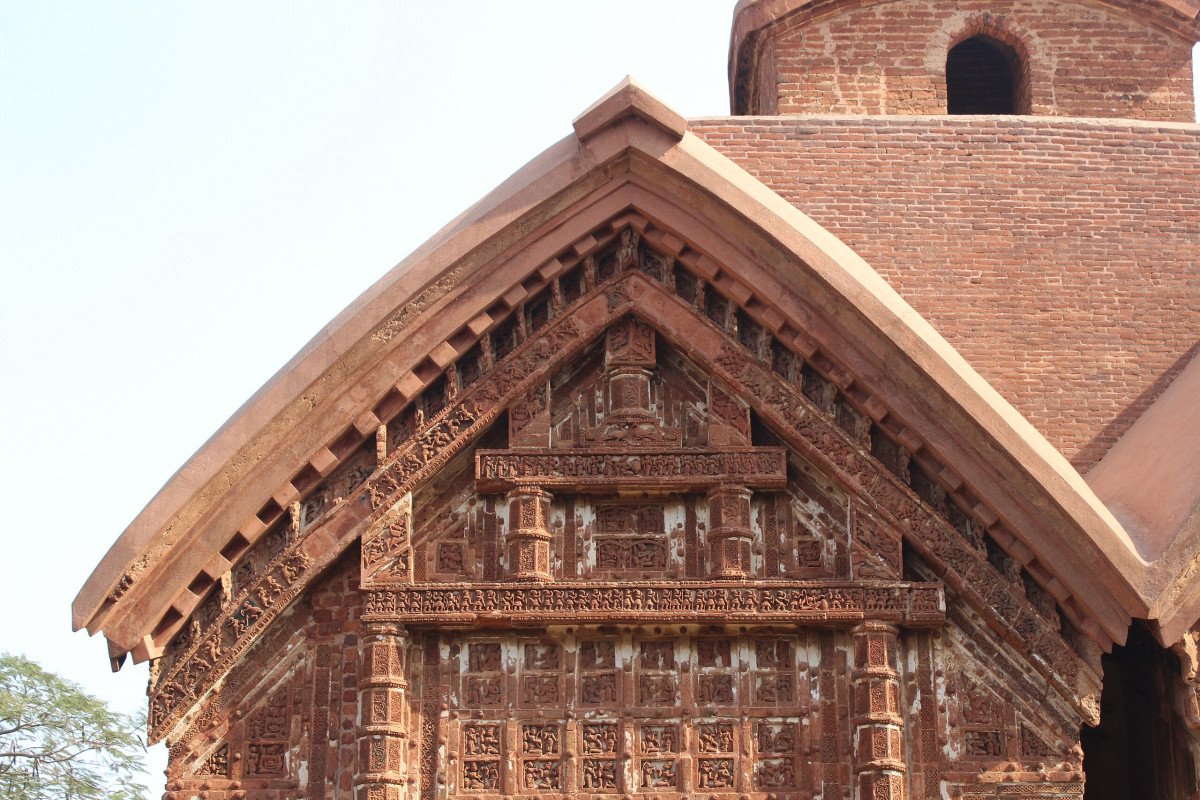
The Distinctive Jor Bangla Style: The defining feature of the Jor Bangla Temple is its unique structural style, which mimics the traditional thatched-roof mud cottages of rural Bengal. This style involves joining two individual Do-chala structures longitudinally. The curve...The Distinctive Jor Bangla Style: The defining feature of the Jor Bangla Temple is its unique structural style, which mimics the traditional thatched-roof mud cottages of rural Bengal. This style involves joining two individual Do-chala structures longitudinally. The curved, ridged roofs, which slope away from the center, are a direct translation of perishable bamboo and thatch into permanent laterite brick. This architectural adaptation elevates the humble village hut form into a sophisticated, permanent, and sacred structure. The style is not only aesthetically pleasing but also showcases the skill of Malla architects in mastering a difficult building material to achieve a fluidity of form.
Detailed Dimensions and Terracotta Placement: The temple stands on a square platform of laterite stone, with its base dimensions measuring approximately 11. 8 meters in length and 11. 7 meters in breadth, rising to a height of about 10. 7 meters. The temple's exterior walls are divided into several decorative panels, or friezes, completely covered by terracotta plaques. The highest concentration of this ornamentation is found on the southern facade (the main entrance). The terracotta panels are organized in rows, often depicting a progression of scenes from the epics, a type of visual storytelling known as narrative relief. The repetition of the central triple-arched entrance, adorned with intricate floral and figurative carvings, further emphasizes the symmetry of the "twin-hut" structure, creating a visually harmonious yet richly detailed temple. -
How To Reach:
By Air:
Connecting via Kolkata (CCU): The primary gateway by air remains Netaji Subhas Chandra Bose International Airport (CCU) in Kolkata, located approximately 150 KM away. From CCU, the most convenient onward journey is by rail or road. ...By Air:
Connecting via Kolkata (CCU): The primary gateway by air remains Netaji Subhas Chandra Bose International Airport (CCU) in Kolkata, located approximately 150 KM away. From CCU, the most convenient onward journey is by rail or road. Taxis can be hired to complete the 4-5 hour journey directly to Bishnupur. The proximity of Kazi Nazrul Islam Airport (RDP) in Durgapur (100 KM) offers another, albeit less busy, domestic option, requiring a final leg by taxi or local bus to Bishnupur.
By Train:
Direct Rail Connectivity: The train is the preferred mode of transport, with Bishnupur Junction (VSU) offering excellent connections to Kolkata (Howrah/Shalimar). Trains like the Rupashi Bangla Express and Purulia Express connect Kolkata and Bishnupur in about 3. 5 to 4. 5 hours. This rail link makes a weekend trip to the temple town highly feasible. For travelers from other states, the station is a crucial stop, connected to the broader Indian railway network via major hubs like Kharagpur and Bankura.
By Road:
State Highway Access: Bishnupur is well-connected by State Highway 2 (SH-2) from Kolkata and other towns in West Bengal. A private car journey takes around 4-5 hours. Regular bus services are operated by state corporations (SBSTC, CSTC) from Esplanade/Dharmatala in Kolkata. While the road journey offers scenic views, buses can be crowded, and journey times can fluctuate depending on road conditions and local traffic along the route via Arambagh.
By Local Transport:
Accessing the Temple: The Jor Bangla Temple is conveniently located very close to the central complex, near the Rasmancha.
Walk: It is a pleasant 5-10 minute walk from the Rasmancha ticket counter.
Cycle-Rickshaw/Toto: From the Bishnupur Bus Stand or Railway Station, a cycle-rickshaw or battery-operated Toto can be hired to take you directly to the temple complex. The short distance ensures the fare is minimal. It is advisable to hire a Toto or a cycle-rickshaw for a half-day tour to cover the remaining clustered temples efficiently. -
Weather and Best Time to Visit:
The Dry and Pleasant Season (Optimal Visit): The optimal period for visiting the Jor Bangla Temple and the entirety of Bishnupur is from October to March. This season bypasses the oppressive heat of summer and the heavy humidity of the monsoon, providing weather that is per...The Dry and Pleasant Season (Optimal Visit): The optimal period for visiting the Jor Bangla Temple and the entirety of Bishnupur is from October to March. This season bypasses the oppressive heat of summer and the heavy humidity of the monsoon, providing weather that is perfectly conducive to outdoor exploration and detailed study of the terracotta carvings. November and December are particularly appealing due to the pleasant temperatures and the festive atmosphere surrounding the Bishnupur Mela/Festival.
The Challenges of Extreme Seasons:
Summer (April - June): The summer months are characterized by scorching heat and are generally discouraged for tourists, as the open sun and reflective brick walls make outdoor sightseeing very tiring.
Monsoon (July - September): The monsoon offers dramatic cloudscapes, but the intermittent heavy rain makes prolonged study of the exterior carvings difficult. The paths can also become slippery. However, the washed-clean walls and vibrant green surroundings provide a unique, atmospheric backdrop for photography if the rain is light. Different Parts of the Day (Maximizing Terracotta Viewing): Late Morning (9:00 AM - 11:
00 AM): This is the peak time to appreciate the terracotta details. The light is bright enough to penetrate the shadows and highlight the high relief of the carvings, allowing for detailed observation of the narrative panels that make this temple so famous. Late Afternoon (3:00 PM - 5:
00 PM): The sun casts long, soft shadows in the afternoon, which can add a beautiful depth and dramatic contrast to the carving details. The reddish hue of the laterite brick and terracotta is also enhanced by the warm, golden light before sunset.
Midday (Avoid): Avoid the midday sun (11:00 AM - 3:00 PM) as the flat, harsh light washes out the intricate details of the carvings, making them less distinct and reducing the aesthetic quality of the photography. -
Near Tourist Places:
Rasmancha: 0. 5 KM (The Pyramidal Hall)
Shyam Rai Temple (Panchchura): 0. 3 KM (Five-pinnacled terracotta temple)
Lalji Temple: 0. 5 KM (Eka-Ratna style)
Madan Mohan Temple: 1. 0 KM (The other famous Eka-Ratna temple)
Dalmadal Cannon: 1. 0 KM (Historical cannon)
Pathar Darja (Stone Gateway): 1. 5 KM (Main Fort Entrance)
Bishnupur Fort Ruins: 1. 5 KM (Ancient Malla Fort complex)
Dihar (Ancient Temple Site): 8 KM (Proto-historic site with ancient temples)
Panchmura Terracotta Village: 19. 35 KM (Artisan village)
Joyrambati: 33 KM (Spiritual destination)
Kamarpukur: 43 KM (Spiritual destination)
Tourism Tips
-
Health & Safety for Temple Viewing:
Carving Protection: Never touch the terracotta carvings. The oils from hands can accelerate the deterioration of the delicate clay work. Maintain a respectful distance while observing the art.Health & Safety for Temple Viewing:
Carving Protection: Never touch the terracotta carvings. The oils from hands can accelerate the deterioration of the delicate clay work. Maintain a respectful distance while observing the art.
Water and Rest: Carry water and take frequent breaks. The detailed study of the terracotta work requires significant time, and sitting on the plinth or a bench in the complex is advisable to avoid exhaustion, particularly in the warmer months.
Local Respect: The temple, though managed by ASI, is still a place of worship for locals. Dress modestly (shoulders and knees covered are respectful) and maintain decorum.
Packing for the Architectural Tour:
Magnification: A pair of compact binoculars or a good zoom lens for your camera is highly recommended. The sheer volume and height of the terracotta carvings (especially those on the roof) make it difficult to appreciate the fine details with the naked eye from the ground.
Note-Taking Gear: Carry a notebook and pen to jot down observations about the different epic scenes and architectural styles, especially if you plan to compare Jor Bangla with the nearby Rasmancha and Shyam Rai Temple.
Accommodation and Booking:
Proximity: Book a hotel near the main temple cluster (Rasmancha/Jor Bangla area) for convenience. This allows you to walk to the sites early in the morning, which is the best time for sightseeing.
Options: Bishnupur offers both government-run tourist lodges and a decent selection of mid-range private hotels. Booking should be done well in advance, especially during the high season (October to March).
Other Cultural and Shopping Tips:
Local Cuisine: After a day of temple hopping, indulge in the local Bengali cuisine. Look for eateries serving dishes like Posto-r Bora (poppy seed fritters) and traditional sweets, often prepared with Nolen Gur (date palm jaggery) if visiting in winter.
Artisanal Shopping: Visit the nearby craft shops for authentic Baluchari Sarees, directly linked to the temple's art. Also, consider a half-day trip to Panchmura (19. 35 KM) to buy original terracotta crafts, including the famous Bankura Horse, straight from the artisan community. This ensures authenticity and supports local commerce.
Reviews
FAQs
Ans:- The magnificent Jor Bangla Temple, also widely recognized by its alternative historical name as the Kesto Rai Temple, was built in the year 1655 CE. It was commissioned under the royal patronage of King Raghunath Singha Dev II, who was the illustrious 51st ruler of the famous Malla dynasty of the Mallabhum kingdom. This era marked a massive golden age for terracotta art and architecture in the Bankura region, as the Malla kings actively promoted the construction of grand Hindu shrines dedicated to Vaishnavism.Ans:- The architecture of this spectacular monument is a classic representation of the traditional Bengal "chala" style, specifically combining elements of "do-chala" and "ratna" designs. The main structure consists of two large, conjoined brick houses built in the do-chala format, which seamlessly merge along their longitudinal axis to create a unified double-roof layout. Above the intersection of these two structures rises a distinct, small four-sided tower known as a char-chala pinnacle, creating an elegant blend that exemplifies medieval structural mastery.Ans:- The term "Jor Bangla" is derived from the local linguistic deformation of the Bengali word "Jora," which literally translates to "twin," "paired," or "coupled," combined with "Bangla," referring to the regional architectural style mimicking native thatched huts. Because the unique temple layout structurally pairs two distinct do-chala or twin-sloping roofs together over a single high laterite platform, it naturally acquired this descriptive colloquial name, highlighting its rare architectural configuration which stands out significantly among the single-roofed structures of West Bengal.Ans:- The Jor Bangla Temple was primarily built as a grand place of worship dedicated to Lord Krishna and his divine consort Radha. The colloquial name of the shrine, "Kesto Rai Temple," directly reflects this dedication, as "Kesto" is a common local variation for Krishna, while "Rai" is an affectionate name used for Radha. Although active daily worship is no longer conducted within the inner sanctum today, the entire complex remains deeply revered as a monumental symbol of medieval Vaishnava devotion.Ans:- The primary construction material utilized for the outer superstructure and walls of the temple is premium-quality burnt red bricks, which provided a smooth and durable surface for fine artistic carving. The entire brick edifice is raised upon a sturdy, square platform that measures nearly twelve meters on each side and stands approximately one meter high, built entirely using heavy laterite stone blocks to protect the delicate brickwork above from moisture, ground erosion, and structural shifting over the centuries.Ans:- The entire exterior facade of the Jor Bangla Temple is covered in incredibly intricate and detailed terracotta plaques that serve as a magnificent open-air gallery. These beautiful burnt-clay bas-reliefs showcase an extraordinary level of craftsmanship, depicting a wide variety of subjects including divine figures, historical events, everyday social life, hunting scenes, royal processions, exotic animals, and elaborate floral patterns. The carvings are arranged in neat rows and panels that completely coat the pillars, arches, and walls.Ans:- The terracotta decorations on the temple walls prominently feature dramatic and narrative scenes extracted directly from major Hindu scriptures and epics, including the Ramayana, the Mahabharata, and the Puranas. Visitors can easily identify beautifully carved panels depicting the epic battles of Lord Rama against Ravana, various legendary exploits from the Krishna Leela stories, representations of Lord Vishnu's multiple incarnations, and depictions of ancient sages, celestial dancers, and traditional Hindu gods performing cosmic duties across different spiritual realms.Ans:- The structural layout of the temple features a clever functional separation where the southern do-chala structure serves as an open, columned porch or mandapa, while the northern do-chala structure houses the private inner sanctum or garbhagriha. The southern entrance facade boasts three beautiful arched openings supported by four thick ornamental columns, providing a grand entryway. Inside, a narrow gallery completely encircles the central sanctum, and small side chambers contain steps that allow access to the top char-chala tower.Ans:- The roof design of the Jor Bangla Temple is a brilliant architectural adaptation that mimics the humble mud and thatch cottages traditionally built by rural communities across ancient Bengal. The architects intentionally incorporated a distinct, low curved profile with two-way pitching, which was originally developed in vernacular architecture to shed heavy monsoon rainwater quickly. The brick and terracotta replication even includes simulated timber frameworks on the eastern and western sides, demonstrating how royal architects elevated humble folk designs into royal monuments.Ans:- Yes, the Jor Bangla Temple is fully recognized as an ancient monument of national importance and is strictly protected under the jurisdiction of the Archaeological Survey of India (ASI). Due to its extraordinary historical value and unique architectural synthesis, it has also been included on the UNESCO World Heritage Site's Tentative List since 1998. The ASI continuously manages regular structural maintenance, chemical preservation of the delicate terracotta plaques, and landscaping around the site to preserve it for future generations.Ans:- The Jor Bangla Temple is generally open to tourists throughout the week from sunrise to sunset, typically between 6:00 AM and 6:00 PM. Visitors are required to purchase a composite entry ticket issued by the Archaeological Survey of India, which grants access to multiple historic monuments across Bishnupur. The ticket cost is highly affordable for domestic Indian travelers and SAARC visitors, while a separate, higher international tariff applies to foreign tourists, with children under fifteen entering free.Ans:- Travelers can reach the Jor Bangla Temple from Kolkata quite easily by taking a direct train from Howrah or Shalimar Station to the Bishnupur Railway Station, which takes around three to four hours. From the Bishnupur station, the temple is located just about four kilometers away and can be accessed via local cycle rickshaws, auto-rickshaws, or toto e-rickshaws. Alternatively, tourists can drive via the well-maintained state highways or board regular long-distance buses connecting Kolkata directly to Bishnupur town.Ans:- The official alternative name for this monument is the Kesto Rai Temple, as recorded in various historical texts, royal Malla kingdom chronicles, and official Archaeological Survey of India plaques. The name directly honors Lord Krishna, with "Kesto" serving as a regional, colloquial variant of Krishna's name, and "Rai" referencing his eternal divine counterpart, Radha. While scholars and historians frequently use Kesto Rai in academic papers, the public overwhelmingly uses the descriptive architectural name Jor Bangla.Ans:- The central pinnacle, or ratna, plays a vital role in balancing the unique visual silhouette of the temple by providing a vertical focal point where the twin roofs join. It is designed as a small, square char-chala tower that rests securely upon a masonry platform built directly in the V-shaped valley formed by the sloping roofs. This architectural masterstroke prevents the structure from looking flat or disjointed, adding a sense of height, royal dignity, and classical religious sanctity to the layout.Ans:- The absolute best angle for photographing the Jor Bangla Temple is from the front-left or front-right sides of the landscaped garden, which perfectly captures the twin curvature of the do-chala roofs and the central pinnacle simultaneously. Capturing close-up shots of the southern facade during the early morning or late afternoon golden hours provides excellent lighting that accentuates the deep textures, dramatic shadows, and fine details of the hundreds of terracotta plaques lining the entry arches.Bishnupur Itineray And Cost:-
Jor Bangla Temple Tourism:-
Information about New and Updated Locations() of West Bengal Has Been Added :-
Card subtitle
Note:-
Information provided here in good Faith and for reference only.
Near Places
Acharya Jogesh Chandra Museum
Some quick example text to build on the card title and make up the bulk of the card's content.
Go somewhere
Big Stone Gateway
Some quick example text to build on the card title and make up the bulk of the card's content.
Go somewhere
Bishnupur Mela Ground
Some quick example text to build on the card title and make up the bulk of the card's content.
Go somewhere
Bishnupur Rajbari
Some quick example text to build on the card title and make up the bulk of the card's content.
Go somewhere
Chhinnamasta Temple
Some quick example text to build on the card title and make up the bulk of the card's content.
Go somewhere
Dalmadal Cannon
Some quick example text to build on the card title and make up the bulk of the card's content.
Go somewhere
Garh Darwaja
Some quick example text to build on the card title and make up the bulk of the card's content.
Go somewhere
Gokul Chand Temple
Some quick example text to build on the card title and make up the bulk of the card's content.
Go somewhere
Hadal-Narayanpur
Some quick example text to build on the card title and make up the bulk of the card's content.
Go somewhere
Jhilimili & Sutan Forest
Some quick example text to build on the card title and make up the bulk of the card's content.
Go somewhere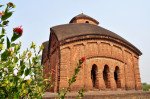
Jor Bangla Temple
Some quick example text to build on the card title and make up the bulk of the card's content.
Go somewhere
Jor Mandir Complex
Some quick example text to build on the card title and make up the bulk of the card's content.
Go somewhere
Jorbangla Temple
Some quick example text to build on the card title and make up the bulk of the card's content.
Go somewhere
Joypur Forest
Some quick example text to build on the card title and make up the bulk of the card's content.
Go somewhere
Kalachand Temple
Some quick example text to build on the card title and make up the bulk of the card's content.
Go somewhere
Kamarpukur
Some quick example text to build on the card title and make up the bulk of the card's content.
Go somewherein Other Cities