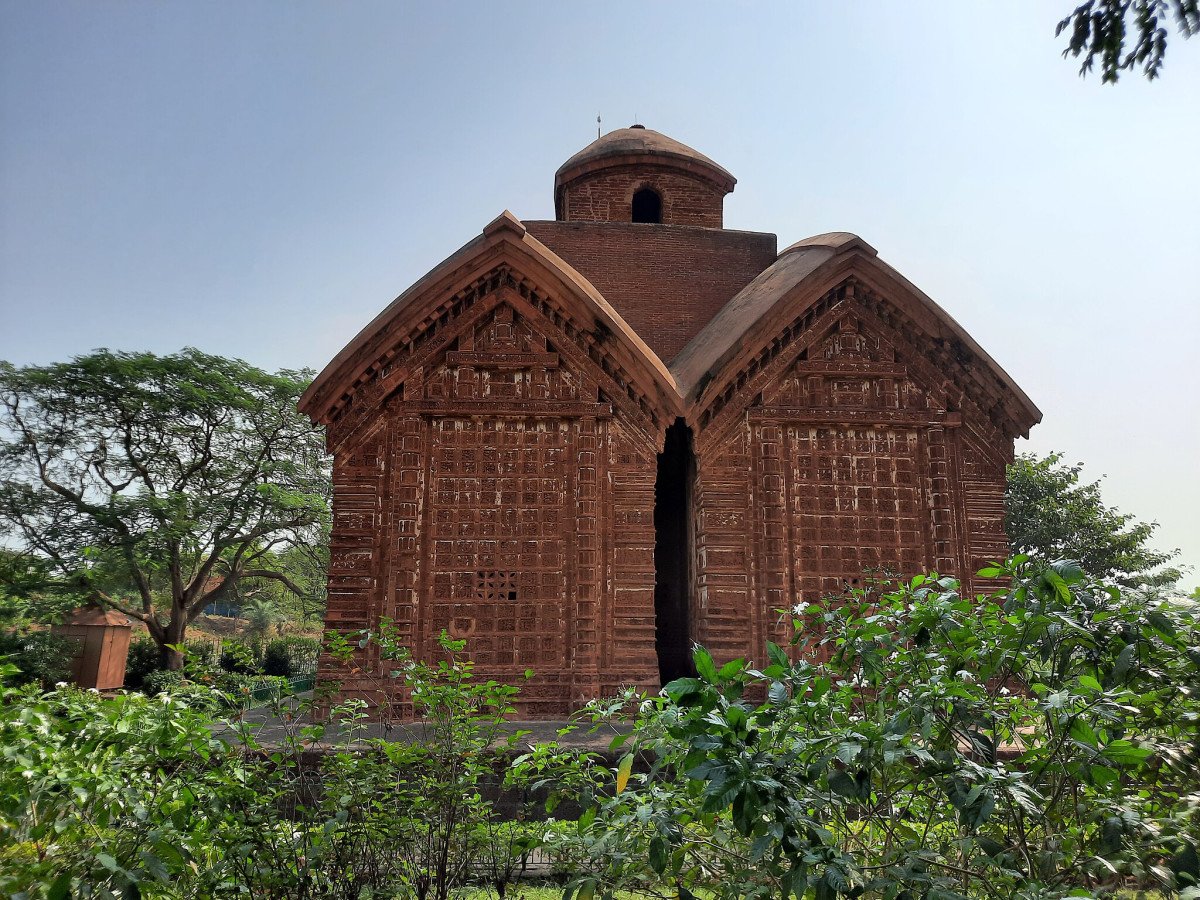
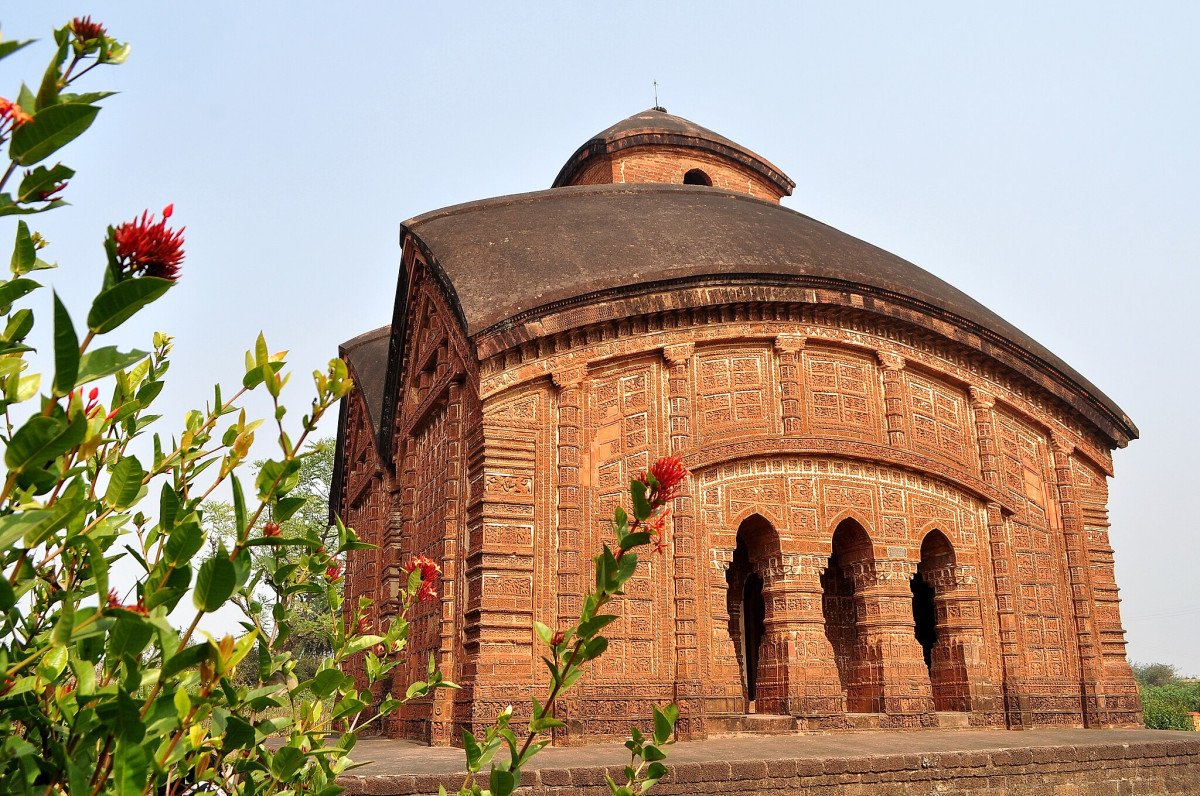
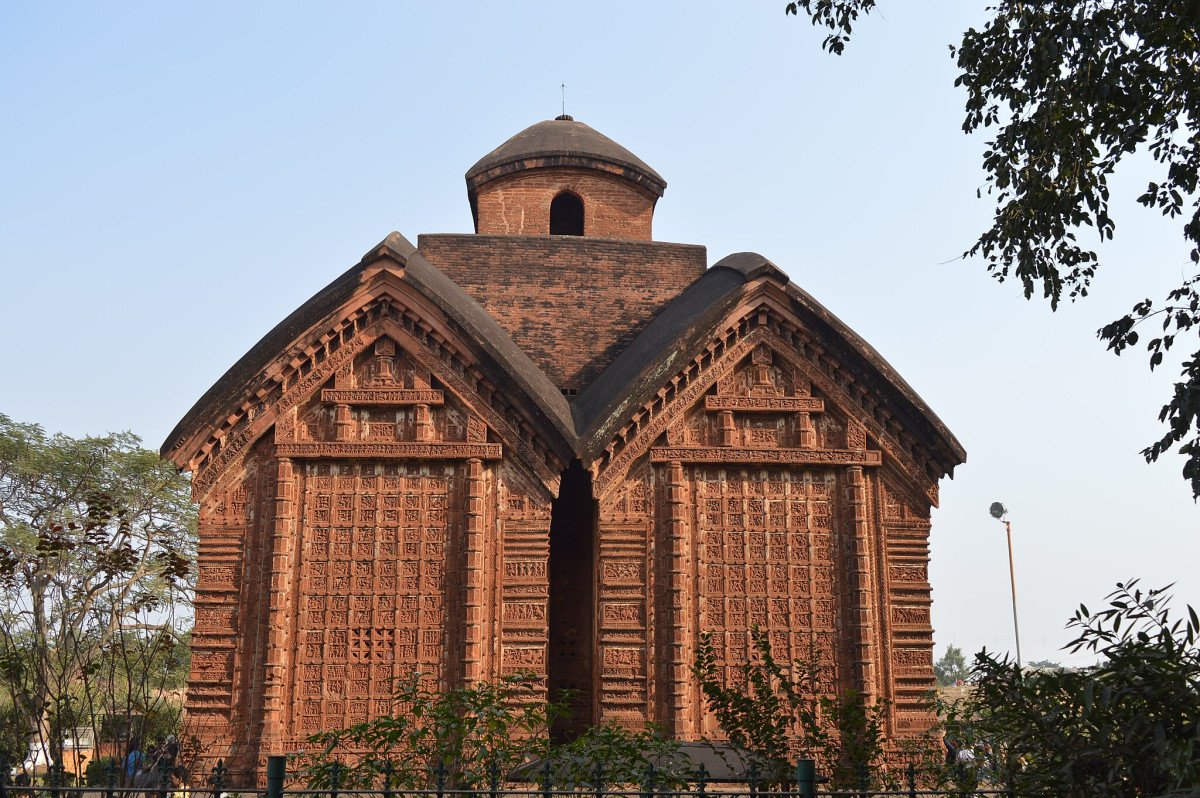
Jorbangla Temple
General information
-
Ideal Duration:
1. 5 HoursPlace Type:
Religious Heritage / Terracotta ArtEntry Fees:
Entry Fee: Part of the ASI combined ticket (approx. Rs.25 for Indians, Rs.300 for foreigners), which covers other major temples.
Validity: The ticket is valid for one day and covers Rasmancha, Shyam Rai, and Jorbangla. ...Entry Fee: Part of the ASI combined ticket (approx. Rs.25 for Indians, Rs.300 for foreigners), which covers other major temples.
Validity: The ticket is valid for one day and covers Rasmancha, Shyam Rai, and Jorbangla.Special Events:
Bishnupur Mela: The temple is a focal point during the mela in December.
Bengali New Year: Special decorations are often seen around the complex in April. ...Bishnupur Mela: The temple is a focal point during the mela in December.
Bengali New Year: Special decorations are often seen around the complex in April.Best Photo Spots:
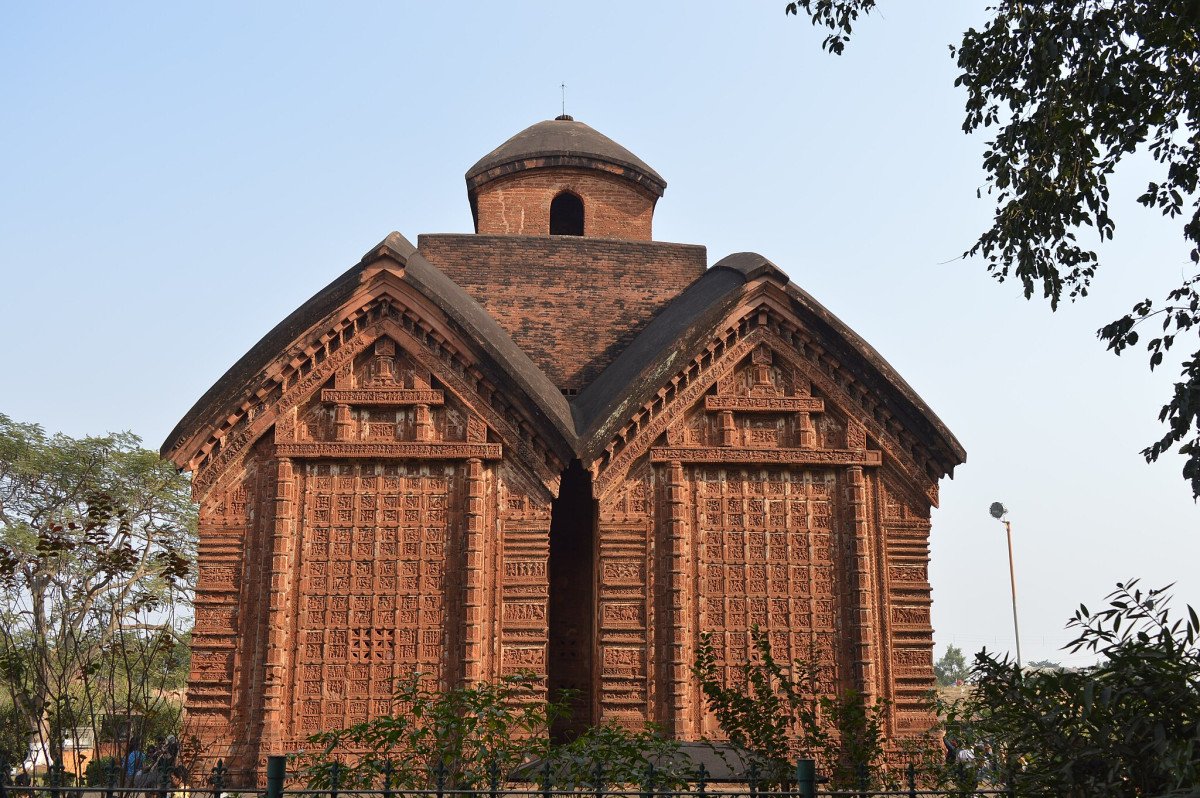
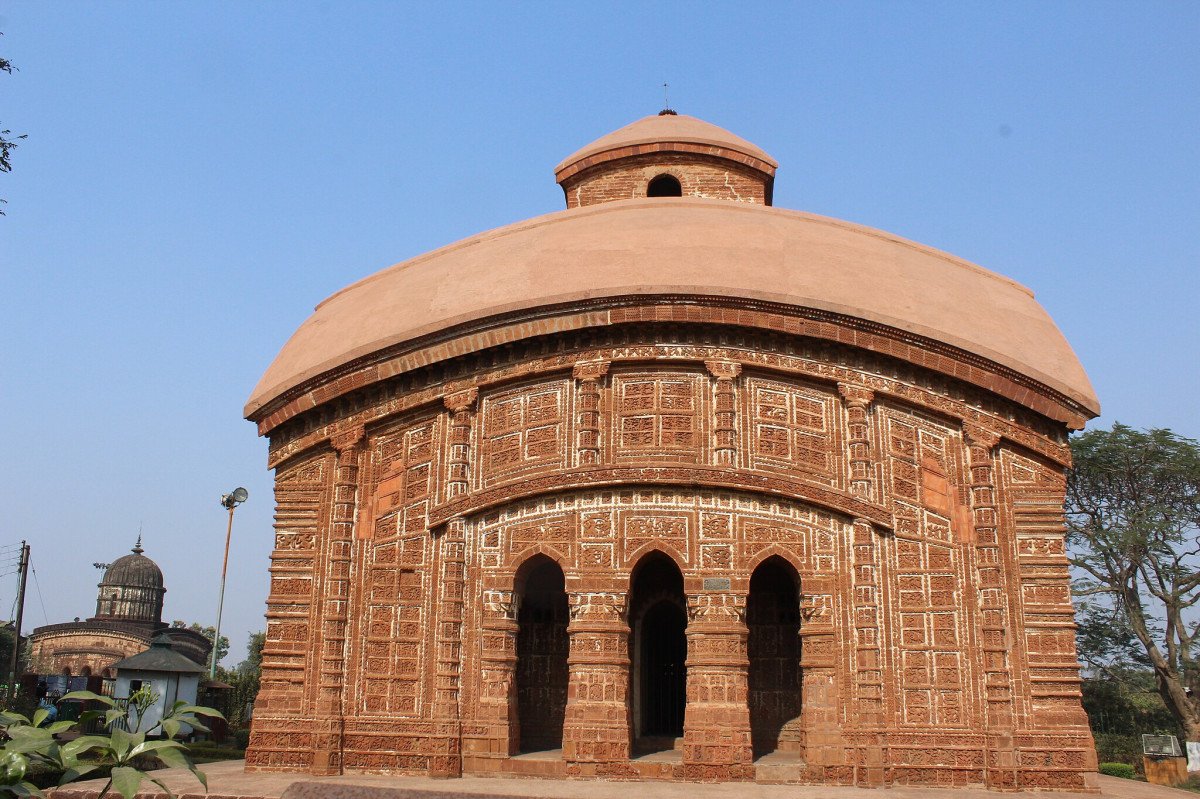
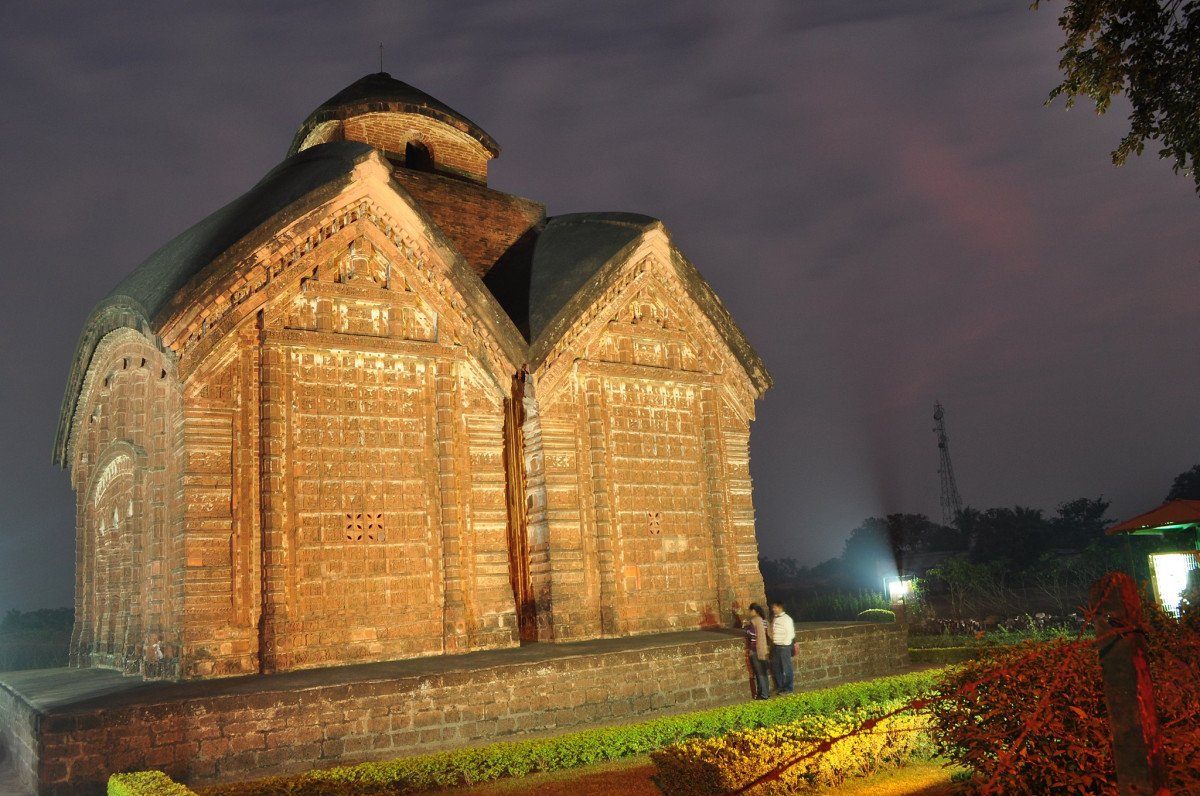
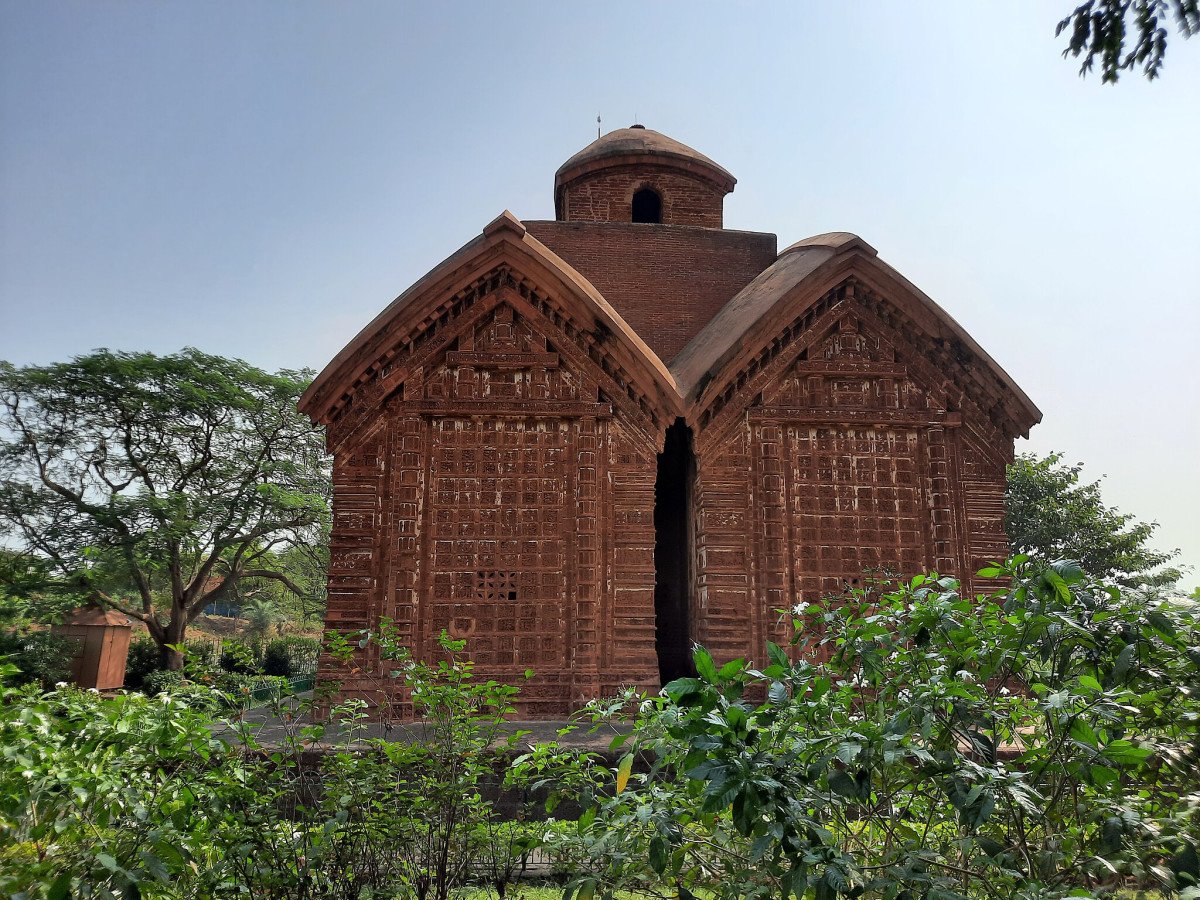
The Twin Roofs: Capture the side profile to clearly show the "Jor" (twin) structure.
Close-up Panels: Use a macro lens for the Krishna Leela scenes.
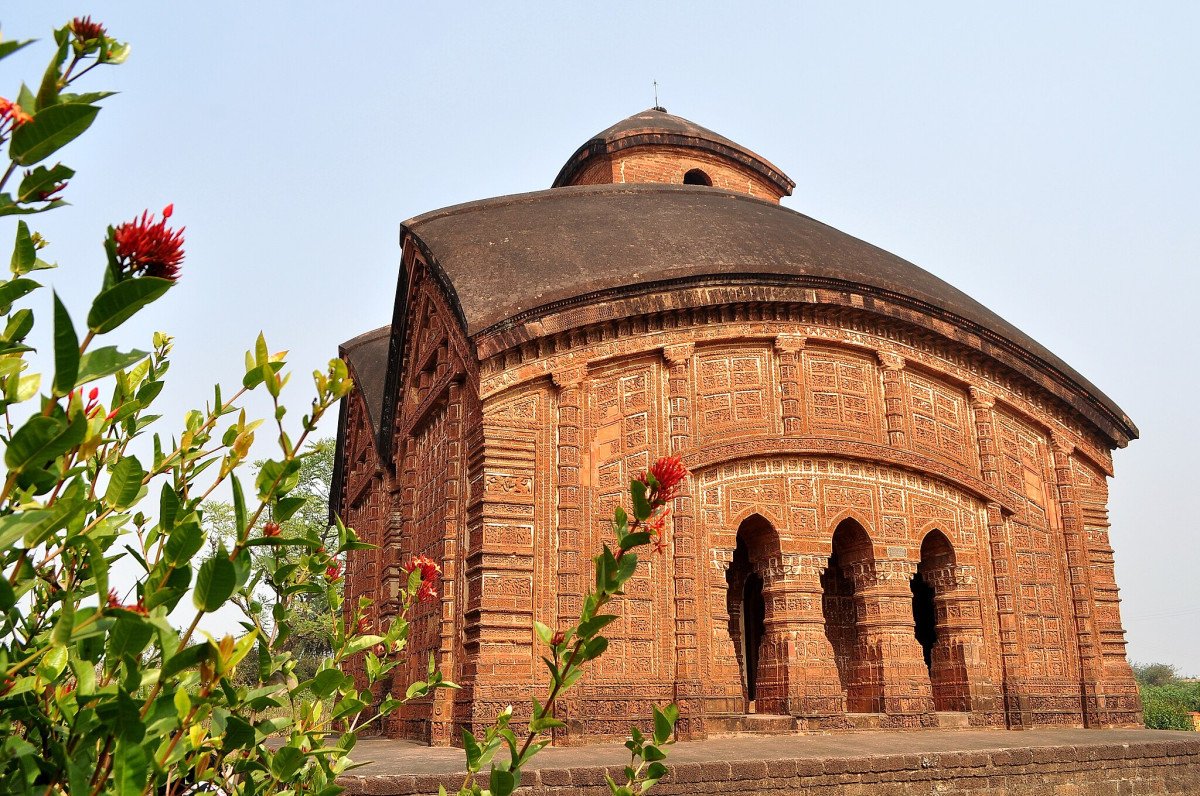
Wide Garden Shot: Use the greenery to frame the red temple...The Twin Roofs: Capture the side profile to clearly show the "Jor" (twin) structure.
Close-up Panels: Use a macro lens for the Krishna Leela scenes.
Wide Garden Shot: Use the greenery to frame the red temple in the center.Photo Gallery
Things To Do
-
Terracotta Study: Spend time identifying scenes from the Ramayana and Mahabharata on the walls.
Photography: The temple is extremely photogenic, especially the detailed wall panels.
Garden Walk: Relax in the manicured gardens surrounding the temple.
Learning Art: Observe the different styles of carvings—from bold figures to intricate floral motifs.
Cultural Immersion: Hire a guide to hear the detailed stories behind each terracotta panel.
Sketching: Perfect for artists looking to capture traditional Bengali motifs.
Historical Mapping: Notice the placement of the temple in relation to the nearby Shyam Rai Temple.
Meditation: Fin...Terracotta Study: Spend time identifying scenes from the Ramayana and Mahabharata on the walls.
Photography: The temple is extremely photogenic, especially the detailed wall panels.
Garden Walk: Relax in the manicured gardens surrounding the temple.
Learning Art: Observe the different styles of carvings—from bold figures to intricate floral motifs.
Cultural Immersion: Hire a guide to hear the detailed stories behind each terracotta panel.
Sketching: Perfect for artists looking to capture traditional Bengali motifs.
Historical Mapping: Notice the placement of the temple in relation to the nearby Shyam Rai Temple.
Meditation: Find a quiet corner in the garden for contemplation.
Souvenir Shopping: Buy terracotta tiles from local artisans outside the gate.
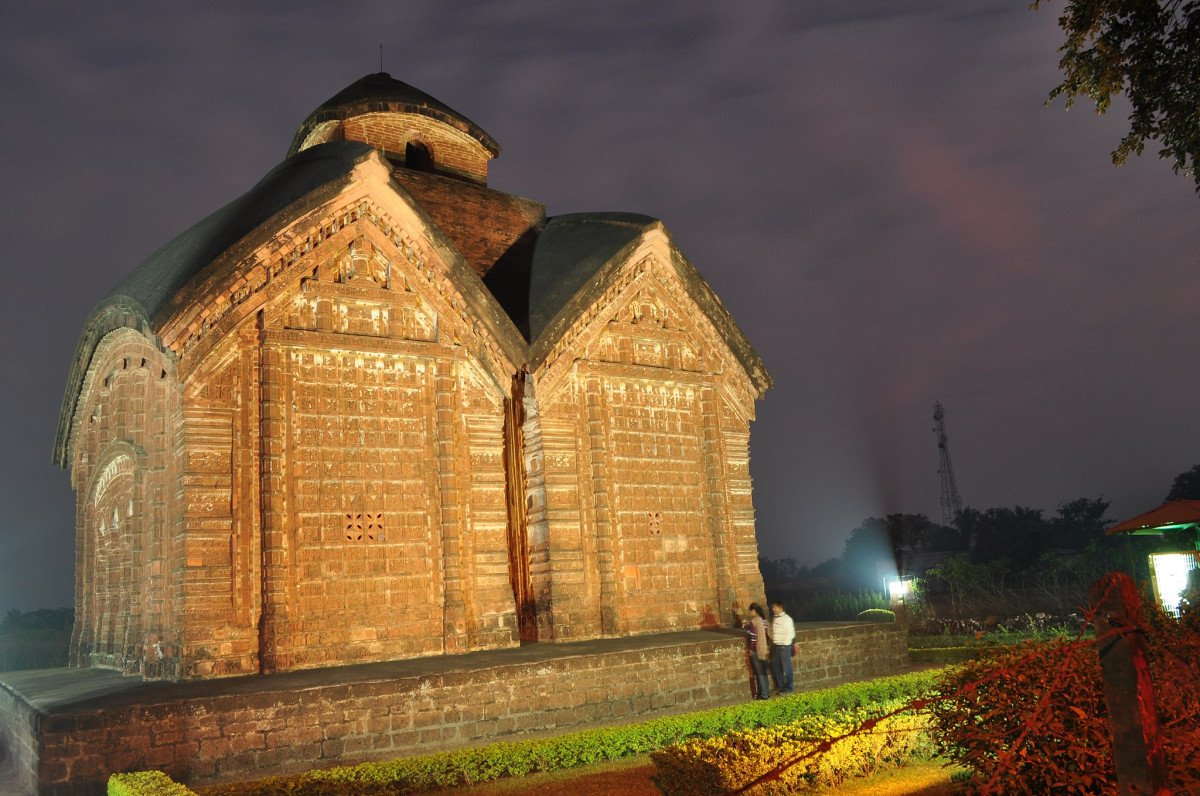
Evening Lighting: Visit during sunset when the red bricks glow brilliantly.
Hotels
● Ankush Resorts
Address: Bishnupur, West Bengal
Distance: 4.0 km
Details: Ankush Resorts is a well-established property in the Bishnupur area. It provides a comfortable stay with a focus on basic amenities and good service. ...
● Bishnupur River Side Resort
Address: Subhas Pally, Bishnupur, West Bengal
Distance: 7.3 km
Details: Bishnupur River Side Resort offers a premium stay with scenic views and a peaceful atmosphere. Key amenities include an outdoor swimming pool, a multi...
● Holiday Resort
Address: Chinnamasta Mandir Road, Bishnupur, West Bengal
Distance: 3.1 km
Details: Holiday Resort offers comfortable stay options in a quiet part of Bishnupur. Its proximity to the Chinnamasta Temple and other local landmarks makes i...
● Hotel Annapurna
Address: Professors Colony, Bishnupur, West Bengal
Distance: 1.1 km
Details: Hotel Annapurna is a well-rated mid-range property in Bishnupur. It features a restaurant, bar, and garden for relaxation. Facilities include free WiF...
● Hotel Olivia and Resort
Address: Near Dalmadal Para, Bishnupur, West Bengal
Distance: 2.8 km
Details: Hotel Olivia and Resort is a 2-star property providing essential comforts for a short stay. It features an on-site restaurant, ensuring guests have ea...
● Hotel Suryadeep
Address: Bishnupur Town, West Bengal
Distance: 3.0 km
Details: Hotel Suryadeep offers a mix of standard and deluxe AC rooms for travelers. This mid-range hotel includes amenities like an on-site restaurant, bonfir...
● Lodge Meghmallar
Address: Bus stand Road, Bishnupur, West Bengal
Distance: 2.4 km
Details: Lodge Meghmallar is a conveniently located budget lodge near the Bishnupur bus stand. It features free WiFi, an on-site restaurant, and room service. ...
● Monalisa Lodge
Address: Bus stand Road, Bishnupur, West Bengal
Distance: 1.6 km
Details: Monalisa Lodge is an affordable budget accommodation located near the bus stand. It provides basic facilities including free WiFi, parking, and cable ...
● New Mukherjee Lodge
Address: Baburdanga, Bishnupur, West Bengal
Distance: 2.6 km
Details: New Mukherjee Lodge is a reliable budget-friendly accommodation in Bishnupur. It features a terrace, restaurant, and 24-hour front desk to assist gues...
● Resort Jorbangla
Address: Katandhar, Bypass, Bishnupur, West Bengal
Distance: 2.7 km
Details: Resort Jorbangla is a popular resort known for its serene atmosphere away from town hustle. It features comfortable AC deluxe double beds, making it s...
Show AllInformation
-
Why Famous:
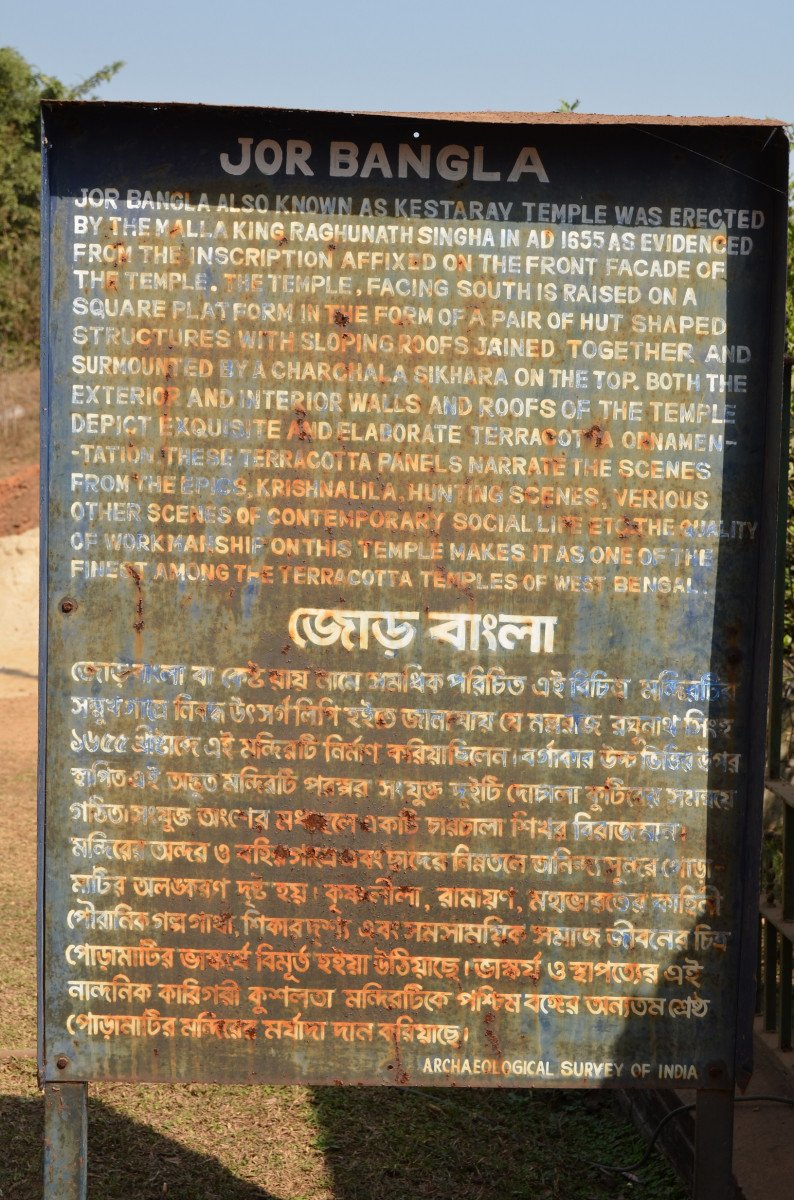
Unique Design: It is the best-preserved example of the twin-hut style of architecture in India.
Artistic Density: The level of detail in its terracotta plaques is unmatched by any other temple in the region.
His...Unique Design: It is the best-preserved example of the twin-hut style of architecture in India.
Artistic Density: The level of detail in its terracotta plaques is unmatched by any other temple in the region.
Historical Record: The carvings of Portuguese soldiers and ships provide a rare contemporary visual record of 17th-century Bengal. -
Architecture:
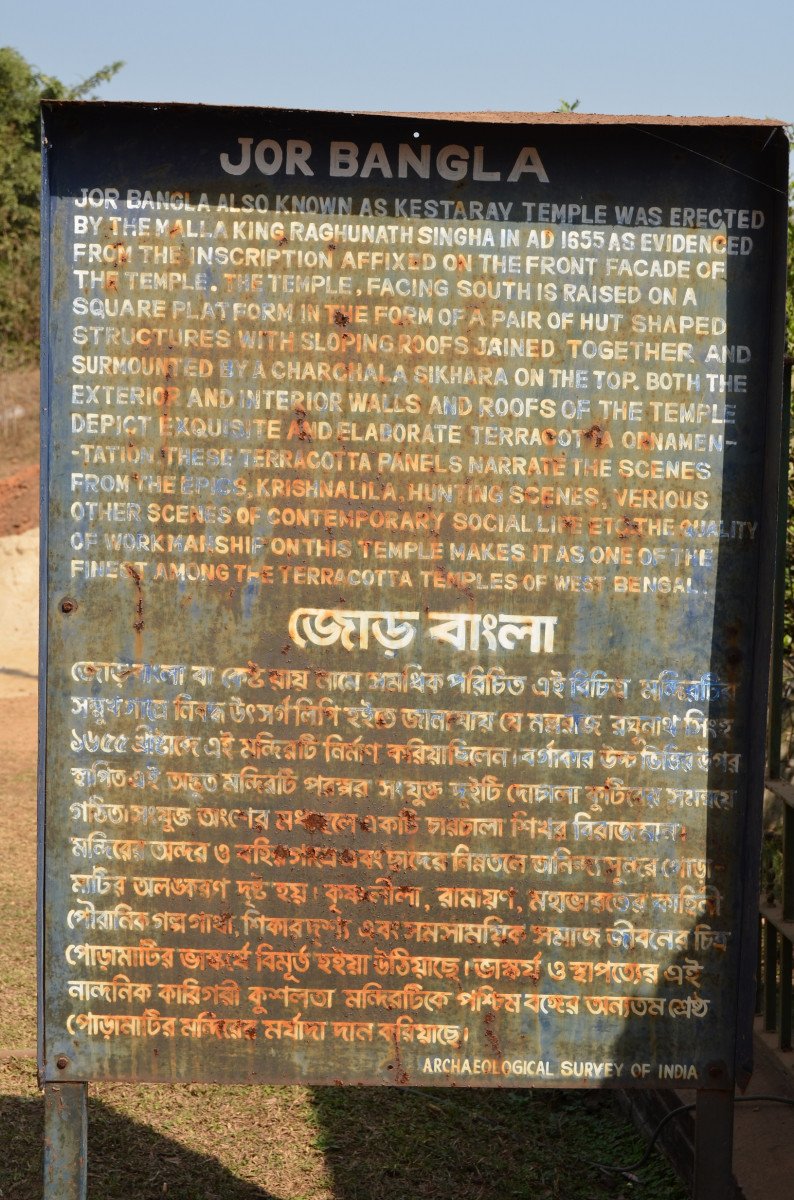
The Jorbangla architecture is a fusion of local folk styles and refined temple design.
Structure: It consists of two "Do-chala" (double-sloped) structures joined together, with a small "Char-chala" (four-sloped) tower on top where the two roofs meet.The Jorbangla architecture is a fusion of local folk styles and refined temple design.
Structure: It consists of two "Do-chala" (double-sloped) structures joined together, with a small "Char-chala" (four-sloped) tower on top where the two roofs meet.
Dimensions: The temple stands on a platform of 11. 8m x 11. 7m and reaches a height of 10. 7m.
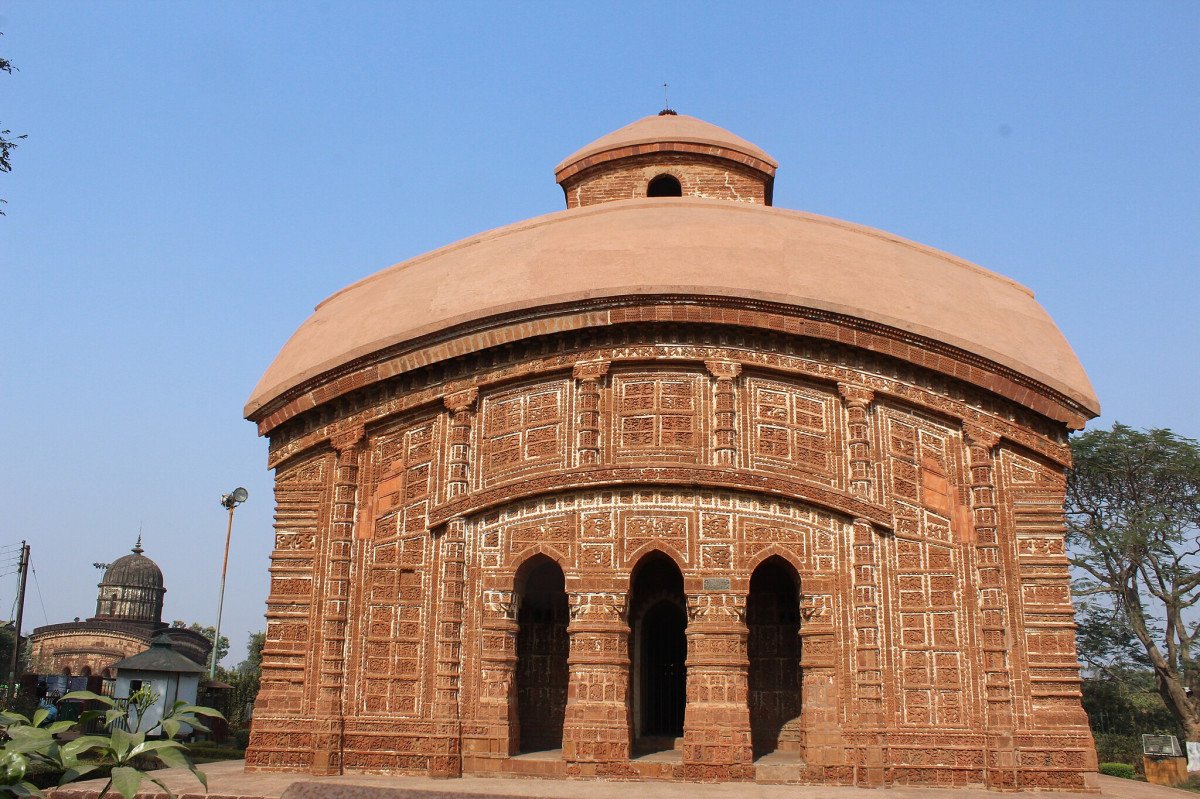
Terracotta Panels: The carvings are arranged in horizontal bands. The base friezes often show secular scenes like hunting and processions, while the upper panels depict religious epics.
Interior: The central sanctum is surrounded by a narrow gallery. The use of the pointed arch in the entrance shows Islamic architectural influence on the local style. -
How To Reach:
By Air: Fly to Kolkata and travel by train or car.
By Train: From Bishnupur Railway Station, it is only 1 KM.
By Road: Easily accessible from the main town center via rickshaw or Toto.
Read MoreBy Air: Fly to Kolkata and travel by train or car.
By Train: From Bishnupur Railway Station, it is only 1 KM.
By Road: Easily accessible from the main town center via rickshaw or Toto.
By Local Transport: Totos are the most convenient; they charge a small fare to take you to the temple cluster.Weather and Best Time to Visit:
Seasons: Winter (October to March) is ideal. Monsoon (July to September) brings out the deep red of the wet bricks.
Parts of the Day: Morning (7:00 AM to 10:00 AM) is best to see the carvings clearly. ...Seasons: Winter (October to March) is ideal. Monsoon (July to September) brings out the deep red of the wet bricks.
Parts of the Day: Morning (7:00 AM to 10:00 AM) is best to see the carvings clearly.Near Tourist Places:
1. Shyam Rai Temple (0. 2 KMS), 2. Rasmancha (0. 8 KMS), 3. Radhashyam Temple (0. 4 KMS), 4. Lalji Temple (0. 5 KMS), 5. Mrinmoyee Temple (0. 6 KMS), 6. Dalmadal Kaman (0. 9 KMS), 7. Madan Mohan Temple (1. 5 KMS), 8. Lalbandh (1. 2 KMS), 9. Bishnupur Museum (1 KMS), 10. Nandalal Temple (0. 7 KMS).Tourism Tips
-
Health and Safety: Do not touch the terracotta plaques as the oil from skin can damage the ancient bricks.
Packing: Bring a high-resolution camera and a zoom lens.
Etiquette: Maintain silence near the sanctu...Health and Safety: Do not touch the terracotta plaques as the oil from skin can damage the ancient bricks.
Packing: Bring a high-resolution camera and a zoom lens.
Etiquette: Maintain silence near the sanctum. No smoking or littering in the garden.
Tourism Tip: Buy a guidebook at the entrance to help identify the various mythological panels.
Reviews
FAQs
Ans:- Yes, local guides are often available at the entrance of major sites like Jorbangla Temple. These guides can provide detailed explanations of the mythological stories depicted on the terracotta walls. While some guides are certified by the tourism department, others are locals with deep knowledge of the history. It is advisable to negotiate the fee beforehand to ensure a smooth and informative experience.Ans:- Photography is generally permitted within the Jorbangla Temple complex for personal use. However, using professional equipment like tripods or drones may require special permission from the Archaeological Survey of India. Visitors are encouraged to capture the beautiful details of the terracotta panels, but they should be careful not to touch the delicate carvings or disturb the sanctity of the historical site while clicking.Ans:- Jorbangla Temple is located within the main town area of Bishnupur, approximately 3 to 4 kilometers from the Bishnupur Railway Station. You can easily find battery-operated rickshaws (Totos) or cycle rickshaws at the station that will take you directly to the temple. Most tourists prefer to hire a Toto for a full day to cover all the local terracotta temples comfortably and efficiently.Ans:- While the temples of Bishnupur, including Jorbangla, have been on the UNESCO World Heritage Tentative List since 1998, they have not yet received full World Heritage status. However, they are protected and maintained by the Archaeological Survey of India (ASI) as monuments of national importance. Their historical value and artistic brilliance make them world-class heritage sites that attract international attention and preservation efforts.Ans:- Yes, there is a combined entry fee for several monuments in Bishnupur, including Jorbangla Temple, Rasmancha, and Shyam Rai Temple. For Indian citizens, the fee is nominal, while foreigners pay a higher rate. Tickets can be purchased at the gate of any of these major sites, and children below 15 years usually have free entry under ASI rules.Ans:- The Jorbangla Temple is generally open to tourists from 6:00 AM to 6:00 PM every day. Since it is maintained by the Archaeological Survey of India (ASI), visitors are required to follow the standard timing. It is best to visit early in the morning or during the late afternoon to witness the sunlight illuminating the intricate terracotta carvings on the walls.Ans:- The ideal time to visit Jorbangla Temple is during the winter months, specifically from October to March. During this period, the weather in West Bengal is pleasant and cool, making it comfortable to walk around the open-air temple complexes. Visiting during the Bishnupur Mela in late December also adds a cultural dimension to the trip, with local music and crafts on display.Ans:- Originally dedicated to Lord Krishna in the form of Keshto Ray, the temple was a vital center for Vaishnavism in Bengal. Although it is no longer an active place of daily worship, it remains a holy site for devotees who visit to admire the divine stories of Krishna and Radha carved into the terracotta tiles, reflecting the spiritual fervor of the 17th century.Ans:- The Jorbangla Temple, also known as the Keshto Ray Temple, features a unique "do-chala" style that resembles two traditional Bengali thatched huts joined together. One hut serves as a porch while the other acts as the inner sanctum. A small tower or "ratna" sits atop the joint, making it a masterpiece of Malla architecture built in 1655 by King Raghunath Singha Dev II.Ans:- The "Ratna" or the central tower of the Jorbangla Temple is a square structure with a four-sided sloping roof (char-chala). It sits precisely where the two "do-chala" huts meet. This combination of styles makes Jorbangla a transitional masterpiece between the simple "chala" style and the more complex "ratna" temples of Bishnupur, representing a creative peak in the evolution of Bengali temple architecture.Ans:- The temple is primarily built using high-quality burnt bricks and laterite stone. Because stone was scarce in the alluvial plains of Bengal, architects used terracotta (baked clay) as a substitute for decorative work. The fine clay from the local riverbeds allowed for the creation of extremely detailed and durable panels that have remarkably survived for over 350 years against the elements.Ans:- There is no strict dress code as it is no longer an active religious site, but visitors are advised to dress modestly out of respect for the cultural heritage and the local community. Comfortable cotton clothing is recommended due to the humid climate of Bengal. Since you will be walking around historical structures with uneven stone floors, wearing sturdy walking shoes or sandals is a practical choice.Ans:- The Jorbangla Temple was commissioned by the 51st Malla King, Raghunath Singha Dev II, in the year 1655. He was a great patron of art and architecture, and this temple stands as a testament to his devotion to Lord Krishna. The inscription on the temple wall confirms the date and the royal lineage responsible for this heritage structure that still attracts thousands.Bishnupur Itineray And Cost:-
Jorbangla Temple Tourism:-
Information about New and Updated Locations() of West Bengal Has Been Added :-
Card subtitle
Note:-
Information provided here in good Faith and for reference only.
Near Places
Acharya Jogesh Chandra Museum
Some quick example text to build on the card title and make up the bulk of the card's content.
Go somewhere
Big Stone Gateway
Some quick example text to build on the card title and make up the bulk of the card's content.
Go somewhere
Bishnupur Mela Ground
Some quick example text to build on the card title and make up the bulk of the card's content.
Go somewhere
Bishnupur Rajbari
Some quick example text to build on the card title and make up the bulk of the card's content.
Go somewhere
Chhinnamasta Temple
Some quick example text to build on the card title and make up the bulk of the card's content.
Go somewhere
Dalmadal Cannon
Some quick example text to build on the card title and make up the bulk of the card's content.
Go somewhere
Garh Darwaja
Some quick example text to build on the card title and make up the bulk of the card's content.
Go somewhere
Gokul Chand Temple
Some quick example text to build on the card title and make up the bulk of the card's content.
Go somewhere
Hadal-Narayanpur
Some quick example text to build on the card title and make up the bulk of the card's content.
Go somewhere
Jhilimili & Sutan Forest
Some quick example text to build on the card title and make up the bulk of the card's content.
Go somewhere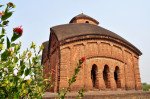
Jor Bangla Temple
Some quick example text to build on the card title and make up the bulk of the card's content.
Go somewhere
Jor Mandir Complex
Some quick example text to build on the card title and make up the bulk of the card's content.
Go somewhere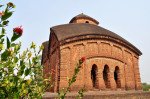
Jorbangla Temple
Some quick example text to build on the card title and make up the bulk of the card's content.
Go somewhere
Joypur Forest
Some quick example text to build on the card title and make up the bulk of the card's content.
Go somewhere
Kalachand Temple
Some quick example text to build on the card title and make up the bulk of the card's content.
Go somewhere
Kamarpukur
Some quick example text to build on the card title and make up the bulk of the card's content.
Go somewherein Other Cities