
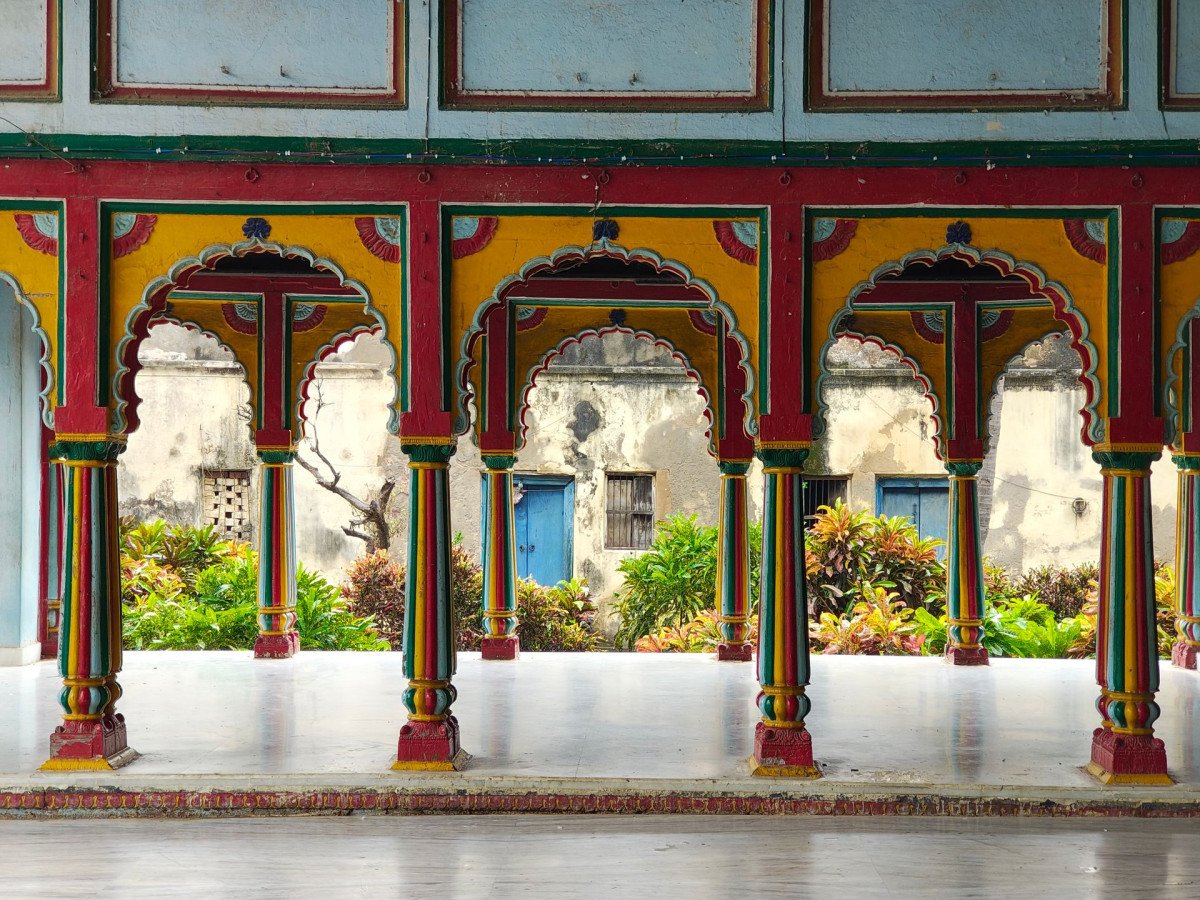
Bishnupur Rajbari
General information
-
Ideal Duration:
1 HourPlace Type:
Royal Heritage / RuinsEntry Fees:
No Entry Fee: Most parts of the ruins are free to access.
Permission: Some inner areas managed by the royal family might require verbal permission from the guards. ...No Entry Fee: Most parts of the ruins are free to access.
Permission: Some inner areas managed by the royal family might require verbal permission from the guards.Special Events:
Durga Puja: The royal family still celebrates Durga Puja at the nearby Mrinmoyee Temple, which draws crowds to the palace area in October.
Rajbari Utsav: Small local festivals occasionally take place on the grounds. ...Durga Puja: The royal family still celebrates Durga Puja at the nearby Mrinmoyee Temple, which draws crowds to the palace area in October.
Rajbari Utsav: Small local festivals occasionally take place on the grounds.Best Photo Spots:
The Hawa Mahal Arch: Frame the sky through the broken arches of the summer palace.
Overgrown Ruins: Use the vines and moss on the laterite stones for a dramatic, "lost world" look.
Golden Hour: The reddish l...The Hawa Mahal Arch: Frame the sky through the broken arches of the summer palace.
Overgrown Ruins: Use the vines and moss on the laterite stones for a dramatic, "lost world" look.
Golden Hour: The reddish laterite glows beautifully during sunset.Photo Gallery
Things To Do
-
Ruins Exploration: Walk through the dilapidated corridors to imagine the palace's former glory.
Photography: The ruins offer a perfect backdrop for heritage-themed photography.
Learning History: Read the informational plaques to learn about the different Malla kings.
Birding: The quiet, overgrown areas are great for spotting local birds.
Picnicking: Enjoy a quiet lunch in the open spaces surrounding the ruins.
Cultural Discussion: Engage with local caretakers to hear family legends of the Malla kings.
Meditation: The peaceful, abandoned vibe of the ruins is ideal for quiet reflection.
Artistic Sketching: Capture the jagged lines ...Ruins Exploration: Walk through the dilapidated corridors to imagine the palace's former glory.
Photography: The ruins offer a perfect backdrop for heritage-themed photography.
Learning History: Read the informational plaques to learn about the different Malla kings.
Birding: The quiet, overgrown areas are great for spotting local birds.
Picnicking: Enjoy a quiet lunch in the open spaces surrounding the ruins.
Cultural Discussion: Engage with local caretakers to hear family legends of the Malla kings.
Meditation: The peaceful, abandoned vibe of the ruins is ideal for quiet reflection.
Artistic Sketching: Capture the jagged lines of the ruins in a sketchbook.
Viewing the Moats: Look at the nearby water bodies that once served as palace defenses.
Walking Tours: Join a guided heritage walk that covers the palace and the nearby gateways.
Information
-
Why Famous:
Royal Legacy: It was the seat of power for the Malla dynasty for centuries.
Hawa Mahal: The unique ventilation-focused architecture of the summer palace is a key attraction.
Cultural Hub: The palace grounds ...Royal Legacy: It was the seat of power for the Malla dynasty for centuries.
Hawa Mahal: The unique ventilation-focused architecture of the summer palace is a key attraction.
Cultural Hub: The palace grounds were the birthplace of many local traditions, including the Bishnupur style of painting and music. -
Architecture:
The architecture of the Bishnupur Rajbari reflects a blend of traditional Bengali and Indo-Islamic styles.
Structure: The palace was built primarily using laterite stone and bricks.
Dimensions: The surviving Hawa Mahal stands about...The architecture of the Bishnupur Rajbari reflects a blend of traditional Bengali and Indo-Islamic styles.
Structure: The palace was built primarily using laterite stone and bricks.
Dimensions: The surviving Hawa Mahal stands about 10 meters high with multiple arched openings. The original palace grounds covered several acres.
Design Features: The use of the "chala" style (sloping roof) is evident in some of the smaller structures within the complex. The palace featured intricate drainage systems and internal courtyards typical of medieval Indian royal residences.
Stucco Work: While most terracotta has faded, some traces of lime-plaster (stucco) floral motifs can still be seen on the surviving arches. -
How To Reach:
By Air: Fly to Kolkata and then take a train or hire a car for the 4-hour journey to Bishnupur.
By Train: Take the Rupashi Bangla or Aranyak Express from Howrah to Bishnupur. The palace is 2. 5 KMS from the station.
Read MoreBy Air: Fly to Kolkata and then take a train or hire a car for the 4-hour journey to Bishnupur.
By Train: Take the Rupashi Bangla or Aranyak Express from Howrah to Bishnupur. The palace is 2. 5 KMS from the station.
By Road: Well-connected via Burdwan and Durgapur.
By Local Transport: Hiring a Toto for a full day of sightseeing is the most efficient way to reach the Rajbari.Weather and Best Time to Visit:
Seasons: Winter (November to February) is best for walking around the open ruins.
Parts of the Day: Late Afternoon is the most atmospheric time to visit. ...Seasons: Winter (November to February) is best for walking around the open ruins.
Parts of the Day: Late Afternoon is the most atmospheric time to visit.Near Tourist Places:
1. Big Stone Gateway (0. 2 KMS), 2. Garh Darwaja (0. 4 KMS), 3. Mrinmoyee Temple (0. 8 KMS), 4. Dalmadal Kaman (1 KMS), 5. Rasmancha (2 KMS), 6. Shyam Rai Temple (1. 5 KMS), 7. Jorbangla Temple (1. 6 KMS), 8. Lalbandh (1 KMS), 9. Madan Mohan Temple (1. 5 KMS), 10. Bishnupur Museum (2. 2 KMS).Tourism Tips
-
Health and Safety: Watch your step as the ruins have loose stones and uneven flooring. Wear insect repellent as the vegetation can attract mosquitoes.
Packing: Wear breathable cotton clothes. Carry a good camera with a wide-angle lens.Health and Safety: Watch your step as the ruins have loose stones and uneven flooring. Wear insect repellent as the vegetation can attract mosquitoes.
Packing: Wear breathable cotton clothes. Carry a good camera with a wide-angle lens.
Accommodation: Stay at the West Bengal Tourism Development Corporation lodge for proximity to the heritage sites.
Etiquette: Do not climb on the fragile structures or take stones as souvenirs.
Reviews
FAQs
Ans:- A typical visit to the Rajbari and its immediate temples takes about 45 minutes to an hour. This allows enough time to admire the architecture of the gate, visit the Mrinmoyee Temple, and take a few photographs. It is often combined with a visit to the Dalmadal Cannon, which is just a short walk away.Ans:- Currently, the Rajbari is a private property owned by the descendants of the Malla royal family. While visitors can view the palace from the outside and explore the impressive boundary walls and the main entrance gate, the inner residential quarters are generally not open to the public to maintain the privacy of the current residents.Ans:- Established in 997 AD by King Jagat Malla, the Mrinmoyee Temple is dedicated to Goddess Durga. The idol is made of Ganga clay and has remained unchanged for centuries. The Durga Puja celebrated here is the oldest in the region, following unique royal traditions that include the firing of a cannon to mark the start of the puja.Ans:- Over the centuries, much of the original fort and its residential palaces have crumbled due to the ravages of time and the lack of maintenance after the decline of the Malla dynasty. What remains today are mostly the stone gateways, some segments of the boundary walls, the cannons, and the resilient terracotta and laterite temples.Ans:- Since the complex houses active temples and a private residence, visitors should dress modestly and behave respectfully. Remove footwear before entering temple platforms. It is also important to stay within the designated public areas and avoid wandering into the clearly marked private sections of the royal estate.Ans:- The best time to visit is during the Durga Puja festival (usually in October). This is when the Rajbari comes alive with ancient rituals, traditional music, and large crowds. If you prefer a quiet visit, the winter months (November to February) are ideal for exploring the complex and the nearby historical ruins in pleasant weather.Ans:- The Rajbari is located in the central part of the town, in an area known as Dalmadal Para or the Rajbari complex. It is well-connected by local roads and is a landmark that every rickshaw driver in the town knows. It sits close to other historical sites like the Dalmadal Cannon and the Garh Darwaja.Ans:- The Rajbari reflects a mix of traditional Bengali architecture and later military fortification styles. Built primarily with laterite stone and bricks, it features arched entrances and thick walls. Some parts of the complex also show the influence of Islamic architecture, which was common in the courtly buildings of that era in Bengal.Ans:- The temples within the complex, being active places of worship, are relatively well-maintained. The main gateway and some boundary walls are also in fair condition. However, some of the older, non-religious ruins within the compound show significant signs of aging. The private residential part is maintained by the current Malla descendants.Ans:- There are many legends, including stories of hidden tunnels that once connected the Rajbari to various temples and strategic points in the town. Local folklore also speaks of the divine protection the royal family received from Goddess Mrinmoyee, which helped them defend the kingdom against numerous foreign invasions over the centuries.Ans:- There is no official ticket or entry fee to walk through the outer complex of the Rajbari or to visit the Mrinmoyee Temple. Since it is a living heritage site and a place of worship, access is free for all. However, visitors are expected to maintain decorum and follow any specific rules set by the royal estate.Ans:- While the descendants still live on the premises, they generally lead private lives. They are sometimes seen participating in the official temple rituals, especially during the annual festivals. Unless you have a specific reason or a prior appointment, it is best to respect their privacy and enjoy the public heritage areas of the complex.Ans:- Yes, the Rajbari compound is home to several important temples, most notably the Mrinmoyee Temple, which is the oldest temple in Bishnupur. The royal family still performs traditional pujas here, especially during Durga Puja. These temples were the private places of worship for the kings and are highly revered by the local community.Bishnupur Itineray And Cost:-
Bishnupur Rajbari Tourism:-
Information about New and Updated Locations() of West Bengal Has Been Added :-
Card subtitle
Note:-
Information provided here in good Faith and for reference only.
Near Places
Acharya Jogesh Chandra Museum
Some quick example text to build on the card title and make up the bulk of the card's content.
Go somewhere
Big Stone Gateway
Some quick example text to build on the card title and make up the bulk of the card's content.
Go somewhere
Bishnupur Mela Ground
Some quick example text to build on the card title and make up the bulk of the card's content.
Go somewhere
Bishnupur Rajbari
Some quick example text to build on the card title and make up the bulk of the card's content.
Go somewhere
Chhinnamasta Temple
Some quick example text to build on the card title and make up the bulk of the card's content.
Go somewhere
Dalmadal Cannon
Some quick example text to build on the card title and make up the bulk of the card's content.
Go somewhere
Garh Darwaja
Some quick example text to build on the card title and make up the bulk of the card's content.
Go somewhere
Gokul Chand Temple
Some quick example text to build on the card title and make up the bulk of the card's content.
Go somewhere
Hadal-Narayanpur
Some quick example text to build on the card title and make up the bulk of the card's content.
Go somewhere
Jhilimili & Sutan Forest
Some quick example text to build on the card title and make up the bulk of the card's content.
Go somewhere
Jor Bangla Temple
Some quick example text to build on the card title and make up the bulk of the card's content.
Go somewhere
Jor Mandir Complex
Some quick example text to build on the card title and make up the bulk of the card's content.
Go somewhere
Jorbangla Temple
Some quick example text to build on the card title and make up the bulk of the card's content.
Go somewhere
Joypur Forest
Some quick example text to build on the card title and make up the bulk of the card's content.
Go somewhere
Kalachand Temple
Some quick example text to build on the card title and make up the bulk of the card's content.
Go somewhere
Kamarpukur
Some quick example text to build on the card title and make up the bulk of the card's content.
Go somewherein Other Cities