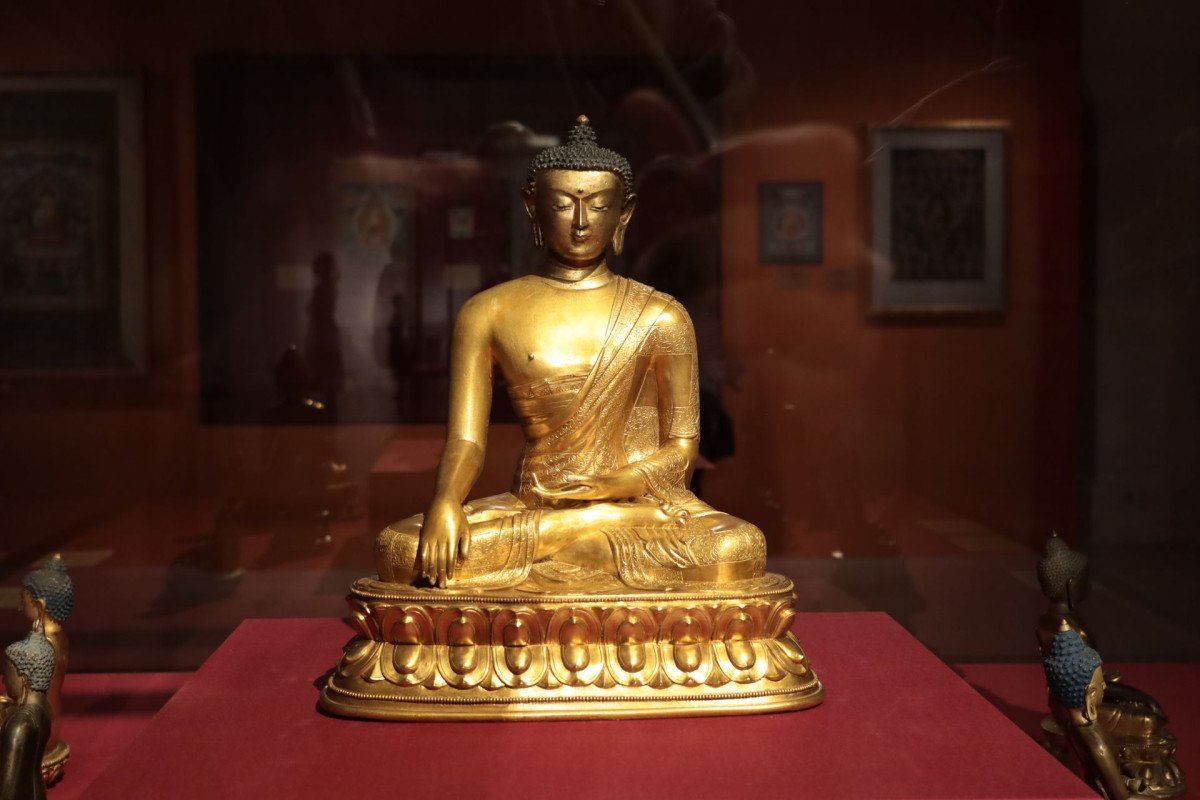
Archaeological Museum of Gurukul
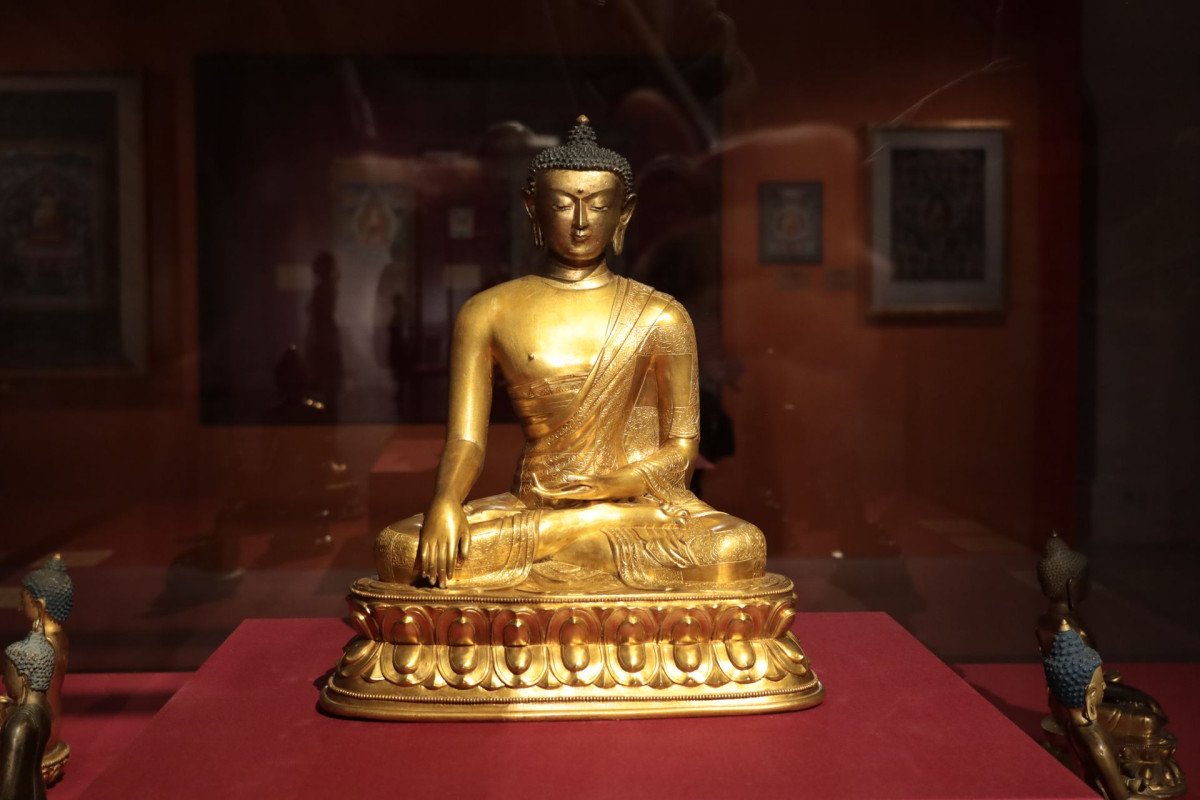
Introduction to Museum and Founder: This museum, often regarded as the biggest in Haryana, is a proud monument established in 1959 by Swami Omanand Saraswati. His visionary effort was dedicated to collecting, preserving, and exhibiting antiques from across India, making it a treasure trove of histor ical artifacts. It is not just a display space but a center for promoting Vedic culture and ancient Indian heritage, deeply connected with the Gurukul institution. The collection is vast and diverse, spanning various periods of Indian history, from the Harappan period to the late medieval era.Major Collections: The museum houses an impressive array of antiquities, including rare Panchal and Yaudheya coins, intricate terracotta objects, stone sculptures of deities like Lord Vishnu and Lord Ganesha, and unique items like a seamless wooden chain and a flexible stone. The sheer volume and variety of the exhibits provide a comprehensive view of the region's historical depth and cultural evolution. It serves as a vital educational resource for historians, archaeologists, and students.Historical Significance and Purpose: The museum’s significance lies in its role in documenting the rich past of the Haryana region, which was historically part of the extensive Indus Valley Civilization and later crucial ancient kingdoms. The collection includes pottery fragments, tools, and seals that directly link Jhajjar to sites like Banawali and Agroha. It actively works to inspire interest in the past among visitors, making history accessible and engaging for all age groups. It's a key destination for anyone wanting to understand the cultural thread running through Haryana.
General information
-
Ideal Duration:
2Rs.3 HoursPlace Type:
Cultural, Historical, ArchaeologicalEntry Fees:
Overview of Fee Structure: The museum, being part of an educational and spiritual institution, typically maintains a very low or nominal entry fee to encourage public access and education. This low cost ensures that history and culture are accessible to all strata of societ...Overview of Fee Structure: The museum, being part of an educational and spiritual institution, typically maintains a very low or nominal entry fee to encourage public access and education. This low cost ensures that history and culture are accessible to all strata of society.
General Adult Entry Fee: For general visitors, the entry fee is usually a nominal amount, often around 10 to 20 INR per person. This fee contributes minimally to the maintenance of the facilities.
Children and Student Concessions: Students, especially those from local schools and colleges (with a valid ID), and young children usually receive a significant concession or may be admitted for free as part of the museum's educational mandate.
Foreign Visitor Fees: Non-Indian citizens may be subject to a slightly higher, yet still moderate, fee (e. g. , 50 to 100 INR), consistent with practices at many national museums in India.
Camera and Photography Charges: There might be a small separate fee for carrying a mathbfstill} mathbfcamera} (e. g. , 20Rs.50 INR), and a higher fee for a mathbfvideo} mathbfcamera} or professional equipment. Always confirm the mathbfno-flash} policy.Timing:
Regular Timings: The museum is generally open to the public from 9:00 AM to 5:00 PM on all days, though it is usually mathbfclosed} on mathbfMondays} and public mathbfholidays} for maintenance. Always call ahead to confirm operational hours.
Read MoreRegular Timings: The museum is generally open to the public from 9:00 AM to 5:00 PM on all days, though it is usually mathbfclosed} on mathbfMondays} and public mathbfholidays} for maintenance. Always call ahead to confirm operational hours.
Lunch Break/Afternoon Closure: Some sections of the museum or the entire facility might observe a short mathbflunch} mathbfbreak}, typically between 1:00 PM and 2:00 PM. Confirming this avoids interruption during your visit.
Ideal Visit Time: The best time to visit is during the mathbfearly} mathbfmorning} (9:00 AM to 11:00 AM) on a mathbfweekday}. This period offers minimal crowds, allowing for quiet reading and detailed inspection of the artifacts, especially the smaller items like coins and seals.
Least Crowded Time: The time immediately after the mathbflunch} mathbfbreak} (2:00 PM onwards) can also be quiet, though the light might be harsher for photography. Avoid weekends when student groups are more likely.
Holiday Schedule: The museum strictly adheres to its holiday schedule, especially for national holidays like mathbfRepublic} Day and mathbfIndependence} mathbfDay}.Special Events:
Annual Gurukul Celebrations: The most significant special events are those associated with the Gurukul itself, such as the annual day, Vedic conferences, or religious festivals like Basant Panchami or Holi (depending on the lunar calendar).
Archa...Annual Gurukul Celebrations: The most significant special events are those associated with the Gurukul itself, such as the annual day, Vedic conferences, or religious festivals like Basant Panchami or Holi (depending on the lunar calendar).
Archaeology Day/Week: The museum may organize special exhibitions, workshops, or guided tours on designated national or international Archaeology days, often held in April or November, featuring lectures by prominent historians.
Temporary Thematic Exhibitions: Occasionally, the museum hosts temporary exhibits focusing on a specific theme, such as a particular dynasty, art form (e. g. , terracotta), or recent excavations from nearby sites.
School Heritage Programs: During the academic year, the museum frequently hosts educational programs, quiz competitions, and guided heritage walks for local school and university students, aiming to foster historical awareness.Best Photo Spots:
Entrance Facade (Traditional Look): The main entry gate or the traditional facade of the Gurukul offers a strong, culturally-rich background for portrait and group photography, especially with its distinctive sign board.
Inside the Stone Sculptur...Entrance Facade (Traditional Look): The main entry gate or the traditional facade of the Gurukul offers a strong, culturally-rich background for portrait and group photography, especially with its distinctive sign board.
Inside the Stone Sculpture Hall: The dimly lit hall featuring the towering Lord Vishnu and Lord Ganesha idols provides excellent contrast for artistic photography, focusing on the shadows and fine stone carving details. Use a high ISO and a stable hand.
Coin Display Cabinets: A close-up or macro shot of the rarest coins, like the Yaudheya or Harappan pieces, through the glass, focusing on the intricate engraving or script (check rules for close-up flash).
The Gurukul Grounds: The well-maintained lawns and the quiet courtyards of the Gurukul provide serene, green backdrops for candid and landscape photography, especially during the early morning golden hour.
The Flexible Stone Display: A close-up, detail-oriented shot of the flexible stone or the wooden chain is perfect for showcasing the unique nature of the artifacts. Use even lighting to highlight texture.
Panoramic View of the Collection: A wide-angle shot from the entrance of the largest gallery, capturing the sheer scale and density of the artifacts displayed, is ideal for establishing context. (Approx. )Photo Gallery
Things To Do
-
Study and Research: Spend time studying the detailed inscriptions and labels for the Yaudheya coins and Kushana terracotta, which offer deep insights into political and artistic history. Consult the library or research materials if available for specific exhibits.
Photography (Check Rules): Capture images of the Panchwati deer statue and the various deity sculptures, focusing on the details of their craftsmanship and expressions (ensure photography is permitted, especially flash).
Vedic Education Exposure: Attend any public lectures or demonstrations hosted by the Gurukul or the museum regarding Vedic rituals, language, or history, which provide a holistic cultural experience.
Interacting with Curators: If possible, contact the museum beforehand to arrange a brief ...Study and Research: Spend time studying the detailed inscriptions and labels for the Yaudheya coins and Kushana terracotta, which offer deep insights into political and artistic history. Consult the library or research materials if available for specific exhibits.
Photography (Check Rules): Capture images of the Panchwati deer statue and the various deity sculptures, focusing on the details of their craftsmanship and expressions (ensure photography is permitted, especially flash).
Vedic Education Exposure: Attend any public lectures or demonstrations hosted by the Gurukul or the museum regarding Vedic rituals, language, or history, which provide a holistic cultural experience.
Interacting with Curators: If possible, contact the museum beforehand to arrange a brief interaction with a curator or expert for deeper context on the most significant or recent finds.
Art Appreciation: Dedicate time to the stone sculpture gallery, focusing on the regional styles and iconographic details, especially those of Lord Vishnu and Lord Ganesha.
Exploring the Gurukul Campus: Take a quiet stroll through the Gurukul campus to appreciate the institution's commitment to traditional Indian education and spiritual life, which complements the museum's historical focus.
Buying Souvenirs: Look for historical reproduction books, educational material, or local handicrafts in any gift shop to support the museum's activities and bring home a piece of Jhajjar heritage.
Documenting Key Eras: Systematically note the distinct artifacts from different eras (e. g. , Harappan, Kushana, Mughal) to understand the chronological progression of culture in the region.
Group Learning Activities: If traveling in a group, assign different eras or artifact categories to members for focused study and shared discussion afterward, enhancing the learning experience.
Meditation and Reflection: Find a quiet spot on the Gurukul campus for a few moments of reflection, integrating the historical knowledge with a sense of peace and continuity.
Hydration and Rest: Take regular breaks in the shaded areas, ensuring you stay hydrated, as the exploration can be mentally intensive due to the volume of information.
Observing Conservation Efforts: Note any visible conservation or restoration work being done on artifacts, appreciating the delicate process of preserving history for future generations.
Information
-
Why Famous:
Largest Museum in Haryana: It is famously known as the largest archaeological museum in Haryana, housing thousands of artifacts that span millennia of Indian history, attracting researchers and students nationwide.
Rare and Unique Collections:Largest Museum in Haryana: It is famously known as the largest archaeological museum in Haryana, housing thousands of artifacts that span millennia of Indian history, attracting researchers and students nationwide.
Rare and Unique Collections: The museum is famous for its exceptionally rare and unique exhibits, such as Harappan artifacts, Kushana terracotta objects, and particularly the coin moulds of the ancient Yaudheya republic, providing tangible links to historical political entities. The sculptures of deities and the intricate wooden/stone artifacts also make it a point of significant interest.
Educational and Spiritual Center: Located within the premises of the Gurukul, it is a key center for promoting Vedic education and traditional Indian values alongside historical research, distinguishing it from purely government-run museums. The founder's spiritual and educational background is integral to its fame.
Connection to Vedic Philosophy: Its establishment is tied to the revival of Vedic thought, attracting visitors interested in the intersection of archaeology, history, and ancient Indian philosophy. The museum acts as a living testament to the continuity of Indian culture. -
Architecture:
Architectural Style and Materials: The museum building's architecture is primarily functional, designed to safely house the vast collection, but the attached Gurukul complex often features traditional Indian and Vedic-inspired design elements, focusing on simplicity, open sp...Architectural Style and Materials: The museum building's architecture is primarily functional, designed to safely house the vast collection, but the attached Gurukul complex often features traditional Indian and Vedic-inspired design elements, focusing on simplicity, open spaces, and natural light to create a conducive learning environment. The interior galleries are designed for chronological or thematic display of artifacts. The structure uses durable materials like reinforced concrete and brick, but incorporates local construction techniques to resonate with the surrounding landscape.
Display and Interior Dimensions: While specific building dimensions vary, the display areas are organized into multiple halls and sections to categorize the diverse artifacts effectively. The organization includes dedicated sections for numismatics (coins), stone sculptures, terracotta items, and metallic objects. Typical display cases include well-lit, humidity-controlled glass enclosures. The artifacts themselves vary drastically in size, such as a 6. 5 cm Harappan rim fragment and larger-than-life stone idols. The overall layout ensures a smooth flow for visitors, covering a substantial floor area, making it the largest of its kind in the state. The emphasis is on safe, educational, and accessible presentation. -
How To Reach:
By Air (Approx.
57 KMS): The nearest major airport is Indira Gandhi mathbfInternational} Airport (DEL) in mathbfNew} Delhi. From the airport, one can hire a pre-paid taxi or take a bus to the mathbfJhajjar} mathbfBus} mathbfStand}, followed by a local aut...By Air (Approx.
57 KMS): The nearest major airport is Indira Gandhi mathbfInternational} Airport (DEL) in mathbfNew} Delhi. From the airport, one can hire a pre-paid taxi or take a bus to the mathbfJhajjar} mathbfBus} mathbfStand}, followed by a local auto-rickshaw to the mathbfGurukul} museum. The journey takes about 1. 5 to 2 hours by road.
By Train (0 KMS from Jhajjar Station): Jhajjar has its own railway station (JHJ), which is on the mathbfRewari-Rohtak} line. Visitors can take a direct train or a connecting train from mathbfDelhi} or mathbfRewari}. From the railway station, the Gurukul is a very short and inexpensive auto-rickshaw ride (3 KMS) or a brisk walk.
By Road (65 KMS from Delhi): Jhajjar is well-connected by National Highway 71 and is easily accessible from major cities like mathbfDelhi} and mathbfRohtak}. Regular and frequent bus services are operated by mathbfHaryana} mathbfRoadways} from the mathbfISBT} in mathbfDelhi} and other nearby cities to the mathbfJhajjar} mathbfBus} mathbfStand}. Driving your own vehicle or hiring a cab is straightforward.
By Local Transport: Once in mathbfJhajjar} city, the best ways to reach the mathbfGurukul} are via mathbfauto-rickshaw} (the most common and quick mode), a cycle mathbfrickshaw}, or a local mathbfcab} service. The museum is a well-known landmark, making directions easy for local drivers. The museum is located right on the mathbfJhajjar-Sonepat} road. -
Weather and Best Time to Visit:
Different Types of Seasons: The mathbfwinter} months (October to mathbfMarch}) are the absolute best time to visit, as the weather is cool and pleasant for both indoor museum visits and outdoor exploration of the mathbfGurukul} campus. The mathbfmonsoon} season (Jul...Different Types of Seasons: The mathbfwinter} months (October to mathbfMarch}) are the absolute best time to visit, as the weather is cool and pleasant for both indoor museum visits and outdoor exploration of the mathbfGurukul} campus. The mathbfmonsoon} season (July to September) can be manageable but involves humidity and intermittent rain. The mathbfsummer} months (April to June) are extremely hot and should be avoided due to temperatures often soaring above 40 °C.
Different Parts of the Day: The mathbfIdeal} Visit Time is the mathbfmorning} (9:00 AM to 11:00 AM) as the light is good and crowds are minimal, allowing for focused and leisurely study of the detailed exhibits. The mid-afternoon can be quiet but is hotter and sometimes interrupted by a lunch break, while the late afternoon (3:00 PM onwards) is another good option. -
Near Tourist Places:
Bua Wala Talab (4 KMS), Group of Tombs and Mosques (4 KMS), Jhajjar Fort (2 KMS), Bhindawas Bird Sanctuary (15 KMS), Mata Bhimeshwari Devi Temple, Beri (25 KMS), Pratapgarh Farms (18 KMS), Jahazgarh Fort (10 KMS), Tilyar Lake, Rohtak (35 KMS), Nawab Mahal, Dujana (15 KMS), Khaparwas Wildlife Sanctuary (20 KMS)
Tourism Tips
-
Health & Safety: Carry mathbfwater} and wear mathbfcomfortable} shoes for walking inside the large premises. Be mindful of humidity and heat, especially during mathbfnon-winter} months. Use mathbfhand} mathbfsanitizer} before and after touching rails or common su...Health & Safety: Carry mathbfwater} and wear mathbfcomfortable} shoes for walking inside the large premises. Be mindful of humidity and heat, especially during mathbfnon-winter} months. Use mathbfhand} mathbfsanitizer} before and after touching rails or common surfaces, and respect the fragile nature of the ancient artifacts.
Packing Essentials: Pack your mathbfphoto} mathbfID} and student mathbfID} (if applicable) for concession entry. Bring a small mathbfnotepad} and mathbfpen} for taking notes on specific artifacts, as detailed reading material may be limited. A small mathbfpower} mathbfbank} for your phone is advisable.
Accommodation Options: mathbfJhajjar} offers budget to mid-range hotels and guest houses in the city center. For more upscale options, consider staying in mathbfRohtak} (35 KMS) or mathbfGurgaon} (60 KMS), and making a day trip. mathbfHaryana} mathbfTourism} motels are also available.
Other Logistics: Always mathbfcall} the museum ahead of time to confirm mathbftimings} and mathbfholiday} mathbfclosures}, as these can be erratic. Hire an mathbfauto-rickshaw} for the day if you plan to visit multiple sites in mathbfJhajjar} for better convenience and a negotiated rate. Photography rules are usually strict for mathbfflash}, so be prepared to shoot with natural light.
Respecting the Gurukul Setting: Remember the museum is part of a spiritual and educational institution; dress modestly, maintain silence in sacred areas, and show respect for the students and faculty.
Reviews
FAQs
Jhajjar Itineray And Cost:-
Archaeological Museum of Gurukul Tourism:-
Other Places In Jhajjar :-
Other States In India :-
Information about New and Updated Locations() of Haryana Has Been Added :-
Card subtitle
Note:-
Information provided here in good Faith and for reference only.
Near Places
Archaeological Museum of Gurukul
Some quick example text to build on the card title and make up the bulk of the card's content.
Go somewhere
Bua Wala Talab
Some quick example text to build on the card title and make up the bulk of the card's content.
Go somewhere
Group of Tombs and Mosques
Some quick example text to build on the card title and make up the bulk of the card's content.
Go somewhere
Joygaon Picnic Park
Some quick example text to build on the card title and make up the bulk of the card's content.
Go somewhere
Khaparwas Wildlife Sanctuary
Some quick example text to build on the card title and make up the bulk of the card's content.
Go somewhere
Mata Bhimeshwari Devi Temple
Some quick example text to build on the card title and make up the bulk of the card's content.
Go somewhere
Pratapgarh Farms
Some quick example text to build on the card title and make up the bulk of the card's content.
Go somewherein Other Cities