
Velavan Temple
General information
-
Ideal Duration:
1 Hour (Including climb and worship)Place Type:
Pilgrimage, Sightseeing, CulturalEntry Fees:
No Entry Fee for Temple: There is no mandatory entry ticket to visit the Velavan Temple. It is a place of public worship and is open to all visitors.
Donation System: Devotees can offer voluntary donations in the hundi (donation box). Spec...No Entry Fee for Temple: There is no mandatory entry ticket to visit the Velavan Temple. It is a place of public worship and is open to all visitors.
Donation System: Devotees can offer voluntary donations in the hundi (donation box). Specific services like mathbfArchana} (special prayers) or mathbfAbhishekam} (ritual bathing) for the deity may require a nominal fee, typically ranging from Rs.10 to Rs.50.
Vehicle Parking: A nominal parking fee may be charged by local attendants for two-wheelers (Rs.10) and cars (Rs.30) parked at the base of the hillock. This is an external service, not an official temple fee. The visit is extremely cost-effective.Timing:
Regular Timings: The temple is generally open from 6:00 AM to 1:00 PM in the morning and from 4:00 PM to 8:00 PM in the evening. Visitors should confirm the exact timings locally, as they can vary with the season and festival periods.
Ideal Vis...Regular Timings: The temple is generally open from 6:00 AM to 1:00 PM in the morning and from 4:00 PM to 8:00 PM in the evening. Visitors should confirm the exact timings locally, as they can vary with the season and festival periods.
Ideal Visit Time for Views: The Ideal Visit Time is either early morning (6:00 AM to 8:00 AM) for cool weather and sunrise views or late afternoon (5:00 PM to 7:00 PM) for sunset views and a pleasant breeze. The temple is closed during the mid-day hours.
Festival Timings: During major festivals like Aadi Krithigai, the temple remains open for extended hours, sometimes late into the night, to accommodate the large influx of pilgrims.Special Events:
Aadi Krithigai Festival: The most important special event is the annual festival held during the Tamil month of Aadi (usually July-August), known as Aadi Krithigai. This is a grand celebration dedicated to Lord Murugan, marked by devotees carrying mathbfKavadi} (a ceremon...Aadi Krithigai Festival: The most important special event is the annual festival held during the Tamil month of Aadi (usually July-August), known as Aadi Krithigai. This is a grand celebration dedicated to Lord Murugan, marked by devotees carrying mathbfKavadi} (a ceremonial burden) and performing special mathbfAbhishekams} (ritual bathing of the idol). The atmosphere is highly festive and spiritual, attracting thousands of pilgrims.
Skanda Sashti: The six-day festival of mathbfSkanda} Sashti (usually in October-November) is also celebrated with great fervor, involving religious discourses and dramatic enactments of the story of mathbfLord} Murugan defeating the demon mathbfSoorapadman}.Best Photo Spots:
The Ghatotkajan Frame: Use the huge mathbfGhatotkajan} statue as a foreground element to frame the distant view of the hills. This shot creates a powerful juxtaposition of myth and nature. Try a low-angle shot to emphasize the statue's height.
Read MoreThe Ghatotkajan Frame: Use the huge mathbfGhatotkajan} statue as a foreground element to frame the distant view of the hills. This shot creates a powerful juxtaposition of myth and nature. Try a low-angle shot to emphasize the statue's height.
The Valli-Deivanai Corner: The small shrines or carvings depicting mathbfLord} Murugan with his consorts, particularly in the mathbfKuravan}-Kurathi form, offer a culturally significant and unique photo opportunity. Capture the intricate details of the idol.
The Temple Steps Perspective: Stand at the base of the hillock and capture the entire staircase leading up to the colorful mathbfGopuram} with the blue sky as the backdrop. This emphasizes the elevation and the journey of the devotee.
Panoramic Valley Shot: From the temple platform, capture a wide-angle photograph of the green valley and the distant Javadi Hills. Take this shot during the golden hours (sunrise or sunset) for the best light.Photo Gallery
Things To Do
-
Worship and Spiritual Rituals: Participate in the mathbfDarshan} (viewing of the deity) and the mathbfAarti} (offering of light) rituals. Spend time in quiet prayer or meditation in the temple's peaceful atmosphere. Check the specific timings for the daily mathbfPujas} for a fuller experience.
Photography of the Panorama: Use the temple courtyard as a natural viewing platform to capture the sprawling views of the valley. The contrast between the vibrant temple and the lush green background provides excellent photographic opportunities.
Climbing the Steps for Fitness: Use the steps leading up to the temple as a light physical workout. The climb is short but invigorating and a good warm-up for other activities. Count the steps as a fun activity.
Study Dravid...Worship and Spiritual Rituals: Participate in the mathbfDarshan} (viewing of the deity) and the mathbfAarti} (offering of light) rituals. Spend time in quiet prayer or meditation in the temple's peaceful atmosphere. Check the specific timings for the daily mathbfPujas} for a fuller experience.
Photography of the Panorama: Use the temple courtyard as a natural viewing platform to capture the sprawling views of the valley. The contrast between the vibrant temple and the lush green background provides excellent photographic opportunities.
Climbing the Steps for Fitness: Use the steps leading up to the temple as a light physical workout. The climb is short but invigorating and a good warm-up for other activities. Count the steps as a fun activity.
Study Dravidian Architecture: Spend time appreciating the details on the mathbfGopuram} and the simplicity of the main sanctum's design. Look for the common mythological figures and scenes depicted in the carvings.
Relaxation and Contemplation: Find a quiet spot in the temple's open area to simply sit, relax, and enjoy the cool breeze and the commanding view. This provides a moment of rest from the day's activities.
Local Product Shopping: Small vendors near the temple often sell local mathbfPrasad} (religious offering), flowers, and small souvenirs. Purchasing these supports the local community.
Identify Landmarks: From the top, try to identify other landmarks in Yelagiri, such as the lake or the main market, using the panoramic view.
Information
-
Why Famous:
Hilltop Location and Scenic Views: The foremost reason for its fame is its strategic hilltop location, which offers some of the most stunning panoramic views of the entire Yelagiri area. Visitors come as much for the view as for the spiritual experience. The temple acts as...Hilltop Location and Scenic Views: The foremost reason for its fame is its strategic hilltop location, which offers some of the most stunning panoramic views of the entire Yelagiri area. Visitors come as much for the view as for the spiritual experience. The temple acts as a natural viewing deck.
Dedication to Lord Murugan: As the main temple for the universally worshipped Lord Murugan in Yelagiri, it holds immense religious importance. It is a mandatory stop for all Hindu devotees visiting the hill station. Murugan's association with hills makes this temple particularly significant.
Unique Ghatotkajan Statue: The presence of the massive, unique statue of the mythological character Ghatotkajan at the entrance is a distinct feature that makes the temple memorable and famous. This unusual inclusion often becomes a key talking point for visitors. -
Architecture:
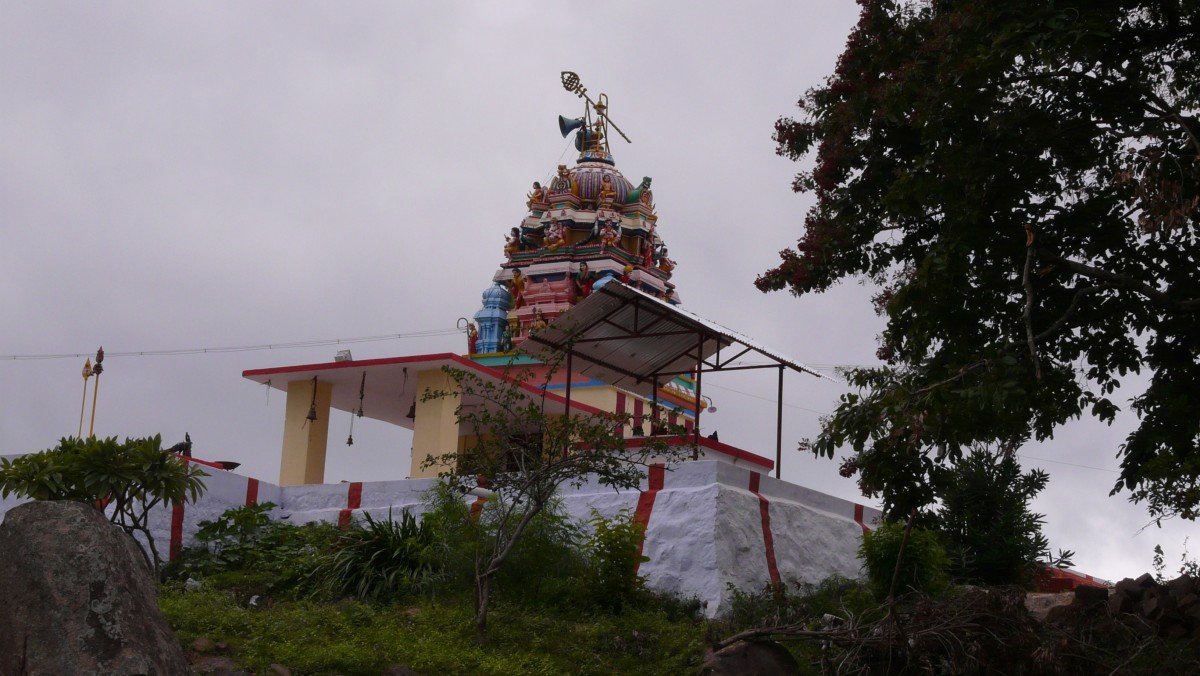
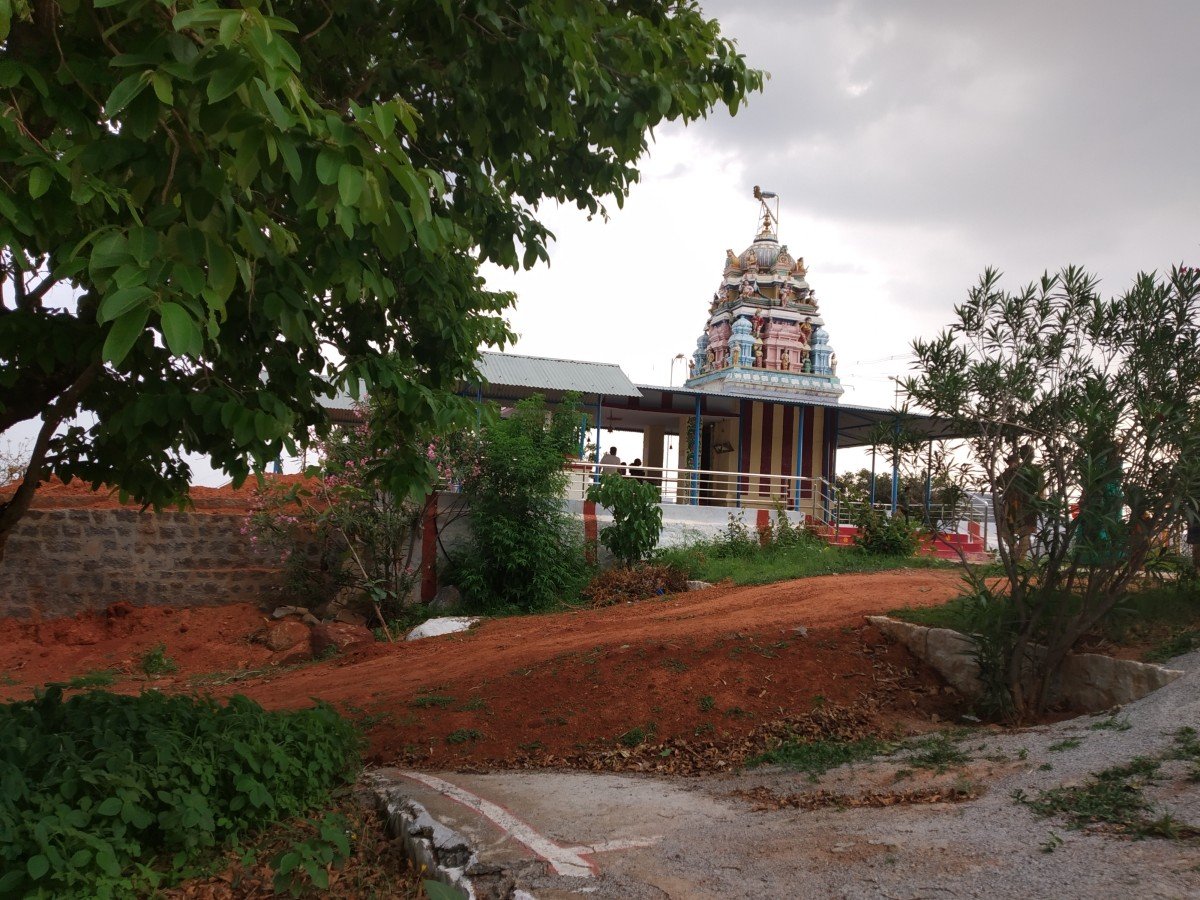
Dravidian Temple Style and Ornamentation: The Velavan Temple exhibits characteristics of the late Dravidian architectural style, although in a smaller, more modern form.
Gopuram and Vimana: The temple entrance typically features a small, col...Dravidian Temple Style and Ornamentation: The Velavan Temple exhibits characteristics of the late Dravidian architectural style, although in a smaller, more modern form.
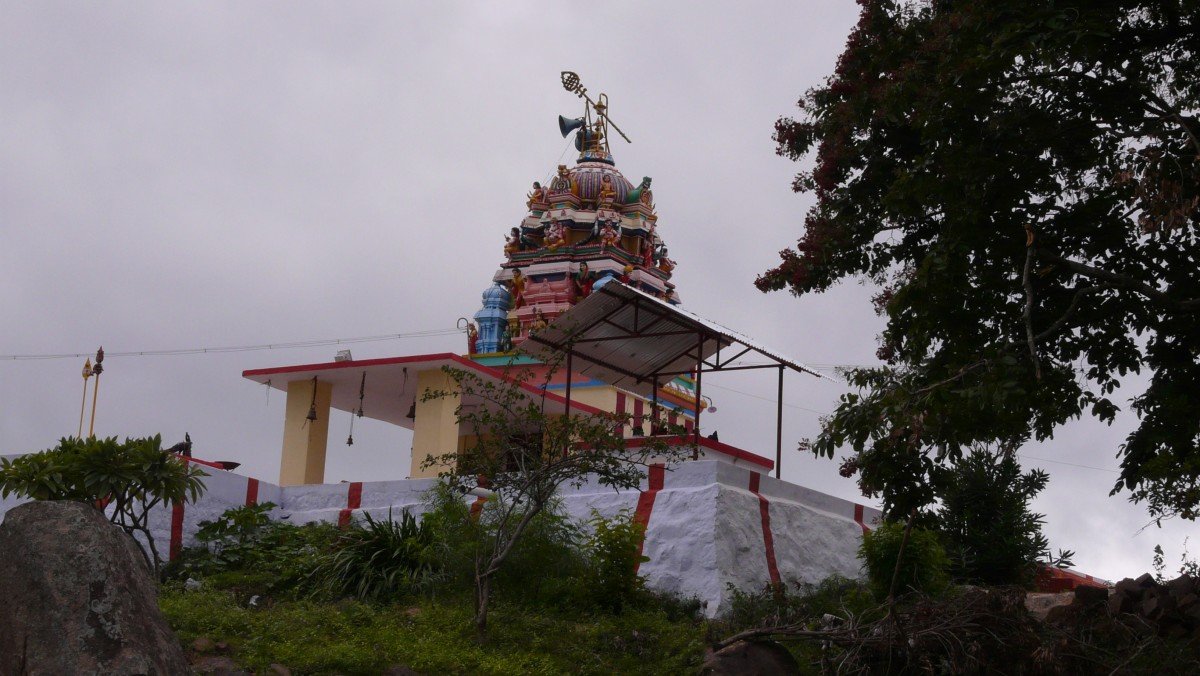
Gopuram and Vimana: The temple entrance typically features a small, colorful Gopuram (ornate tower) adorned with intricate carvings of various deities and mythological figures, which is a hallmark of South Indian temple architecture. The main sanctum is topped with a Vimana, often pyramidal in shape and less elaborate than the main gopuram, but still following traditional proportions.
Dimensions and Platform: The temple sits on a raised stone platform on the hillock. The total height of the hillock is modest, and the Gopuram might stand about 10-15 meters tall. The main courtyard and platform area could be around 50M×50M. The Ghatotkajan statue is a modern addition, often towering over the entrance steps, with its height being a significant vertical dimension.
Material and Construction: Construction is primarily done using dressed granite stone for the main sanctum, following centuries-old practices, while the exterior ornamentation and gopuram use concrete and plasterwork painted in vibrant colors. The steps leading up to the temple are typically wide, stone-paved, and easy to climb. -
How To Reach:
By Air: The nearest major airports are Chennai International Airport (MAA) (Rs.230 KMS) and Kempegowda International Airport (BLR) (Rs.195 KMS). From the airport, hiring a private taxi or cab is the only direct option. The drive is lengthy but comfortable.
Read MoreBy Air: The nearest major airports are Chennai International Airport (MAA) (Rs.230 KMS) and Kempegowda International Airport (BLR) (Rs.195 KMS). From the airport, hiring a private taxi or cab is the only direct option. The drive is lengthy but comfortable.
By Train: The closest railway station is Jolarpettai Junction (JTJ), which is just about 21 KMS away. JTJ has regular express trains from major South Indian cities. From the junction, a short taxi or auto-rickshaw ride will take you up the hill and directly to the temple's base.
By Road: Yelagiri is highly accessible via the NH44. State-run and private bus services connect nearby major towns like Tirupattur, Vellore, and Vaniyambadi to the foot of the hills. Self-driving or taking a pre-booked taxi is the preferred method for getting to the temple, as it is just a short distance from the main Yelagiri road.
By Local Transport: The temple is very close (2 KMS) to the main Athanavoor town. Local auto-rickshaws, shared taxis, and rental scooters/bicycles are the primary modes of transport within the hill station. The temple's base is easily accessible by a short ride.Weather and Best Time to Visit:
Best Season - Winter (October to February): Winter is the Best Time to Visit. The mild and pleasant weather is perfect for the temple visit and for enjoying the clear, panoramic views from the hilltop. The cool breeze is a highlight.
Monsoon S...Best Season - Winter (October to February): Winter is the Best Time to Visit. The mild and pleasant weather is perfect for the temple visit and for enjoying the clear, panoramic views from the hilltop. The cool breeze is a highlight.
Monsoon Season (June to September): The Monsoon season offers a lush green landscape, but the views can be obscured by mist and rain, and the temple steps can be slippery.
Summer Season (March to May): The Summer is manageable, but mid-day can be hot, making the climb slightly uncomfortable. Early morning visits are recommended.
Best Part of the Day - Early Morning: The Best Part of the Day is the early morning, right when the temple opens at 6:00 AM. This is the quietest time for worship, and the air is freshest, offering the best conditions for viewing the surrounding scenery. Late afternoon is a close second.Near Tourist Places:
1. Punganoor Lake (Boat House) - 1. 5 KMS; 2. Yelagiri Nature Park - 2. 5 KMS; 3. Yelagiri Adventure Camp - 2 KMS; 4. Government Herbal Farm - 1. 5 KMS; 5. Nilavoor Lake - 5. 5 KMS; 6. Sunset View Point - 3 KMS; 7. Swamimalai Hills Trek Start Point - 4 KMS; 8. Moksha Vimochana Temple - 5 KMS; 9. Murugan Temple (Athanavoor) - 0. 5 KMS; 10. Athanavoor Market - 1. 5 KMS.Tourism Tips
-
Health & safety - Footwear and Steps: Wear comfortable, but modest, footwear that is easy to remove before climbing the steps. During the monsoon, be very cautious of slippery steps. The temple is safe, but watch for the small drop-off points near the viewing areas.Health & safety - Footwear and Steps: Wear comfortable, but modest, footwear that is easy to remove before climbing the steps. During the monsoon, be very cautious of slippery steps. The temple is safe, but watch for the small drop-off points near the viewing areas.
Packing - Modest Dress Code: Carry a shawl or wrap, as temples in India often require a modest dress code, especially for women (covering shoulders and knees). Photography inside the main sanctum is usually prohibited.
Accommodation - Near the Hub: Choose accommodation near Athanavoor or Mangalam Village for easy access to the temple and other main attractions. The temple's central location is a great base for sightseeing.
Cultural Sensitivity: Respect the local customs. Maintain silence within the inner sanctum. Take off your footwear before entering the temple premises and follow the instructions of the temple priests. Avoid using cell phones loudly inside the prayer hall.
Reviews
FAQs
Yelagiri Itineray And Cost:-
Other Places In Yelagiri :-
Other States In India :-
Information about New and Updated Locations() of Tamil Nadu Has Been Added :-
Card subtitle
Note:-
Information provided here in good Faith and for reference only.
Near Places
Amirthi Zoological Waterfalls
Some quick example text to build on the card title and make up the bulk of the card's content.
Go somewhere
Bappu Vainu Observatory
Some quick example text to build on the card title and make up the bulk of the card's content.
Go somewhere
Burla View Point
Some quick example text to build on the card title and make up the bulk of the card's content.
Go somewhere
Cloud Forest Entertainment Park
Some quick example text to build on the card title and make up the bulk of the card's content.
Go somewhere
Fundera Park
Some quick example text to build on the card title and make up the bulk of the card's content.
Go somewhere
Government Herbal Farm
Some quick example text to build on the card title and make up the bulk of the card's content.
Go somewhere
Government Silk Farm
Some quick example text to build on the card title and make up the bulk of the card's content.
Go somewhere
Jalagamparai Waterfalls
Some quick example text to build on the card title and make up the bulk of the card's content.
Go somewhere
Jalakanda Parameswari Temple
Some quick example text to build on the card title and make up the bulk of the card's content.
Go somewhere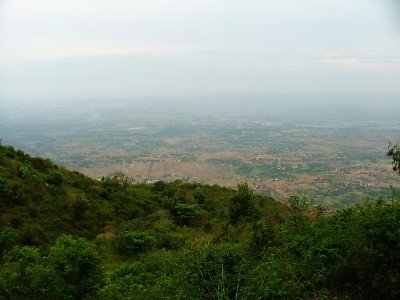
Moksha Vimochana Temple
Some quick example text to build on the card title and make up the bulk of the card's content.
Go somewhere
Murugan Temple
Some quick example text to build on the card title and make up the bulk of the card's content.
Go somewhere
Nature Park
Some quick example text to build on the card title and make up the bulk of the card's content.
Go somewhere
Nilavoor Cliff View Point
Some quick example text to build on the card title and make up the bulk of the card's content.
Go somewhere
Nilavoor Lake
Some quick example text to build on the card title and make up the bulk of the card's content.
Go somewhere
Palamathi Hills
Some quick example text to build on the card title and make up the bulk of the card's content.
Go somewhere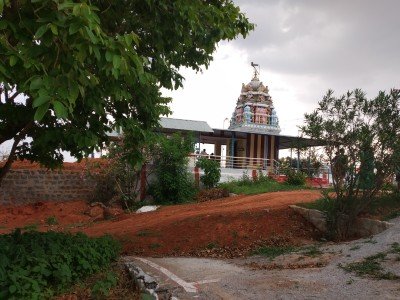
Perumal Temple
Some quick example text to build on the card title and make up the bulk of the card's content.
Go somewherein Other Cities