Jhula Devi Temple
General information
-
Ideal Duration:
30 Minutes to 1 HourPlace Type:
Religious, Pilgrimage, TempleEntry Fees:
Entry Fee: There is no entry fee for the Jhula Devi Temple. Like many ancient Hindu temples, it operates on a voluntary donation model.
Rs. Pooja/Prasad Costs: The cost to purchase prasad (sweet offering), flowers, and other puja items from t...Entry Fee: There is no entry fee for the Jhula Devi Temple. Like many ancient Hindu temples, it operates on a voluntary donation model.
Rs. Pooja/Prasad Costs: The cost to purchase prasad (sweet offering), flowers, and other puja items from the small shops outside is nominal (e. g. , INR 10 to INR 50).
Rs. Bell Cost: If you wish to pledge a bell (or offer one upon a wish fulfillment), the cost of a small to medium copper bell can range from INR 100 to INR 500, depending on the size and material.
Rs. Parking Fee: You might encounter a small fee (INR 20-50) for parking if you use a private vehicle in the designated area near the temple complex. Rs. The entire experience is spiritual and extremely affordable, encouraging only voluntary contributions. Rs. Be aware of commercial touts outside trying to sell expensive puja kits; simple offerings suffice.Timing:
Regular Timings: The temple is generally open from 6:00 AM to 7:00 PM on all days of the week.
Rs. Ideal Visit Time (Peace): The best time for a peaceful, solitary visit is early in the morning, right after opening (around 6:30 AM to 8:00 AM),...Regular Timings: The temple is generally open from 6:00 AM to 7:00 PM on all days of the week.
Rs. Ideal Visit Time (Peace): The best time for a peaceful, solitary visit is early in the morning, right after opening (around 6:30 AM to 8:00 AM), before the tourist buses arrive.
Rs. Ideal Visit Time (Aarti): The main Aarti (worship) ceremony is usually held in the morning and again in the evening (around 6:30 PM), which is an excellent time for a spiritual experience.
Rs. Forest Exploration Time: The hours between 10 AM and 4 PM are suitable for exploring the surrounding forest trails and visiting the nearby Chaubatia Gardens. Rs. Visitors should plan to spend about an hour at the complex. Rs. There are no special time restrictions except during festivals when the crowds are high.Special Events:
Navaratri Festival: The nine nights of Navaratri (celebrated twice a year) are the most important event, with special pujas, decorative lights, and continuous bhajans dedicated to Goddess Durga. The atmosphere is at its most festive and spiritually intense.Navaratri Festival: The nine nights of Navaratri (celebrated twice a year) are the most important event, with special pujas, decorative lights, and continuous bhajans dedicated to Goddess Durga. The atmosphere is at its most festive and spiritually intense.
Rs. Durga Ashtami and Kali Puja: Specific days dedicated to Goddess Durga (like Ashtami) are celebrated with special offerings and large communal meals (bhandara).
Rs. Sawan (Monsoon Month): The Hindu month of Sawan (typically July-August) is considered auspicious for worshipping Lord Shiva and related deities; hence, the temple sees a high influx of devotees during this period. Rs. Local Kumaoni festivals related to harvest or local New Year are also celebrated by the adjacent community.Best Photo Spots:
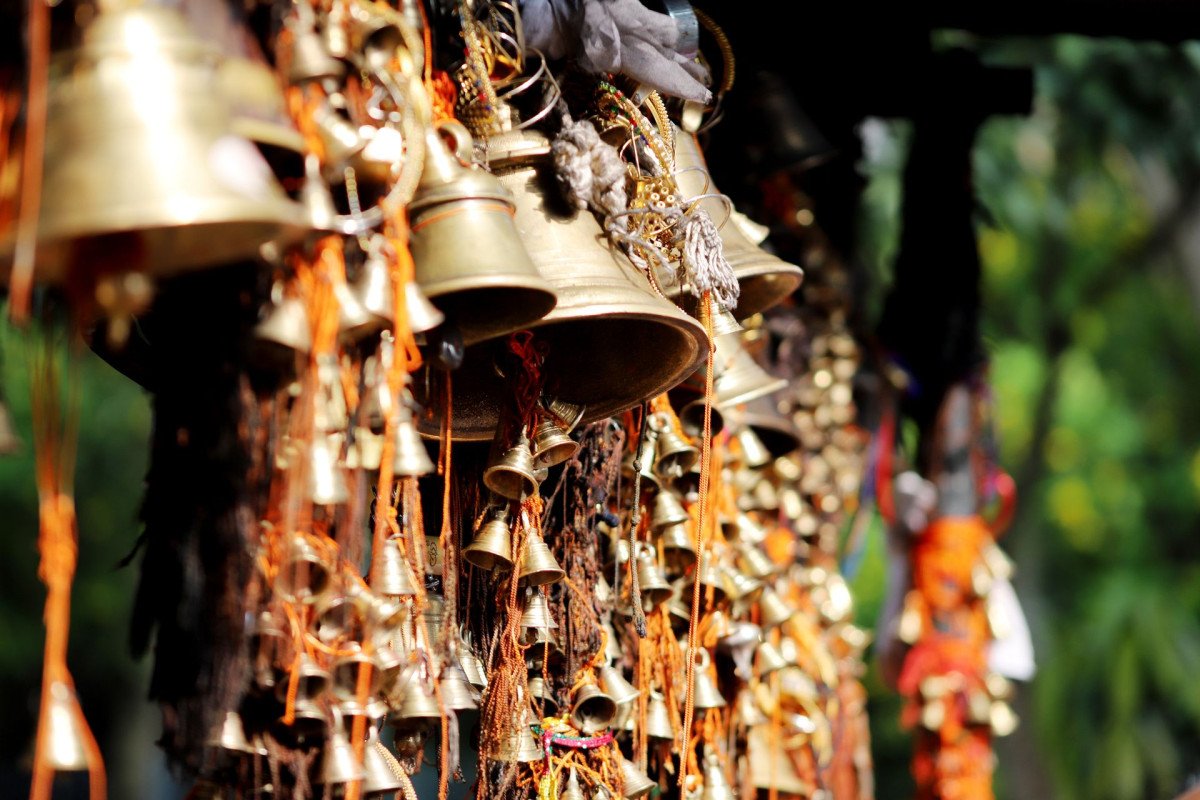
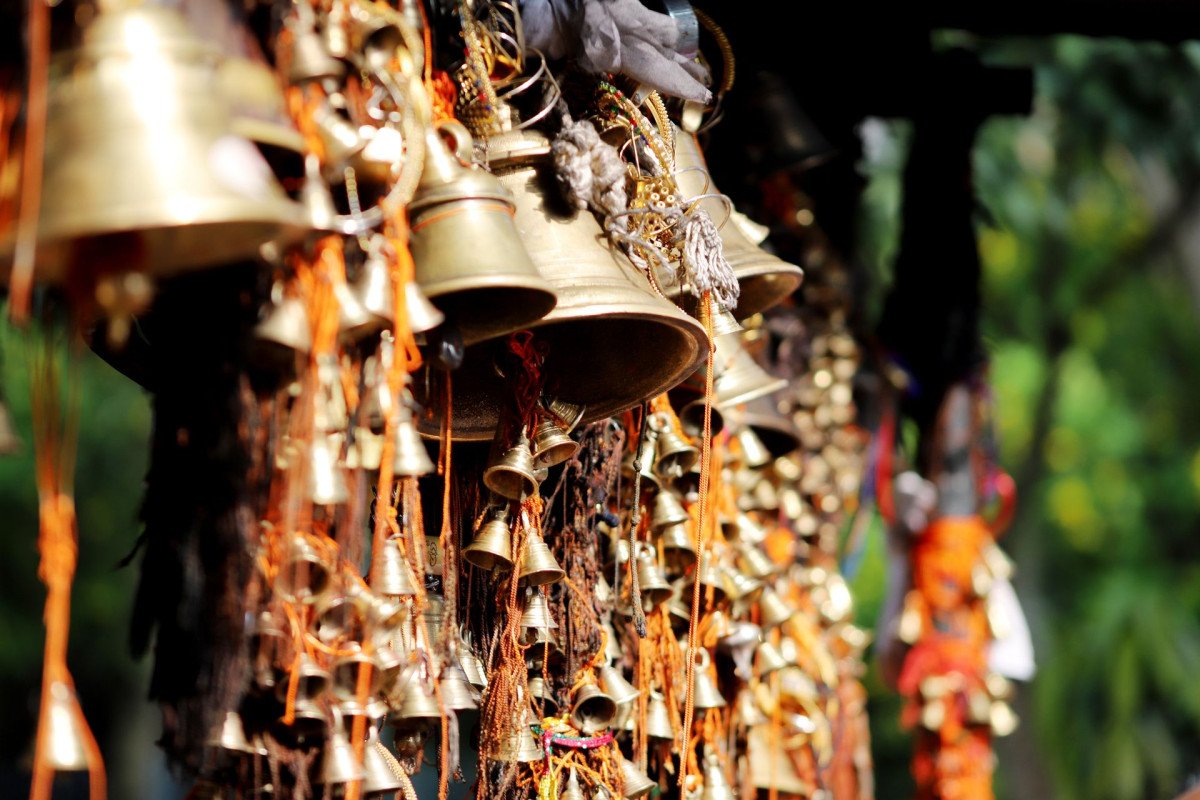
The Main Bell Clusters: The areas where the most dense clusters of bells hang (often near the main entrance or on the peripheral railings) are the best spots for creating dramatic, close-up, and textured photographs.
Rs. The Forest Backdrop: U...The Main Bell Clusters: The areas where the most dense clusters of bells hang (often near the main entrance or on the peripheral railings) are the best spots for creating dramatic, close-up, and textured photographs.
Rs. The Forest Backdrop: Use the towering Pine and Deodar trees in the background to frame the temple, highlighting its secluded location and the contrast between the stone structure and the deep green forest.
Rs. Entrance Archway Shot: A wide-angle shot from the entrance, capturing the flow of devotees and the overwhelming number of bells, gives a great sense of scale.
Rs. The Temple Idol: With permission, a simple, respectful, flash-off photo of the deity, preferably during a quiet time, is valuable for documenting the temple's main idol.
Rs. Bell Silhouettes at Sunset: Capturing the silhouettes of the bells against the setting sun (or filtered light through the trees) can create a moody and artistic shot.Photo Gallery
Things To Do
-
Tie a Bell and Make a Wish: The primary activity is participating in the temple's unique tradition: offering a prayer or making a wish, and pledging to return with a bell upon its fulfillment.
Rs. Offer Worship and Prasad: Join the local devotees in offering prasad (sweet offering) and performing puja to Goddess Durga. The daily aarti is a significant, if simple, ritual to attend.
Rs. Photography of the Bells: Dedicate time to capturing the incredible visual spectacle of the thousands of bells. Focus on the diverse textures and colors of the bells hanging in clusters.
Rs. Visit the Ram Mandir: Walk the short distance to the nearby Ram Mandir to complete the spiritual circuit, offering prayers to Lord Rama and Lord Hanuman.
Rs. Nature Photo...Tie a Bell and Make a Wish: The primary activity is participating in the temple's unique tradition: offering a prayer or making a wish, and pledging to return with a bell upon its fulfillment.
Rs. Offer Worship and Prasad: Join the local devotees in offering prasad (sweet offering) and performing puja to Goddess Durga. The daily aarti is a significant, if simple, ritual to attend.
Rs. Photography of the Bells: Dedicate time to capturing the incredible visual spectacle of the thousands of bells. Focus on the diverse textures and colors of the bells hanging in clusters.
Rs. Visit the Ram Mandir: Walk the short distance to the nearby Ram Mandir to complete the spiritual circuit, offering prayers to Lord Rama and Lord Hanuman.
Rs. Nature Photography in the Forest: Take a short, refreshing walk into the surrounding forest area, capturing the serene atmosphere, the towering pine trees, and the occasional wildlife (like small deer or birds). The forest air is invigorating.
Rs. Meditation: The dense forest environment makes the clearing around the temple a surprisingly peaceful spot for a few minutes of quiet contemplation.
Rs. Souvenir Shopping: Buy a small replica of the temple bell or a small religious artifact from the shops outside.
Information
-
Why Famous:
The Festival of Bells: It is renowned across Uttarakhand for the unique tradition of offering bells (of all sizes, typically copper) to Goddess Durga upon the fulfillment of a wish (mannat). The vast collection of bells is visually and acoustically impressive and symbolizes...The Festival of Bells: It is renowned across Uttarakhand for the unique tradition of offering bells (of all sizes, typically copper) to Goddess Durga upon the fulfillment of a wish (mannat). The vast collection of bells is visually and acoustically impressive and symbolizes the faith of countless devotees.
Rs. The Legend of the Tiger: The founding legend, where the Goddess instructed a shepherd to excavate her idol to protect the villagers from tigers, has cemented its fame as a guardian deity temple, making it a sacred site for safety and protection.
Rs. Proximity to Chaubatia: Its location near the famous Chaubatia Gardens and the Ram Mandir makes it a popular stop on the main tourist circuit of Ranikhet. Rs. The powerful, spiritual atmosphere created by the dense forest and the constant, soft tinkling of bells is a major draw, distinguishing it from other temples. Rs. It is a highly active center of worship, with prayers offered daily. -
Architecture:
Traditional Kumaoni Style: The temple features a relatively simple and traditional North Indian and Kumaoni style of architecture, prioritizing functionality and devotion over intricate carving. Rs. It is a modest stone structure, built to withstand the mountain climate. The...Traditional Kumaoni Style: The temple features a relatively simple and traditional North Indian and Kumaoni style of architecture, prioritizing functionality and devotion over intricate carving. Rs. It is a modest stone structure, built to withstand the mountain climate. The main shrine is rectangular or square with a small, traditional shikhara (spire).
Rs. The Bell Phenomenon: The most striking 'architectural' feature is the overwhelming presence of the thousands of bells tied everywhere—on the ceiling, pillars, and railings. While not structural, these bells are an essential part of the temple's aesthetic and acoustic dimension.
Rs. Dimension and Layout: The temple itself is small and compact, allowing for close interaction with the deity. The main mandap (hall) leads to the inner sanctum. The surrounding area is designed to accommodate the offerings (bells) and is surrounded by dense forest. The complex is spread over a small clearing, with a flight of steps leading to the Rama Temple nearby. Rs. The construction materials primarily involve local stone and wood, showcasing the local building traditions. The temple has been renovated over the years, but its core spiritual layout remains ancient. The color scheme is usually a simple white and light earth tones. -
How To Reach:
By Air: Nearest is Pantnagar Airport (PGH), approx. 110 KMS. From the airport, hire a pre-paid taxi directly to the temple, a drive of about 3. 5 to 4 hours.
Rs. By Train: Nearest is Kathgodam Railway Station (KGM), approx. 75 KMS. Taxis a...By Air: Nearest is Pantnagar Airport (PGH), approx. 110 KMS. From the airport, hire a pre-paid taxi directly to the temple, a drive of about 3. 5 to 4 hours.
Rs. By Train: Nearest is Kathgodam Railway Station (KGM), approx. 75 KMS. Taxis and state-run buses ply the route to Ranikhet. From Ranikhet Bus Stand, the temple is a short local ride.
Rs. By Road: The temple is 7 KMS on the Chaubatia Road from Ranikhet town center. It is a well-maintained, motorable road. Frequent local shared taxis (Sumos/Marutis) ply this route, as they go to Chaubatia Gardens.
Rs. By Local Transport: The easiest way is to hire a local shared taxi (available from the Sadar Bazaar/Bus Stand area) heading towards Chaubatia. Ask to be dropped off at the temple. The fare is nominal. A private taxi is also easily available. The road is scenic, making even the short drive enjoyable. For the adventurous, it is a rewarding 7 KMS downhill walk from Chaubatia or an uphill trek from Ranikhet. -
Weather and Best Time to Visit:
Different Types of Seasons: April to June (Summer) offers pleasant weather and is the best for general tourism. Rs. October to November (Post-Monsoon) is ideal, with clear skies for excellent views and comfortable weather. This is arguably the best time to visit. Rs. Winter (...Different Types of Seasons: April to June (Summer) offers pleasant weather and is the best for general tourism. Rs. October to November (Post-Monsoon) is ideal, with clear skies for excellent views and comfortable weather. This is arguably the best time to visit. Rs. Winter (December to February) is very cold, with a chance of snow, which adds a magical quality but requires heavy woolens. Avoid Monsoon (July-September) due to muddy trails and reduced visibility.
Rs. Different Parts of the Day: Early morning (before 9 AM) is the best time for peace, spiritual focus, and parking availability. Late afternoon is also lovely as the sun filters through the forest, creating a beautiful light effect, perfect for photography. Rs. The temple closes in the early evening, so a mid-day visit is fine but can be crowded. -
Near Tourist Places:
Ram Mandir (approx. 0.
5 KMS): Chaubatia Gardens (approx.
1 KMS): Bhalu Dam (approx.
3 KMS): Kumaon Regimental Centre Museum (approx.
5 KMS): Mankameshwar Temple (approx.
7 KMS): Rani Jheel (approx.
8 KMS): Ranikhet Golf Course (approx.
5 KMS): Haidakhan Baba Ashram (approx.
10 KMS): Majkhali (approx.
1
5 KMS): Kalika Temple (approx. 14 KMS).
Tourism Tips
-
Health & Safety: Be careful of the steep stairs if traveling with the elderly. Rs. Watch out for monkeys, who can be mischievous and snatch food items.
Rs. Packing Essentials: Carry a water bottle. Wear practical, flat shoes as the complex inv...Health & Safety: Be careful of the steep stairs if traveling with the elderly. Rs. Watch out for monkeys, who can be mischievous and snatch food items.
Rs. Packing Essentials: Carry a water bottle. Wear practical, flat shoes as the complex involves some walking and potentially slippery ground in the Monsoon.
Rs. Accommodation: The temple does not offer accommodation. Stay in a hotel/resort in Ranikhet town or Chaubatia.
Rs. Other Topics (Respectful Conduct): Dress conservatively. Rs. Always be respectful of the sacred nature of the bells; do not touch or disturb them unnecessarily. Rs. Keep the surrounding forest area clean and avoid littering. Rs. Ensure you carry small change/cash for prasad and donation purposes. Rs. Combine the visit with Chaubatia Gardens and Ram Mandir to save travel time, as they are all nearby.
Reviews
FAQs
Ranikhet Itineray And Cost:-
Jhula Devi Temple Tourism:-
Other Places In Ranikhet :-
Other States In India :-
Information about New and Updated Locations() of Uttarakhand Has Been Added :-
Card subtitle
Note:-
Information provided here in good Faith and for reference only.
Near Places

Apple Garden
Some quick example text to build on the card title and make up the bulk of the card's content.
Go somewhere
Ashiyana Park
Some quick example text to build on the card title and make up the bulk of the card's content.
Go somewhere
Bhalu Dam
Some quick example text to build on the card title and make up the bulk of the card's content.
Go somewhere
Binsar Mahadev Temple
Some quick example text to build on the card title and make up the bulk of the card's content.
Go somewhere
Chaubatia Gardens
Some quick example text to build on the card title and make up the bulk of the card's content.
Go somewhere
Chiliyanaula
Some quick example text to build on the card title and make up the bulk of the card's content.
Go somewhere
Dwarahat Temples
Some quick example text to build on the card title and make up the bulk of the card's content.
Go somewhere
Golf Ground
Some quick example text to build on the card title and make up the bulk of the card's content.
Go somewhere
Government Fruit Research Center
Some quick example text to build on the card title and make up the bulk of the card's content.
Go somewhere
Haidakhan Baba Ashram
Some quick example text to build on the card title and make up the bulk of the card's content.
Go somewhere
Hairakhan Temple
Some quick example text to build on the card title and make up the bulk of the card's content.
Go somewhere
Jhula Devi Temple
Some quick example text to build on the card title and make up the bulk of the card's content.
Go somewhere
Kalika Temple
Some quick example text to build on the card title and make up the bulk of the card's content.
Go somewhere
Kumaon Regimental Centre Museum
Some quick example text to build on the card title and make up the bulk of the card's content.
Go somewhere
Mankameshwar Temple
Some quick example text to build on the card title and make up the bulk of the card's content.
Go somewhere
Ram Mandir
Some quick example text to build on the card title and make up the bulk of the card's content.
Go somewherein Other Cities