


Mahakuta Group of Temples
General information
-
Ideal Duration:
2 to 3 HoursPlace Type:
Religious Heritage / PilgrimageEntry Fees:
There is no entry fee to visit the Mahakuta Group of Temples as it is a public religious site.
Parking Charges: A small fee of 10 to 20 Rupees might be collected for parking vehicles near the village entrance.
Donations: Visitors a...There is no entry fee to visit the Mahakuta Group of Temples as it is a public religious site.
Parking Charges: A small fee of 10 to 20 Rupees might be collected for parking vehicles near the village entrance.
Donations: Visitors are free to make voluntary donations to the temple trust for the maintenance of the premises.Timing:
Regular timings are from 6:00 AM to 8:00 PM every day.
Ideal Visit Time: The best time to visit is early morning around 7:00 AM to avoid the crowd and experience the peaceful atmosphere.
Evening Visit: Visiting around 5:30 PM allow...Regular timings are from 6:00 AM to 8:00 PM every day.
Ideal Visit Time: The best time to visit is early morning around 7:00 AM to avoid the crowd and experience the peaceful atmosphere.
Evening Visit: Visiting around 5:30 PM allows you to see the evening rituals and enjoy the cooler temperature.Special Events:
The biggest event at Mahakuta is the Mahashivratri festival celebrated in February or March. During this time, thousands of devotees flock to the temple to offer special prayers and perform overnight vigils.
Annual Chariot Festival: The temple organizes a colorful...The biggest event at Mahakuta is the Mahashivratri festival celebrated in February or March. During this time, thousands of devotees flock to the temple to offer special prayers and perform overnight vigils.
Annual Chariot Festival: The temple organizes a colorful Rathotsava (chariot festival) where the deity is taken out in a grand procession.
Karthika Maasa: During the holy month of November, the temple complex is lit with thousands of oil lamps, creating a stunning visual experience.Best Photo Spots:
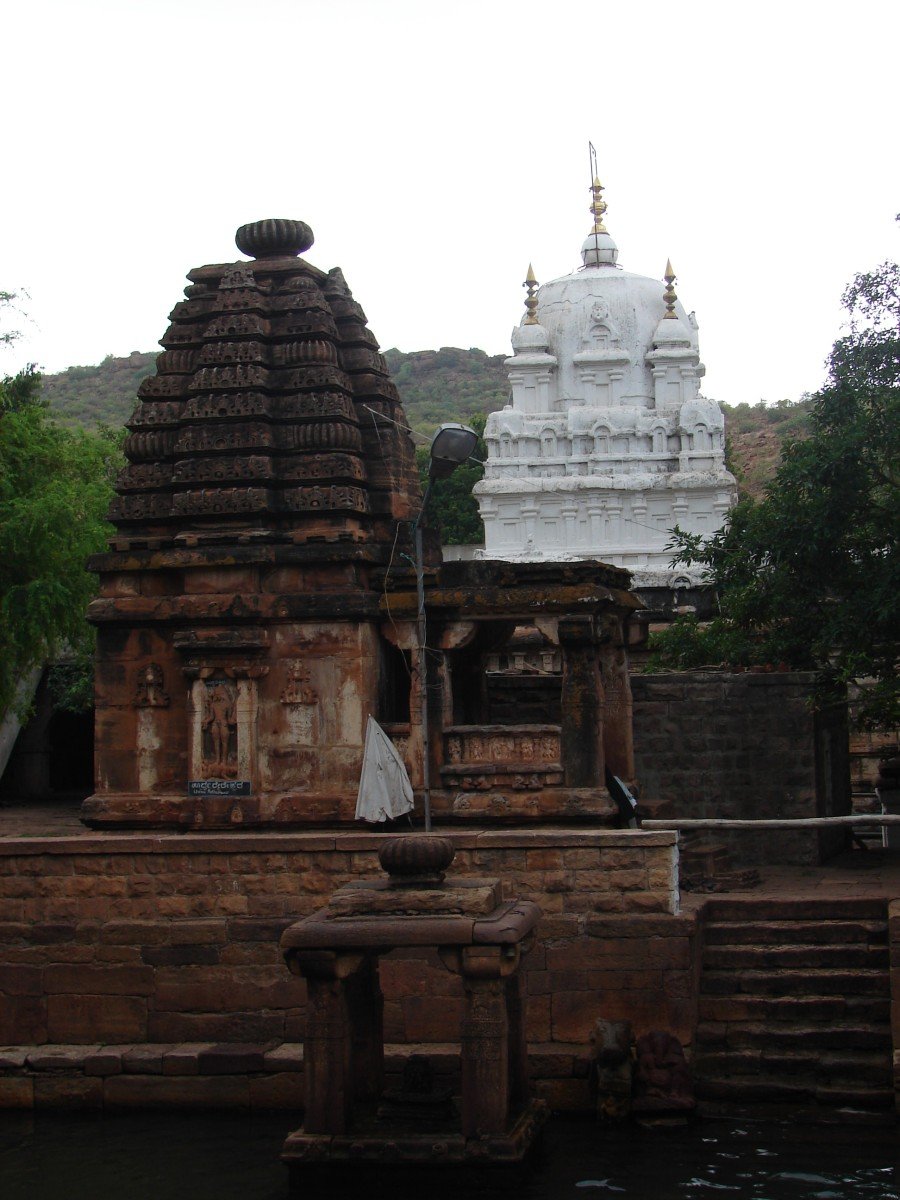
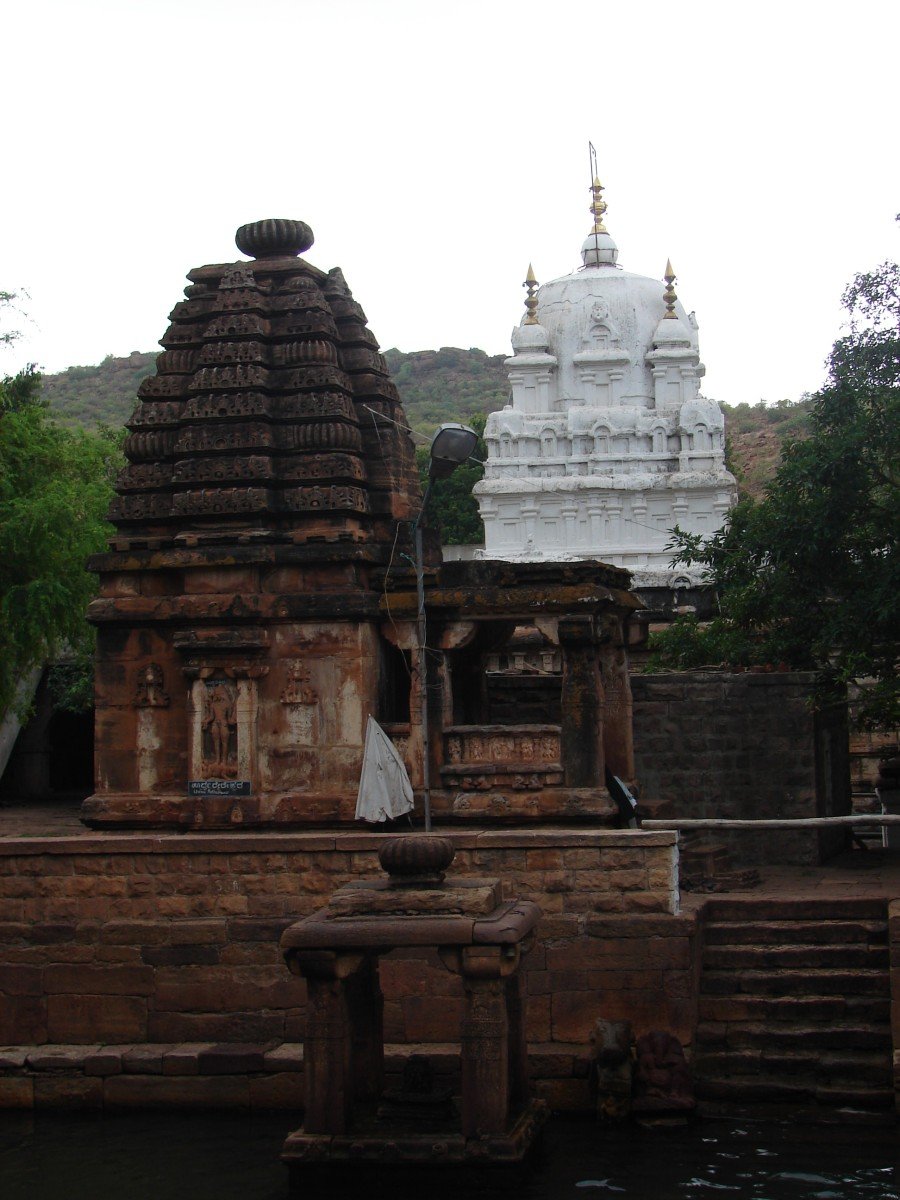
The best spot is the edge of the Vishnu Pushkarini tank, capturing the reflection of the temples in the emerald green water.
Ancient Tree Roots: The thick, hanging roots of the banyan trees near the entrance provide a dramatic natural frame for portrait photography...The best spot is the edge of the Vishnu Pushkarini tank, capturing the reflection of the temples in the emerald green water.
Ancient Tree Roots: The thick, hanging roots of the banyan trees near the entrance provide a dramatic natural frame for portrait photography.
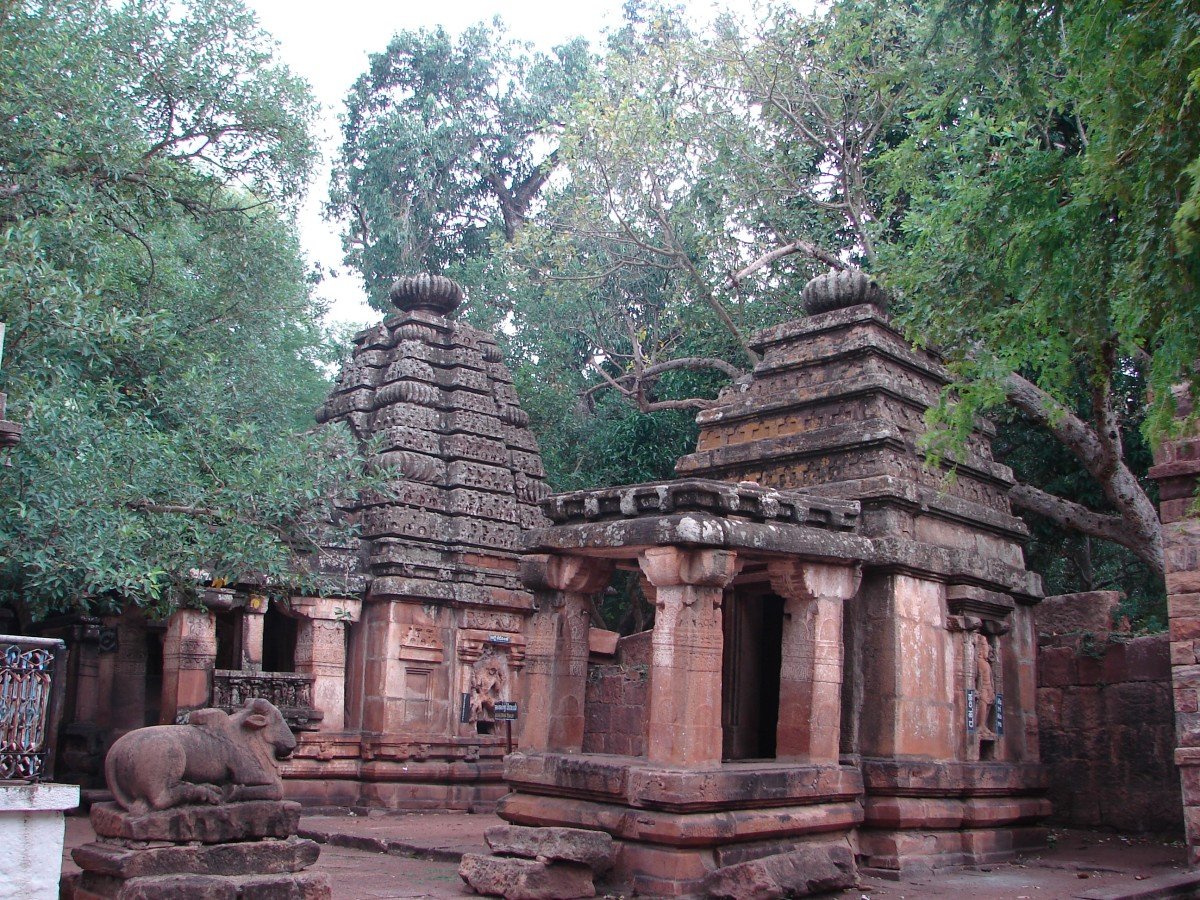
Carved Doorways: The intricate doorways of the smaller shrines offer great close-up shots of Chalukyan artistry.
Morning Light: The early morning sun filtering through the forest onto the red stone creates a warm, golden glow perfect for landscape shots.Photo Gallery

Things To Do
-
One of the top things to do at Mahakuta is to observe the local rituals at the Mahakuteshwara Temple where priests perform daily poojas in an ancient tradition.
Take a Holy Dip: Many visitors enjoy taking a refreshing dip in the Vishnu Pushkarini tank, which is believed to wash away sins and has cool, clean water.
Study the Inscriptions: For history buffs, looking for the replicas or spots where the Mahakuta Pillar was found provides a deep dive into Chalukya history.
Photography: The play of light through the banyan trees onto the ancient red sandstone temples creates a magical setting for photography.
Picnic Under the Trees: The peaceful area outside the temple walls is perfect for a quiet family picnic while enjoying the natural surroundings.One of the top things to do at Mahakuta is to observe the local rituals at the Mahakuteshwara Temple where priests perform daily poojas in an ancient tradition.
Take a Holy Dip: Many visitors enjoy taking a refreshing dip in the Vishnu Pushkarini tank, which is believed to wash away sins and has cool, clean water.
Study the Inscriptions: For history buffs, looking for the replicas or spots where the Mahakuta Pillar was found provides a deep dive into Chalukya history.
Photography: The play of light through the banyan trees onto the ancient red sandstone temples creates a magical setting for photography.
Picnic Under the Trees: The peaceful area outside the temple walls is perfect for a quiet family picnic while enjoying the natural surroundings.
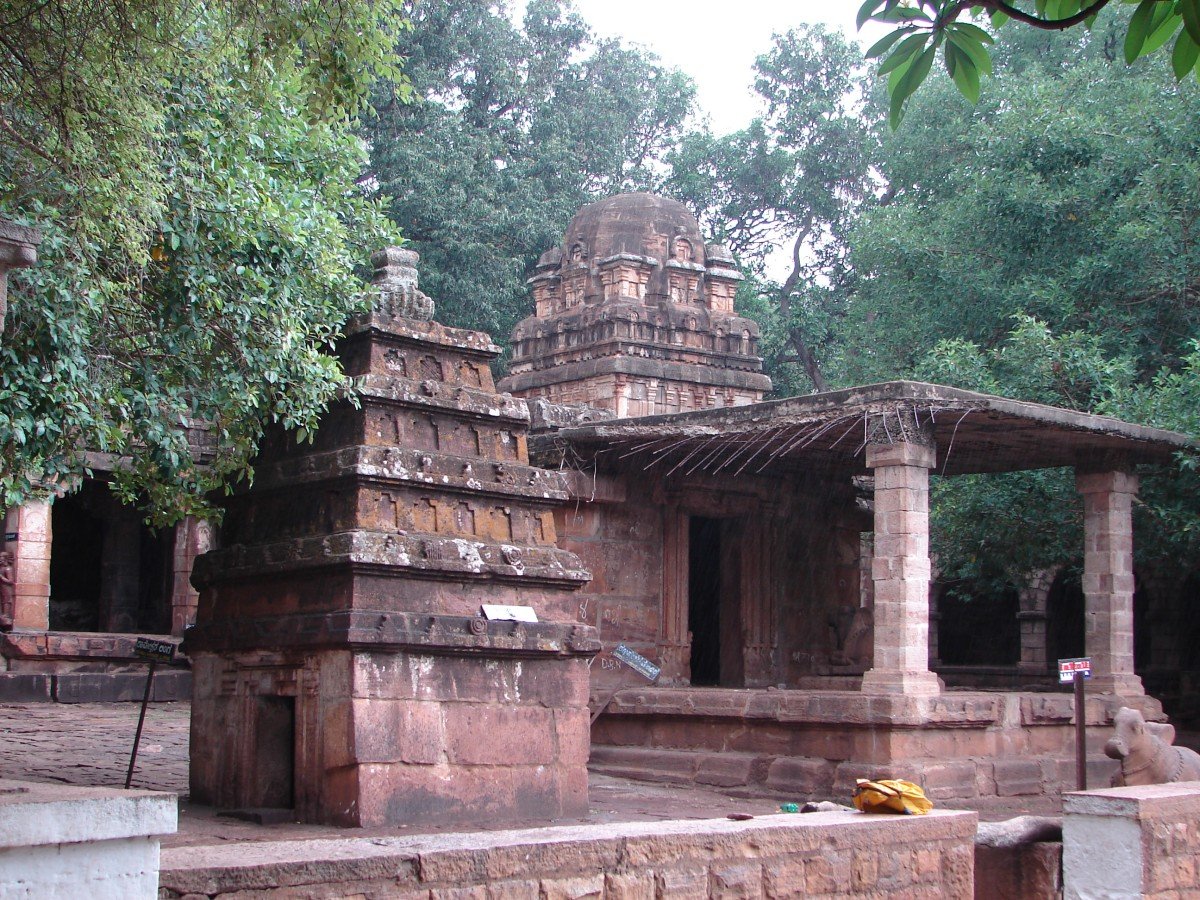
Explore the Smaller Shrines: Spend time walking around the dozens of small shrines to see the different carving styles and depictions of Hindu gods.
Bird Watching: The greenery around the spring attracts various birds, making it a nice spot for nature lovers to sit quietly with binoculars.
Visit the Nearby Village: Walking through the small Mahakuta village gives you a glimpse into the rural life of Karnataka and local agriculture.
Meditation: The quiet corners of the temple complex, away from the main tank, offer an ideal environment for silent meditation and reflection.
Trekking: There is a local hiking path that connects Mahakuta to the Badami Caves over the hills for those looking for adventure.
Enjoy Local Snacks: Small vendors outside the temple sell local snacks like mandakki (puffed rice) and tea, which is a great way to taste the local flavor.
Learn Architecture: Architecture students can spend hours comparing the different shikhara (tower) designs between the Dravidian and Nagara temples in the complex.
Sketching and Art: The intricate details of the pillars and the reflection of temples in the water make it a favorite spot for artists to sit and draw.
Cultural Interaction: Talking to the temple priests can reveal local legends and stories about the miracles associated with the holy spring.
Information
-
Why Famous:
This site is famous because it serves as a "laboratory" for early temple architecture where Dravidian and Nagara styles coexist side by side. It is also renowned for the Vishnu Pushkarini, a natural spring-fed tank that never goes dry even in the hottest summers.
Reli...This site is famous because it serves as a "laboratory" for early temple architecture where Dravidian and Nagara styles coexist side by side. It is also renowned for the Vishnu Pushkarini, a natural spring-fed tank that never goes dry even in the hottest summers.
Religious Significance: Being known as Dakshina Kashi, it is one of the most sacred sites for Shaivites in Karnataka.
Historical Inscriptions: The Mahakuta Pillar inscription found here is a primary source for the history of the Chalukya Empire. -
Architecture:
The architecture of the Mahakuta complex is famous for showcasing a mix of Dravidian and Nagara styles. The Mahakuteshwara Temple features a tiered tower and a large assembly hall with heavy pillars. The complex measures approximately 100 meters by 80 meters. Dimensions of the main shrine are ro...The architecture of the Mahakuta complex is famous for showcasing a mix of Dravidian and Nagara styles. The Mahakuteshwara Temple features a tiered tower and a large assembly hall with heavy pillars. The complex measures approximately 100 meters by 80 meters. Dimensions of the main shrine are roughly 12 meters in height with a sanctum of 4x4 meters.
Structural Style: The temples use red sandstone and feature intricate carvings on the doorways and exterior walls.
Temple Layout: The shrines are arranged around a central tank called Vishnu Pushkarini which is a key architectural feature. -
How To Reach:
By Air: The nearest airport is Hubballi Airport, located about 110 KMS away. From there, you can hire a taxi or take a bus.
By Train: The Badami Railway Station is the closest railhead, about 15 KMS from the temple. It is well connected t...By Air: The nearest airport is Hubballi Airport, located about 110 KMS away. From there, you can hire a taxi or take a bus.
By Train: The Badami Railway Station is the closest railhead, about 15 KMS from the temple. It is well connected to Bangalore and Hubballi.
By Road: Regular buses run from Badami Bus Stand to Mahakuta, or you can hire an auto-rickshaw for a round trip.
By Local Transport: Shared autos and private taxis are easily available from the Badami city center. -
Weather and Best Time to Visit:
Winter Season: The months from October to February are the best as the weather is cool and pleasant for exploring.
Monsoon Season: July to September makes the area very green and the spring water flow is at its peak.
Read MoreWinter Season: The months from October to February are the best as the weather is cool and pleasant for exploring.
Monsoon Season: July to September makes the area very green and the spring water flow is at its peak.
Time of Day: Early morning is perfect for spiritual vibes, while late afternoons are great for photography and avoiding the midday heat.Near Tourist Places:
Badami Caves (15 km), Bhutanatha Temple (14 km), Agastya Lake (14 km), Pattadakal (10 km), Aihole (25 km), Banashankari Temple (5 km), Badami Fort (15 km), Museum (15 km), Malegitti Shivalaya (15 km), Sidhlaphadi Cave (4 km)Tourism Tips
-
Health & Safety: Carry plenty of water and wear comfortable walking shoes as the stone floors can get hot.
Packing: Wear modest clothing as this is an active religious site; carry a towel if you plan to dip in the tank.
Read MoreHealth & Safety: Carry plenty of water and wear comfortable walking shoes as the stone floors can get hot.
Packing: Wear modest clothing as this is an active religious site; carry a towel if you plan to dip in the tank.
Accommodation: It is best to stay in Badami city where there are several hotels and guest houses.
Cash & Connectivity: Carry cash as there are no ATMs in the village; mobile connectivity is decent but Wi-Fi is unavailable.
Eco-Friendly: Please do not litter in the holy water tank and maintain the sanctity of the place.Reviews
FAQs
Badami Itineray And Cost:-
Mahakuta Group of Temples Tourism:-
Other Places In Badami :-
Other States In India :-
Information about New and Updated Locations() of Karnataka Has Been Added :-
Card subtitle
Note:-
Information provided here in good Faith and for reference only.
Near Places
Agastya Lake
Some quick example text to build on the card title and make up the bulk of the card's content.
Go somewhere
Aihole Group of Monuments
Some quick example text to build on the card title and make up the bulk of the card's content.
Go somewhere
Badami Archaeological Museum
Some quick example text to build on the card title and make up the bulk of the card's content.
Go somewhere
Badami Cave 1
Some quick example text to build on the card title and make up the bulk of the card's content.
Go somewhere
Badami Cave 2
Some quick example text to build on the card title and make up the bulk of the card's content.
Go somewhere
Badami Cave 3
Some quick example text to build on the card title and make up the bulk of the card's content.
Go somewhere
Badami Cave 4
Some quick example text to build on the card title and make up the bulk of the card's content.
Go somewhere
Badami Cave Temples
Some quick example text to build on the card title and make up the bulk of the card's content.
Go somewhere
Badami Fort
Some quick example text to build on the card title and make up the bulk of the card's content.
Go somewhere
Banashankari Temple
Some quick example text to build on the card title and make up the bulk of the card's content.
Go somewhere
Bhoothanatha Group of Temples
Some quick example text to build on the card title and make up the bulk of the card's content.
Go somewhere
Bhutanatha Group of Temples
Some quick example text to build on the card title and make up the bulk of the card's content.
Go somewhere
Bhutanatha Temple Group
Some quick example text to build on the card title and make up the bulk of the card's content.
Go somewhere
Durga Temple
Some quick example text to build on the card title and make up the bulk of the card's content.
Go somewhere
Jain Temple
Some quick example text to build on the card title and make up the bulk of the card's content.
Go somewhere
Lad Khan Temple
Some quick example text to build on the card title and make up the bulk of the card's content.
Go somewherein Other Cities