Ravana Phadi Cave
General information
-
Ideal Duration:
1 HourPlace Type:
Archaeological / Cave HeritageEntry Fees:
Entry is usually included in the Aihole monument ticket which is around 25-40 Rupees for Indians.
Foreign Visitors: The fee is higher, around 300 to 600 Rupees, covering all main sites in Aihole.
Still Camera: Use of a still camera...Entry is usually included in the Aihole monument ticket which is around 25-40 Rupees for Indians.
Foreign Visitors: The fee is higher, around 300 to 600 Rupees, covering all main sites in Aihole.
Still Camera: Use of a still camera is usually free, but professional video equipment requires a separate permit.Timing:
Regular timings are from 6:00 AM to 6:00 PM daily.
Ideal Visit Time: Visit at 9:00 AM when the morning light enters the cave slightly and the carvings are more visible.
Afternoon Visit: 3:00 PM is good as it is quieter and you can ...Regular timings are from 6:00 AM to 6:00 PM daily.
Ideal Visit Time: Visit at 9:00 AM when the morning light enters the cave slightly and the carvings are more visible.
Afternoon Visit: 3:00 PM is good as it is quieter and you can combine it with a visit to the Meguti Temple for sunset.Special Events:
Aihole comes alive during the Chalukya Utsava, a cultural festival held in January or February with dance and music.
Local Fairs: Small village fairs (Jatras) happen occasionally near the Durga Temple, which are great for cultural immersion.
Read MoreAihole comes alive during the Chalukya Utsava, a cultural festival held in January or February with dance and music.
Local Fairs: Small village fairs (Jatras) happen occasionally near the Durga Temple, which are great for cultural immersion.
Archaeology Day: Sometimes the ASI organizes guided walks here for students during World Heritage Week in November.Best Photo Spots:
The Nataraja panel inside the left chamber is the most famous shot.
Cave Entrance: A wide-angle shot from the Nandi statue looking into the cave captures the entire scale of the rock-cut work.
Ceiling Carvings: Looking straight up ...The Nataraja panel inside the left chamber is the most famous shot.
Cave Entrance: A wide-angle shot from the Nandi statue looking into the cave captures the entire scale of the rock-cut work.
Ceiling Carvings: Looking straight up to capture the circular reliefs requires a tripod but gives a unique perspective.
Distant Landscape: Photos of the Aihole village from the cave platform show the "Cradle of Indian Architecture. "Photo Gallery
Things To Do
-
Spend at least 20 minutes inside the cave just studying the Nataraja panel and the seven mothers.
Walk the Complex: Explore the smaller, lesser-known shrines located right next to the cave entrance.
Village Exploration: Walk from the cave into the Aihole village to see how modern houses are built around ancient temple ruins.
Visit Durga Temple: Head to the nearby Durga Temple complex to compare the rock-cut style with structural style.
Photography: The shadows inside the cave create a very moody and beautiful environment for black-and-white photography.
Learn Iconography: Use a guidebook to identify the different gods like Ganesha, Kartikeya, and Durga carved inside.
Meditation: The cav...Spend at least 20 minutes inside the cave just studying the Nataraja panel and the seven mothers.
Walk the Complex: Explore the smaller, lesser-known shrines located right next to the cave entrance.
Village Exploration: Walk from the cave into the Aihole village to see how modern houses are built around ancient temple ruins.
Visit Durga Temple: Head to the nearby Durga Temple complex to compare the rock-cut style with structural style.
Photography: The shadows inside the cave create a very moody and beautiful environment for black-and-white photography.
Learn Iconography: Use a guidebook to identify the different gods like Ganesha, Kartikeya, and Durga carved inside.
Meditation: The cave is usually quiet, making it a good place to sit and feel the ancient energy for a few minutes.
Trek to Meguti Hill: From the cave, you can see the Meguti Jain Temple on the hill; it's a great short trek from here.
Talk to the ASI Guard: They often know small details about the carvings that aren't in the standard guidebooks.
Observe the Nandi: Look at the weathered Nandi outside and how it has stood against time for 1400 years.
Sketching: The large panels are perfect for students to practice sketching classical Indian figures.
Compare with Badami: If you have seen the Badami Caves, try to spot the similarities in the pillar designs.
Nature
Photography: The rocky terrain around the cave is home to many lizards and birds that make for good nature shots.
Check for Paintings: Look closely at the ceiling to find tiny remnants of the original paintings that once covered the cave.
Information
-
Why Famous:
It is famous for the Nataraja sculpture which is considered one of the most graceful depictions of the dancing Shiva in India. It is also renowned for being the earliest rock-cut cave of the Chalukyas, predating those in Badami.
Sapta Matrikas: The inclusion of th...It is famous for the Nataraja sculpture which is considered one of the most graceful depictions of the dancing Shiva in India. It is also renowned for being the earliest rock-cut cave of the Chalukyas, predating those in Badami.
Sapta Matrikas: The inclusion of the seven mother goddesses alongside Shiva is a unique iconographic feature.
Architectural Transition: It shows the transition from simple cave dwellings to elaborate religious shrines. -
Architecture:
The cave is a rock-cut structure with a rectangular hall. The sanctum contains a Shiva Linga. The cave measures approximately 10 meters in depth and 18 meters in width. The central hall is about 3 meters high.
Sculptural Panels: The side walls feature massive pa...The cave is a rock-cut structure with a rectangular hall. The sanctum contains a Shiva Linga. The cave measures approximately 10 meters in depth and 18 meters in width. The central hall is about 3 meters high.
Sculptural Panels: The side walls feature massive panels of Harihara, Ardhanarishvara, and Varaha.
Ceiling Art: The ceiling has three circular carved sections depicting Indra, Vishnu, and a central Lotus. -
How To Reach:
By Air: Nearest airport is Hubballi (135 KMS).
By Train: Nearest station is Badami (35 KMS) or Guledgudda Road (13 KMS).
By Road: You can take a KSRTC bus from Badami to Aihole (approx. 1 hour).By Air: Nearest airport is Hubballi (135 KMS).
By Train: Nearest station is Badami (35 KMS) or Guledgudda Road (13 KMS).
By Road: You can take a KSRTC bus from Badami to Aihole (approx. 1 hour).
By Local Transport: Hiring a private taxi from Badami for a full-day tour of Pattadakal and Aihole is the most convenient way. -
Weather and Best Time to Visit:
Winter Season: October to March is the most comfortable time for travelers.
Daytime: Mid-morning is best because the cave interiors are dark and need some ambient light to see the carvings clearly.
Monsoon:...Winter Season: October to March is the most comfortable time for travelers.
Daytime: Mid-morning is best because the cave interiors are dark and need some ambient light to see the carvings clearly.
Monsoon: The landscape becomes vibrant green, but the roads from Badami can be a bit muddy. -
Near Tourist Places:
Durga Temple (0. 5 km), Lad Khan Temple (0. 6 km), Meguti Jain Temple (1 km), Huchappayya Gudi (0. 8 km), Pattadakal (14 km), Badami Caves (35 km), Mahakuta (25 km), Banashankari Temple (30 km), Archaeological Museum Aihole (0. 5 km), Mallikarjuna Temple (0. 7 km)
Tourism Tips
-
Health & Safety: Use a flashlight or your phone light to see the darker corners of the cave carvings.
Packing: Carry snacks and plenty of water as Aihole village has very limited restaurant options.
Accommodati...Health & Safety: Use a flashlight or your phone light to see the darker corners of the cave carvings.
Packing: Carry snacks and plenty of water as Aihole village has very limited restaurant options.
Accommodation: It is better to stay in Badami and visit Aihole as a day trip.
Cash & Connectivity: Keep enough cash; ATMs are rare in the village. Mobile signal is patchy inside the cave.
Respect the Art: Do not touch the ancient carvings as the oils from hands can damage the stone over time.
Reviews
FAQs
Badami Itineray And Cost:-
Ravana Phadi Cave Tourism:-
Other Places In Badami :-
Other States In India :-
Information about New and Updated Locations() of Karnataka Has Been Added :-
Card subtitle
Note:-
Information provided here in good Faith and for reference only.
Near Places
Agastya Lake
Some quick example text to build on the card title and make up the bulk of the card's content.
Go somewhere
Aihole Group of Monuments
Some quick example text to build on the card title and make up the bulk of the card's content.
Go somewhere
Badami Archaeological Museum
Some quick example text to build on the card title and make up the bulk of the card's content.
Go somewhere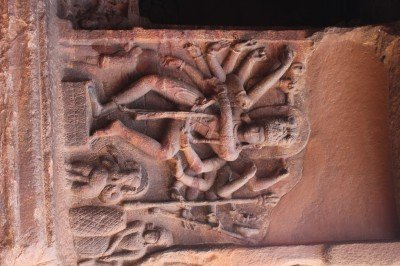
Badami Cave 1
Some quick example text to build on the card title and make up the bulk of the card's content.
Go somewhere
Badami Cave 2
Some quick example text to build on the card title and make up the bulk of the card's content.
Go somewhere
Badami Cave 3
Some quick example text to build on the card title and make up the bulk of the card's content.
Go somewhere
Badami Cave 4
Some quick example text to build on the card title and make up the bulk of the card's content.
Go somewhere
Badami Cave Temples
Some quick example text to build on the card title and make up the bulk of the card's content.
Go somewhere
Badami Fort
Some quick example text to build on the card title and make up the bulk of the card's content.
Go somewhere
Banashankari Temple
Some quick example text to build on the card title and make up the bulk of the card's content.
Go somewhere
Bhoothanatha Group of Temples
Some quick example text to build on the card title and make up the bulk of the card's content.
Go somewhere
Bhutanatha Group of Temples
Some quick example text to build on the card title and make up the bulk of the card's content.
Go somewhere
Bhutanatha Temple Group
Some quick example text to build on the card title and make up the bulk of the card's content.
Go somewhere
Durga Temple
Some quick example text to build on the card title and make up the bulk of the card's content.
Go somewhere
Jain Temple
Some quick example text to build on the card title and make up the bulk of the card's content.
Go somewhere
Lad Khan Temple
Some quick example text to build on the card title and make up the bulk of the card's content.
Go somewherein Other Cities