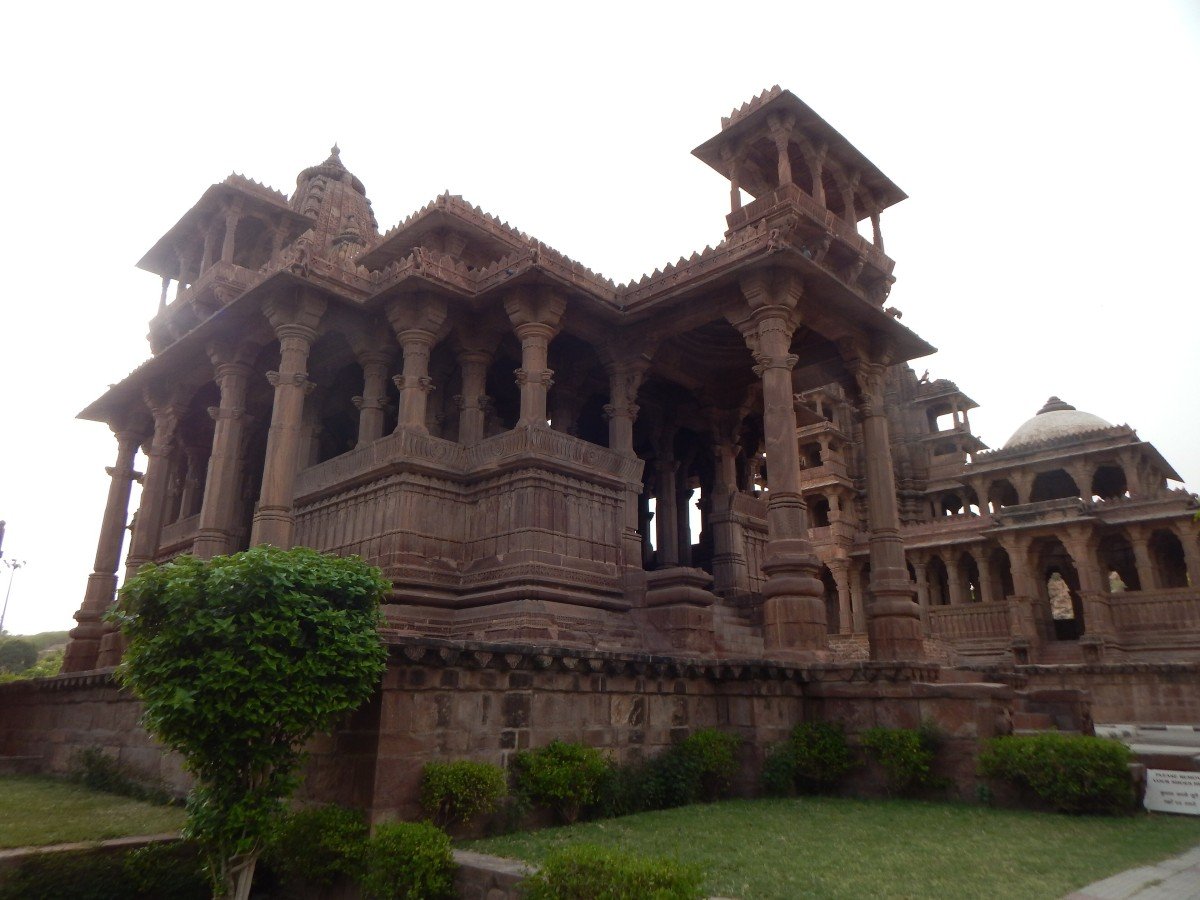
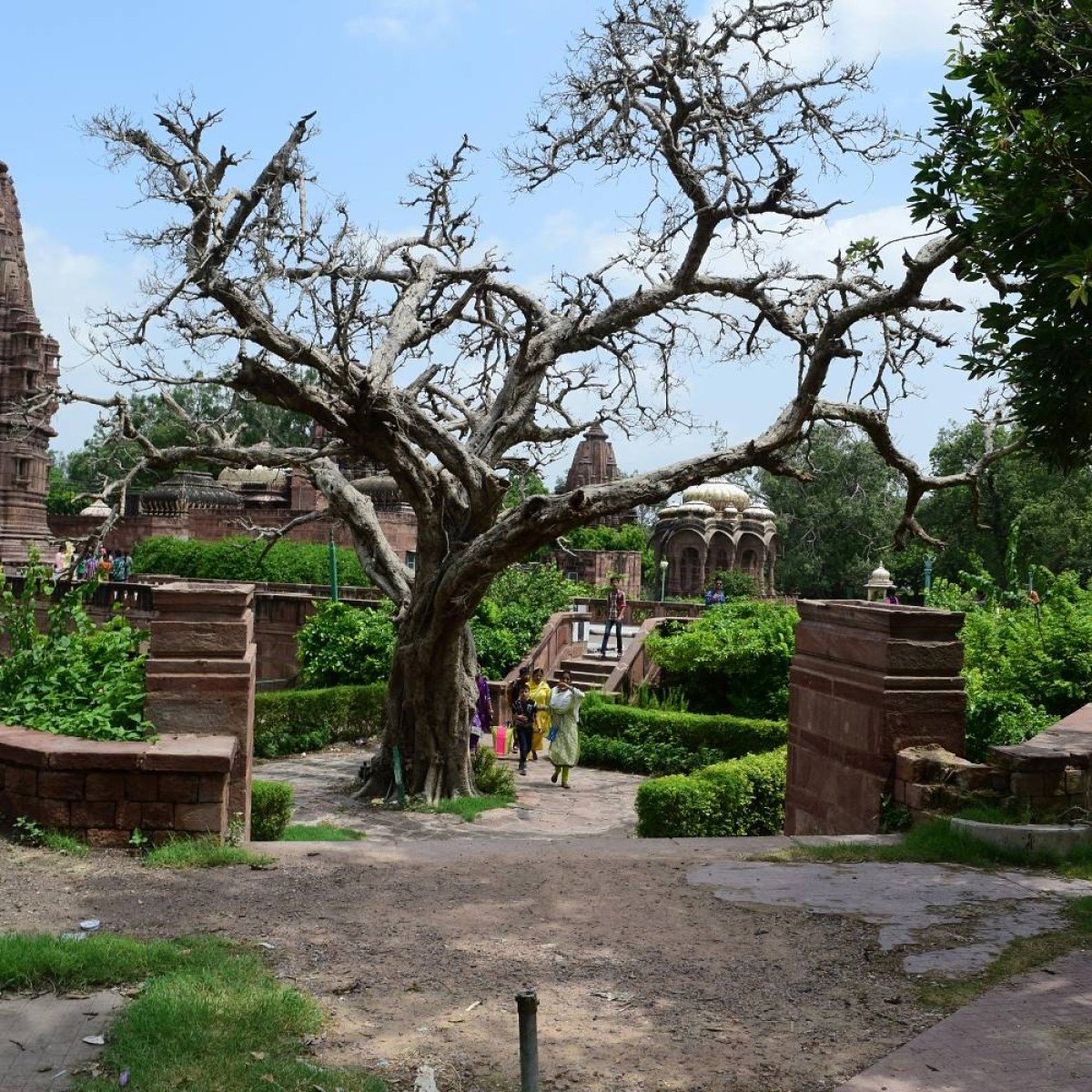
Mandore Garden
General information
-
Ideal Duration:
2 - 3 Hours:Place Type:
Historical, Architectural, Garden, Spiritual:Entry Fees:
Mandore Garden Entry: Entry to the main Mandore Garden premises, including access to the royal cenotaphs, the Hall of Heroes, and the Temple of 33 Crore Gods, is Free of Charge for all visitors, both Indian and foreign. This makes the gardens a highly accessible historical ...Mandore Garden Entry: Entry to the main Mandore Garden premises, including access to the royal cenotaphs, the Hall of Heroes, and the Temple of 33 Crore Gods, is Free of Charge for all visitors, both Indian and foreign. This makes the gardens a highly accessible historical and recreational space for the public. This policy encourages frequent visits by locals and budget travellers alike.
Government Museum Fee: While the gardens are free, the small Government Museum located within the complex does levy a nominal entry fee. This fee is typically a small charge (historically around INR 50 per person for Indian nationals, with a slightly higher fee for foreign tourists). This charge is used for the maintenance and upkeep of the artifacts and the museum structure itself.
Camera and Video Fees: Sometimes, a small, separate fee might be charged for carrying still cameras and, more notably, video cameras into the premises, especially for commercial or professional photography/videography. Standard mobile phone photography is generally included in the free entry. It is always wise to check with the security personnel at the entrance for the latest rules regarding professional equipment.Timing:
Regular Garden Timings: The main Mandore Garden is generally open from 6:00 AM to 10:00 PM daily, making it accessible for both early morning walks and late evening strolls. The vast open nature of the garden allows for these extended hours.
G...Regular Garden Timings: The main Mandore Garden is generally open from 6:00 AM to 10:00 PM daily, making it accessible for both early morning walks and late evening strolls. The vast open nature of the garden allows for these extended hours.
Government Museum Timings: The Government Museum within the complex operates on a much shorter schedule. It is typically open from 9:00 AM to 5:00 PM and is historically closed on Friday. Visitors planning to see the artifacts must adhere to these specific hours.
Ideal Visit Time (Morning Serenity): The best time to visit the Mandore Garden is in the early morning (between 6:00 AM and 9:00 AM). During this time, the weather is cool and pleasant, the light is soft for photography, and the atmosphere is tranquil, before the arrival of large tour groups and the midday heat. This timing is perfect for enjoying a peaceful walk and reflective time.
Ideal Visit Time (Golden Hour Photography): Alternatively, the hour before sunset is another ideal time, especially for photography. The setting sun bathes the red sandstone cenotaphs in a warm, golden glow, creating stunning visual effects and dramatic shadows. However, this time may be slightly more crowded than the early morning.Special Events:
Marwar Festival: The Mandore Garden is one of the key venues for the annual Marwar Festival (formerly known as the Maand Festival), typically held in September or October to celebrate the full moon of the Hindu month of Ashwin. The festival is a vibrant showcase of Marwari ...Marwar Festival: The Mandore Garden is one of the key venues for the annual Marwar Festival (formerly known as the Maand Festival), typically held in September or October to celebrate the full moon of the Hindu month of Ashwin. The festival is a vibrant showcase of Marwari culture, including folk music, dance performances (such as Ghoomar), and traditional rituals. The historical backdrop of the cenotaphs provides a majestic setting for these cultural events, attracting artists and spectators alike.
Local Religious Observances: Being home to the Temple of 33 Crore Gods, the garden complex becomes a focal point for various Hindu festivals and religious observances throughout the year. Days dedicated to major deities like Shivratri or local regional festivals often see a surge of devotees, traditional processions, and special prayer ceremonies. These events offer a deep dive into the local religious life and are distinct from the major tourist festivals.Best Photo Spots:
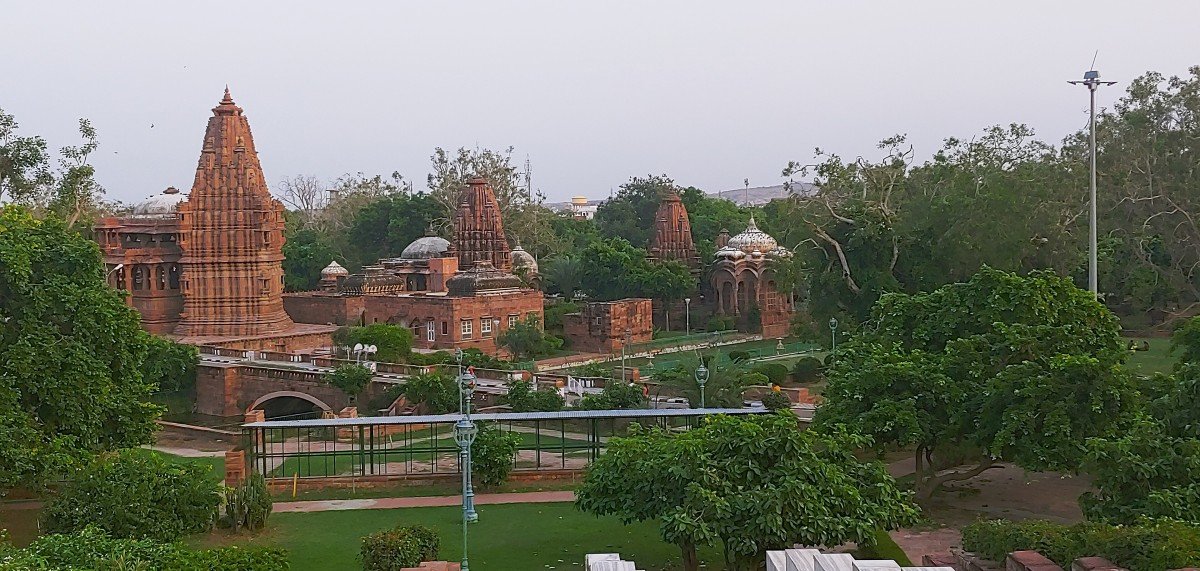
The Majestic Cenotaph Cluster: The main group of large cenotaphs, especially the one dedicated to Maharaja Ajit Singh, is the quintessential photo spot.
Best Angle: Position yourself across the small water channel or lawn to capture the ful...The Majestic Cenotaph Cluster: The main group of large cenotaphs, especially the one dedicated to Maharaja Ajit Singh, is the quintessential photo spot.
Best Angle: Position yourself across the small water channel or lawn to capture the full height and reflection of the chhatris. This angle emphasizes the temple-like architecture and the contrast with the green grass.
Time of Day: Early morning (shortly after sunrise) and late afternoon/sunset are ideal for the best lighting, as the red sandstone glows warmly.
Inside the Hall of Heroes: The long, narrow, rock-cut hall with the brightly painted statues provides a dramatic and unusual photo opportunity.
Focus: Capture the vibrant colours and the size of the heroic figures. Use a wide-angle lens to include the entire row of statues and the architectural setting.
Lighting Challenge: The hall is dimly lit, making a tripod or a camera with good low-light performance beneficial for capturing sharp images of the artwork.
Water Bodies and Reflections: The small lakes or tanks within the garden complex, when still, provide perfect reflective surfaces.
Composition: Frame the shot to include the cenotaphs or the palace ruins reflected clearly in the water. Look for symmetry in the composition.
Natural Elements: Incorporate the surrounding trees, lilies, or other foliage into the foreground to add depth and a sense of nature to the historical setting.
The Overlooked Architecture and Ruins: Seek out the less-crowded areas, such as the ruins of the Rani Mahal or the remnants of the Mandore Fort on the hill.
Unique Perspective: These spots offer unique views, often with fewer people in the frame. Capture the textures of the aged stone, the crumbling arches, and the natural growth reclaiming the structures.
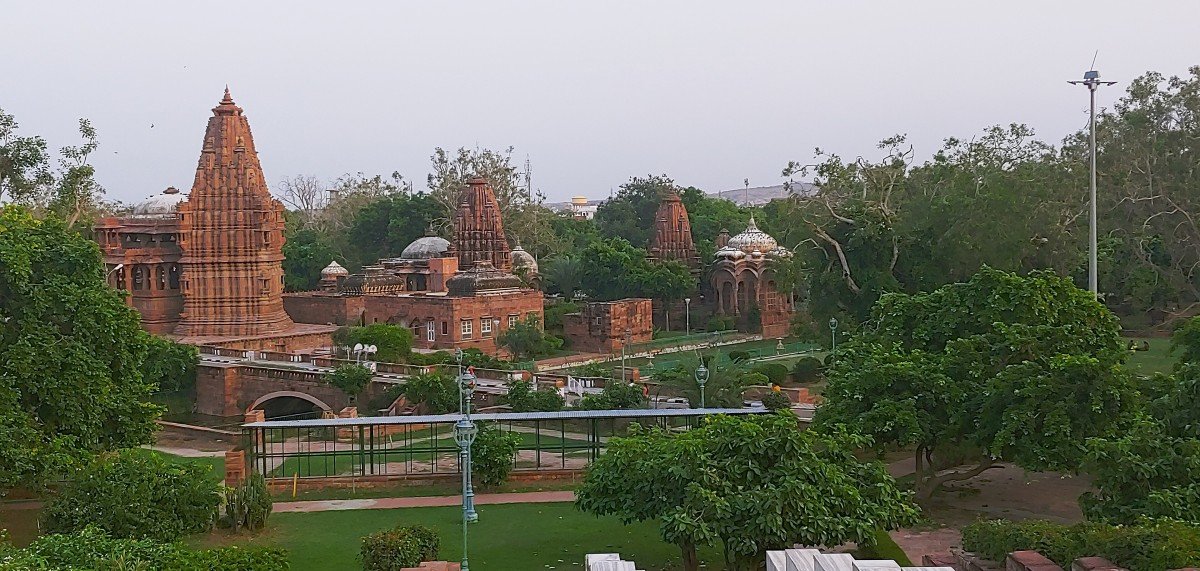
Panoramic Views: From the elevated fort ruins, capture a wide shot of the entire Mandore Garden sprawling below, showcasing the scale of the complex.Photo Gallery
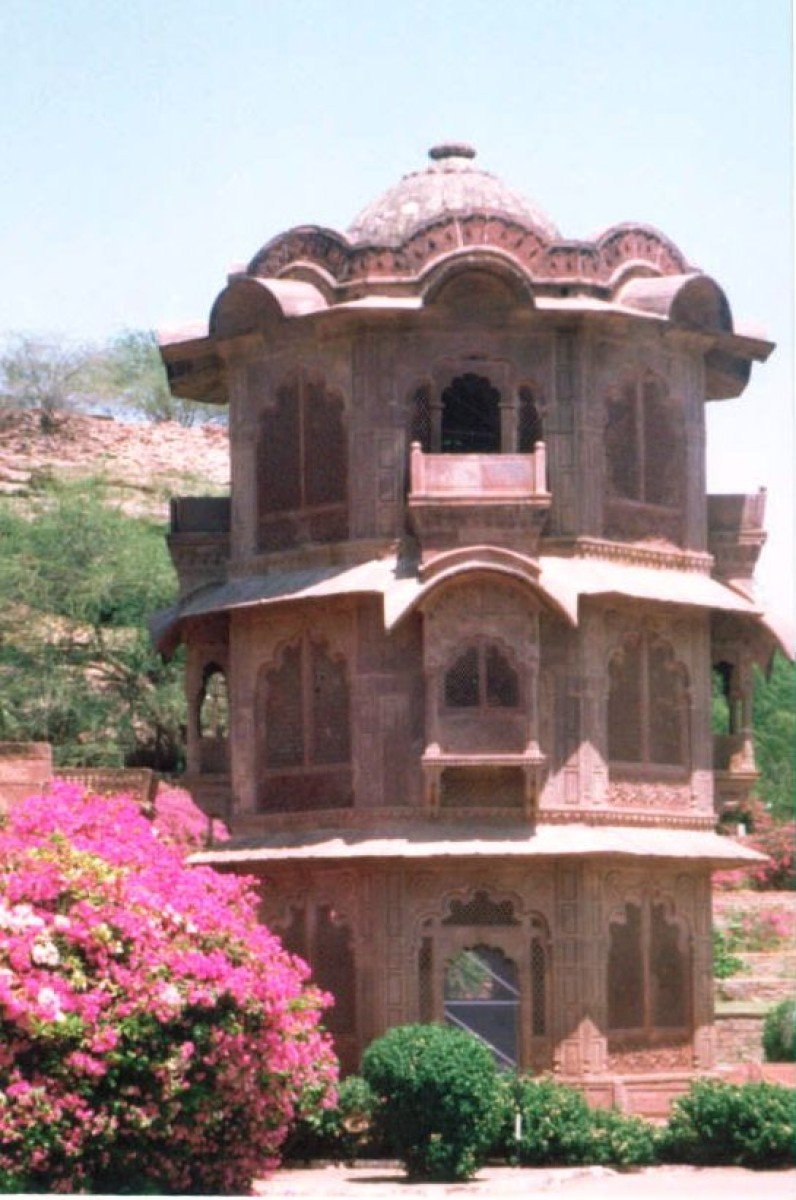

Things To Do
-
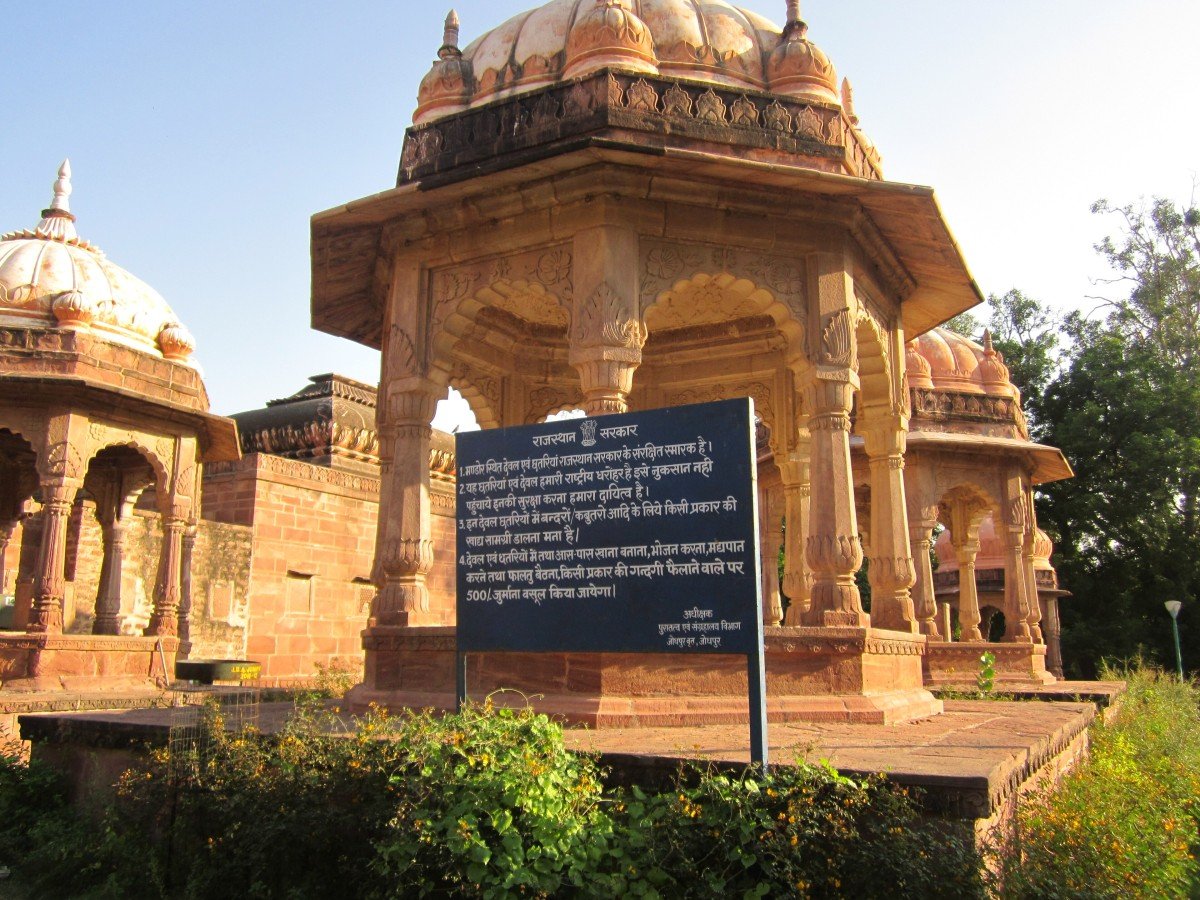
Explore the Royal Cenotaphs (Chhatris): This is the primary activity. Dedicate time to walking among the intricate stone memorials of the Marwar rulers. Observe the temple-style architecture of these structures, noting the difference from typical cenotaphs. The Maharaja Ajit Singh chhatri demands detailed attention for its size and fine carvings. Spend time understanding the different motifs and artistic representations on each memorial.
Tip: Carry a camera with a good zoom to capture the intricate details on the upper levels.
Visit the Hall of Heroes: Walk through the long, narrow passageway of the Hall of Heroes. Stop to admire the 16 large, colorful statues of Rajput folk heroes and Hindu deities carved into the rock face. This section provides a vibrant, artistic representation of loca...Explore the Royal Cenotaphs (Chhatris): This is the primary activity. Dedicate time to walking among the intricate stone memorials of the Marwar rulers. Observe the temple-style architecture of these structures, noting the difference from typical cenotaphs. The Maharaja Ajit Singh chhatri demands detailed attention for its size and fine carvings. Spend time understanding the different motifs and artistic representations on each memorial.
Tip: Carry a camera with a good zoom to capture the intricate details on the upper levels.
Visit the Hall of Heroes: Walk through the long, narrow passageway of the Hall of Heroes. Stop to admire the 16 large, colorful statues of Rajput folk heroes and Hindu deities carved into the rock face. This section provides a vibrant, artistic representation of local legends, including figures like Pabuji. Read any available plaques to understand the stories and significance of each hero and deity. This is an excellent place for children to learn about local lore.
Worship at the Temple of 33 Crore Gods: Take a moment for spiritual reflection at the unique Teen Tis Karor Devtaon ki Sal. This temple houses figures and representations of a vast multitude of Hindu deities. The sheer number and variety of the painted figures are impressive. Note the traditional artistic style and the devotional atmosphere. Though technically a religious site, its architectural and artistic value is significant for all visitors.
Tour the Government Museum: Head to the small but insightful Government Museum located within the garden complex. The museum houses an important collection of artifacts, sculptures, inscriptions, and relics recovered from the Mandore region. It provides context to the history of the Pratihara and Rathore dynasties that ruled from here. Viewing the archaeological finds helps to piece together the life and times of ancient Marwar.
Note: The museum typically has separate timings and a small entry fee.
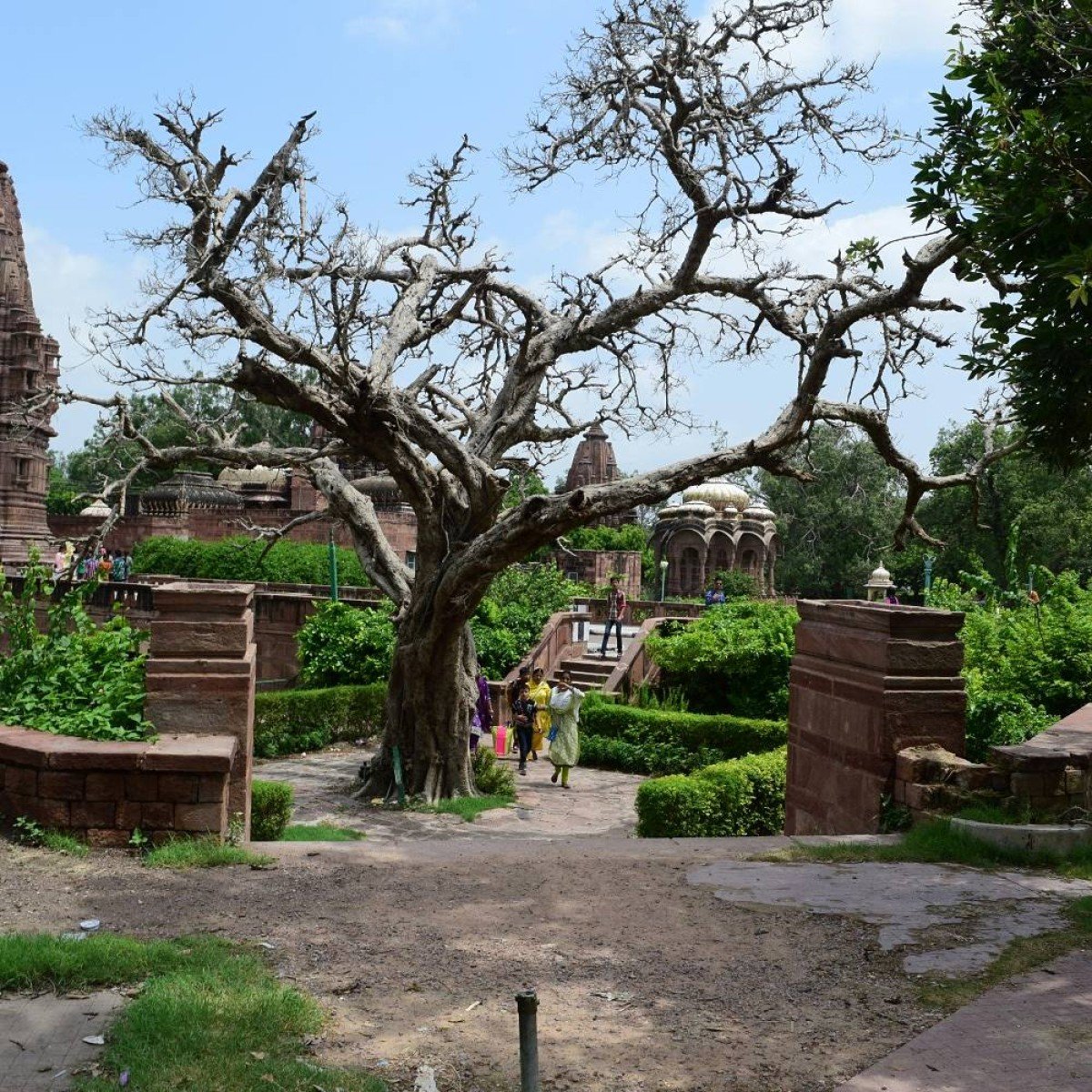
Leisurely Strolls and Picnicking in the Gardens: The Mandore Garden is a large, beautifully maintained green space. Enjoy a relaxing walk amidst the lush lawns, diverse flora, and mature trees, which offer significant shade. It's a popular spot for locals for recreation. Find a quiet bench near the small lakes or fountains for a moment of peace. The calm atmosphere is a perfect break from the hustle of Jodhpur city life. Many visitors bring light snacks for a casual picnic (ensure responsible disposal of waste).
Photography and Sunset Views: The complex is a paradise for photographers. The red sandstone cenotaphs contrasting with the green lawns, the dramatic Hall of Heroes, and the ruins of the fort offer diverse photo opportunities. The late afternoon and sunset hours are particularly magical, as the golden light dramatically enhances the intricate carvings of the chhatris. Capture the reflections of the monuments in the water bodies.
Explore the Mandore Fort Ruins: Venture beyond the gardens to find the remains of the old Mandore Fort. The ruins are less maintained but offer a sense of ancient history. Walking through the crumbled structures allows you to imagine the former scale of the capital. The vantage point from the fort ruins can also provide scenic views of the garden below and the surrounding area.
Wildlife and Bird Watching: Due to the presence of water bodies and dense foliage, the garden attracts various bird species, especially in the early morning and late evening. Keep an eye out for local birds and even animals like langurs (monkeys), which are often seen climbing the trees and cenotaphs (be cautious and maintain distance from the langurs).
Information
-
Why Famous:
Historical Capital of Marwar: Mandore was the original capital of the Marwar region before the city of Jodhpur was founded in 1459. This historical status imbues the garden with a deep sense of heritage and is a primary reason for its fame. Visitors come to witne...
Historical Capital of Marwar: Mandore was the original capital of the Marwar region before the city of Jodhpur was founded in 1459. This historical status imbues the garden with a deep sense of heritage and is a primary reason for its fame. Visitors come to witness the remnants of the powerful Pratihara dynasty and the subsequent Rathore rulers, bridging the history between ancient and medieval Rajasthan.
Unique Royal Cenotaphs (Chhatris): The most celebrated feature is the collection of royal cenotaphs. Unlike simple memorials, these are elaborate, multi-tiered structures built like high-towered Hindu temples, showcasing a unique blend of Rajput and temple architecture. This distinctive style, particularly the grandeur of Maharaja Ajit Singh's chhatri made of red sandstone, draws architecture and history buffs from around the world.
Mythological Connection to Ravan: Mandore is also locally famous due to its strong mythological link to the epic Ramayana. Local legend suggests that Mandodari, the wife of the demon king Ravan, hailed from Mandore. Consequently, there is a dedicated Ravan Temple in the area, honoring him as the son-in-law of Mandore, adding a unique cultural dimension that attracts devotees and curious visitors.
Hall of Heroes and 33 Crore Gods Temple: The Hall of Heroes, with its vividly painted rock-cut statues of folk heroes and deities, and the extraordinary Temple of 33 Crore Gods are significant cultural landmarks. These attractions celebrate the valor, devotion, and rich religious mythology of the region, ensuring the garden's fame extends beyond just the royal memorials. -
Architecture:
Cenotaph Style and Grandeur: The Mandore Garden cenotaphs (chhatris) stand out for their distinct architectural style. Unlike the plain, domed pavilions common for memorials in other parts of Rajasthan, the cenotaphs of the Marwar rulers here are designed as elaborate, mult...Cenotaph Style and Grandeur: The Mandore Garden cenotaphs (chhatris) stand out for their distinct architectural style. Unlike the plain, domed pavilions common for memorials in other parts of Rajasthan, the cenotaphs of the Marwar rulers here are designed as elaborate, multi-story Hindu temples (Mandirs). This unique integration of funerary monument and temple architecture is a signature feature of Marwar's royal memorials, predominantly using locally sourced red sandstone. The largest and most impressive is the chhatri of Maharaja Ajit Singh.
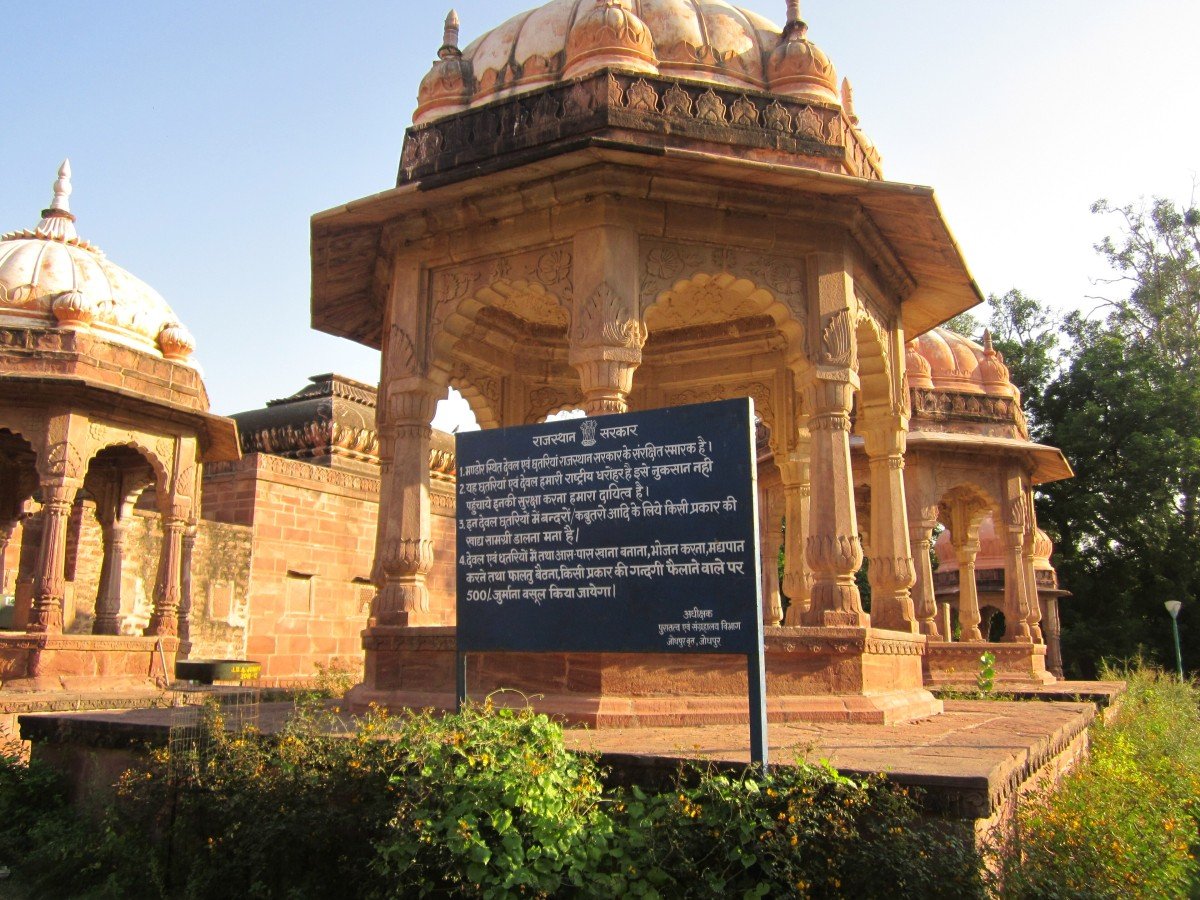
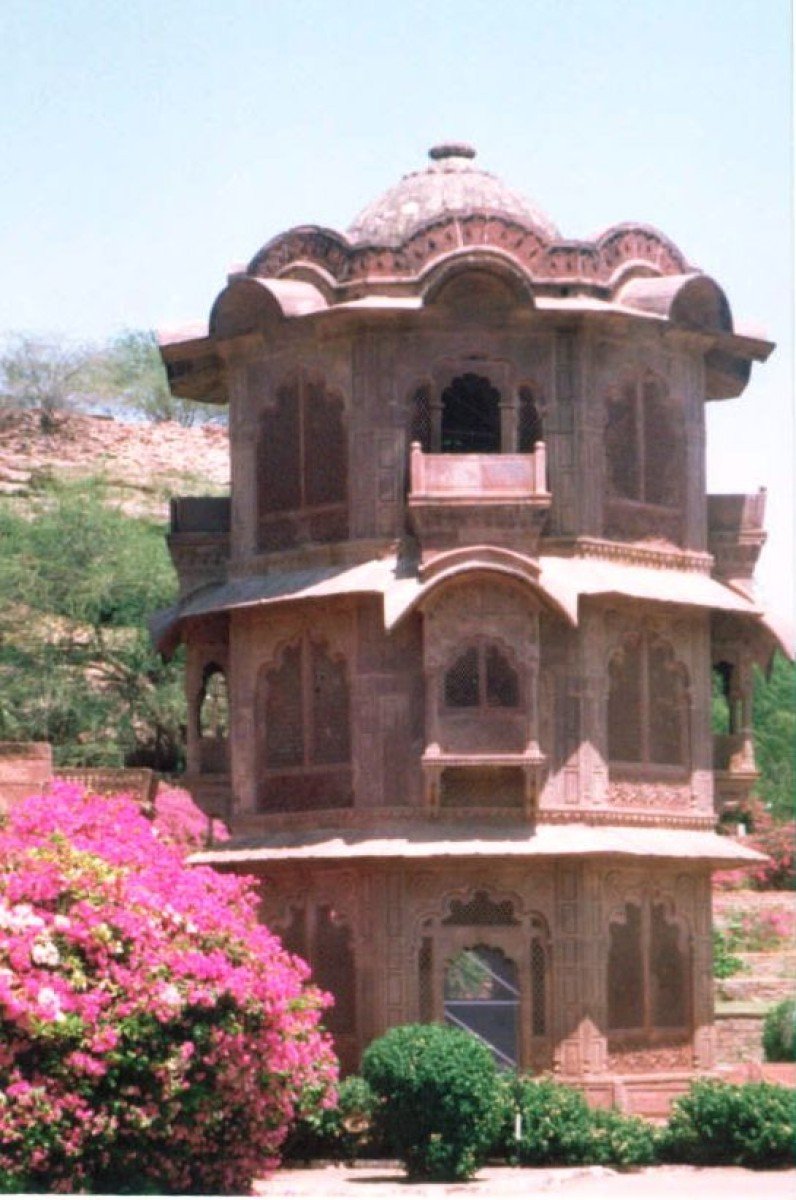
Intricate Carvings and Detailing: The structures are adorned with incredibly detailed carvings that depict mythological scenes, deities, celestial beings, and flora/fauna motifs. Pillars, arches (jharokhas), and domes are intricately sculpted, showcasing the high level of craftsmanship of the Rajput artisans of the 17th and 18th centuries. These carvings not only served as decoration but also narrated tales of the Marwar royal lineage and religious beliefs.
Hall of Heroes and Monolithic Statues: The Hall of Heroes exhibits a more folk-art approach. It is a long, rock-cut structure where large, painted, monolithic statues of 16 famous folk heroes and deities are carved into the rock wall. While exact dimensions vary, these statues are imposing, designed to inspire awe and commemorate the valor of the legendary figures. The rock carving technique showcases a different dimension of the regional architecture.
Dimension Note (Height/Approximate Size): The cenotaphs vary in height, with the most significant ones rising to several stories, reminiscent of temple towers (shikharas). The largest, Maharaja Ajit Singh's chhatri, is a substantial structure, possibly reaching a height of around 30-40 feet, dominating the garden landscape. The entire garden complex covers a significant area, allowing for large open spaces and distinct architectural clusters. -
How To Reach:
By Air: The nearest airport is Jodhpur Airport (JDH), which is approximately 15-20 KMS from Mandore Garden. The airport is well-connected to major Indian cities like Delhi, Mumbai, Bengaluru, and Jaipur by domestic flights. Upon arrival, travelers can easily hire a pre-pai...By Air: The nearest airport is Jodhpur Airport (JDH), which is approximately 15-20 KMS from Mandore Garden. The airport is well-connected to major Indian cities like Delhi, Mumbai, Bengaluru, and Jaipur by domestic flights. Upon arrival, travelers can easily hire a pre-paid taxi, a standard taxi, or book an app-based cab (Ola/Uber) directly to Mandore Garden. The drive typically takes about 30-45 minutes, depending on the city traffic. Alternatively, one can take a local auto-rickshaw from outside the airport for a more budget-friendly option, but ensure the fare is agreed upon beforehand.
By Train: The closest major railway hub is Jodhpur Junction (JU), which is approximately 9-10 KMS from Mandore Garden. Jodhpur Junction is a crucial station on the Indian Railways network, with excellent connectivity to almost all parts of the country, including major metropolitan areas. From the railway station, reaching Mandore Garden is straightforward. You can find numerous pre-paid taxi booths, regular taxis, and auto-rickshaws right outside the station. The ride is relatively short, usually taking about 20-30 minutes. Local buses also run on the Mandore route, which is the most economical but less comfortable option.
By Road (Inter-City): Jodhpur is well-connected to nearby cities in Rajasthan and other states via a robust network of National and State Highways.
From Jaipur: Approximately 335 KMS via NH48 and NH19.
From Udaipur: Approximately 250 KMS via NH58.
From Jaisalmer: Approximately 280 KMS via NH125. Travelers can take state-run buses (RSRTC) or private luxury buses, which are widely available and terminate at the main Jodhpur Bus Stand (RSRTC Bus Depot), located about 8-9 KMS from Mandore. From the bus stand, local transport must be used to reach the garden. Self-driving is also an option, as the roads are generally in good condition, and ample parking is usually available near the garden entrance.
By Local Transport (Within Jodhpur): Mandore Garden is easily accessible from any part of Jodhpur city.
Auto-rickshaws: This is the most popular local transport. They are readily available and relatively inexpensive. Negotiate the fare before starting the journey or insist on using the meter.
App-Based Taxis: Services like Ola and Uber operate in Jodhpur and offer a convenient and comfortable way to reach the garden, with transparent pricing.
Local Buses: City buses operate to the Mandore area, offering the cheapest mode of transport. However, they can be crowded and may drop you off a short walk from the exact entrance. -
Weather and Best Time to Visit:
Peak Tourist Season (Winter): The best time to visit Mandore Garden is during the winter months, specifically from October to March.
Weather: The weather during this period i...Peak Tourist Season (Winter): The best time to visit Mandore Garden is during the winter months, specifically from October to March.
Weather: The weather during this period is the most pleasant, with clear skies and comfortable temperatures ranging from 10Rs.C to 25Rs.C. This climate is ideal for walking, sightseeing, and spending extended time outdoors without the exhaustion of heat.
Festivals: This season also coincides with the major festivals like the Marwar Festival and other cultural events, adding a vibrant layer to the visit.
Shoulder Season (Post-Monsoon): The month of September and the early part of April can also be good times to visit.
Weather: September sees the tail end of the monsoon, leaving the gardens lush and green, though it can still be slightly humid. April starts to warm up, but mornings and evenings are still manageable.
Crowds: These months offer a good balance of decent weather and fewer crowds compared to the peak December to February period.
Off-Season (Summer and Monsoon): The summer months, from April to June, should ideally be avoided.
Weather: Temperatures can soar above 40Rs.C, making daytime outdoor exploration extremely challenging and uncomfortable. The monsoon season (July to August) brings relief from the heat but can be unpredictable with heavy rains. While the gardens are beautiful and green, outdoor plans can be disrupted.
Best Part of the Day (Mornings for Tranquility): The early morning (6:00 AM - 9:00 AM) is the most advisable part of the day to visit year-round (especially outside of winter). The cooler air and soft light create a tranquil atmosphere, perfect for photography and a peaceful stroll among the cenotaphs before the heat sets in.
Best Part of the Day (Evenings for Photography): The hours just before sunset offer the best photographic lighting, the "golden hour," making the red sandstone glow. This time is also popular for relaxing as the temperature drops, though it will be the most crowded time of day. -
Near Tourist Places:
S. No. Nearby Place Name Category Distance (KMS) from Mandore Garden
:
:
:
: 1 Balsamand Lake Lake / Heritage Hotel ~ 4 KMS 2 Kaylana Lake Lake / Nature Spot ~ 15 KMS 3 Mehrangarh Fort Fort / Historical ~ 10 KMS 4 Jaswant Thada Royal Cenotaph / Memorial ~ 9. 5 KMS 5 Ghanta Ghar (Clock Tower) Landmark / Market ~ 8 KMS 6 Sardar Market Market / Shopping ~ 8 KMS 7 Toorji Ka Jhalra Stepwell / Historical ~ 9 KMS 8 Umaid Bhawan Palace Palace / Museum ~ 13 KMS 9 Rao Jodha Desert Rock Park Ecology Park ~ 10 KMS 10 Masuriya Hill Garden Garden / Viewpoint ~ 12 KMS
Tourism Tips
-
Health & Safety:
Hydration: Always carry a water bottle, especially if visiting outside of the peak winter months. Dehydration is a risk in the Jodhpur climate.
Sun Protection: Wear a hat or cap, sunglasse...Health & Safety:
Hydration: Always carry a water bottle, especially if visiting outside of the peak winter months. Dehydration is a risk in the Jodhpur climate.
Sun Protection: Wear a hat or cap, sunglasses, and apply good quality sunscreen, even on hazy days. The sun can be intense.
Footwear: Wear comfortable walking shoes, as exploring the entire complex, including the fort ruins, involves a lot of walking on uneven paths.
Monkeys (Langurs): Mandore Garden is home to many langurs. While generally harmless, do not feed them and keep a distance. Secure loose items like sunglasses, cameras, and food, as they may try to snatch them.
Packing Essentials:
Dress Code: While the garden is secular, modest dressing is respectful, especially when visiting the temples within the complex. Light, breathable cotton clothing is best for the warm climate.
Camera Gear: A camera is essential for capturing the beautiful architecture. Consider a zoom lens for details on the cenotaphs and a wide-angle lens for the entire landscape.
Snacks: Pack light snacks, as only basic vendors are available near the entrance.
Accommodation:
Jodhpur City Base: It is highly recommended to stay in Jodhpur city proper, which offers a wide range of accommodation, from luxury heritage hotels (like Umaid Bhawan Palace or WelcomHeritage Bal Samand Lake Palace nearby) to budget guesthouses and hostels in the old city (near Clock Tower).
Convenience: Staying in the main city provides easy access to dining, shopping, and other tourist attractions. Mandore is an easy day trip. Cultural Respect &
Guides:
Local Customs: When visiting the temples, remove your shoes and maintain silence. Ask permission before photographing locals or performing religious rites.
Guides: Hiring a local guide at the entrance can significantly enhance the experience by providing historical context and stories for the cenotaphs and the Hall of Heroes, which are otherwise just beautiful structures. Negotiate the guide fee beforehand.
Reviews
FAQs
Jodhpur Itineray And Cost:-
Other Places In Jodhpur :-
Other States In India :-
Information about New and Updated Locations() of Rajasthan Has Been Added :-
Card subtitle
Note:-
Information provided here in good Faith and for reference only.
Near Places

Phool Mahal
Some quick example text to build on the card title and make up the bulk of the card's content.
Go somewhere
Ranisar and Padamsar Lakes
Some quick example text to build on the card title and make up the bulk of the card's content.
Go somewhere
Sheesh Mahal
Some quick example text to build on the card title and make up the bulk of the card's content.
Go somewhere
Achal Nath Shivalaya
Some quick example text to build on the card title and make up the bulk of the card's content.
Go somewhere
Arna Jharna The Desert Museum
Some quick example text to build on the card title and make up the bulk of the card's content.
Go somewhere
Balsamand Lake
Some quick example text to build on the card title and make up the bulk of the card's content.
Go somewhere
Bheru Bagh
Some quick example text to build on the card title and make up the bulk of the card's content.
Go somewhere
Bishnoi Village Safari
Some quick example text to build on the card title and make up the bulk of the card's content.
Go somewhere
Chamunda Mata Temple
Some quick example text to build on the card title and make up the bulk of the card's content.
Go somewhere
Ghanta Ghar
Some quick example text to build on the card title and make up the bulk of the card's content.
Go somewhere
Hanwant Mahal
Some quick example text to build on the card title and make up the bulk of the card's content.
Go somewhere
Jaswant Thada
Some quick example text to build on the card title and make up the bulk of the card's content.
Go somewhere
Kaylana Lake
Some quick example text to build on the card title and make up the bulk of the card's content.
Go somewhere
Khejarla Fort
Some quick example text to build on the card title and make up the bulk of the card's content.
Go somewhere
Khichan Bird Sanctuary
Some quick example text to build on the card title and make up the bulk of the card's content.
Go somewhere
Kunj Bihari Temple
Some quick example text to build on the card title and make up the bulk of the card's content.
Go somewherein Other Cities