Mehrangarh Fort
General information
-
Ideal Duration:
3 to 4 Hours (Excluding dining/zip-lining)Place Type:
Fort, Palace, Museum, Architectural MarvelEntry Fees:
Indian Nationals (Adults): The standard entry ticket for Indian citizens is typically Rs.200 per person. This fee usually includes the entry into the main fort and museum galleries.
Foreign Tourists (Adults): Foreign tourists are charged a...Indian Nationals (Adults): The standard entry ticket for Indian citizens is typically Rs.200 per person. This fee usually includes the entry into the main fort and museum galleries.
Foreign Tourists (Adults): Foreign tourists are charged a higher, comprehensive fee. The ticket price is generally around Rs.800 per person. This fee is often inclusive of the mandatory audio guide, which is highly recommended for a rich historical experience.
Optional Charges and Extras: The basic entry fee does not cover everything, and visitors should budget for extras:
Elevator: A one-way elevator ride up the hill is available for visitors, especially the elderly or those with mobility issues, for a nominal fee of approximately Rs.50 per person.
Camera/Video Fees: A separate fee is usually charged for carrying still cameras (Rs.100) and video cameras (Rs.200) inside the fort complex to take photographs and videos.
Zipline/Flying Fox: The adventure activity is charged separately and is significantly higher, typically starting around Rs.2,000 or more per person.Timing:
Regular Timings: The Mehrangarh Fort is open to the public daily throughout the year. The regular operating hours are from 9:00 AM to 5:00 PM. Visitors must ensure they purchase their tickets and start their tour well before the closing time.
Read MoreRegular Timings: The Mehrangarh Fort is open to the public daily throughout the year. The regular operating hours are from 9:00 AM to 5:00 PM. Visitors must ensure they purchase their tickets and start their tour well before the closing time.
Ideal Visit Time: The ideal time to visit the fort is immediately upon opening at 9:00 AM or during the late afternoon, between 3:00 PM and 5:00 PM.
Morning Visit: Visiting early helps to avoid the intense heat of the Jodhpur sun, particularly between March and October. The light is also excellent for photography, and the crowd levels are lower.
Late Afternoon Visit: The late afternoon provides the magical experience of watching the sunset over the Blue City from the ramparts, a truly memorable sight, though visitors must exit the museum sections promptly at 5:00 PM.
Special Activities Time: The Flying Fox Zipline, if opted for, often starts its first run around 9:30 AM and continues until the afternoon, but it is best to check for seasonal changes in their operating hours due to weather conditions.Special Events:
Rajasthan International Folk Festival (RIFF): The Jodhpur RIFF is arguably the most famous annual event held at the fort. It takes place every October (around the time of the full moon) and is supported by the Mehrangarh Museum Trust and the Jodhpur royal family. This fiv...Rajasthan International Folk Festival (RIFF): The Jodhpur RIFF is arguably the most famous annual event held at the fort. It takes place every October (around the time of the full moon) and is supported by the Mehrangarh Museum Trust and the Jodhpur royal family. This five-day music and arts festival celebrates traditional folk music and arts from Rajasthan and around the world. The setting is spectacular, with performances taking place in the fort's courtyards and terraces. It's a key global platform for promoting authentic folk music and brings a vibrant, modern cultural life to the ancient fortress.
World Sacred Spirit Festival (WSSF): Held usually in February, the WSSF is an annual event showcasing sacred music and spiritual songs from across the globe. It features musicians and dancers performing pieces rooted in various spiritual traditions, from Sufi qawwalis to Buddhist chants. The evocative and majestic setting of Mehrangarh Fort, particularly the inner courtyards and the Jaswant Thada grounds nearby, lends a deeply atmospheric quality to the powerful, often moving, performances.Best Photo Spots:
The Blue City Panorama from the Ramparts: The most iconic photo spot is from the Gun Terrace near the fortRs.s outer walls. This location offers a sprawling, high-angle view of the old city's homes painted in the striking blue shade, with the Clock Tower (Ghanta Ghar) visibl...The Blue City Panorama from the Ramparts: The most iconic photo spot is from the Gun Terrace near the fortRs.s outer walls. This location offers a sprawling, high-angle view of the old city's homes painted in the striking blue shade, with the Clock Tower (Ghanta Ghar) visible below. The best time is around sunrise or sunset when the soft light illuminates the blue houses perfectly, creating a stunning contrast with the massive reddish-brown fort walls.
The Elephant Footprints at Loha Pol: This is a more intimate, historical photo spot. The Loha Pol (Iron Gate) is famous for the deeply moving handprints (sati marks) of the loyal women who immolated themselves on the pyres of their deceased husbands. The photo, focusing on the historical marks, is a poignant, close-up shot that captures the fort's human history. The contrast between the rough stone and the delicate hand impressions is visually striking.
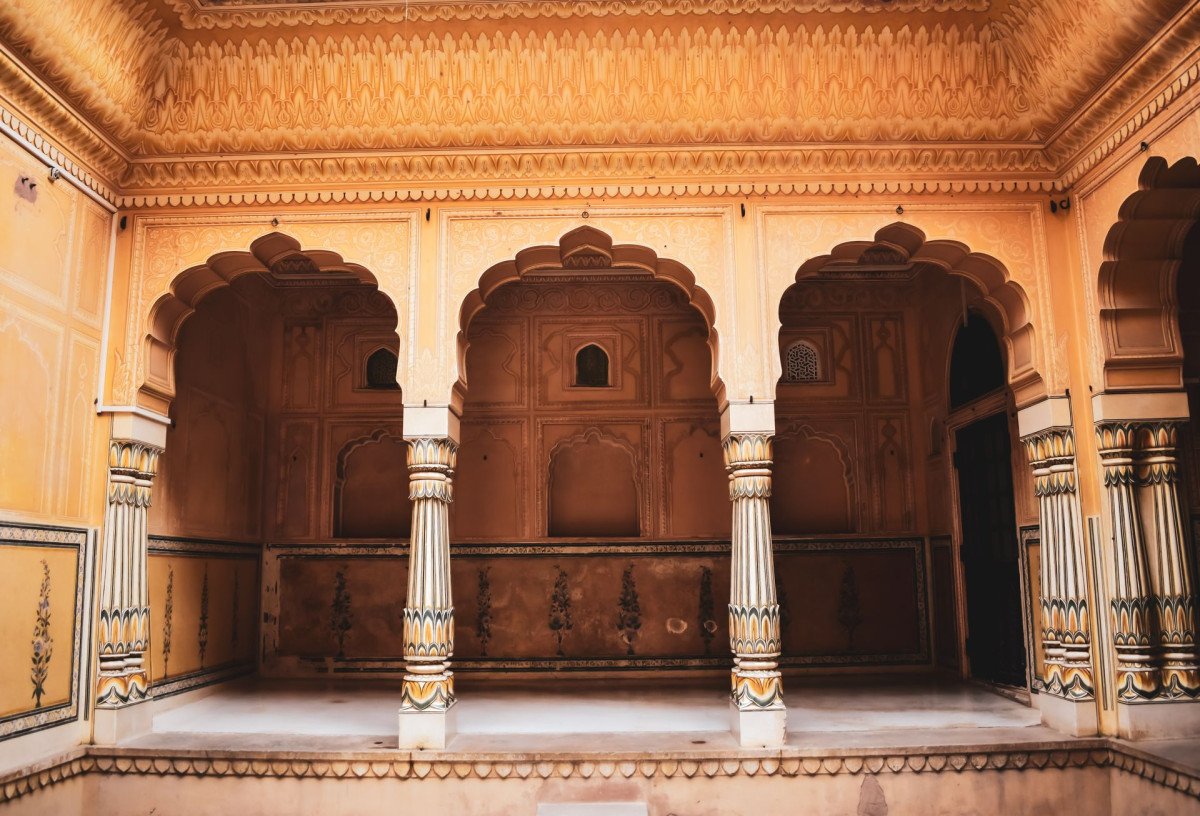
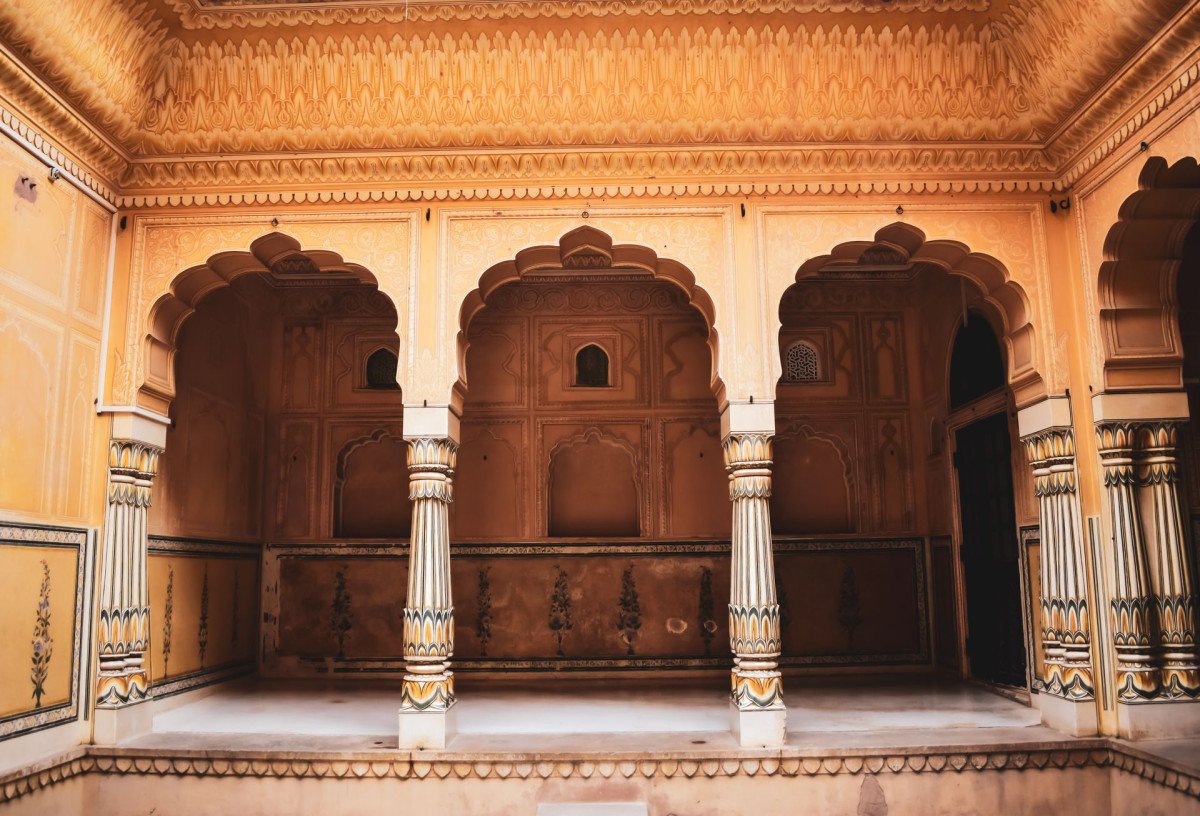
Phool Mahal Interior: The inside of the Phool Mahal (Flower Palace), though seen from behind a rope, is a masterpiece of vibrant colour and gold. The exquisitely painted ceiling with gold leaf on wood and the ornate pillars and lattice work provide a fantastic opportunity for interior architectural photography, capturing the opulence and artistry of the royal chambers.Photo Gallery
Things To Do
-
Explore the Magnificent Palaces: Wander through the lavish interior palaces. Start with the Moti Mahal (Pearl Palace), used for royal assemblies, and notice the ingenious jharokhas (latticed screens) that allowed queens to observe proceedings. Next, step into the stunning Phool Mahal (Flower Palace), once the private chamber for male enjoyment, famous for its exquisite gold-painted ceiling. The Sheesh Mahal (Mirror Palace) offers an overwhelming spectacle of tiny mirrors, while the Jhanki Mahal (Glimpse Palace) is where royal women watched festivities outside. Take your time to appreciate the fine sandstone carvings and the flow of the courtyards.
Visit the Mehrangarh Museum Galleries: The fort houses one of Rajasthan's most impressive museums, spread across several galleries.
Howdah Gallery:...Explore the Magnificent Palaces: Wander through the lavish interior palaces. Start with the Moti Mahal (Pearl Palace), used for royal assemblies, and notice the ingenious jharokhas (latticed screens) that allowed queens to observe proceedings. Next, step into the stunning Phool Mahal (Flower Palace), once the private chamber for male enjoyment, famous for its exquisite gold-painted ceiling. The Sheesh Mahal (Mirror Palace) offers an overwhelming spectacle of tiny mirrors, while the Jhanki Mahal (Glimpse Palace) is where royal women watched festivities outside. Take your time to appreciate the fine sandstone carvings and the flow of the courtyards.
Visit the Mehrangarh Museum Galleries: The fort houses one of Rajasthan's most impressive museums, spread across several galleries.
Howdah Gallery: See the priceless collection of ornate howdahs (elephant seats), including one presented by Mughal Emperor Shah Jahan.
Palanquin Gallery: Features beautifully decorated palanquins (palkis) used by the royal ladies and nobles.
Arms Gallery: A fantastic display of different kinds of weapons, from ancient swords and spears to elaborate Mughal-era firearms, showcasing the Rathore warrior tradition.
Daulat Khana Gallery: Houses the finest collection of arts and artifacts from the Mughal and Rajput periods, including rare textiles, manuscripts, and miniature paintings.
Walk the Fort Ramparts and Gun Terrace: Take a walk along the massive fortified walls. This is where you find the large, antique cannons, notably the famous Kilkila. The primary attraction here is the panoramic viewRs.a breathtaking sight of the sprawling, densely packed "Blue City" below, contrasted against the arid desert landscape beyond. This spot is perfect for photography, especially during sunrise and sunset.
Experience the Flying Fox Zipline Tour: For the adventure seeker, the fort offers a thrilling Flying Fox zip-line experience. This unique activity involves gliding on six separate zip lines across the canyons and battlements of the fort, offering an unparalleled bird's-eye view of the surrounding walls, lakes (Ranisar and Padmasar), and the Rao Jodha Desert Rock Park. ItRs.s a modern way to appreciate the immense scale of the ancient fortress, providing an adrenaline rush alongside historical insight.
Attend Cultural Performances: Often at the fort's entrance or main courtyard, local folk artists perform traditional Rajasthani music and dance, including the vibrant Kalbelia dance and soothing instrumental melodies. These short, lively performances offer a taste of the region's rich cultural heritage and make the entrance experience more immersive. Check the daily schedule for timings.
Explore the Rao Jodha Desert Rock Park: Located right next to the fort's base, this eco-park was created to restore the natural ecology of the rocky wasteland. It features winding trails showcasing the indigenous flora of the Thar Desert. Spend an hour here for a peaceful walk, learning about the desert's unique ecosystem, and getting different perspectives of the mighty fort towering above.
Visit Chamunda Mataji Temple: The fort houses the important Chamunda Mataji Temple, the patron goddess (Isht Devi) of the Maharajas and a goddess worshipped by a majority of Jodhpur's citizens. Located at the fort's southern end, a visit here provides spiritual and cultural context, especially during the festive time of Dussehra when huge crowds gather.
Information
-
Why Famous:
Impregnable Military Architecture: The fort's fame largely rests on its seemingly impregnable structure. Built atop a sheer cliff, it utilizes the natural topography for defense. The circuitous, steeply-rising approach road, guarded by seven massive, spiked gates (Pols), ...Impregnable Military Architecture: The fort's fame largely rests on its seemingly impregnable structure. Built atop a sheer cliff, it utilizes the natural topography for defense. The circuitous, steeply-rising approach road, guarded by seven massive, spiked gates (Pols), ensured that a frontal attack was nearly impossible. The sheer scale and towering walls that seamlessly blend with the mountain make it a masterpiece of defensive military engineering, symbolizing the strength of the Rathore rulers.
The Blue City Panorama: Mehrangarh is the perfect vantage point for viewing the 'Blue City' of Jodhpur. From its ramparts, especially the Gun Terrace, visitors get a spectacular, unparalleled view of the old city houses painted in vivid blue. This iconic sight is a major draw for photographers and tourists worldwide, making the fort's view itself a globally recognized landmark.
Royal Palaces and Museum: Within the formidable exterior lies a delicate world of art. The series of exquisitely decorated palacesRs.Moti Mahal, Phool Mahal, Sheesh Mahal, and Takhat VilasRs.showcase the artistic taste and opulence of the maharajas. The fort's meticulously maintained museum is one of Rajasthan's best, housing priceless royal possessions, including arms, costumes, and the finest collection of elephant howdahs and palanquins in India. -
Architecture:
Construction Material and Fortification: The primary construction material is a durable, locally sourced reddish-brown sandstone that perfectly blends with the rocky hill upon which it rests. The fort's unique location and construction technique make its exterior walls app...Construction Material and Fortification: The primary construction material is a durable, locally sourced reddish-brown sandstone that perfectly blends with the rocky hill upon which it rests. The fort's unique location and construction technique make its exterior walls appear to be a natural extension of the mountain itself. The walls are not uniform; they are immense, reaching heights of up to 36 meters (118 feet) and a thickness of up to 21 meters (69 feet), designed to withstand intense cannon fire. The fort is entered through seven massive gateways known as Pols, such as the Jai Pol and Fateh Pol, each strategically placed at turns along the winding ascent road, preventing enemy elephants from gaining momentum. The famous handprints (Sati marks) on the Loha Pol are a poignant architectural detail and a historical marker.
Palace Design and Dimension: The palaces within the fort are examples of refined Rajput and later Mughal influence in their decorative elements. The inner courtyards are vast and open, contrasting with the tightly fortified exterior.
Moti Mahal (Pearl Palace): This is one of the oldest surviving rooms, built by Raja Sur Singh. It is the largest hall, designed for public audience, and its ceiling is adorned with gilded stucco and mirrored work, hence the name 'Pearl'. It is known for its five hidden alcoves where the queens could listen to the court proceedings without being seen (Purda system).
Phool Mahal (Flower Palace): Built by Maharaja Abhay Singh in the 18th century, it served as the private party chamber for the male royals. It is noted for its spectacular ceiling, which features intricate gold leaf work on wooden beams and fine, latticed windows (jharokhas).
Sheesh Mahal (Mirror Palace): A marvel of mirror work, this bedchamber is covered floor to ceiling with tiny, brightly coloured mirror pieces set in plaster and superimposed by plaster figures of religious deities. The opulent decoration reflects the king's private luxury.
Fort Dimensions: The overall complex spans over 5 kilometers (3. 1 miles) along the hilltop, rising approximately 122 meters (400 feet) above the city. -
How To Reach:
By Air: The nearest airport is Jodhpur Airport (JDH), located approximately 8 to 9 KMS from the fort. Jodhpur is well-connected to major Indian cities like Delhi, Mumbai, Bengaluru, and Jaipur by domestic flights. Upon arrival at JDH, one can easily hire a pre-paid taxi o...By Air: The nearest airport is Jodhpur Airport (JDH), located approximately 8 to 9 KMS from the fort. Jodhpur is well-connected to major Indian cities like Delhi, Mumbai, Bengaluru, and Jaipur by domestic flights. Upon arrival at JDH, one can easily hire a pre-paid taxi or a ride-sharing cab service to reach the base of the fort within 30 minutes, depending on traffic.
By Train: Jodhpur Junction (JU) is the main railway station and is a major rail hub, connecting the city to nearly all parts of India, including overnight trains from Delhi, Mumbai, Kolkata, and Chennai. The railway station is approximately 6 KMS from the fort. From the station, auto-rickshaws, pre-paid taxis, and local city buses are readily available to take visitors directly to the fort's entrance. The ride typically takes about 20 minutes.
By Road: Jodhpur is well-connected by National and State Highways. It's easily accessible by bus and private car from nearby cities like Jaipur (approx. 330 KMS), Udaipur (approx. 250 KMS), and Jaisalmer (approx. 280 KMS). Government (RSRTC) and private luxury buses operate frequently to the Rai Ka Bagh Central Bus Stand, which is about 5 KMS from the fort. From the bus stand, local transport must be utilized to reach the hilltop fort.
By Local Transport: To reach the fort from anywhere in Jodhpur, local transport options include:
Auto-rickshaws: These are the most common and convenient mode for short distances. They can be hailed anywhere and will take you to the fort's main gate. Bargaining is advisable.
Taxis/Cabs: Ride-sharing services and local taxi operators offer point-to-point services. This is a more comfortable option, especially in the heat.
Foot/Walking: From the old city center, the fort is reachable by a winding, steep path. This walk is challenging but offers unique photo opportunities of the surrounding walls and old blue houses. This option is only recommended in the cooler months (November to February). -
Weather and Best Time to Visit:
Different Types of Seasons: The best season to visit Mehrangarh Fort and Jodhpur is during the winter months, from October to March.
Winter (October to March): The weather is pleasantly cool and sunny, with temperatures ranging from 10Rs.C t...Different Types of Seasons: The best season to visit Mehrangarh Fort and Jodhpur is during the winter months, from October to March.
Winter (October to March): The weather is pleasantly cool and sunny, with temperatures ranging from 10Rs.C to 25Rs.C. This comfortable climate is perfect for extensive walking tours inside the massive fort and for enjoying the panoramic views without the discomfort of heat. October is particularly vibrant due to the Jodhpur RIFF festival.
Summer (April to June): The city experiences extreme heat, with temperatures soaring past 40Rs.C. Visiting during this time is challenging, making the fort visit exhausting.
Monsoon (July to September): Though bringing some relief from the heat and making the landscape greener, the humidity can be high, and travel is less predictable. However, the fort looks stunning after a good shower.
Different Parts of the Day: Early Morning (9:00 AM - 11:00 AM) This is the most recommended time. The temperature is cool, the light is soft for photography, and the crowd is minimal, allowing for a peaceful appreciation of the fort's architecture. Late Afternoon (3:00 PM - 5:00 PM) This time is ideal for catching the famous sunset view over the Blue City from the fort's western ramparts. The light casts a beautiful golden glow on the sandstone. -
Near Tourist Places:
Jaswant Thada: (Approx. 1. 5 KMS from Fort base) - White marble cenotaph, offers a serene environment.
Rao Jodha Desert Rock Park: (Adjacent to Fort base) - Ecological park with indigenous Thar Desert flora.
Ghanta Ghar (Clock Tower): (Approx. 2. 5 KMS) - Historic landmark marking the center of the Old City.
Sardar Market: (Adjacent to Clock Tower) - Bustling local market for spices, textiles, and handicrafts.
Toorji Ka Jhalra Bavdi (Stepwell): (Approx. 3 KMS) - Beautifully restored 18th-century stepwell.
Umaid Bhawan Palace: (Approx. 7 KMS) - Massive 20th-century palace, partly a museum and hotel.
Mandore Garden: (Approx. 10 KMS) - Site of Jodhpur rulers' cenotaphs and temples.
Kaylana Lake: (Approx. 12 KMS) - Artificial lake, popular spot for birdwatching and boating.
Balsamand Lake: (Approx. 15 KMS) - Historic lake with a palace on its embankment.
Achal Nath Shivalaya Temple: (Approx. 3 KMS) - Ancient, architecturally significant Shiva temple in the old city.
Tourism Tips
-
Health & Safety:
Hydration: Always carry a water bottle, especially if visiting outside of winter. The heat can be severe, and climbing the fort's slopes and stairs is physically demanding.
Footwear: Wear...Health & Safety:
Hydration: Always carry a water bottle, especially if visiting outside of winter. The heat can be severe, and climbing the fort's slopes and stairs is physically demanding.
Footwear: Wear comfortable, closed walking shoes. The fort involves a lot of walking on cobbled, uneven, and sometimes steep surfaces. Avoid flip-flops or high heels.
Sun Protection: Carry a hat, sunglasses, and use sunscreen to protect against the strong Rajasthani sun.
Packing:
Clothing: Light, breathable cotton clothing is best for most of the year. For the winter months (December and January), carry a light jacket or shawl for the early mornings and evenings.
ID Proof: Always carry a government-issued photo ID (like an Aadhar Card or Passport) for ticket concessions and general security checks.
Camera Essentials: Carry a portable charger, extra camera batteries, and memory cards, as the photo opportunities are endless.
Accommodation:
Old City: Staying in a haveli (traditional mansion) in the old city near the Clock Tower gives an authentic experience, often with rooftop restaurants offering stunning views of the fort.
New City/Palaces: For a luxurious stay, consider the heritage hotels or modern hotels in the new city area. The famous Umaid Bhawan Palace is an option for a premium experience.
Booking: It's best to book accommodation well in advance, especially during the peak season (October to March) and festival times.
Other Different Topics Heading:
Audio Guide: Take the audio guide. It is detailed, well-narrated, and included in the foreign tourist fee (available separately for Indian tourists). It provides depth and context that a general tour can miss.
Mind the Monkeys: Be cautious of the monkeys, especially around the gates and food areas; avoid feeding them or making direct eye contact. Secure your belongings.
Bargaining: While the ticket price is fixed, be prepared to bargain for auto-rickshaw fares outside the fort premises.
Tours: Consider combining the fort visit with a walk through the Blue City to truly understand the relationship between the fort (power) and the city (people) below.
Reviews
FAQs
Jodhpur Itineray And Cost:-
Other Places In Jodhpur :-
Other States In India :-
Information about New and Updated Locations() of Rajasthan Has Been Added :-
Card subtitle
Note:-
Information provided here in good Faith and for reference only.
Near Places

Phool Mahal
Some quick example text to build on the card title and make up the bulk of the card's content.
Go somewhere
Ranisar and Padamsar Lakes
Some quick example text to build on the card title and make up the bulk of the card's content.
Go somewhere
Sheesh Mahal
Some quick example text to build on the card title and make up the bulk of the card's content.
Go somewhere
Achal Nath Shivalaya
Some quick example text to build on the card title and make up the bulk of the card's content.
Go somewhere
Arna Jharna The Desert Museum
Some quick example text to build on the card title and make up the bulk of the card's content.
Go somewhere
Balsamand Lake
Some quick example text to build on the card title and make up the bulk of the card's content.
Go somewhere
Bheru Bagh
Some quick example text to build on the card title and make up the bulk of the card's content.
Go somewhere
Bishnoi Village Safari
Some quick example text to build on the card title and make up the bulk of the card's content.
Go somewhere
Chamunda Mata Temple
Some quick example text to build on the card title and make up the bulk of the card's content.
Go somewhere
Ghanta Ghar
Some quick example text to build on the card title and make up the bulk of the card's content.
Go somewhere
Hanwant Mahal
Some quick example text to build on the card title and make up the bulk of the card's content.
Go somewhere
Jaswant Thada
Some quick example text to build on the card title and make up the bulk of the card's content.
Go somewhere
Kaylana Lake
Some quick example text to build on the card title and make up the bulk of the card's content.
Go somewhere
Khejarla Fort
Some quick example text to build on the card title and make up the bulk of the card's content.
Go somewhere
Khichan Bird Sanctuary
Some quick example text to build on the card title and make up the bulk of the card's content.
Go somewhere
Kunj Bihari Temple
Some quick example text to build on the card title and make up the bulk of the card's content.
Go somewherein Other Cities