
Vellore Fort
General information
-
Ideal Duration:
2-3 Hours:Place Type:
Category:
Fort, Heritage, History, Architecture:Entry Fees:
Fort Entry: Entry to the entire Vellore Fort complex is Free for all visitors. This includes access to the moat area, the ramparts (where allowed), and the open grounds.
Internal Sites:
The key internal sites a...Fort Entry: Entry to the entire Vellore Fort complex is Free for all visitors. This includes access to the moat area, the ramparts (where allowed), and the open grounds.
Internal Sites:
The key internal sites are also free: Jalakandeswarar Temple (Free) and St. John's Church (Free). The ASI Museum charges a nominal ticket (e. g. , Rs.10-Rs.20 for Indians).
Photography Fees: There is generally no fee for personal photography on the open grounds, ramparts, or outside the temple. The ASI Museum may charge a very small fee for cameras. The overall visit is extremely budget-friendly.
():Timing:
Regular Hours: The fort complex itself is generally accessible from 9:00 AM to 5:00 PM for exploration of the ramparts and museum. The Jalakandeswarar Temple has its own split timing (6:30 AM-1:00 PM and 3:00 PM-8:30 PM).
Ideal Visit Time:...Regular Hours: The fort complex itself is generally accessible from 9:00 AM to 5:00 PM for exploration of the ramparts and museum. The Jalakandeswarar Temple has its own split timing (6:30 AM-1:00 PM and 3:00 PM-8:30 PM).
Ideal Visit Time: The best time is the early morning (9:00 AM to 12:00 PM) or the late afternoon (4:00 PM to 5:00 PM). The mid-day sun makes walking on the open ramparts and grounds very hot.
Duration and Planning: Allocate a minimum of 3 hours to comprehensively explore the main walls, the temple, the museum, and the other historical buildings within the vast complex. Start with the temple, then the museum, and finish with a walk on the walls.
():Special Events:
Events:
Sepoy Mutiny Commemoration: The most significant annual event is the commemoration of the Vellore Sepoy Mutiny on July 10th. Small, respectful ceremonies are often held by government and military groups to honor the first martyrs of ...Events:
Sepoy Mutiny Commemoration: The most significant annual event is the commemoration of the Vellore Sepoy Mutiny on July 10th. Small, respectful ceremonies are often held by government and military groups to honor the first martyrs of the struggle against the British.
Temple Festivals: The fort regularly hosts the major Hindu festivals associated with the Jalakandeswarar Temple, such as Maha Shivaratri (February/March) and Karthikai Deepam (November/December), which bring the fort campus to life with color and sound.
Independence Day and Republic Day: On national holidays like August 15th and January 26th, flag-hoisting ceremonies often take place near the public government offices inside the fort, maintaining its status as a central civic and historical landmark.
():Best Photo Spots:
Photo Spots:
The Moat and Granite Walls: The most iconic shot is a wide-angle view of the massive, rough-hewn granite walls reflected in the still water of the moat (when full), especially near the main entrance bastions. This captures the f...Photo Spots:
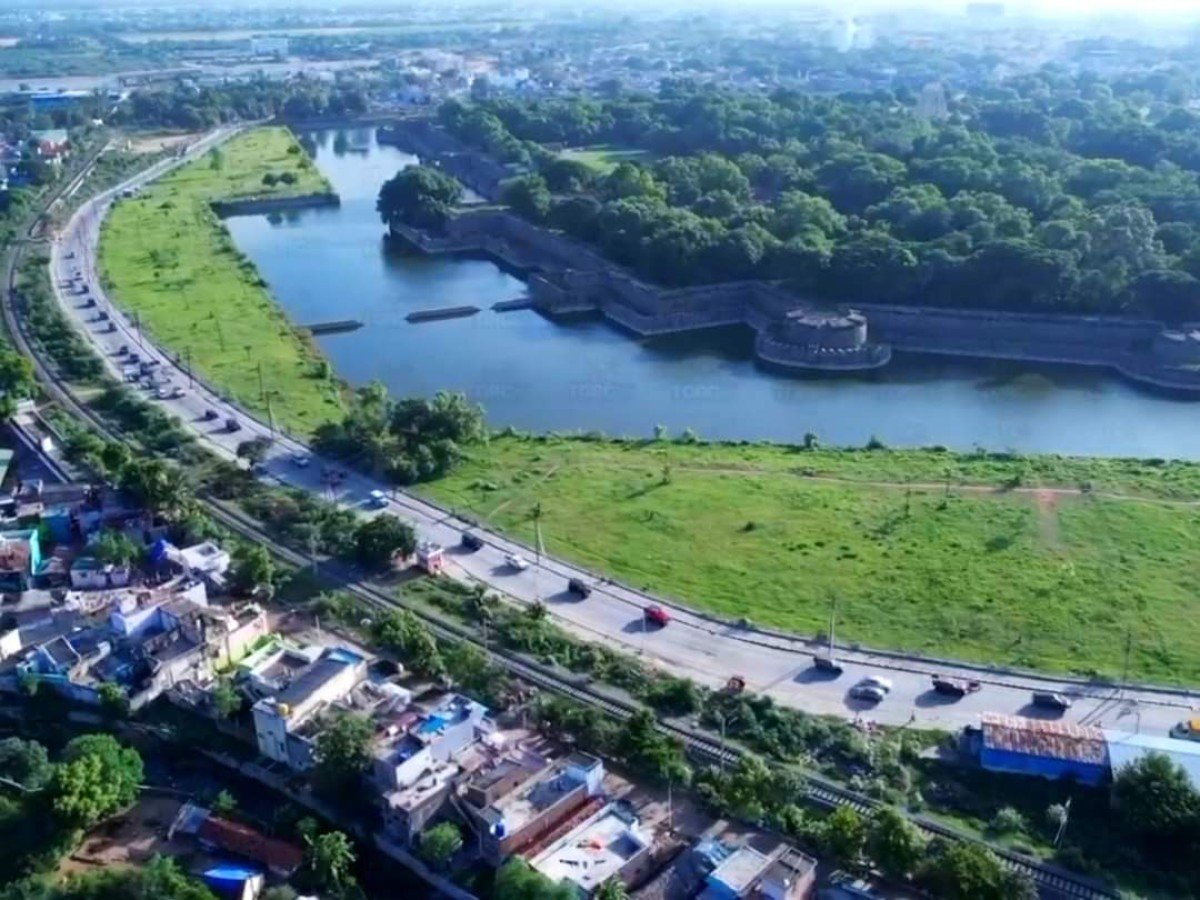
The Moat and Granite Walls: The most iconic shot is a wide-angle view of the massive, rough-hewn granite walls reflected in the still water of the moat (when full), especially near the main entrance bastions. This captures the fort's defensive strength.
The Gopuram Framed by the Walls: A picture of the towering gopuram of the Jalakandeswarar Temple rising high above the surrounding military walls, perfectly capturing the blend of military and religious architecture.
The Spiked Wooden Gates: A close-up shot of the massive, original wooden gates, focusing on the large, metal anti-elephant spikes, which showcase the medieval military technology.
View from the Ramparts: A panoramic view of the internal complex, showing the church, temple, and museum buildings together, best illustrates the diversity of the fort's internal life.
():Photo Gallery
Things To Do
-
Activities:
Moat Walk and Wall Exploration: Walk along the inner perimeter of the fort to appreciate the vast scale of the moat (which is now empty/seasonal) and the thickness of the double walls. Climb the ramparts (where permitted) for a panoramic view of the internal complex and the surrounding city. Locate and count the strategically placed bastions.
Explore the Jalakandeswarar Temple: Dedicate a significant amount of time to visiting the magnificent Jalakandeswarar Temple (see the previous entry for details). Study the Kalyana Mandapam pillars, which are the artistic highlight of the entire complex.
Visit the ASI Museum: Head to the Archaeological Survey of India Museum (also within the fort) to gain historical context, particularly on the Sepoy Mutiny and...Activities:
Moat Walk and Wall Exploration: Walk along the inner perimeter of the fort to appreciate the vast scale of the moat (which is now empty/seasonal) and the thickness of the double walls. Climb the ramparts (where permitted) for a panoramic view of the internal complex and the surrounding city. Locate and count the strategically placed bastions.
Explore the Jalakandeswarar Temple: Dedicate a significant amount of time to visiting the magnificent Jalakandeswarar Temple (see the previous entry for details). Study the Kalyana Mandapam pillars, which are the artistic highlight of the entire complex.
Visit the ASI Museum: Head to the Archaeological Survey of India Museum (also within the fort) to gain historical context, particularly on the Sepoy Mutiny and the region's archaeology. Reading the inscriptions and viewing the artifacts enriches the fort experience.
Multi-Faith Exploration: Visit the St. John's Church (an active colonial-era church) and the Big Mosque (Masjid-e-Azam) to appreciate the religious diversity and colonial history housed within the fortress walls. The church offers a look into British life.
Photography: Capture the imposing granite walls, the reflective water of the moat (if full), and the soaring gopuram of the temple against the fort's military backdrop. The contrast between the rigid military lines and the flowing temple art is highly photogenic.
Reflection on History: Spend time at the plaques that detail the Sepoy Mutiny of 1806 and the imprisonment of the exiled royal families. This is a quiet, powerful moment for historical reflection on the sacrifices and struggles that took place here.
():
Information
-
Why Famous:
Fame:
Site of the 1806 Sepoy Mutiny: The fort is most famous globally as the birthplace of the Vellore Sepoy Mutiny of 1806. This event is a landmark in Indian military history, signifying the first major large-scale armed resistance by the ...Fame:
Site of the 1806 Sepoy Mutiny: The fort is most famous globally as the birthplace of the Vellore Sepoy Mutiny of 1806. This event is a landmark in Indian military history, signifying the first major large-scale armed resistance by the native troops against the British East India Company.
The Crocodile Moat: The legendary 8,000-foot moat, once filled with thousands of crocodiles for defense, is a famous, unique, and terrifying detail of its strategic design, cementing its reputation as an impenetrable fortress.
Home to the Jalakandeswarar Temple: Housing the stunning 16th-Century Jalakandeswarar Temple, a masterpiece of Vijayanagara architecture, within its walls gives the fort a unique blend of military history and profound religious and artistic heritage, unlike most other forts.
Royal Prison: It is famous for serving as the prison for the family of the legendary Tipu Sultan after his defeat, and the exiled last Tamil King of Kandy, Sri Vikrama Rajasinha.
(): -
Architecture:
Classic Vijayanagara Military Engineering: The fort exemplifies brilliant military architecture of the late Vijayanagara period.
Ramparts and Walls: It is a massive, irregularly shaped, low-height fortress with colossal, granite double wall...Classic Vijayanagara Military Engineering: The fort exemplifies brilliant military architecture of the late Vijayanagara period.
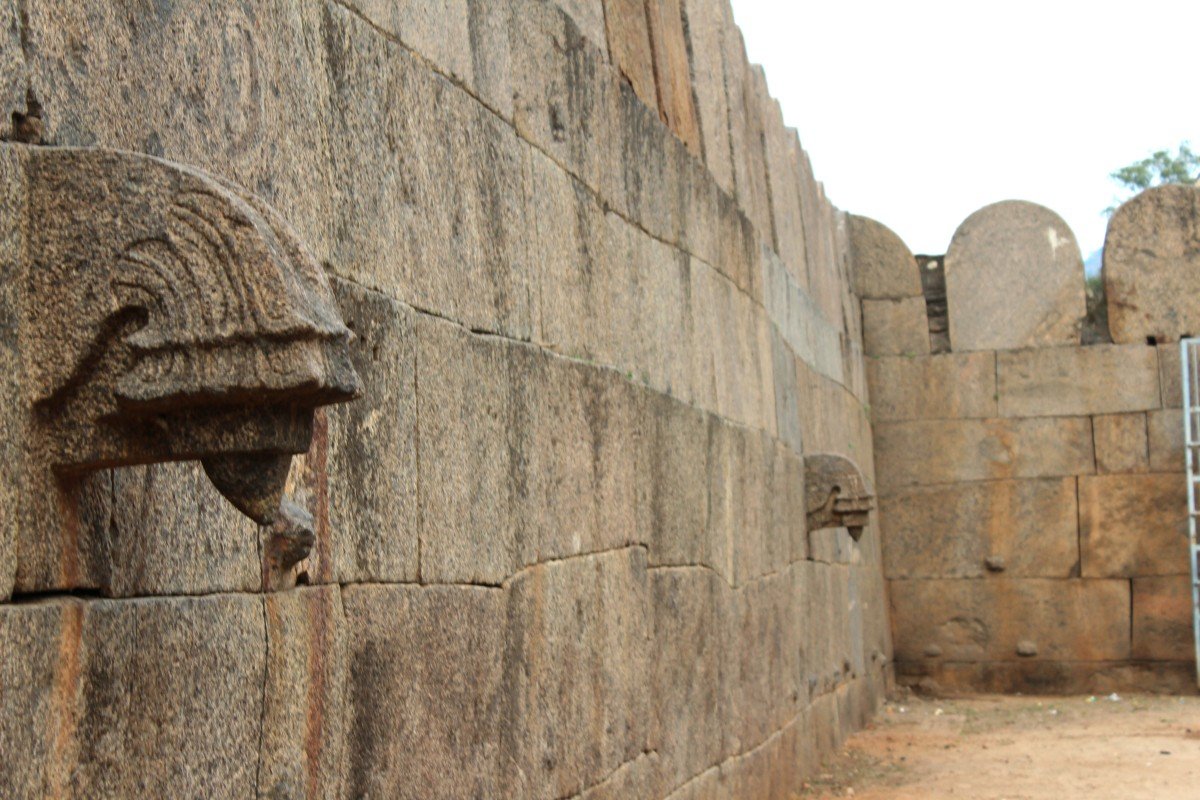
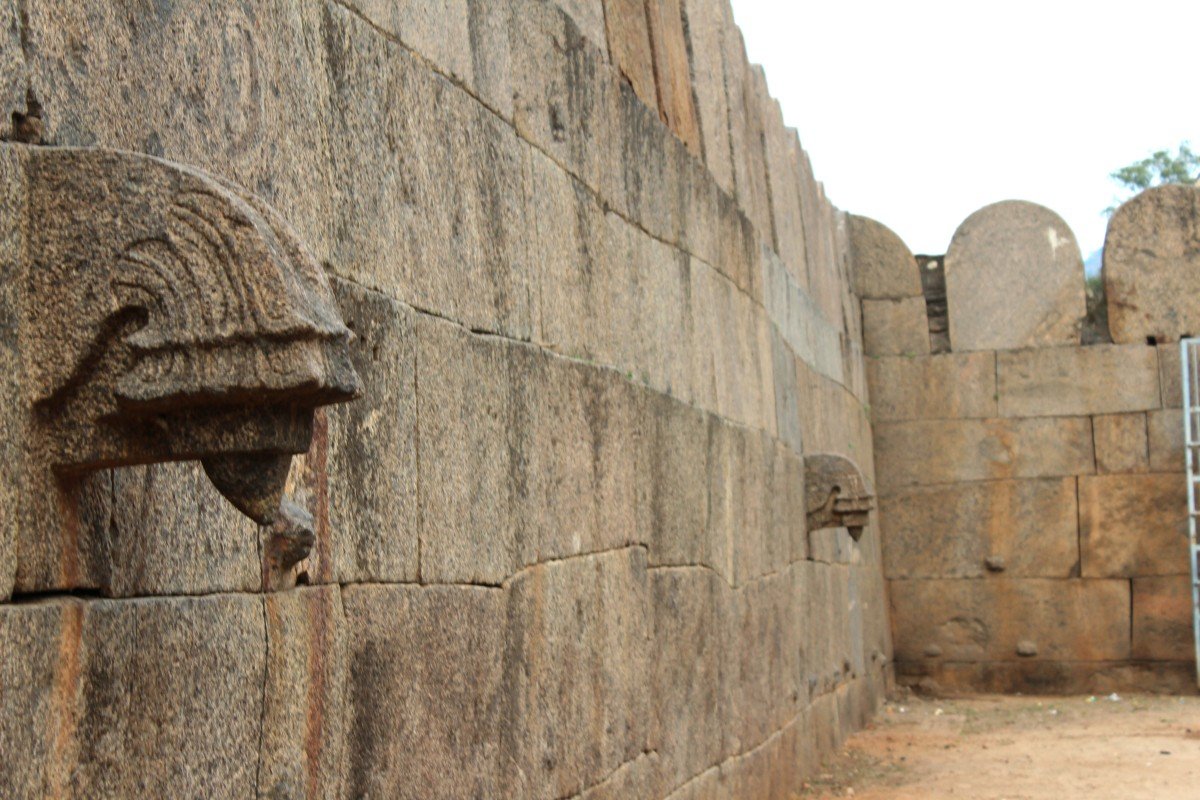
Ramparts and Walls: It is a massive, irregularly shaped, low-height fortress with colossal, granite double walls. The outer walls are characterized by a series of imposing bastions (likely 12 to 14 in number) designed to withstand cannon fire.
Moat Dimensions: The most distinctive feature is the vast surrounding moat (Agazhi), which is over 8,000 feet in circumference and was strategically designed to be wide and deep, serving as the first line of defense.
Internal Layout: The internal space, covering over 130 acres, is divided into functional areas for the royal palace (now largely ruined), barracks, and religious structures.
Entrance: The main entrance is protected by a sophisticated series of turning passageways and massive wooden gates studded with iron spikes, typical of medieval Indian military design to foil elephant attacks. The use of granite throughout gives the fort its enduring strength.
(): -
How To Reach:
By Air: The nearest major international airport is Chennai International Airport (MAA), approximately 140 KM away. From there, take a train or bus to Vellore.
By Train: The nearest main station is Katpadi Junction (KPD), which is a major r...By Air: The nearest major international airport is Chennai International Airport (MAA), approximately 140 KM away. From there, take a train or bus to Vellore.
By Train: The nearest main station is Katpadi Junction (KPD), which is a major railway hub. The fort is about 8 KM from Katpadi Station. An auto-rickshaw or a prepaid taxi can take you directly to the fort's main entrance.
By Road: Vellore Fort is located centrally and is a well-known landmark, easily reachable from the main Vellore Bus Stand (1. 5 KM). The city is connected via NH 48 (formerly NH 46) to Chennai and Bengaluru.
By Local Transport: The fort is the most central attraction. Local town buses stop right near the entrance. Shared or private auto-rickshaws are plentiful from all parts of the city and Katpadi station. Walking is also a pleasant option if you are staying in the central areas.
(): -
Weather and Best Time to Visit:
Best Time:
Winter (October to February): This is the perfect time. The cool and dry weather is ideal for spending hours walking the ramparts, exploring the grounds, and enjoying the entire large complex without heat exhaustion.Best Time:
Winter (October to February): This is the perfect time. The cool and dry weather is ideal for spending hours walking the ramparts, exploring the grounds, and enjoying the entire large complex without heat exhaustion.
Monsoon (June to September): The weather is pleasant, and the best time to see the moat filled with water, which is a rare and beautiful sight. Carry an umbrella for unexpected rain.
Summer (March to May): The weather is intensely hot, making the fort's open spaces and granite pathways very uncomfortable. Visits must be scheduled for the very early morning or late evening.
Ideal Part of the Day: Early Morning (9:00 AM to 11:00 AM). This time provides soft light for photography, the coolest temperatures for walking the perimeter, and allows you to visit the temple early before it gets crowded.
(): -
Near Tourist Places:
Jalakandeswarar Temple (Inside Fort, 0 KM), ASI Museum (Inside Fort, 0 KM), St. John's Church (Inside Fort, 0. 2 KM), Big Mosque (Inside Fort, 0. 3 KM), Muthu Mandapam (~1 KM), Vellore Old Bus Stand (~1. 5 KM), District Science Centre (~4. 7 KM), Cup and Saucer Waterfalls (~4. 9 KM), Sri Lakshmi Narayani Golden Temple (~8 KM), Ratnagiri Murugan Temple (~14 KM).
Tourism Tips
-
Health & Safety: Wear a hat, sunglasses, and high-quality sunscreen, as the fort's granite grounds and walls offer little shade. Carry plenty of water. The moat's edge can be deep and uneven, so supervise children closely. Wear comfortable walking shoes, as the complex i...Health & Safety: Wear a hat, sunglasses, and high-quality sunscreen, as the fort's granite grounds and walls offer little shade. Carry plenty of water. The moat's edge can be deep and uneven, so supervise children closely. Wear comfortable walking shoes, as the complex is vast.
Packing Essentials: Bring your camera for the spectacular architecture. Carry a scarf or shawl to cover your shoulders before entering the Jalakandeswarar Temple. Carry only necessary items, as you will be walking a lot.
Accommodation: Stay in Vellore city. Hotels near the Old Bus Stand or CMC Hospital are the most convenient locations for fort access.
Historical Context: Read up on the 1806 Sepoy Mutiny before visiting. This knowledge will dramatically enhance your appreciation of the fort's historical significance beyond just its military architecture.
():
Reviews
FAQs
Vellore Itineray And Cost:-
Other Places In Vellore :-
Other States In India :-
Information about New and Updated Locations() of Tamil Nadu Has Been Added :-
Card subtitle
Note:-
Information provided here in good Faith and for reference only.
Near Places

Alangayam Lake
Some quick example text to build on the card title and make up the bulk of the card's content.
Go somewhere
Amirthi Zoological Park
Some quick example text to build on the card title and make up the bulk of the card's content.
Go somewhere
Anaicut Dam
Some quick example text to build on the card title and make up the bulk of the card's content.
Go somewhere
Archaeological Survey of India
Some quick example text to build on the card title and make up the bulk of the card's content.
Go somewhere
Arcot
Some quick example text to build on the card title and make up the bulk of the card's content.
Go somewhere
Cup and Saucer Waterfalls
Some quick example text to build on the card title and make up the bulk of the card's content.
Go somewhere
Dhabaleshwar Temple
Some quick example text to build on the card title and make up the bulk of the card's content.
Go somewhere
District Science Centre
Some quick example text to build on the card title and make up the bulk of the card's content.
Go somewhere
French Bungalow
Some quick example text to build on the card title and make up the bulk of the card's content.
Go somewhere
Jalagandeeswarar Temple
Some quick example text to build on the card title and make up the bulk of the card's content.
Go somewhere
Jalakandeswarar Temple
Some quick example text to build on the card title and make up the bulk of the card's content.
Go somewhere
Jamadhi Hills
Some quick example text to build on the card title and make up the bulk of the card's content.
Go somewhere
Kuppanatham Dam
Some quick example text to build on the card title and make up the bulk of the card's content.
Go somewhere
Muthu Mandapam
Some quick example text to build on the card title and make up the bulk of the card's content.
Go somewhere
Palamathi Hills
Some quick example text to build on the card title and make up the bulk of the card's content.
Go somewhere
Periyar Park
Some quick example text to build on the card title and make up the bulk of the card's content.
Go somewherein Other Cities