
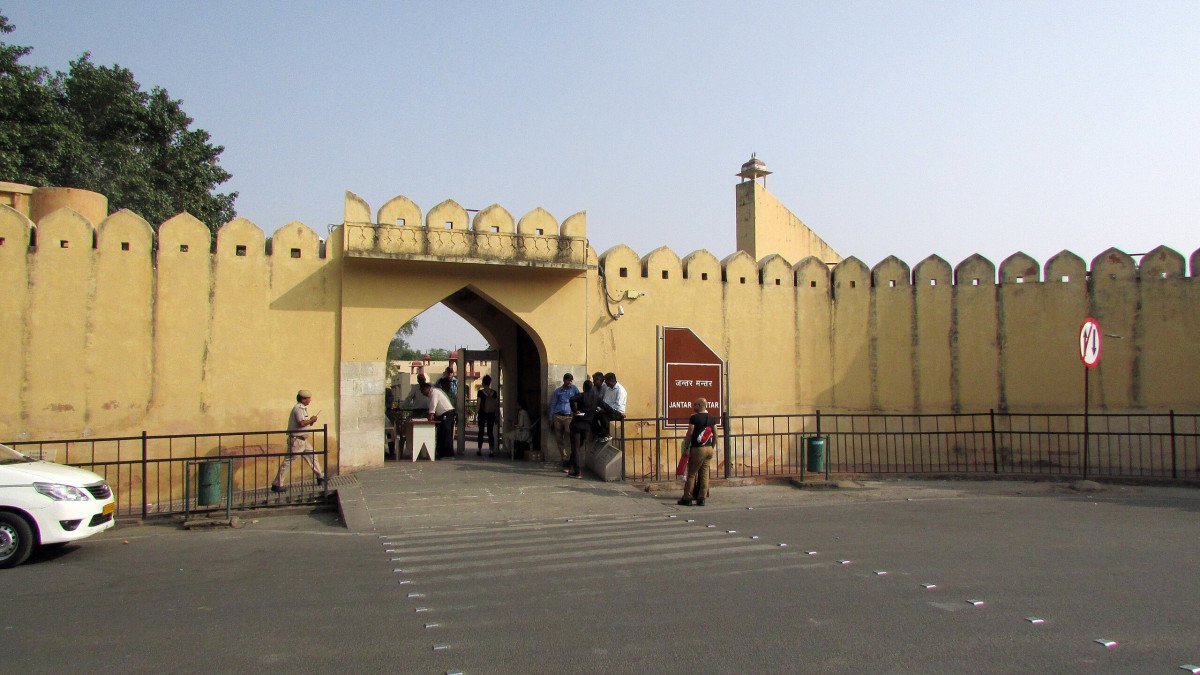

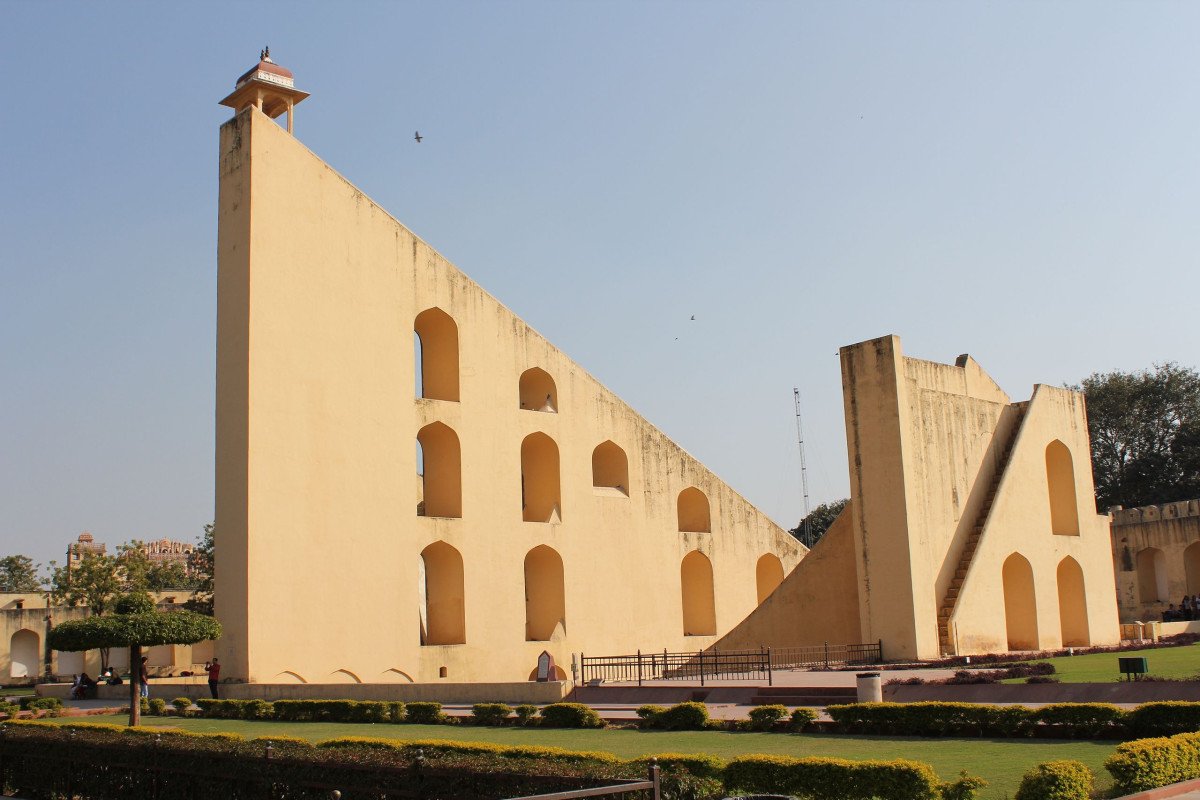


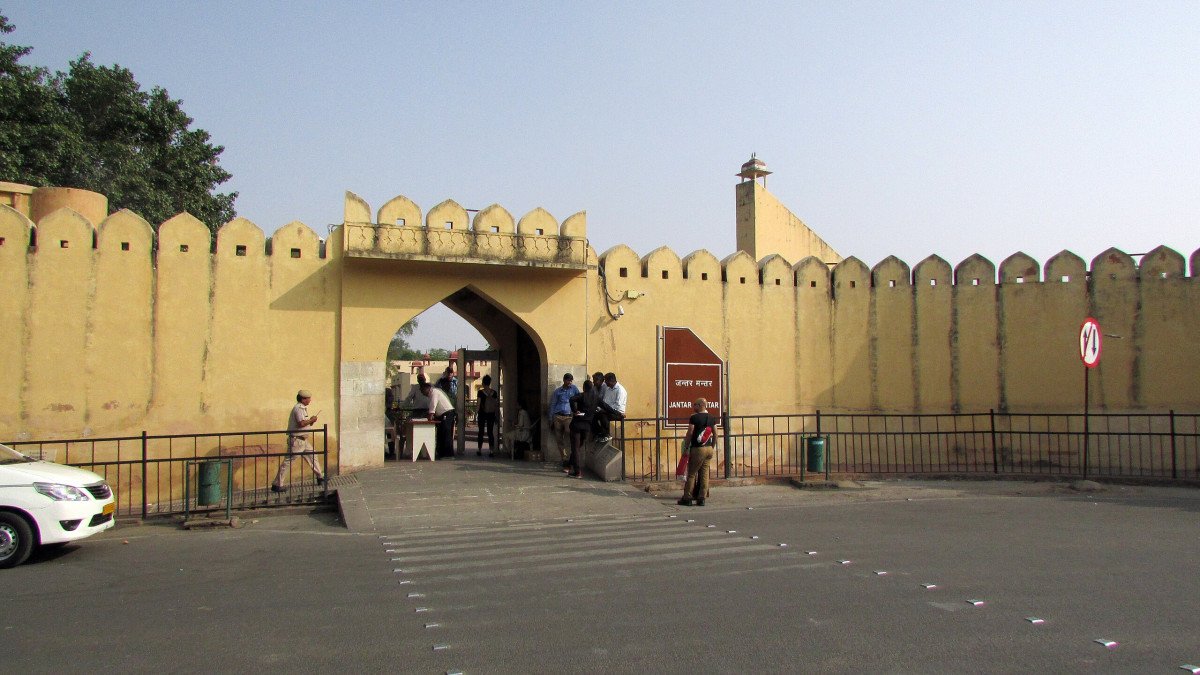
Jantar Mantar, Jaipur
General information
-
Ideal Duration:
1 to 2 hours (Essential to hire a guide for interpretation).Place Type:
Astronomical Observatory, Scientific Heritage, UNEEntry Fees:
General Entry Fee:
- Indian Tourists: Approximately Rs.50 to Rs.80 per person.
- Foreign Tourists: Approximately Rs.200 to Rs.300 per person.
- Student Discounts: Available with a va...General Entry Fee:
- Indian Tourists: Approximately Rs.50 to Rs.80 per person.
- Foreign Tourists: Approximately Rs.200 to Rs.300 per person.
- Student Discounts: Available with a valid student ID.
Note: This ticket grants access to the entire observatory complex and its instruments.
Combined Tickets:
- Composite Ticket: Jaipur offers a composite ticket that includes entry to Jantar Mantar, City Palace, Amer Fort, Nahargarh Fort, Hawa Mahal, and the Albert Hall Museum. This ticket is valid for two days and offers significant savings if you plan to visit multiple monuments. The cost is typically around Rs.300 for Indians and Rs.1000 for Foreigners.
Other Fees:
- Photography/Videography: Usually no separate fee for still photography or mobile cameras, but check current rules.
- Official Guide Service: Essential for understanding the site. The cost varies, but is typically around Rs.200 to Rs.500 for a shared or private guide.
Note: Prices are approximate and subject to change; always verify at the official ticket counter or website.Timing:
Regular Timings:
- Opening Hours: 9:00 ext{AM} to 4:30 ext{PM} or 5:00 ext{PM}.
- Open Days: Open seven days a week, except potentially on the day of Dhulandi (Holi).
I...Regular Timings:
- Opening Hours: 9:00 ext{AM} to 4:30 ext{PM} or 5:00 ext{PM}.
- Open Days: Open seven days a week, except potentially on the day of Dhulandi (Holi).
Ideal Visit Time: Mid-Morning (10:00 ext{AM} to 1:
00 ext{PM}): This period is ideal for the Jantar Mantar because the primary function of the instruments relies on the sun's position. The shadows are sharpest and clearest around noon, which is the best time to see the Vrihat Samrat Yantra in action.
Avoid: Early mornings or late afternoons if you want to see the instruments functioning optimally. However, if avoiding heat and crowds is your priority, then a very early entry at 9:00 ext{AM} is better.Special Events:
World Heritage Day Observances: Every year on April 18th (World Heritage Day), Jantar Mantar often hosts special educational events, workshops, and guided talks by astronomers, historians, and conservationists to raise awareness about its scientific and architectural importa...World Heritage Day Observances: Every year on April 18th (World Heritage Day), Jantar Mantar often hosts special educational events, workshops, and guided talks by astronomers, historians, and conservationists to raise awareness about its scientific and architectural importance as a UNESCO World Heritage Site. These events offer a deeper academic look at the observatory's history and function.
Astronomy/Star Gazing Events: While primarily a daytime site, the educational center sometimes organizes special lectures or limited-access night viewing programs, often involving portable telescopes, to connect the historic instruments with modern astronomy. Check local listings for any scheduled events, particularly around significant astronomical dates.Best Photo Spots:
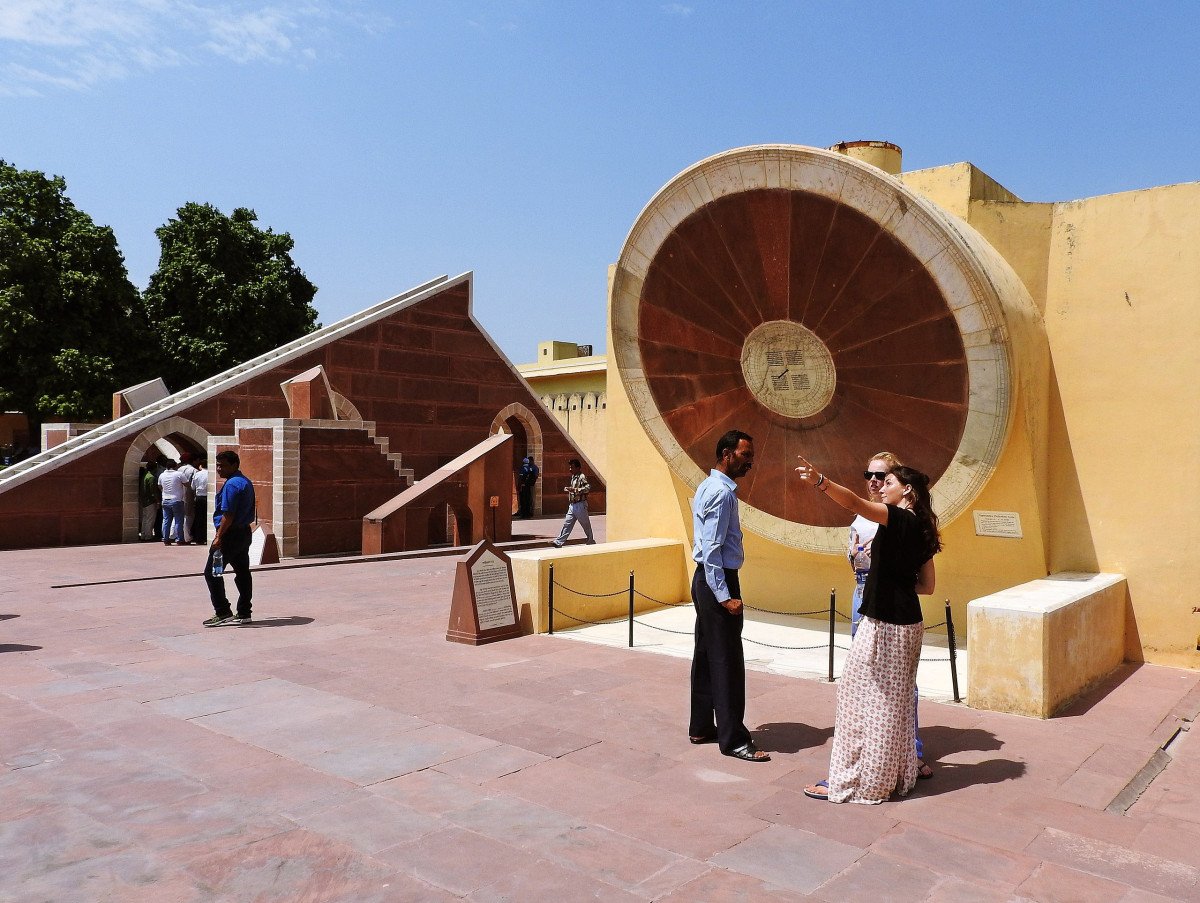
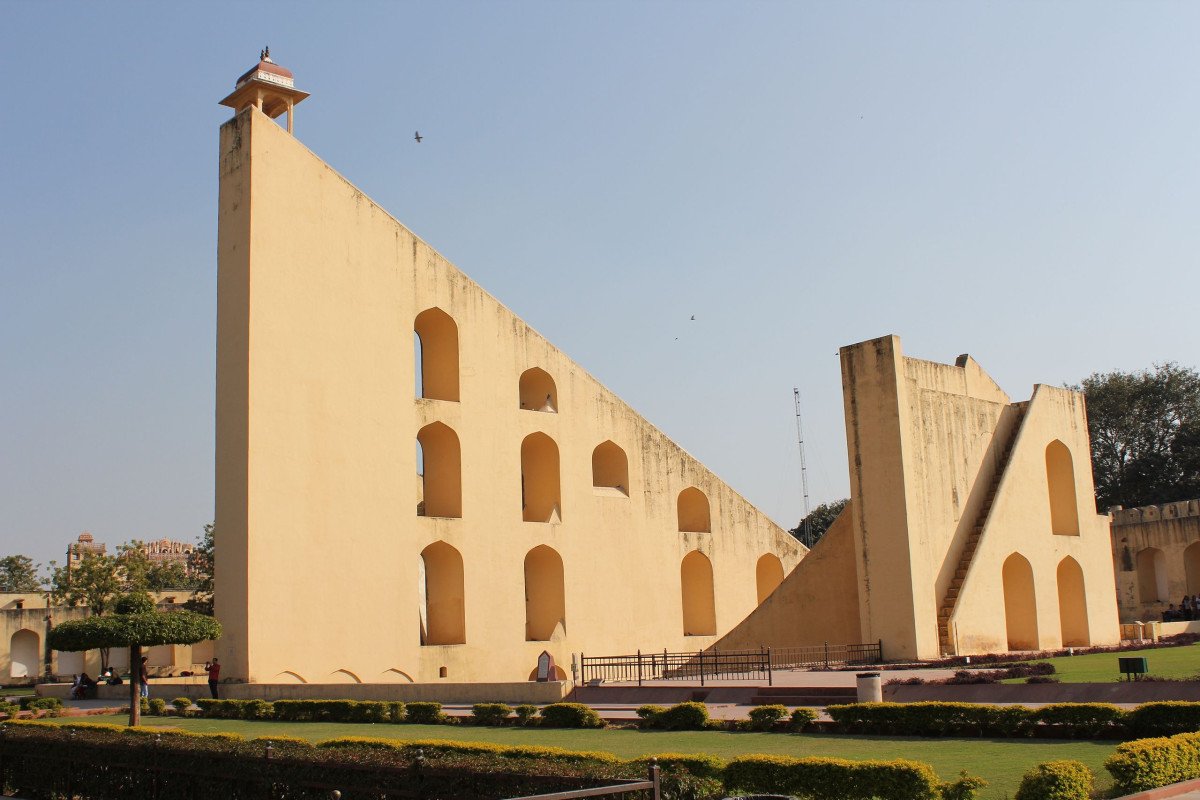
The Vrihat Samrat Yantra: The sheer scale of the 27 ext{meter} sundial is a challenge and a reward for photographers. Shoot from the base looking up to emphasize its height and triangular gnomon. Alternatively, stand on the steps of the surrounding quadrant to capture t...The Vrihat Samrat Yantra: The sheer scale of the 27 ext{meter} sundial is a challenge and a reward for photographers. Shoot from the base looking up to emphasize its height and triangular gnomon. Alternatively, stand on the steps of the surrounding quadrant to capture the full curve and the central gnomon. The interplay of light and shadow is best captured near midday or in the morning.
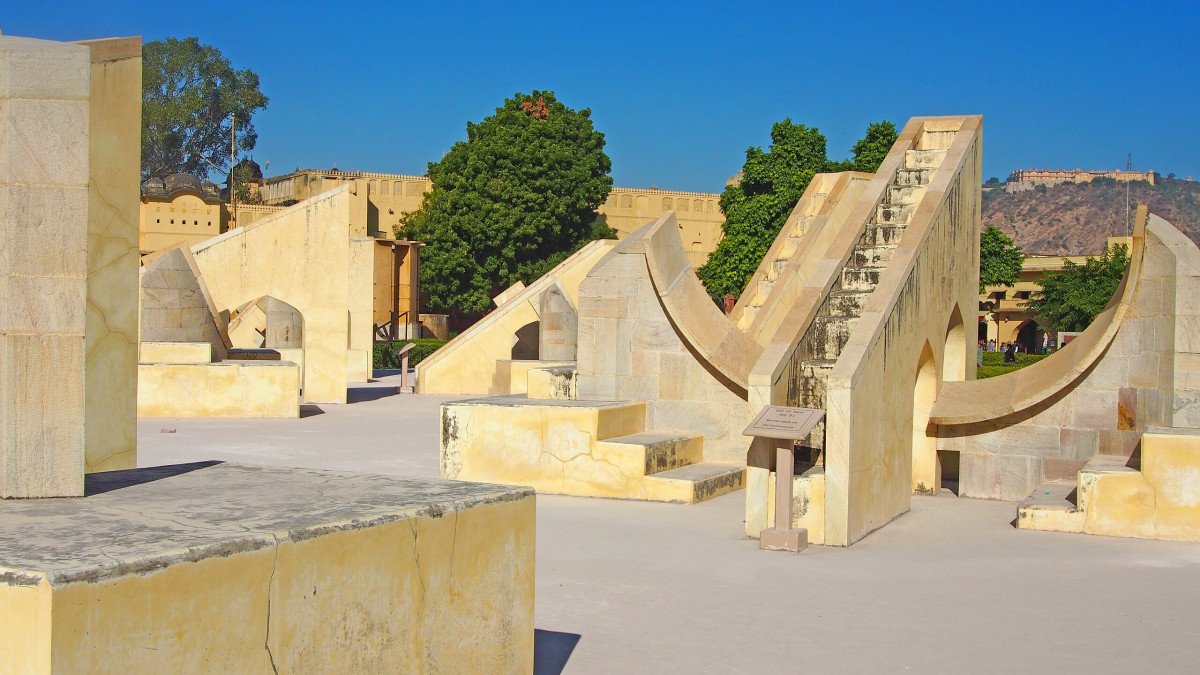
Geometric Views of the Instruments: The smaller instruments, like the Ram Yantra (cylindrical structures) and the Jai Prakash Yantra (hemispheres), offer abstract and artistic photo opportunities. Look for sharp angles and repeating patterns created by the stone structures against the blue sky.
Frame with City Palace: Stand at an angle to capture the monumental instruments with a glimpse of the neighbouring City Palace walls or even the Hawa Mahal in the background, contrasting the scientific marvel with the royal and architectural splendour of the Pink City.
The Rashivalaya Yantras: The twelve distinct Zodiac instruments provide an excellent opportunity for a series of photographs, each capturing a unique structure and its accompanying marble scale.Photo Gallery
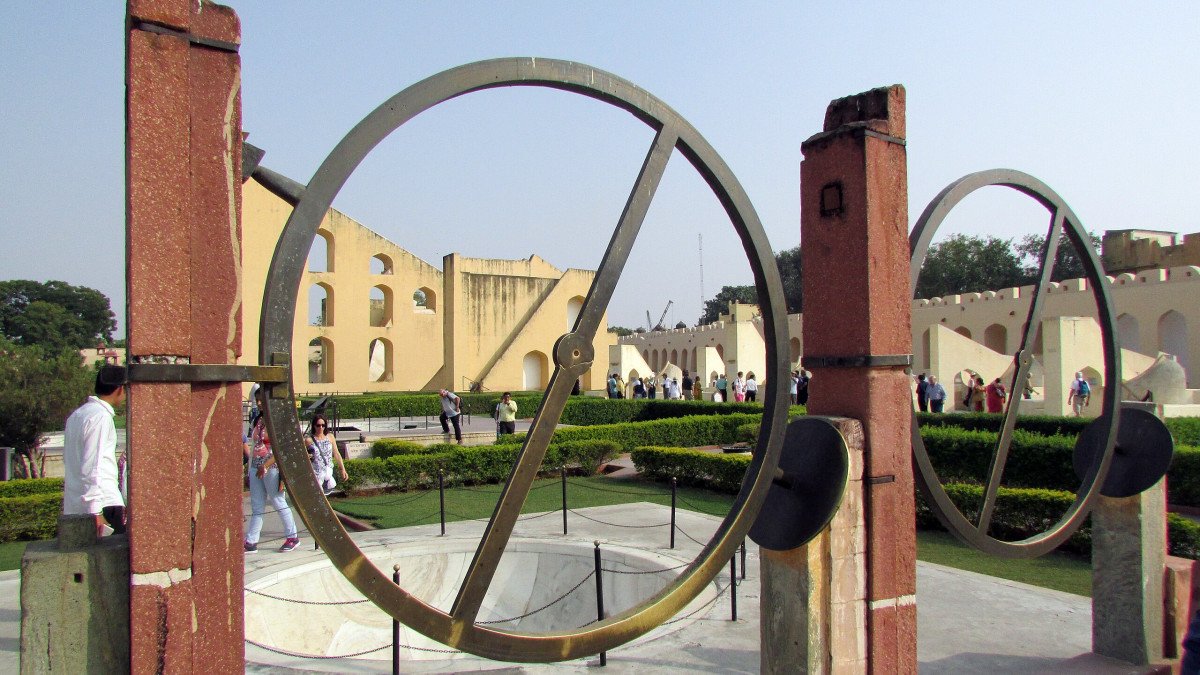

Things To Do
-
Take a Guided Tour: The instruments are complex and their function is not immediately obvious. Hiring an official, knowledgeable guide is the most important thing to do. The guide will explain the working principles of the major instruments, such as how the Vrihat Samrat Yantra measures time and how the Ram Yantra measures the altitude and azimuth of the sun.
Observe the Vrihat Samrat Yantra: Spend time watching the movement of the 27 ext{meter} sundial's shadow. The shadow moves perceptibly every minute (about 6 ext{cm}), offering a tangible demonstration of Earth's rotation and timekeeping. Try to calculate the time yourself using the inscribed scales.
Explore the Zodiacal Instruments: Locate the Rashivalaya Yantras (12 Zodiac instruments). Appreciate the design specific to each Zo...Take a Guided Tour: The instruments are complex and their function is not immediately obvious. Hiring an official, knowledgeable guide is the most important thing to do. The guide will explain the working principles of the major instruments, such as how the Vrihat Samrat Yantra measures time and how the Ram Yantra measures the altitude and azimuth of the sun.
Observe the Vrihat Samrat Yantra: Spend time watching the movement of the 27 ext{meter} sundial's shadow. The shadow moves perceptibly every minute (about 6 ext{cm}), offering a tangible demonstration of Earth's rotation and timekeeping. Try to calculate the time yourself using the inscribed scales.
Explore the Zodiacal Instruments: Locate the Rashivalaya Yantras (12 Zodiac instruments). Appreciate the design specific to each Zodiac sign and understand how the Maharaja used these to reform the calendar and astronomical tables based on the ecliptic plane.
Understand the Nadivalaya Yantra: Find the Nadivalaya Yantra (Equatorial Instrument). This instrument, with its two circular plates facing north and south, symbolizes the two hemispheres and is used to accurately measure time, demonstrating the concept of the Earth's equator.
Capture Geometric Shapes: The observatory is a photographer's paradise of abstract and monumental geometric forms. Use the sharp lines and angles of the instruments against the sky to capture unique, visually striking compositions.
Information
-
Why Famous:
World's Largest Stone Sundial: The primary fame of Jantar Mantar rests on the Vrihat Samrat Yantra, which holds the record for being the largest stone sundial in the world. Its sheer size is monumental, and its ability to measure time to an astonishing accuracy of ...
World's Largest Stone Sundial: The primary fame of Jantar Mantar rests on the Vrihat Samrat Yantra, which holds the record for being the largest stone sundial in the world. Its sheer size is monumental, and its ability to measure time to an astonishing accuracy of two seconds demonstrates the advanced level of positional astronomy achieved in India in the 18th century.
UNESCO World Heritage Status: It is one of only two UNESCO World Heritage Sites in Jaipur (the other being Amer Fort and the overall 'Walled City of Jaipur'), recognizing it as the most significant, most comprehensive, and best-preserved of India's historic observatories, highlighting its universal value to science and history.
Symbol of Scientific Patronage: The observatory is a physical manifestation of Maharaja Sawai Jai Singh IIRs.s passion for mathematics and astronomy, showcasing a royal commitment to scientific reform and innovation during a time when Mughal power was declining. It embodies the integration of diverse astronomical traditions, from Ptolemaic and Islamic to indigenous Hindu systems. -
Architecture:
Architectural Style: The architecture of Jantar Mantar is unique, as it is entirely functional and scientific, yet strikingly monumental and geometric. The instruments are massive, fixed structures built primarily from local stone and marble, a sharp departure from the smal...Architectural Style: The architecture of Jantar Mantar is unique, as it is entirely functional and scientific, yet strikingly monumental and geometric. The instruments are massive, fixed structures built primarily from local stone and marble, a sharp departure from the smaller, movable brass instruments common in European and other Asian observatories of the time. The structures are built on a grand scale, ensuring high accuracy and longevity. The geometrical shapes, like triangles, cylinders, and hemispheres, are the core of the design, reflecting a deep understanding of geometry and trigonometry.
Construction and Materials: The instruments are built with precision-cut stone and marble slabs, often with astronomical scales carefully inscribed on the marble inner linings. The foundations were meticulously laid to ensure the instruments' axes and angles were perfectly aligned with the Earth's orbit and celestial poles. The precision in masonry construction, rather than simple construction, is what makes the site so exceptional and functional.
Dimension Highlights (Vrihat Samrat Yantra):
- Height: The Vrihat Samrat Yantra stands approximately 27 ext{meters} (88 feet) tall.
- Gnomon Angle: Its central ramp (gnomon), which casts the shadow, is inclined at an angle of 27circ, corresponding precisely to the latitude of Jaipur.
- Accuracy: Due to its immense size and precise construction, it can measure the local time of Jaipur with an accuracy of 2 seconds. The shadow moves approximately 6 ext{cm} every minute. -
How To Reach:
Jantar Mantar is situated directly opposite the City Palace and is at the heart of the walled Pink City.
By Air: The nearest major airport is Jaipur International Airport (JAI), approximately 12 to 15 ext{KMS} away.Jantar Mantar is situated directly opposite the City Palace and is at the heart of the walled Pink City.
By Air: The nearest major airport is Jaipur International Airport (JAI), approximately 12 to 15 ext{KMS} away.
- Local Transport: Take a pre-paid taxi, airport taxi, or a ride-sharing service to the City Palace/Jantar Mantar area. Travel time is 30 to 45 minutes.
By Train: Jaipur Junction (JP) railway station is about 4 to 5 ext{KMS} from the observatory.
- Local Transport: Auto-rickshaws, cycle-rickshaws, and taxis are easily available outside the station. The travel time is around 15 to 20 minutes.
By Road (Bus/Car): Jaipur is well-connected via National Highways.
- Bus: Take a local bus or an auto-rickshaw from the Sindhi Camp Bus Stand (5 ext{KMS} away).
- Private Vehicle/Taxi: You can be dropped off near the main entrance. The walled city area can be congested, so walking from a nearby designated parking area or metro station is advisable.
By Local Transport:
- Metro: The closest metro station is Badi Chaupar on the Pink Line, which is only about 500 ext{meters} from the entrance. This is the recommended mode of transport for reaching the walled city.
- Auto-rickshaws and Cycle-rickshaws: Readily available throughout the city. -
Weather and Best Time to Visit:
By Seasons:
- Winter (October to March): Best time to visit. The weather is cool and sunny, which is essential for enjoying the open-air complex and seeing the instruments work clearly. The light is good for photography.
Read MoreBy Seasons:
- Winter (October to March): Best time to visit. The weather is cool and sunny, which is essential for enjoying the open-air complex and seeing the instruments work clearly. The light is good for photography.
- Monsoon (July to September): Good, as the sun is still out most days, and the crowds are less.
- Summer (April to June): Avoid the midday sun, as there is little shade among the large stone instruments. Visit only during the early 9:00 ext{AM} slot.
By Parts of the Day: - Late Morning/Noon (11:00 AM to 1:00 PM) Scientifically, this is the most interesting time, as the sun is high and casts the clearest shadow on the main sundial, allowing for the best time measurement observation.
- Avoid: Late afternoons, as the shadows lengthen and become diffused, making the instruments less dramatic.Near Tourist Places:
1.
City Palace: 50 ext{meters} (Royal Residence and Museum) 2.
Hawa Mahal (Palace of Winds): 800 ext{meters} (Iconic five-storey facade) 3.
Govind Dev Ji Temple: 200 ext{meters} (Within City Palace complex) 4.
Tripolia Bazaar: Adjacent to the site (Traditional Jaipur market) 5.
Isarlat (Sargasooli): 1. 2 ext{KMS} (Minaret offering city views) 6.
Johari Bazaar: 1. 5 ext{KMS} (Famous for jewellery) 7.
Albert Hall Museum: 3. 5 ext{KMS} (Central Museum of Rajasthan) 8.
Bapu Bazaar: 1. 8 ext{KMS} (Famous for Rajasthani textiles and goods) 9.
Nahargarh Fort: 6 ext{KMS} (Hill fort offering sunset views) 10.
Amer Fort: 11 ext{KMS} (Majestic Hill Fort, UNESCO World Heritage Site)Tourism Tips
-
Health & Safety:
- Guide/Audio Guide: It is crucial to use a guide (human or audio) to understand the function of the instruments. Without one, the visit is merely a walk through geometric shapes.
- Sun Protecti...Health & Safety:
- Guide/Audio Guide: It is crucial to use a guide (human or audio) to understand the function of the instruments. Without one, the visit is merely a walk through geometric shapes.
- Sun Protection: The observatory is entirely open-air. Carry a hat, sunglasses, and use sunscreen, even in winter.
- Footwear: Wear comfortable, closed-toe shoes for walking on the large, uneven stone grounds.
Packing:
- Camera: Essential for capturing the abstract and scientific beauty of the monumental instruments.
- Notebook/Pen: If you are a student or keen on astronomy, note-taking while the guide explains the instruments is highly recommended.
- Composite Ticket: Consider buying the composite ticket if you plan to visit City Palace, Hawa Mahal, and Amer Fort.
Other Different Topics Heading:
- Combine Visit: Plan your visit to Jantar Mantar immediately before or after the City Palace, as they share an entrance area.
- Scientific Interpretation: Don't rush; take time at each of the 19 instruments. The complexity of the design, such as the curved surfaces, has a specific scientific reason that the guide can explain.
Reviews
FAQs
Jaipur Itineray And Cost:-
Jantar Mantar, Jaipur Tourism:-
Other Places In Jaipur :-
Other States In India :-
Information about New and Updated Locations() of Rajasthan Has Been Added :-
Card subtitle
Note:-
Information provided here in good Faith and for reference only.
Near Places

City Palace, Jaipur
Some quick example text to build on the card title and make up the bulk of the card's content.
Go somewhere
Hawa Mahal
Some quick example text to build on the card title and make up the bulk of the card's content.
Go somewhere
Jantar Mantar, Jaipur
Some quick example text to build on the card title and make up the bulk of the card's content.
Go somewhere
Albert Hall Museum
Some quick example text to build on the card title and make up the bulk of the card's content.
Go somewhere
Amer Fort
Some quick example text to build on the card title and make up the bulk of the card's content.
Go somewhere
Anokhi Museum of Hand Printing
Some quick example text to build on the card title and make up the bulk of the card's content.
Go somewhere
Bapu Bazaar
Some quick example text to build on the card title and make up the bulk of the card's content.
Go somewhere
Birla Mandir
Some quick example text to build on the card title and make up the bulk of the card's content.
Go somewhere
Blue Pottery Art Centre, Ram Niwas Garden
Some quick example text to build on the card title and make up the bulk of the card's content.
Go somewhere
Central Park
Some quick example text to build on the card title and make up the bulk of the card's content.
Go somewhere
Chokhi Dhani Village
Some quick example text to build on the card title and make up the bulk of the card's content.
Go somewhere
Dolls Museum
Some quick example text to build on the card title and make up the bulk of the card's content.
Go somewhere
Elefantastic
Some quick example text to build on the card title and make up the bulk of the card's content.
Go somewhere
Galta Ji
Some quick example text to build on the card title and make up the bulk of the card's content.
Go somewhere
Galtaji Temple
Some quick example text to build on the card title and make up the bulk of the card's content.
Go somewhere
Gatore Ki Chhatriyan
Some quick example text to build on the card title and make up the bulk of the card's content.
Go somewherein Other Cities