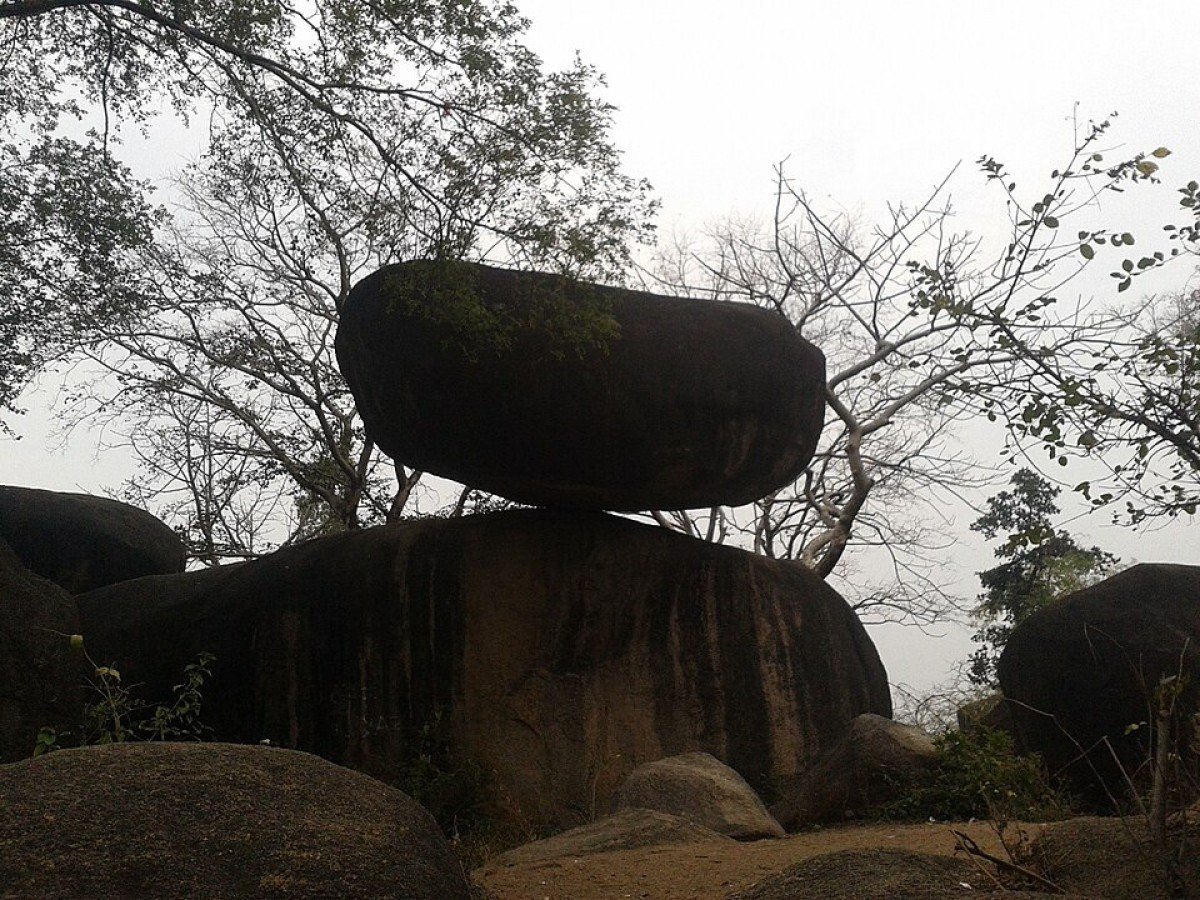


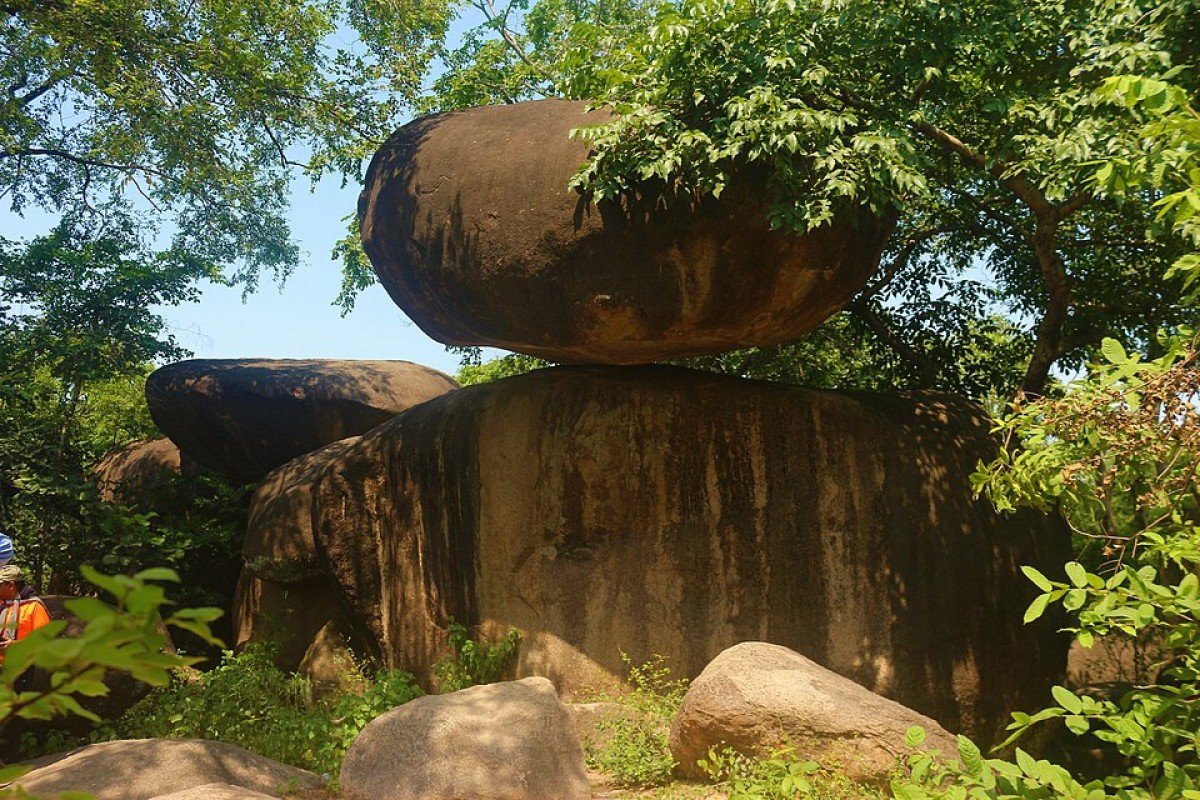
Balancing Rock Formation
General information
-
Ideal Duration:
30 minutes - 1 hourPlace Type:
Geological Natural LandmarkEntry Fees:
Roadside Attraction Status:: The Balancing Rock Formation is essentially a natural, roadside, public geological landmark. There is typically No Entry Fee levied by any government or private authority to view the rock itself, meaning it is Free for all visitors to approach a...Roadside Attraction Status:: The Balancing Rock Formation is essentially a natural, roadside, public geological landmark. There is typically No Entry Fee levied by any government or private authority to view the rock itself, meaning it is Free for all visitors to approach and observe at any time.
Informal Parking Charges:: If one arrives by private vehicle, there may be a small, informal fee collected by local vendors or organizations for parking near the site, usually a nominal amount of Rs.10 to Rs.30 per vehicle, but this is for parking convenience, not for entry to the rock.
Combined Visit to Madan Mahal Fort:: If visitors choose to combine the trip with the nearby, official archaeological site of Madan Mahal Fort (highly recommended), the fort itself will have its own separate, low entry ticket cost, which is distinct from the rock.
No Ticketing Infrastructure:: The lack of a ticket booth, turnstiles, or official security checks confirms its status as an open, accessible, and Free public point of interest, designed for a brief stop rather than a controlled, lengthy experience.
Timing:
Regular Timings:: The Balancing Rock Formation is an open, roadside, natural landmark that technically has No Official Timings. It is accessible and viewable 24 Hours a Day, 7 Days a Week, ensuring flexibility for a quick stop at any time.
Idea...Regular Timings:: The Balancing Rock Formation is an open, roadside, natural landmark that technically has No Official Timings. It is accessible and viewable 24 Hours a Day, 7 Days a Week, ensuring flexibility for a quick stop at any time.
Ideal Visit Time:: The Ideal Visit Time is during the early morning (6:00 AM to 8:00 AM) or the late afternoon/evening (5:00 PM to 7:00 PM). The light during these times (the Golden Hour) is perfect for photography, and the temperatures are much cooler than the midday heat, making the outdoor viewing experience more pleasant.
Avoid Midday Sun:: It is highly recommended to Avoid visiting between 11:00 AM and 4:00 PM during the summer and hot months, as the intense sun exposure in the open area can be uncomfortable.
Night-Time View:: The rock is sometimes subtly illuminated at night, making a post-dinner visit an intriguing option for a unique and dramatic view of the silhouette.
Special Events:
Annual Rock Appreciation Day:: While no formal event is widely publicized, local geology clubs or nature enthusiasts sometimes organize a small, informal 'Rock Appreciation Day' or a photography contest, typically in the pleasant weather of January or February, focused on th...Annual Rock Appreciation Day:: While no formal event is widely publicized, local geology clubs or nature enthusiasts sometimes organize a small, informal 'Rock Appreciation Day' or a photography contest, typically in the pleasant weather of January or February, focused on the geological mystery and stability of the formation.
Historical Reenactments (Rare):: Occasionally, as it is close to the Madan Mahal Fort, very rare, small-scale historical reenactment groups use the base of the rock as an external staging point for events related to the fort’s history, though this is not a scheduled, public event.
New Year's Eve Photo Gathering:: Due to its iconic status and accessibility, a spontaneous, informal gathering of local photographers often occurs on New Year's Eve to capture the last sunset and the first moments of the new year with the unique silhouette of the rock.
Best Photo Spots:
The Low-Angle Profile Shot:: Position yourself at a low angle, slightly off-center from the rock's base, to maximize the sense of scale and precarious balance, making the upper rock appear even more massive and the contact point smaller against the sky, creating a visually d...The Low-Angle Profile Shot:: Position yourself at a low angle, slightly off-center from the rock's base, to maximize the sense of scale and precarious balance, making the upper rock appear even more massive and the contact point smaller against the sky, creating a visually dramatic and iconic shot.
Madan Mahal Fort Backdrop View:: Frame the Balancing Rock with the distant, historic ruins of the Madan Mahal Fort on the hill in the background. This composition contrasts the millions-of-years-old natural geology with the centuries-old man-made history, offering a rich narrative.
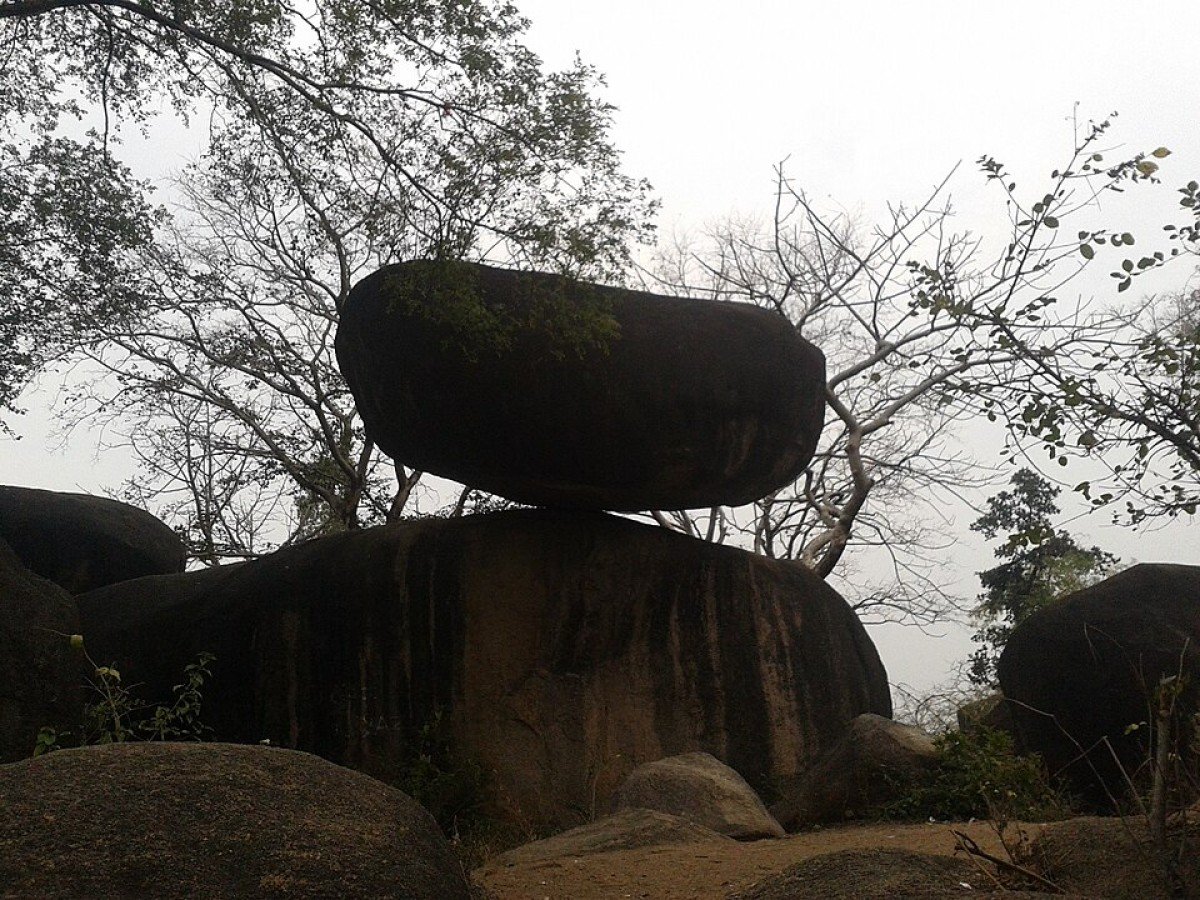
Golden Hour Silhouette:: The most aesthetically pleasing photo spot is capturing the rock as a sharp, high-contrast silhouette against the vibrant colors of either the sunrise or the sunset sky. This dramatically emphasizes the unique, gravity-defying form and the illusion of a floating rock.
Macro-Texture Shots:: Use a close-up lens to focus on the intricate patterns of erosion, lichen growth, and mineral color variations on the rock surfaces. This reveals the hidden details of the geological 'architecture' and the effects of time on the durable basalt.
Photo Gallery
Things To Do
-
Geological Photography Session:: Spend time capturing the gravity-defying spectacle of the Balancing Rock Formation from various angles, focusing on the unique shadow play and the precise point of contact between the two massive boulders. Experiment with macro shots of the weathered rock texture.
Visit Madan Mahal Fort:: Combine your short visit to the rock by immediately walking or driving up the nearby hill to explore the ancient, 11th-century Madan Mahal Fort (Rani Durgawati Fort), which offers a historical counterpoint to the natural wonder and panoramic views of Jabalpur City.
Contemplation and Nature Observation:: Take a few moments of quiet reflection at the site. Observe the surrounding natural environment, the vegetation growing on the rocky terrain, and the overall stillness of the si...Geological Photography Session:: Spend time capturing the gravity-defying spectacle of the Balancing Rock Formation from various angles, focusing on the unique shadow play and the precise point of contact between the two massive boulders. Experiment with macro shots of the weathered rock texture.
Visit Madan Mahal Fort:: Combine your short visit to the rock by immediately walking or driving up the nearby hill to explore the ancient, 11th-century Madan Mahal Fort (Rani Durgawati Fort), which offers a historical counterpoint to the natural wonder and panoramic views of Jabalpur City.
Contemplation and Nature Observation:: Take a few moments of quiet reflection at the site. Observe the surrounding natural environment, the vegetation growing on the rocky terrain, and the overall stillness of the site, appreciating the millions of years of geological time that led to this formation.
Sunrise/Sunset Viewing:: Plan a visit during the early morning or late evening to witness the rock silhouetted against the colorful sky. The light at these times is perfect for dramatic, high-contrast photography and offers cooler temperatures for a more pleasant experience.
Explore Local Roadsides:: Since the rock is a roadside attraction, take a short walk along the immediate road and nearby paths to observe local life, perhaps purchasing local water or a quick snack from a nearby vendor, integrating the natural visit with the local urban atmosphere.
Educational Spotting:: For a more engaging visit, try to spot and identify the geological features like Andesite or Basalt composition, and the various signs of wind and water erosion, treating the site as an open-air natural history exhibit.
Short Hike and Hillside Exploration:: Take a brief, safe, informal walk on the cleared trails around the base of the rock and up the immediate hillside to gain a slight elevation, offering different perspective and a short burst of physical activity within the natural environment.
Sketching and Painting:: Bring a small notepad or art kit and try to sketch or paint the rock. Its unique, static form makes it an ideal, challenging subject for an artist to capture the peculiar natural geometry and the sheer scale of the balance.
Reading the Local Interpretations:: If available, read up on the local folklore or scientific explanations regarding the rock's formation, which enriches the experience by adding a layer of cultural or scientific context to the visual marvel. This provides intellectual engagement with the site.
Information
-
Why Famous:
The Gravity-Defying Mystery:: The Balancing Rock Formation is famous primarily for its extraordinary and seemingly impossible physical structure—a massive rock precariously balanced on a smaller one, a natural feat that appears to openly defy the fundamental laws of gravit...The Gravity-Defying Mystery:: The Balancing Rock Formation is famous primarily for its extraordinary and seemingly impossible physical structure—a massive rock precariously balanced on a smaller one, a natural feat that appears to openly defy the fundamental laws of gravity and physics. This bizarre visual is a major draw for tourists seeking unique sights.
Scientific and Seismic Resilience:: Its fame is significantly bolstered by the remarkable fact that this delicate-looking structure has successfully withstood numerous powerful earthquakes, including one registered at a magnitude of 6. 5, which has led to widespread local belief in its supernatural stability. This resilience turns it into a scientific curiosity and a symbol of natural tenacity.
Proximity to Madan Mahal Fort:: Being situated at the base of the historic Madan Mahal Fort adds to its popularity, as tourists can easily combine a visit to the medieval fort with a stop at this geological wonder. This combination of history and natural science enhances its appeal as a dual-interest destination.
Photographer's Delight:: The unique silhouette and the background of the fort and surrounding landscape make it a highly desirable location for photography enthusiasts and social media users looking for an iconic, memorable, and visually dramatic shot. The simplicity and rawness of the setting contrast sharply with the complexity of the structure itself. The local folklore attached to the formation further adds a layer of mystery.
-
Architecture:
Geological Formation & Basalt Composition:: The rock formation's architecture is purely natural, a result of millions of years of geological stress, volcanic activity, and differential erosion. The main composition is believed to be Andesite or Basalt, an igneous rock forme...Geological Formation & Basalt Composition:: The rock formation's architecture is purely natural, a result of millions of years of geological stress, volcanic activity, and differential erosion. The main composition is believed to be Andesite or Basalt, an igneous rock formed from the rapid cooling of lava. This material's hardness allowed it to resist the weathering that eroded the surrounding, softer materials.
Physical Dimensions & Weight Distribution:: The top oval boulder is massive, with estimates suggesting its approximate height is around 10 meters (33 feet) and its diameter possibly exceeding that, though no official measurements are readily available. Its entire enormous weight is distributed over a comparatively small, pivot-like point of contact with the base rock, a smaller conical structure. This seemingly impossible feat of balance is due to its precise center of gravity and the unique structural alignment of the two weathered masses, a phenomenon studied by geologists.
Lack of Man-made Alterations:: Importantly, the architecture is characterized by a complete absence of human construction, retaining its natural, raw geological design. Its stability against a magnitude 6. 5 earthquake underscores its natural structural integrity. The surrounding area has minimal man-made structures, letting the natural wonder dominate the view, serving as a raw example of nature's structural engineering. The sheer scale and visual impact of the top rock poised on the smaller base is the primary architectural feature, defying the laws of engineering.
-
How To Reach:
By Air:: The nearest airport is Jabalpur Airport (Dumna, JLR), approximately 20-25 KMS away. From the airport, one can hire a pre-paid taxi or an app-based cab (like Ola or Uber) directly to the Balancing Rock Formation near Madan Mahal Fort. The drive takes about 45 minut...By Air:: The nearest airport is Jabalpur Airport (Dumna, JLR), approximately 20-25 KMS away. From the airport, one can hire a pre-paid taxi or an app-based cab (like Ola or Uber) directly to the Balancing Rock Formation near Madan Mahal Fort. The drive takes about 45 minutes to an hour.
By Train:: The closest and most convenient railway station is Madan Mahal Railway Station (MML), which is only a short 2-3 KMS distance away, often walkable or a very quick auto-rickshaw ride. The main station, Jabalpur Junction (JBP), is about 8 KMS away. From either station, an auto-rickshaw is the most practical and immediate option, taking less than 20 minutes.
By Road:: The formation is easily accessible by road, situated near the Madan Mahal area, a known landmark. Visitors can drive their private vehicles or hire a taxi/auto-rickshaw from any point in Jabalpur City. Since it is a roadside attraction, its location is known to all local transport providers, ensuring easy navigation and direct access to the viewing spot.
By Local Transport:: Local bus services within Jabalpur may have stops near the Madan Mahal area, but the most flexible and reliable local transport is the ubiquitous auto-rickshaw, which is the preferred method for reaching the formation quickly and directly from the city center, which is roughly 8-10 KMS away.
-
Weather and Best Time to Visit:
Different Types of Seasons:: The Best Time to Visit is during the Winter months, from October to March. The weather is cool, dry, and pleasant, which is ideal for an open-air visit and photography, as the intense heat of the summer is absent. Monsoon (July to September) is...Different Types of Seasons:: The Best Time to Visit is during the Winter months, from October to March. The weather is cool, dry, and pleasant, which is ideal for an open-air visit and photography, as the intense heat of the summer is absent. Monsoon (July to September) is also acceptable, though the ground around the rock may be slippery, but the surrounding foliage will be lush and green.
Different Parts of the Day:: The most recommended time of day is the Early Morning (6:00 AM - 8:00 AM) or the Late Afternoon/Sunset period (5:00 PM - 7:00 PM). These times provide the best soft, dramatic light for photography and are significantly cooler than the harsh mid-day sun.
Temperature Considerations:: The Summer season (April to June) is extremely hot in Jabalpur, with high daytime temperatures, making the open-air visit uncomfortable and less enjoyable. Visits during this season should only be attempted early in the morning.
Photo Opportunities:: The Golden Hour light during sunrise and sunset perfectly highlights the unique silhouette of the rock, offering the best conditions for capturing its geological wonder against a colorful sky.
-
Near Tourist Places:
Near Tourist Places: Madan Mahal Fort (0. 5 KMS); Rani Durgavati Museum (6 KMS); Bhawartal Garden (8 KMS); Jabalpur Junction Railway Station (8 KMS); Tilwara Ghat (12 KMS); Pisanhari Ki Madiya (12 KMS); Dhuandhar Falls (20 KMS); Marble Rocks, Bhedaghat (20 KMS); Chausath Yogini Temple (22 KMS); Gwarighat (5 KMS).
Tourism Tips
-
Health & Safety:: Be cautious of the uneven, rocky terrain around the rock, especially if climbing for a better view. Wear sturdy shoes. Since it is an open area, carry a hat and sunscreen, particularly during the hot parts of the day. Stay hydrated.
Read MoreHealth & Safety:: Be cautious of the uneven, rocky terrain around the rock, especially if climbing for a better view. Wear sturdy shoes. Since it is an open area, carry a hat and sunscreen, particularly during the hot parts of the day. Stay hydrated.
Packing Essentials:: Essential items include water bottles, a good camera (for the unique photo opportunity), sunglasses, and perhaps a small local guidebook for history/geology context. Since it is a short stop, minimal packing is required.
Accommodation:: Accommodation is available across Jabalpur City. The area near Madan Mahal or Civil Lines is convenient for city-center access. Consider a clean, mid-range hotel or guest house in these central localities.
Other Different Topics Heading:
Combining Trips:: Always combine this short visit with a trip to the nearby, historically significant Madan Mahal Fort on the same hill to maximize the value of your travel time.
Transport Tip:: Use a local auto-rickshaw for the easiest and most direct transport.
Local Folklore:: Engage with locals if possible to learn about the rock's legends.
Time Management:: Budget no more than an hour for the actual rock site.
Reviews
FAQs
Jabalpur Itineray And Cost:-
Balancing Rock Formation Tourism:-
Other Places In Jabalpur :-
Other States In India :-
Information about New and Updated Locations() of Madhya Pradesh Has Been Added :-
Card subtitle
Note:-
Information provided here in good Faith and for reference only.
Near Places

Bagdari Water Fall
Some quick example text to build on the card title and make up the bulk of the card's content.
Go somewhere
Bargi Dam
Some quick example text to build on the card title and make up the bulk of the card's content.
Go somewhere
Bargi Scenic Beauty
Some quick example text to build on the card title and make up the bulk of the card's content.
Go somewhere
Bheema Kund
Some quick example text to build on the card title and make up the bulk of the card's content.
Go somewhere
Jalpari Lake
Some quick example text to build on the card title and make up the bulk of the card's content.
Go somewhere
Kali Math
Some quick example text to build on the card title and make up the bulk of the card's content.
Go somewhere
Lamheta Ghat
Some quick example text to build on the card title and make up the bulk of the card's content.
Go somewhere
Sangram Sagar Lake
Some quick example text to build on the card title and make up the bulk of the card's content.
Go somewherein Other Cities