
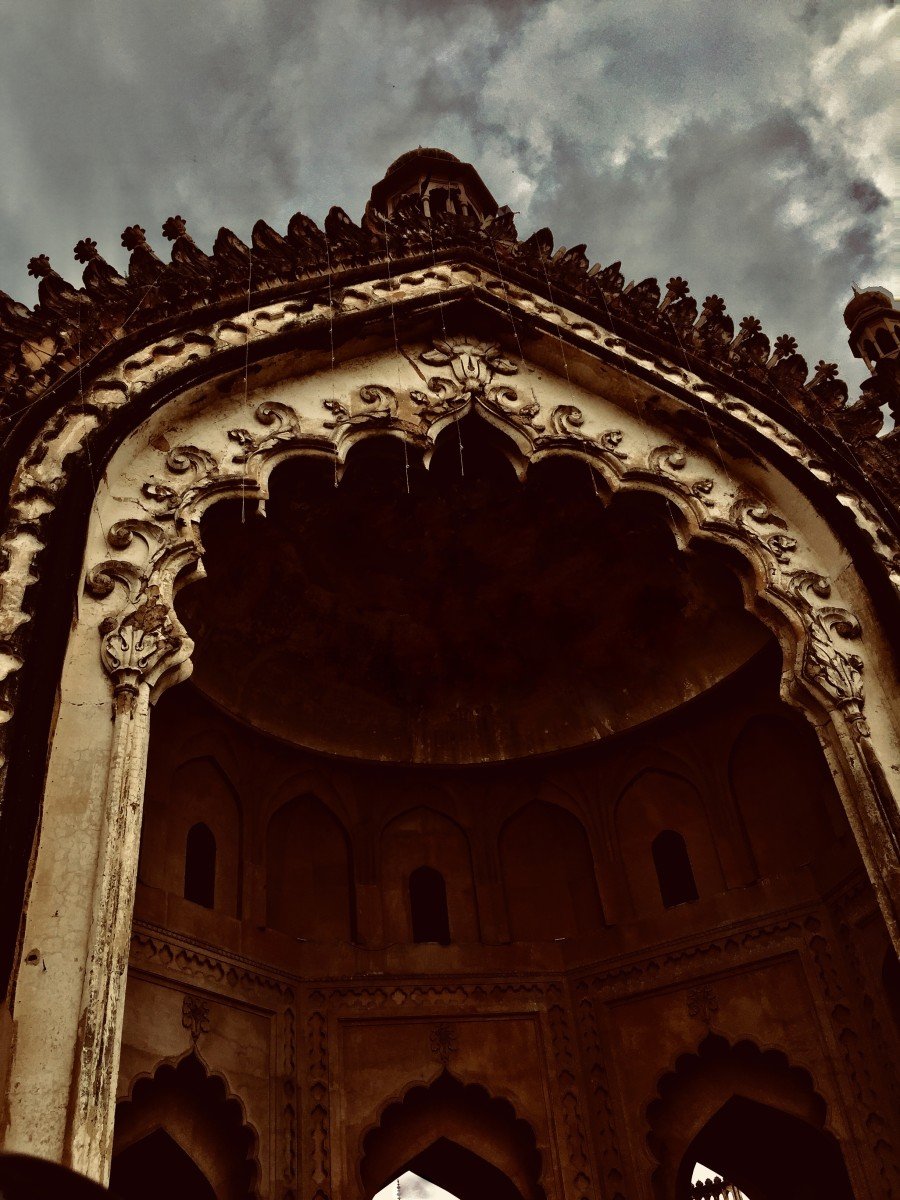
Rumi Darwaza
General information
-
Ideal Duration:
30 Minutes - 1 Hour (External View):Place Type:
Historical Gateway/Monument:Entry Fees:
Entry Fee: There is absolutely No Entry Fee to the Rumi Darwaza, as it is an ornamental public gateway and a part of the city's road network.
Timings: It is Open 24 Hours a day, seven days a week, as it is a working thoroughfare and a traffi...Entry Fee: There is absolutely No Entry Fee to the Rumi Darwaza, as it is an ornamental public gateway and a part of the city's road network.
Timings: It is Open 24 Hours a day, seven days a week, as it is a working thoroughfare and a traffic junction.
Justification: The structure's function as a public gateway means it must remain freely accessible to all citizens, aligning with the Nawab's original intention to use it as a grand entrance.
Associated Costs: The only costs would be for purchasing souvenirs from nearby vendors, hiring a guide, or the parking and transport costs to reach the area.
Guide Fees: Hiring an authorized local guide (often found near the Bara Imambara) is highly recommended to fully appreciate the history and architecture, and this fee should be negotiated beforehand. :Timing:
Regular Timings: As a public gateway, the Rumi Darwaza is Open 24 Hours.
Ideal Visit Time: The best time to visit for photography and a less congested experience is the early morning (6:00 AM – 8:00 AM) before the major city traffic begins...Regular Timings: As a public gateway, the Rumi Darwaza is Open 24 Hours.
Ideal Visit Time: The best time to visit for photography and a less congested experience is the early morning (6:00 AM – 8:00 AM) before the major city traffic begins. The early morning light is also excellent. The most atmospheric time is the evening (7:00 PM – 9:00 PM) to see the spectacular floodlighting.
Avoid Peak Traffic: Mid-day and late afternoon can be very congested and noisy due to heavy city traffic passing through the archway.
Optimal Season: Winter evenings are the most pleasant for viewing the monument in comfort.
Illumination Time: The gate is typically lit up from sunset until late at night, making the evening illumination a must-see. :Special Events:
Lucknow Mahotsav Gateway: The Rumi Darwaza is a key visual landmark and a focal point during the annual Lucknow Mahotsav (late November/December), often serving as the grand visual entry point to the historical city events and illuminated for the duration.
Read MoreLucknow Mahotsav Gateway: The Rumi Darwaza is a key visual landmark and a focal point during the annual Lucknow Mahotsav (late November/December), often serving as the grand visual entry point to the historical city events and illuminated for the duration.
Muharram Processions: The gate is a central point for the solemn and historic Muharram processions in Lucknow, with significant cultural and religious activity centered around the Imambaras and the Darwaza.
Festival Illumination: The gate is brightly and dramatically illuminated for various major festivals, including Diwali and Eid, becoming a spectacular sight for both locals and visitors.
Cultural Photography Events: The picturesque nature of the gate makes it a popular venue for specialized photography walks and heritage tours, often organized by local cultural groups on weekend mornings.
Historical Commemorations: Occasionally, small, local ceremonies or academic events are held near the monument to commemorate its history, particularly its link to the 1784 famine. :Best Photo Spots:
The Grand Arch from the South: The iconic shot, capturing the massive archway from a distance with the road leading up to it, often with the flow of auto-rickshaws and traffic, symbolizing the city's pulse.
Night Illumination: The most recom...The Grand Arch from the South: The iconic shot, capturing the massive archway from a distance with the road leading up to it, often with the flow of auto-rickshaws and traffic, symbolizing the city's pulse.
Night Illumination: The most recommended photo is a long-exposure shot at night, capturing the dramatic floodlighting that highlights the stucco designs and the majestic height.
Close-up of the Stucco Work: Detailed shots of the intricate floral motifs and plasterwork on the facade, showcasing the fine texture and craftsmanship of the Awadhi style.
Framing the Bara Imambara: Standing at a distance and using the Rumi Darwaza's arch to frame the distant dome of the Bara Imambara creates a powerful composition connecting the two monuments.
The Top Chhatri Silhouette: Capturing the silhouette of the top architectural features against the twilight sky highlights the 60-foot height and the elegance of the structure.
Street Life and Gate: A candid shot that captures the contrast between the ancient gate and the modern street life, like a bicycle rickshaw passing through the arch, provides a narrative image. :Photo Gallery
Things To Do
-
Photography: Capture the imposing height and grand arch from different angles, especially framing the flow of daily traffic passing beneath it to show the contrast of old and new.
View at Night: Visit during the evening to see the gate beautifully illuminated by floodlights, which highlights the intricate stucco work and creates a dramatic silhouette.
Historical Walk: Walk from the Rumi Darwaza towards the Bara Imambara and Chota Imambara to appreciate its role as the grand entrance to the city's main heritage complex.
Observe the Stucco Work: Take time for a close inspection of the intricate floral carvings and decorative stucco plasterwork on the facade, noticing the fine craftsmanship of the Awadhi artisans.
Visit Nearby Markets:<...Photography: Capture the imposing height and grand arch from different angles, especially framing the flow of daily traffic passing beneath it to show the contrast of old and new.
View at Night: Visit during the evening to see the gate beautifully illuminated by floodlights, which highlights the intricate stucco work and creates a dramatic silhouette.
Historical Walk: Walk from the Rumi Darwaza towards the Bara Imambara and Chota Imambara to appreciate its role as the grand entrance to the city's main heritage complex.
Observe the Stucco Work: Take time for a close inspection of the intricate floral carvings and decorative stucco plasterwork on the facade, noticing the fine craftsmanship of the Awadhi artisans.
Visit Nearby Markets: Explore the vibrant local markets in the Machchhi Bhavan and Hussainabad areas, which surround the monument, for a taste of authentic old Lucknow life.
Historical Context:
Imagine the original sight: a royal gate with an active water feature, a lantern, and a clock, dominating a much quieter landscape.
Look for Cannonball Marks: Though less prominent than in the Residency, look for subtle marks or repairs that might hint at its role or damage during historical conflicts.
Hire a Guide: Engage an authorized guide near the Bara Imambara to get a detailed historical and architectural explanation of the gate and its context. :
Information
-
Why Famous:
Symbol of Lucknow: It is the most recognizable, historical symbol of the city of Lucknow, often featured in city emblems and promotional material, instantly signifying the era of the Nawabs.
Turkish Gate Resemblance: Its nickname and fame st...Symbol of Lucknow: It is the most recognizable, historical symbol of the city of Lucknow, often featured in city emblems and promotional material, instantly signifying the era of the Nawabs.
Turkish Gate Resemblance: Its nickname and fame stem from its striking architectural similarity to a famous gate in old Constantinople, marking it as a piece of international architectural influence.
Famine Relief Monument: It is famously known for being built as part of a massive 'Food for Work' initiative by Nawab Asaf-ud-Daula, symbolizing the Nawab's compassion during a severe famine.
Architectural Excellence: It is a paramount example of the elegant and highly decorative Awadhi architectural style, celebrated for its symmetry and intricate stucco ornamentation.
Gateway to Heritage: It stands as the grand entrance to the heritage zone of Old Lucknow, connecting the two major Imambaras (Bara and Chota), making it a high-traffic tourist landmark. : -
Architecture:
Awadhi Style Fusion: The Rumi Darwaza is a quintessential example of the Lucknow School of Architecture, which aimed to preserve the elegance of Mughal architecture while incorporating innovative designs and local materials. Unlike traditional Mughal monuments, it primarily...Awadhi Style Fusion: The Rumi Darwaza is a quintessential example of the Lucknow School of Architecture, which aimed to preserve the elegance of Mughal architecture while incorporating innovative designs and local materials. Unlike traditional Mughal monuments, it primarily uses brick construction with a lime coating (stucco), giving it a distinctive appearance.
Dimensions and Features: The monument stands tall at approximately 60 feet (18 meters). Its main feature is a massive, towering central archway, flanked by two smaller arches, providing striking symmetry. The structure is adorned with highly elaborate stucco plasterwork, intricate floral patterns, and complex geometric designs.
The Pinnacle: The pinnacle of the gate was historically adorned with an eight-sided chhatri (umbrella) and, according to accounts, once featured a large lantern. It was also said that the flower buds carved on the sides of the arch would release jets of water, though these features are no longer active.
Structural Integrity: The gate's construction is a testament to the robust engineering of the time, designed to act as a grand, standalone entrance and capable of bearing the weight of its massive height for centuries.
Turkish Inspiration: The resemblance to the Bab-i-Humayun gate in Constantinople (now Istanbul, Turkey) is a key architectural detail that sets it apart and gives it its popular name. : -
How To Reach:
By Air: The nearest airport is Chaudhary Charan Singh International Airport (LKO), approx. 15 KMs away. Hire a taxi to the Old Lucknow area near the Bara Imambara. The drive takes about 35-45 minutes.
By Train: The major station is Luckno...By Air: The nearest airport is Chaudhary Charan Singh International Airport (LKO), approx. 15 KMs away. Hire a taxi to the Old Lucknow area near the Bara Imambara. The drive takes about 35-45 minutes.
By Train: The major station is Lucknow Junction (LJN)/Charbagh Railway Station, approx. 5 KMs away. Take an auto-rickshaw or taxi, which can be easily negotiated to the Rumi Darwaza (a famous landmark). The journey takes about 15-20 minutes.
By Road: The Darwaza is centrally located in the heart of Old Lucknow, on the main road connecting the historical sites. It is a well-known landmark, easily reachable by all city transport. Parking can be challenging in this dense, old city area.
By Local Transport: Local city buses and shared auto-rickshaws frequently ply the route between Charbagh and Bara Imambara. Using a ride-sharing service or a local taxi is convenient, but be prepared for heavy traffic congestion in the immediate vicinity. : -
Weather and Best Time to Visit:
Different Types of Seasons: Winter (October to March) is the most comfortable and pleasant time for an extended visit, especially the cool evenings for viewing the illumination. Summer is extremely hot, making only the very early morning and late evening bearable. Monsoon ...Different Types of Seasons: Winter (October to March) is the most comfortable and pleasant time for an extended visit, especially the cool evenings for viewing the illumination. Summer is extremely hot, making only the very early morning and late evening bearable. Monsoon can be picturesque, with the gate looking dramatic against the grey sky, but the area can get muddy.
Different Parts of the Day: The Early Morning is best for a quiet, traffic-free, and photographic experience. The Evening is best for witnessing the illumination and the vibrant atmosphere of the Old City.
Avoid Midday: The heat and the extremely high volume of traffic make the hours between 10:00 AM and 4:00 PM the least ideal time for a visit.
Festival Time: Visit during Muharram for a profound cultural experience (while being respectful of the solemnity). : -
Near Tourist Places:
Bara Imambara (0. 5 KMs), Chota Imambara (0. 5 KMs), Satkhanda (0. 2 KMs), Clock Tower (0. 5 KMs), Picture Gallery (0. 5 KMs), Husainabad Imambara (0. 5 KMs), Tomb of Saadat Ali Khan (4. 5 KMs), British Residency (3. 5 KMs), Lucknow Museum (5 KMs), Hazratganj Market (5 KMs):
Tourism Tips
-
Health & Safety: The area is very safe, but exercise extreme caution due to the heavy traffic passing directly through the arch. Be mindful of your belongings in the dense crowds. Stay hydrated, especially in summer.
Packing: Minimal bagga...Health & Safety: The area is very safe, but exercise extreme caution due to the heavy traffic passing directly through the arch. Be mindful of your belongings in the dense crowds. Stay hydrated, especially in summer.
Packing: Minimal baggage is best due to the crowded environment. Wear sensible footwear, as the sidewalks can be uneven. A good camera for night photography is essential. Carry cash for small vendors and guides.
Accommodation: Staying in Hazratganj or nearby central areas and taking a short taxi ride to the Old City is often preferred, as accommodation options in the immediate vicinity of the Darwaza are fewer and more basic.
Other Different Topics Heading: Combine the visit with the adjacent Bara Imambara and Chota Imambara to complete the historical loop. Hire a local, authorized guide to fully understand the historical context of the famine relief work. Be prepared for the vibrant noise and energy of the Old City. :
Reviews
FAQs
Lucknow Itineray And Cost:-
Other Places In Lucknow :-
Other States In India :-
Information about New and Updated Locations() of Uttar Pradesh Has Been Added :-
Card subtitle
Note:-
Information provided here in good Faith and for reference only.
Near Places
Ambedkar Memorial Park
Some quick example text to build on the card title and make up the bulk of the card's content.
Go somewhere
Aminabad Market
Some quick example text to build on the card title and make up the bulk of the card's content.
Go somewhere
Bara Imambara
Some quick example text to build on the card title and make up the bulk of the card's content.
Go somewhere
Begum Hazrat Mahal Park
Some quick example text to build on the card title and make up the bulk of the card's content.
Go somewhere
British Residency
Some quick example text to build on the card title and make up the bulk of the card's content.
Go somewhere
Chattar Manzil
Some quick example text to build on the card title and make up the bulk of the card's content.
Go somewhere
Chota Imambara
Some quick example text to build on the card title and make up the bulk of the card's content.
Go somewhere
Dilkusha Kothi
Some quick example text to build on the card title and make up the bulk of the card's content.
Go somewhere
Hazratganj Market
Some quick example text to build on the card title and make up the bulk of the card's content.
Go somewhere
Hussainabad Clock Tower
Some quick example text to build on the card title and make up the bulk of the card's content.
Go somewhere
Indira Gandhi Planetarium
Some quick example text to build on the card title and make up the bulk of the card's content.
Go somewhere
Janeshwar Mishra Park
Some quick example text to build on the card title and make up the bulk of the card's content.
Go somewhere
La Martinière College
Some quick example text to build on the card title and make up the bulk of the card's content.
Go somewhere
Lucknow Museum
Some quick example text to build on the card title and make up the bulk of the card's content.
Go somewhere
Marine Drive
Some quick example text to build on the card title and make up the bulk of the card's content.
Go somewhere
Moti Mahal
Some quick example text to build on the card title and make up the bulk of the card's content.
Go somewherein Other Cities