

Shekha Bird Sanctuary
General information
-
Ideal Duration:
3 hoursPlace Type:
Bird Sanctuary, Wildlife Reserve, Natural WetlandEntry Fees:
Entry Fee: A nominal entry ticket is charged, typically around INR 10/Rs. per visitor, which goes towards the maintenance of the sanctuary.
Camera Fees: A separate, higher fee may be charged for professional cameras or telephoto lenses, espec...Entry Fee: A nominal entry ticket is charged, typically around INR 10/Rs. per visitor, which goes towards the maintenance of the sanctuary.
Camera Fees: A separate, higher fee may be charged for professional cameras or telephoto lenses, especially for commercial photography, though a basic phone camera is usually Free.
Guide/Jeep Fees: There are no formal jeep safaris. A local, mathbfknowledgeable {guide} (often a local villager) can be hired for a negotiated fee.
Vehicle Parking: A small fee may be charged for parking private vehicles near the main entrance.
Timing:
Regular Timings: Generally open from 9:00 AM to 5:00 PM daily. mathbfEarly {access} for serious bird watchers may be negotiable with the mathbfForest {Department}.
Ideal Visit Time: mathbfSunrise} to 11:00 AM and 3:00 PM...Regular Timings: Generally open from 9:00 AM to 5:00 PM daily. mathbfEarly {access} for serious bird watchers may be negotiable with the mathbfForest {Department}.
Ideal Visit Time: mathbfSunrise} to 11:00 AM and 3:00 PM to Sunset are the mathbfPrime {bird } watching {hours} as birds are most active during these cooler periods.
Midday: Birds are less active and the heat is intense, so mathbfMidday} is generally not recommended.
Special Events:
World Migratory Bird Day Programs: On or near mathbfWorld {Migratory } Bird {Day} (mathbfMay {and } October}), the sanctuary may host educational talks, bird-ringing demonstrations, or guided tours organized by the mathbfForest {Department}.World Migratory Bird Day Programs: On or near mathbfWorld {Migratory } Bird {Day} (mathbfMay {and } October}), the sanctuary may host educational talks, bird-ringing demonstrations, or guided tours organized by the mathbfForest {Department}.
Annual Bird Count/Census: The sanctuary participates in an mathbfannual {winter } bird {census}, often allowing experienced volunteers to assist in the count, which is a key event for ornithologists.
Local School Field Trips: During the peak mathbfWinter} season, the sanctuary often hosts mathbfschool {and } university {educational } trips}, focusing on local ecology and conservation.
Best Photo Spots:
The Main mathbfJheel} mathbfWaterfront}: Capture a wide-angle shot of the lake during the winter, filled with flocks of mathbfmigratory {birds}, creating a living tapestry on the water surface.
The mathbfUpper {Ganges } Canal:<...The Main mathbfJheel} mathbfWaterfront}: Capture a wide-angle shot of the lake during the winter, filled with flocks of mathbfmigratory {birds}, creating a living tapestry on the water surface.
The mathbfUpper {Ganges } Canal: Use the straight lines of the adjacent canal as a contrasting, man-made element against the wildness of the sanctuary.
Silhouetted Birds at Dusk: The best spot for capturing the mathbfsilhouettes} of storks, egrets, and ducks returning to their roosts against the vibrant sunset colors.
The mathbfReedbeds {and } Marshland}: Capture the textures and details of the natural wetland vegetation, which provides shelter for the birds.
Photo Gallery
Things To Do
-
Intensive Bird Watching: Spend dedicated time with binoculars and a checklist to identify the vast number of mathbfmigratory} and mathbfresident} species, focusing on mathbfducks}, mathbfstorks}, and mathbfwaders}.
Wildlife Photography: This is a prime location for mathbfnature {and } wildlife {photography}, especially for capturing spectacular shots of birds in flight or feeding in the shallow waters, requiring a powerful telephoto lens.
Nature Walks and Trail Exploration: Take a quiet, slow walk along the designated pathways and the mathbfcanal {bank} to observe the ecosystem and the natural soundscape.
Picnicking (Designated Area): Carry a packed lunch and enjoy a quiet picnic in the designated mathbfpicnic {spot}, ensuring ...Intensive Bird Watching: Spend dedicated time with binoculars and a checklist to identify the vast number of mathbfmigratory} and mathbfresident} species, focusing on mathbfducks}, mathbfstorks}, and mathbfwaders}.
Wildlife Photography: This is a prime location for mathbfnature {and } wildlife {photography}, especially for capturing spectacular shots of birds in flight or feeding in the shallow waters, requiring a powerful telephoto lens.
Nature Walks and Trail Exploration: Take a quiet, slow walk along the designated pathways and the mathbfcanal {bank} to observe the ecosystem and the natural soundscape.
Picnicking (Designated Area): Carry a packed lunch and enjoy a quiet picnic in the designated mathbfpicnic {spot}, ensuring all trash is carried out to maintain the sanctuary's cleanliness.
Volunteering and Conservation Education: Check with the mathbfForest {Department} for any ongoing mathbfconservation {programs} or mathbfwildlife {education} seminars, especially during the peak season.
Sketching and Painting: Carry a sketch pad or watercolors to capture the tranquil landscapes and the forms of the birds in their natural habitat.
Sunset Viewing: The isolated location allows for stunning, uninterrupted views of the sunset over the wetland, often silhouetting the feeding birds.
Information
-
Why Famous:
Major Stopover on the Asian Flyway: The sanctuary is a globally important destination for mathbfmigratory {birds}, particularly between November and February, attracting rare and spectacular species.
Perennial Water Source: The contin...Major Stopover on the Asian Flyway: The sanctuary is a globally important destination for mathbfmigratory {birds}, particularly between November and February, attracting rare and spectacular species.
Perennial Water Source: The continuous feeding from the mathbfUpper {Ganges } Canal} ensures the Jheel remains a perennial water body, making it a reliable refuge for birds even during drier periods when other local wetlands disappear.
Ecological Research Site: It serves as a significant site for ecological studies and conservation programs by the mathbfForest {Department} and university researchers.
-
Architecture:
Naturalistic Wetland Structure: The sanctuary is primarily a natural, topographical formation—a large, shallow lake (Jheel) fed by the adjacent Upper Ganges Canal. The architecture is naturalistic, focusing on the preservation of the wetland's natural contours and surro...Naturalistic Wetland Structure: The sanctuary is primarily a natural, topographical formation—a large, shallow lake (Jheel) fed by the adjacent Upper Ganges Canal. The architecture is naturalistic, focusing on the preservation of the wetland's natural contours and surrounding marshland.
Man-made Interventions: ManRs.made architecture is limited to essential functional structures. This includes small mathbfForest {Department} observation posts, boundary demarcation fences, and the main mathbfentry {gate} and ticket counter. Historically, there were rusty watch towers for observation, but these are often unmaintained, keeping the focus on the ground-level experience.
Dimensions and Coverage: The protected area spans 25 hectares or 62 acres. The shape of the mathbfJheel} is irregular, following the natural depression of the land near the canal. The water depth fluctuates seasonally, with the surrounding area being a mix of marshy land and small patches of scrub forest.
Observation Huts: Basic, functional huts or hides are sometimes available for bird watchers to conceal themselves and observe without disturbing the wildlife. The emphasis is on blending the visitor facilities with the wild environment.
-
How To Reach:
By Air: The nearest major airport is Indira Gandhi International Airport (DEL) in Delhi, Rs.150 KMS away. From there, take a train to Aligarh.
By Train: The nearest major station is Aligarh Junction (ALJN). From the station, the sanctua...By Air: The nearest major airport is Indira Gandhi International Airport (DEL) in Delhi, Rs.150 KMS away. From there, take a train to Aligarh.
By Train: The nearest major station is Aligarh Junction (ALJN). From the station, the sanctuary is Rs.17 KMS and requires a mathbfpre-booked {taxi} or an mathbfauto-rickshaw} for the final leg.
By Road: It is located about 5 KMS from the mathbfGrand {Trunk } Road} (GT Road) and can be accessed via the mathbfAtrauli {Charra } Kasganj {Road}. Self-driving or hiring a cab is the most convenient option.
By Local Transport: mathbfLocal {buses} travel towards Atrauli on the route, but a mathbftaxi} or mathbfhired {auto-rickshaw} is necessary to cover the last few kilometers from the main road to the gate.
-
Weather and Best Time to Visit:
Winter Season (Best Time): mathbfNovember} to February is the mathbfpeak {migratory } bird {season} and offers the most comfortable weather for long hours of observation.
Summer Season (Poor): mathbfApril} to June is very ho...Winter Season (Best Time): mathbfNovember} to February is the mathbfpeak {migratory } bird {season} and offers the most comfortable weather for long hours of observation.
Summer Season (Poor): mathbfApril} to June is very hot, and the water levels may drop significantly, driving most of the birds away.
Monsoon Season: July to October offers lush greenery but is not the peak season for migratory birds, though resident species are active.
Part of the Day: mathbfSunrise} and mathbfSunset} are the mathbfmost {active } times} for the birds and offer the best light for photography.
-
Near Tourist Places:
Aligarh Fort (Rs.15 KMS), Khereshwar Temple (Rs.22 KMS), AMU Campus (Rs.18 KMS), Teerthdham Mangalayatan (Rs.30 KMS), Dhanipur Airstrip (Rs.8 KMS), Kala Mahal (Rs.17 KMS), mathbf{Marris {Road {Market}} (Rs.18 KMS), Jama Masjid (Rs.16 KMS), Naqvi Park (Rs.19 KMS), Dargah Baba Barchhi Bahadur (Rs.18 KMS).
Tourism Tips
-
Health & safety: mathbfWear {earthy } colors} to blend in and avoid disturbing the birds. Carry insect repellent, especially during the mathbfMonsoon} and evening. mathbfDo {not } litter} and maintain absolute silence near the viewing areas.Health & safety: mathbfWear {earthy } colors} to blend in and avoid disturbing the birds. Carry insect repellent, especially during the mathbfMonsoon} and evening. mathbfDo {not } litter} and maintain absolute silence near the viewing areas.
Packing Essentials: mathbfBinoculars {and } a {powerful } telephoto {lens} are mandatory for a rewarding experience. Carry a bird identification guide or app. Wear a mathbfhat} and mathbfsunscreen}.
Accommodation: The sanctuary has no on-site accommodation. The best options are to stay in the city of mathbfAligarh} at hotels like Fortune Park and Lemon Tree .
Other Tips: mathbfAvoid {using } flash {photography}. mathbfDo {not } feed} the birds. Engage with the mathbfForest {Department} staff to learn about recent sightings.
Reviews
FAQs
Aligarh Itineray And Cost:-
Shekha Bird Sanctuary Tourism:-
Other Places In Aligarh :-
Other States In India :-
Information about New and Updated Locations() of Uttar Pradesh Has Been Added :-
Card subtitle
Note:-
Information provided here in good Faith and for reference only.
Near Places
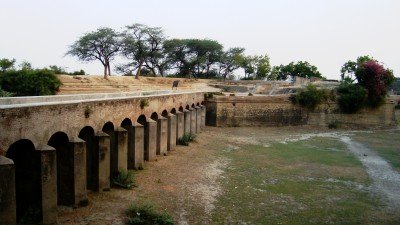
Aligarh Fort
Some quick example text to build on the card title and make up the bulk of the card's content.
Go somewhere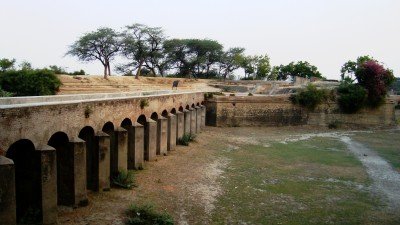
Baba Barchi Bahadur Dargah
Some quick example text to build on the card title and make up the bulk of the card's content.
Go somewhere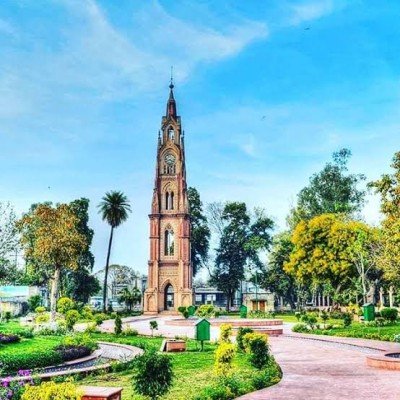
Baradwari Chowk Ghanta Ghar
Some quick example text to build on the card title and make up the bulk of the card's content.
Go somewhere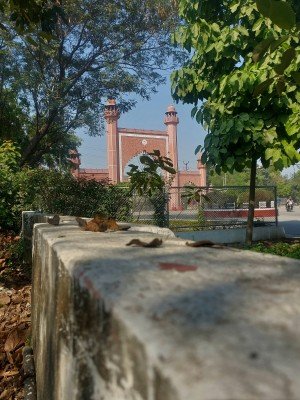
Centenary Gate
Some quick example text to build on the card title and make up the bulk of the card's content.
Go somewhere
Chacha Nehru Gyan Pushp
Some quick example text to build on the card title and make up the bulk of the card's content.
Go somewhere
Dor Fortress
Some quick example text to build on the card title and make up the bulk of the card's content.
Go somewhere
Fort Royal
Some quick example text to build on the card title and make up the bulk of the card's content.
Go somewhere
Ghanta Ghar
Some quick example text to build on the card title and make up the bulk of the card's content.
Go somewhere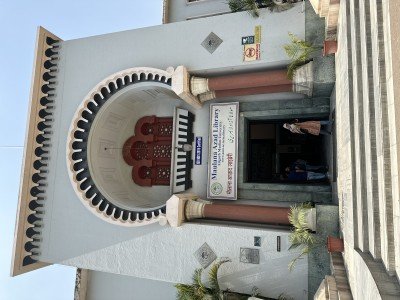
Hakim Karam Hussain Museum
Some quick example text to build on the card title and make up the bulk of the card's content.
Go somewhere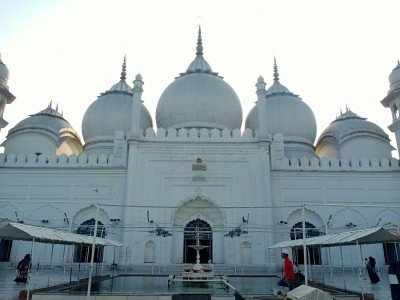
Jama Masjid
Some quick example text to build on the card title and make up the bulk of the card's content.
Go somewhere
Khereshwar Temple
Some quick example text to build on the card title and make up the bulk of the card's content.
Go somewhere
Maulana Azad Library
Some quick example text to build on the card title and make up the bulk of the card's content.
Go somewhere
Naqvi Park
Some quick example text to build on the card title and make up the bulk of the card's content.
Go somewhere
Shekha Bird Sanctuary
Some quick example text to build on the card title and make up the bulk of the card's content.
Go somewhere
Sir Syed Academy Museum
Some quick example text to build on the card title and make up the bulk of the card's content.
Go somewhere
Skyhigh India
Some quick example text to build on the card title and make up the bulk of the card's content.
Go somewherein Other Cities