Swaminarayan Temple
General information
-
Ideal Duration:
1 to 2 HoursPlace Type:
Place of Worship, Religious, Cultural CenterEntry Fees:
Entry Fee: There is No Entry Fee to visit the BAPS Shri Swaminarayan Mandir. Access to the main temple complex, the inner sanctum for Darshan, the gardens, and the assembly halls for public discourses is completely Free of Charge, reflecting the temple's mission of open spi...Entry Fee: There is No Entry Fee to visit the BAPS Shri Swaminarayan Mandir. Access to the main temple complex, the inner sanctum for Darshan, the gardens, and the assembly halls for public discourses is completely Free of Charge, reflecting the temple's mission of open spiritual accessibility.
Parking Charges: Visitors arriving by private vehicle may have to pay a small, nominal fee for Parking in the dedicated temple parking lot. This fee helps cover the cost of managing the large parking facility required for the huge number of visitors.
Prasad and Bookstore: The Prasad (sacred offering, often a sweet or food item) is typically distributed Free of Charge after the Aarti ceremonies. However, any purchase made at the on-site Bookstore (for literature, CDs, or souvenirs) or any food/refreshments purchased at the cafeteria/canteen (if available) are Additional Costs not covered by the free entry policy.
Donations: While not mandatory, the temple complex relies on the generous Donations of devotees to sustain its massive operations, cultural activities, and social services. Visitors are welcome to offer voluntary donations at designated counters if they feel spiritually or morally inclined to support the temple's mission.Timing:
Regular Timings: The temple is generally open seven days a week. The opening hours are usually from 7:30 AM until 8:15 PM (closing after the last Shayan Aarti). There is a specific Midday Closure period, typically from 12:00 PM (noon) to 4:00 PM, which is strictly observed...Regular Timings: The temple is generally open seven days a week. The opening hours are usually from 7:30 AM until 8:15 PM (closing after the last Shayan Aarti). There is a specific Midday Closure period, typically from 12:00 PM (noon) to 4:00 PM, which is strictly observed, and visitors should not plan to arrive during this time.
Ideal Visit Time: The Ideal Visit Time is the Late Afternoon/Evening (4:00 PM to 8:15 PM). Arriving at 4:00 PM allows for a peaceful walk around the gardens, followed by witnessing the spectacular Sandhya Aarti (usually around 7:00 PM), after which the temple looks stunningly illuminated. The Early Morning (7:30 AM to 9:00 AM) is the best time for a more serene, less-crowded experience and to witness the Shangar Aarti.
Aarti Timings:
Specific Aarti times are crucial: Mangla Aarti is typically at 6:00 AM (before general opening); Shangar Aarti at 7:30 AM; Rajbhog Aarti at 11:15 AM; Sandhya Aarti at 7:00 PM; and Shayan Aarti at 8:15 PM (these times are approximate and can change, so check official announcements).Special Events:
Janmashtami and Ram Navami: The temple is the primary center for celebrating major Hindu festivals like Janmashtami (Lord Krishna's birthday, usually in August/September) and Ram Navami (Lord Ram's birthday, usually in March/April). These festivals are celebrated with immen...Janmashtami and Ram Navami: The temple is the primary center for celebrating major Hindu festivals like Janmashtami (Lord Krishna's birthday, usually in August/September) and Ram Navami (Lord Ram's birthday, usually in March/April). These festivals are celebrated with immense fervor, featuring elaborate decoration of the deities, traditional dances, musical performances, spiritual discourses, and a massive community feast (maha-prasad).
Pramukh Swami Maharaj Jayanti Celebrations: The temple holds grand celebrations for the birth anniversaries of its gurus, particularly Pramukh Swami Maharaj (in December). These events are marked by special light-and-sound shows, large cultural programs, and attendance by thousands of devotees, showcasing the highest level of community organization and festive spirit, often attracting national and international visitors.
Diwali and Annakut Festival: The celebration of Diwali and the subsequent Annakut festival (a huge offering of vegetarian food to the deities) are spectacular. The temple is dramatically illuminated, and the Annakut display is an extraordinary sight of hundreds of food items artistically arranged before the deities, which is a rare and special photo opportunity and a significant religious event.Best Photo Spots:
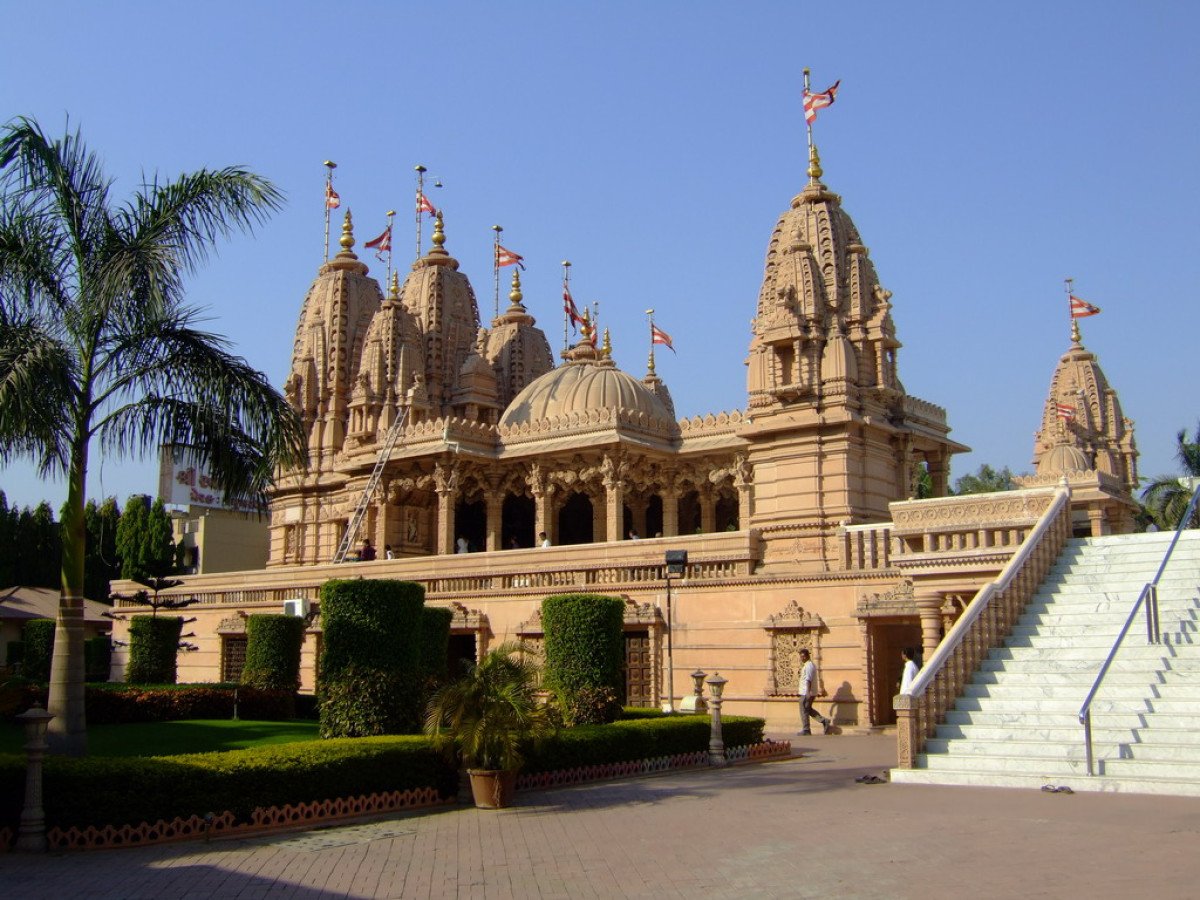
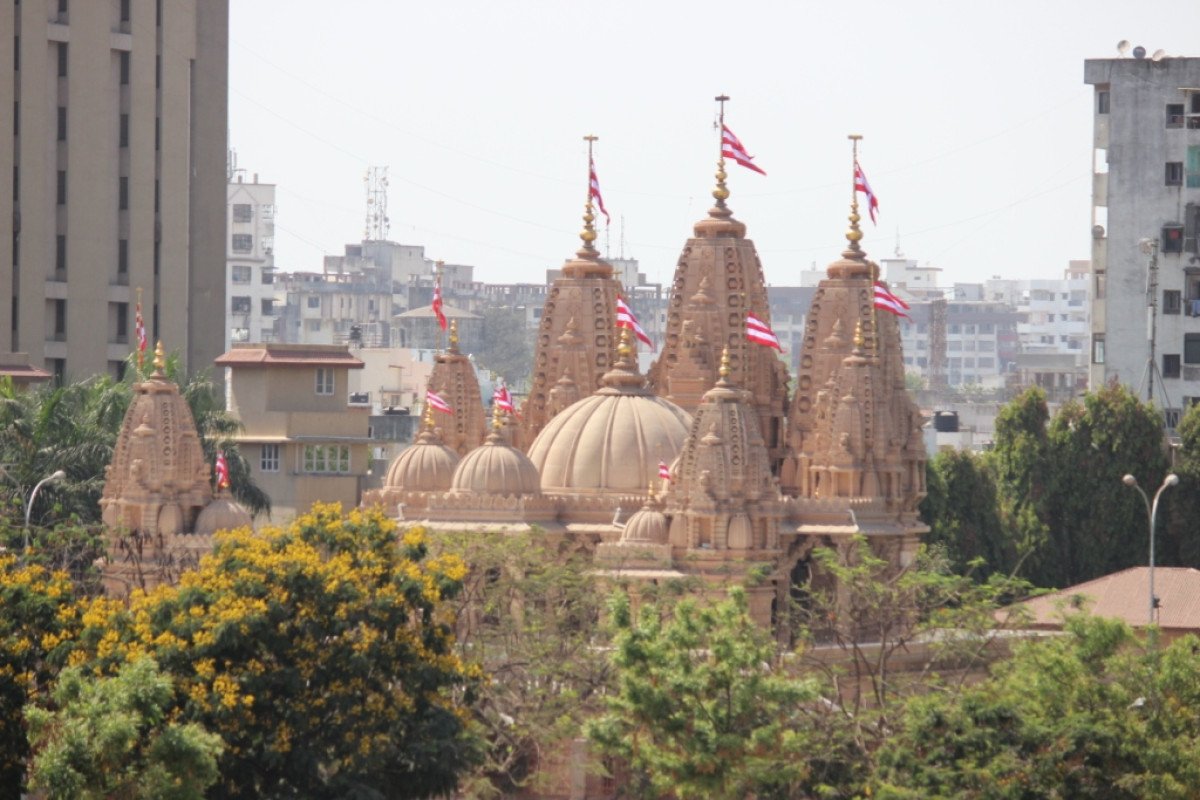
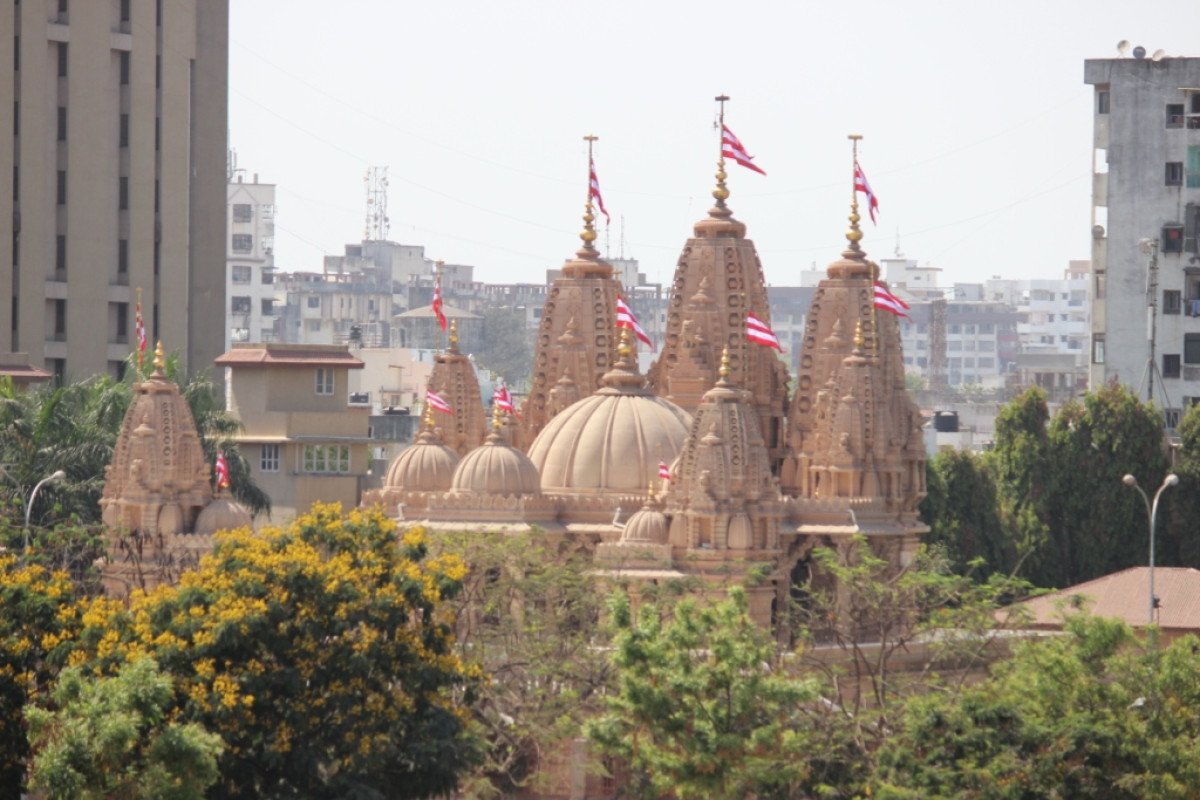
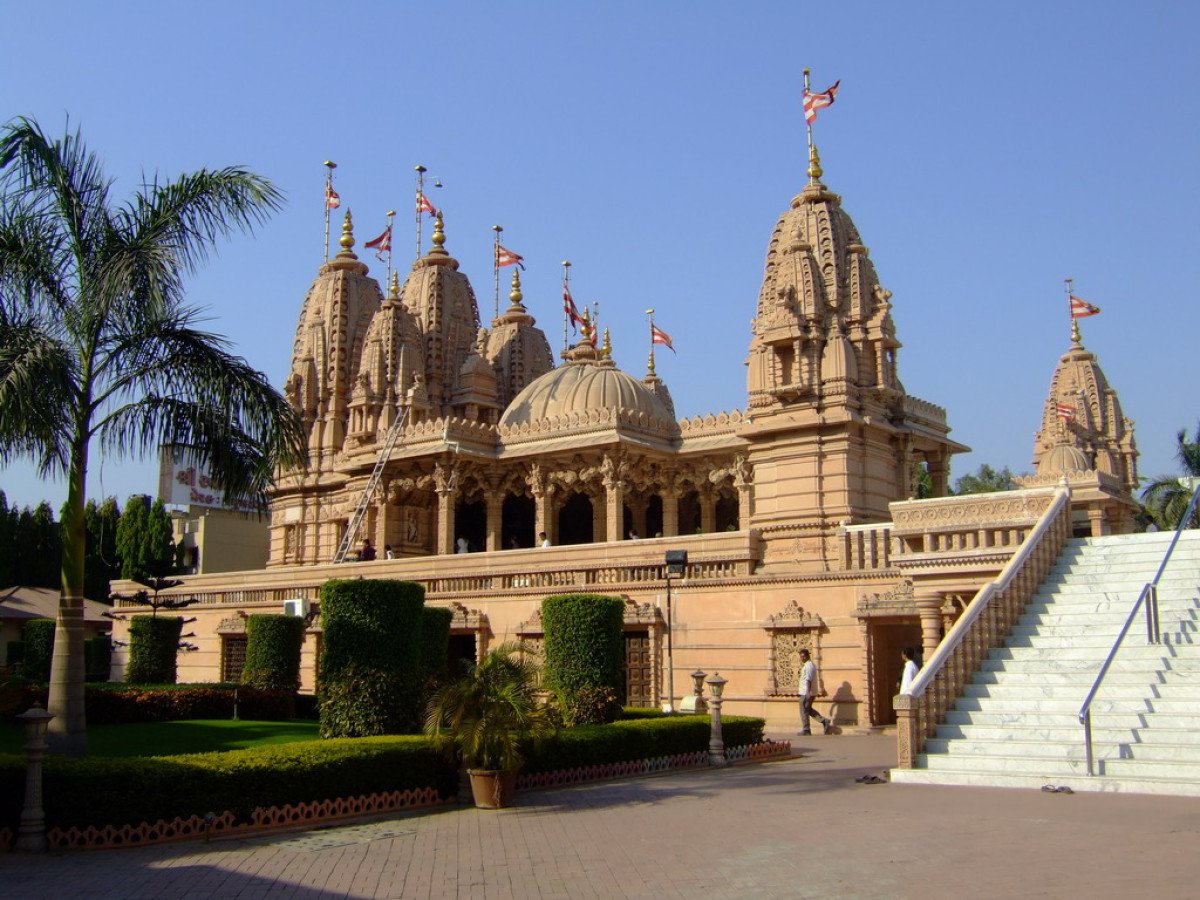
The Main Mandir Facade (Illuminated): The temple's grand exterior, especially the intricately carved main entrance and the five towering shikhars (spires), is the absolute best photo spot. The best time is just after sunset, when the entire pink sandstone structure is beaut...The Main Mandir Facade (Illuminated): The temple's grand exterior, especially the intricately carved main entrance and the five towering shikhars (spires), is the absolute best photo spot. The best time is just after sunset, when the entire pink sandstone structure is beautifully and dramatically illuminated by carefully placed lights, making the carvings stand out against the dark sky.
The Carved Pillars and Arches: Focus on the interior of the main hall, particularly the detailed carvings on the pillars and the graceful arches. These architectural elements provide excellent subjects for close-up and abstract photography, showcasing the fine craftsmanship and the texture of the pink stone.
The Garden View with the Mandir: Step back to one of the corners of the manicured gardens or courtyards. This vantage point allows you to frame the magnificent pink structure against the backdrop of the lush green lawns and hedges, providing a more serene and natural composition that captures the scale of the entire complex.
Aarti Ceremony Crowd: If possible, from a respectful distance (usually from the side or back of the hall), take a photograph that captures the atmosphere of the Aarti ceremony—the crowd of devotees, the waving of the lamps, and the priests performing the ritual—to document the spiritual energy and vibrant cultural experience.
The Reflective Marble Flooring: The polished marble floors in the main walkways and halls often provide a perfect, clean reflection of the carved ceiling and the overhead arches. A low-angle shot that captures this architectural reflection can create a stunning and unique symmetrical photo.Photo Gallery
Things To Do
-
Attending the Daily Aarti: The most crucial activity is to attend at least one of the daily Aarti ceremonies, especially the vibrant Sandhya Aarti (Evening Worship) around sunset. This ritual involves devotional singing, the waving of lamps, and chanting, providing an intense and uplifting spiritual and cultural experience that is the heart of the temple visit.
Admiring the Pink Sandstone Carvings: Take an unhurried, detailed walk around the exterior and interior of the main mandir structure. Spend time closely examining the intricate, hand-carved pink sandstone details, the sculpted figures (murtis), the decorative arches, and the towering spires (shikhars), which represent the height of traditional Indian craftsmanship and temple art.
Walking the Manicured Grounds: Enjoy a peaceful stroll thr...Attending the Daily Aarti: The most crucial activity is to attend at least one of the daily Aarti ceremonies, especially the vibrant Sandhya Aarti (Evening Worship) around sunset. This ritual involves devotional singing, the waving of lamps, and chanting, providing an intense and uplifting spiritual and cultural experience that is the heart of the temple visit.
Admiring the Pink Sandstone Carvings: Take an unhurried, detailed walk around the exterior and interior of the main mandir structure. Spend time closely examining the intricate, hand-carved pink sandstone details, the sculpted figures (murtis), the decorative arches, and the towering spires (shikhars), which represent the height of traditional Indian craftsmanship and temple art.
Walking the Manicured Grounds: Enjoy a peaceful stroll through the meticulously maintained gardens and courtyards. The clean, serene environment is perfect for quiet reflection and appreciating the temple's expansive scale. The lush greenery surrounding the sandstone structure provides a beautiful contrast and a cool atmosphere.
Participating in the Sunday Sabha: If visiting on a Sunday evening, try to attend the large Satsang Sabha (Congregation), which features discourses, devotional music, and cultural programs. This provides a deep insight into the BAPS community life and the teachings of the Swaminarayan faith, offering a rich cultural immersion.
Visiting the Exhibits/Information Center: Explore the educational exhibits or the information center/bookstore on the premises. These often provide an excellent overview of the history of the Swaminarayan sampradaya (tradition), the life of Pramukh Swami Maharaj, and the construction of the temple, adding an intellectual and educational layer to the visit.
Quiet Meditation: Find a quiet bench in one of the assembly halls or a secluded spot in the garden to simply sit in silence. The temple atmosphere is profoundly calming, making it an ideal place for personal reflection or quiet meditation away from the distractions of city life.
Respectful Darshan: Take a moment for Darshan (seeing and being seen by the deity) in the main inner sanctum, offering a silent prayer or moment of respect before the central deities, which is the core spiritual purpose of the temple visit.
Information
-
Why Famous:
Magnificent Pink Sandstone Architecture: The temple is famous throughout Gujarat and beyond for its spectacular, large-scale architecture, constructed entirely out of intricately carved pink sandstone. The sight of this pristine, traditional Hindu temple, especially when il...Magnificent Pink Sandstone Architecture: The temple is famous throughout Gujarat and beyond for its spectacular, large-scale architecture, constructed entirely out of intricately carved pink sandstone. The sight of this pristine, traditional Hindu temple, especially when illuminated at night, is breathtaking and marks it as one of the most beautiful and spiritually resonant modern religious structures in Surat, attracting architectural and religious tourists alike.
Central Hub for BAPS Community and Faith: It is widely renowned as the central hub of the BAPS Swaminarayan Sanstha in Surat, a spiritual organization with a massive global following. The temple's fame comes from its role not just as a prayer hall but as a vibrant, well-organized center for community service, youth development, daily spiritual discourses (sabhas), and major religious celebrations, making it a focal point for the city's moral and cultural activities, embodying the spirit of selfless service. -
Architecture:
Architectural Style: Traditional Hindu Shikharbaddha (Spired Temple) Style: The temple is a masterwork of traditional Hindu architecture, specifically the Shikharbaddha Mandir style, built entirely according to ancient scriptural guidelines. Its construction utilizes thousa...Architectural Style: Traditional Hindu Shikharbaddha (Spired Temple) Style: The temple is a masterwork of traditional Hindu architecture, specifically the Shikharbaddha Mandir style, built entirely according to ancient scriptural guidelines. Its construction utilizes thousands of intricately hand-carved pieces of imported pink sandstone, showcasing exceptional craftsmanship that rivals some of the grandest temples in India.
Dimension and Carving Detail: The overall structure rises to a height of approximately 75 feet and features a magnificent façade spanning over 150 feet wide. It includes a traditional five-shikhar (spire) design, each signifying divine elevation and sacred space. The interior and exterior are adorned with thousands of detailed murti (idols) and narrative carvings that depict scenes from the Hindu scriptures, epic stories, and portraits of the gurus. These carvings, including intricately designed pillars, elegant archways, and detailed ceilings (mandap), are all sculpted and assembled without the use of ferrous materials (steel/iron), adhering to traditional temple building conventions. The lack of structural steel gives the temple's form its characteristic, robust, and eternal appearance. -
How To Reach:
By Air: The nearest major airport is Surat International Airport (STV), which is about 15 KMS from the Adajan area where the temple is located. A taxi or an app-based ride-sharing service is the best way to reach the temple directly, taking approximately 30-40 minutes via t...By Air: The nearest major airport is Surat International Airport (STV), which is about 15 KMS from the Adajan area where the temple is located. A taxi or an app-based ride-sharing service is the best way to reach the temple directly, taking approximately 30-40 minutes via the main city roads.
By Train: The closest and most convenient major railway station is Surat Junction (ST), which is approximately 7-8 KMS from the temple. From the station, you can easily hire a dedicated auto-rickshaw or an app-based cab to the Adajan area. Since the temple is a very famous landmark ("Swaminarayan Mandir Adajan"), the journey is quick and straightforward, typically taking only about 20 minutes through moderate traffic.
By Road: The temple is situated in the prominent Adajan area, easily accessible from all parts of Surat via the main Ring Road and Sardar Bridge. If driving your own vehicle, the temple's location on Pramukh Swami Maharaj Marg is clearly signposted. It is well-connected to the National Highway network (NH 48) for intercity travelers from Mumbai or Ahmedabad.
By Local Transport: The temple is exceptionally well-served by local public transport. Auto-rickshaws, shared autos, and city buses frequently run services to the Swaminarayan Chowk in Adajan. It is a major local landmark, making it extremely easy to reach from any part of the city, and a dedicated auto-rickshaw is a cheap and quick option. -
Weather and Best Time to Visit:
Different Types of Seasons: Winter (October to March) is the absolutely Best Time to Visit. The mild and pleasant climate allows for comfortable exploration of the large temple complex, especially the open courtyards and gardens, without the distraction of intense heat or r...Different Types of Seasons: Winter (October to March) is the absolutely Best Time to Visit. The mild and pleasant climate allows for comfortable exploration of the large temple complex, especially the open courtyards and gardens, without the distraction of intense heat or rain. Summer (April to mid-June) is very hot, making the marble and stone surfaces difficult to walk on; only the early morning or late evening is tolerable. Monsoon (mid-June to September) is challenging due to rain, though the greenery around the temple is at its most vibrant during this season.
Different Parts of the Day: The Ideal Part of the Day is the Evening (4:00 PM to 8:15 PM). This allows for a leisurely walk, comfortable exploration, and most importantly, participation in the famous Sandhya Aarti at 7:00 PM, followed by seeing the temple spectacularly lit up at night. The Early Morning (7:30 AM to 9:00 AM) is the best time for a peaceful, reflective visit with minimal crowds. Avoid the mandatory Midday Closure (12:00 PM - 4:00 PM). -
Near Tourist Places:
Tapi Riverfront (3 KMS), Gaurav Path (5 KMS), Sneh Rashmi Botanical Garden (10 KMS), VR Surat Mall (7 KMS), Snow Park (7 KMS), Science Centre Surat (6 KMS), Sardar Patel Museum (6 KMS), Gopi Talav (8 KMS), Dutch Cemetery (9 KMS), Surat Castle (8 KMS).
Tourism Tips
-
Health & safety: Remove your shoes at the designated shoe counter before entering the temple premises (mandatory). The polished marble floors can be hot during the day, so wear socks or carry them with you, especially if visiting between 10 AM and 4 PM. Dress conservativel...Health & safety: Remove your shoes at the designated shoe counter before entering the temple premises (mandatory). The polished marble floors can be hot during the day, so wear socks or carry them with you, especially if visiting between 10 AM and 4 PM. Dress conservatively, covering your shoulders and knees, as a sign of respect for the religious site.
Packing: Carry only essential items, as large bags may not be allowed inside the main sanctum. A good camera is essential for capturing the beautiful architecture (check if specific restrictions apply to professional cameras inside the main hall). Carry a bottle of water, though clean water facilities are usually available.
Accommodation: Stay in the modern Adajan or Piplod areas of Surat, as they are close to the temple and offer a wide range of accommodation. The temple area itself is quiet and provides easy access to food and transport.
Other Different Topics heading:
Respectful Conduct: Maintain silence and decorum within the main hall. Do not touch the deities or religious objects.
Food: The temple usually has a clean, vegetarian cafeteria or canteen offering quality, low-cost food and refreshments (prasad), which is a great option for a light, sanctified meal.
Photography: While generally permitted, exercise caution and respect; do not take photos during the Aarti or within the immediate sanctum area.
Reviews
FAQs
Surat Itineray And Cost:-
Swaminarayan Temple Tourism:-
Other Places In Surat :-
Other States In India :-
Information about New and Updated Locations() of Gujarat Has Been Added :-
Card subtitle
Note:-
Information provided here in good Faith and for reference only.
Near Places

Amaazia Water Park
Some quick example text to build on the card title and make up the bulk of the card's content.
Go somewhere
Ambika Niketan Temple
Some quick example text to build on the card title and make up the bulk of the card's content.
Go somewhere
Chintamani Jain Temple
Some quick example text to build on the card title and make up the bulk of the card's content.
Go somewhere
Dumas Beach
Some quick example text to build on the card title and make up the bulk of the card's content.
Go somewhere
Dutch Garden
Some quick example text to build on the card title and make up the bulk of the card's content.
Go somewhere
Galteshwar Mahadev Mandir
Some quick example text to build on the card title and make up the bulk of the card's content.
Go somewhere
Gavier Lake
Some quick example text to build on the card title and make up the bulk of the card's content.
Go somewhere
Gopi Talav
Some quick example text to build on the card title and make up the bulk of the card's content.
Go somewhere
Hajira Village
Some quick example text to build on the card title and make up the bulk of the card's content.
Go somewhere
ISKCON Temple
Some quick example text to build on the card title and make up the bulk of the card's content.
Go somewhere
Jagdishchandra Bose Aquarium
Some quick example text to build on the card title and make up the bulk of the card's content.
Go somewhere
Jawaharlal Nehru Garden
Some quick example text to build on the card title and make up the bulk of the card's content.
Go somewhere
Kavi Narmad Central Library
Some quick example text to build on the card title and make up the bulk of the card's content.
Go somewhere
Nehru Bridge
Some quick example text to build on the card title and make up the bulk of the card's content.
Go somewhere
Rang Upavan
Some quick example text to build on the card title and make up the bulk of the card's content.
Go somewhere
Sardar Patel Museum
Some quick example text to build on the card title and make up the bulk of the card's content.
Go somewherein Other Cities