Tomb of Khudawand Khan
General information
-
Ideal Duration:
30 Minutes to 1 HourPlace Type:
Historical Monument, Tomb, Heritage SiteEntry Fees:
Entry Fee: There is typically No Entry Fee to visit the Tomb of Khudawand Khan. It is an open, historical monument and an active tomb complex, making entry free for all visitors.
Photography Fees: Casual photography with mobile phones and p...Entry Fee: There is typically No Entry Fee to visit the Tomb of Khudawand Khan. It is an open, historical monument and an active tomb complex, making entry free for all visitors.
Photography Fees: Casual photography with mobile phones and personal cameras is generally allowed without any charge, though any professional or commercial film/videography will require special Permission from the relevant authorities (e. g. , the Archaeological Survey of India (ASI) or the SMC) and may incur substantial Fees.
Donations: As a historical and sometimes religiously visited site, there may be designated boxes or a caretaker accepting Voluntary Donations to assist in the upkeep and maintenance of the monument, which is an optional expense.
Guidance: If a local guide or custodian offers to provide historical information, a small Gratuity is usually expected for their time and knowledge, which is an optional but recommended cost for history enthusiasts.Timing:
Regular Timings: The tomb is generally accessible seven days a week. As an historical site in a residential area, it typically follows standard daylight hours, often from 8:00 AM to 6:00 PM. Visitors should check the gate or ask a local for the most precise operational hou...Regular Timings: The tomb is generally accessible seven days a week. As an historical site in a residential area, it typically follows standard daylight hours, often from 8:00 AM to 6:00 PM. Visitors should check the gate or ask a local for the most precise operational hours, as these can sometimes be fluid and dependent on the resident caretaker.
Ideal Visit Time: The Ideal Visit Time is the Early Morning (8:00 AM to 10:00 AM). The atmosphere is the most peaceful and cool, and the golden morning light brings out the beautiful texture and detail of the stone carvings on the exterior walls, which is perfect for photography and quiet contemplation before the Chakla Bazaar rush begins. The Late Afternoon (4:00 PM to 6:00 PM) is the second-best option for a cooler visit.Special Events:
Local Heritage Walks and History Talks: Since the tomb is a core part of the city's historical narrative, it is sometimes included as a key stop on the occasional Surat Heritage Walks organized by local history groups or the SMC, often accompanied by a specialized historian....Local Heritage Walks and History Talks: Since the tomb is a core part of the city's historical narrative, it is sometimes included as a key stop on the occasional Surat Heritage Walks organized by local history groups or the SMC, often accompanied by a specialized historian. These events provide a Special Event dimension with in-depth lectures and curated historical information not available on a standard visit.
Commemorative Days: The tomb, as a site of historical importance, may feature low-key, localized gatherings or ceremonies on specific days related to the life or death anniversary of Khudawand Khan, or on occasions like Gujarat Foundation Day, where the monument's role in the state's history is subtly commemorated.
Ramadan/Eid Season: During the month of Ramadan and the subsequent festival of Eid, the tomb and the surrounding Muslim-majority neighborhood of Sayedpura become especially lively. While the tomb itself is quiet, the area around it is bustling with traditional evening food stalls and a festive atmosphere, offering a unique cultural event experience.Best Photo Spots:
The Intricate Jali Screens: The best photo spot is a close-up, high-detail shot of the jali (lattice work) on the exterior. Frame the geometric and floral patterns to emphasize the fine stone carving, ideally when the sunlight is filtering through to create dramatic shadows...The Intricate Jali Screens: The best photo spot is a close-up, high-detail shot of the jali (lattice work) on the exterior. Frame the geometric and floral patterns to emphasize the fine stone carving, ideally when the sunlight is filtering through to create dramatic shadows.
The Archway Entrance: Capture the formal archway leading into the mausoleum complex. This classic architectural element frames the view of the tomb itself, adding depth and a sense of historical entrance to the photograph.
The Tomb Interior with Filtered Light: From a respectful distance, take a photo of the inner chamber (hujra) where the grave (qabr) is located. The soft, diffused light entering through the jali screens creates a peaceful, mystical, and contemplative atmosphere, which is excellent for artistic, evocative photography.
Contrast with the Old City: Stand a short distance away on the main Chakla Bazaar road and take a shot that contrasts the quiet, old stone structure of the tomb with the colorful, chaotic, and modern commercial life of the surrounding Sayedpura neighborhood, symbolizing the historical continuity of the city.Photo Gallery
Things To Do
-
Examining the Indo-Islamic Architecture: Take time to walk around the exterior of the mausoleum, studying the blend of Indo-Islamic architectural features. Focus on the structure of the dome, the elegant arches, the symmetry of the design, and the construction methods of the 16th century, appreciating the synthesis of local and imperial styles.
Detailed Photography of the Stone Carvings: Bring a camera with a good close-up (macro) function to capture the detailed stone carvings on the walls and the delicate geometric and floral patterns of the jali (lattice) screens. The interplay of light and shadow on these surfaces makes for excellent artistic and architectural photos.
Quiet Contemplation: Due to the profound historical significance and the surprisingly peaceful atmosphere, dedicate a few mi...Examining the Indo-Islamic Architecture: Take time to walk around the exterior of the mausoleum, studying the blend of Indo-Islamic architectural features. Focus on the structure of the dome, the elegant arches, the symmetry of the design, and the construction methods of the 16th century, appreciating the synthesis of local and imperial styles.
Detailed Photography of the Stone Carvings: Bring a camera with a good close-up (macro) function to capture the detailed stone carvings on the walls and the delicate geometric and floral patterns of the jali (lattice) screens. The interplay of light and shadow on these surfaces makes for excellent artistic and architectural photos.
Quiet Contemplation: Due to the profound historical significance and the surprisingly peaceful atmosphere, dedicate a few minutes to quiet reflection inside the tomb complex. Consider the historical context of Khudawand Khan and the life of a great military and administrative figure from the Gujarat Sultanate era.
Exploring the Chakla Bazaar Area: Since the tomb is located in the vibrant Chakla Bazaar area, combine the historical visit with a walk through the surrounding old city lanes. This area is famous for its diamond and textile trade, traditional houses (havelis), and historic markets, giving a complete picture of Old Surat's culture and commerce.
Seeking Local Historical Information: Engage with any caretakers, local historians, or nearby residents (if they speak your language) to glean any additional unwritten or localized historical information or stories about Khudawand Khan and the monument, often providing a fascinating personal perspective.
Offering Respect: The site is a tomb (roza), so visitors should maintain a demeanor of respect and solemnity appropriate for a resting place, ensuring that they do not damage or disrespect the structure or its immediate surroundings.
Information
-
Why Famous:
The Final Resting Place of the Castle Builder: The tomb's primary fame rests on the identity of the man buried within: Khudawand Khan (Khwaja Safar Salmani), the architect, engineer, and governor responsible for building the magnificent, lead-fortified Surat Castle (Old Fort...The Final Resting Place of the Castle Builder: The tomb's primary fame rests on the identity of the man buried within: Khudawand Khan (Khwaja Safar Salmani), the architect, engineer, and governor responsible for building the magnificent, lead-fortified Surat Castle (Old Fort). Visiting the tomb allows visitors to connect directly to one of the most important figures of 16th-century Surat, understanding the individual who shaped the city's defensive landscape during a time of intense Portuguese threat.
Rare Surviving Sultanate-Era Architecture: It is a celebrated, though locally known, structure because it is one of the relatively few surviving monuments of the Gujarat Sultanate era (15th-16th century) in the dense urban landscape of Surat. Its architectural style, with its delicate jali screens and unique blend of influences, provides a vital, tangible link to the city's historical period that predates the famous Mughal and British dominance. -
Architecture:
Architectural Style:
Indo-Islamic Mausoleum Style: The tomb is a classic example of 16th-century Indo-Islamic mausoleum architecture, combining the structural elements of local Gujarati stone-carving traditions with the geometric and formal e...Architectural Style:
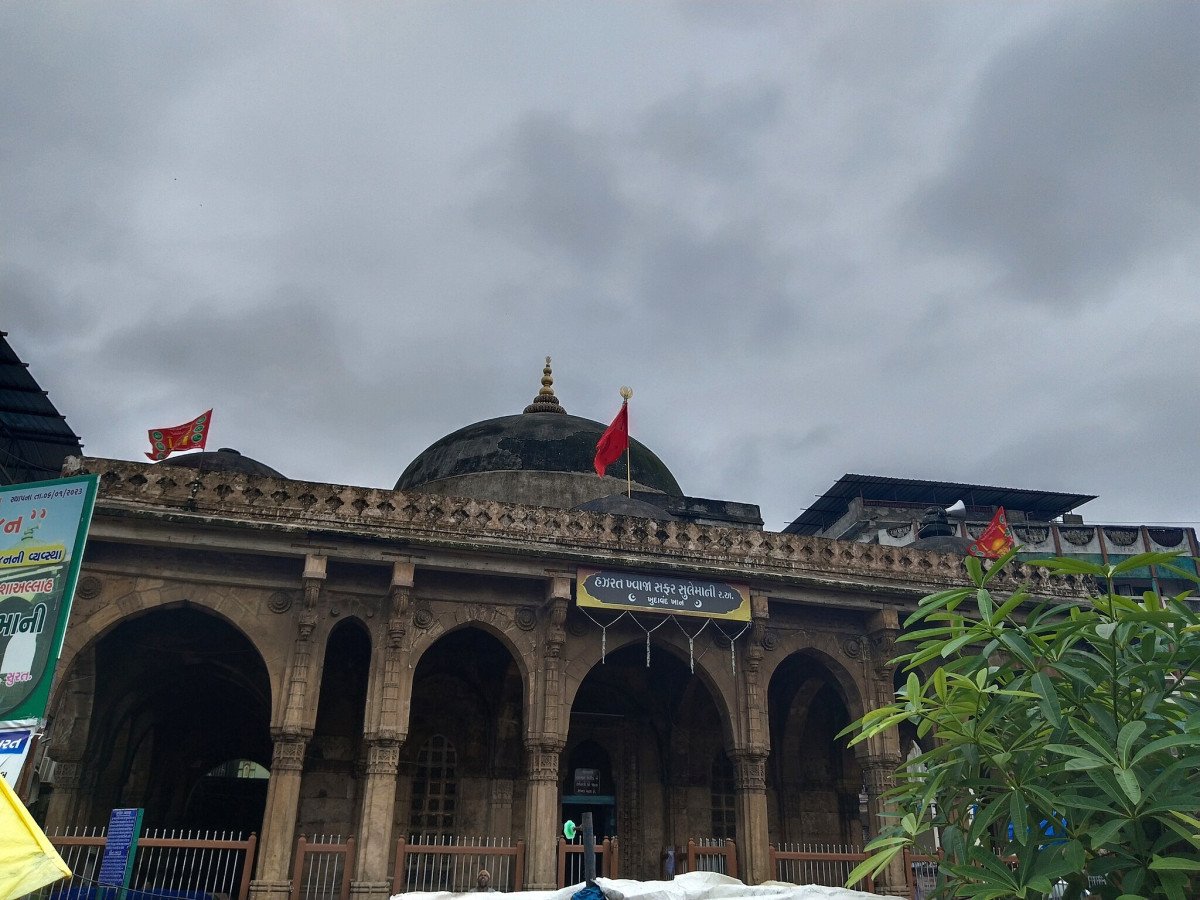
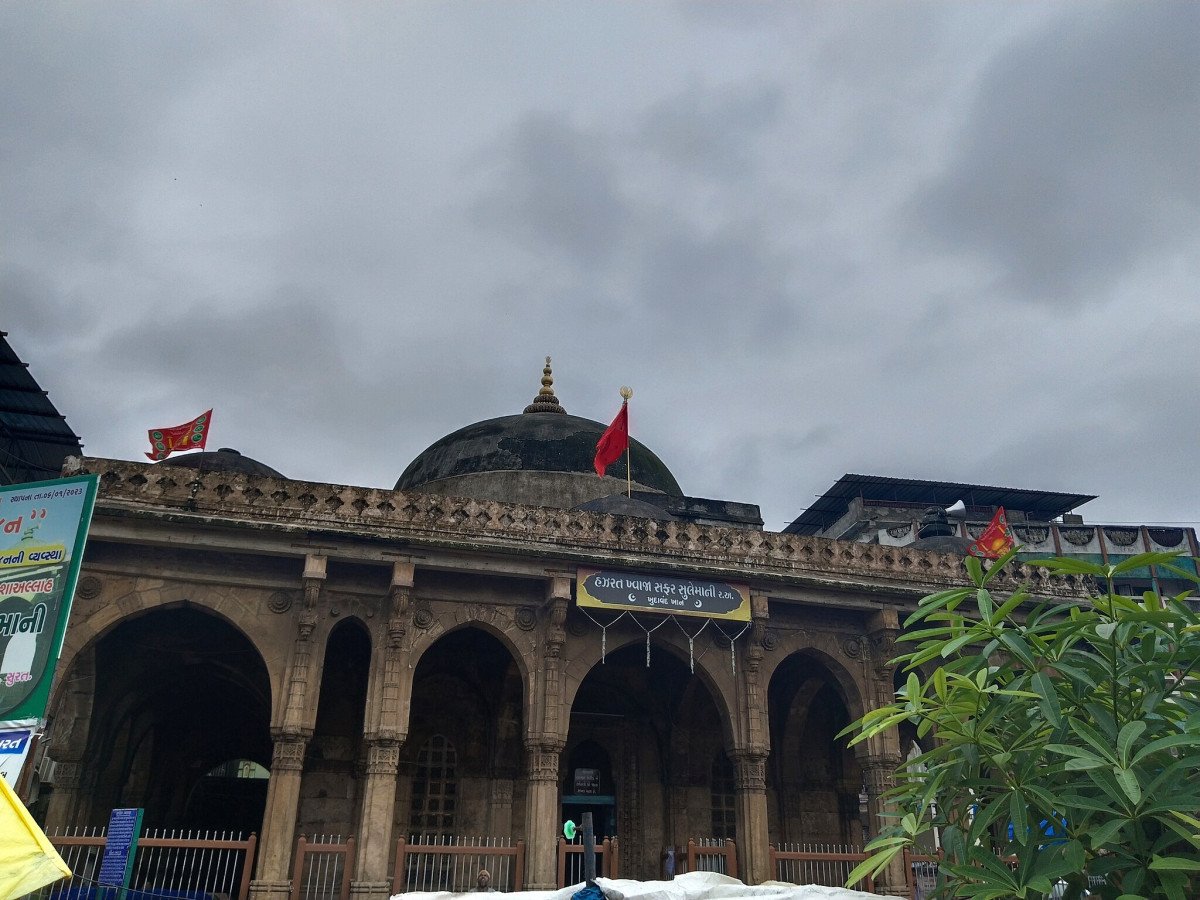
Indo-Islamic Mausoleum Style: The tomb is a classic example of 16th-century Indo-Islamic mausoleum architecture, combining the structural elements of local Gujarati stone-carving traditions with the geometric and formal elements characteristic of Persian and Sultanate funerary architecture. The overall form is a simple, robust structure, likely square or rectangular in plan, topped by a dome (possibly with four smaller corner domes).
Dimension and Ornamentation: While exact dimensions vary, the mausoleum is a moderate-sized structure, designed for dignified contemplation. The focus is on the intricate surface ornamentation. The exterior features delicate jali (stone lattice work) screens that allow light to filter into the inner chamber, creating a spiritual atmosphere, and detailed calligraphic inscriptions in Arabic or Persian, which are central to the tomb's aesthetic. The masonry work is of high quality, displaying the craftsmanship of the period, with finely finished stone blocks and decorative elements like carved niches, pointed arches, and the transition zone (squinch) between the square walls and the circular dome. The entire composition emphasizes balance, proportion, and spiritual tranquility. -
How To Reach:
By Air: The nearest airport is Surat International Airport (STV), which is about 18 KMS from the tomb's location in Sayedpura, Old City. Hire a taxi or an app-based cab for a direct journey, which usually takes about 40 minutes to reach the congested old city area.
...By Air: The nearest airport is Surat International Airport (STV), which is about 18 KMS from the tomb's location in Sayedpura, Old City. Hire a taxi or an app-based cab for a direct journey, which usually takes about 40 minutes to reach the congested old city area.
By Train: The closest and most convenient major railway station is Surat Junction (ST), which is only about 3-4 KMS from the tomb. From the station, the best way to travel is by a dedicated auto-rickshaw (approximately 15 minutes). Be prepared to walk the final stretch, as the very narrow lanes of Chakla Bazaar are often inaccessible to cars and sometimes even to large auto-rickshaws.
By Road: The tomb is located in the extremely dense and commercial Old City area near Chakla Bazar and the fort. Access by private car is highly discouraged due to the narrow streets, lack of parking, and heavy pedestrian/street traffic. It is best to drive to the nearest major intersection (e. g. , Chowk Bazar) and complete the rest of the journey on foot or via a small auto-rickshaw.
By Local Transport: The monument is well-known to local auto-rickshaw drivers. The most efficient way to arrive is via a dedicated auto-rickshaw or an app-based taxi that will drop you as close as possible to the Chakla Bazaar/Sayedpura area, and then a short walk through the atmospheric lanes to the exact location of the tomb. -
Weather and Best Time to Visit:
Different Types of Seasons: Winter (October to March) is the Best Time to Visit. The cooler, dry weather is essential for comfortably walking the last few hundred meters through the congested, sun-exposed lanes of the old city and for exploring the monument itself without t...Different Types of Seasons: Winter (October to March) is the Best Time to Visit. The cooler, dry weather is essential for comfortably walking the last few hundred meters through the congested, sun-exposed lanes of the old city and for exploring the monument itself without the discomfort of intense heat. Summer (April to mid-June) is very hot, making the exposed stone unbearable during the day. Monsoon (mid-June to September) makes the approach lanes slippery and messy, which is not ideal for walking.
Different Parts of the Day: The Ideal Part of the Day is the Early Morning (8:00 AM to 10:00 AM). This is the quietest time, offering the best light for photography and a serene atmosphere for historical appreciation before the commercial activities of Chakla Bazaar reach their peak. The Late Afternoon should only be considered if the weather is exceptionally cool. -
Near Tourist Places:
Surat Castle (1 KM), Gopi Talav (2 KMS), Dutch Cemetery (4 KMS), Sardar Patel Museum (3 KMS), Rang Upvan (4 KMS), Textile Market (1 KM), Tapi Riverfront (3 KMS), Rander (9 KMS), Swaminarayan Temple Adajan (8 KMS), Maniyakarao Palace (1 KM).
Tourism Tips
-
Health & safety: Be highly mindful of the crowded and narrow streets of Chakla Bazaar on the approach. Watch out for speeding two-wheelers and street traffic. Since the area is crowded, keep a very close watch on your valuables. The monument itself is safe.Health & safety: Be highly mindful of the crowded and narrow streets of Chakla Bazaar on the approach. Watch out for speeding two-wheelers and street traffic. Since the area is crowded, keep a very close watch on your valuables. The monument itself is safe.
Packing: Wear closed-toe shoes that are easy to take off, as a sign of respect, if you wish to enter the roza (tomb) chamber itself. Carry minimal bags and a small bottle of water. Avoid bringing large professional camera gear unless you have official permission.
Accommodation: Accommodation should be secured in the central city area near Surat Junction or Ring Road for easy access. The surrounding old city area is not known for tourist-friendly hotels.
Other Different Topics heading:
Old City Experience: Make the visit to the tomb a part of a larger, immersive experience of the Old City of Surat, which is the commercial and historical heart of the city. Plan to explore the diamond markets, textile shops, and traditional havelis (mansions) in the nearby streets, which are as historically rich as the monument itself.
Respect: Maintain religious and cultural respect while on the premises, especially in the presence of the grave, and avoid climbing on the old stone structures.
Reviews
FAQs
Surat Itineray And Cost:-
Tomb of Khudawand Khan Tourism:-
Other Places In Surat :-
Other States In India :-
Information about New and Updated Locations() of Gujarat Has Been Added :-
Card subtitle
Note:-
Information provided here in good Faith and for reference only.
Near Places

Amaazia Water Park
Some quick example text to build on the card title and make up the bulk of the card's content.
Go somewhere
Ambika Niketan Temple
Some quick example text to build on the card title and make up the bulk of the card's content.
Go somewhere
Chintamani Jain Temple
Some quick example text to build on the card title and make up the bulk of the card's content.
Go somewhere
Dumas Beach
Some quick example text to build on the card title and make up the bulk of the card's content.
Go somewhere
Dutch Garden
Some quick example text to build on the card title and make up the bulk of the card's content.
Go somewhere
Galteshwar Mahadev Mandir
Some quick example text to build on the card title and make up the bulk of the card's content.
Go somewhere
Gavier Lake
Some quick example text to build on the card title and make up the bulk of the card's content.
Go somewhere
Gopi Talav
Some quick example text to build on the card title and make up the bulk of the card's content.
Go somewhere
Hajira Village
Some quick example text to build on the card title and make up the bulk of the card's content.
Go somewhere
ISKCON Temple
Some quick example text to build on the card title and make up the bulk of the card's content.
Go somewhere
Jagdishchandra Bose Aquarium
Some quick example text to build on the card title and make up the bulk of the card's content.
Go somewhere
Jawaharlal Nehru Garden
Some quick example text to build on the card title and make up the bulk of the card's content.
Go somewhere
Kavi Narmad Central Library
Some quick example text to build on the card title and make up the bulk of the card's content.
Go somewhere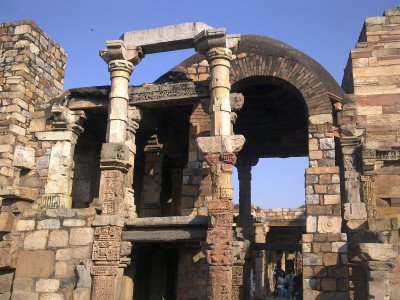
Nehru Bridge
Some quick example text to build on the card title and make up the bulk of the card's content.
Go somewhere
Rang Upavan
Some quick example text to build on the card title and make up the bulk of the card's content.
Go somewhere
Sardar Patel Museum
Some quick example text to build on the card title and make up the bulk of the card's content.
Go somewherein Other Cities