Visvesvaraya Industrial & Technological Museum
General information
-
Ideal Duration:
3 to 4 HoursPlace Type:
Museum (Science and Technology)Entry Fees:
General Adult Entry Fee: The entry fee for general adult visitors is very reasonable, typically around INR 50 per person. This provides access to all the general galleries and exhibits within the museum.
Concessional Fees for Students and Group...General Adult Entry Fee: The entry fee for general adult visitors is very reasonable, typically around INR 50 per person. This provides access to all the general galleries and exhibits within the museum.
Concessional Fees for Students and Groups: The museum is primarily focused on education, so there is a significantly reduced concessionary fee for students, usually around INR 25 per person, upon presenting a valid school or college ID card. Group rates are also often available.
Charges for Special Shows/Services: Certain special attractions or high-value services have separate, additional fees. This includes the popular 3D Science Show, the Science on a Sphere presentation, and the Flight Simulator. These are optional tickets that must be purchased separately at the counter.
Free for Younger Children: Children below a certain age (e. g. , 5 years) are typically allowed free entry. The museum's aim is to be accessible to all age groups.
No Photography Fee: Unlike many other museums, the VITM generally does not charge a separate fee for photography, encouraging visitors to document their learning experience. Flash photography may be restricted in certain areas due to preservation concerns. The fees support the maintenance of the numerous interactive and working exhibits, which require continuous upkeep and technical support.Timing:
Regular Timings:
Daily Opening Hours: The Visvesvaraya Industrial & Technological Museum (VITM) is open to the public on all days of the week, including weekends, from 10:00 AM to 6:00 PM.
The museum is only clos...Regular Timings:
Daily Opening Hours: The Visvesvaraya Industrial & Technological Museum (VITM) is open to the public on all days of the week, including weekends, from 10:00 AM to 6:00 PM.
The museum is only closed on two major festivals: Ganesha Chaturthi and Deepavali (Diwali).
Ideal Visit Time:
Weekday Morning: The ideal time to visit is on a weekday morning, immediately after it opens at 10:00 AM. This allows visitors to enjoy the popular interactive exhibits and galleries before the large school groups and weekend crowds arrive.
Timing for Shows: Check the schedule for the special shows (like the 3D show or Science on a Sphere) immediately upon arrival and plan your gallery visits around those timings. Often, the earliest shows have fewer people.
Peak Crowd Times: Expect the museum to be very crowded on weekends, public holidays, and during school holiday seasons. If you must visit then, target the last hour (5:00 PM to 6:00 PM) when crowds start to thin out.
Duration for Full Experience: To thoroughly enjoy all the interactive exhibits, spend time in the main galleries, and watch one or two special shows, you should allocate a minimum of 3 hours, and ideally 4 hours. Rushing through the museum will diminish the interactive experience.
Avoid Midday Lunch Rush: The museum cafeteria can get very busy around lunchtime (1:00 PM to 2:00 PM). Plan your visit to either eat early or later to maximize exhibit time.Special Events:
National Science Day Celebration: The museum's most significant event is the celebration of National Science Day (February 28th) and Engineer's Day (September 15th, honoring Sir M. Visvesvaraya). These days feature special exhibits, lectures by eminent scientists, educatio...National Science Day Celebration: The museum's most significant event is the celebration of National Science Day (February 28th) and Engineer's Day (September 15th, honoring Sir M. Visvesvaraya). These days feature special exhibits, lectures by eminent scientists, educational workshops, and competitive events for students.
Science Seminars and Workshops: The VITM regularly hosts special weekend workshops, science seminars, and hands-on science camps, especially during school holidays. These events are often thematic, covering robotics, astronomy, or physics, and require special registration.
School Holiday Programs: During major school holiday periods (like Summer and Dasara breaks), the museum organizes special educational programs, planetarium shows, and competitive activities designed to engage young minds with science outside the regular curriculum.
International Museum Day: On International Museum Day (May 18th), the museum often hosts special guided tours, free entry periods, and unique interactive sessions to highlight the importance of cultural and scientific institutions.
New Exhibit Launch Events: The museum frequently updates and launches new, cutting-edge exhibits. The launch of a new gallery, like one on artificial intelligence or space exploration, is often celebrated with a special event, attracting media and scientific community attention. These events offer a glimpse into the future of science communication.Best Photo Spots:
The Dinosaur Corner Models: The most fun and popular photo spot is the 'Dinosaur Corner,' especially the life-sized replica of the T-Rex. Capture interactive shots with the dinosaur models, especially good for family and children's photographs.
...The Dinosaur Corner Models: The most fun and popular photo spot is the 'Dinosaur Corner,' especially the life-sized replica of the T-Rex. Capture interactive shots with the dinosaur models, especially good for family and children's photographs.
The Interactive Exhibits (Hands-on): Capture action shots of people (especially kids) actively engaging with the interactive exhibits in the 'Fun Science' and 'Electro Technic' galleries, showing the 'hands-on' nature of the museum experience. Good spots include the balancing beam or the electrical generator.
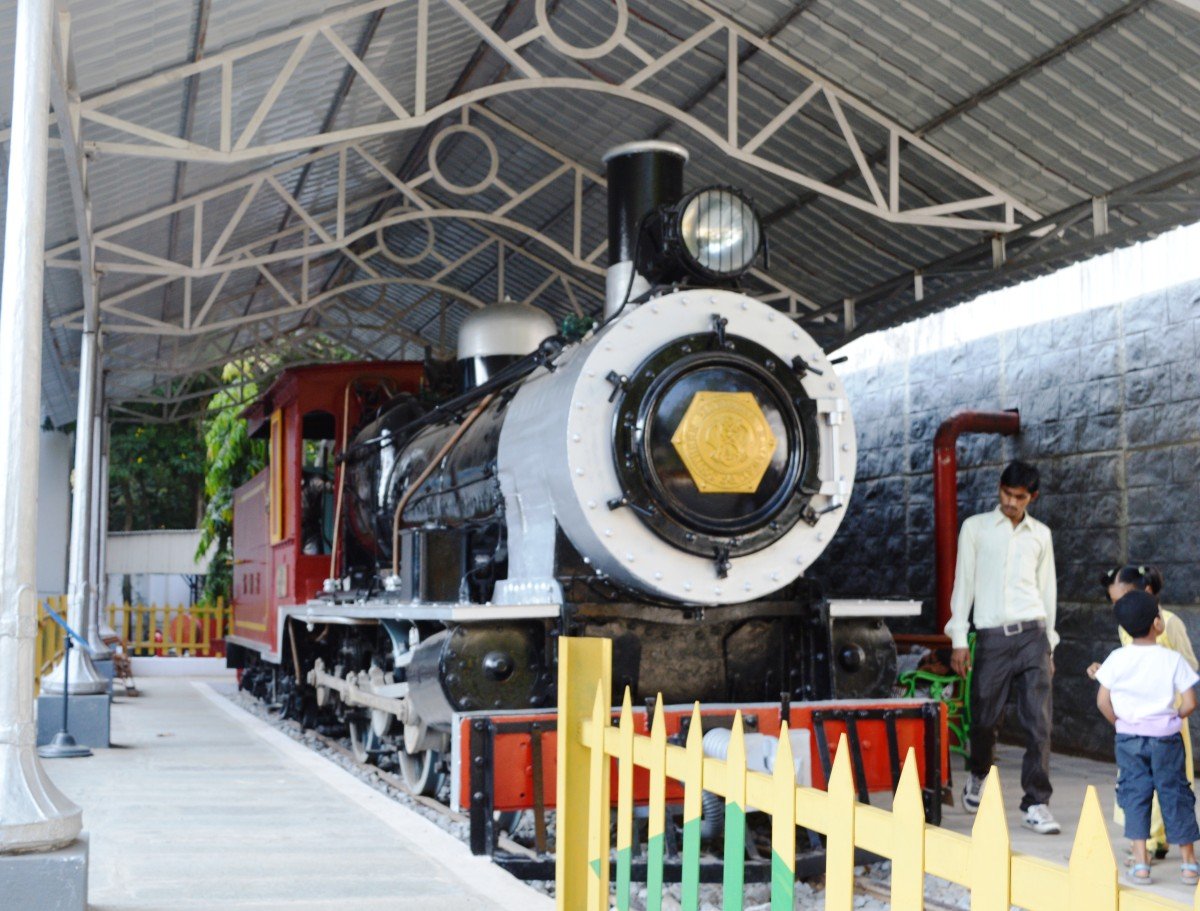
The Vintage Steam Engine: The replica of the 1940s vintage steam engine in the 'Engine Hall' is a fantastic subject for industrial or mechanical photography. Capture its intricate details and polished metal surface.
Space Technology Models: The section on ISRO and the models of rockets and satellites offer great, modern photo spots. Capture the sleek, metallic models against the informational backdrop, symbolizing India's technological progress.
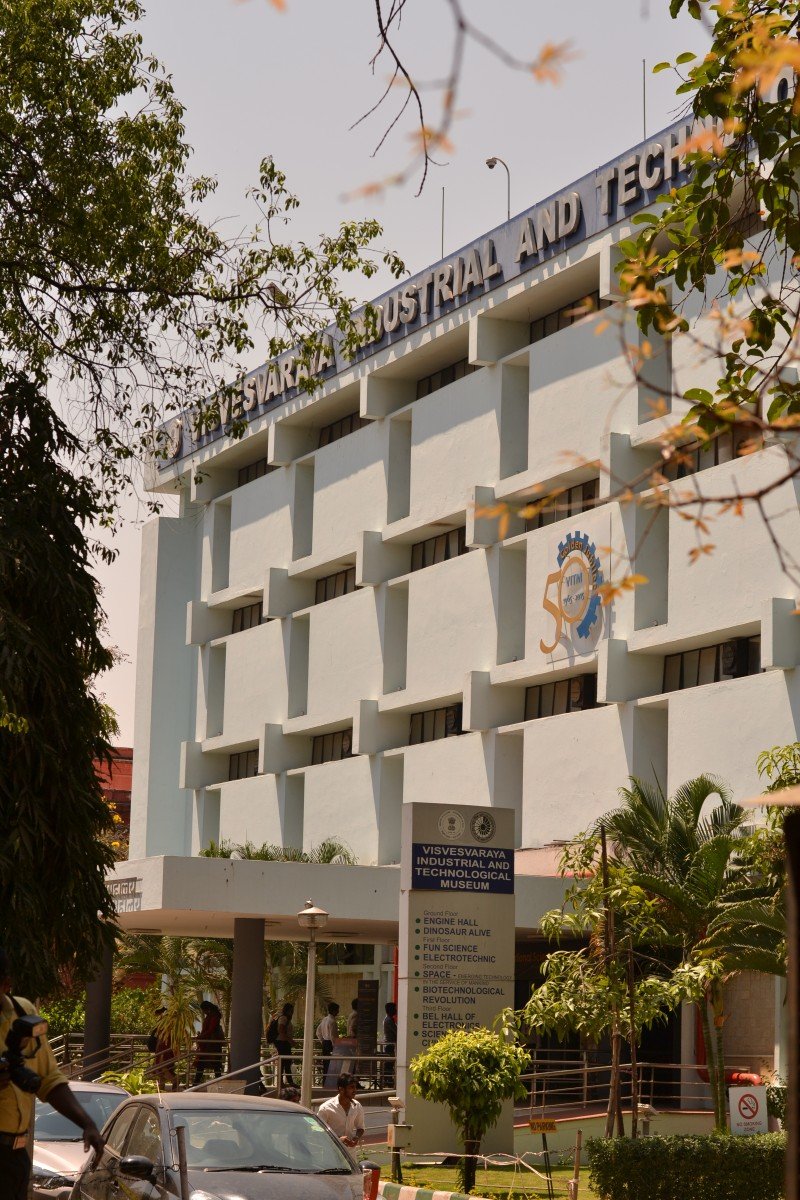
Exterior with Cubbon Park Backdrop: The museum building's exterior, when framed with the lush greenery of Cubbon Park in the background, offers a pleasing institutional photograph that balances technology with nature.
The Science on a Sphere Display: If the show is running, try to capture a wide-angle shot of the mesmerizing 'Science on a Sphere' display, showing the earth or other planetary models projected onto the large suspended globe.
Artistic Close-ups of Machinery: For detailed photography, focus on close-up shots of the exposed parts and mechanisms of the various industrial machinery and engine models, highlighting the complexity of their engineering and design.Photo Gallery
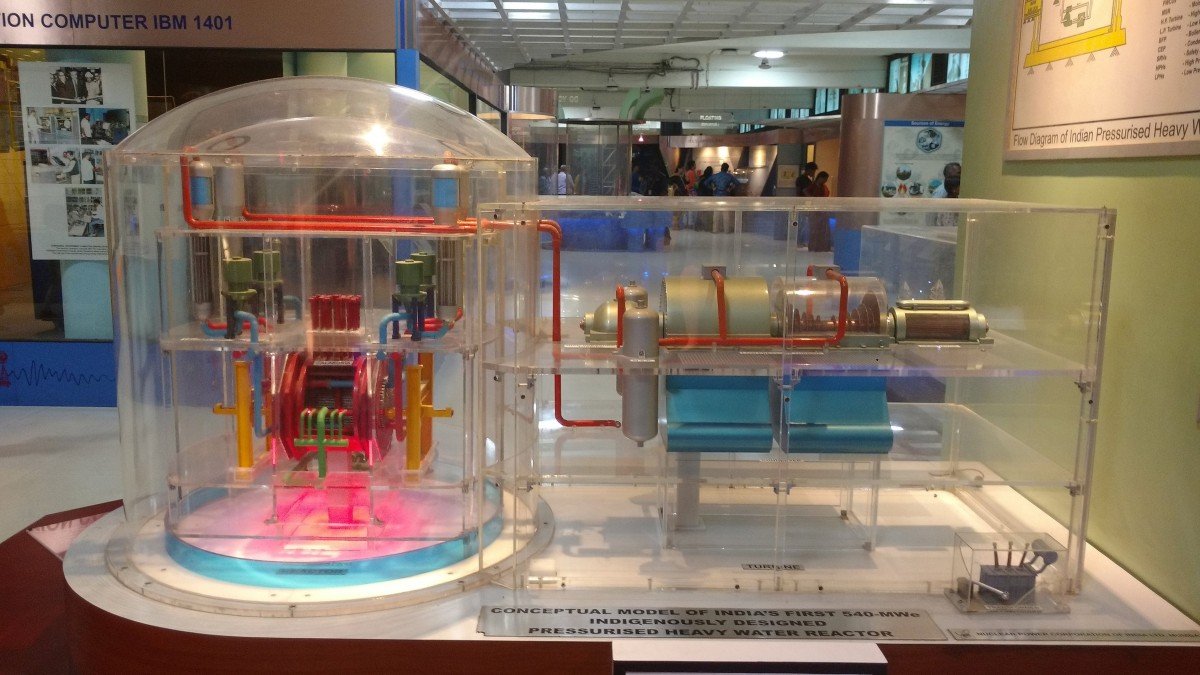
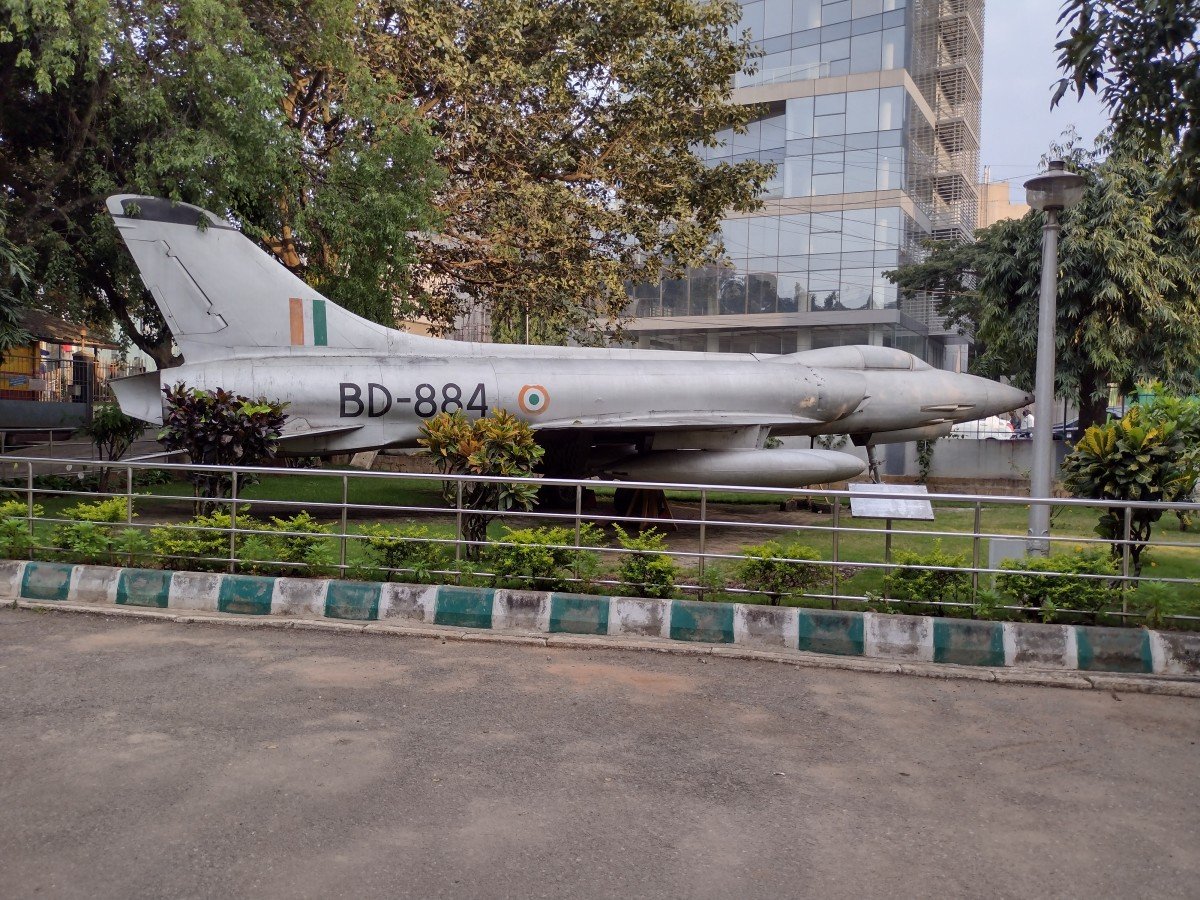

Things To Do
-
Engage with Interactive Exhibits (Fun Science): Spend ample time in the 'Fun Science' gallery. This is the heart of the museum, where you can actively participate in hands-on exhibits that demonstrate basic laws of physics and science in an entertaining way, such as balancing the center of gravity, generating electricity, and optical illusions.
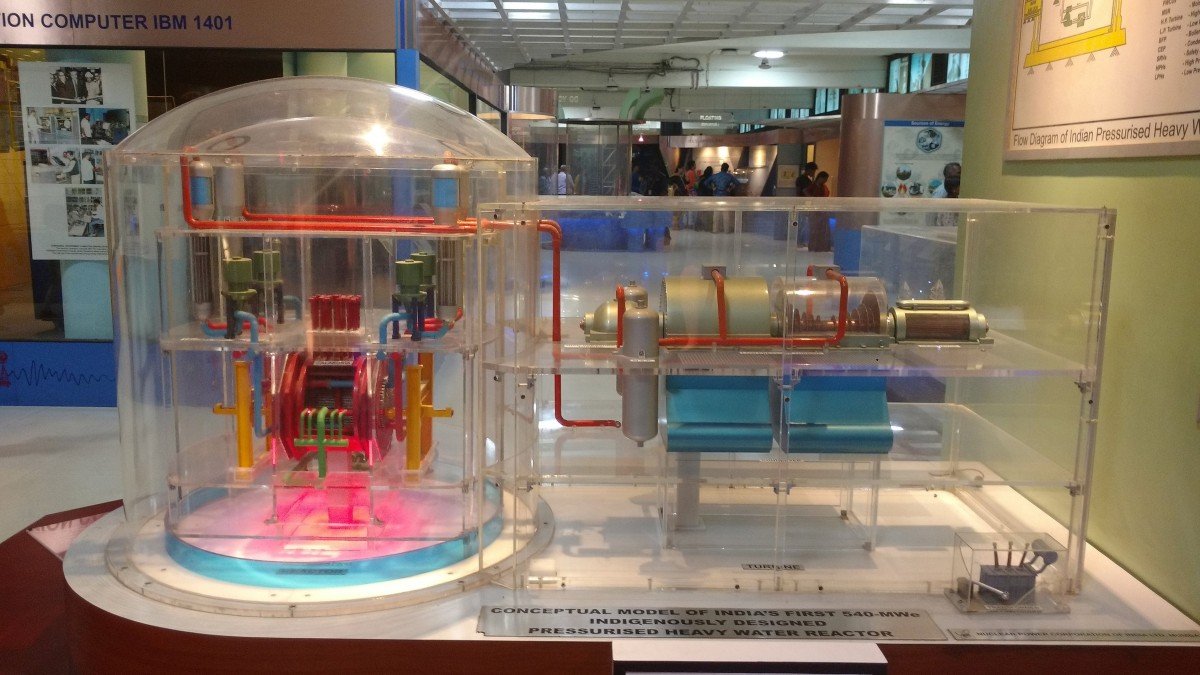
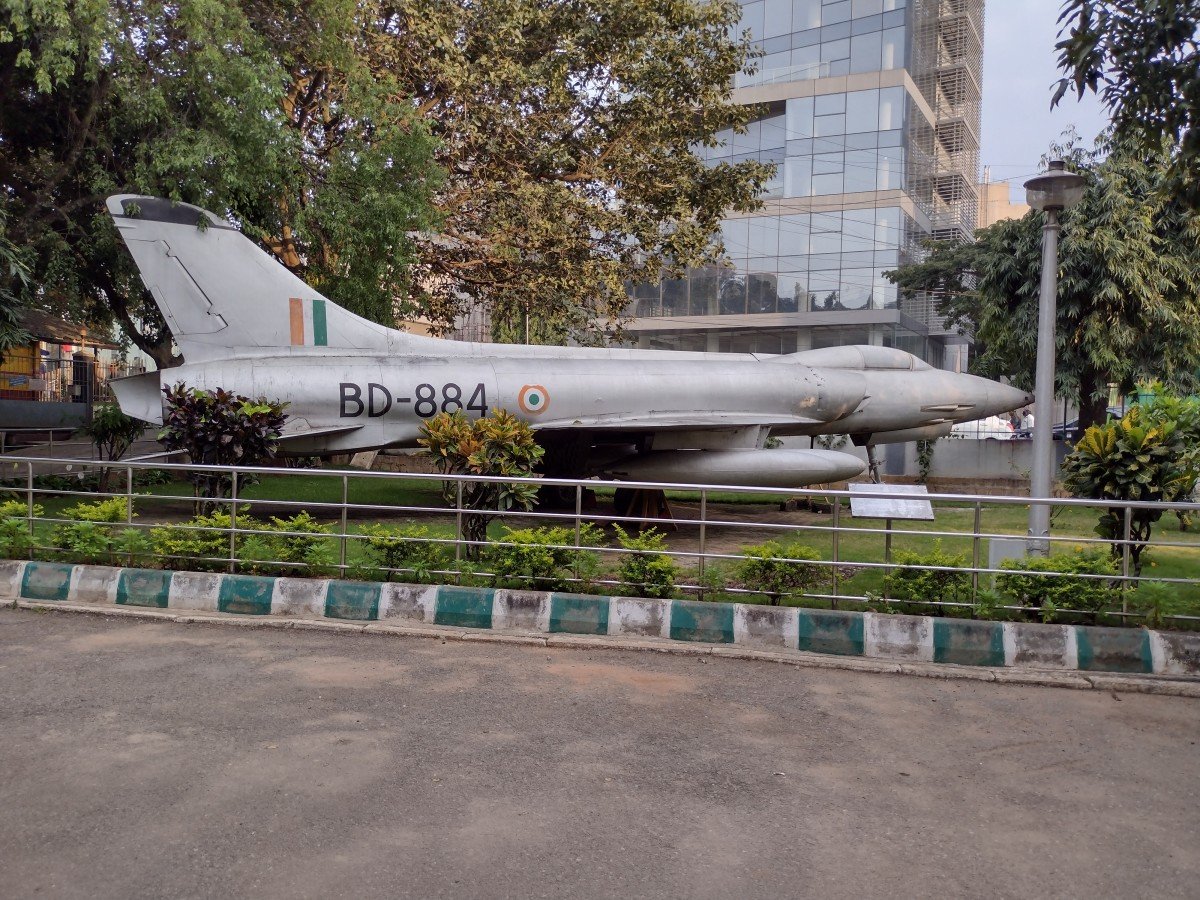
Explore the Engine Hall: Visit the 'Engine Hall' to see the historical development of mechanical power. This includes various working models and actual engines, like the vintage steam engine and diesel engines. For engineering enthusiasts, this is a highlight.
Discover the Dinosaur Corner: A must-do for all visitors, especially children, is exploring the 'Dinosaur Corner,' which features life-sized models and skeletons of various dinosaurs, offering a f...Engage with Interactive Exhibits (Fun Science): Spend ample time in the 'Fun Science' gallery. This is the heart of the museum, where you can actively participate in hands-on exhibits that demonstrate basic laws of physics and science in an entertaining way, such as balancing the center of gravity, generating electricity, and optical illusions.
Explore the Engine Hall: Visit the 'Engine Hall' to see the historical development of mechanical power. This includes various working models and actual engines, like the vintage steam engine and diesel engines. For engineering enthusiasts, this is a highlight.
Discover the Dinosaur Corner: A must-do for all visitors, especially children, is exploring the 'Dinosaur Corner,' which features life-sized models and skeletons of various dinosaurs, offering a fun and educational introduction to paleontology.
Experience the Space Technology Gallery: Spend time in the 'Space Emerging Technology' gallery to learn about India's space missions (ISRO) and the latest in space exploration, including models of rockets and satellites.
Watch a Science Show/Demonstration: Check the schedule for live science demonstrations and shows, such as the popular 'Science on a Sphere' show or the 3D shows. These are highly engaging and offer deep insights into complex topics.
Visit the Electronics Gallery: Explore the 'Electro Technic' gallery, which showcases the history and evolution of electronics, from early components like vacuum tubes to modern microchips and telecommunication devices.
Operate Working Models: Actively operate the various working models scattered throughout the museum. This hands-on approach is the best way to understand the scientific principles being demonstrated.
Lunch at the Cafeteria: The museum typically has a cafeteria. Taking a break for a meal or a snack allows you to refresh before exploring the next set of galleries.
Visit the Biotechnology Section: Explore the modern 'Biotechnology Revolution' gallery to understand the basics of DNA, genetics, and its applications in health and agriculture, representing the cutting edge of science.
Sketching the Exhibits: For artists and students, sketching the complex machinery in the 'Engine Hall' or the structure of the dinosaur models can be a highly engaging way to study their form and function.
Information
-
Why Famous:
Pioneering Science Museum: The VITM is famous for being one of India's first and most successful interactive science centers. It was a pioneering effort to popularize science and technology among the masses, especially students. Tribute to Sir M.
Read MorePioneering Science Museum: The VITM is famous for being one of India's first and most successful interactive science centers. It was a pioneering effort to popularize science and technology among the masses, especially students. Tribute to Sir M.
Visvesvaraya: It is a significant memorial to Sir M. Visvesvaraya, a recipient of the Bharat Ratna and one of the most respected engineers and statesmen in modern Indian history. The museum honors his legacy of industrial and technological vision.
Interactive and Hands-on Exhibits: Its core fame lies in its vast collection of interactive exhibits across multiple halls, such as 'Fun Science,' 'Engine Hall,' and 'Space Technology. ' Visitors, especially children, are encouraged to touch, operate, and experiment with working models, providing an immersive, engaging, and memorable educational experience far superior to traditional museums.
Educational Resource Hub: The museum is highly regarded as an essential educational resource, attracting thousands of school students on field trips throughout the year. It serves as a complementary learning environment to the school curriculum, sparking curiosity in physics, electronics, and engineering.
Dinosaur Corner Attraction: The museum is also widely known for its popular 'Dinosaur Corner,' which features life-sized models and skeletons, including a replica of a T-Rex, which is a particular favorite among younger visitors.Architecture:
Functional Modernist Design: The Visvesvaraya Industrial & Technological Museum's architecture is characterized by a functional and modernist approach, typical of post-independence institutional buildings in India. The design prioritizes large, open spaces for exhibitions a...Functional Modernist Design: The Visvesvaraya Industrial & Technological Museum's architecture is characterized by a functional and modernist approach, typical of post-independence institutional buildings in India. The design prioritizes large, open spaces for exhibitions and efficient flow of visitors, rather than ornate decoration.
Building Blocks and Galleries: The main structure is a large, multi-story concrete and steel building, strategically divided into several halls or galleries, each dedicated to a specific scientific theme. The layout is designed to maximize interaction with the exhibits.
Dimensions and Space Utilization: The museum covers a significant floor area, with dedicated galleries that can house large-scale working models and full-size machines. The floor area is approximately 55,000 square feet, spread across multiple floors, each floor designed to accommodate substantial exhibition load. The galleries are spacious, allowing for easy movement even during peak hours.
Integration with Cubbon Park: The building's design attempts to integrate with its surroundings, the lush Cubbon Park. Though the structure is imposing, its location within the green space allows for open areas and a pleasant environment for visitors. The use of large windows in some sections allows for natural light, connecting the indoor exhibits with the natural outdoors. The museum has a modest height compared to the surrounding trees.How To Reach:
By Air: The nearest airport is Kempegowda International Airport Bengaluru (BLR), about 35 kilometers away. The fastest way is an app-based cab or a taxi. Alternatively, take the BMTC Vayu Vajra airport bus to the Cubbon Park area, followed by a short walk or auto-rickshaw ...By Air: The nearest airport is Kempegowda International Airport Bengaluru (BLR), about 35 kilometers away. The fastest way is an app-based cab or a taxi. Alternatively, take the BMTC Vayu Vajra airport bus to the Cubbon Park area, followed by a short walk or auto-rickshaw ride.
By Train: The museum is approximately 5 kilometers from the Bangalore City Railway Station (KSR Bengaluru) and very close to the Bangalore Cantonment Railway Station (BNC). A short auto-rickshaw or taxi ride will take you directly to the museum, which is located on Kasturba Road.
By Road: The museum is centrally located on Kasturba Road, adjacent to the Cubbon Park grounds and near prominent landmarks like the Venkatapa Art Gallery and Bangalore Aquarium. The location is easy to find via GPS. Limited paid parking is available near the museum and along Kasturba Road, but it can fill up quickly.
By Local Transport:
Metro: The nearest Namma Metro station is the Cubbon Park station (Green Line), which is at a walkable distance (around 1. 5 kilometers) through the park. The MG Road station (Purple Line) is also a short distance away.
Bus: Many BMTC city bus routes pass by Cubbon Park and the High Court area. The nearest bus stop is a short walk from the museum.
Auto-rickshaw/Taxi: Auto-rickshaws and app-based cabs are a convenient option, dropping you right at the museum's entrance gate. Due to its central location, local transport is the easiest way to reach the museum, especially the Metro and subsequent short walk through Cubbon Park.Weather and Best Time to Visit:
Best Season:
All Year, But Winter is Preferred: Since the VITM is an indoor, air-conditioned attraction, it is an excellent place to visit all year round. However, the Winter months (October to February) are best because the surrounding Cubb...Best Season:
All Year, But Winter is Preferred: Since the VITM is an indoor, air-conditioned attraction, it is an excellent place to visit all year round. However, the Winter months (October to February) are best because the surrounding Cubbon Park is more pleasant to walk through. It's an excellent escape from the Summer heat.
Monsoon Advantage: The Monsoon season (June to September) makes the museum a perfect rainy-day activity, offering an engaging, dry environment when outdoor sightseeing is difficult.
Best Time of Day:
Weekday Morning: The ideal time is a weekday morning, right at opening time (10:00 AM). You will have the most popular interactive exhibits to yourself before the rush of school groups and general public begins around midday.
Late Afternoon for Quiet: The last hour before closing (5:00 PM to 6:00 PM) is also a good time, as many people have left, allowing for a quieter, focused exploration of the less-crowded galleries.
Worst Time:
Weekend Midday: The museum is often very crowded, especially from 11:00 AM to 4:00 PM on weekends and public holidays. If you must visit then, be prepared for queues and wait times for the popular interactive displays.
Show Timings: Schedule your arrival to align with the timing of the special shows (3D/Sphere) you want to attend, as these are fixed and often sell out.Near Tourist Places:
Visvesvaraya Industrial & Technological Museum: 1. Cubbon Park (Park) - 0. 5 KM; 2. Vidhana Soudha (View Only) - 0. 78 KM; 3. Venkatappa Art Gallery (Art) - 0. 1 KM; 4. Bangalore Aquarium (Aquarium) - 1. 4 KM; 5. Jawaharlal Nehru Planetarium (Science) - 1 KM; 6. Indira Gandhi Musical Fountain Park (Park) - 1 KM; 7. St. Mary's Basilica (Basilica) - 2 KMS; 8. Bangalore Palace (Palace) - 3 KMS; 9. Ulsoor Lake (Lake) - 3. 6 KMS; 10. Lalbagh Botanical Garden (Garden) - 3 KMS.Tourism Tips
-
Health & Safety:
Interactive Exhibit Use: Follow all instructions for the interactive exhibits, especially in the 'Fun Science' and 'Engine Hall' areas, to prevent injury and damage to the models. Supervise children closely, especially near ...Health & Safety:
Interactive Exhibit Use: Follow all instructions for the interactive exhibits, especially in the 'Fun Science' and 'Engine Hall' areas, to prevent injury and damage to the models. Supervise children closely, especially near the machinery and climbing exhibits.
Packing Essentials:
Comfort and Cash: Wear very comfortable shoes, as you will be doing a lot of standing and walking through the large galleries. Carry some cash for the entry ticket and the special show tickets (like the 3D show) which are often purchased separately. A notebook might be useful for students.
Accommodation:
Near Cubbon Park: Staying in accommodations near Cubbon Park or MG Road is ideal, as the museum is a central attraction. This location is convenient for combining the museum visit with other major city sightseeing.
Other Tips:
Plan for Time and Shows: Arrive early to maximize your time, as the museum is vast. Check the schedule for the special shows immediately upon arrival and buy tickets right away, as seating is limited. The museum cafeteria can be busy; consider eating a meal before or after your visit. Encourage children to interact with every exhibit for the best learning experience. It's a great spot for a full-day family outing.
Reviews
FAQs
Bengaluru Itineray And Cost:-
Visvesvaraya Industrial & Technological Museum Tourism:-
Other Places In Bengaluru :-
Other States In India :-
Information about New and Updated Locations() of Karnataka Has Been Added :-
Card subtitle
Note:-
Information provided here in good Faith and for reference only.
Near Places

Bangalore Palace
Some quick example text to build on the card title and make up the bulk of the card's content.
Go somewhere
Bannerghatta Biological Park
Some quick example text to build on the card title and make up the bulk of the card's content.
Go somewhere
Big Bull Temple
Some quick example text to build on the card title and make up the bulk of the card's content.
Go somewhere
Commercial Street
Some quick example text to build on the card title and make up the bulk of the card's content.
Go somewhere
Cubbon Park
Some quick example text to build on the card title and make up the bulk of the card's content.
Go somewhere
Devanahalli Fort
Some quick example text to build on the card title and make up the bulk of the card's content.
Go somewhere
Dodda Alada Mara
Some quick example text to build on the card title and make up the bulk of the card's content.
Go somewhere
Gavi Gangadhareshwara Temple
Some quick example text to build on the card title and make up the bulk of the card's content.
Go somewhere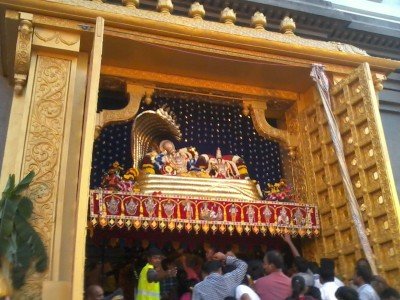
ISKCON Temple Bangalore
Some quick example text to build on the card title and make up the bulk of the card's content.
Go somewhere
Jawaharlal Nehru Planetarium
Some quick example text to build on the card title and make up the bulk of the card's content.
Go somewhere
Lalbagh Botanical Garden
Some quick example text to build on the card title and make up the bulk of the card's content.
Go somewhere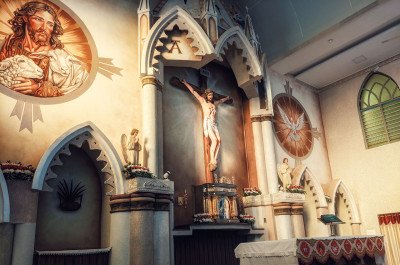
MG Road / Church Street
Some quick example text to build on the card title and make up the bulk of the card's content.
Go somewhere
Nandi Hills
Some quick example text to build on the card title and make up the bulk of the card's content.
Go somewhere
National Gallery of Modern Art
Some quick example text to build on the card title and make up the bulk of the card's content.
Go somewhere
St. Mary's Basilica
Some quick example text to build on the card title and make up the bulk of the card's content.
Go somewhere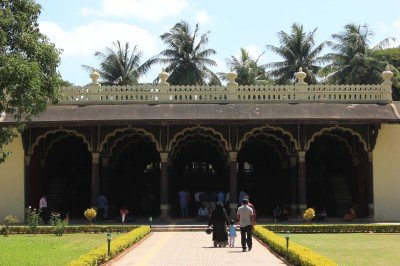
Tipu Sultan's Summer Palace
Some quick example text to build on the card title and make up the bulk of the card's content.
Go somewherein Other Cities