



Jagdish Temple
General information
-
Ideal Duration:
45 Minutes to 1 Hour (For Darshan and architectural appreciation)Place Type:
Hindu Temple, Religious Site, Architectural LandmaEntry Fees:
Temple Entry: There is no entry fee for general public access and worship at the Jagdish Temple. As a functional place of worship, it adheres to the principle of open access for all devotees and visitors.
Camera Charges: Unlike the City ...Temple Entry: There is no entry fee for general public access and worship at the Jagdish Temple. As a functional place of worship, it adheres to the principle of open access for all devotees and visitors.
Camera Charges: Unlike the City Palace nearby, there are generally no separate fees for carrying a still camera or mobile phone for photography. However, a respectful distance and discretion are expected, and flash photography is usually discouraged or restricted in the inner sanctum.
Donations and Offerings: While entry is free, visitors may choose to make a donation towards the temple's upkeep or purchase religious offerings ('prasad') for the deity. These are entirely optional.Timing:
Regular Timings: The Jagdish Temple is a functional temple and is open for 'darshan' and worship from early morning, typically around 4:30 AM or 5:00 AM, until late evening, usually around 9:30 PM to 10:00 PM, with intermittent breaks during the day, particularly in the aft...Regular Timings: The Jagdish Temple is a functional temple and is open for 'darshan' and worship from early morning, typically around 4:30 AM or 5:00 AM, until late evening, usually around 9:30 PM to 10:00 PM, with intermittent breaks during the day, particularly in the afternoon. Aarti (prayer) times are specific and are usually held at Sunrise (Mangala Aarti), Noon (Rajbhog Aarti), and Sunset (Sandhya Aarti and Shayan Aarti).
Ideal Visit Time:
The most captivating times for a visit are: Early Morning (5:00 AM - 7:00 AM) For a peaceful and spiritual experience, witnessing the first Aarti and avoiding crowds. Late Afternoon/Evening (5:00 PM - 7:00 PM) To attend the evening Aarti, when the temple is beautifully lit by lamps, and the atmosphere is vibrant with devotees and chanting.Special Events:
Janmashtami Celebration: The Jagdish Temple, being dedicated to Lord Vishnu (whose eighth avatar is Lord Krishna), celebrates Janmashtami (Lord Krishna's birth festival, typically in August or September) with immense devotion and grandeur. The temple is lavishly decorated ...Janmashtami Celebration: The Jagdish Temple, being dedicated to Lord Vishnu (whose eighth avatar is Lord Krishna), celebrates Janmashtami (Lord Krishna's birth festival, typically in August or September) with immense devotion and grandeur. The temple is lavishly decorated with flowers and lights. Special 'darshan' timings are arranged, and the idol is dressed in new, vibrant clothes and ornaments. The celebrations include late-night prayers, devotional singing (Bhajans and Kirtans), folk dances, and a large gathering of devotees who fast until midnight. The atmosphere is spiritually charged and offers a deep insight into Hindu religious practices.Best Photo Spots:
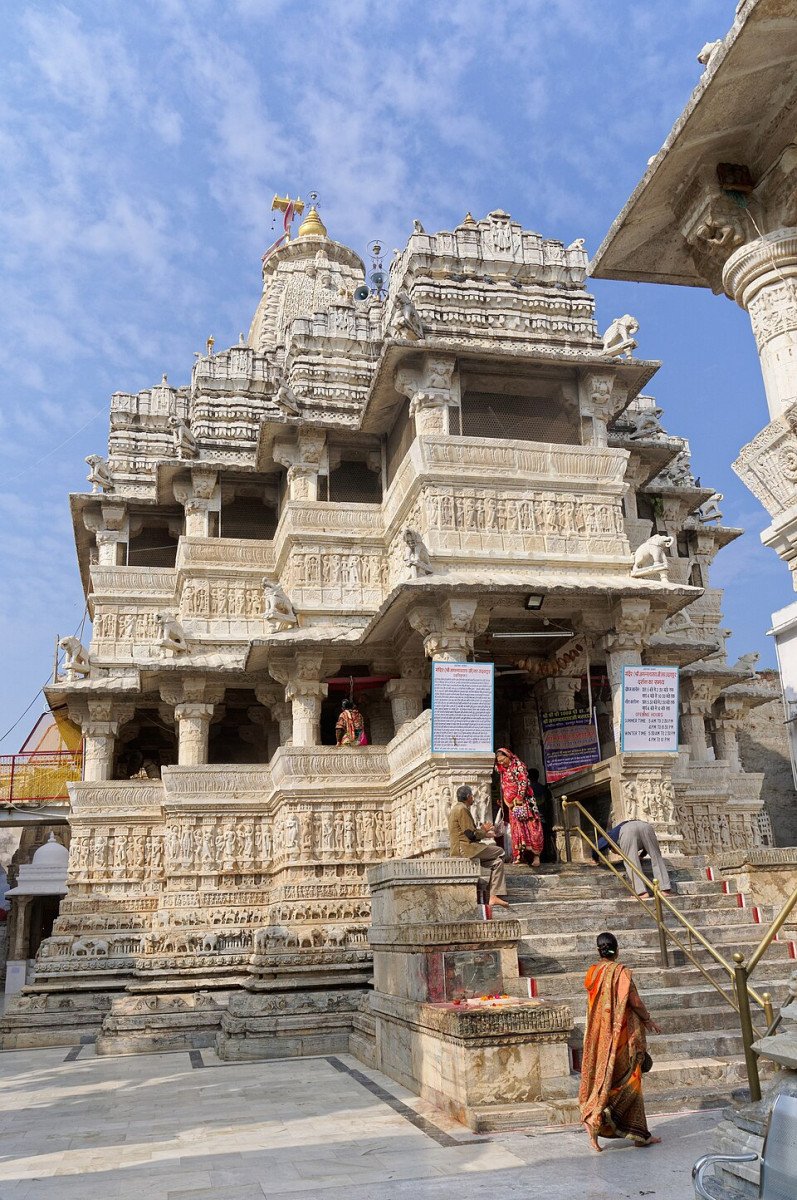
The 32 Steps and Elephant Guardians: The perfect vantage point to capture the scale of the entrance is from the bottom of the 32 marble steps. Frame the shot to include the two large stone elephant statues guarding the ascent, creating a majestic and dramatic lead-in to th...The 32 Steps and Elephant Guardians: The perfect vantage point to capture the scale of the entrance is from the bottom of the 32 marble steps. Frame the shot to include the two large stone elephant statues guarding the ascent, creating a majestic and dramatic lead-in to the main temple structure.
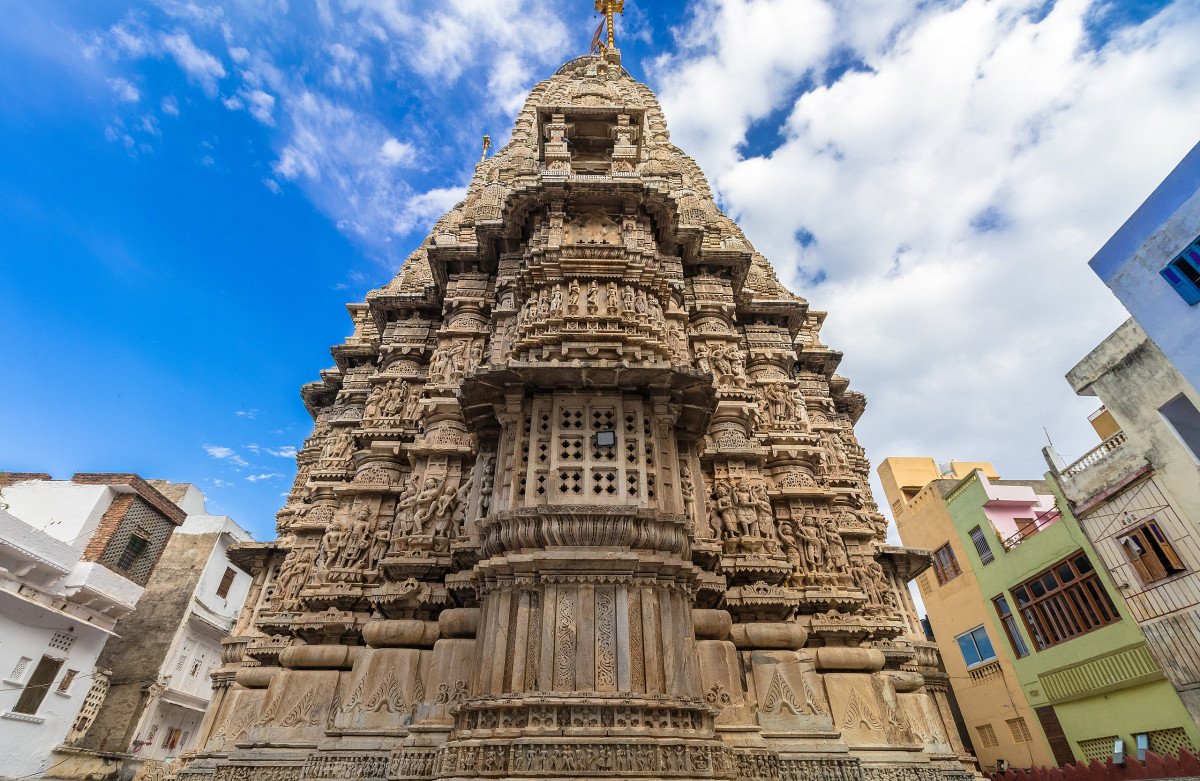
The Shikhar (Spire) from Jagdish Chowk: Stand back in Jagdish Chowk or from one of the lanes leading to it. This allows you to capture the impressive height and ornate details of the 79-foot Shikhar towering over the surrounding buildings and the busy market square, showing its dominance on the skyline.
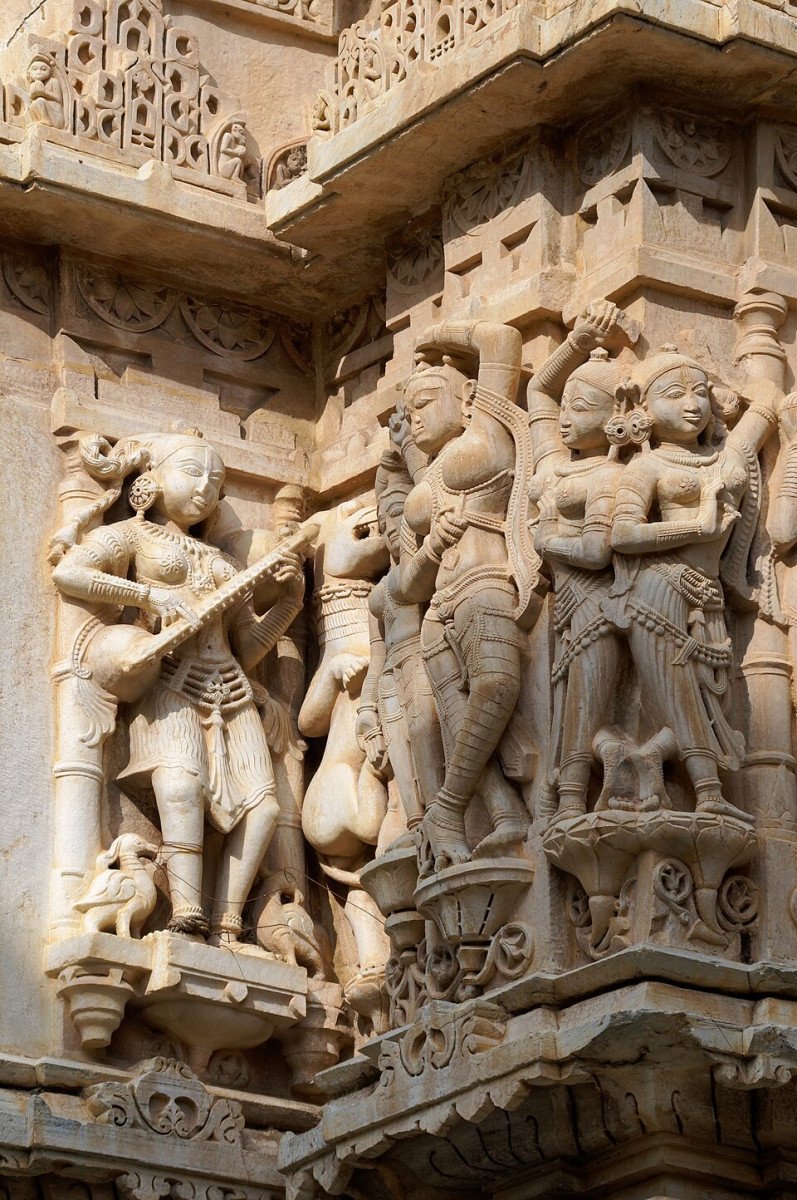
Detailed Carvings on the Exterior Walls: For close-up photography, the exterior walls and pillars offer an inexhaustible array of subjects. Focus on the intricate, minute carvings of mythological scenes, human figures, and animals that cover every surface. The challenge is capturing the detail in the shifting sunlight.
Garuda Shrine in the Courtyard: The brass statue of Garuda in his shrine, facing the main deity, provides a focused, symbolic photo opportunity within the courtyard, representing devotion and protection.Photo Gallery



Things To Do
-
Observe the Main Deity and Subsidiary Shrines: The core activity is visiting the main sanctum (Garbhagriha) for 'darshan' (viewing) of the principal deity, the magnificent four-armed black stone idol of Lord Vishnu (Jagannath). After that, ensure you visit the four smaller shrines dedicated to Lord Shiva, Lord Ganesha, the Sun God, and Goddess Shakti, arranged around the main temple.
Architectural Appreciation: Dedicate time to a slow walk around the exterior of the temple to fully appreciate the extraordinary detail of the Indo-Aryan architecture. Study the minute, intricate carvings on the Shikhar (spire), the walls, and the pillars of the Mandap. Look for the depictions of mythological narratives and secular scenes of daily life. The two huge stone elephants guarding the entrance are a classic subject for photos.
...Observe the Main Deity and Subsidiary Shrines: The core activity is visiting the main sanctum (Garbhagriha) for 'darshan' (viewing) of the principal deity, the magnificent four-armed black stone idol of Lord Vishnu (Jagannath). After that, ensure you visit the four smaller shrines dedicated to Lord Shiva, Lord Ganesha, the Sun God, and Goddess Shakti, arranged around the main temple.
Architectural Appreciation: Dedicate time to a slow walk around the exterior of the temple to fully appreciate the extraordinary detail of the Indo-Aryan architecture. Study the minute, intricate carvings on the Shikhar (spire), the walls, and the pillars of the Mandap. Look for the depictions of mythological narratives and secular scenes of daily life. The two huge stone elephants guarding the entrance are a classic subject for photos.
Attend Aarti (Prayer) Ceremonies: If possible, attend one of the daily Aarti ceremonies (usually in the morning, noon, and evening). The chanting, the bells, the fragrance of incense, and the rituals create a vibrant, powerful spiritual atmosphere that is a profound cultural experience. The temple comes most alive during these times.
Climb the 32 Steps and See Garuda's Shrine: Climb the steep flight of 32 marble steps, taking in the grand entrance experience. At the top, just before the main temple, pay respects at the smaller shrine housing the brass statue of Garuda, Lord Vishnu's vehicle, which traditionally faces the main deity.
Explore Jagdish Chowk and Surrounding Market: The temple is situated in Jagdish Chowk, a very busy intersection and market area. After your visit, take a stroll around the chowk. It's a great place to absorb the local city life, shop for local handicrafts, and find traditional Rajasthani snacks and sweets from the nearby vendors.
Photographic Details: The carvings and the grand scale of the temple provide excellent subjects for photography. Focus on close-ups of the detailed sculptures, the dramatic perspective of the steps and the elephant statues, and the soaring height of the Shikhar. Remember to be respectful of the sacred space while taking photographs.
Information
-
Why Famous:
A Marvel of Indo-Aryan Architecture: The Jagdish Temple is renowned as one of the finest and largest examples of the Indo-Aryan style of temple architecture in Rajasthan. Its imposing size, towering 79-foot spire, and incredibly detailed, minute carvings covering its exter...A Marvel of Indo-Aryan Architecture: The Jagdish Temple is renowned as one of the finest and largest examples of the Indo-Aryan style of temple architecture in Rajasthan. Its imposing size, towering 79-foot spire, and incredibly detailed, minute carvings covering its exterior walls, pillars, and ceiling, are a testament to the skill of the 17th-century Mewar artisans.
Religious Significance: It is the most important and sacred temple in Udaipur, dedicated to a form of Lord Vishnu (Jagannath), who is a principal deity in the Hindu trinity. Its location in the heart of the capital makes it a continuous hub of religious activity, with devotees flocking to it daily for prayers and during major festivals.
Central City Landmark: The temple's strategic location in the main Jagdish Chowk, and its proximity to the City Palace and Lake Pichola, make it an unmissable and well-known landmark. It serves as a navigational point in the old city and is integral to the cultural landscape of Udaipur. -
Architecture:
Indo-Aryan (Maru-Gurjara) Style: The Jagdish Temple is a magnificent example of the Indo-Aryan style of architecture, specifically the Maha-Maru or Maru-Gurjara school, characterized by its towering, ornate 'shikhar' (spire) and intricately carved exterior. The temple is b...Indo-Aryan (Maru-Gurjara) Style: The Jagdish Temple is a magnificent example of the Indo-Aryan style of architecture, specifically the Maha-Maru or Maru-Gurjara school, characterized by its towering, ornate 'shikhar' (spire) and intricately carved exterior. The temple is built on a high pedestal or terrace (Jagati), which raises it above the surroundings, a common feature in temple architecture, symbolizing the holy mountain. The use of local stone, primarily white marble and black stone for the idol, is prominent.
Structure and Dimension:
The Shikhar (Spire): The main spire, or Shikhar, is approximately 79 feet tall (around 24 meters), making it a dominant feature on Udaipur's skyline. It is adorned with complex carvings of dancers, musicians, elephants, and various mythological figures.
Steps and Entrance: A flight of 32 marble steps leads up to the main structure. The entrance is guarded by two imposing stone elephants, symbolizing strength and royalty. A brass image of Garuda (Lord Vishnu's vehicle, a man-bird figure) is housed in a separate shrine and faces the main deity.
The Mandap and Garbhagriha: The temple features a Mandap (prayer hall/porch) with two storeys, each containing 50 intricately carved pillars. The inner sanctum (Garbhagriha) houses the principal deity. The overall complex is multi-storied.
Idols and Shrines: The main idol of the four-armed Lord Vishnu is carved from a single block of black stone. The central shrine is encircled by four smaller subsidiary shrines, dedicated to Lord Shiva, Goddess Shakti, the Sun God, and Lord Ganesha, adhering to the traditional Panchayatana style of Hindu temple grouping. -
How To Reach:
By Air: Fly to Maharana Pratap Airport (UDR), 25 KMS away. From the airport, take a taxi or cab directly to Jagdish Chowk in the Old City. The total travel time is approximately 1 hour.
By Train: Arrive at Udaipur City Railway Station (...By Air: Fly to Maharana Pratap Airport (UDR), 25 KMS away. From the airport, take a taxi or cab directly to Jagdish Chowk in the Old City. The total travel time is approximately 1 hour.
By Train: Arrive at Udaipur City Railway Station (UDZ), 3. 5 KMS away. The temple is a short 10-15 minute auto-rickshaw or taxi ride from the station. Due to its location in the crowded Old City, the vehicle may drop you a short walk away.
By Road: Reach the Udaipur Bus Stand (2. 5 KMS away) by bus or the vicinity of the Old City by car. From the nearest drop-off point, local transport or a walk is required.
By Local Transport:
Auto-rickshaws: The most common way. They can take you right up to Jagdish Chowk.
Walking: If you are visiting the nearby City Palace or Bagore Ki Haveli, the Jagdish Temple is just a few minutes' walk away. Walking is recommended for exploring the immediate area, as the surrounding lanes are narrow. -
Weather and Best Time to Visit:
Different Types of Seasons:
Winter (October to March): The ideal season, with cool and comfortable temperatures for an enjoyable visit, especially around the crowded entrance.
Monsoon (July to September): ...Different Types of Seasons:
Winter (October to March): The ideal season, with cool and comfortable temperatures for an enjoyable visit, especially around the crowded entrance.
Monsoon (July to September): A beautiful time, with the wet stone of the temple gleaming, though you might need to carry an umbrella.
Different Parts of the Day:
Aarti Timings (Morning and Evening): The most spiritually and culturally rewarding times, as the temple is at its most active and atmospheric.
Afternoons (Avoid): The middle of the day is generally quiet with a brief closure period, and the marble steps can become very hot and uncomfortable, especially in summer. -
Near Tourist Places:
Other Places Distance (in KMS) from Jagdish Temple City Palace (Badi Pol) 0. 2 Bagore Ki Haveli Museum 0. 3 Gangaur Ghat (Lake Pichola) 0. 3 Ambrai Ghat 0. 7 Doodh Talai Lake 1. 5 Swaroop Sagar Lake 1. 8 Gulab Bagh and Zoo 2. 0 Vintage and Classic Car Museum 3. 5 Fateh Sagar Lake 4. 5 Saheliyon Ki Bari 5. 0
Tourism Tips
-
Health & Safety:
Footwear Removal: As it's a sacred place, you must remove your footwear before climbing the steps. Be mindful of the marble, which can be slippery or very hot.
Crowd Safety: Exercise caut...Health & Safety:
Footwear Removal: As it's a sacred place, you must remove your footwear before climbing the steps. Be mindful of the marble, which can be slippery or very hot.
Crowd Safety: Exercise caution in the crowded Jagdish Chowk and the narrow lanes. Keep valuables secure.
Packing:
Modesty: Dress conservatively out of respect for the religious site. Shoulders and knees should ideally be covered, especially when entering the inner sanctum.
Bag Check: Large bags may not be allowed inside, or you may be asked to deposit them outside. Carry minimal essentials.
Accommodation:
Central Location: Staying near Jagdish Chowk or Gangaur Ghat offers the best accessibility, as you can walk to the temple at any time, including the early morning Aarti.
Other Different Topics:
Temple Etiquette: Observe silence and respect the customs of the temple. Do not point your feet towards the idol.
Guide: While not mandatory, a guide can explain the detailed carvings and the temple's history, as there are few information boards.
Seating: Be aware that seating areas inside are limited, and most visitors stand for darshan and to view the architecture.
Reviews
FAQs
Udaipur Itineray And Cost:-
Other Places In Udaipur :-
Other States In India :-
Information about New and Updated Locations() of Rajasthan Has Been Added :-
Card subtitle
Note:-
Information provided here in good Faith and for reference only.
Near Places

City Palace, Udaipur
Some quick example text to build on the card title and make up the bulk of the card's content.
Go somewhere
Jag Mandir Palace
Some quick example text to build on the card title and make up the bulk of the card's content.
Go somewhere
Jagdish Temple
Some quick example text to build on the card title and make up the bulk of the card's content.
Go somewhere
Lake Pichola
Some quick example text to build on the card title and make up the bulk of the card's content.
Go somewhere
Saheliyon Ki Bari
Some quick example text to build on the card title and make up the bulk of the card's content.
Go somewhere
Ahar Museum & Cenotaphs
Some quick example text to build on the card title and make up the bulk of the card's content.
Go somewhere
Ambrai Ghat
Some quick example text to build on the card title and make up the bulk of the card's content.
Go somewhere
Badi Lake
Some quick example text to build on the card title and make up the bulk of the card's content.
Go somewhere
Bagore Ki Haveli
Some quick example text to build on the card title and make up the bulk of the card's content.
Go somewhere
Bhartiya Lok Kala Mandal
Some quick example text to build on the card title and make up the bulk of the card's content.
Go somewhere
City Palace
Some quick example text to build on the card title and make up the bulk of the card's content.
Go somewhere
Crystal Gallery
Some quick example text to build on the card title and make up the bulk of the card's content.
Go somewhere
Doodh Talai Lake
Some quick example text to build on the card title and make up the bulk of the card's content.
Go somewhere
Doodh Talai Musical Garden
Some quick example text to build on the card title and make up the bulk of the card's content.
Go somewhere
Fateh Sagar Lake
Some quick example text to build on the card title and make up the bulk of the card's content.
Go somewhere
Gangaur Ghat
Some quick example text to build on the card title and make up the bulk of the card's content.
Go somewherein Other Cities